Lamballe Revisited – A One Trick Pony?

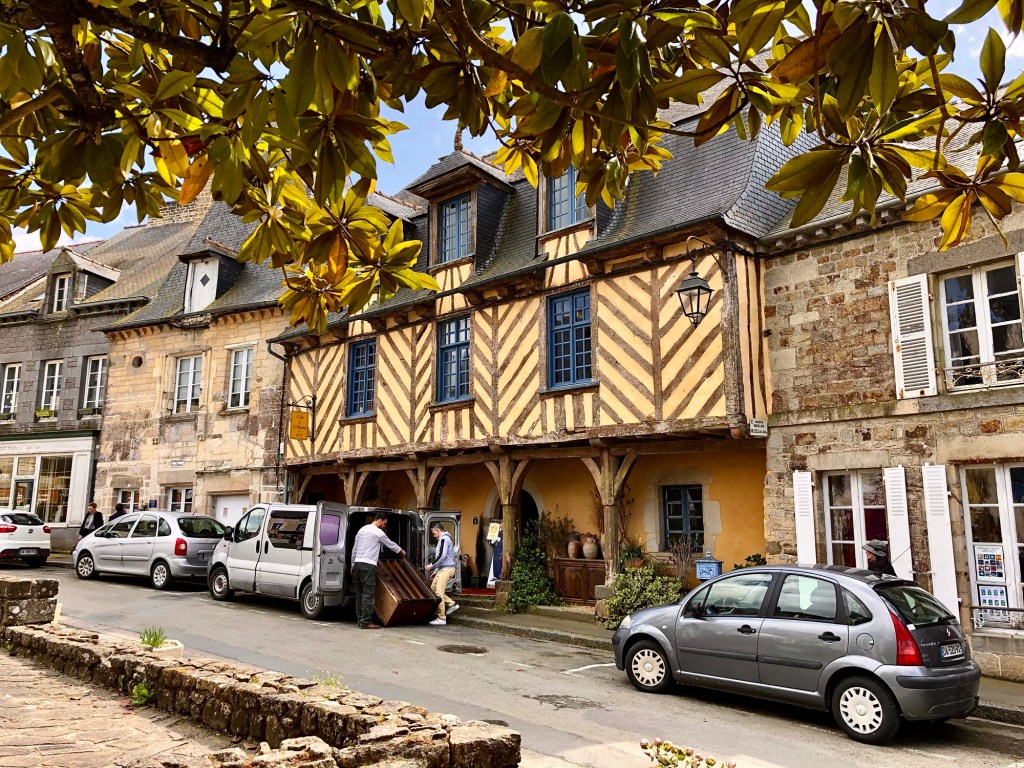
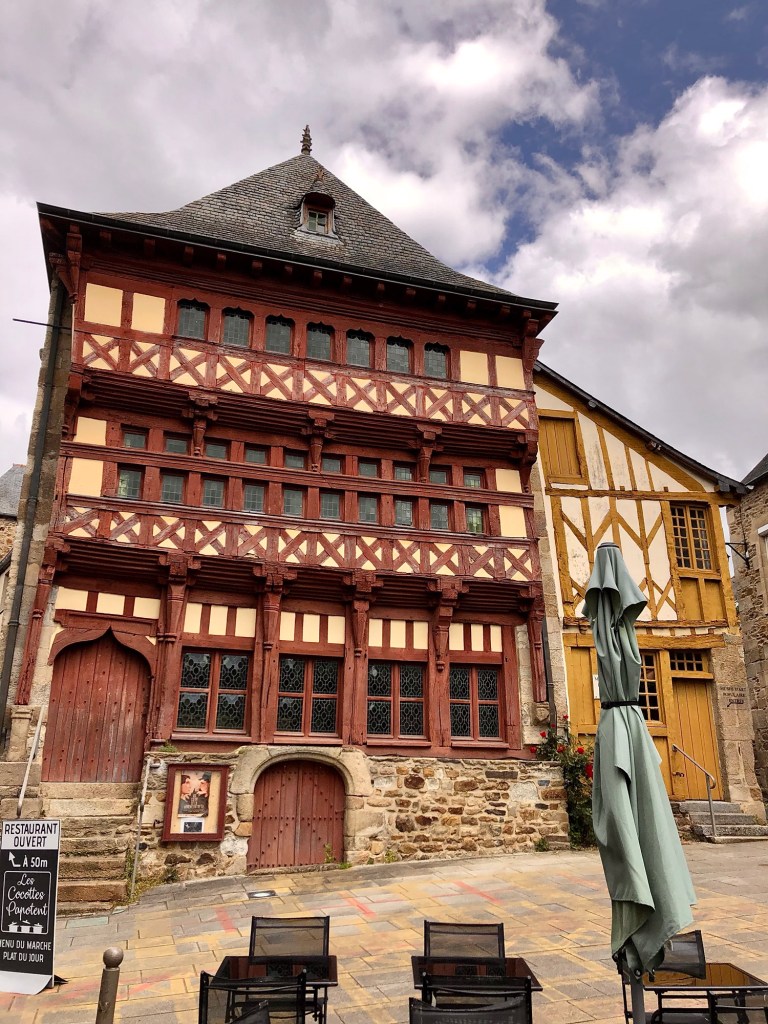
The 15th Century Maison de Bourreau (Executioner’s House), Place du Martray

Faithful followers of this blog may remember a post from a couple of years ago describing our visit to the Christmas market at the National Stud stables in Lamballe. On that occasion we had gone straight to the stable complex itself. There was a lot to do and see there – not least of which was fulfilling our Breton civic duty to devour sausage gallettes – so our entire focus was on the market. But, surely, there is more to Lamballe than a collection of beautiful horses, some vintage barns and ginormous mounds of manure? Right?

Well, we thought that the town deserved a more expansive visit. Cherie’s mother Valerie was still visiting us so this was the perfect time to embark on our return sojourn to stud town. Together, the three of us rolled down to Rennes and then northwest on the RN12 (E50) autoroute directly through to the heart of Côte d’Armor’s interior wherein sits Lamballe.
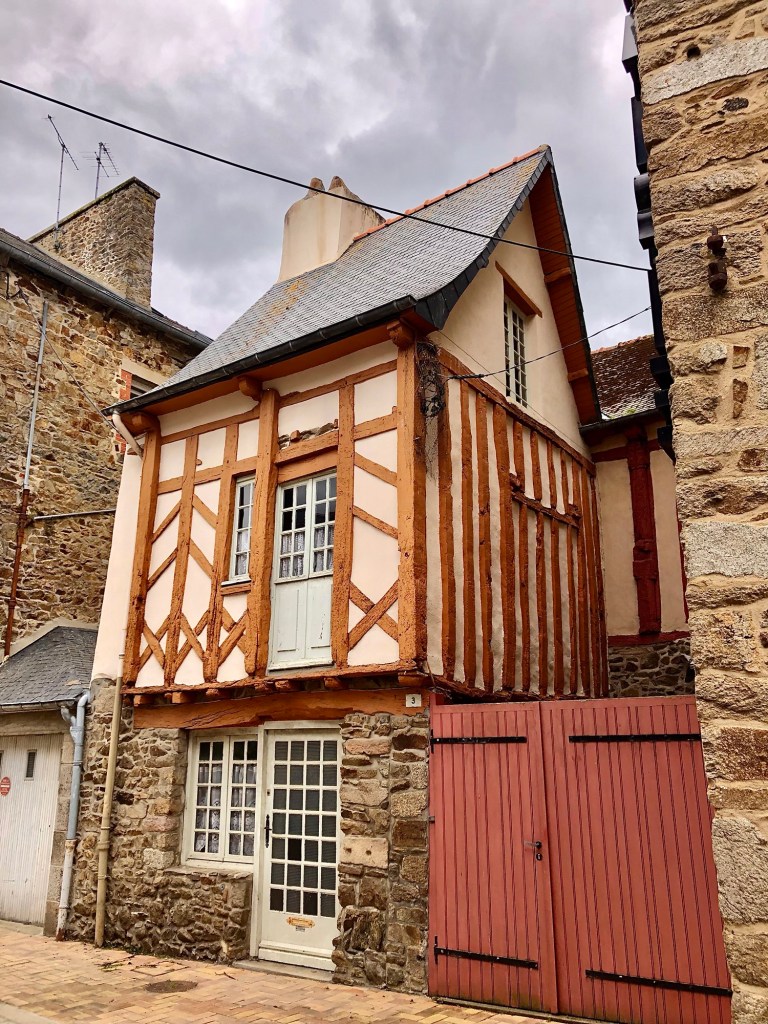
The OG Tiny House Movement

It’s an old town. Not like American “old” where a settlement founded in the 18th century is considered ancient. Nope, this place is proper old. Habitation in this area is at least from the Bronze Age, and Lamballe itself is first mentioned in a document from 1084. And the town shows its age in the most wonderful way. Centre-ville is well-supplied with lovely old buildings overhanging narrow streets. These ancient rues join up with charming, cobbled squares around which are huddled many independent restaurants, cafés and shops.
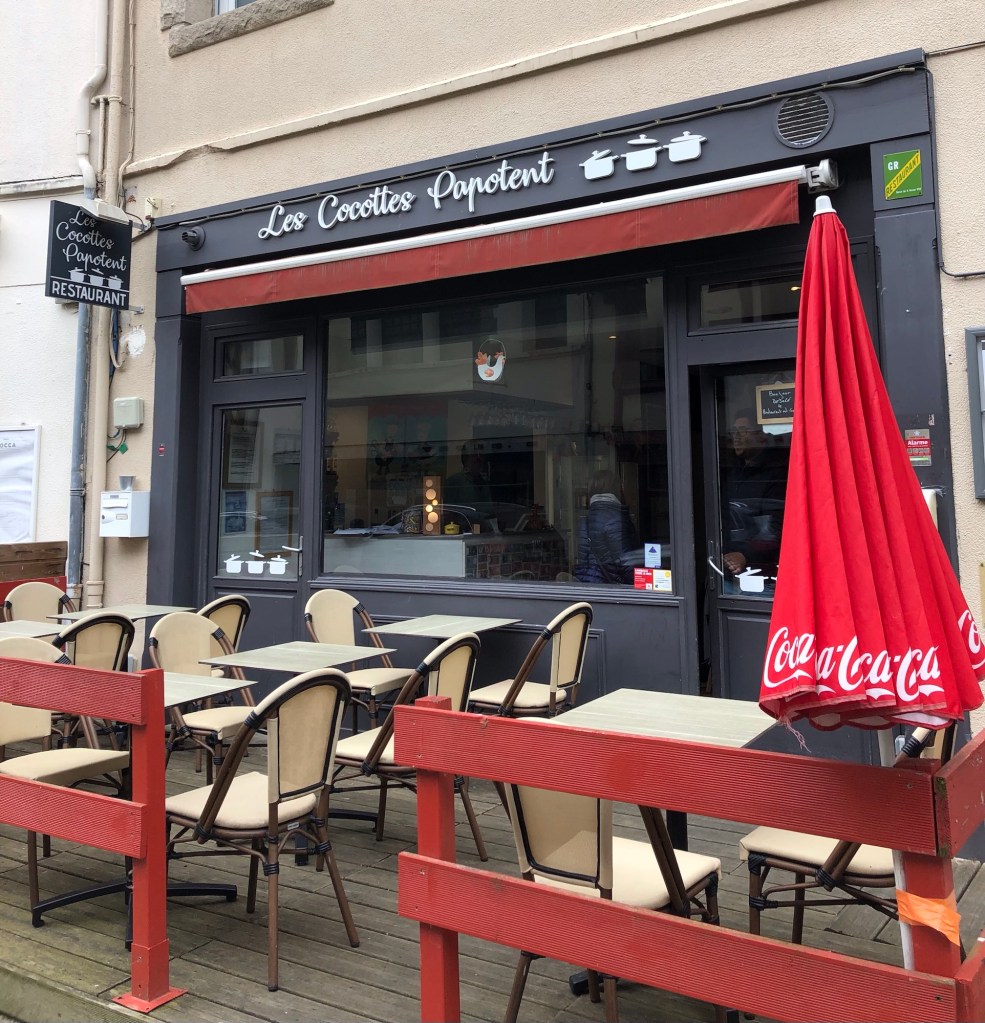
Good, Solid, French Cuisine – Les Cocottes Papotent

As is most often the case we arrived hungry. So we ducked in for some lunch at a nice little restaurant called Les Cocottes Papotent. A lively little place, our host was welcoming and we all had a great meal. It was clearly a local go-to for lunch. I recommend it if you’re in town. [Paid advertisement? Sadly, no.]
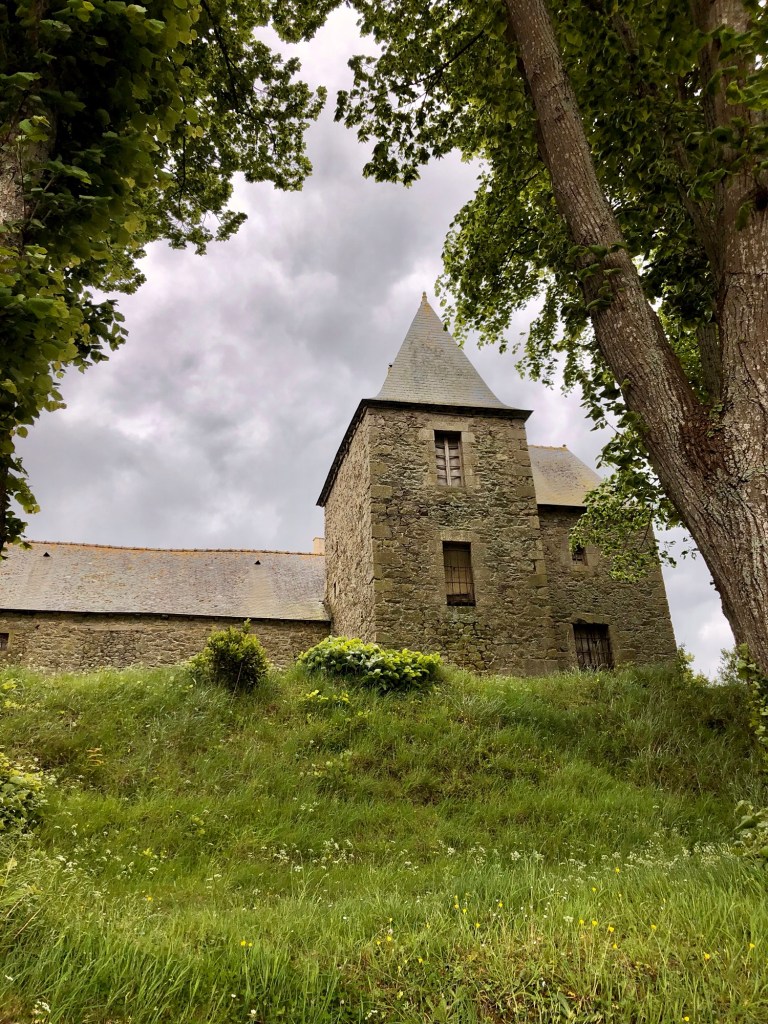
Where Once Stood a Castle

We followed our instincts, enjoying the architectural highlights of the old center as we found ourselves gently climbing to the summit of the rise. There used to be a powerful castle at the top with a town growing up around it, tumbling down the slopes to a lazy river (Le Gouessant) where the tanners plied their trade. The hilltop makes for a tranquille walk amongst the tree-lined promenade and the few remaining old stone buildings there. It also gives a view over the town, amplified by the chirping of songbirds and the sounds of scores of schoolchildren playing somewhere in the town below. Reassuring sounds, to my mind.
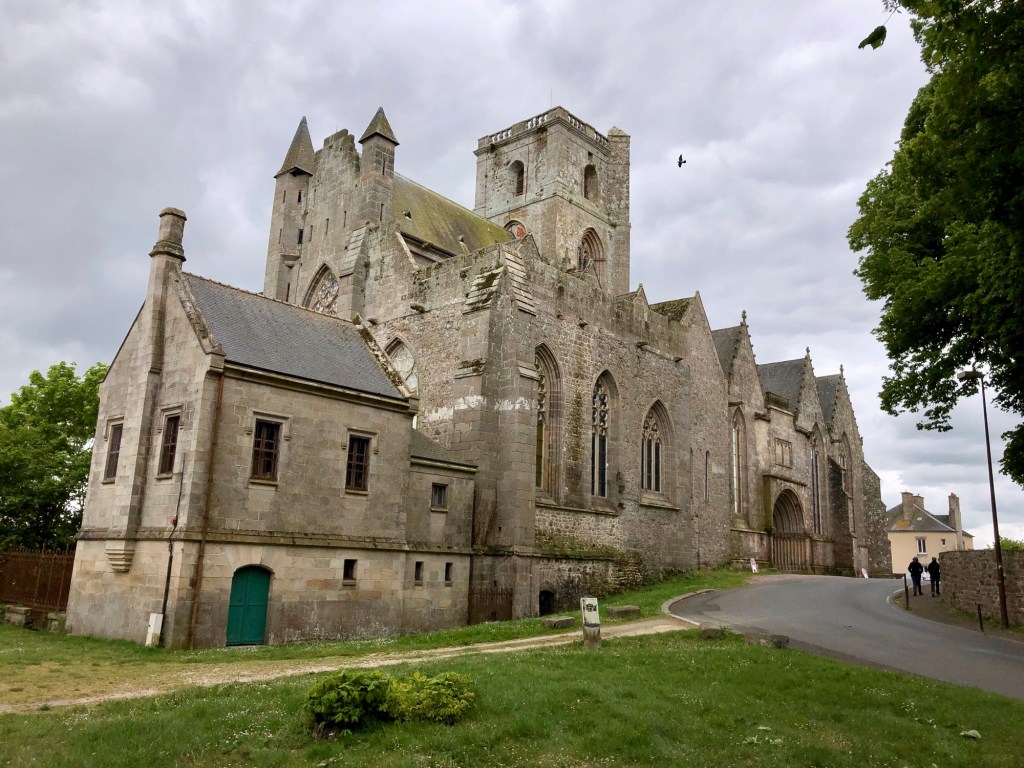
Collégiale Notre Dame de Grande Puissance
A Tour de Force of Carving on Display

Cardinal Richelieu of The Three Musketeers fame is said to have put an end to Lamballe’s castle. He did that a lot. Now, only the chapel of the complex remains in the form of the collegiate church of Notre Dame. The church is somewhat unusual in form, probably because it is the fragmented remains of a once-larger complex. Even Napoleon’s minions had a go at it in the early 19th century. But it is certainly worth a visit, containing some interesting features and displaying lovely examples of gothic architectural wood carving.

Take a Walk on the Washing Side

Walk down to the riverside and you will find a trail which meanders pleasantly through parkland. It affords views of a series of charming, if sometimes quirky, lavoirs – wash houses where the townspeople did their laundry in the waters of the river. Who knew that laundry could be so visually stimulating?
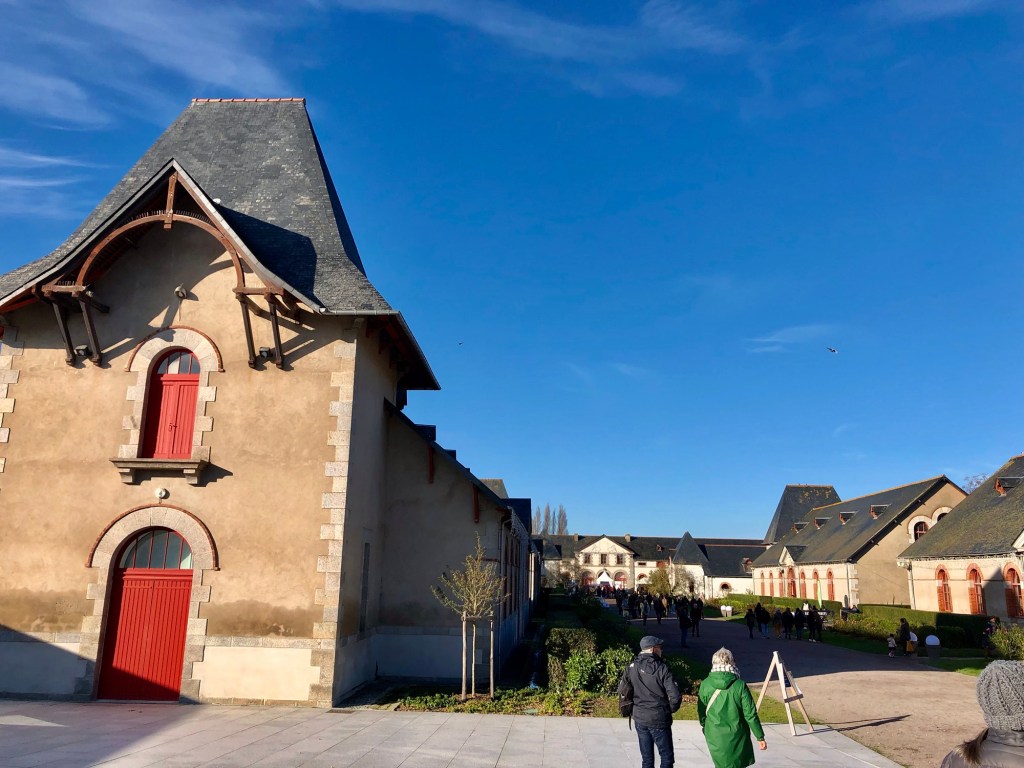
Your Basic Run-of-the-Mill Stables – the Haras National

The National Stud looms large in Lamballe. It sits prominently in the middle of town, after all. It, too, makes for an enjoyable stroll. There’s something calming, soothing about horse barns. They specialize in raising and training the Breton and Postier Breton breeds here. And they are magnificent creatures. During the high season there are regular shows displaying the majesty, power and grace of these and other breeds. Carriage rides are also available as well as tours of the facilities – it’s the perfect chance to practice your royal wave.
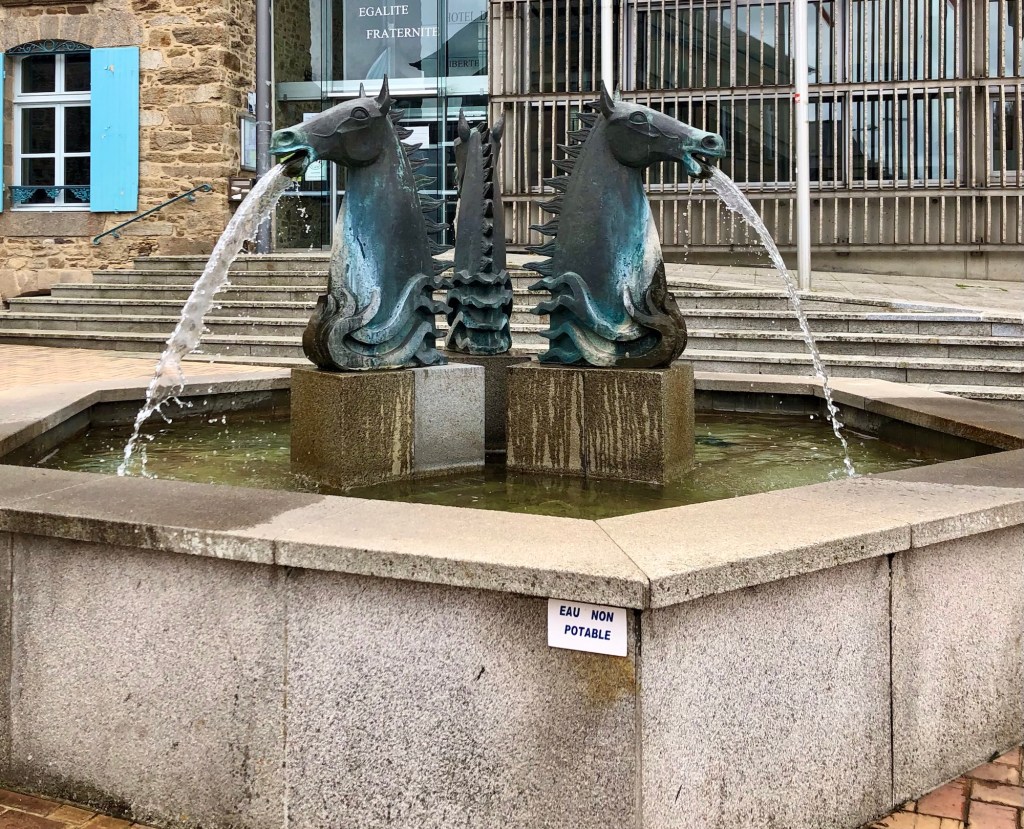
Do Not Drink the Horsewater!

Seeking the ever-popular bathroom break, we ducked in to Lamballe’s clean, swanky, modern tourist office located just within the grounds of the National Stud. It feels more like a museum shop than a tourist office. That’s probably because it also serves as the entrance to the Mathurin Méheut museum of art. For those of you a bit rusty on your fine arts connoisseurship, Méheut was an early 20th century French painter, ceramicist, engraver and etcher. His loose, sketchy style remains popular and a slick, new gallery houses a collection of his works as well as exhibitions of other contemporary pieces. [Prints, coffee mugs, pencils, calendars, notebooks – a wide variety of commercial schlock is, of course, available in the shop.]

A Passage Through Time

We had a very nice time in Lamballe. A reboot in this lovely old town was definitely worthwhile. It proved to us that this place is no one-trick-pony. If you visit (easy by car, or by TGV train with a stop in town), veer off from the horse barns for an hour or two to wander the picturesque views, streetscapes and shops that Lamballe has to offer. Your soul will thank you.

Surveying Her Domaine – Valerie in Lamballe

Deux Jolies Villes: Montfort-sur-Meu and Bécherel

Small Town Surprises – Montfort-sur-Meu

Cherie has a list. Actually, she has many lists. Finances, house projects, dog treats. She’s very organized. She probably has a naughty and nice list too, but I haven’t seen that one. Probably best that I don’t. At any rate, this particular list bears a carefully curated collection of sights which she feels we should see. As lists go, it’s a good one. And it only includes places we can comfortably drive to and return home within a day. Reviewing her choices for our latest outing, Cherie chose a mini-rally of two small towns to the west of Fougères: Montfort-sur-Meu and Bécherel.

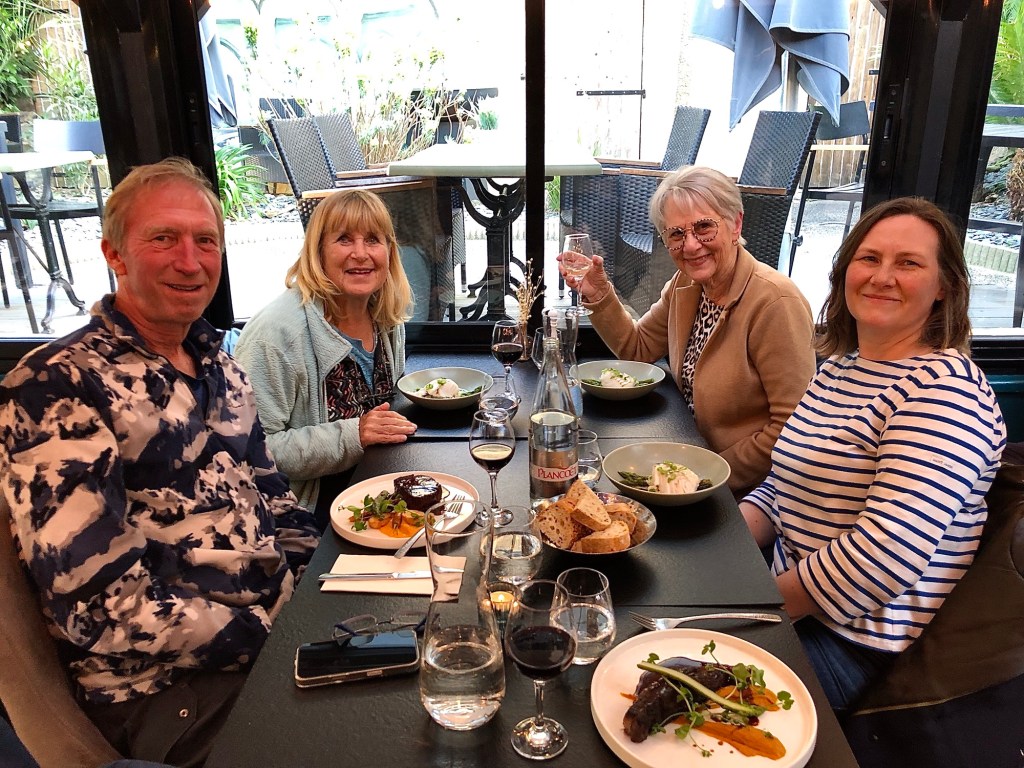
Valerie (third from left) in Her Happy Place: with Friends and Family at Restaurant l’Éveché in Dol de Bretagne

Joining us on this trip was Valerie, Cherie’s mother. Val comes to stay with us for a month or so every year. We love her visits and they always end far too quickly. Val’s time with us is an excellent excuse to hit the road and see something new. So, our special guest safely nestled in the passenger seat, off we trundled for a day out in Bretagne.

Lunchtime and the Streets are Empty – Montfort-sur-Meu

Our first target was the town of Montfort-sur-Meu (MsM). This small town of some 7,000 inhabitants lies at the confluence of two rivers (the Meu and the Garun) about 30 kilometers west of Bretagne’s regional capital, Rennes. The first thing we noted was the purple schist gleaming in the sunlight. The local stone contains elements which give it a dark purple hue. Many of the buildings in the town are constructed with it, lending them a quite distinctive character. But did I take a photo of one? No. I can’t think why I didn’t. Perhaps I was distracted by one of the boulangeries; pastries have always been my downfall.

Only the Donjon Remains

MsM is fairly compact, easily walkable. When we were there, it was a lovely spring day. The streets with its many shops and eateries were quiet. But we had arrived during the sacred lunch hour (which, in France, typically stretches to two hours) and most businesses were closed – except the few restaurants bulging with the entire population of the town. Still, there was always the boulangerie. And after a pleasant amble around the imposing remains of a medieval stone tower, we stepped in the bakery to purchase some sandwiches and pastries. For some reason, I seemed to be uttering a rare dialect of Alsatian because the woman helping us couldn’t understand a word of the French I thought I was rather competently speaking. Just when I think I’ve cracked it, life will remind me that I still have a lot to learn. Life is like that, I suppose: sometimes you speak French, sometimes you speak Alsatian.

The Church in MsM was Built upon the Ruins of the Medieval Castle

We ate our little picnic on a bench in a quiet square next the baroque church under flowering trees filled with gently chirruping sparrows. We took our time – because it’s France, you know, and it would be a crime to do otherwise – enjoying our simple sandwiches and sumptuous pastries. As we chatted away, I suspect that each of us were quietly thanking the universe for the gift of being in this lovely country and delighting in yet another wonderful day. Perfection.

A Quiet Corner Next to the Park

Montfort-sur-Meu is not possessed of any big attractions. And that’s okay. It’s just a lovely town with some pretty streets lined with some attractive and characterful architecture, quaint and gently flowing rivers, and a couple of agreeable parks. I’m sure it would be a very nice place to live; people have been making it their home since neolithic times. It also makes for an enjoyable visit. A couple of hours spent here is well worth the effort.

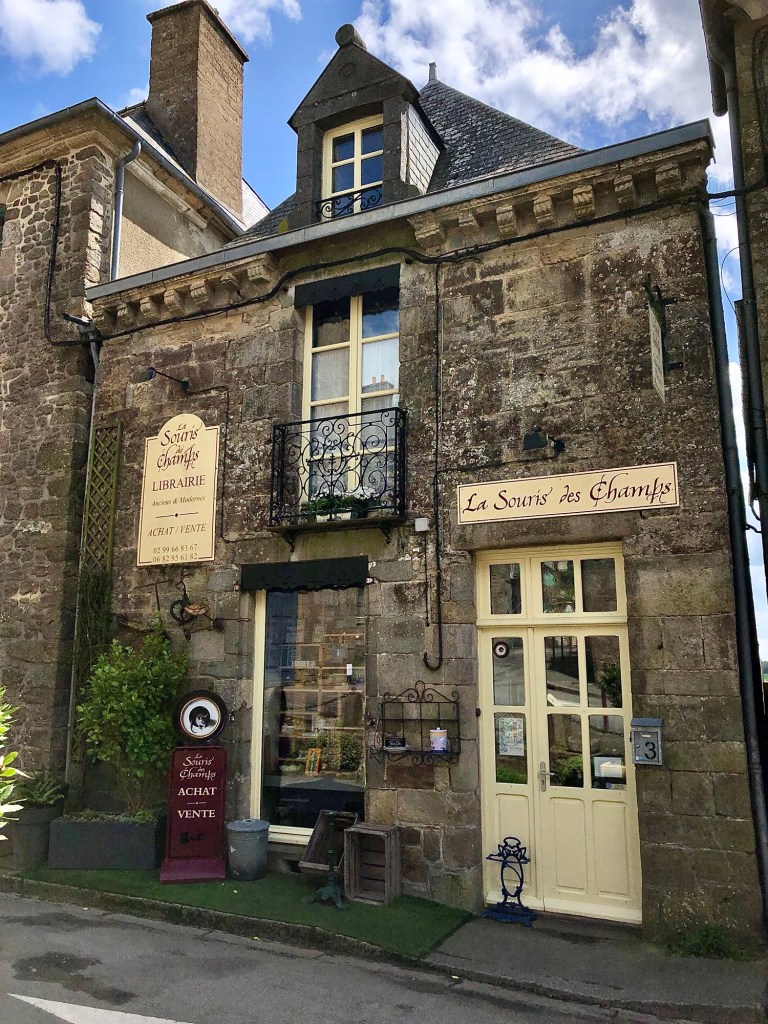
La Souris des Champs (The Field Mouse) – One of the Many Bookshops in Bécherel

A few minutes’ drive to the north brings you to the even smaller town of Bécherel. Sitting atop a rise overlooking lushly green hills and valleys, Bécherel has staked its claim as a reader’s paradise. Around 700 people live here – most of whom seem to own a book shop. Throw a stone here and you are likely to strike a bookseller’s business. The town holds a large book fair (the aptly named Fête du Livre) every year as well. As a great lover of books, I would have gone in to check out the many shops. But, had I done so, I likely wouldn’t have then emerged for hours, only to discover that Cherie, Val, and the car had gone home. I decided that it was probably wise not to tempt a long, book-laden walk home.

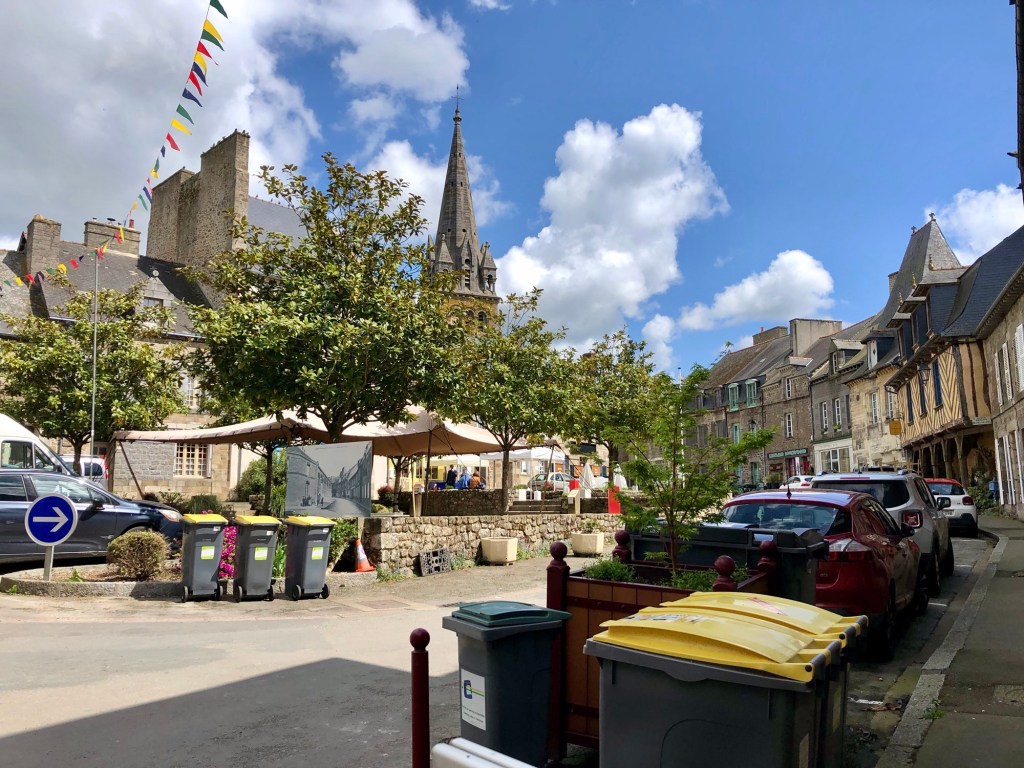
Garbage Day in Bécherel’s Charming Main Square – Everybody has One (garbage day, that is)

Bécherel wears its age proudly. Old stone and timber-frame buildings huddle around an open square. The pretty little church stands wedged in to one end of the square, overseeing the behavior of its parishioners. The church was apparently destroyed and rebuilt in the 19th century, but it contains two older baptismal fonts – one of them from the 12th century. A must-see for an old thing aficionado like me.

Cracked and Worn, this Tower Still Stands Watch over Bécherel

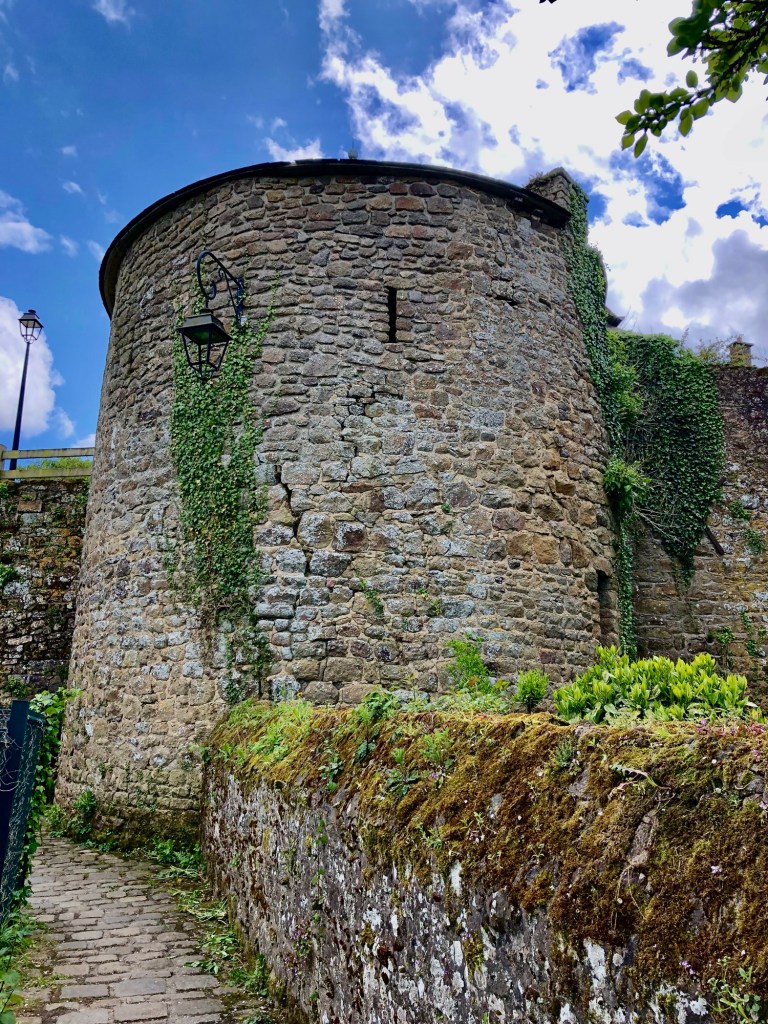
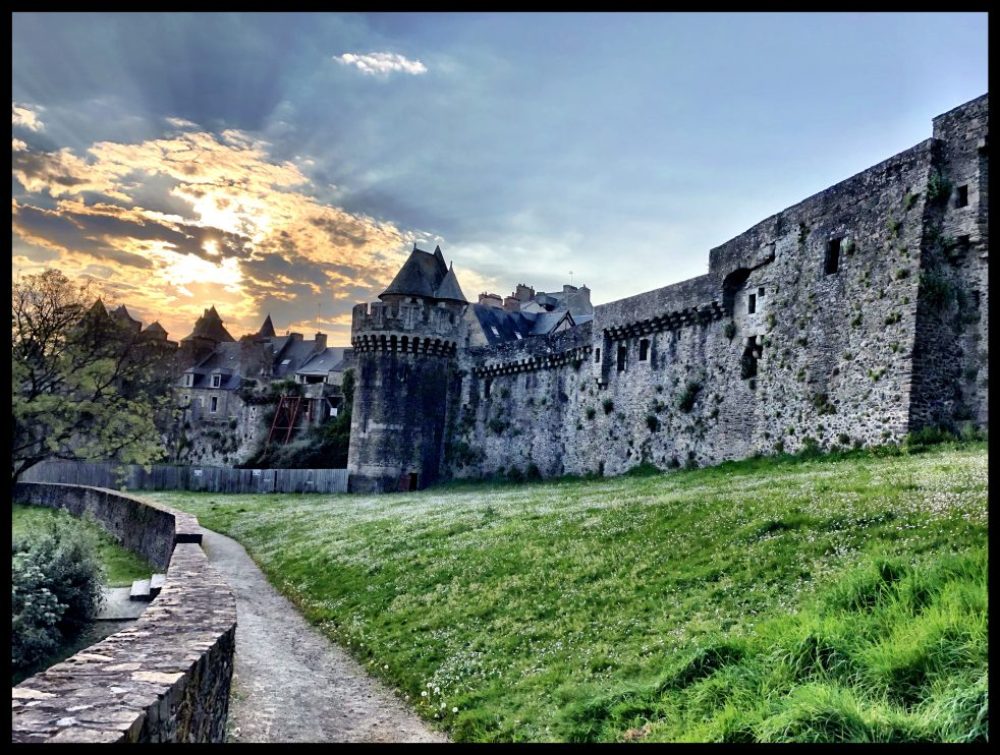
The town was once surrounded by stone fortifications and there are several parts still visible. Poking around, we discovered a small tower and section of wall, a small elevated park within hosting a number of flowering trees, wisteria and lilacs and presenting a charming panoramic view of the town and surrounding countryside. The quaint little streets wind through the old town and make for a pleasant stroll. It’s a quiet, contemplative place, this Bécherel. Appropriate, I suppose, for a place of books and readers. Winding our way around town, I can imagine many enjoyable hours spent devouring a good book, ensconced in one of its many charming nooks and crannies. We enjoyed our afternoon discovering this Petite Cité de Caractère.

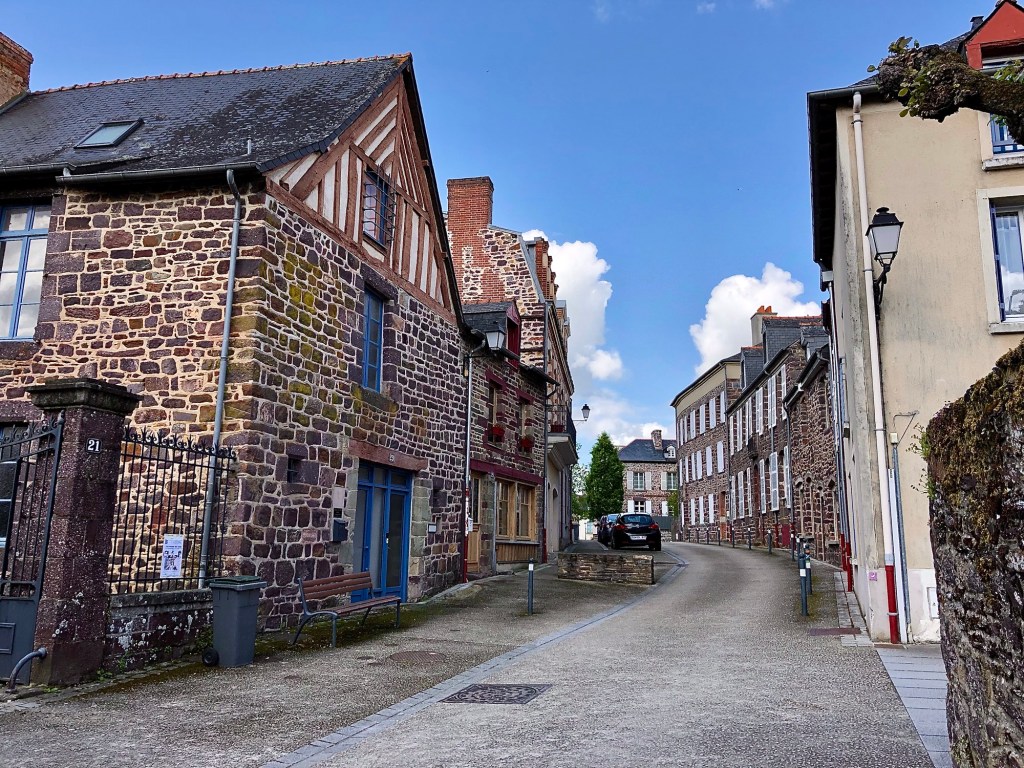
Street Scene in Bécherel

Montfort-sur-Meu and Bécherel; a pleasant day-trip itinerary. They’re not big, they’re not bold or bombastic. They do not wow with Instagram-worthy photo-ops. But that’s kind of the point. Not all visits in France have to be monumental. Yes, it’s a fantastic experience to witness the historical touchstone of the Bayeux Tapestry, or to experience the mad excess of Versailles. But we find that the quiet moments of simple, elegant beauty to be found in abundance throughout this wonderful country are equally rewarding. We treasure them greatly. I hope you find them inspiring as well.

Get Your Feet Wet – La Tourbière de Landmarais

Bog Land Paradise – la Tourbière de Landmarais

I’m just going to say it: Spring is the best season of the year. It is.

Most people say it’s Autumn or Summer. And yes, yes, they’re pretty good too. We all like a bit of sunshine, a bit of heat. But you truly can have too much of a good thing. Summer is overindulgence personified; it’s a surfeit of obscene temperatures and overly-optimistic expectations that never pan out. Autumn is all pumpkin spice kitsch, dying vegetation and a spasm of macabre cosplay. Let’s not forget Winter – the Grim Reaper of seasons. Occasionally someone will choose it as their favorite. I can never tell if they’re just being contrary or if they choose it because everyone else has already chosen the good ones. Weirdos, whatever the case. The best I can say is that Winter is definitely in the top four of all the seasons.

Ah, but Spring. Spring is the beginning, it’s renewal, exuberance, exultation. It is simply Nature declaring itself. No more, no less. The wind may blow. The rain may fall. But there is no denying the joy of this annual renaissance, the promise of another year of the thrilling sound of birds singing, the heady scent of roses blooming, the warming sight of lambs at play in the meadows. It is all such a deliriously delicious buffet for the senses. And the power of this infectious explosion of life is at its zenith in Spring. Undeniably, the top season.

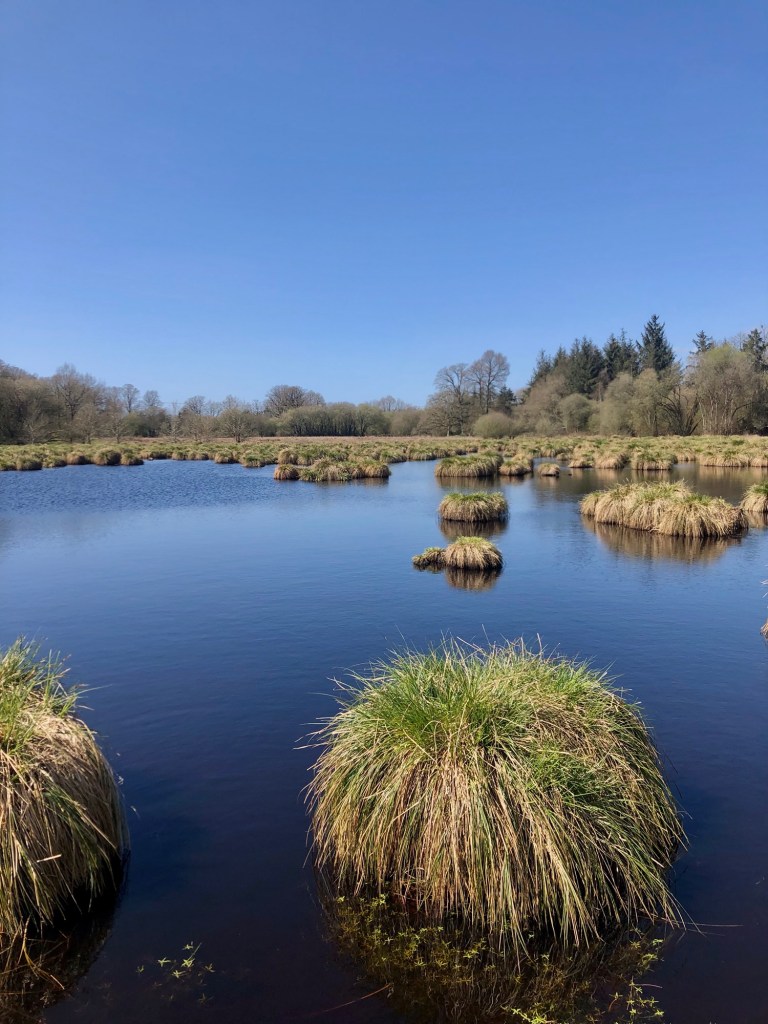
Woodland, Water and Sky

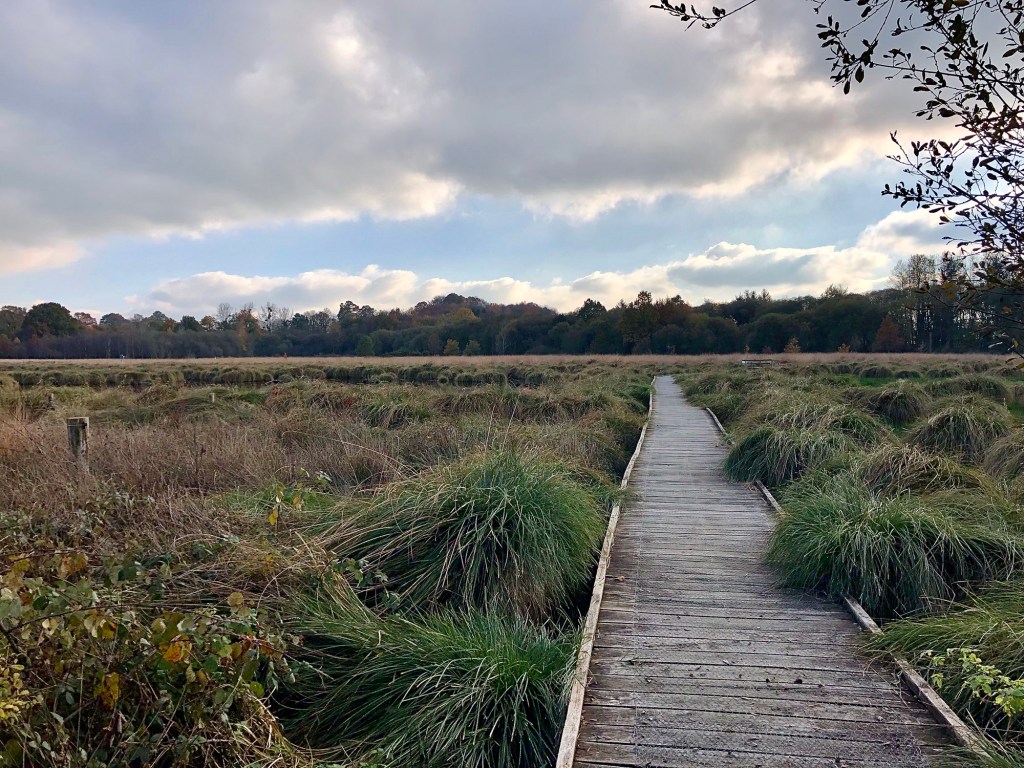
So it was in this elevation of spirit that Cherie and I took a sunny Spring afternoon off from our exhausting retirement and drove the 10 kilometers north of Fougères to La Tourbière de Landmarais. This natural area comprises 26 hectares of marshland – one of only three rainwater source peat bogs in Bretagne. that was restored and established as a regional park in the late 1980’s.

Since at least as early as the Middle Ages the bog had been used as a source of peat, the turves cut, dried and burned for domestic cooking and heat. Large scale exploitation of the peat here was first employed under the direction of occupying German forces during World War II with additional industrial digging conducted in the 1960’s. These 20th century intensifications led to considerable damage to this sensitive ecosystem. Much of the water had been drained away, leading to the degradation of the remaining peatlands. In the 1980’s the Département of Ille et Vilaine purchased the area and established it as a regional park. Through careful management by the regional authorities, the wetlands have been restored. They now provide a beautiful natural space for a wide range of wildlife, as well as an enjoyable place for visitors to walk and observe.

Wellies are Optional

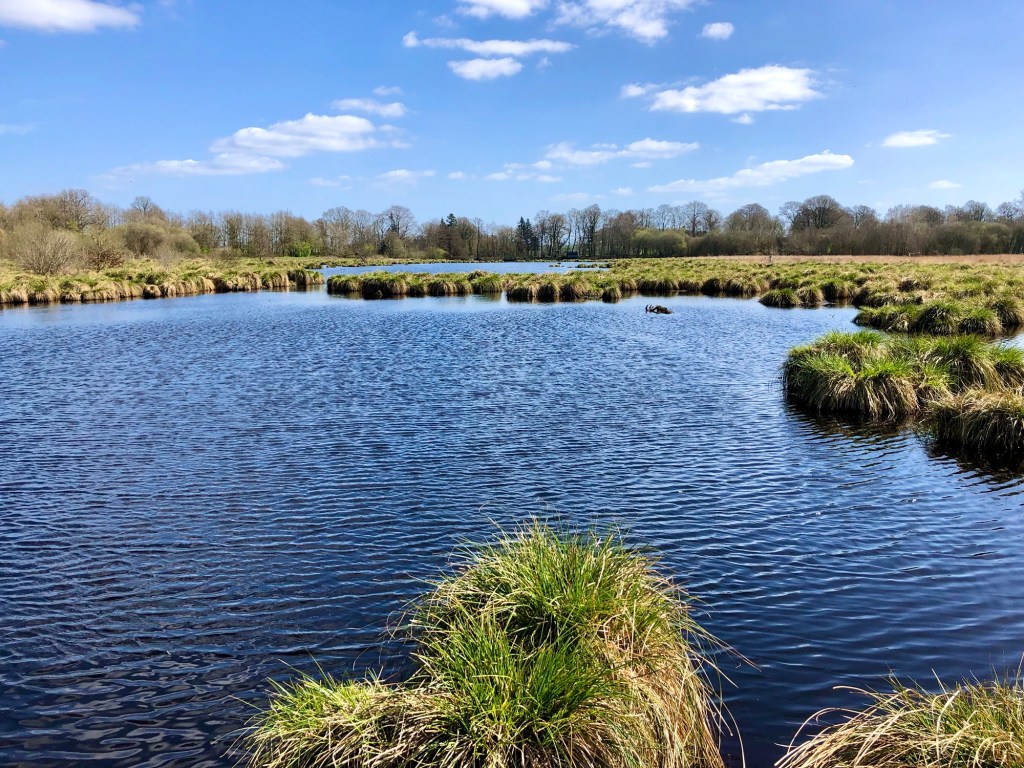
On any given day, you will have the entire park to yourself. Except for a good number of migrating birds, insects, and all of the creepy-crawly creatures that inhabit the still, tea-stained waters of the bog. Well-tended wooden walkways allow you to proceed out over the marsh, winding your way through tall-grass tussocks. The stillness is pervasive, broken only by the low murmurs of conversing waterfowl in the distance – a much better way to calm your spirit than a €300 hot stone spa treatment.

The Walking is Easy

A broad trail leads around the perimeter of the marshland, leading you past pleasantly green pastures and through woodland. The flowering trees are alive with bees. The busy humming of their work to collect pollen and break their winter’s fast on nectar is a symphony to which several species of songbirds chirp and trill their endorsements of the season as they flit through the branches overhead.

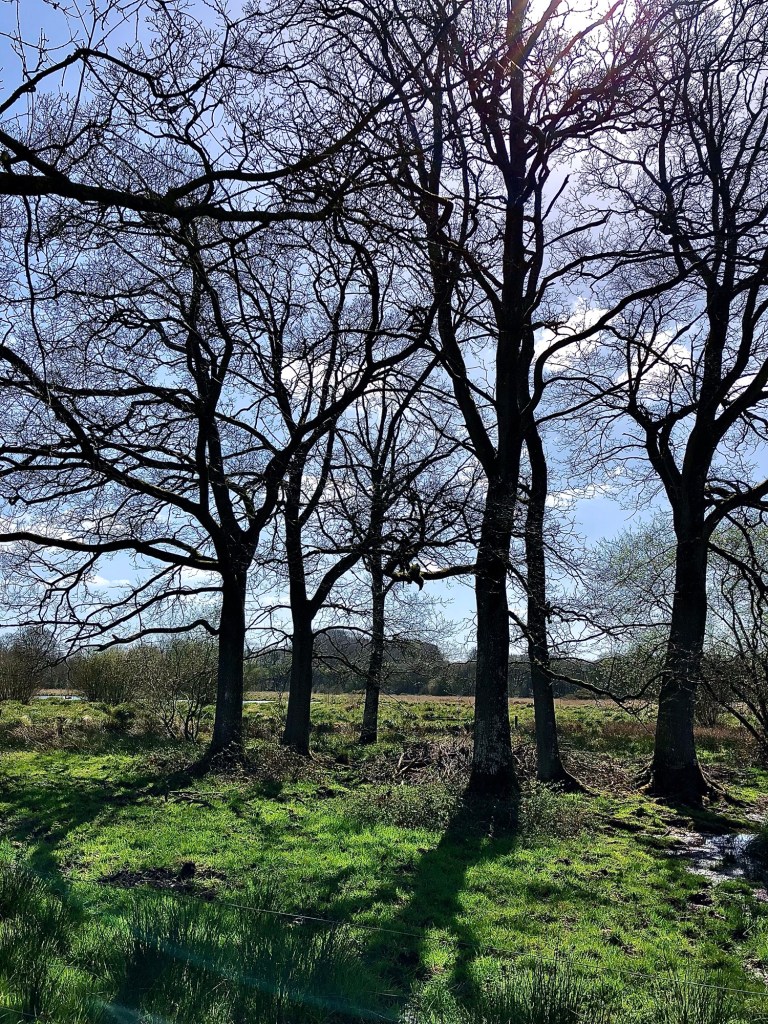
Oak Sentinels Standing Firm in the Boggy Ground

All of the trails are flat and very easy going. Perfect for a casual walk. Parking is easy as there is a dedicated graveled car park for the site. There are interpretive panels at the entrance but we found their design to be overly clever, to the point of being enigmatic. Best to look up information on this park online if you are curious. A pair of binoculars and a good birding book wouldn’t go amiss either, but the park is completely enjoyable without them.

New Grass Springing from the Old

Peaceful, beautiful and very accessible, La Tourbière de Landmarais is a lovely place to celebrate Spring – or any of the other, lesser, seasons. Maybe we’ll see you there!