A New Hat for the Old Lady – La Tour Desnos Gets Some Dormers

New Windows Upon Our World

What do you do with a drunken sailor? I honestly don’t know. But I do know one thing you definitely don’t do with those filthy reprobates: home improvement. Especially roofing work. Leave that to the professionals. The sailors can carry on with singing sea shanties.

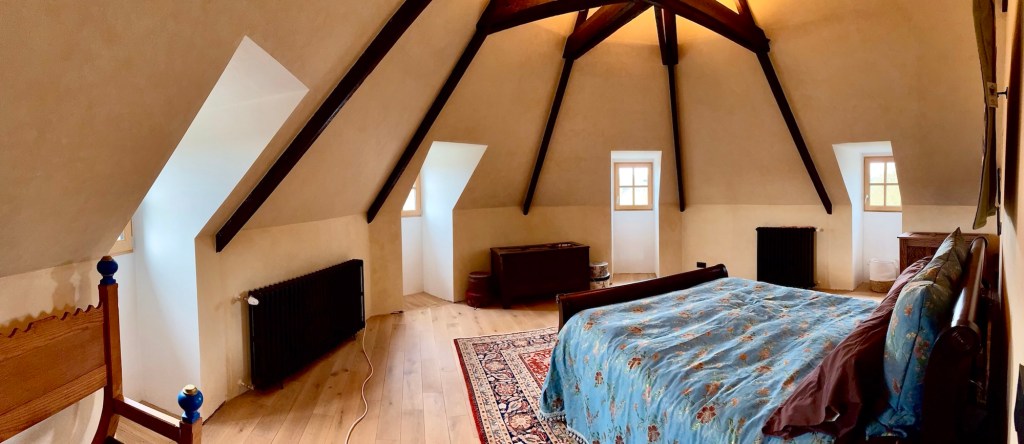
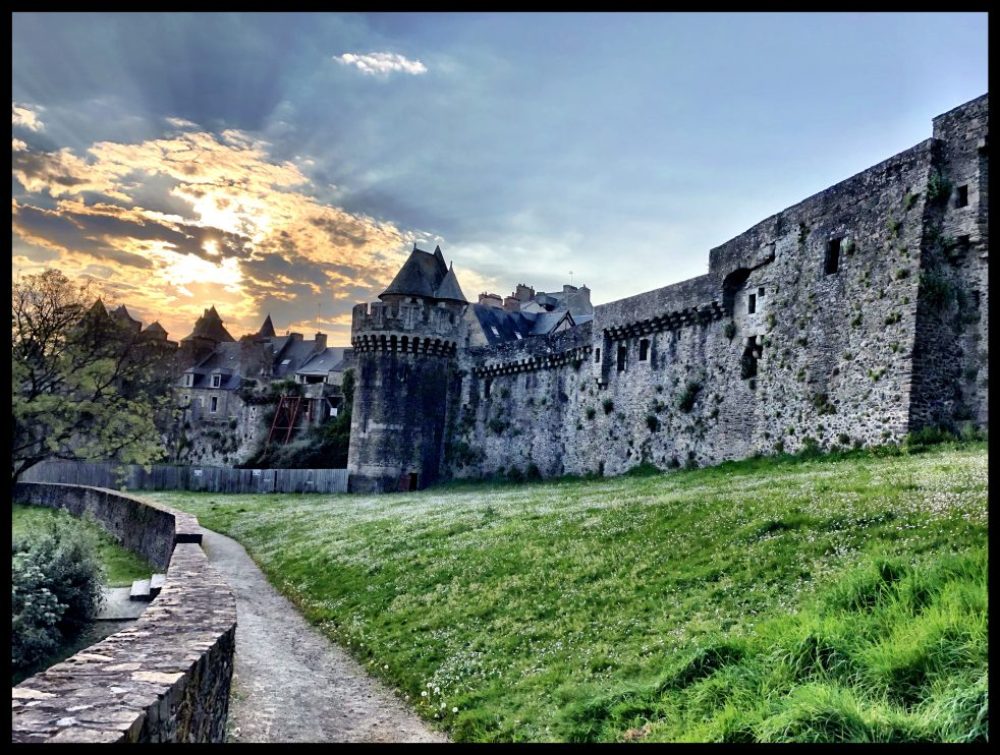
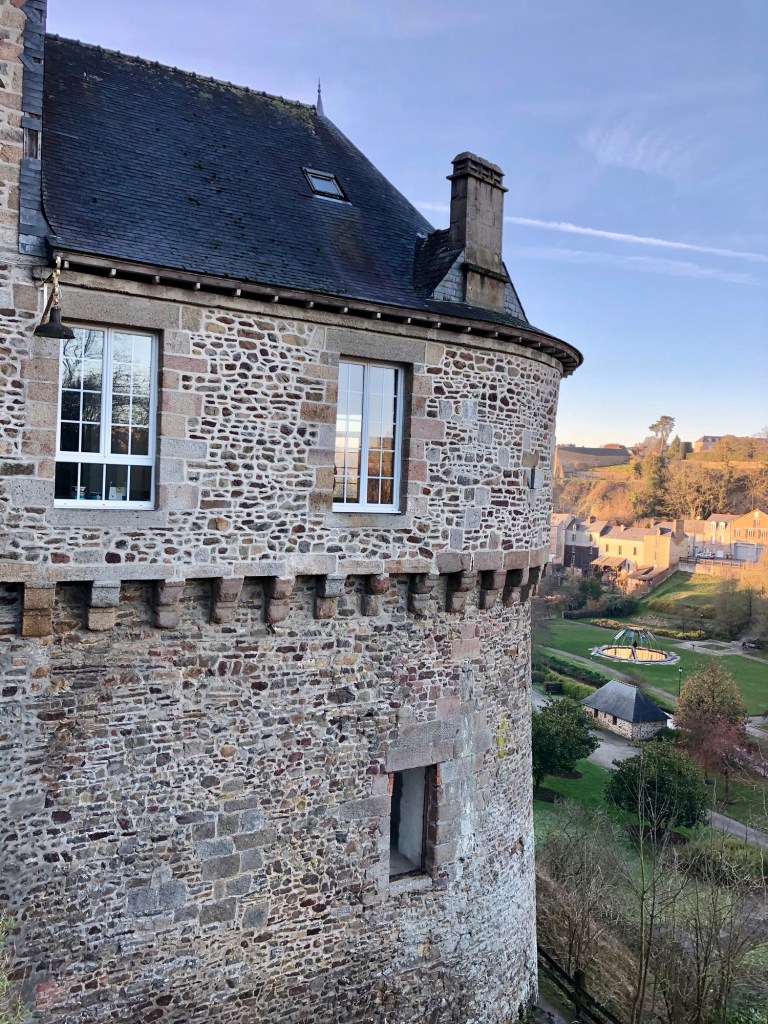
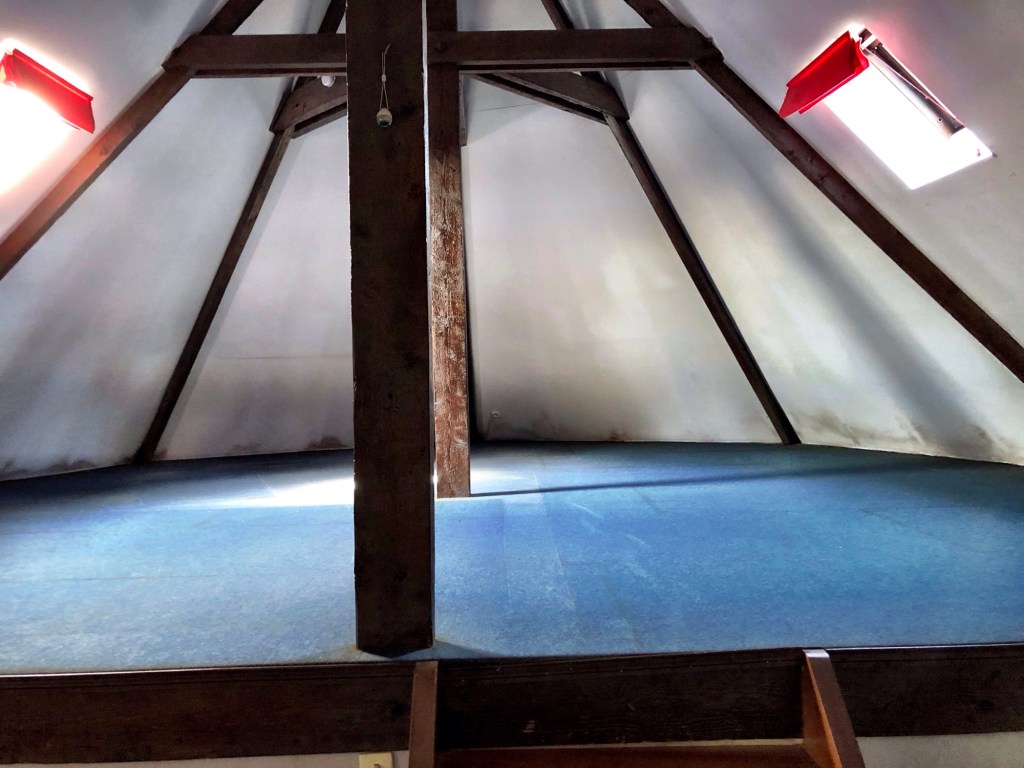
With this bit of wisdom in mind, we were finally able to launch a big project that we had been wanting to do ever since we bought La Tour Desnos – adding dormer windows to the tower roof. Our main bedroom is on the top floor of the tower, under the roof. Now, we have already done a lot of work up there: lowering the floor level, adding a bathroom/wardrobe suite, laying down new wood and stone flooring, and brushing on vast amounts of new paint. But the space still felt a bit closed off, isolated, due mainly to the lack of windows. Two small velux windows (Americans would call them skylights) were the only sources of light and air. Placed as they were in the sloping roof, they could only be opened in the absence of rain. Their elevated position also prevented us from taking advantage of the beautiful views over the park below. By adding dormer windows to the roof, we could bring in more light, more air, and give ourselves yet another panoramic view of our surroundings.
Good plan, eh? We thought so. But this is France, where bureaucracy is king. Although, we don’t mention the “king” bit. [They’re still a little touchy about monarchy since the Revolution in 1789.] But it’s true. The administration of all things reigns supreme here. And, to be fair, that’s often a good thing. Things run pretty smoothly in France. The government can be counted on and, in turn, be accountable. Corruption is very low. However, the tangle of administration can be intensely ponderous and arcane.

We first broached the subject of adding lucarnes (dormer windows) to the authorities not long after we bought the property. La Tour Desnos is listed as a monument historique so, not only do we have to obtain approval from our local mairie, we also have to run it by ABF (Les Architectes des Bâtiments de France), the government body which oversees all historical monuments in the country. In our town, we have generally found the mairie to be accommodating with our requests. But ABF can be a bit more challenging.

On our first encounter with ABF, I had proposed an ambitious program of stone-fronted lucarnes with gothic peaks. The representative just tutted, shook her head and growled “non!”. I was a bit taken aback. But, in hindsight, I have to admit that it was the right call. My ambitious design was not appropriate for the history, form and function of the building. Besides, it’s unlikely we could have afforded the cost. Still, it felt to me like a setback. We put the whole idea aside for the time being and got on with more pressing work on the tower.

A year or so later we hosted yet another visit from ABF. This time we politely suggested adding more simple dormers to the roof. The ABF architect firmly responded with an all-too-common phrase that we have come to both love and fear since moving here: “C’est pas possible.” – It’s not possible. With an air of righteous authority, to which she added just a dash of courteous but unmistakable disdain, she informed us that no dormers of any kind would be permissible for our home. Hmnnn … that felt pretty final to us. My recollection is that we drowned our disappointment in copious amounts of tea and scones that evening. With butter and strawberry jam. [Hardcore, eh? Well, that’s how we roll. Get used to it.]

The final round in our battle royale for dormer freedom came two years ago. We thought that we would try for lucarnes one more time. This time, the architect was a different person. The previous official had moved on to terrorize a different region of the country. So, while seeking approval for some new doors and other bits and bobs, Cherie nonchalantly happened to mention that “Wouldn’t it be nice if there were different windows upstairs in the master suite? Maybe two more velux windows?” The young man looked at us in surprise, wondering aloud why we would want velux windows when lucarnes would be much more appropriate and aesthetically pleasing … Wait. What? Barely concealing our shock, we hastily agreed. At our kitchen table he proceeded to dash off a quick sketch with notes for dimensions and materials, allowing for four dormer windows. Voila! Just like that we had our approval. Phew!
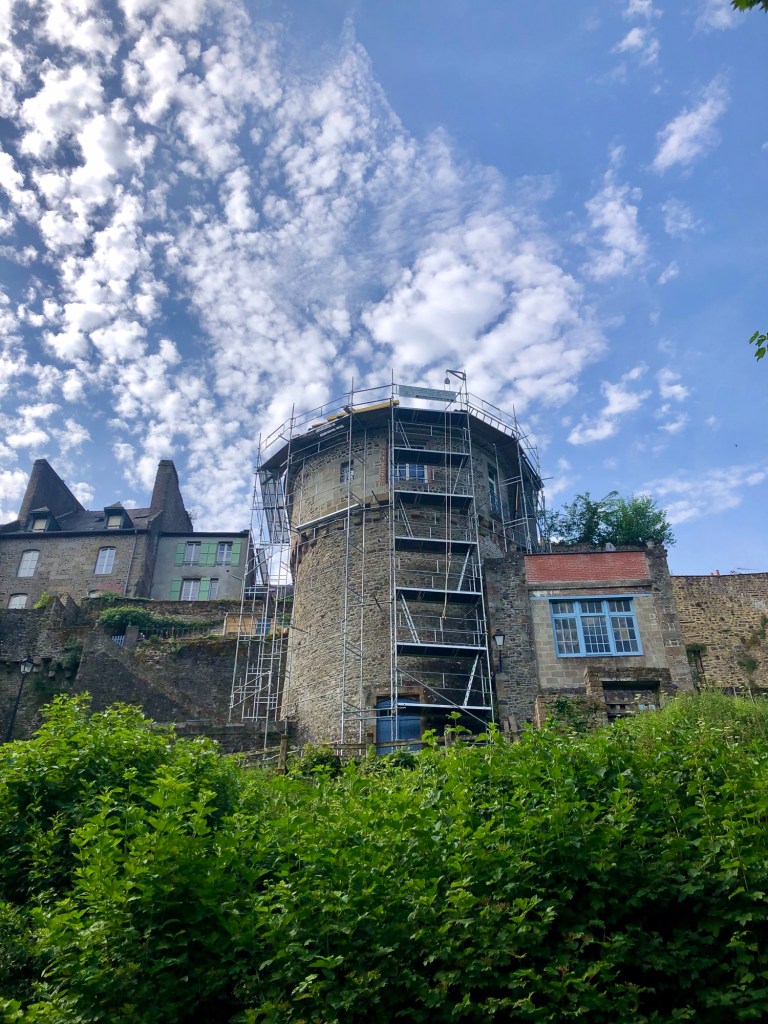
Encased in Steel – The Scaffolding Goes Up

We have never tried to analyze the turnaround in ABF’s opinion about the dormers. It’s not worth the brain damage that might result from attempting to rationalize the irrational. Instead, we immediately set to obtaining construction bids. We found a great local company which presented a reasonable price for the work. Unfortunately, the schedule slipped a couple of times; it was several months before our builders were finally able to begin work in June of last year.
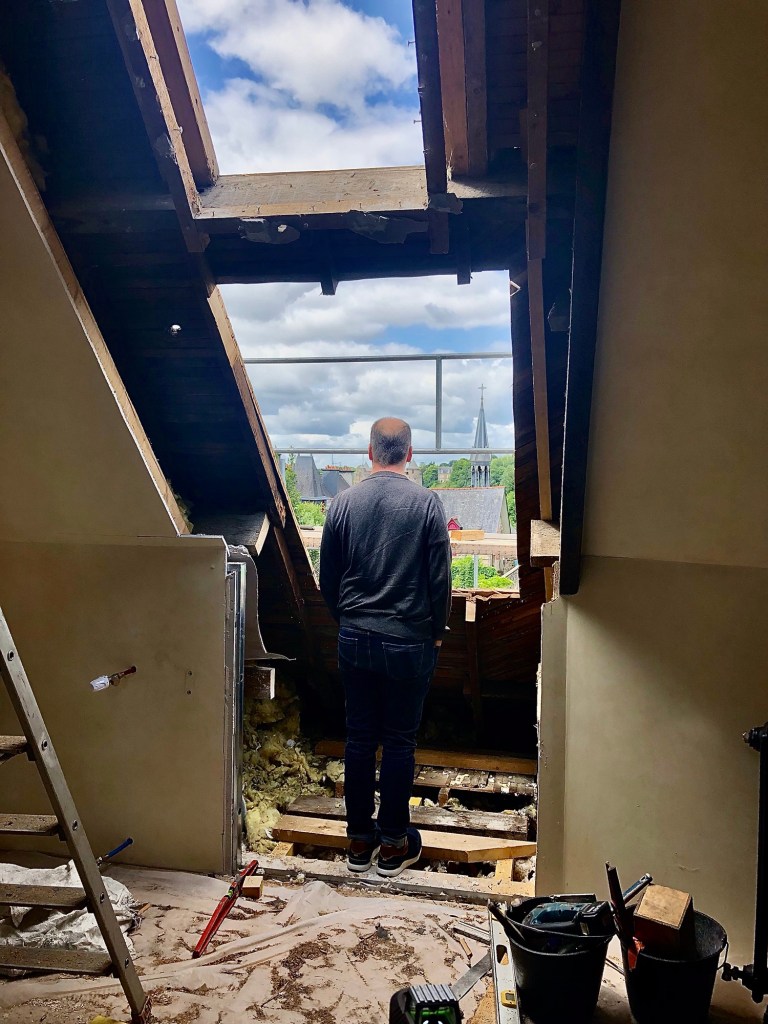
Reflecting on My Life Choices as I Face Ginormous Holes in Our Roof

Despite the inconvenience of having a recently-renovated room once again thrown into the chaos of construction, it was exciting to watch the scaffolding encircle the tower and the artisans begin to work on the first of four lucarnes. The first part is pretty brutal. The slate shingles come off and the saws come out, cutting giant holes in the roof structure. The bedroom we had worked so hard to transform was once again a messy, dirty work site. Kind of heartbreaking. But all for a good cause. At least we were hoping so. Soon, though, the framing for the dormer began to take shape and we could begin to see the form of our new windows.
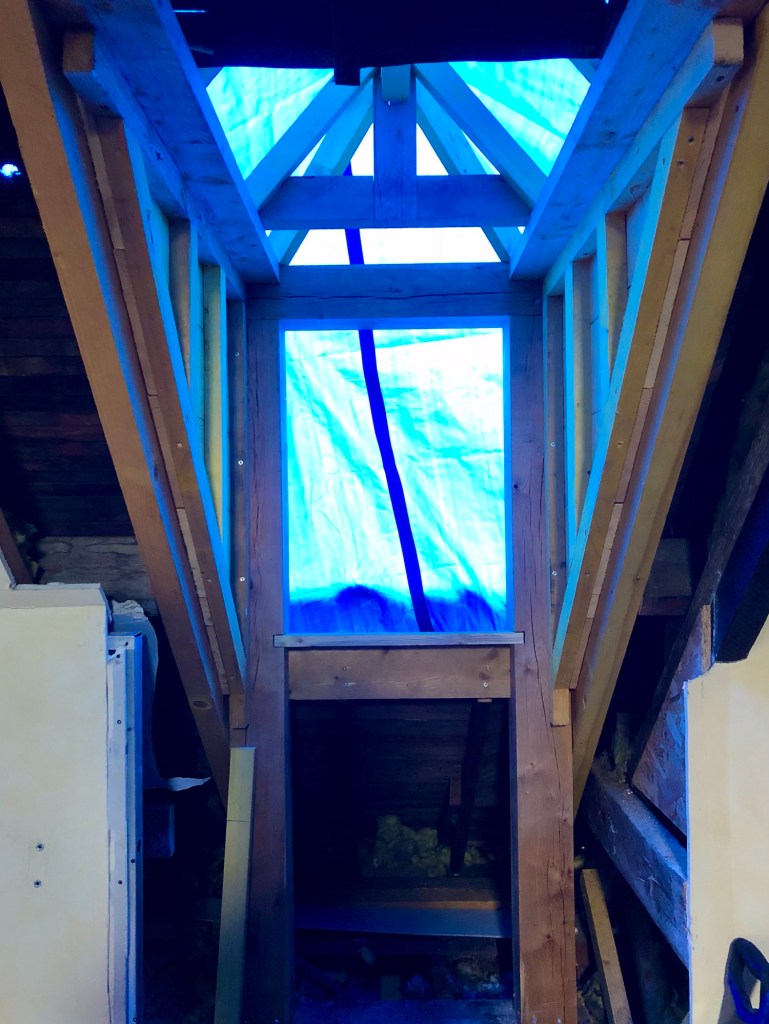
The First One Begins to Take Shape
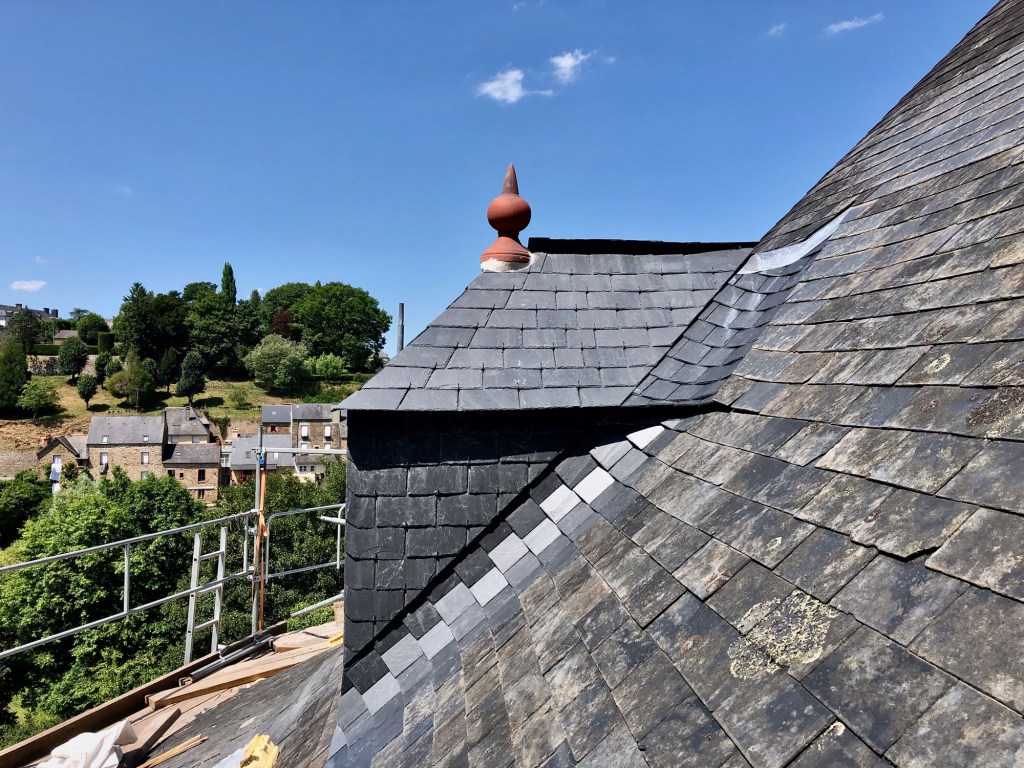
An épi de faîtage Puts a Finishing Touch on the Lucarne

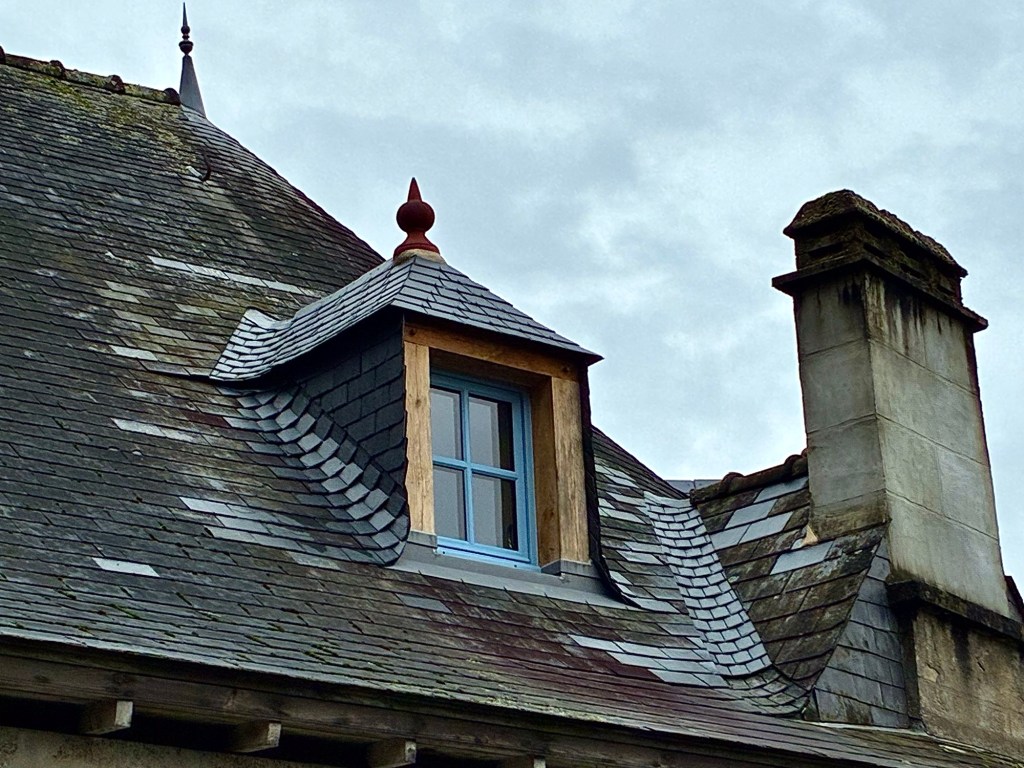
This project demanded but a small team, the core of which consisted of two men for the daily work, occasionally supplemented by an additional three or four helpers for transporting materials or for managing the scaffolding. They built each lucarne one at a time, completing each one entirely before moving on to the next. The primary framing of solid french oak is satisfyingly thick and solid, pegged together in the traditional manner. Slate tiles clad the roofs and sides, the latter cleverly swooping in a gentle curve to create the gullies in such a way as to harmonious blend the dormers into the roofline as though they had spontaneously grown there. We chose to top the peaks of each lucarne with a traditional terra cotta épi de faîtage (finial) for just a little understated flair; we were a bit nervous about the choice, but we are very happy with the results. The final step was the window installation which, after nearly four months of work on the dormers, felt like an instant – all four windows were in place in the space of a single morning.
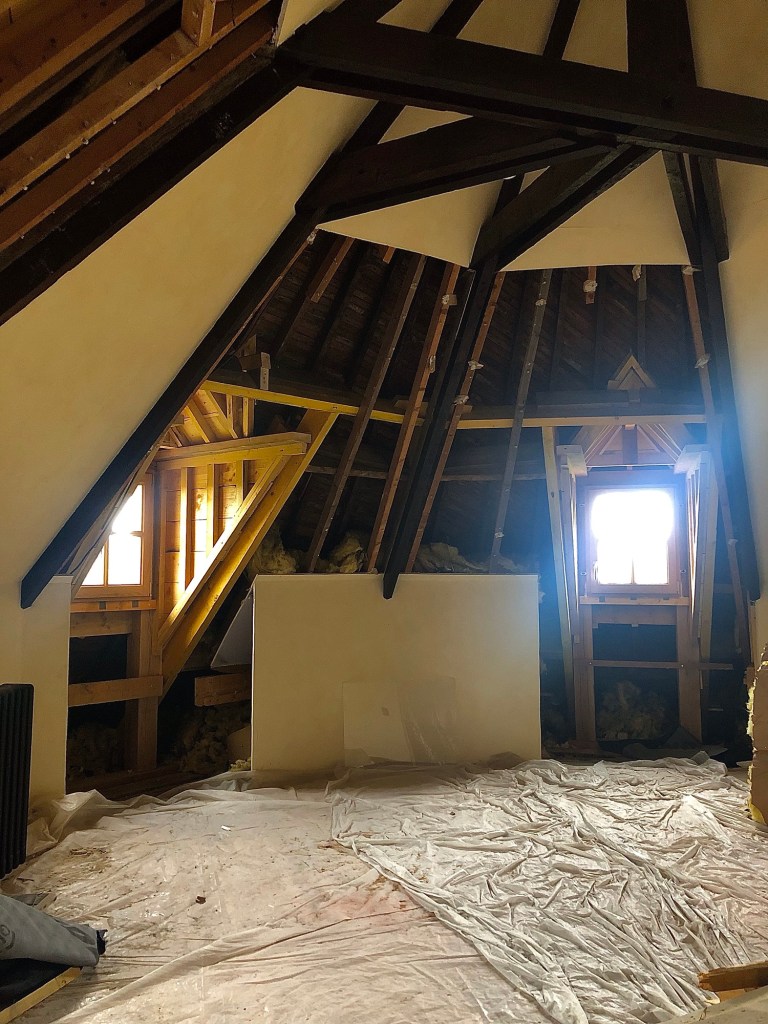
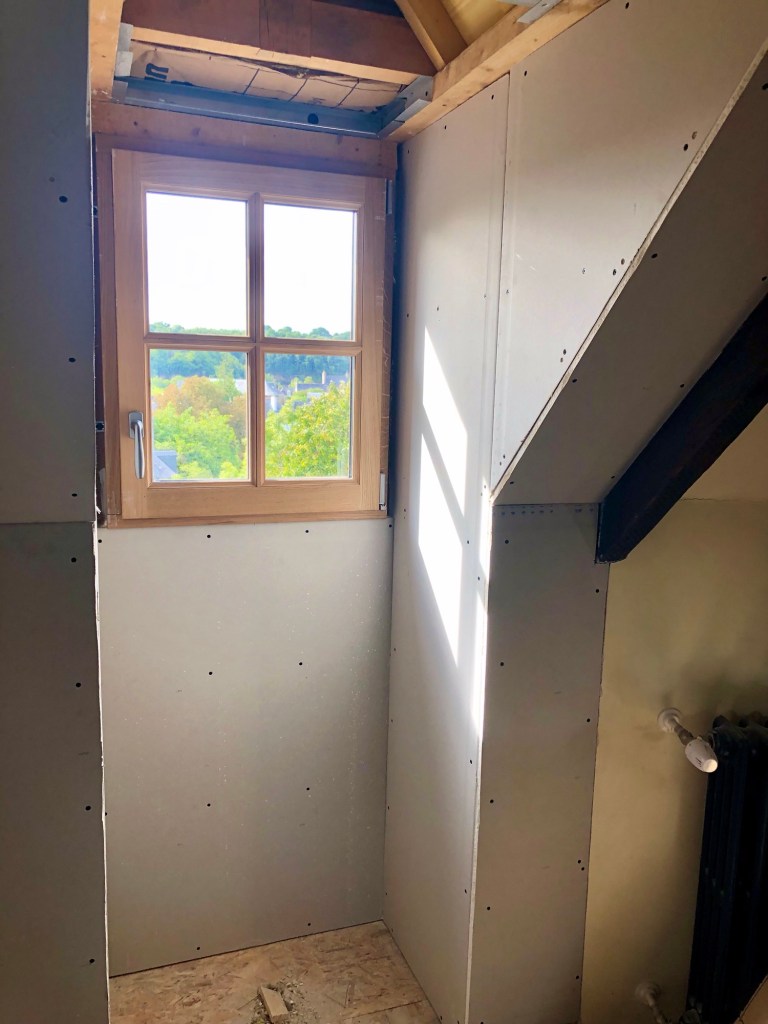
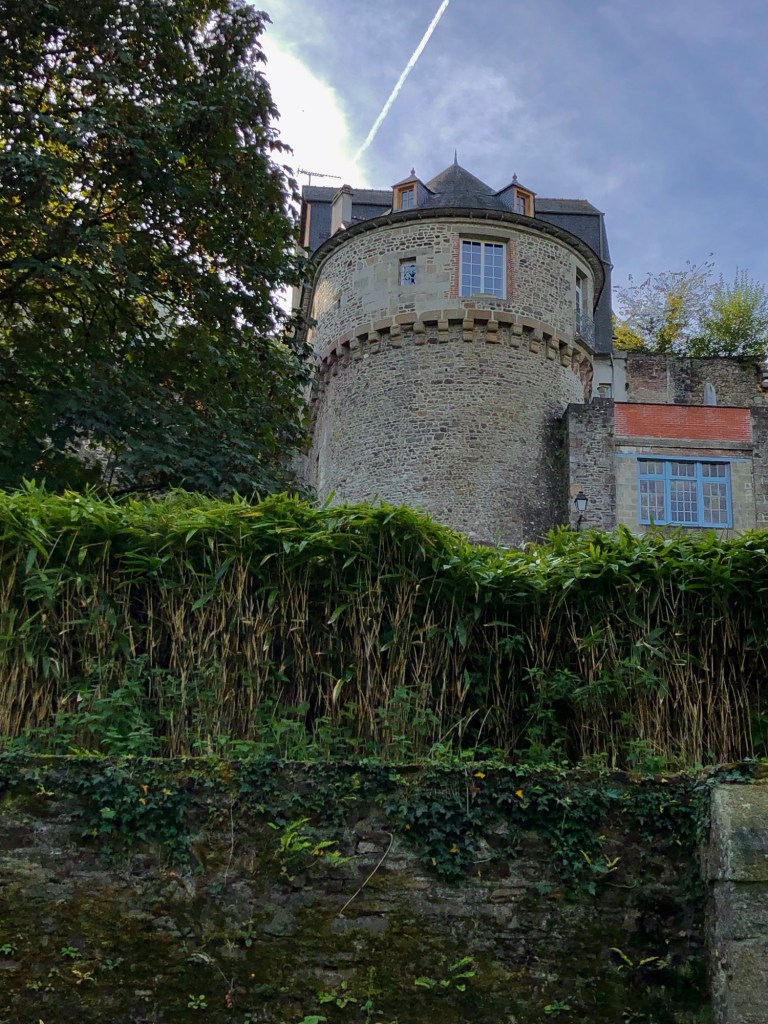
The scaffolding came down, the artisans took their leave and we finally had four brand new dormer windows in our master bedroom. Oh, we also had a pile of debris and several large gaping holes in the ceiling and wall plaster. Hélas! But this was no surprise; we knew it would be this way. So we had already arranged for our regular English building contractors to come and restore the interior for us. Kelson and Stuart not only do fine work, but they and their families have also become good friends. With their habitual efficiency and good humor they soon had our wreck of a room looking whole again.
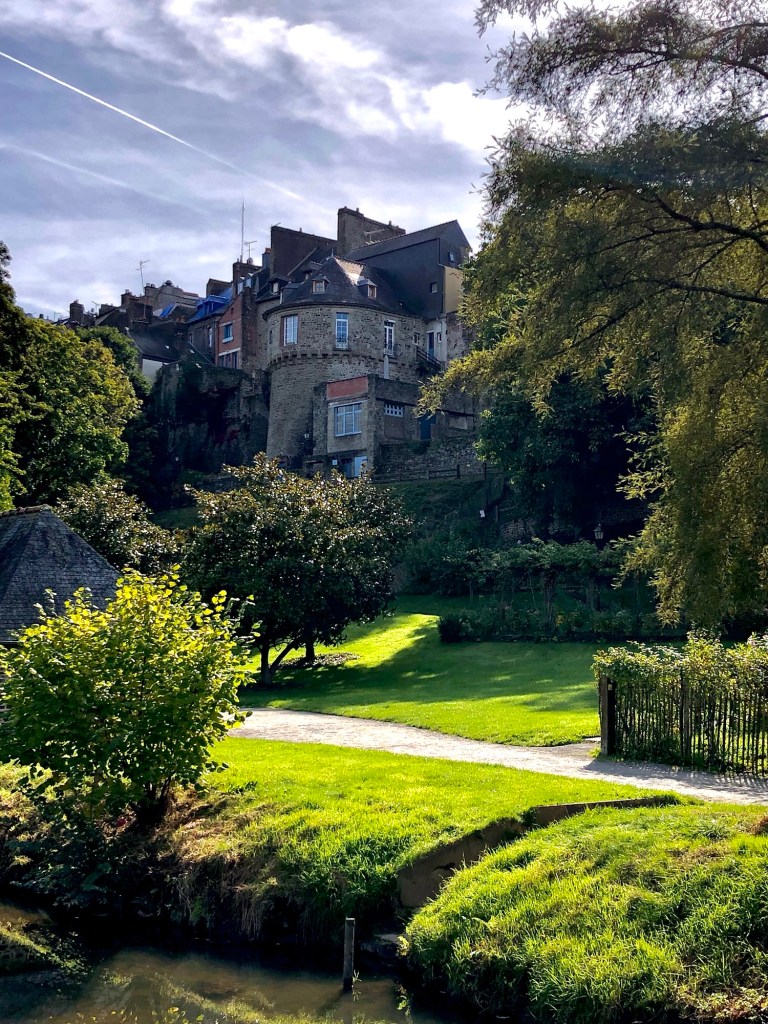
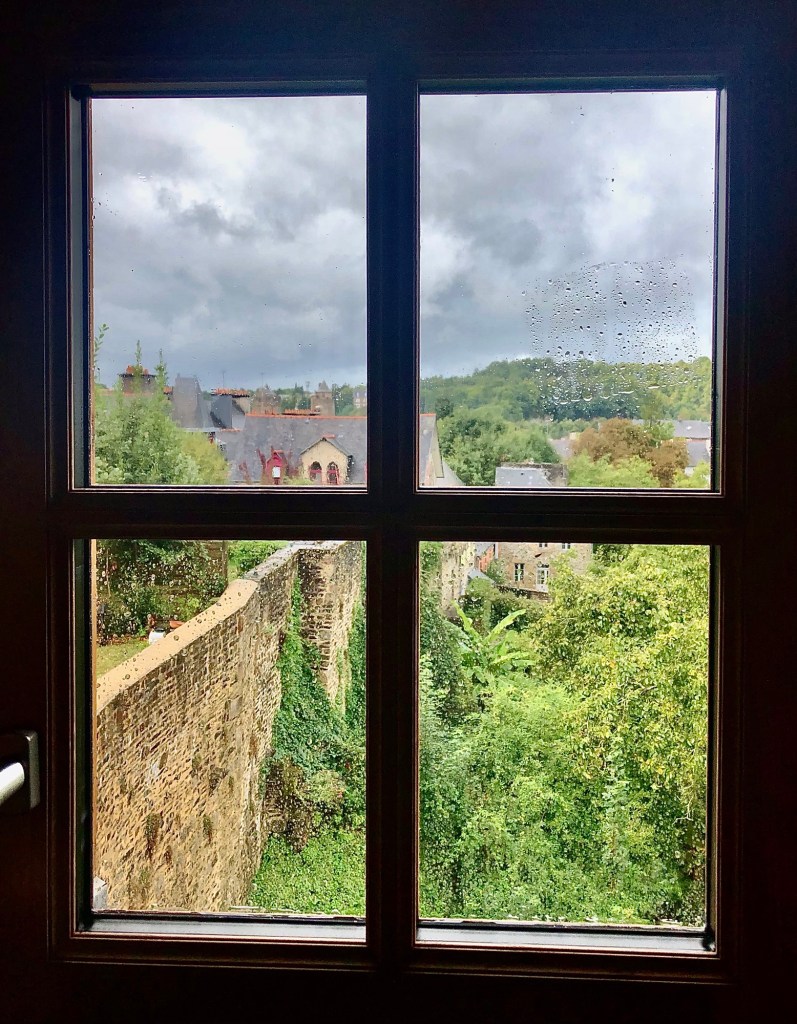
With a lot cleaning, a bit of touch-up painting and the reintroduction of furniture and decorations, our upstairs bedroom is now looking better than ever. The 180 degree views over the park and surrounding town are very pleasant. The cross-ventilation we now have in the room will be especially welcome in the summertime. And we can even have the windows open when it’s lightly raining if we want to. We are very pleased with the way the project turned out and we feel a little bit proud at how our persistence ultimately overcame the mighty bureaucratic steeplechase that had challenged us, at times almost to despair. In short, it’s made us feel, in some small way, French. And we think that’s a good thing.
Lamballe Revisited – A One Trick Pony?

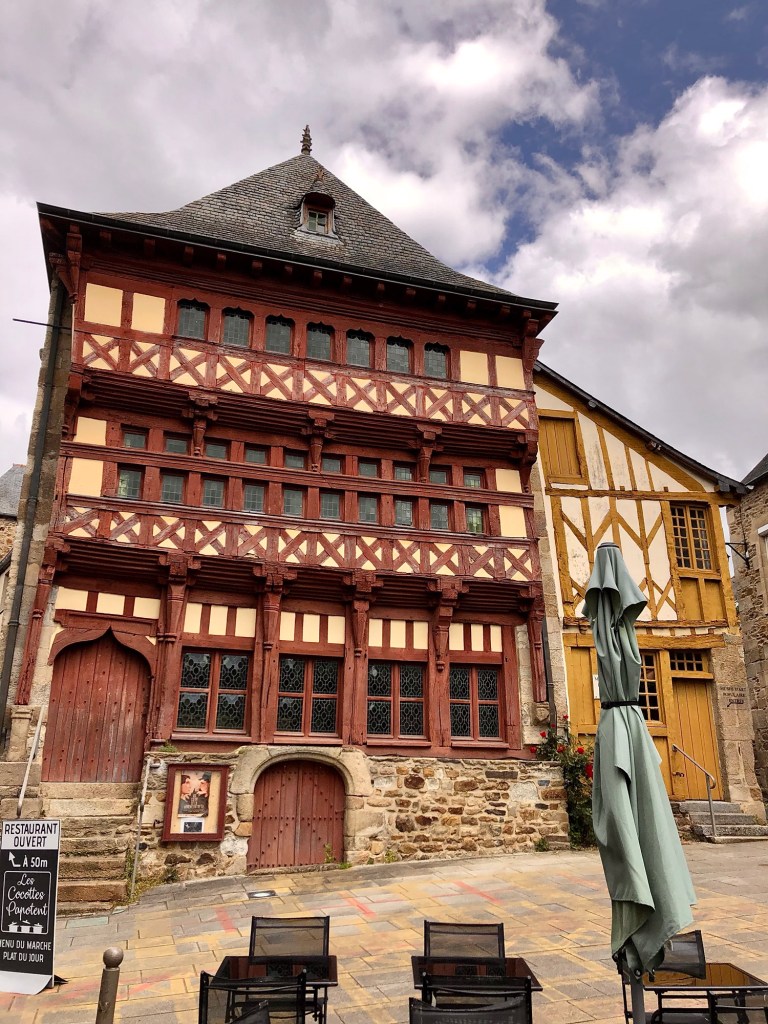
The 15th Century Maison de Bourreau (Executioner’s House), Place du Martray

Faithful followers of this blog may remember a post from a couple of years ago describing our visit to the Christmas market at the National Stud stables in Lamballe. On that occasion we had gone straight to the stable complex itself. There was a lot to do and see there – not least of which was fulfilling our Breton civic duty to devour sausage gallettes – so our entire focus was on the market. But, surely, there is more to Lamballe than a collection of beautiful horses, some vintage barns and ginormous mounds of manure? Right?

Well, we thought that the town deserved a more expansive visit. Cherie’s mother Valerie was still visiting us so this was the perfect time to embark on our return sojourn to stud town. Together, the three of us rolled down to Rennes and then northwest on the RN12 (E50) autoroute directly through to the heart of Côte d’Armor’s interior wherein sits Lamballe.

The OG Tiny House Movement

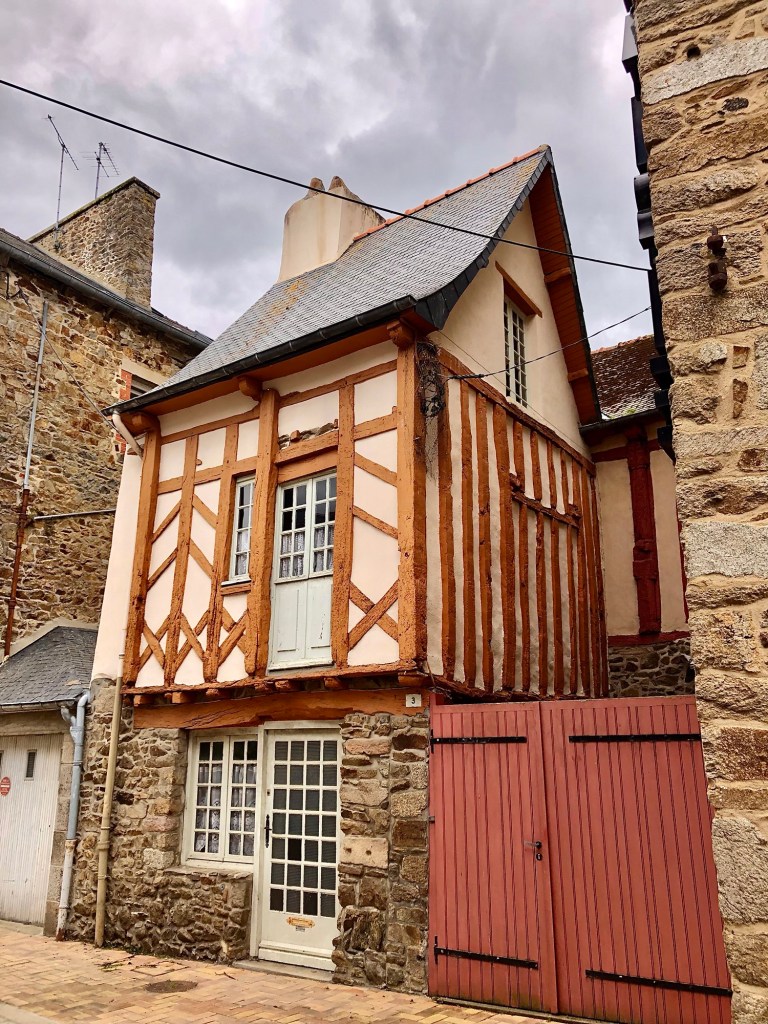
It’s an old town. Not like American “old” where a settlement founded in the 18th century is considered ancient. Nope, this place is proper old. Habitation in this area is at least from the Bronze Age, and Lamballe itself is first mentioned in a document from 1084. And the town shows its age in the most wonderful way. Centre-ville is well-supplied with lovely old buildings overhanging narrow streets. These ancient rues join up with charming, cobbled squares around which are huddled many independent restaurants, cafés and shops.

Good, Solid, French Cuisine – Les Cocottes Papotent

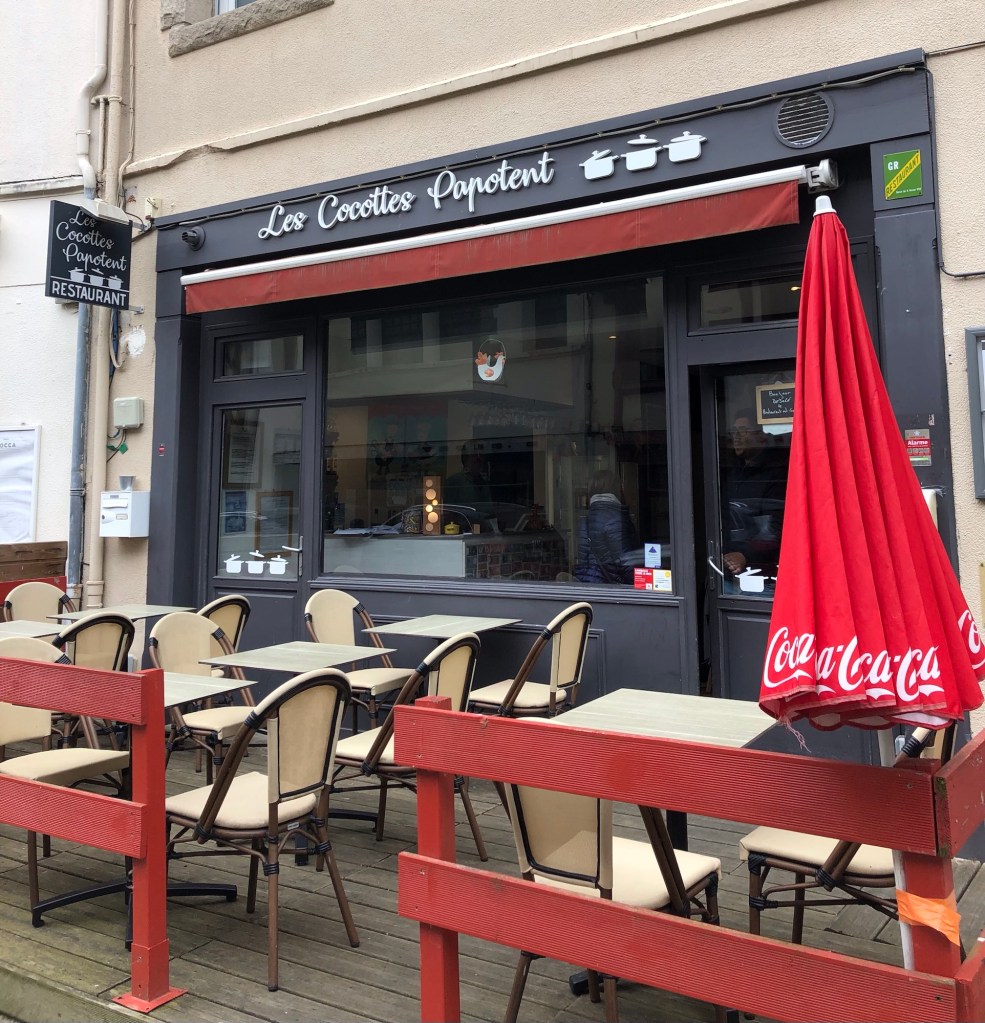
As is most often the case we arrived hungry. So we ducked in for some lunch at a nice little restaurant called Les Cocottes Papotent. A lively little place, our host was welcoming and we all had a great meal. It was clearly a local go-to for lunch. I recommend it if you’re in town. [Paid advertisement? Sadly, no.]

Where Once Stood a Castle

We followed our instincts, enjoying the architectural highlights of the old center as we found ourselves gently climbing to the summit of the rise. There used to be a powerful castle at the top with a town growing up around it, tumbling down the slopes to a lazy river (Le Gouessant) where the tanners plied their trade. The hilltop makes for a tranquille walk amongst the tree-lined promenade and the few remaining old stone buildings there. It also gives a view over the town, amplified by the chirping of songbirds and the sounds of scores of schoolchildren playing somewhere in the town below. Reassuring sounds, to my mind.

Collégiale Notre Dame de Grande Puissance
A Tour de Force of Carving on Display

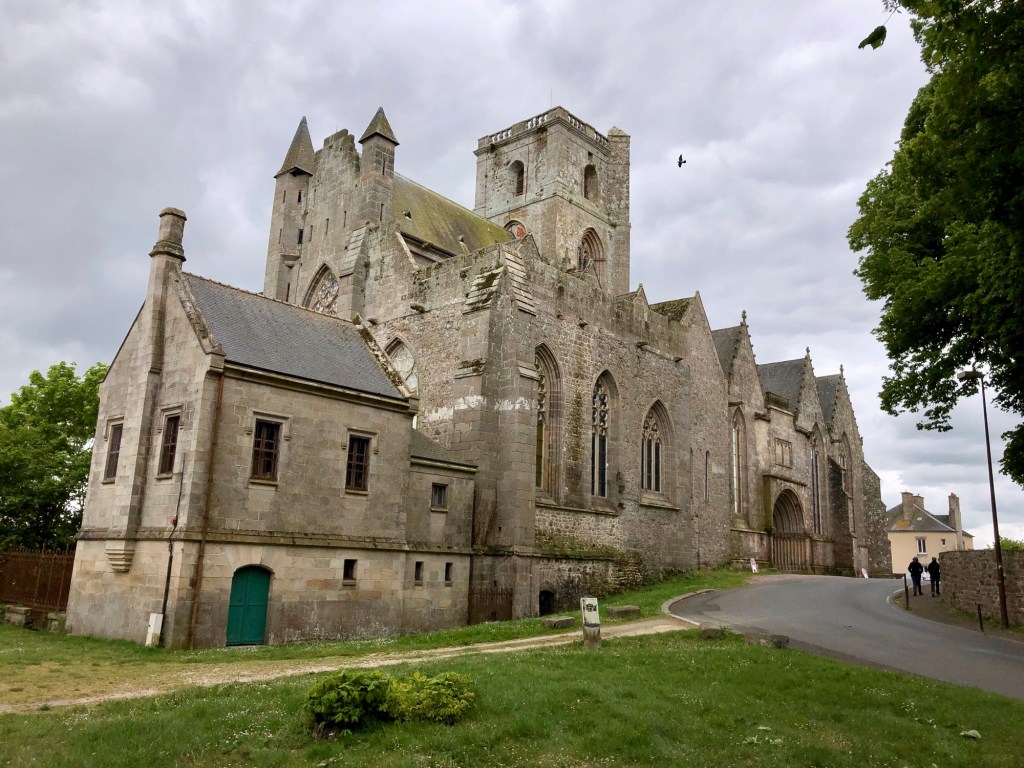
Cardinal Richelieu of The Three Musketeers fame is said to have put an end to Lamballe’s castle. He did that a lot. Now, only the chapel of the complex remains in the form of the collegiate church of Notre Dame. The church is somewhat unusual in form, probably because it is the fragmented remains of a once-larger complex. Even Napoleon’s minions had a go at it in the early 19th century. But it is certainly worth a visit, containing some interesting features and displaying lovely examples of gothic architectural wood carving.

Take a Walk on the Washing Side

Walk down to the riverside and you will find a trail which meanders pleasantly through parkland. It affords views of a series of charming, if sometimes quirky, lavoirs – wash houses where the townspeople did their laundry in the waters of the river. Who knew that laundry could be so visually stimulating?

Your Basic Run-of-the-Mill Stables – the Haras National

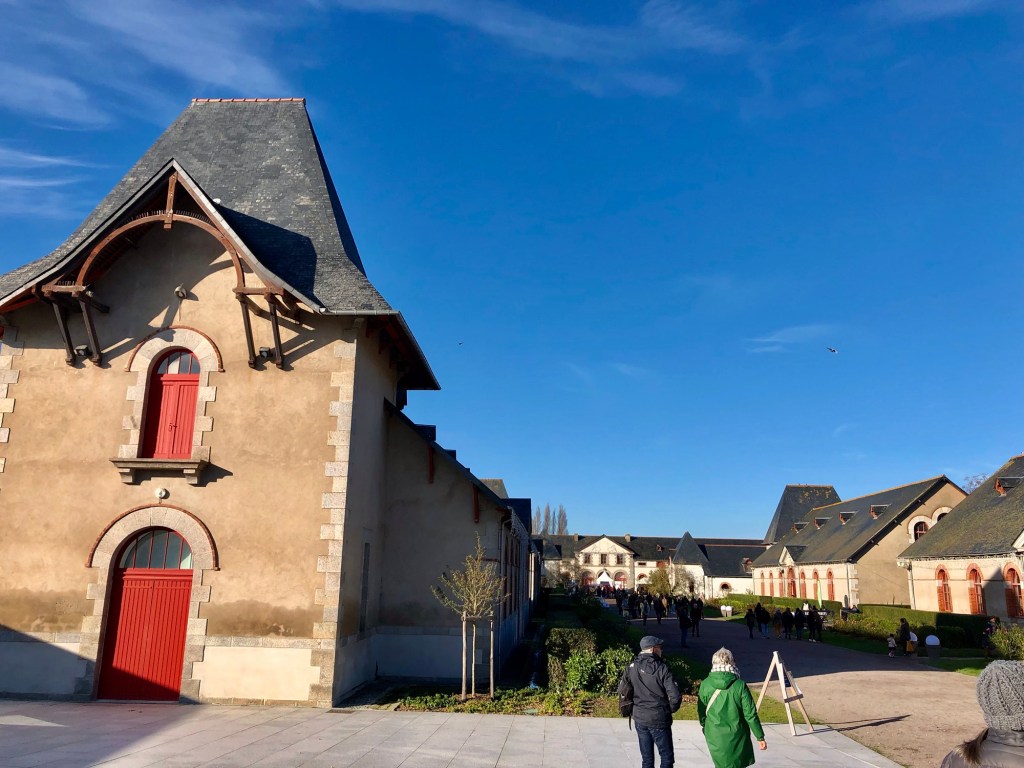
The National Stud looms large in Lamballe. It sits prominently in the middle of town, after all. It, too, makes for an enjoyable stroll. There’s something calming, soothing about horse barns. They specialize in raising and training the Breton and Postier Breton breeds here. And they are magnificent creatures. During the high season there are regular shows displaying the majesty, power and grace of these and other breeds. Carriage rides are also available as well as tours of the facilities – it’s the perfect chance to practice your royal wave.

Do Not Drink the Horsewater!

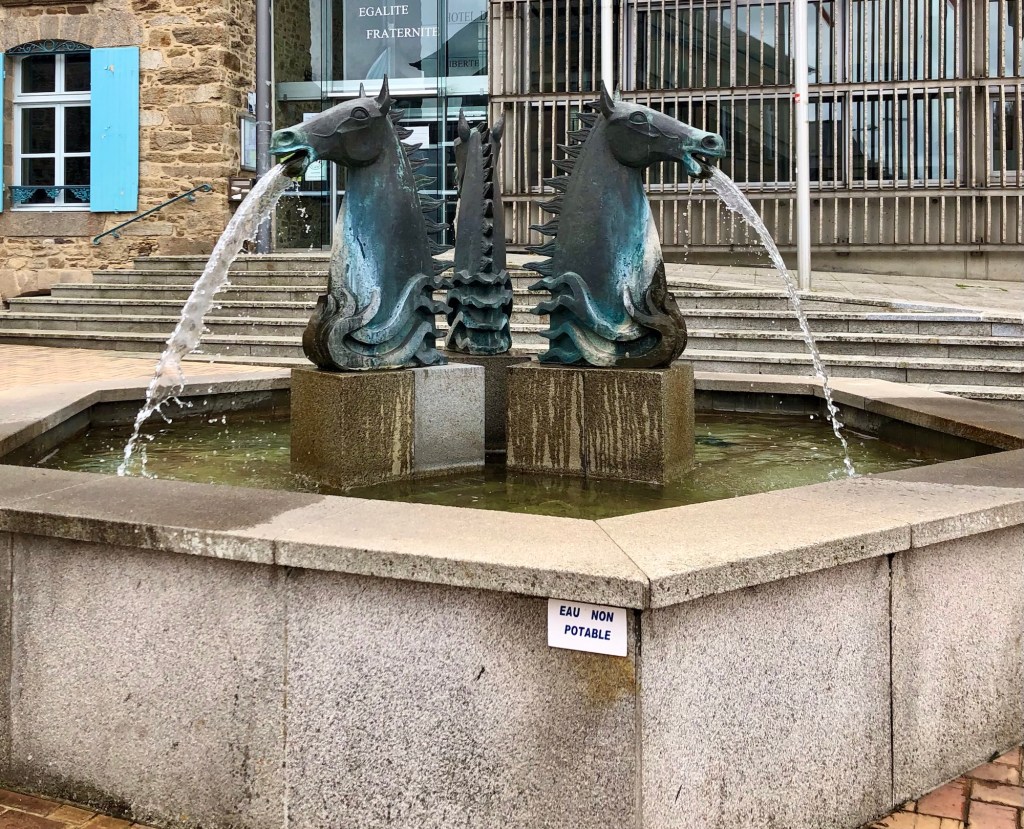
Seeking the ever-popular bathroom break, we ducked in to Lamballe’s clean, swanky, modern tourist office located just within the grounds of the National Stud. It feels more like a museum shop than a tourist office. That’s probably because it also serves as the entrance to the Mathurin Méheut museum of art. For those of you a bit rusty on your fine arts connoisseurship, Méheut was an early 20th century French painter, ceramicist, engraver and etcher. His loose, sketchy style remains popular and a slick, new gallery houses a collection of his works as well as exhibitions of other contemporary pieces. [Prints, coffee mugs, pencils, calendars, notebooks – a wide variety of commercial schlock is, of course, available in the shop.]

A Passage Through Time

We had a very nice time in Lamballe. A reboot in this lovely old town was definitely worthwhile. It proved to us that this place is no one-trick-pony. If you visit (easy by car, or by TGV train with a stop in town), veer off from the horse barns for an hour or two to wander the picturesque views, streetscapes and shops that Lamballe has to offer. Your soul will thank you.

Surveying Her Domaine – Valerie in Lamballe

Deux Jolies Villes: Montfort-sur-Meu and Bécherel

Small Town Surprises – Montfort-sur-Meu

Cherie has a list. Actually, she has many lists. Finances, house projects, dog treats. She’s very organized. She probably has a naughty and nice list too, but I haven’t seen that one. Probably best that I don’t. At any rate, this particular list bears a carefully curated collection of sights which she feels we should see. As lists go, it’s a good one. And it only includes places we can comfortably drive to and return home within a day. Reviewing her choices for our latest outing, Cherie chose a mini-rally of two small towns to the west of Fougères: Montfort-sur-Meu and Bécherel.

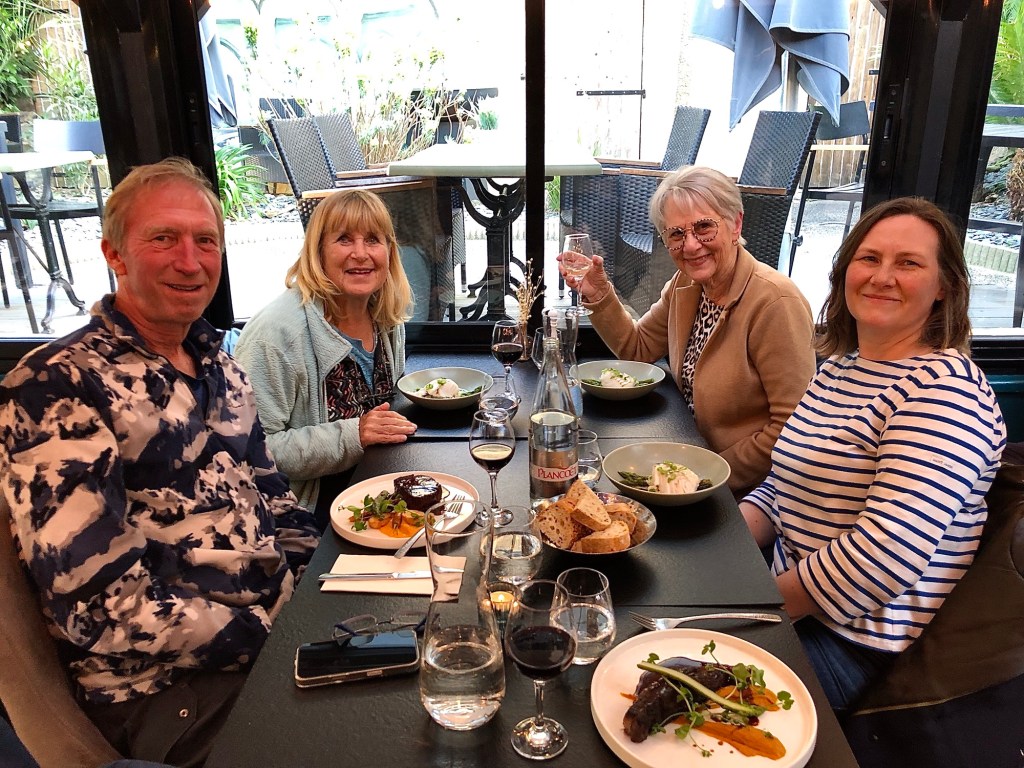
Valerie (third from left) in Her Happy Place: with Friends and Family at Restaurant l’Éveché in Dol de Bretagne

Joining us on this trip was Valerie, Cherie’s mother. Val comes to stay with us for a month or so every year. We love her visits and they always end far too quickly. Val’s time with us is an excellent excuse to hit the road and see something new. So, our special guest safely nestled in the passenger seat, off we trundled for a day out in Bretagne.

Lunchtime and the Streets are Empty – Montfort-sur-Meu

Our first target was the town of Montfort-sur-Meu (MsM). This small town of some 7,000 inhabitants lies at the confluence of two rivers (the Meu and the Garun) about 30 kilometers west of Bretagne’s regional capital, Rennes. The first thing we noted was the purple schist gleaming in the sunlight. The local stone contains elements which give it a dark purple hue. Many of the buildings in the town are constructed with it, lending them a quite distinctive character. But did I take a photo of one? No. I can’t think why I didn’t. Perhaps I was distracted by one of the boulangeries; pastries have always been my downfall.

Only the Donjon Remains

MsM is fairly compact, easily walkable. When we were there, it was a lovely spring day. The streets with its many shops and eateries were quiet. But we had arrived during the sacred lunch hour (which, in France, typically stretches to two hours) and most businesses were closed – except the few restaurants bulging with the entire population of the town. Still, there was always the boulangerie. And after a pleasant amble around the imposing remains of a medieval stone tower, we stepped in the bakery to purchase some sandwiches and pastries. For some reason, I seemed to be uttering a rare dialect of Alsatian because the woman helping us couldn’t understand a word of the French I thought I was rather competently speaking. Just when I think I’ve cracked it, life will remind me that I still have a lot to learn. Life is like that, I suppose: sometimes you speak French, sometimes you speak Alsatian.

The Church in MsM was Built upon the Ruins of the Medieval Castle

We ate our little picnic on a bench in a quiet square next the baroque church under flowering trees filled with gently chirruping sparrows. We took our time – because it’s France, you know, and it would be a crime to do otherwise – enjoying our simple sandwiches and sumptuous pastries. As we chatted away, I suspect that each of us were quietly thanking the universe for the gift of being in this lovely country and delighting in yet another wonderful day. Perfection.

A Quiet Corner Next to the Park

Montfort-sur-Meu is not possessed of any big attractions. And that’s okay. It’s just a lovely town with some pretty streets lined with some attractive and characterful architecture, quaint and gently flowing rivers, and a couple of agreeable parks. I’m sure it would be a very nice place to live; people have been making it their home since neolithic times. It also makes for an enjoyable visit. A couple of hours spent here is well worth the effort.

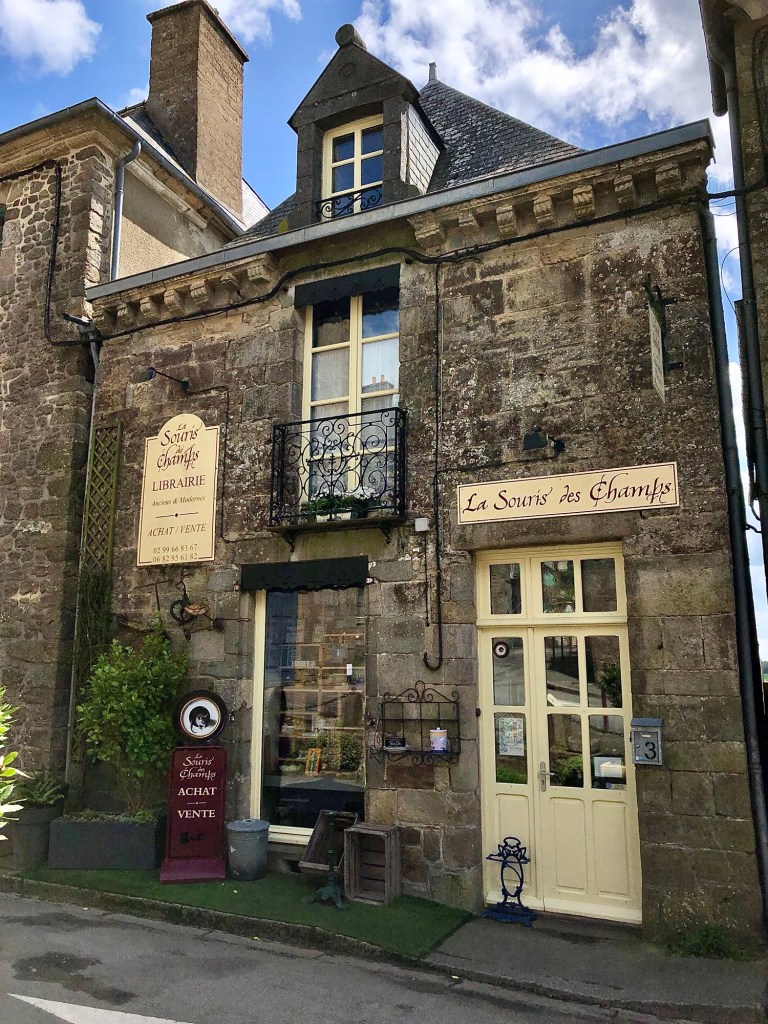
La Souris des Champs (The Field Mouse) – One of the Many Bookshops in Bécherel

A few minutes’ drive to the north brings you to the even smaller town of Bécherel. Sitting atop a rise overlooking lushly green hills and valleys, Bécherel has staked its claim as a reader’s paradise. Around 700 people live here – most of whom seem to own a book shop. Throw a stone here and you are likely to strike a bookseller’s business. The town holds a large book fair (the aptly named Fête du Livre) every year as well. As a great lover of books, I would have gone in to check out the many shops. But, had I done so, I likely wouldn’t have then emerged for hours, only to discover that Cherie, Val, and the car had gone home. I decided that it was probably wise not to tempt a long, book-laden walk home.

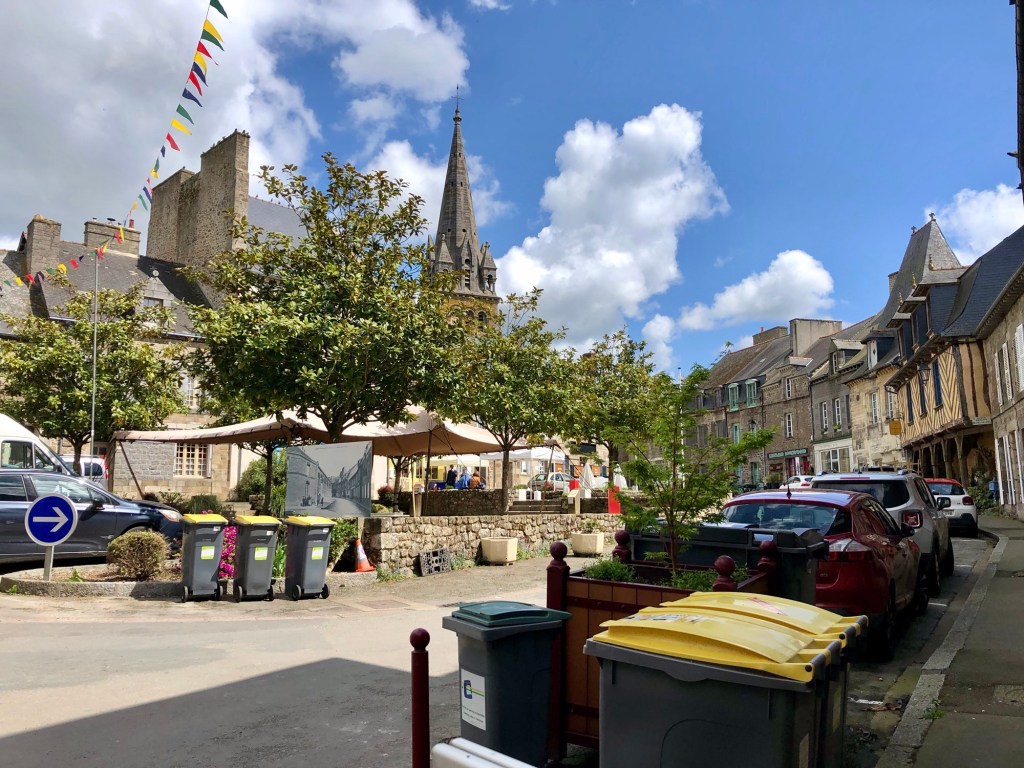
Garbage Day in Bécherel’s Charming Main Square – Everybody has One (garbage day, that is)

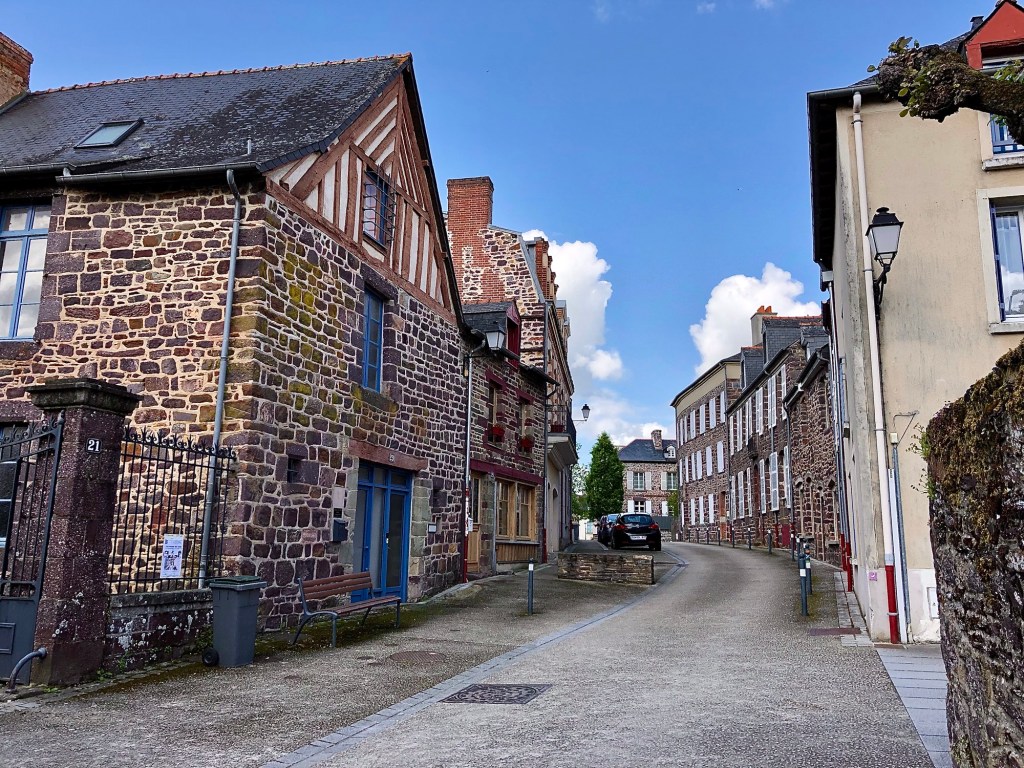
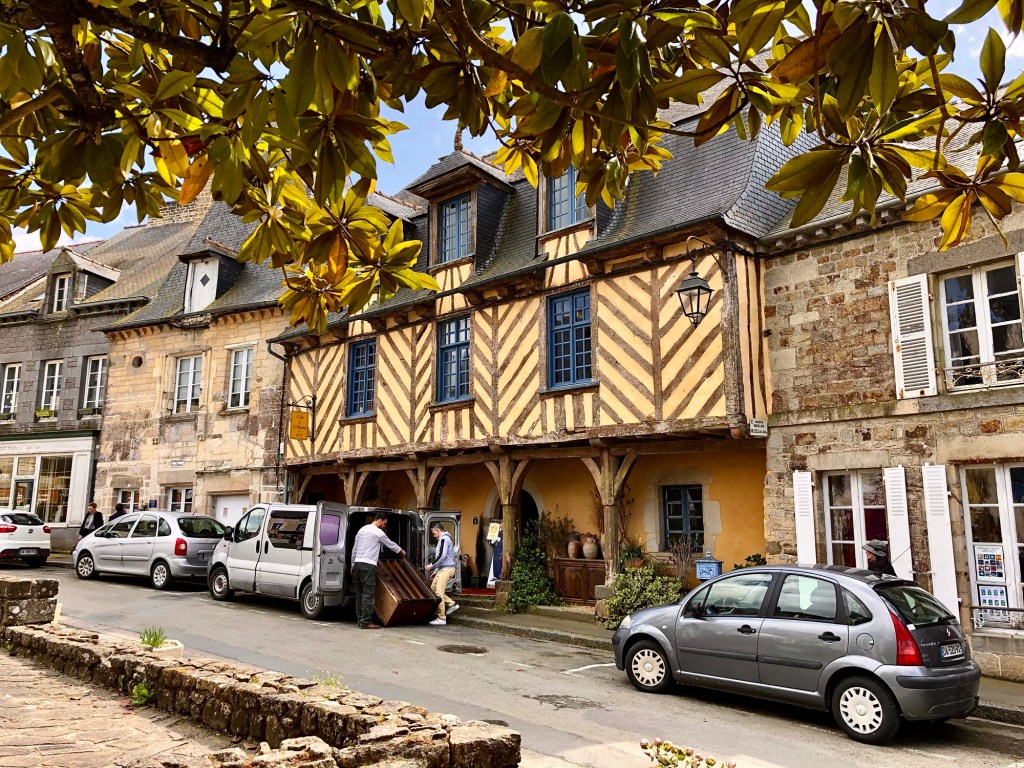
Bécherel wears its age proudly. Old stone and timber-frame buildings huddle around an open square. The pretty little church stands wedged in to one end of the square, overseeing the behavior of its parishioners. The church was apparently destroyed and rebuilt in the 19th century, but it contains two older baptismal fonts – one of them from the 12th century. A must-see for an old thing aficionado like me.

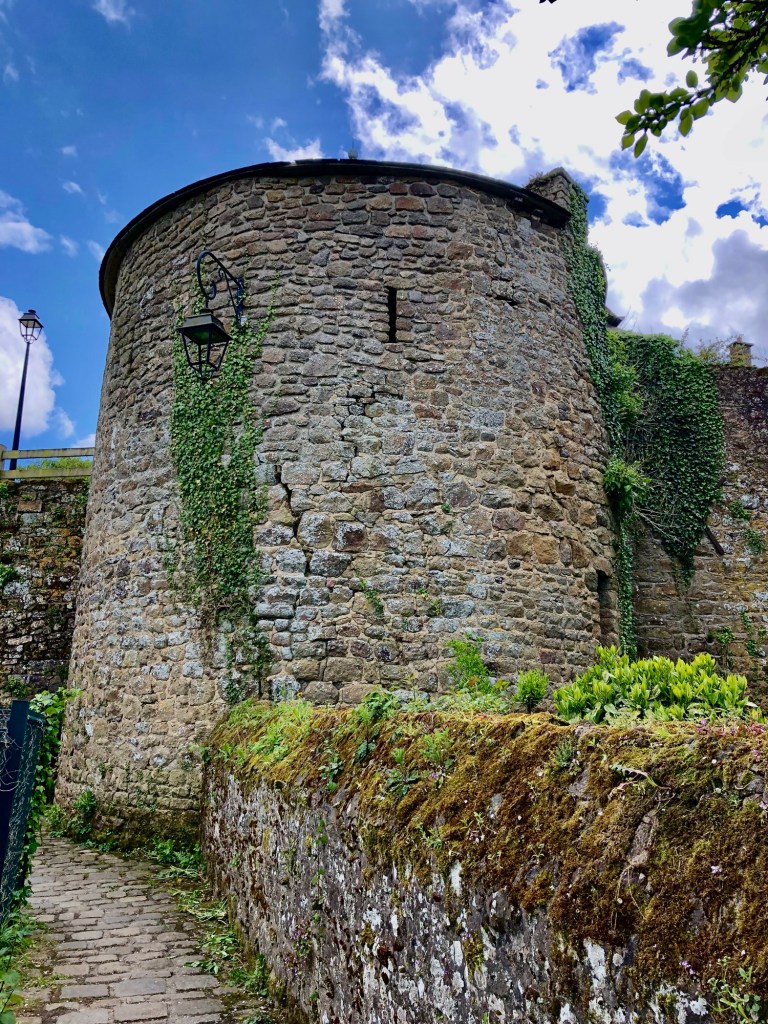
Cracked and Worn, this Tower Still Stands Watch over Bécherel

The town was once surrounded by stone fortifications and there are several parts still visible. Poking around, we discovered a small tower and section of wall, a small elevated park within hosting a number of flowering trees, wisteria and lilacs and presenting a charming panoramic view of the town and surrounding countryside. The quaint little streets wind through the old town and make for a pleasant stroll. It’s a quiet, contemplative place, this Bécherel. Appropriate, I suppose, for a place of books and readers. Winding our way around town, I can imagine many enjoyable hours spent devouring a good book, ensconced in one of its many charming nooks and crannies. We enjoyed our afternoon discovering this Petite Cité de Caractère.

Street Scene in Bécherel

Montfort-sur-Meu and Bécherel; a pleasant day-trip itinerary. They’re not big, they’re not bold or bombastic. They do not wow with Instagram-worthy photo-ops. But that’s kind of the point. Not all visits in France have to be monumental. Yes, it’s a fantastic experience to witness the historical touchstone of the Bayeux Tapestry, or to experience the mad excess of Versailles. But we find that the quiet moments of simple, elegant beauty to be found in abundance throughout this wonderful country are equally rewarding. We treasure them greatly. I hope you find them inspiring as well.