A Calm Breeze in Cancale

Quayside Refreshment in Cancale

It’s 9:00 in the morning and we’re just rousing ourselves from sleep. Ugh! So EARLY, right? But we were determined to take a little road trip because we live in France. And it would be a crime not to see as much of our new home as possible. Walked Saxon. Showers. Clothes. And off we went. This day’s objective was the small seaside town of Cancale.

Just a few kilometers east of St. Malo, on a part of the north coast of Bretagne which juts out into La Manche (the English Channel), Cancale faces eastward. A hazy view of Mont-Saint-Michel on the horizon, the sea is dense, a solid blue-green slate upon which a few fishing boats skate back and forth. The town itself sits upon a high headland, tumbling down to a broad, hard-working port and a waterfront lined with a profusion of businesses trawling for the tourist trade.

Oyster Beds with Mont-Saint-Michel on the Horizon

Cancale is most well-known for its oysters: in particular, the Pied de Cheval, or, Horse’s Hoof oyster. Quite large, these oysters are native to the Baie de Mont-Saint-Michel and are a highly prized delicacy. Or so I’m told. Neither of us are partial to oysters (huîtres). Especially in the raw. So, I’m sorry that I won’t be able to report on the magical slurpiness of these treasured bivalves. But, judging by the high praises (bordering on cult-like mania) of every French person who ever lived, I’m guessing that you could do worse than slug down an oyster from Cancale. I mean, Louis XIV had them delivered fresh from here to Versailles every day. And that gentleman knew a thing or two about eating well.
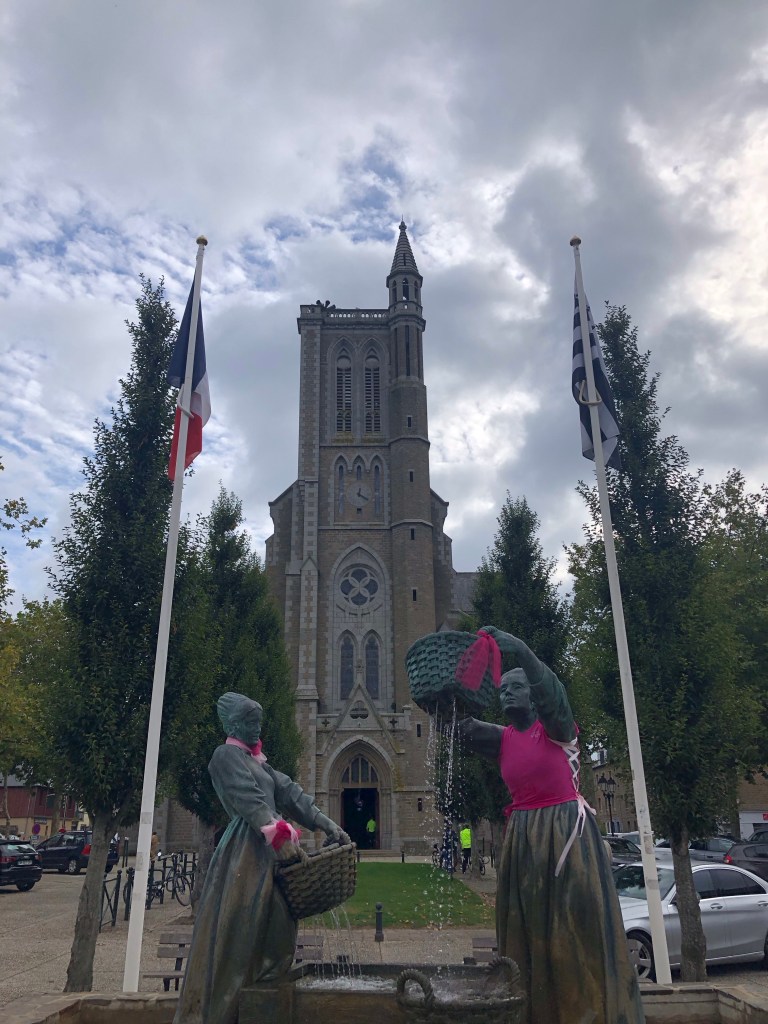

Out of the door by 10:30, we fetched up to the center of Cancale a little before Noon. There is a lovely square with a tasteful park/parking lot surrounded by a church, a pharmacy, a grocery shop, florist, boulangerie, bar and bistros – all of the French essentials. This is the upper town. Much more geared toward local life and the needs of the people who actually live in town.

A Modest Home Overlooking the Bay

We had a fine meal (no oysters) for lunch in a bistro on the square and took a leisurely stroll through the neighborhood. There are many stylish and interesting homes from the late 19th to the early 20th centuries in the upper town and we enjoyed pointing out their various decorative features to one another. As we always do. We’re unrepentant architecture nerds.


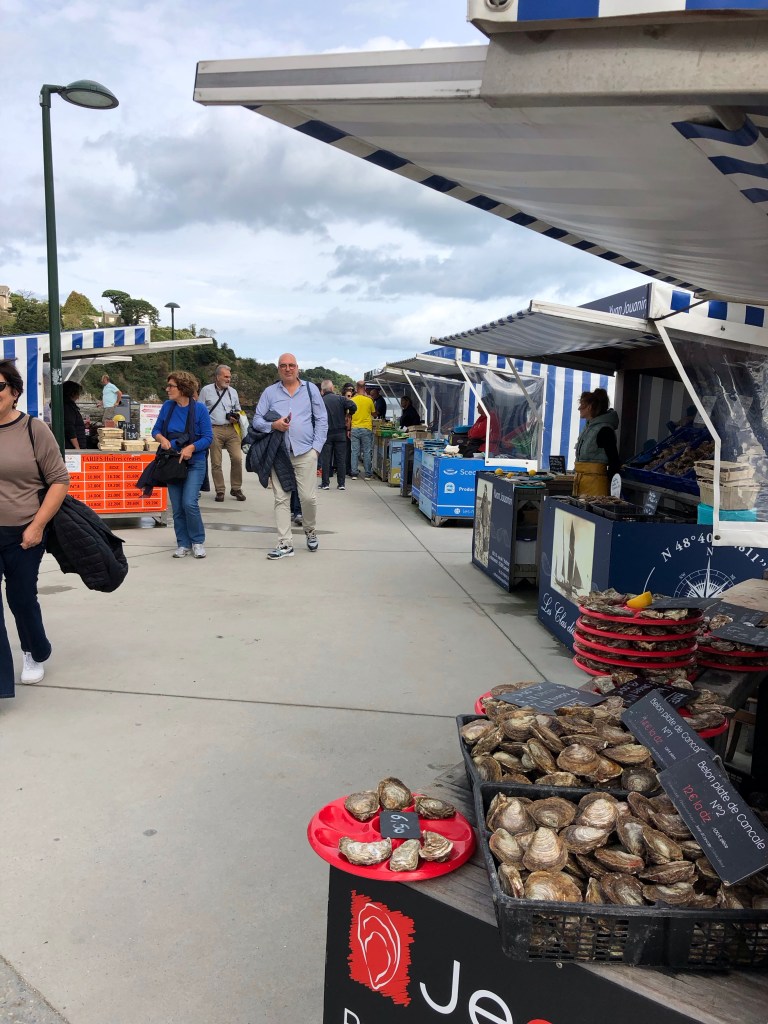
Then it was down to the harbor-side where, despite it being the low season, was still thronging with tourists. Despite the tourism focus of this part of Cancale, it is a pleasant area. The shopping for Breton-inspired clothing, food, sweets and other assorted tchotchkes is good. But the real stars of the show are the views. The harbor and the bay are stunning. From the quai you can see the acres of oyster beds where tractors weave in and out of the rows at low tide. In the distance you can see Mont Dol (Holy Hills & High Streets: Mont Dol and Dol de Bretagne) and Mont-Saint-Michel (Blue Skies and Archangels) across the broad waters of the bay.
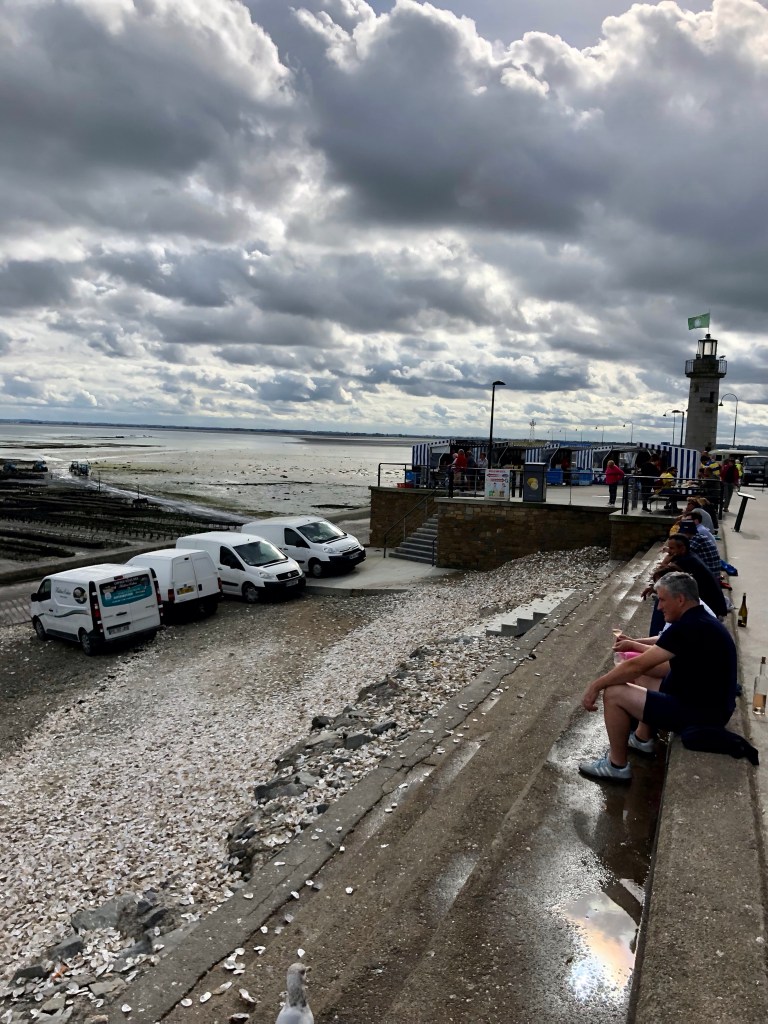
Oyster Nirvana – Eating Oysters With the Market in the Background

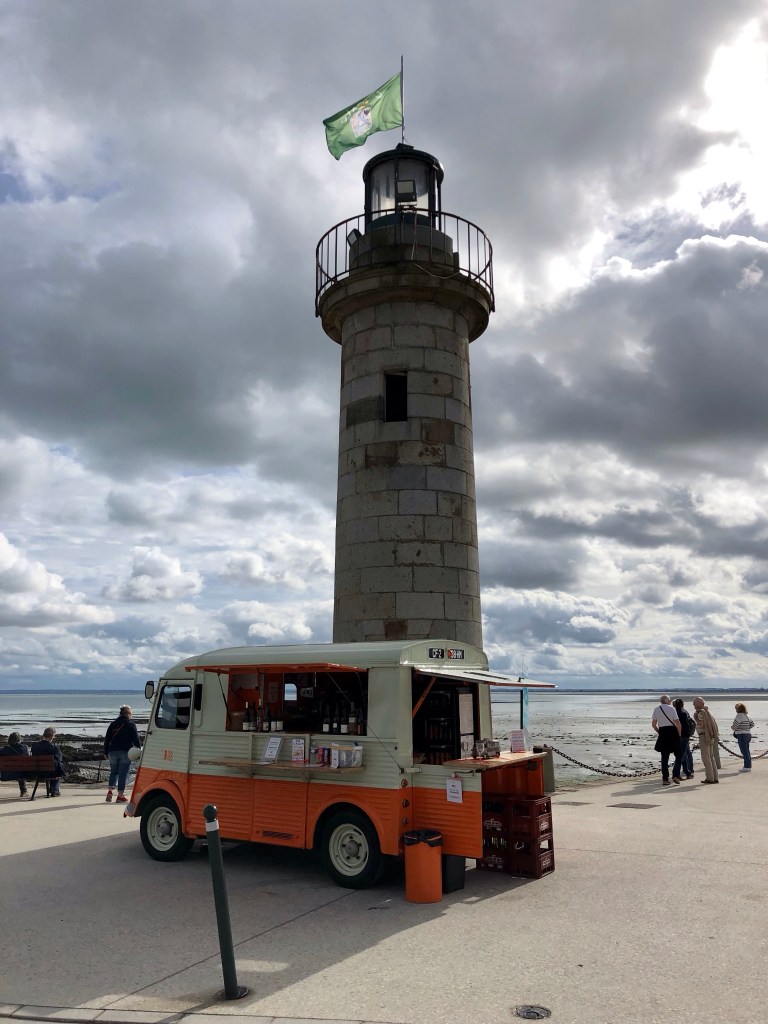
The waterfront bustles and there is a nice outdoor market by the lighthouse where one can buy freshly-harvest oysters and all the fixings. Not us, obviously. But many people pick up a plate of oysters and a glass of wine and sit on the edge of the promenade, slurping down their gelatinous treasures and tossing the empty shells onto the beach. Don’t worry, they aren’t carelessly littering. It’s traditional to discard the shells. And given the size of the pile, thousands of others have done the same thing. People power!
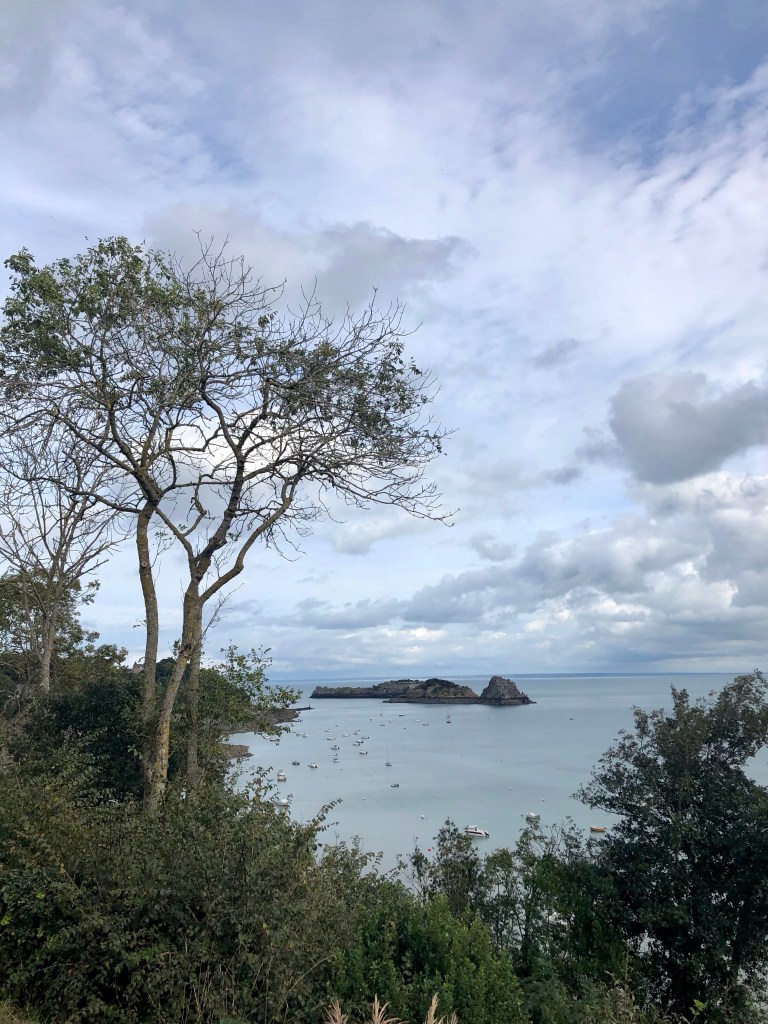

Although we didn’t have time to walk the entire 7 kilometer trail, but we did take a stroll along part of the cliffside path which stretches from Cancale to the Point de Grouin. The path affords dramatic views of hidden coves, smaller harbors and moorings, and beautiful old homes perched atop the bluffs. We even spotted a public seawater swimming pool cached demurely on a rocky beach. We have spotted several of these piscines de mer around the seaside towns of Bretagne. Cherie is intrigued by these public facilities and feels that it is a kindly service to provide for their citizens’ enjoyment and good health. I couldn’t agree more.
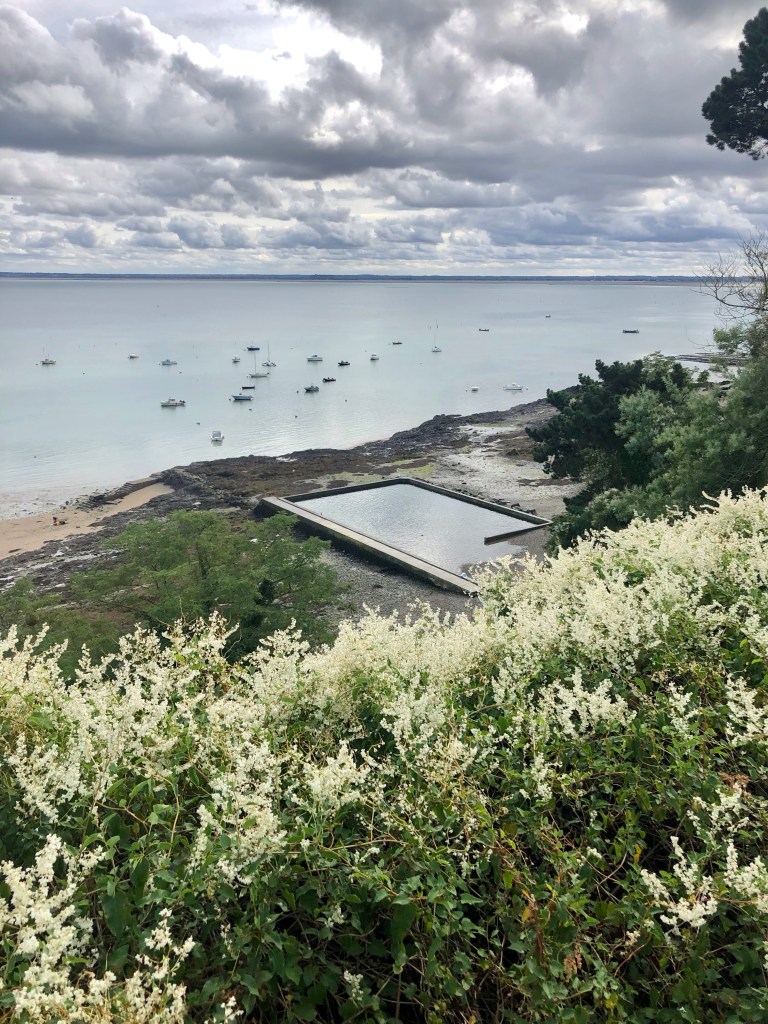
A Public Swimming Pool With a View

A few hours enjoying the charms of Cancale is time well spent. We had a lovely, relaxing visit. You could too. And if you are in the area, we would definitely recommend it. Our sojourn to Cancale is so typical of the good life in France. All one has to do is slow down a bit and open your eyes to the small things which make us truly happy and content. The French are particularly good at cultivating these things and we love them for it!


Oyster Harvesters Returning from the Beach (click to play video)

Saint-Suliac: Beach-Easy and Beautiful

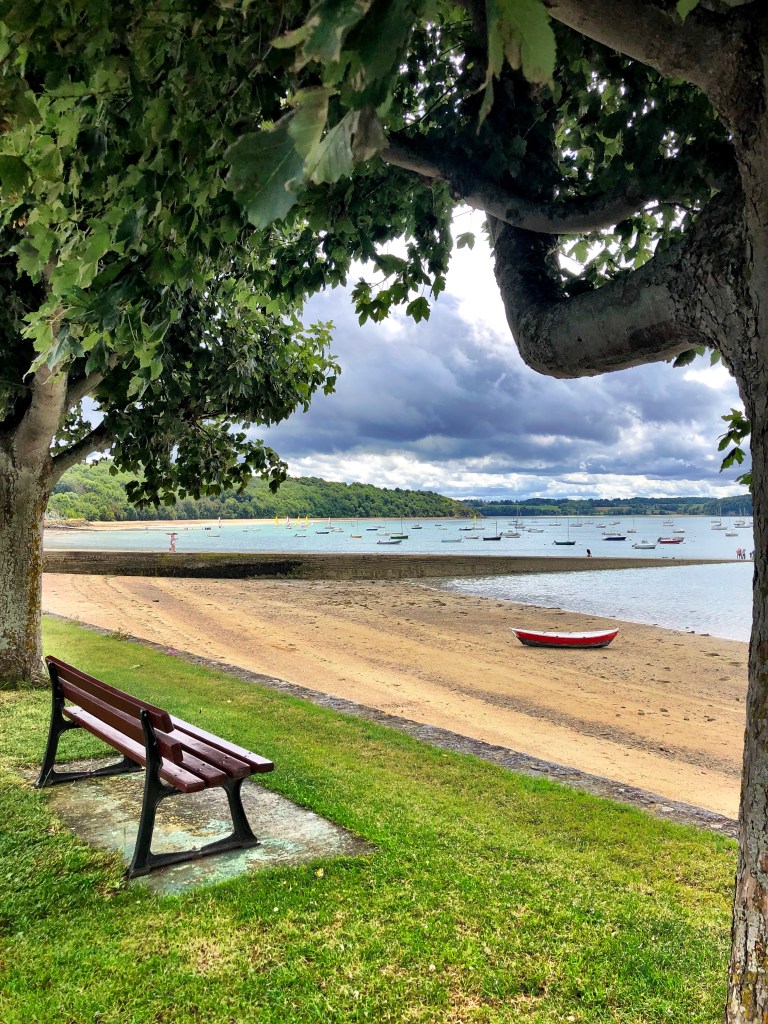
Awaiting the Tide on Saint-Suliac Beach

Summertime, and the livin’ is” … busy?, stressful?, abnormally hot? The classic Gershwin lullaby suggests that life in the summer is “easy”. Though, it often doesn’t seem very relaxing, does it? Instead, life can feel pretty crazy and frenetic during the summer months. Even vacations – which are supposed to be a time to decompress, to set aside the stresses of daily life – are quite often filled with pressure to finish all of those home projects you’ve been putting off, or the annoyances of traffic jams, air travel, or the overcrowded, overpriced holiday destinations you’re so hurriedly trying to get to (and away from). Yeah, summertime is crazy!

But you would be forgiven for finding yourself absently humming that wonderful old song as you soak in the easygoing, relaxed atmosphere that permeates the village of Saint-Suliac. We recently visited this venerable Breton fishing village on a late July weekday afternoon and we were quickly lulled into its easygoing vibe. And just as the lyrics claim, the fish are, literally, jumpin’ there. Though I don’t think you are likely to see cotton of any height growing in the area. One thing’s for sure: the livin’ is easy in this sublime little waterside community. At least for lucky visitors.


Saint-Suliac is quite old. Founded by a monk in the 6th century, this village had always made its living by fishing. Tourism and leisure is pretty heavy on the agenda nowadays. Solid stone cottages tumble down the slope to the sandy shoreline of the wide estuary of the Rance river as it ebbs and flows back and forth between Dinan to the south and St. Malo in the north. Although the village is on a river, it feels more connected to the sea. The scent of salt is pleasingly heavy in the air and signs of dramatic tides are everywhere evident on the shoreline. In fact, La Manche (or, as some like to call it: The English Channel) is only a few kilometers downriver where the Rance merges with the Baie du Mont Saint-Michel.

Lunch in the Centre-Ville

We arrived by car around lunchtime and found that parking is a challenge. Surprisingly for such a popular tourist destination, the village government doesn’t appear particularly interested in accommodating the many vehicles which must flood its narrow streets during the holidays. A couple of moderate-sized car parks can be found on the outskirts of the village. They’re little more than small, grassy lots but they do the job. And they are free, so who’s to complain?

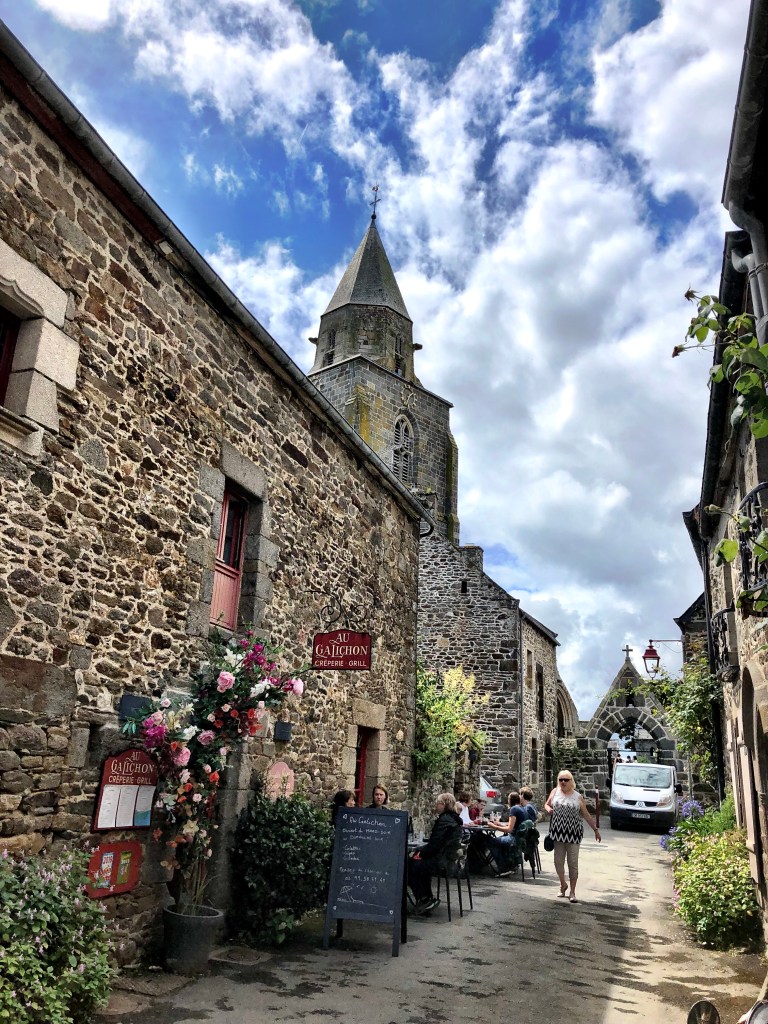
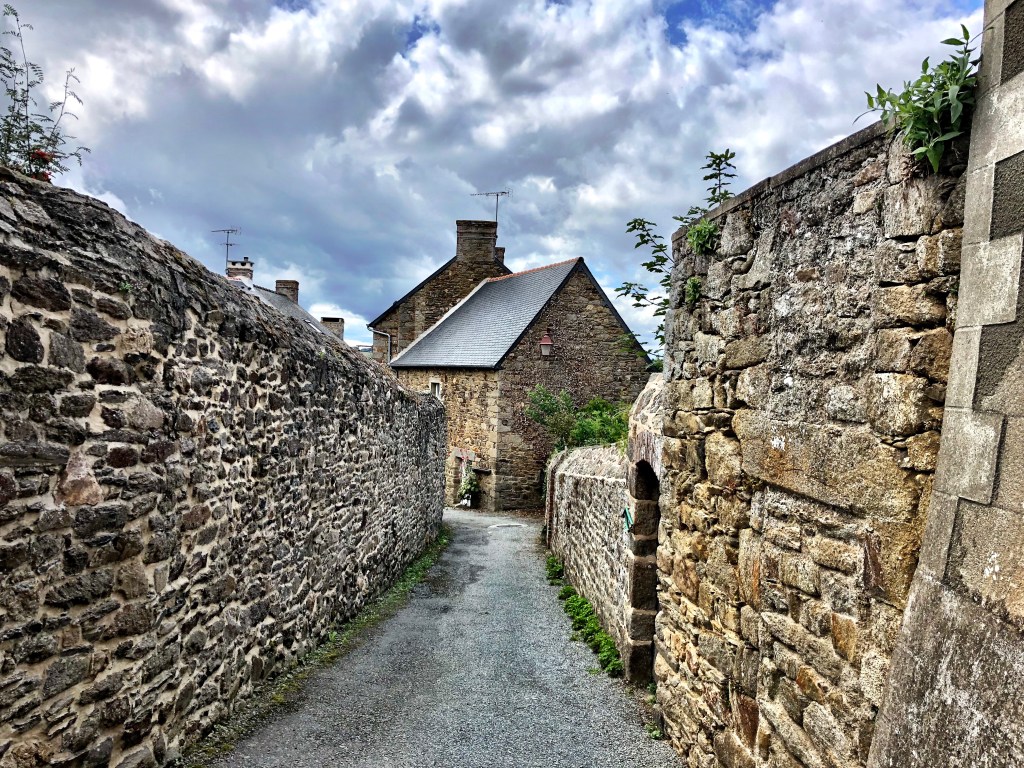
An Allée Amongst the Stones

We parked in a blue zone (which means there is usually a time limit), feeling quite clever to have found an open spot. It wasn’t until we returned to the car to leave when we spotted the sign indicating that the row of spaces we were in are restricted to those who possess a special badge of some sort. Probably for local residents only. Whoops! We seem to have gotten away with our mistake without an amende (parking ticket). At least so far. Sometimes the authorities simply send a notice of a fine to be paid in the mail. We will be keeping our fingers crossed for the next few weeks.

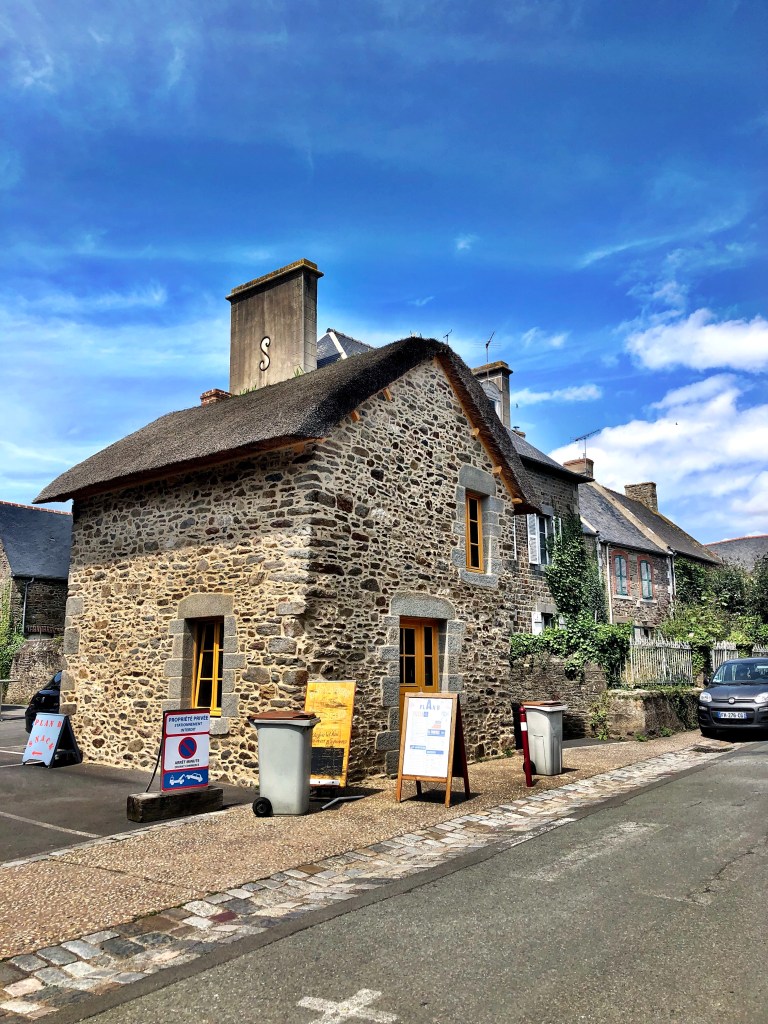
Exceeding the Cute Limit – A Thatched House in the Village

Blissfully ignorant of our parking faux pas, we enjoyed a leisurely stroll through the pretty streets and alleys of Saint- Suliac. One thing we noticed right away was the presence of thatched roofs on a few buildings, a feature we rarely see in this part of France. The thatching is beautifully, very neatly done. The roof ridges are flat and appear to be planted with irises. I imagine they are even prettier when the roof tops are in bloom. Fishing nets still hang out to dry, suspended on hooks on the walls of a few cottages, and boats rest in enclosed courtyards. Just a taste of what this village must have looked like during its past as an active fishing community.

Heavy Clouds Add Drama But No Rain – John Walking the Broad and Pleasant Shoreline of Saint-Suliac

The shoreline at Saint-Suliac is broad and expansive – particularly at low tide. Boats, small and large, dot the bay, tethered to moorings. Some of their fellows lay comfortably beached on the sand, silently awaiting the rising waters. The views along the shoreline and across the waters are sublime.

Fish & Chips? Galette? Sandwich Saucisse? – Visitors Enjoying a Casual Bite

There are a couple of indoor restaurants and several outdoor cafés offering a range of foods lining the wide street which follows the beach. And they looked pretty good. But, instead, we opted to pick up some excellent prepared salads, along with some fruit and a bit to drink from the small village grocer. With this local, fresh bounty, we filled one of the many benches set along the edge of the shoreline and enjoyed a picnic. We enjoyed our lunch as the waters of the estuary gently rolled in; small seabirds stilt-walked along the shore, dipping into the encroaching tide as locals and holiday-makers slowly, unsteadily guided their paddle boards about, dodging in and out of the moorings. It was lovely.

A Pretty Good Picnic Spot

Apart from wandering the quaint streets of this Plus Beau Village de France, admiring the views across the Rance, enjoying a lunch en plein aire, swimming, sunbathing, or perhaps renting a paddle board, row boat or sailing dingy for some time out on the water, there are not many things to do in Saint-Suliac. Hmnnn … that actually seems like quite a bit to do, doesn’t it? What more could you want? If you can, go there. Allow your mind and body to wander, to unwind and indulge in the pleasure of doing very little at all. You will thank yourself. For our part, we thoroughly enjoyed Saint-Suliac and it is a place we will return to time and again.

A True Pizza Hut – Plan B Pizzas in Saint-Suliac

Les Belles Vues de Granville

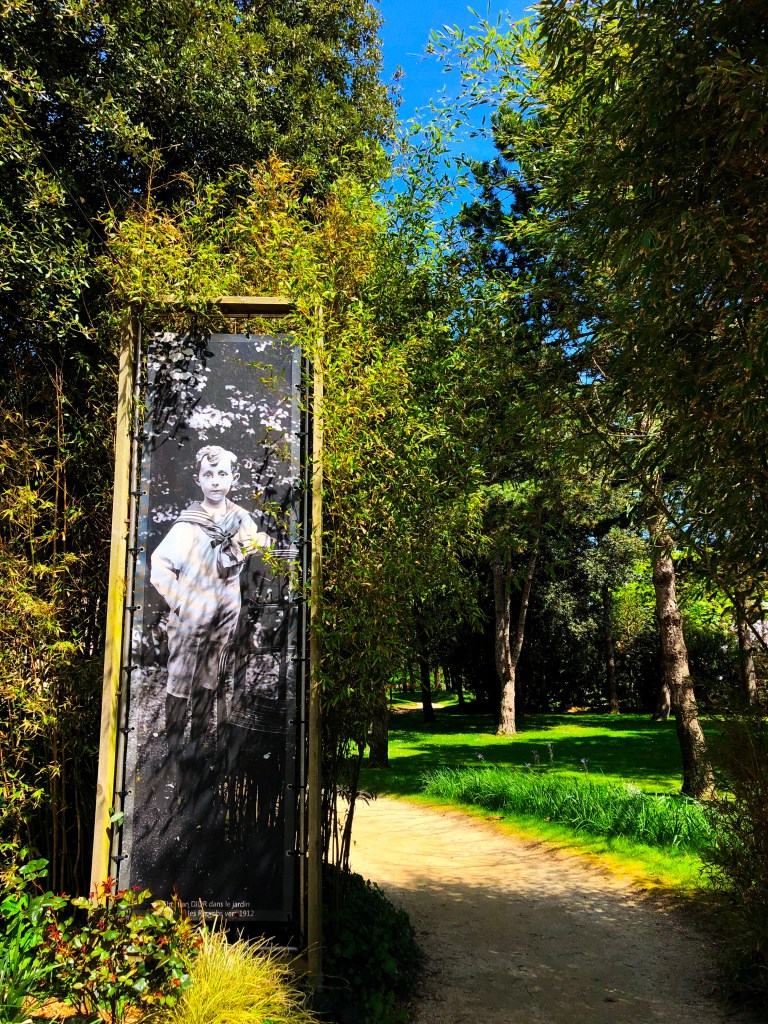
Junior Fashion Icon – Dior in His Granville Garden

“It’s only an hour away. Why haven’t you been there yet?” All of our French friends in Fougères are surprised/bemused when we sheepishly admit that we have yet to visit Granville. Cherie and I would exchange looks, acknowledging to each other our private misgivings about this town: casinos, congested beaches, hordes of tourists, souvenir shops as far as the eye could see – that was our impression. Not really our kind of thing. But our friends are always enthusiastic on the subject. Hmnnn … were we missing something?

Valerie’s visit gave us the impetus to give Granville a look. It’s always fun to share new places with her. So, off we went, north from Fougères to Avranches, and then west along the coast of the Baie du Mont-Saint-Michel. Well-trod and not particularly interesting highways all of the way. Then, by a circuitous route through the outskirts of town, we ended up in the center of our destination. Parking wasn’t too difficult to come by. But this was the middle of the week during the run up to high season, so I imagine the ville becomes much more congested as the summer months roll on.

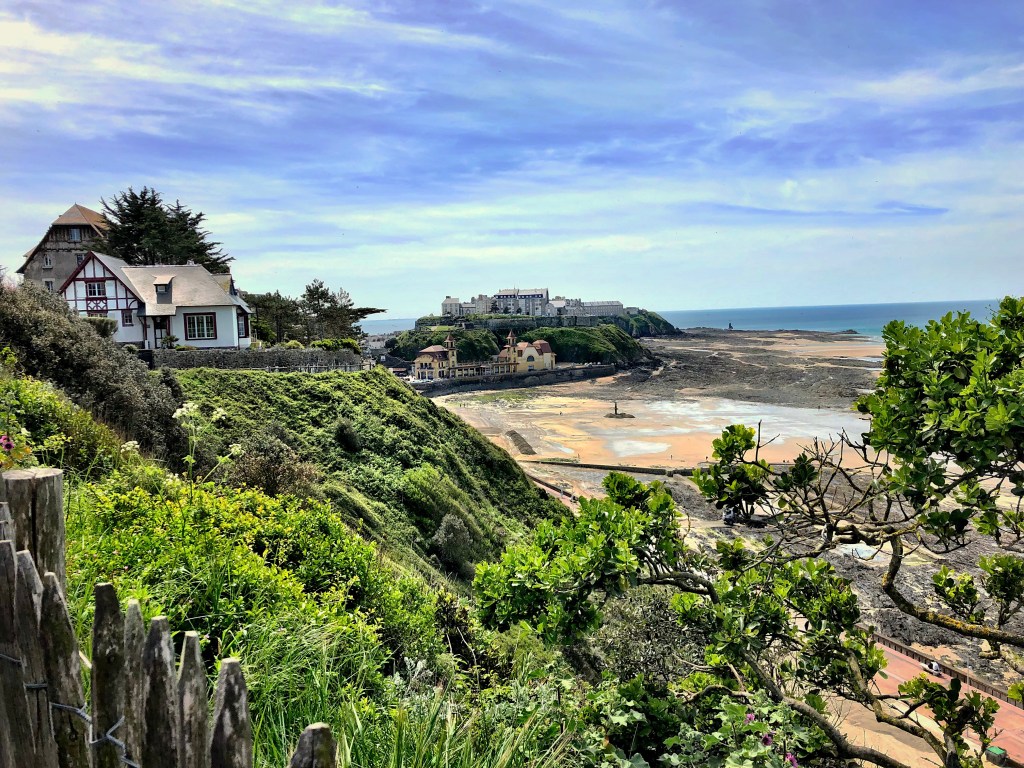
Cliffs and Beaches – Granville’s Got a Lot

Aaaah, there it was: the long, broad stretches of sandy beaches flanked by the blue waters of the bay on one side and on the other side, like a bank of barnacles, was the cliffside, encrusted with buildings. I had to admit, it was striking. Grand. Scenic. Immense. Even from the lower parts of town, the views out to the ocean are sweeping. The weather was mild and there were a number of hardy souls taking advantage of the conditions to swim, paddle board, windsurf and sail. Oh, sailing! I felt the pull myself. Granville is one of those places that compels you to engage with the sea. But we had other things in mind for our visit that day. Like lunch. Sailing would have to wait. Perhaps another time.

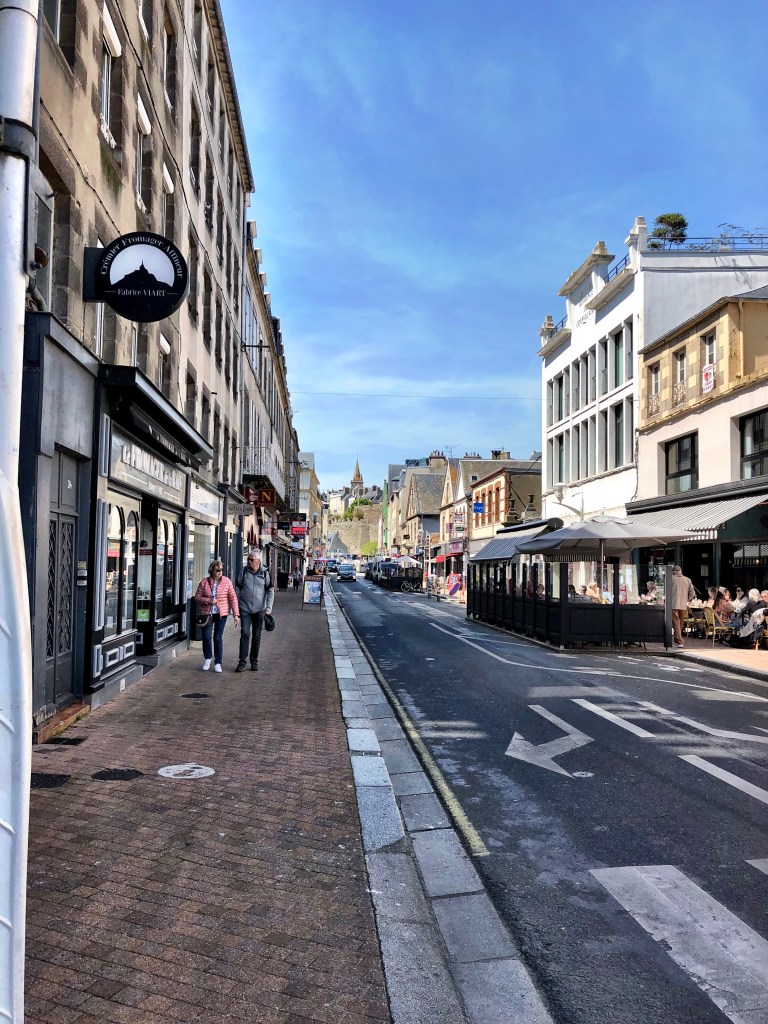
The Commercial and Tourist Hub

Wandering in to the lower town’s busy commercial streets, we admired the many restaurants, bars, bistros and cafés. A nice variety. We made our way to a restaurant specializing in couscous dishes that we had spotted earlier and sat down inside. The menu looked excellent. Fortunately, Cherie asked our server about the presence of fresh coriander (cilantro, as we know it in the U.S.) in any of the dishes. Pulling a slightly puzzled face, he responded, “Yes. It’s in everything.” Oh. Cherie is allergic to fresh coriander. Not in an emergency ambulance kind of way, but even a small amount of those soapy green leaves causes her great digestive upset. We tendered our apologies and made for the door.

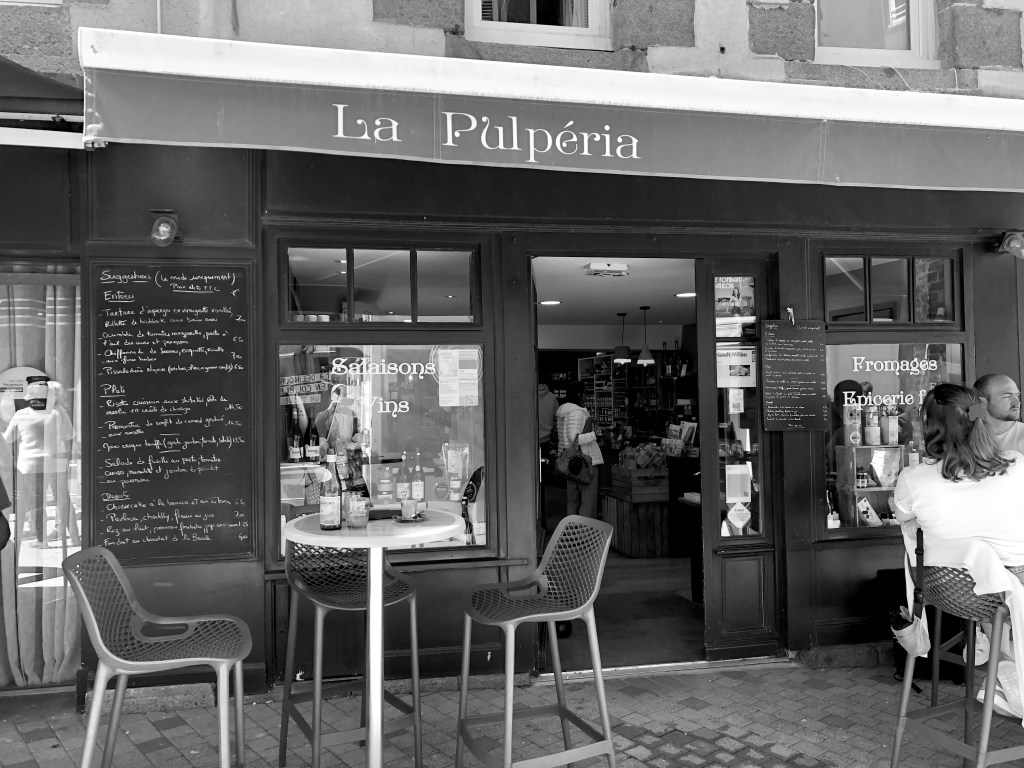
Our Second Choice Was First Class

Around the corner was a nice épicerie with a small restaurant tucked away inside: La Pulpéria. We were pretty hungry by now, so we ducked in and sat down. With our wine, an excellent local cider, and water, we enjoyed a fine meal, looking out on to the busy pedestrian street outside. While we ate, Granville got on with the business of daily life and welcoming a steady stream of tourists – jobs for which the town is ideally suited.

The House of Dior

The three of us only had one specific site we planned to see in Granville: le Musée Christian Dior, the childhood home of the legendary fashion designer. The house where he spent his early childhood is perched high on a cliff overlooking the seaside. Surrounded by beautifully laid gardens, this moderately sized home was purchased by Dior’s father who owned a large fertilizer company. Christian was born there but the family only lived in Granville for a few years before moving to Paris. Nevertheless, like many well-off Parisians of the time, they continued to take their summer holidays in Granville.

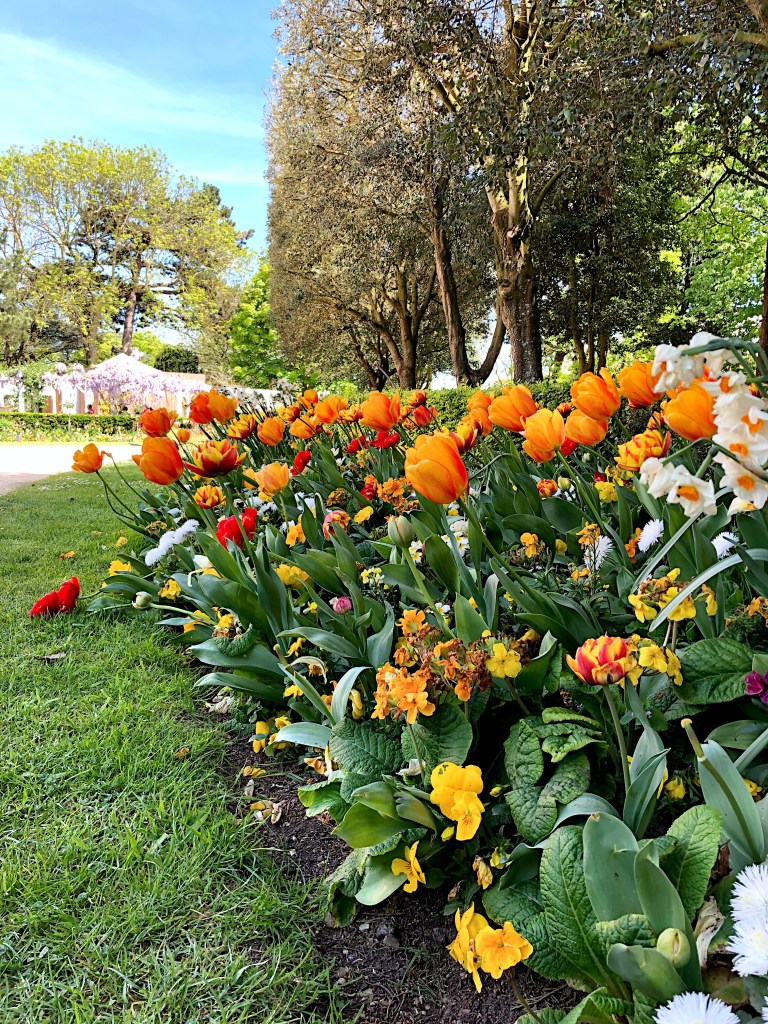
The Peak of Tulip Time

The Dior house is surrounded by pleasant gardens. Christian himself was a keen gardener and he designed several aspects of the landscaping which are still on view today. The flowers were in full bloom – all of them bursting to compete for attention. And the grounds enjoy some spectacular views out to sea. It must have been a soul-satisfying place to live. Not to be forgotten, there is also a nice teahouse featuring a wisteria-clad terrace on which one can enjoy a civilized cuppa.


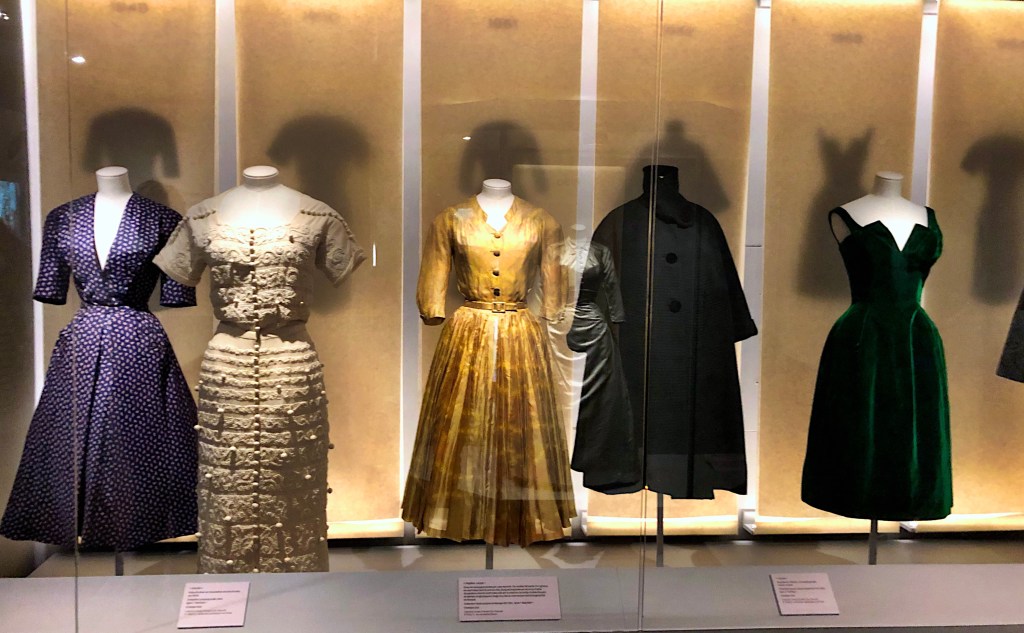
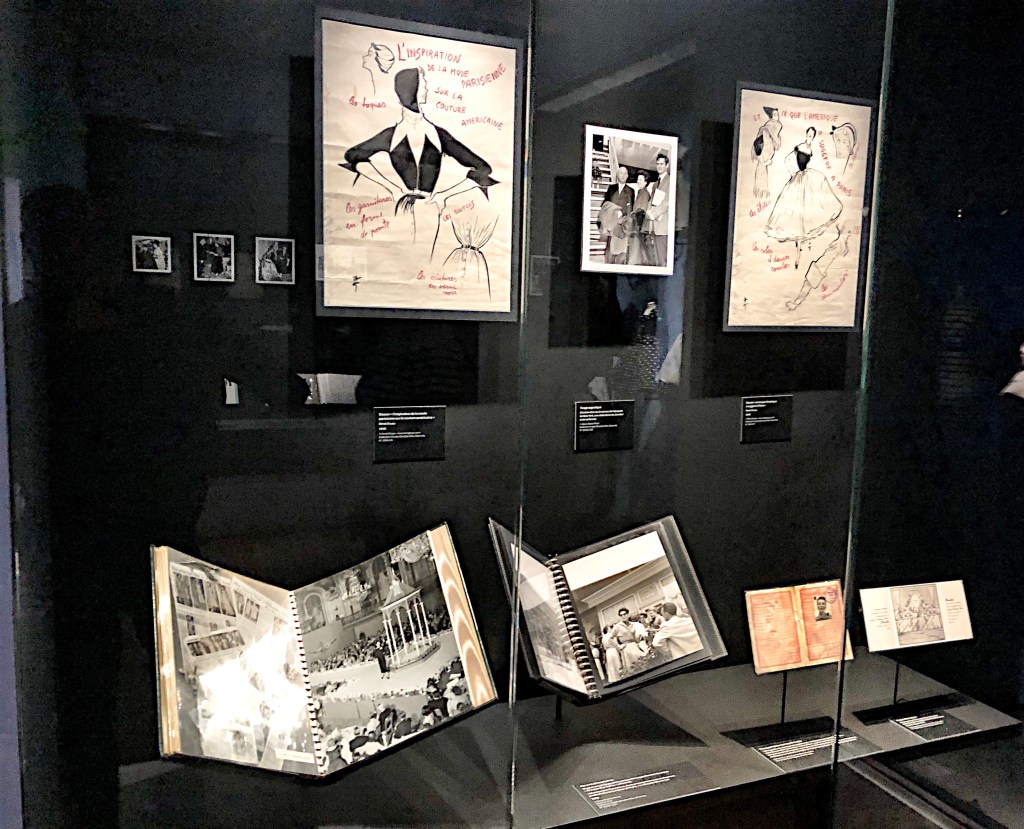
The Dior house is entirely given over to a museum. If you are keen to see how the family lived, you will be disappointed. But the many exhibits are well-curated and present an interesting look at the designer’s creative and professional life. Scores of dresses and accessories are on display. Fans of haute-couture and the Dior brand will be thrilled by the depth and breadth of the collection. The man’s originality and skill cannot be denied. It was amazing to see how radically Dior altered the course of clothing design and how his innovations are still so strongly reflected in the clothes we wear today. Gardens, fashion from the past, and extraordinary seaside views: we enjoyed our visit to the Dior house.

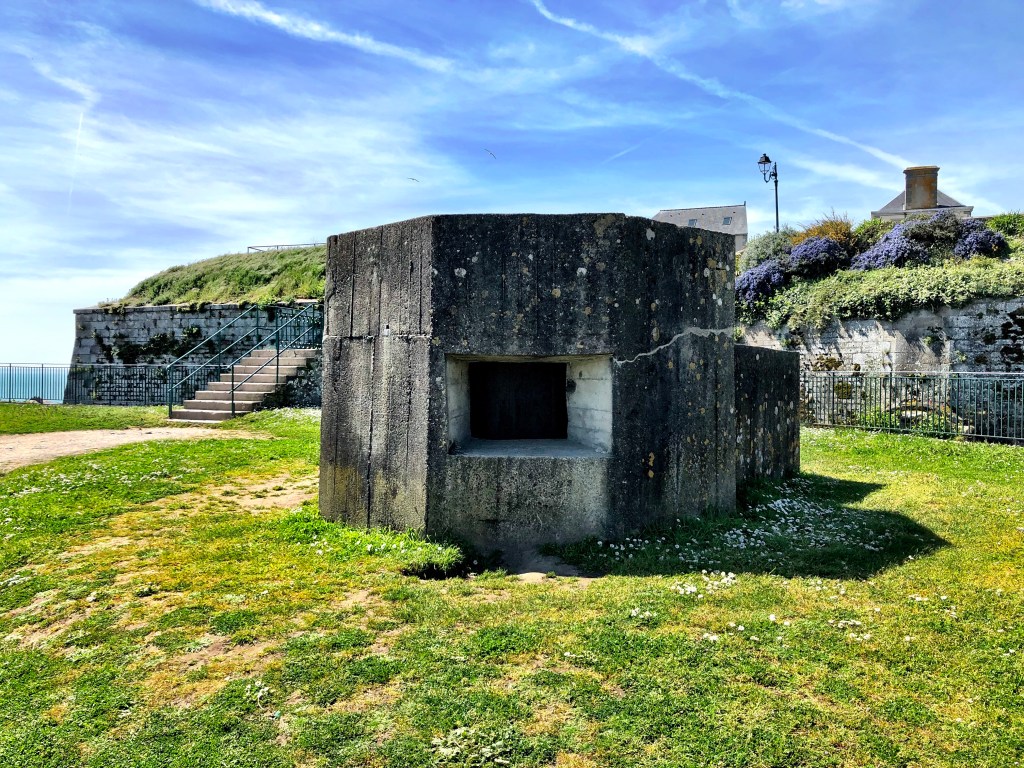
A Monument to Savagery – WWII German Gun Emplacement

Of course, when in Normandie, you’re never far from reminders of the Second World War. Situated at the northern entrance to the Baie de Mont Saint-Michel, Granville was ideally suited to defend against an Allied invasion. There are still remnants of the gun emplacements and military installations put in place by Hitler’s forces. Just above the casino, on the Point du Roc, are the remains of concrete bunkers, gun emplacements and barracks. Considerable effort was put into reinforcing this fortified point by the German army. But it was all for naught. The Nazis ultimately abandoned Granville without a fight after the D-Day invasion in June, 1944.


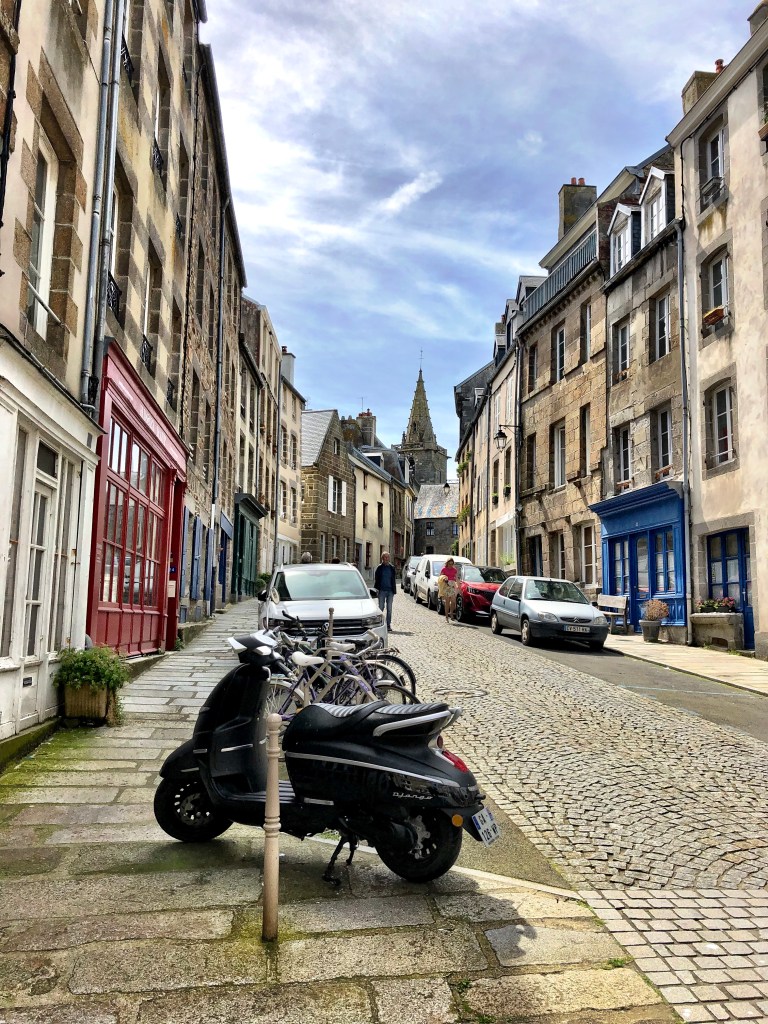
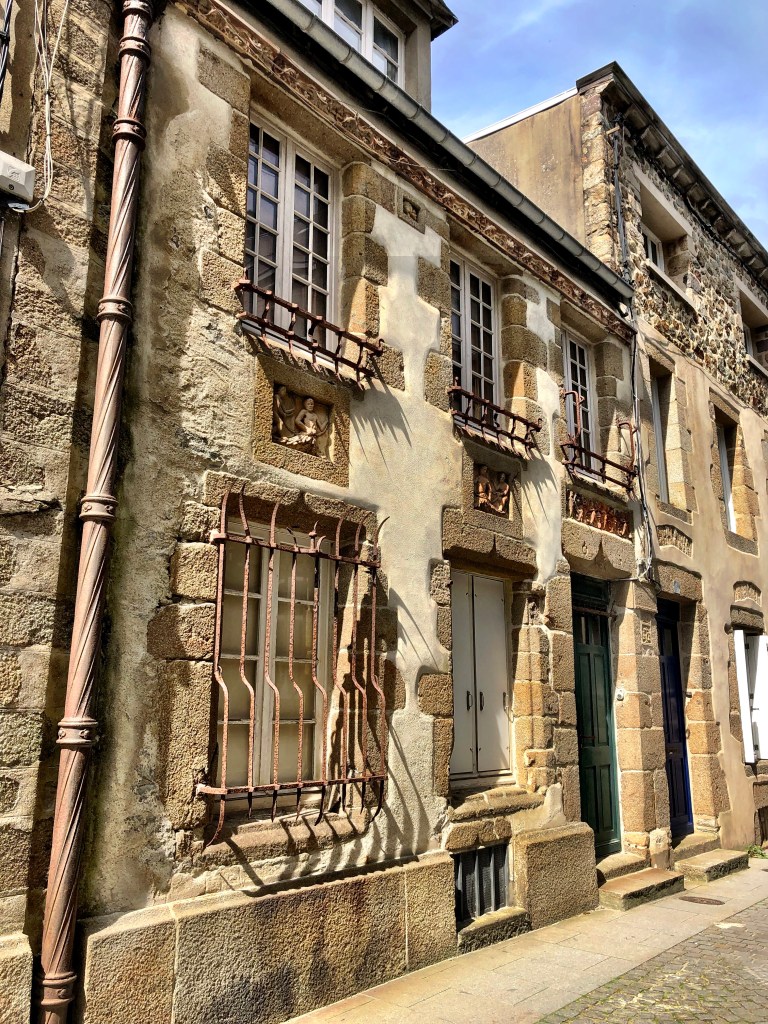
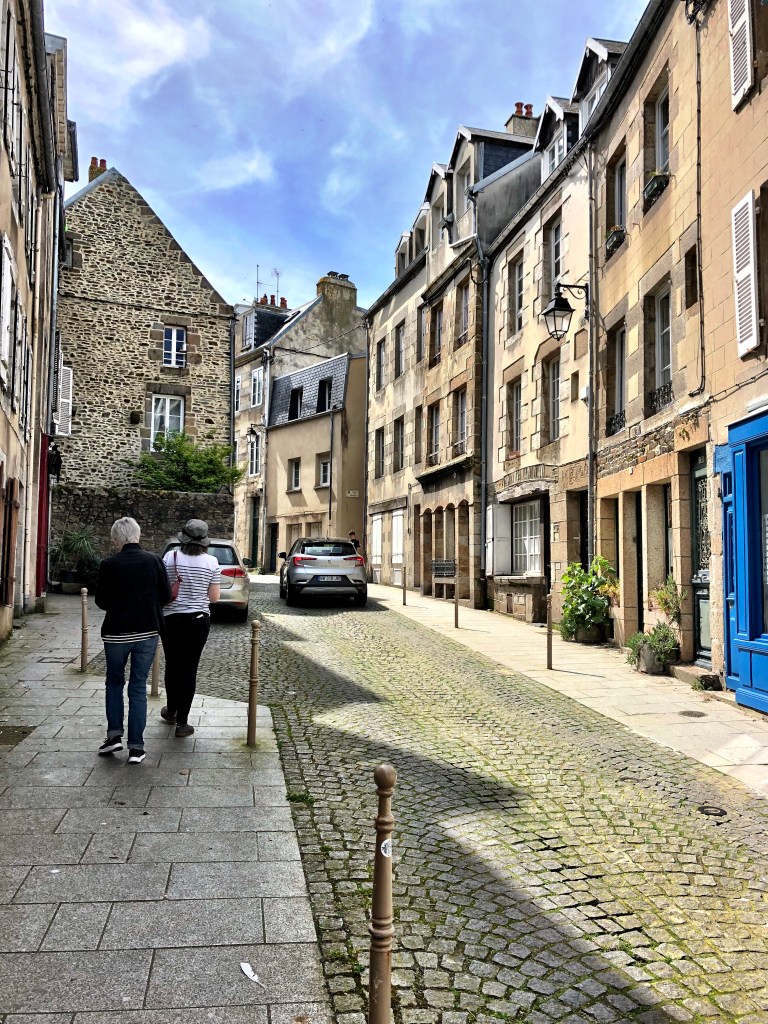
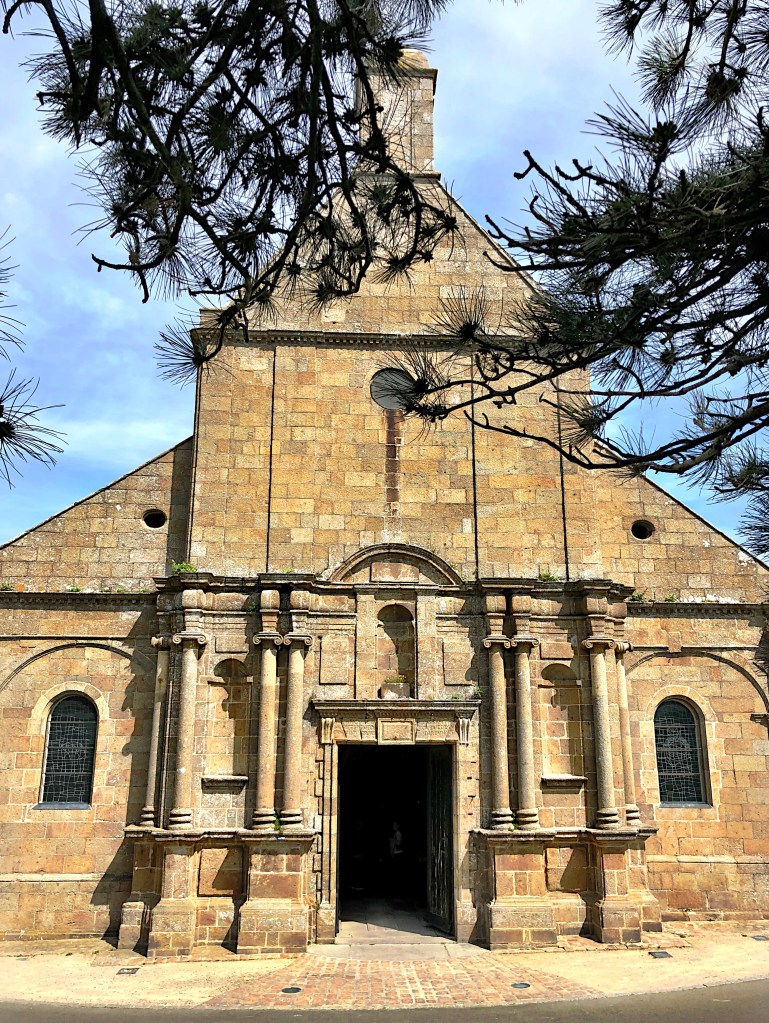
Towards the end of our visit, we made our way to the old, upper town on the Point du Roc, or Cap Lihou. This turned out to be our favorite part of Granville. Beautiful, old buildings with stone, render and timber-frame façades, a medieval gateway, a lovely old church, and lofty views over the harbor and far out to sea. What’s not to like? We pretty much had the old town to ourselves. I love it when the locals far outnumber the tourists. It feels much more like an actual place where people live year-round and everybody has a true interest in what happens there on a day-to-day basis. The Point du Roc felt like that kind of place.

A Refreshing Break

While up there, we stopped at a bar situated in a lovely square. It was getting a little hot and cold drinks seemed like just the ticket. Typical for a French bar, everyone was sitting outside at a dozen or so impossibly thin metal bistro tables and chairs ranged haphazardly about the ancient cobbles – there wasn’t a soul inside. Even the bartender spent most of her time in the square, taking drink orders and chatting away with locals. She seemed reluctant as anyone to be within. A couple in their seventies, sitting next to us, were habitually ignoring each other: he distractedly glancing at a newspaper, she mulling over her book. They proved to be a nice quiet buffer zone between us and the rest of the bar’s customers, all of whom were talking, gesticulating, and laughing in that inimitably relaxed way the French have been born with. I wish I had it in me. But I don’t. I do admire it though.

In this very pleasant atmosphere, within this unlooked-for square which so generously unfolded itself to us like a springtime gift basket, we enjoyed a real moment of tranquility. We sipped at our drinks, chatted away (to the slight consternation, I thought, of the older buffer couple next to us) and let the joie de vivre permeating this place gently wash over us. I’ll never stop saying it: it’s the simple things that give us all the most happiness.

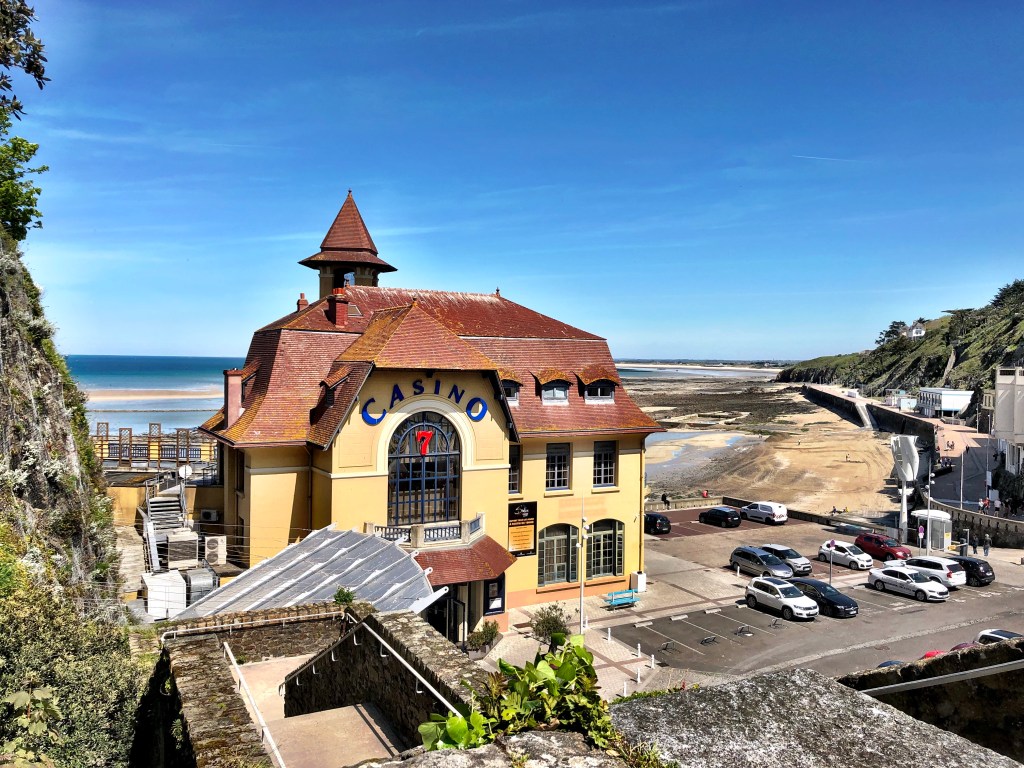
A Casino on the Shore

And that was it. Our visit to Granville was a success. And much more enjoyable than we had thought it would be. Yes, there are the endless shops and restaurants clamoring for the tourist trade, the casinos, and the crowded (albeit beautiful) beaches. And if that’s your thing, then you’ll love Granville. But this town also offers another side: beautiful views, an elegant museum, clifftop gardens, and an old town where traditional French life has persevered through the ravages of seaside weather, wars, occupation and the rush of progress to continue celebrating the good, small things in life. So, why haven’t you been there yet?

Thanks for visiting with us. See you again soon!

You Can Find Relief in the Dior House Gardens