We are in the depths of Autumn now. It’s often quite stormy. I’m cold all of the time – the French have a particular word for this: frileux – and I’m wishing our chimney was in good repair so that we could have a cozy fire. Yet another repair project for the future.
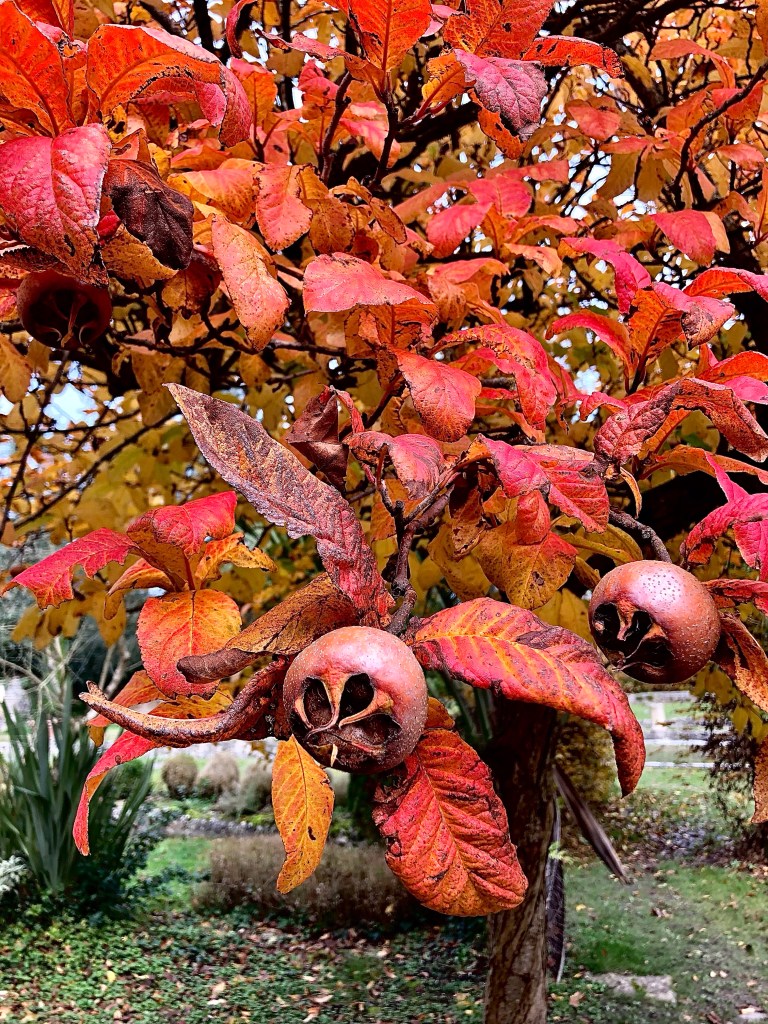
Nevertheless, this time of year has its attractions. Bretagne is a land dominated by deciduous trees, the gold and red hues of their waning leaves making for a very colorful season. The view from our elevated perch in the tower over the park allows us to watch the grand carpet of shrubs and trees laid out below us as it gradually shifts tones from day to day.
Cherie and I try to maintain our quest to visit as many local sites of interest as possible. But it is decidedly more of a challenge to do so during the off-season. Many, if not most, privately-held attractions in France tend to close from October through April. Doors are shut, shutters are closed and gates are locked to visitors for months on end. So, we look for the sites which remain accessible.
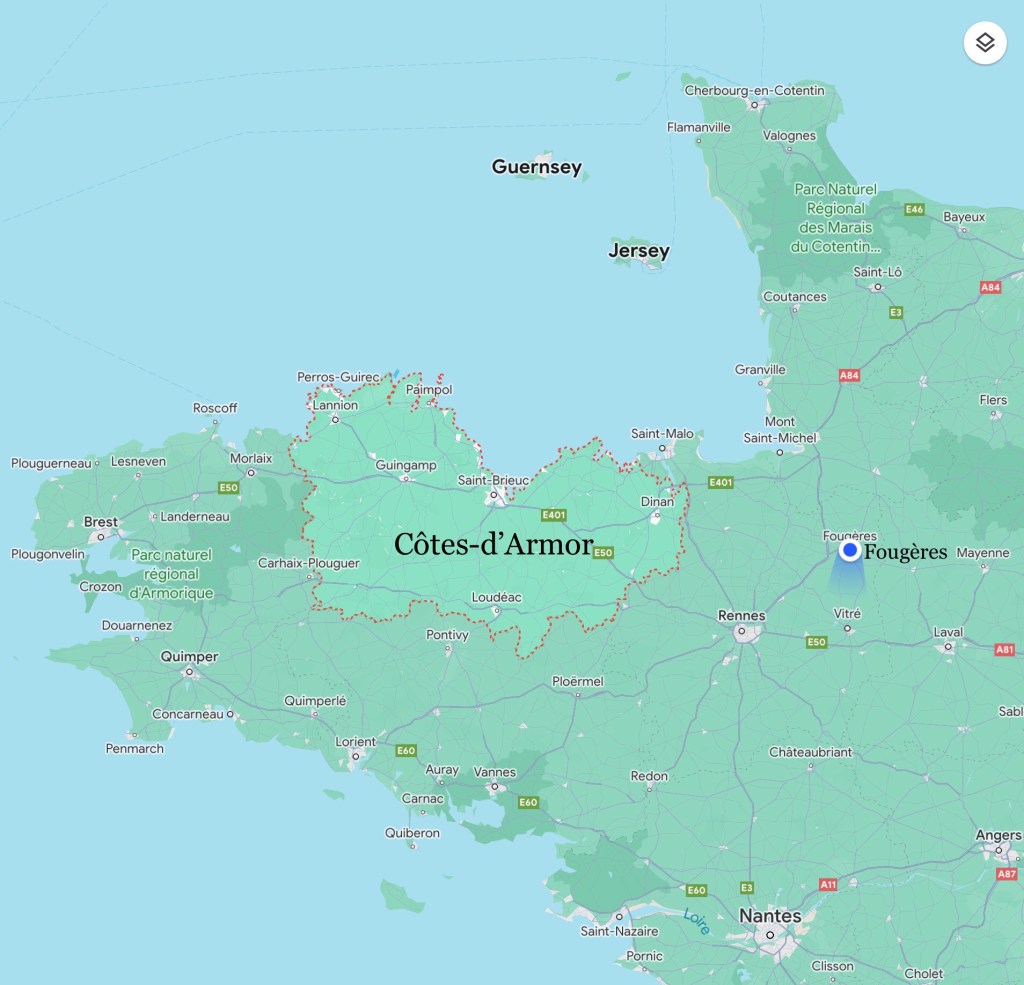
This week we ventured westward into the heart of Bretagne, in the département of Côtes d’Armor. With the exception of Dinan, we haven’t really explored this part of the region. When searching for a house in 2018, we made some brief sojourns to Tréguier, La Roche-Derrien and Pontrieux, but we never did much in the way of sightseeing. It’s a lovely part of the peninsula with lots of green, rolling countryside and rocky coastline looking northward to England across the Channel.
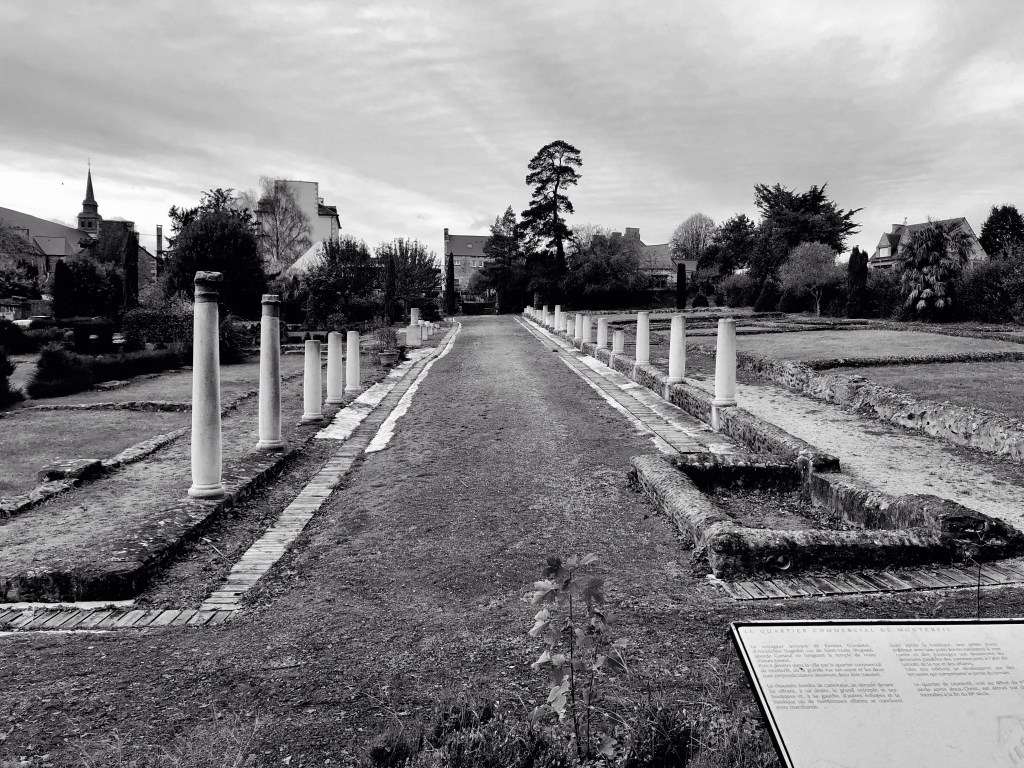
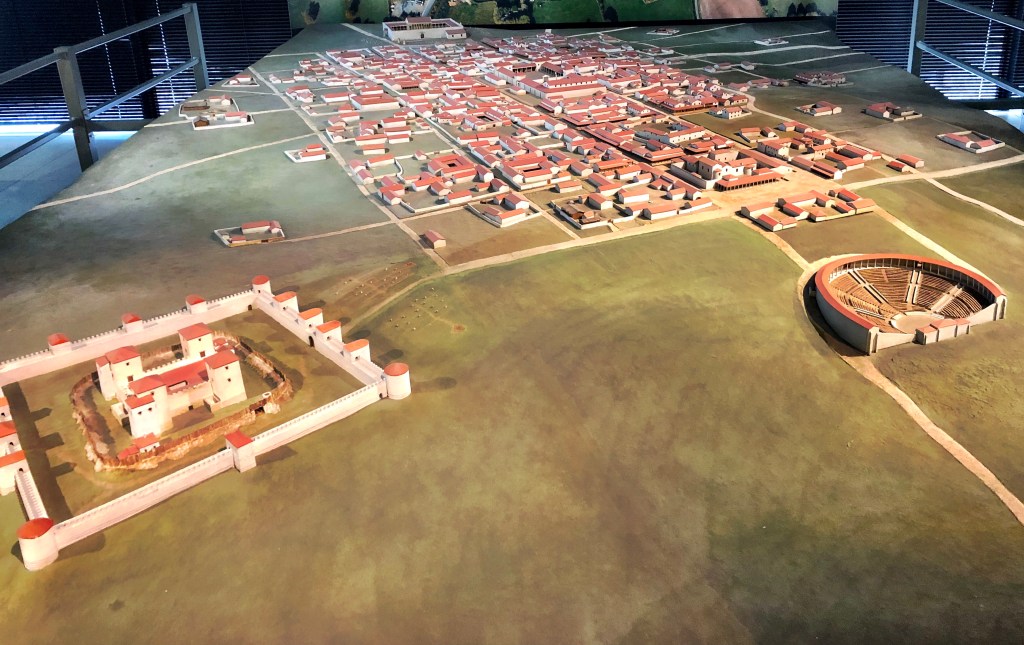
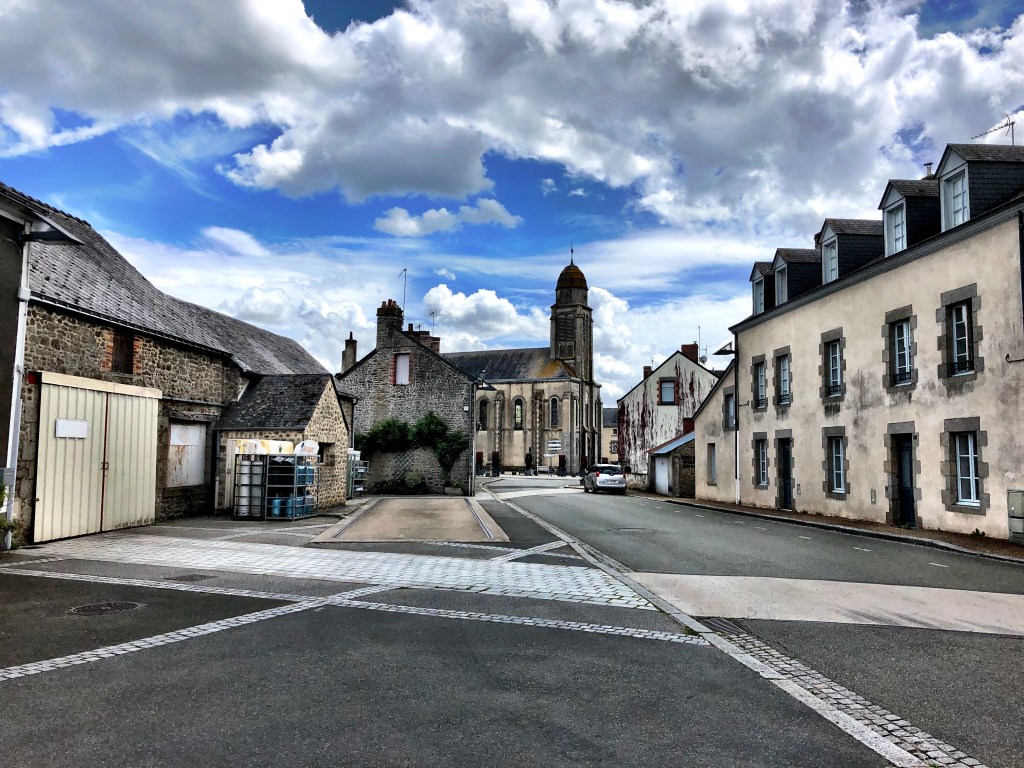
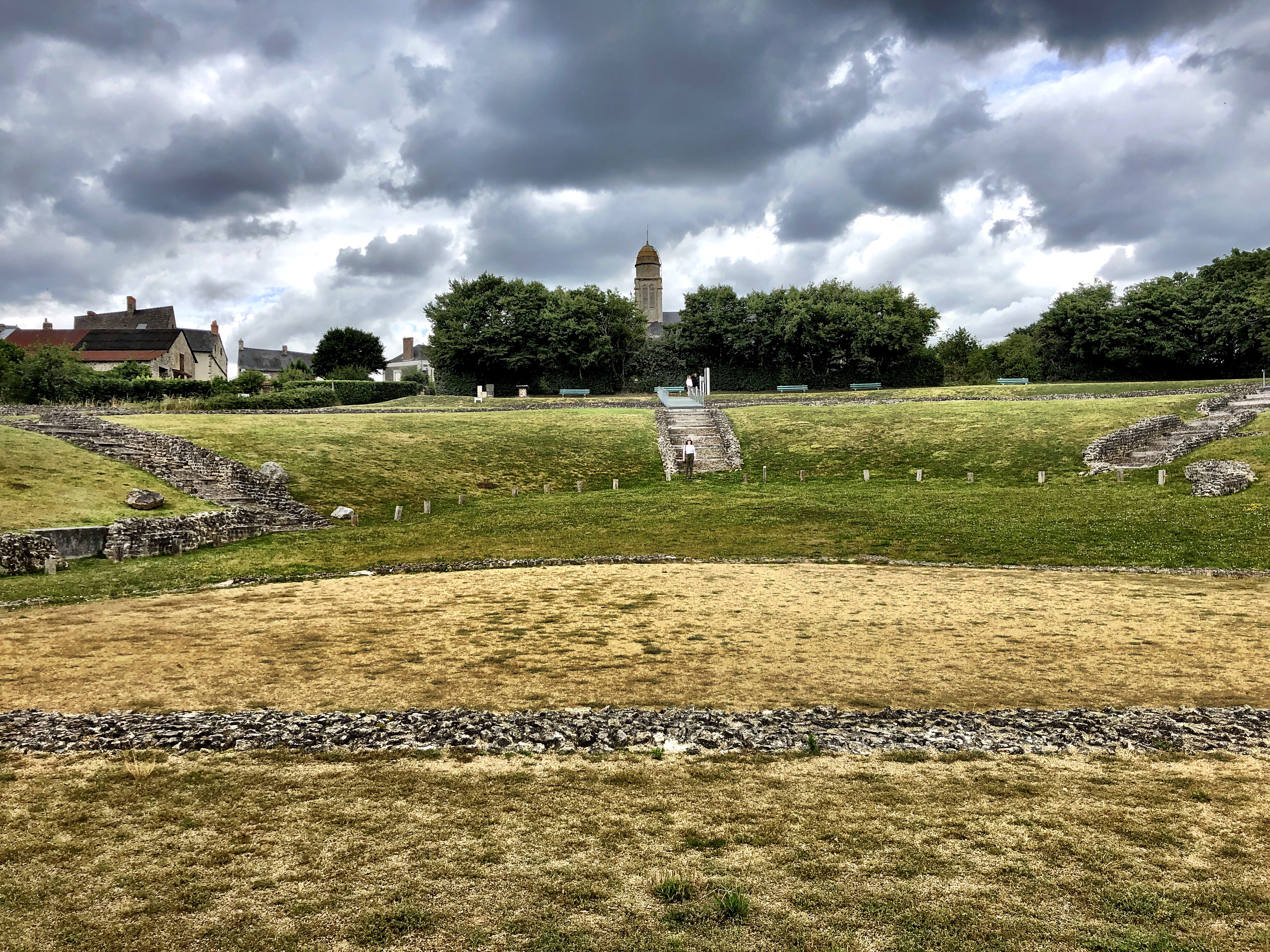
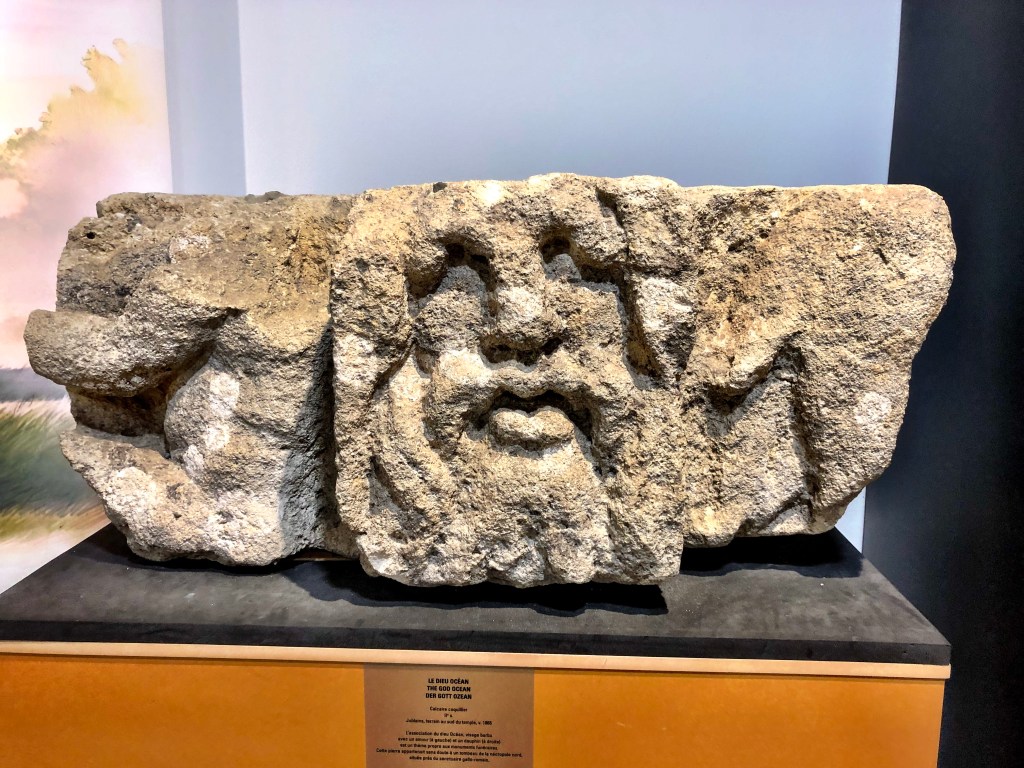
Not too far west (11 kilometers) of Dinan is the village of Corseul. A village which has the good fortune to sit upon the ruins of a Gallo-Roman town. Dating from the 1st century, Corsiolitum, as it was known then, was the capital of the Coriosolites – the local gallic tribe who so kindly agreed to be overrun and absorbed into the Roman Empire. In return they ended up with the latest in Italian urban design, complete with paved streets, underfloor heating and shopping.

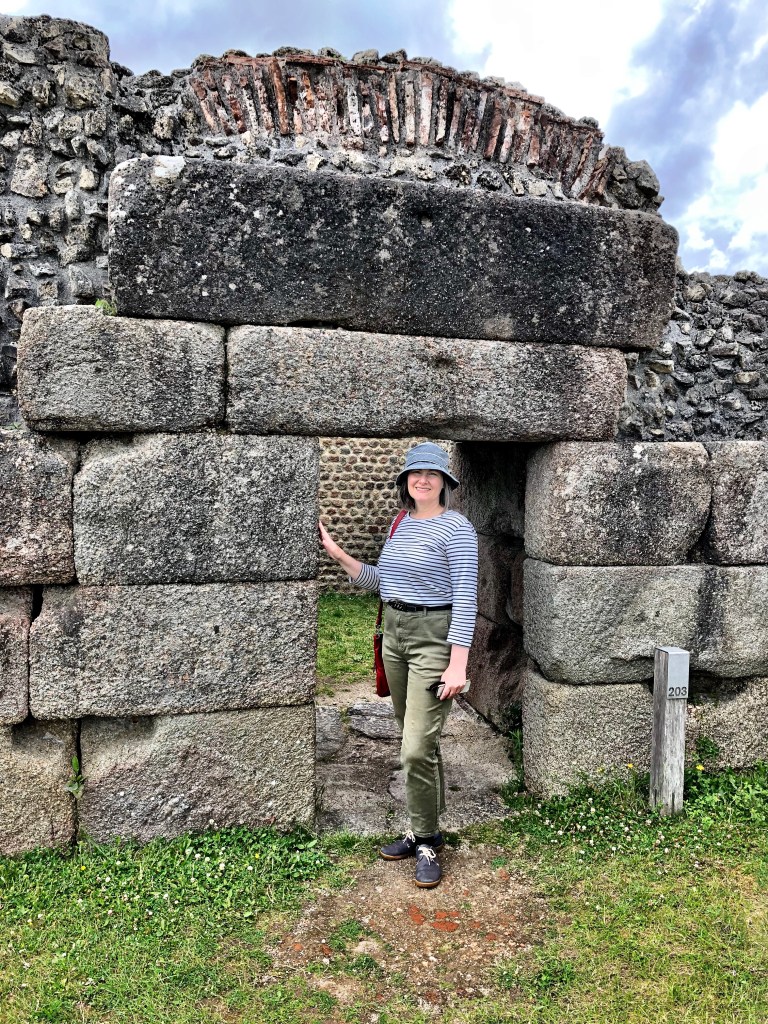
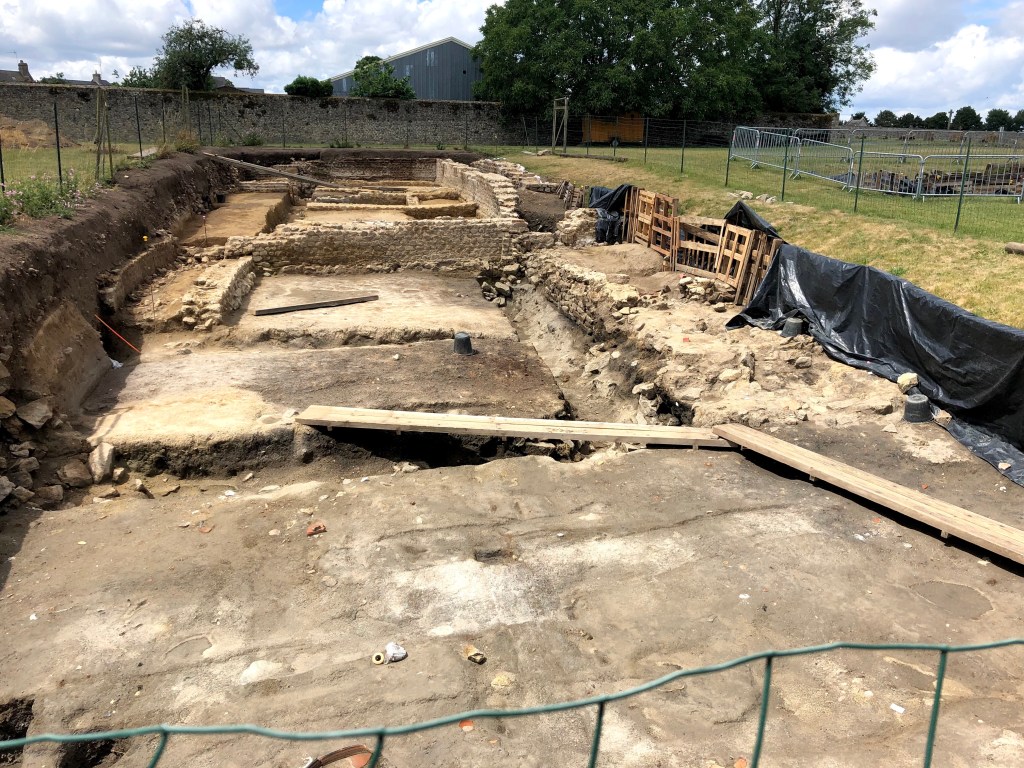
The ruins in Corseul are subtle. One can walk down a short section of streetscape marked by the remains of townhouse and warehouse foundations. Well-posted interpretive signs help visitors to imagine the scene as it may have been as a bustling hub. Extensively excavated in the 1980’s and 1990’s, the remains have been tidied up quite a bit. This includes what appeared to us as the imposition of cement copies of architectural elements such as rows of columns, textured and broken. A problematic practice which is, thankfully, rarely employed.
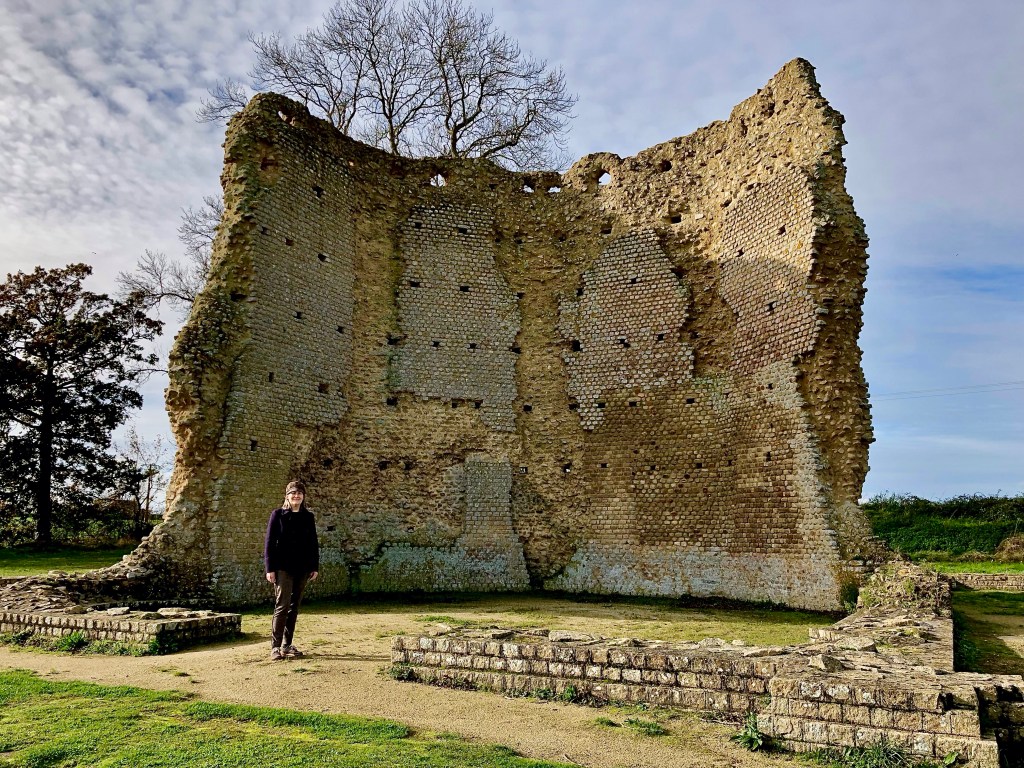
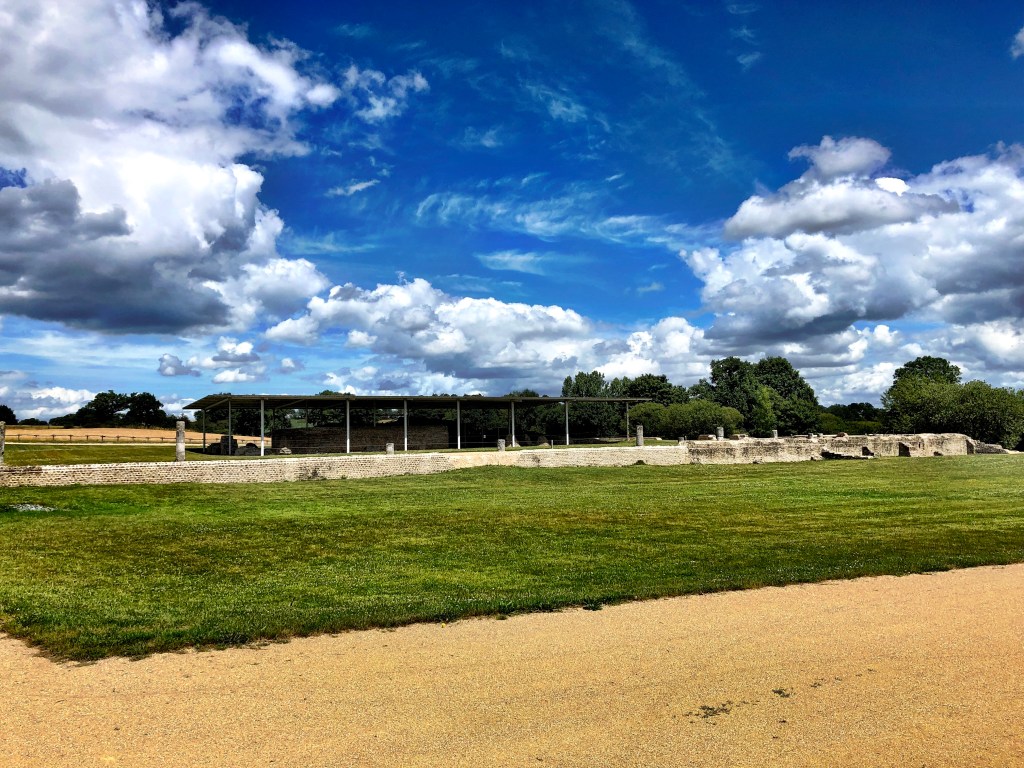
Just outside of town is the site of a Gallo-Roman temple complex: the Temple of Mars. It is a remarkable site with the remains of a roman tower standing tall like a sentinel above the foundations of a complex of walkways gateways and ancillary structures. Constructed in the first century, its primary purpose was dedicated to the worship of the god Mars. But there was also a smaller temple for veneration of the emperor. The builders also saw fit to include a separate entrance to the complex for the wealthy elite. Some things never change.

One of the interpretive signs in Corseul noted what we thought was another roman site to the other side of town. Following a narrow rural road up into the hills, we ended up at a wide spot near a dead end marked “parking”. Somewhere, down a dirt drive, was an historic monument. At least that was where the vague sign pointed to. Shrugging our shoulders, we parked and trudged along a lonely track through an oak wood. It was only five minutes later when we sidled up to the remains of a medieval castle. Hmnnn … not quite what we were expecting. But a pleasant surprise nonetheless.
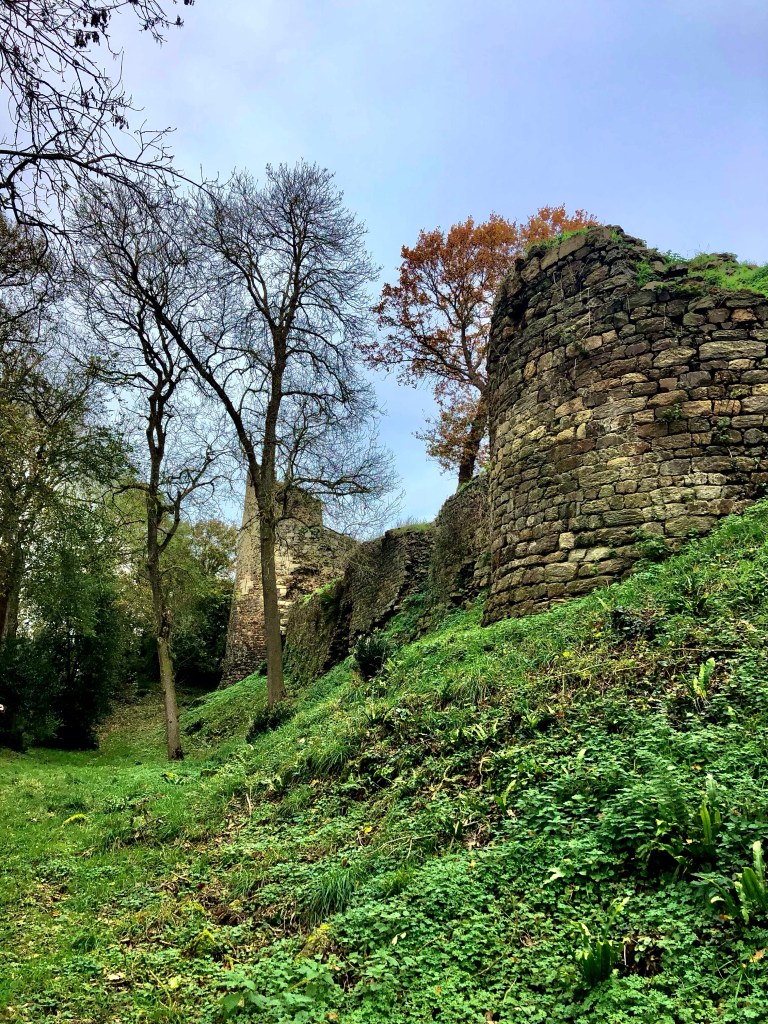
The château-fort of Montafilant was built in the 12th century. It remained in use until the end of the 15th century when it was abandoned. After that, its structures served as farm sheds and its ramparts as a handy quarry for stone by local inhabitants. Amazingly, there is still a substantial portion of walls and towers remaining. Enough to see that this was a considerable fortress. It rests on a promontory above two steep-sided valleys. Montafilant is a no-frills monument. Quite the opposite of the ruins back in town, this castle is raw. No effort has been spared to present this edifice as anything but what you see. All the better for it in my opinion. For those willing to do a bit of exploring, this castle is worth the time and effort. If you go, make sure to continue along the outside of the wall – you will find a large corner tower and a further rampart with a dry moat around the other side.

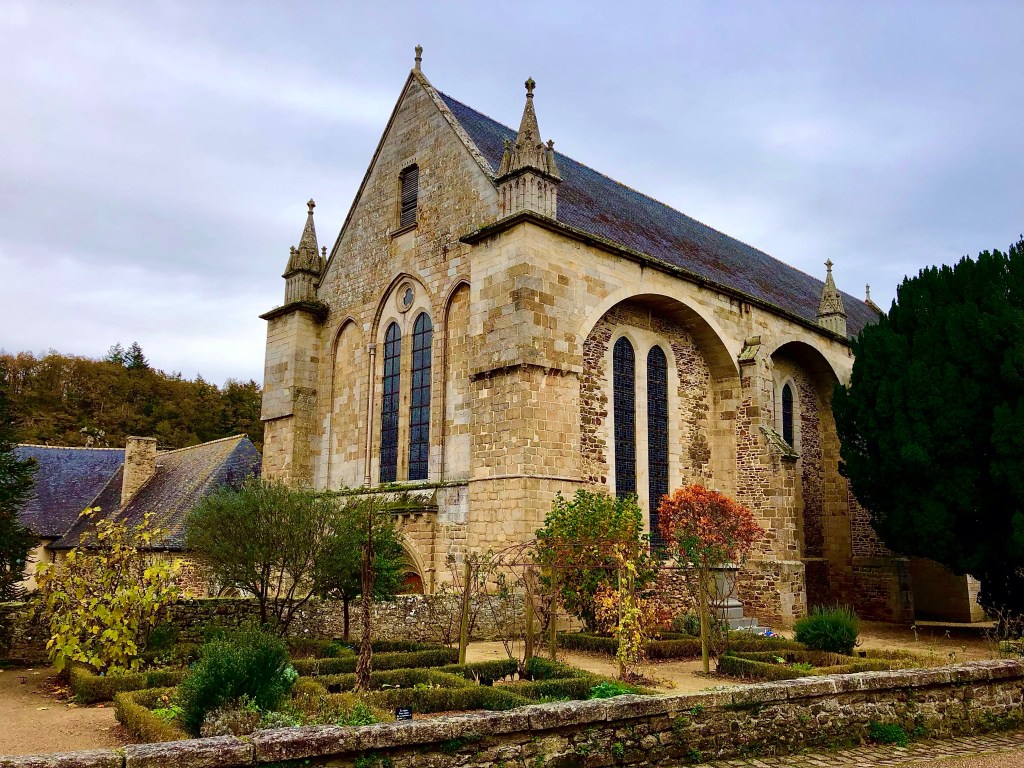
Our final stop for the day was the village of Léhon. Now it is, effectively, a suburb on the south side of Dinan. But it originally grew up around an independent abbey and castle along the banks of the Rance river. This Petite Cité de Caractère’s most picturesque area is the bourg surrounding the medieval abbey, overlooked by the castle ruins on the escarpment above. We enjoyed a nice afternoon stroll through the compact bourg, over its lovely medieval stone bridge and along the river to the canal lock and back. It didn’t take long. The bourg is quite small. Especially since the abbey was closed for the season. We plan to come back sometime when it’s open to visitors.
All in all, we passed an enjoyable day of visits and got to know this part of Bretagne a little bit better. We witnessed 2,000 years of history in the span of an afternoon. Not bad for a day’s work!





 Finding Our France