From Bastard to Conqueror – William in Bayeux and Falaise

Fanciful 19th Century Ode to William the Conqueror in Falaise

This post has taken a few months to produce. Principally, because I am an arch-procrastinator. There is no task that I can’t put off until later.

Much later.

But, in my defense, it also took this long because the post covers two separate visits which – conveniently, for the purposes of stitching together this weak excuse – happened several months apart. Earlier this summer (June) we made a somewhat rushed trip to the town of Bayeux. Then, just a couple of days ago, we had a look around the town of Falaise. So, how could I have possibly written this post until today?

Erm … we’ll just ignore the fact that I could have simply done two separate blog posts. Arch-procrastinator, remember? Also, there is a through-line connecting these two town visits: the life of William the Conqueror. So let’s focus on that. Stay with me on this …

William (Guillaume in French or, commonly, Gulielmus, in Latin) was born in Falaise around 1027 or 1028. At the time, the town was the seat of power for the duchy of Normandie. A castle already stood on the rocky outcrop where the remains of the last fortifications exist today. After his father died while returning from pilgrimage to Jerusalem, little Billy became duke at the age of 7 or 8. Many years passed, during which the young ruler gained much experience in waging war and governing an expanding duchy. Finally, in 1066, he took a short sailing trip with a few buddies. On the way, they decided to conquer England and commission the stitching of the longest “Mission Accomplished” banner ever made. That banner ended up in Bayeux where boatloads of visitors (and their buddies) travel to see it firsthand. There. See? Through-line.
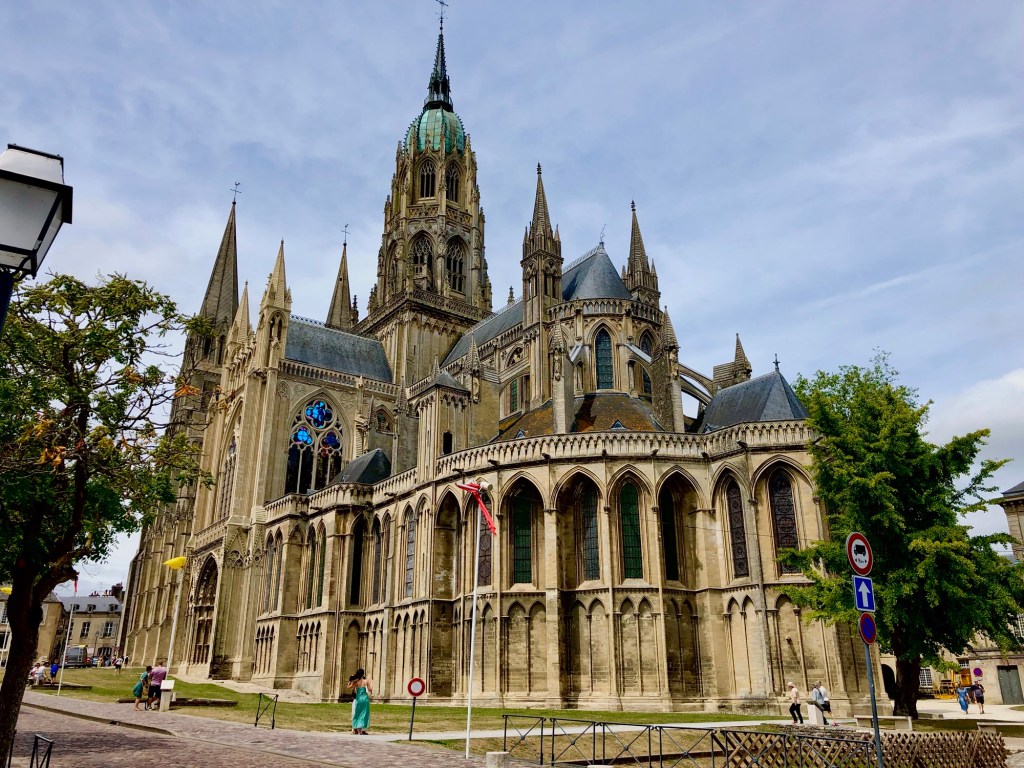
Bayeux Cathedral

Bayeux is a small town of around 13,000 inhabitants, just a few kilometers northwest of Caen, in the département of Calvados. It’s also not very far from the D-day beaches. Interestingly, it is this relative proximity to the allied invasion landing sites that helped to spare the town from destruction. As a result, it is one of the very few villes in this part of Normandie to have retained its pre-war character.

Elegant Entrance to the Forecourt of the Tapestry Museum

We arrived in Bayeux on a beautiful day with only one solid objective in mind: the Bayeux tapestry. But that would come after lunch. We found a nice local bistro where we had a bite to eat and then made our way to Le Musée de La Tapisserie de Bayeux. Housed in a former 17th century seminary, this well-organized and well-presented museum houses excellent displays on the town’s history. But the star of the show is undoubtedly the tapestry itself. Actually, it is an embroidery: a linen textile base onto which wool thread of ten different colors is stitched.
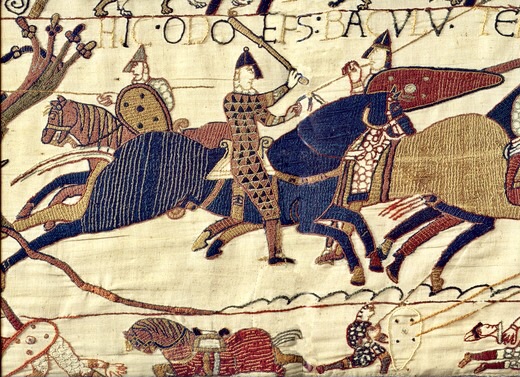
Bishop Odo Spreading the Love

The general scholarly consensus is that the “tapestry” was commissioned by William’s half-brother Odo, bishop of Bayeux (and proud new owner of massive parts of England, courtesy of brother Billy) in the 1070’s. Possibly created in southern England, it is thought to have been hung in Bayeux Cathedral (definitely worth a visit) after completion. The entire length (68.38 meters, or slightly over 224 feet) of the tapestry is displayed in a darkened room (to protect against damage from light) behind glass. We were happy to discover that one can get very close to the textile and see it in great detail. Absolutely brilliant to think that one is looking at an embroidery which is nearly a thousand years old.
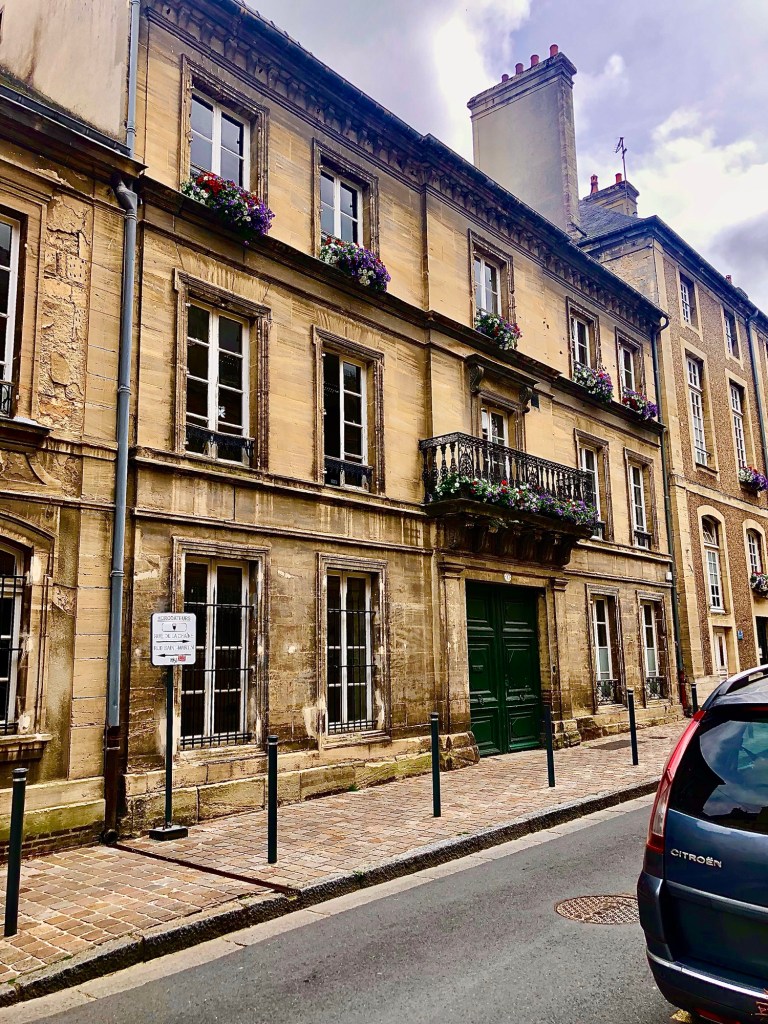
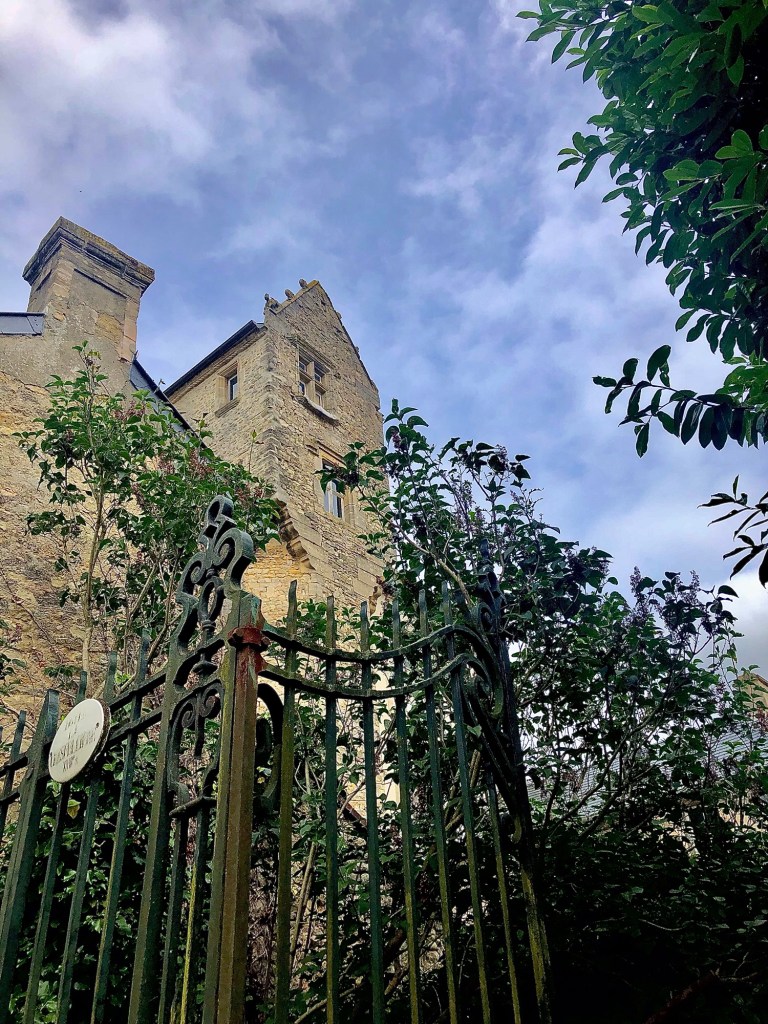
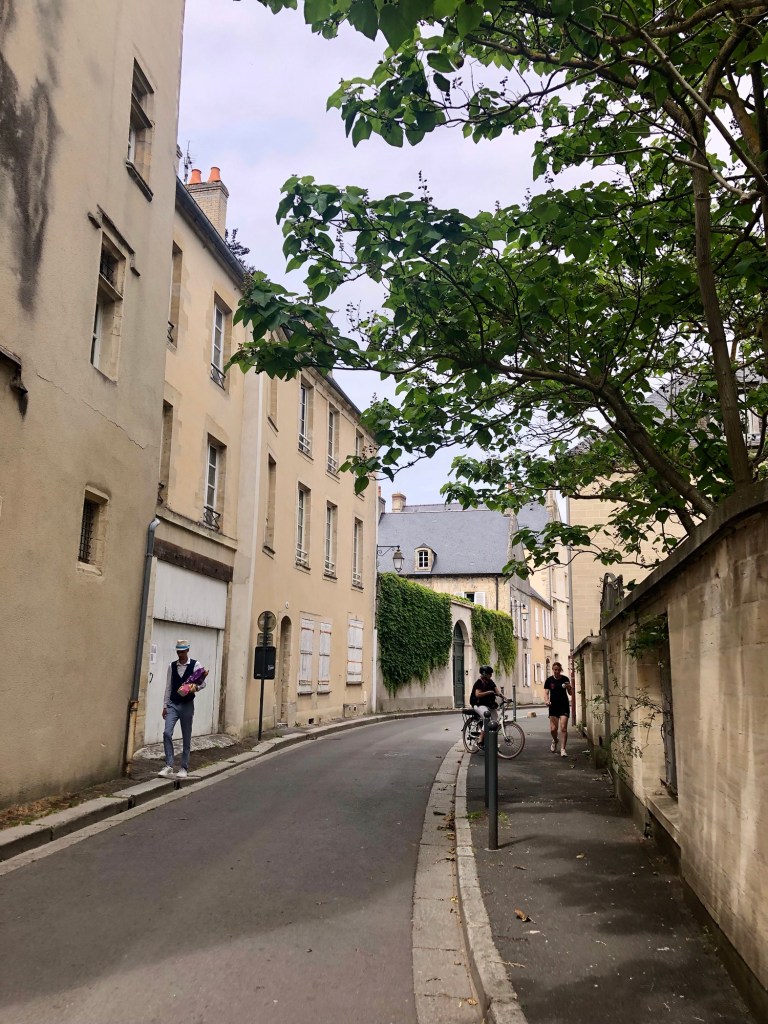
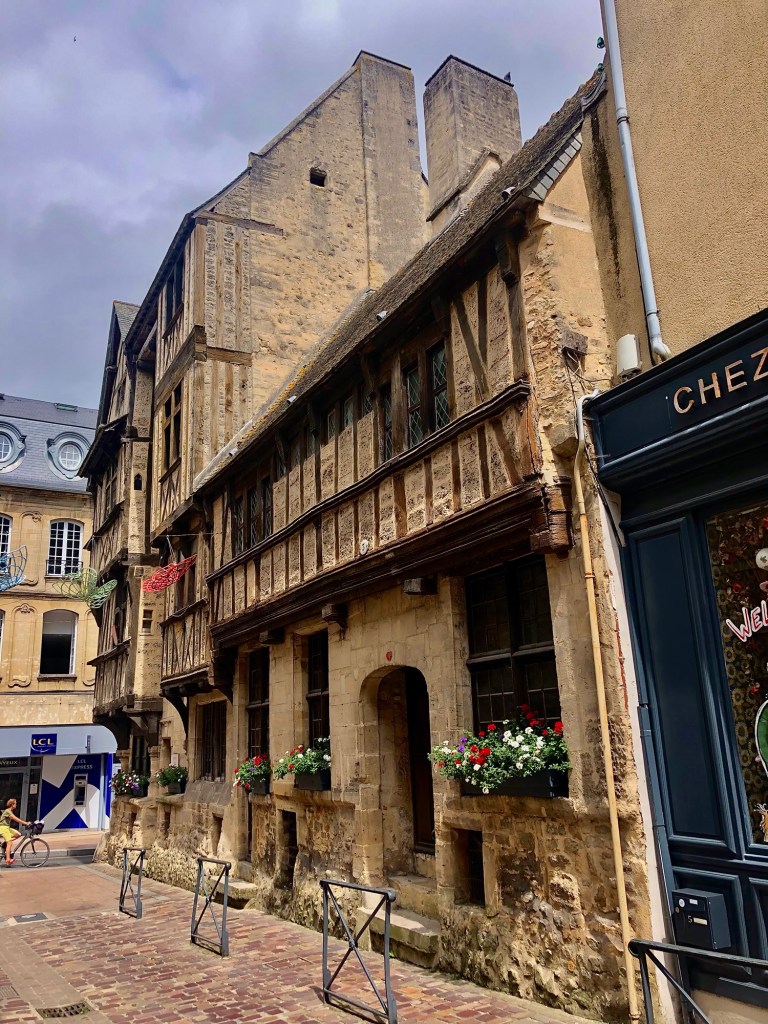
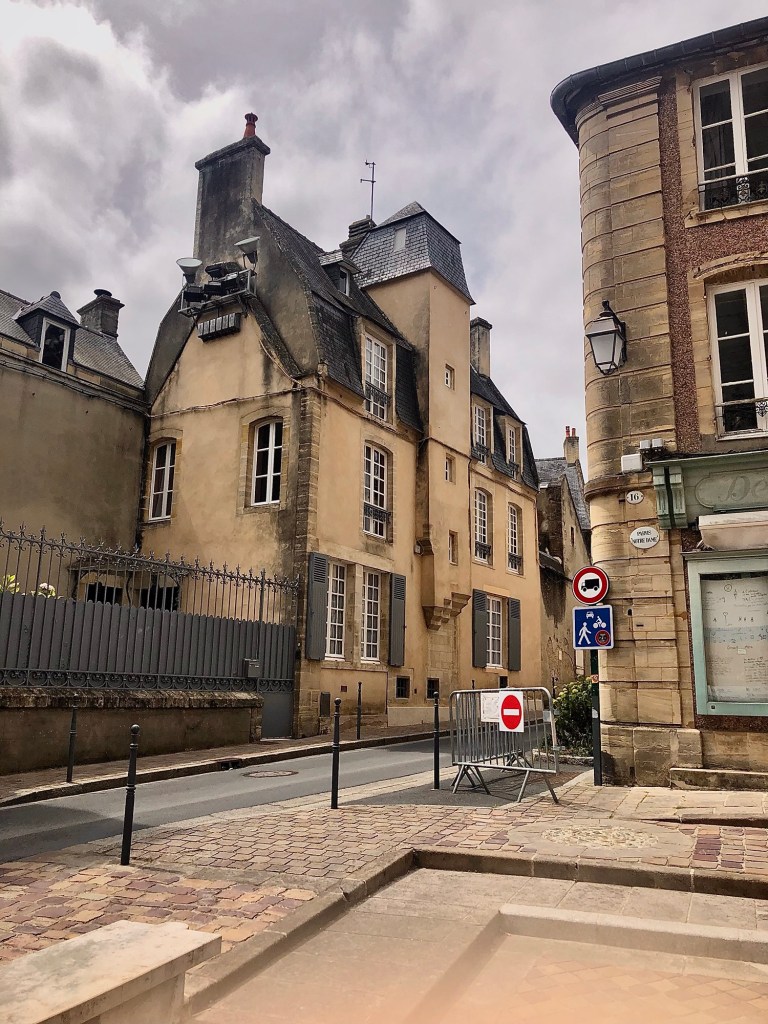
Though relatively small, the center of town has a bustling high street. We were there in late June on a weekday and it was completely rammed with tourists – a good deal of them American or British. But, as is usually the case, the side streets are where few tourists dare to tread. And it’s there where we not only found a more peaceful version of Bayeux, but also some beautiful scenic gems. The narrow medieval streets of the old town are hedged in by lovely old buildings, many of which display interesting architectural facets which seem to be unique to the area. We spent an enchanting afternoon wandering aimlessly, willingly following the timeless cobblestones whither they wished to lead us.
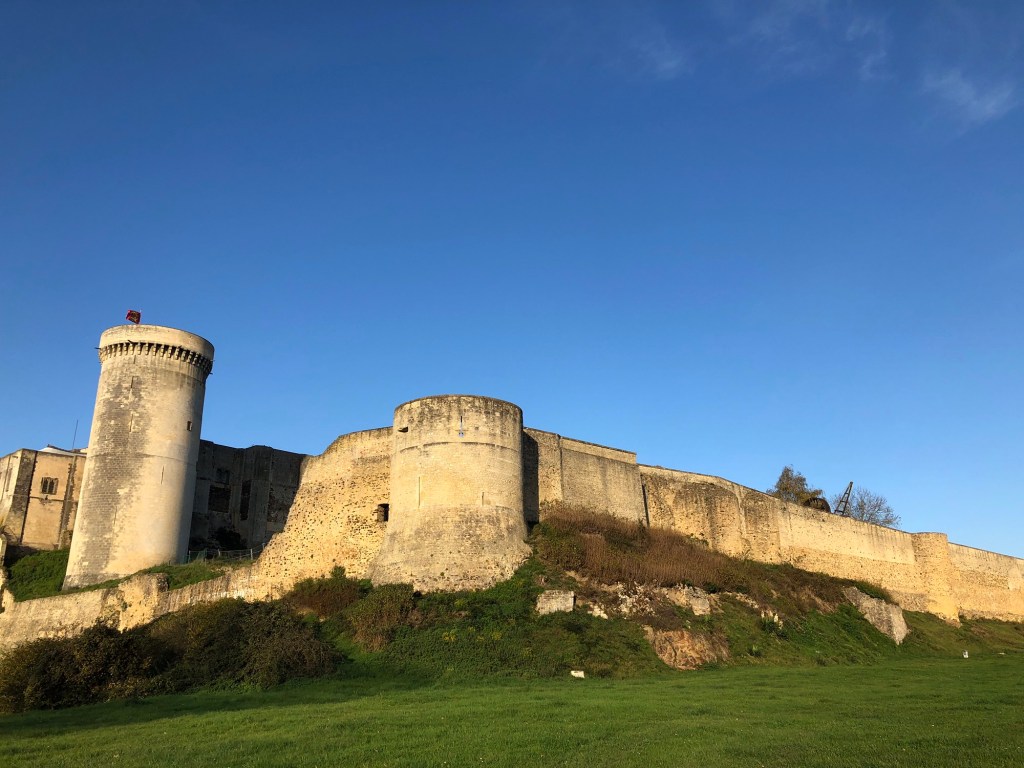
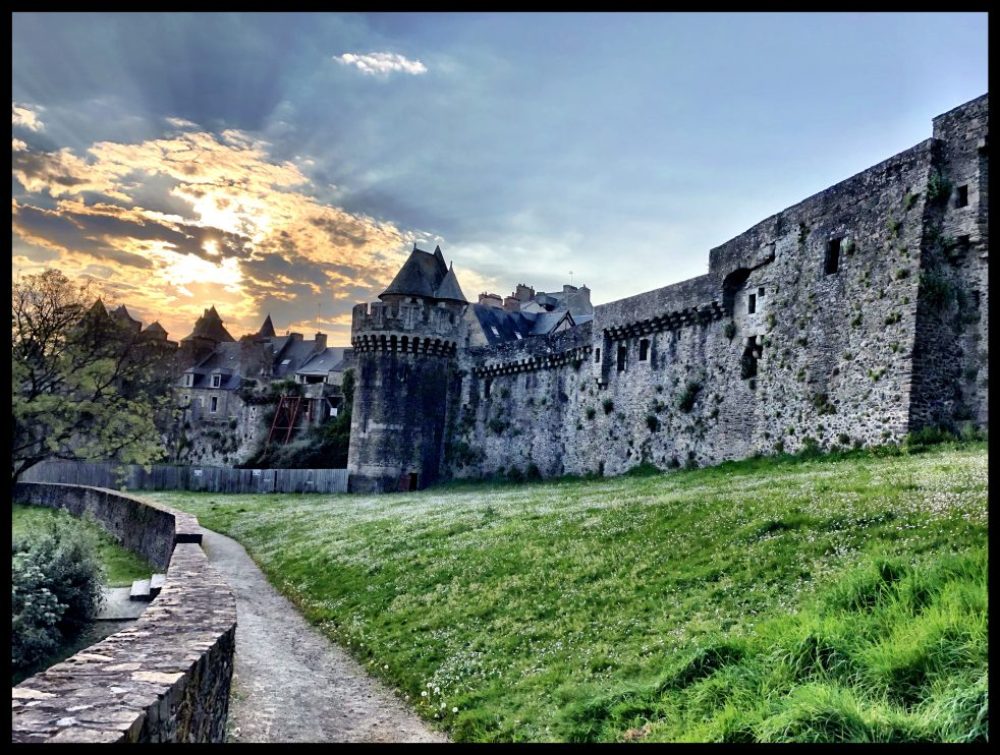
Le Château-Fort de Falaise

We continued our Conqueror’s Trail – he was also called “the Bastard”, but Bastard’s Trail doesn’t quite have the same ring to it – by pulling into the even smaller town of Falaise. It was mid-November by now so there were almost no other visitors apart from us. I imagine, though, that the place can be thronging in the high season. I mean, one look at the magnificent, chalky ramparts, towers and donjon of the château standing watch over its town is more than enough to get your tourist juices flowing.

Odd Camouflage – WWII Sherman Tank on Display Near the Centre-Ville Car Park

But first things first. As per usual, we arrived in town at lunchtime. We were hungry. And those tourist juices don’t just create themselves. So we nipped into a brasserie just opposite the castle and grabbed a bite to eat, stuffed in like sardines with locals who, I think, found us to be a curious diversion while they loudly bantered with each other over their meals. We all seemed to have a nice lunch and, by the time we walked out the door, they were laughing with us instead of at us. It was fun. And that little spark of connection between two cultures is always a rewarding feeling. So, we’ll take that as a win. Off to the château!
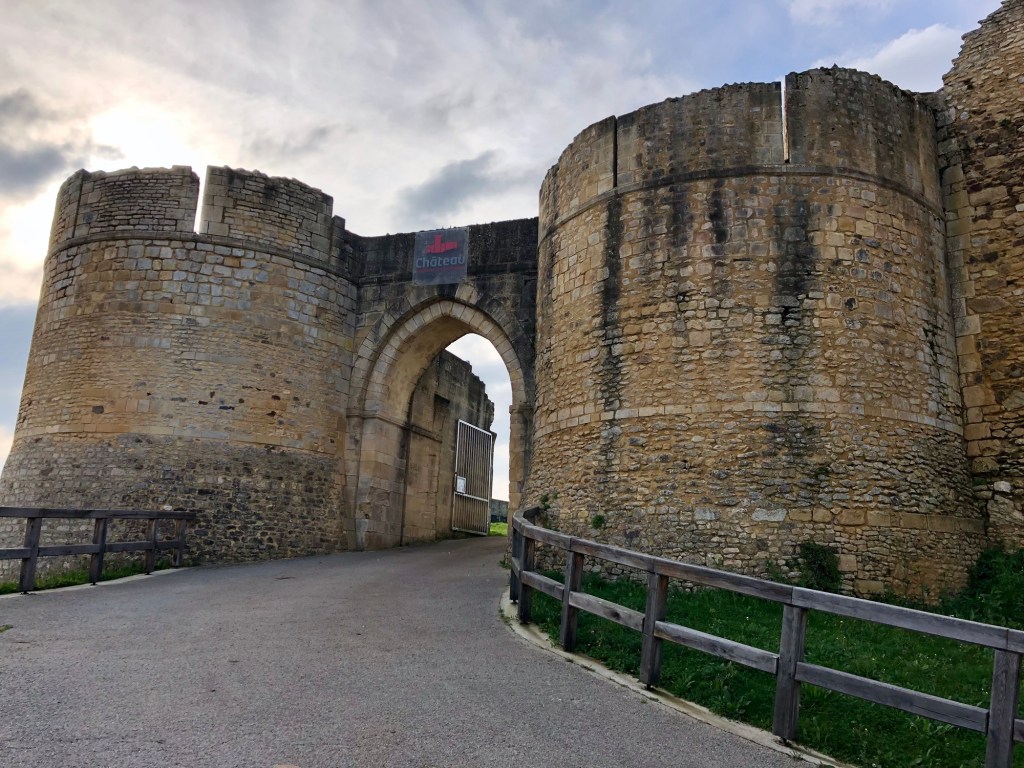
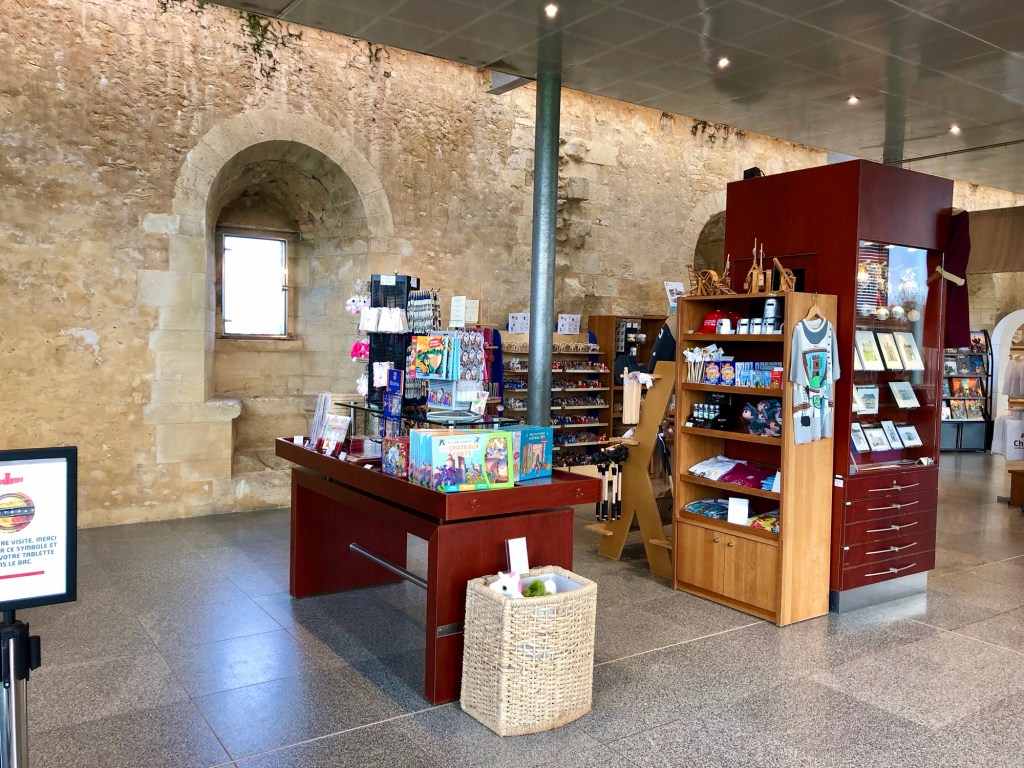
The illegitimate offspring of a duke and a local tanner’s daughter, William spent much of his early years in Falaise. In the very castle which we were privileged to visit that day. There has been a stone fortification of some kind on this rocky mound since circa 960. You can wander freely around the outer ramparts but there is a fee charged to enter the hub of the château-fort: the donjon. The square, imposing form of the principal surviving stone structure inside the walls has been restored – in some areas quite heavily. For some reason, the restorers erected a gargantuan concrete and steel-beam structure in front, apparently in an attempt to reference the original entrance but in a very post-modern, brutalist manner. We both found it to be a bewildering choice.


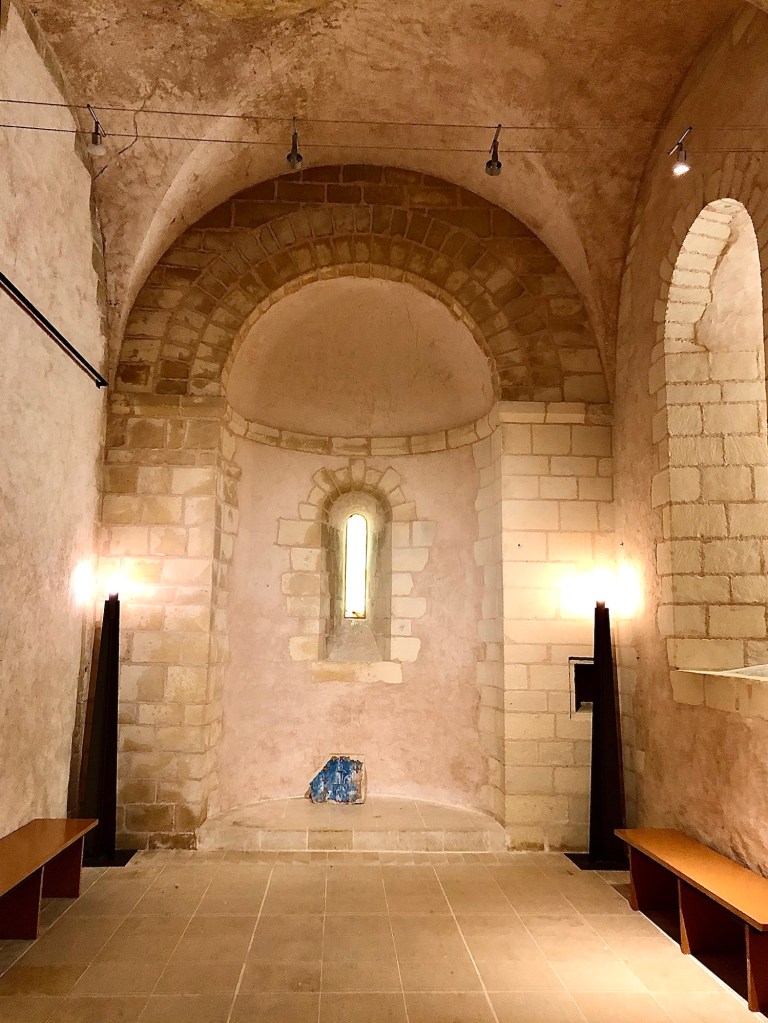
Once inside, we discovered that the main hall of the Norman keep has also been handled in a very strange way. The best way we could think to describe it is “early 2000’s exhibition hall chic”. But the good news is that the rest of the donjon has been much more sympathetically restored. There are several levels to see, even up to the rooftop for some nice views of the town and surrounding countryside. Overall, it’s a rewarding place to visit and worth the price of the ticket.
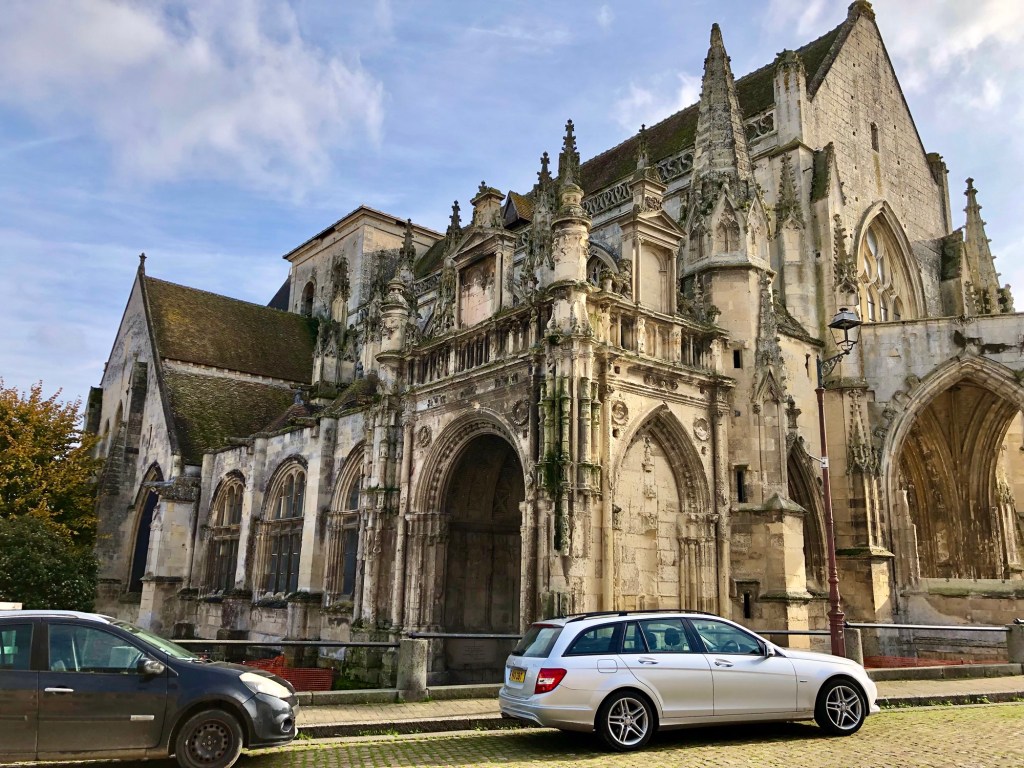
La Trinité

We are always keen to visit a nice church and there are two within easy walking distance from the castle. Our favorite was the most ancient and interesting L’Église de la Trinité. The current edifice stands facing the lovely Hôtel de Ville and the château beyond. It originates from the 13th century and after, but there has been a church on the spot since at least the 9th century. So, yeah, kinda old. La Trinité was heavily damaged during World War II but lovingly and expertly rebuilt. Of special note are the substantial portions built in the French Renaissance style (porch, various chapels). Quite special and beautiful. But the whole church is a gem and definitely a must-see.

Châtelet of Our Dreams – La Porte dés Cordeliers

Falaise has retained many vestiges of its 12th century town defenses. One special point along this circuit is the Porte dés Cordeliers. A picture-perfect châtelet guarding one entrance into the medieval town, this charming remnant completely entranced us both. It is sadly empty and seemingly abandoned, but so incredibly beautiful to our eyes. As we took our many photos, we madly schemed with each other as to how one could purchase it and make it the perfect home. This poor, neglected piece of history is crying out for help. We really hope it receives some attention soon.

Falaise War Devastation

We liked Falaise. Though small, and having suffered horribly during the last war, it is bursting with history. We ran out of time so we were unable to visit the museum dedicated to the experiences of the citizens of Falaise during the war (Les Civils dans la Guerre) but we hope to return to see it someday soon. A thriving commercial district lines the axis of the town too. So there are plenty of shops to browse. It was a fun time. And our only regret was that we didn’t have more time to spend there.

Bayeux and Falaise. You should visit them. We’re certainly glad that we did.
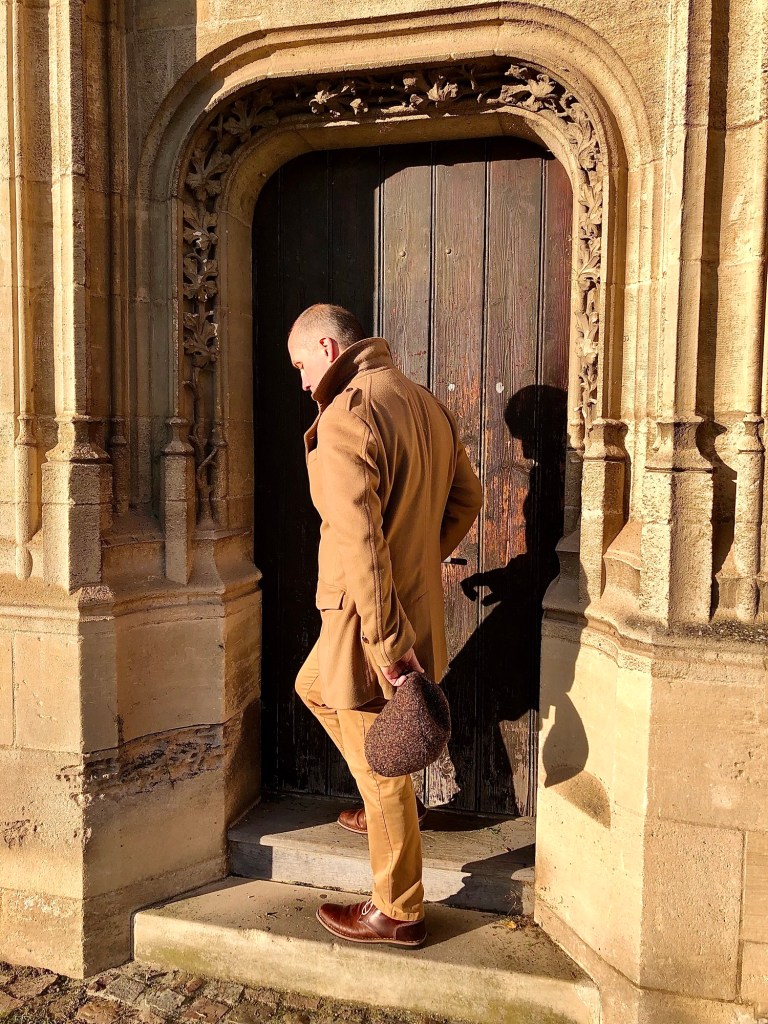
Closing the Door on Another Adventure

Les Belles Vues de Granville

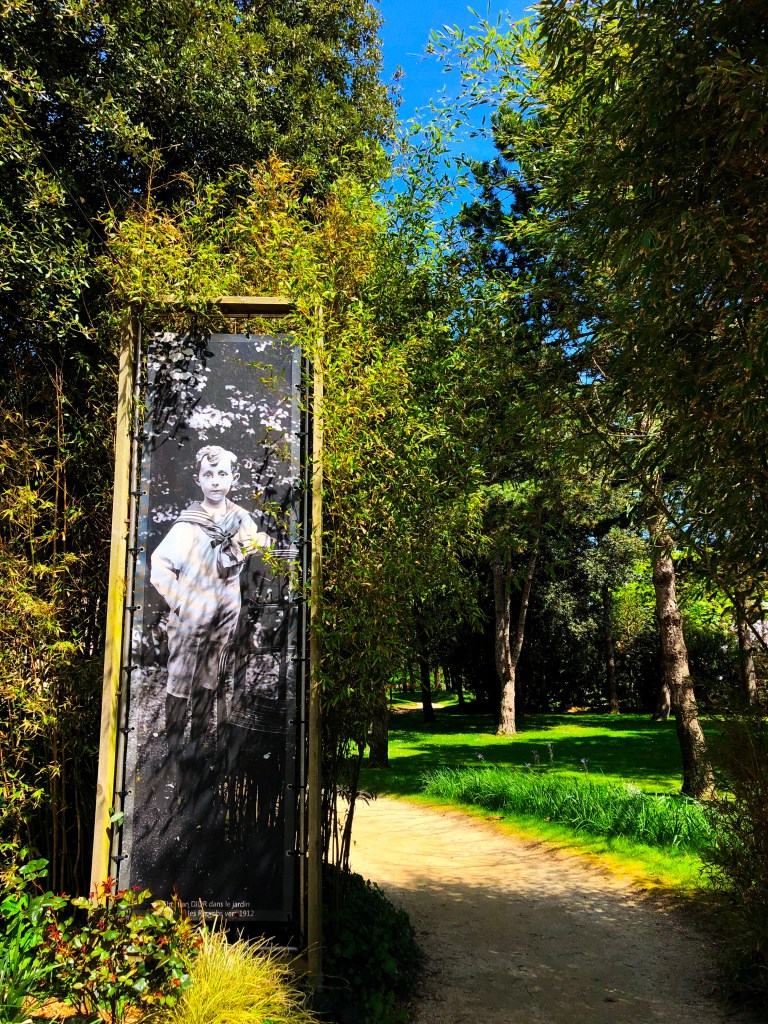
Junior Fashion Icon – Dior in His Granville Garden

“It’s only an hour away. Why haven’t you been there yet?” All of our French friends in Fougères are surprised/bemused when we sheepishly admit that we have yet to visit Granville. Cherie and I would exchange looks, acknowledging to each other our private misgivings about this town: casinos, congested beaches, hordes of tourists, souvenir shops as far as the eye could see – that was our impression. Not really our kind of thing. But our friends are always enthusiastic on the subject. Hmnnn … were we missing something?

Valerie’s visit gave us the impetus to give Granville a look. It’s always fun to share new places with her. So, off we went, north from Fougères to Avranches, and then west along the coast of the Baie du Mont-Saint-Michel. Well-trod and not particularly interesting highways all of the way. Then, by a circuitous route through the outskirts of town, we ended up in the center of our destination. Parking wasn’t too difficult to come by. But this was the middle of the week during the run up to high season, so I imagine the ville becomes much more congested as the summer months roll on.

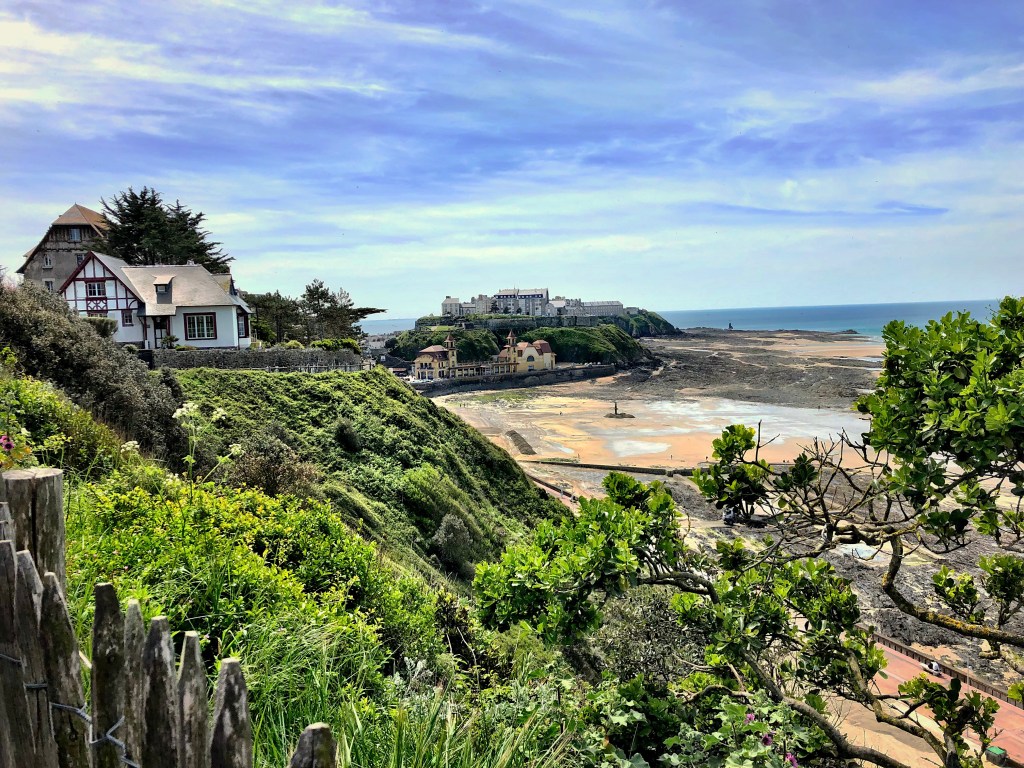
Cliffs and Beaches – Granville’s Got a Lot

Aaaah, there it was: the long, broad stretches of sandy beaches flanked by the blue waters of the bay on one side and on the other side, like a bank of barnacles, was the cliffside, encrusted with buildings. I had to admit, it was striking. Grand. Scenic. Immense. Even from the lower parts of town, the views out to the ocean are sweeping. The weather was mild and there were a number of hardy souls taking advantage of the conditions to swim, paddle board, windsurf and sail. Oh, sailing! I felt the pull myself. Granville is one of those places that compels you to engage with the sea. But we had other things in mind for our visit that day. Like lunch. Sailing would have to wait. Perhaps another time.

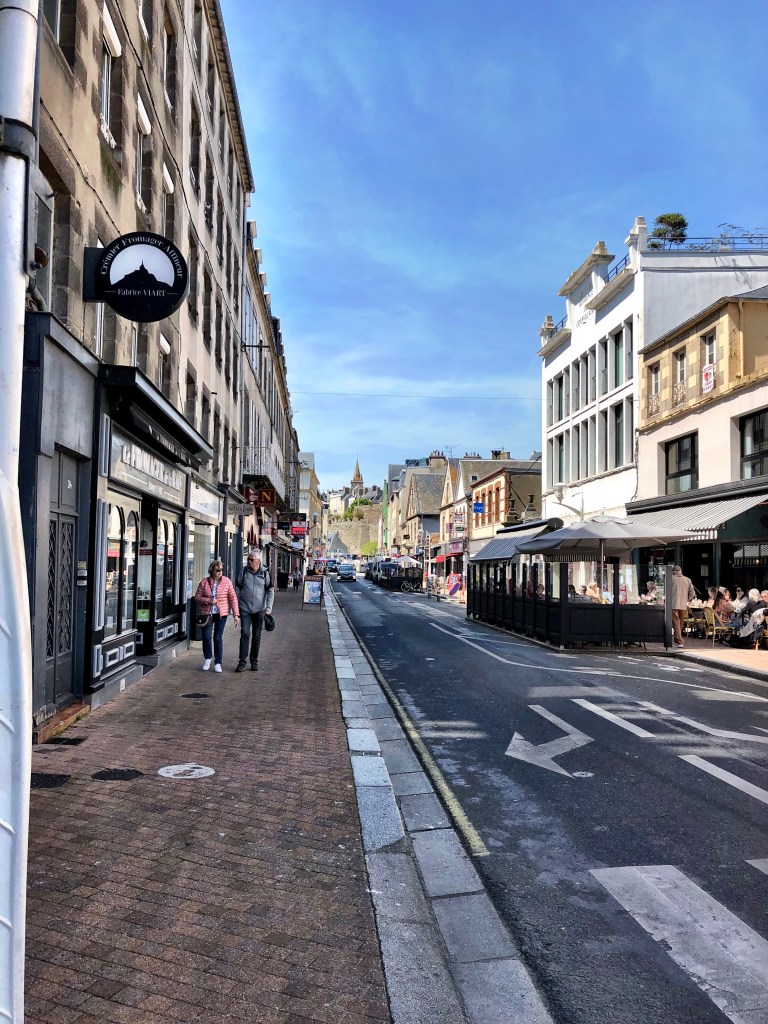
The Commercial and Tourist Hub

Wandering in to the lower town’s busy commercial streets, we admired the many restaurants, bars, bistros and cafés. A nice variety. We made our way to a restaurant specializing in couscous dishes that we had spotted earlier and sat down inside. The menu looked excellent. Fortunately, Cherie asked our server about the presence of fresh coriander (cilantro, as we know it in the U.S.) in any of the dishes. Pulling a slightly puzzled face, he responded, “Yes. It’s in everything.” Oh. Cherie is allergic to fresh coriander. Not in an emergency ambulance kind of way, but even a small amount of those soapy green leaves causes her great digestive upset. We tendered our apologies and made for the door.

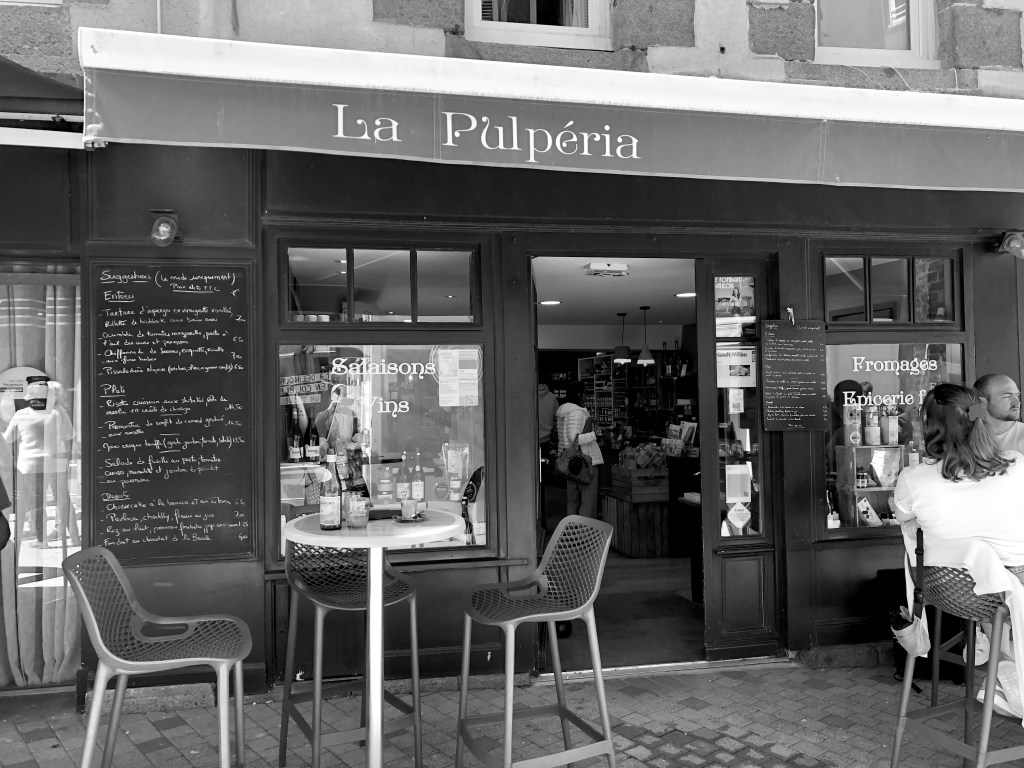
Our Second Choice Was First Class

Around the corner was a nice épicerie with a small restaurant tucked away inside: La Pulpéria. We were pretty hungry by now, so we ducked in and sat down. With our wine, an excellent local cider, and water, we enjoyed a fine meal, looking out on to the busy pedestrian street outside. While we ate, Granville got on with the business of daily life and welcoming a steady stream of tourists – jobs for which the town is ideally suited.

The House of Dior

The three of us only had one specific site we planned to see in Granville: le Musée Christian Dior, the childhood home of the legendary fashion designer. The house where he spent his early childhood is perched high on a cliff overlooking the seaside. Surrounded by beautifully laid gardens, this moderately sized home was purchased by Dior’s father who owned a large fertilizer company. Christian was born there but the family only lived in Granville for a few years before moving to Paris. Nevertheless, like many well-off Parisians of the time, they continued to take their summer holidays in Granville.

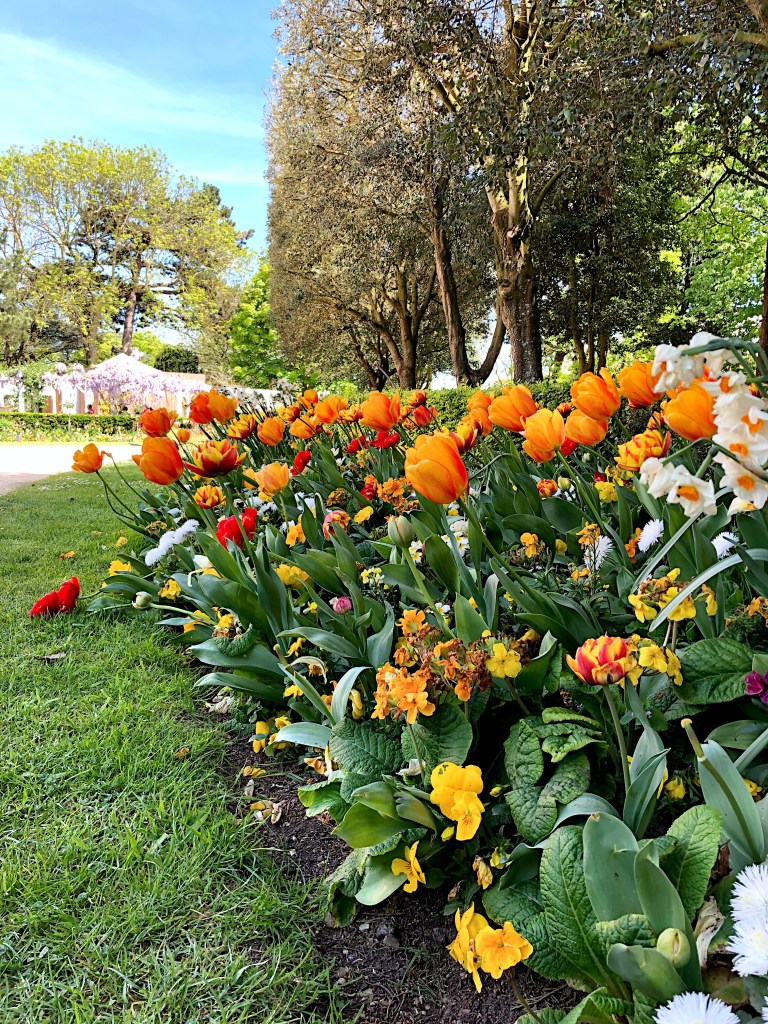
The Peak of Tulip Time

The Dior house is surrounded by pleasant gardens. Christian himself was a keen gardener and he designed several aspects of the landscaping which are still on view today. The flowers were in full bloom – all of them bursting to compete for attention. And the grounds enjoy some spectacular views out to sea. It must have been a soul-satisfying place to live. Not to be forgotten, there is also a nice teahouse featuring a wisteria-clad terrace on which one can enjoy a civilized cuppa.


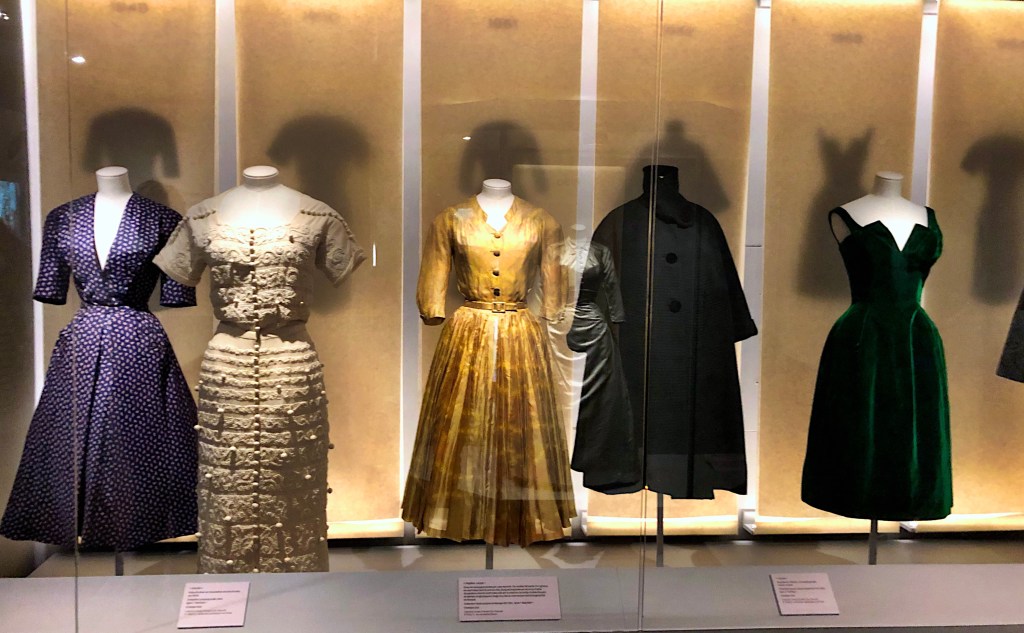
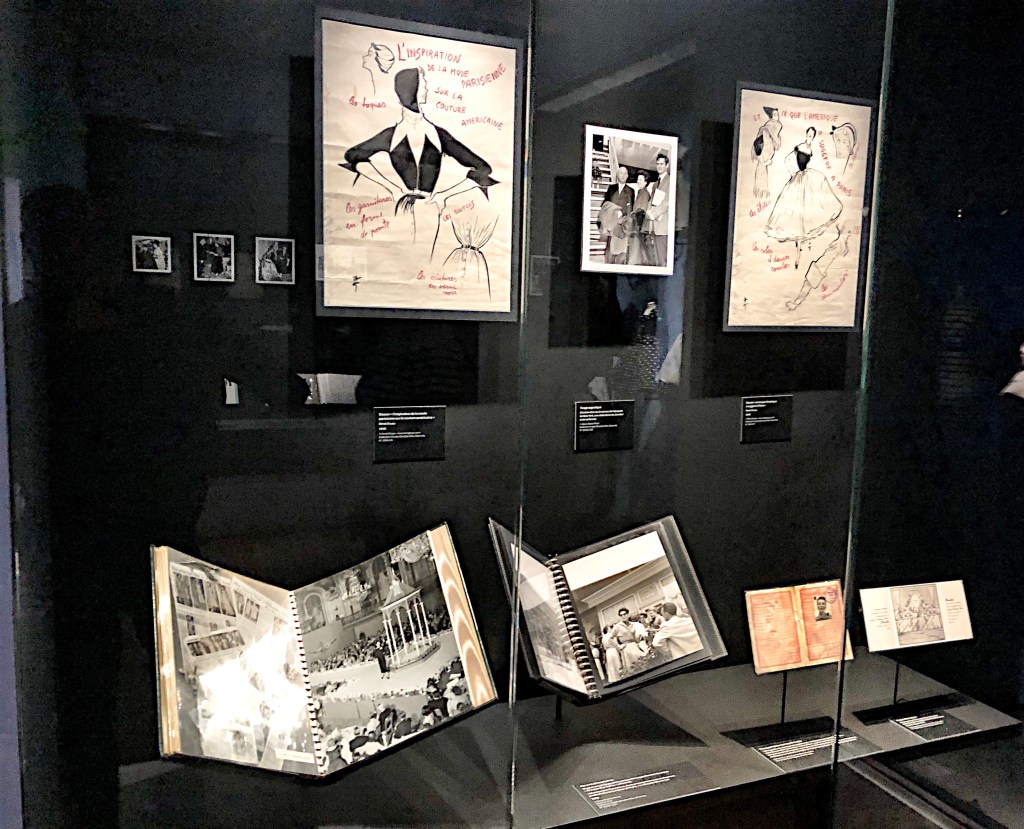
The Dior house is entirely given over to a museum. If you are keen to see how the family lived, you will be disappointed. But the many exhibits are well-curated and present an interesting look at the designer’s creative and professional life. Scores of dresses and accessories are on display. Fans of haute-couture and the Dior brand will be thrilled by the depth and breadth of the collection. The man’s originality and skill cannot be denied. It was amazing to see how radically Dior altered the course of clothing design and how his innovations are still so strongly reflected in the clothes we wear today. Gardens, fashion from the past, and extraordinary seaside views: we enjoyed our visit to the Dior house.

A Monument to Savagery – WWII German Gun Emplacement

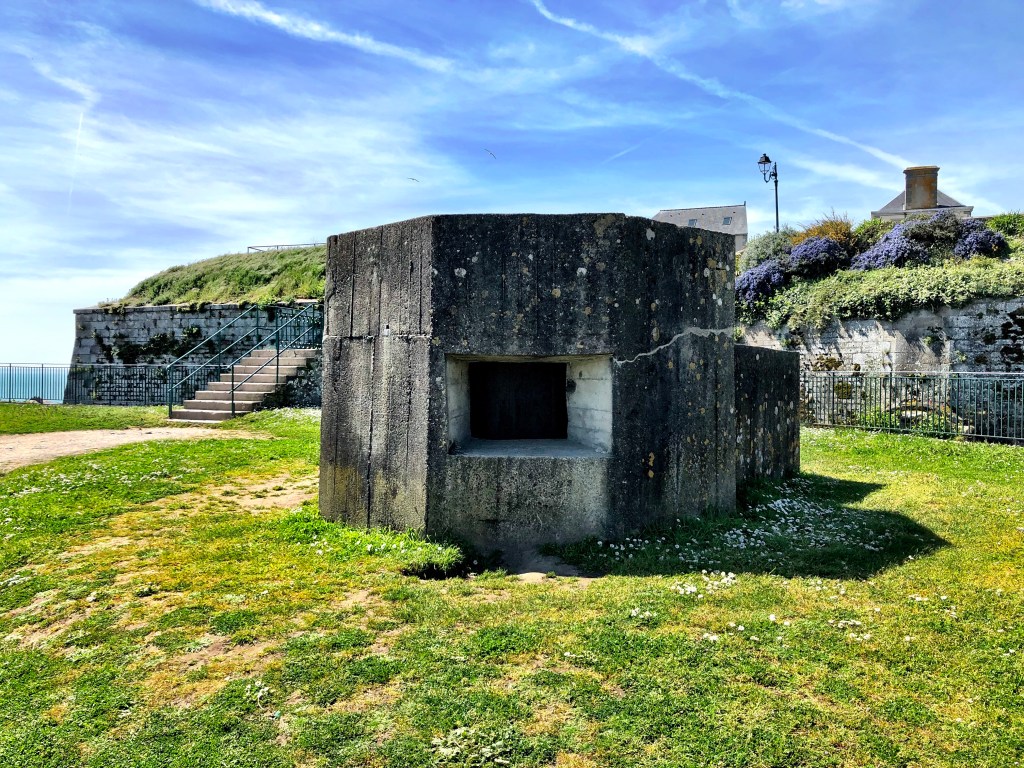
Of course, when in Normandie, you’re never far from reminders of the Second World War. Situated at the northern entrance to the Baie de Mont Saint-Michel, Granville was ideally suited to defend against an Allied invasion. There are still remnants of the gun emplacements and military installations put in place by Hitler’s forces. Just above the casino, on the Point du Roc, are the remains of concrete bunkers, gun emplacements and barracks. Considerable effort was put into reinforcing this fortified point by the German army. But it was all for naught. The Nazis ultimately abandoned Granville without a fight after the D-Day invasion in June, 1944.


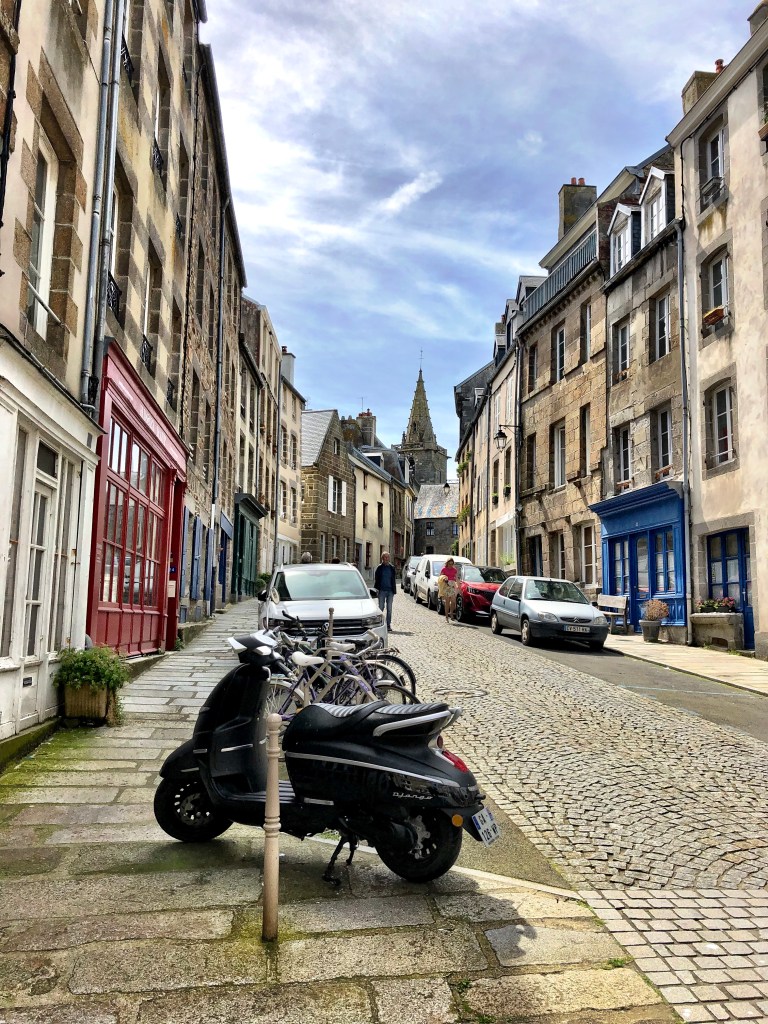
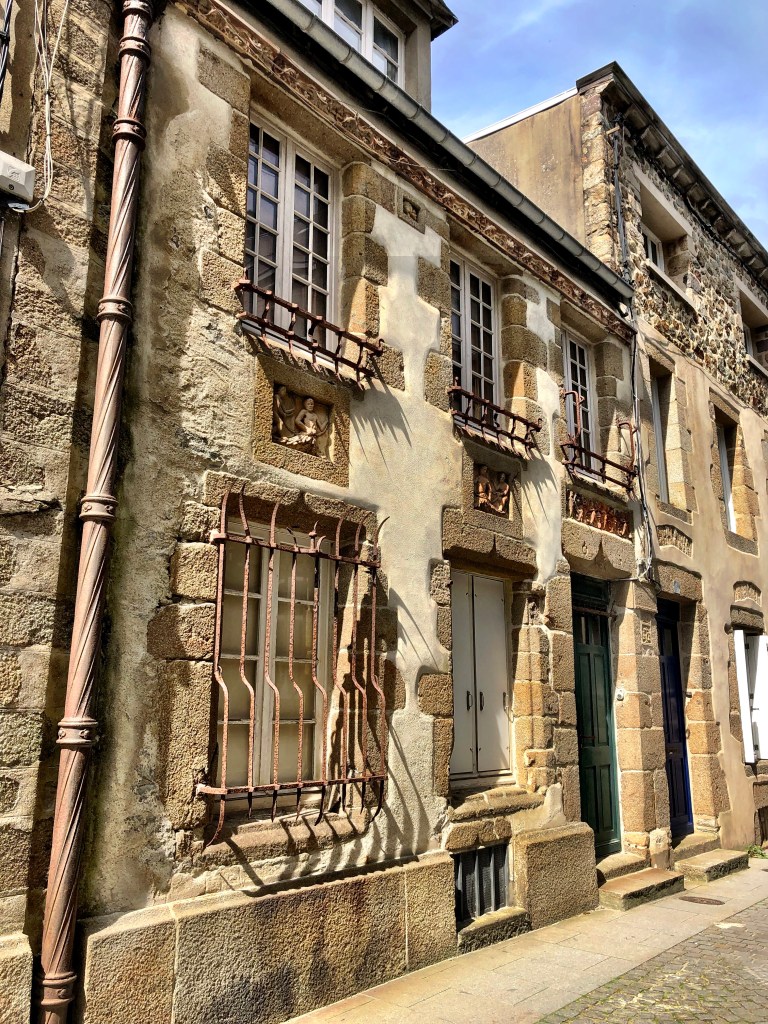
Towards the end of our visit, we made our way to the old, upper town on the Point du Roc, or Cap Lihou. This turned out to be our favorite part of Granville. Beautiful, old buildings with stone, render and timber-frame façades, a medieval gateway, a lovely old church, and lofty views over the harbor and far out to sea. What’s not to like? We pretty much had the old town to ourselves. I love it when the locals far outnumber the tourists. It feels much more like an actual place where people live year-round and everybody has a true interest in what happens there on a day-to-day basis. The Point du Roc felt like that kind of place.

A Refreshing Break

While up there, we stopped at a bar situated in a lovely square. It was getting a little hot and cold drinks seemed like just the ticket. Typical for a French bar, everyone was sitting outside at a dozen or so impossibly thin metal bistro tables and chairs ranged haphazardly about the ancient cobbles – there wasn’t a soul inside. Even the bartender spent most of her time in the square, taking drink orders and chatting away with locals. She seemed reluctant as anyone to be within. A couple in their seventies, sitting next to us, were habitually ignoring each other: he distractedly glancing at a newspaper, she mulling over her book. They proved to be a nice quiet buffer zone between us and the rest of the bar’s customers, all of whom were talking, gesticulating, and laughing in that inimitably relaxed way the French have been born with. I wish I had it in me. But I don’t. I do admire it though.

In this very pleasant atmosphere, within this unlooked-for square which so generously unfolded itself to us like a springtime gift basket, we enjoyed a real moment of tranquility. We sipped at our drinks, chatted away (to the slight consternation, I thought, of the older buffer couple next to us) and let the joie de vivre permeating this place gently wash over us. I’ll never stop saying it: it’s the simple things that give us all the most happiness.

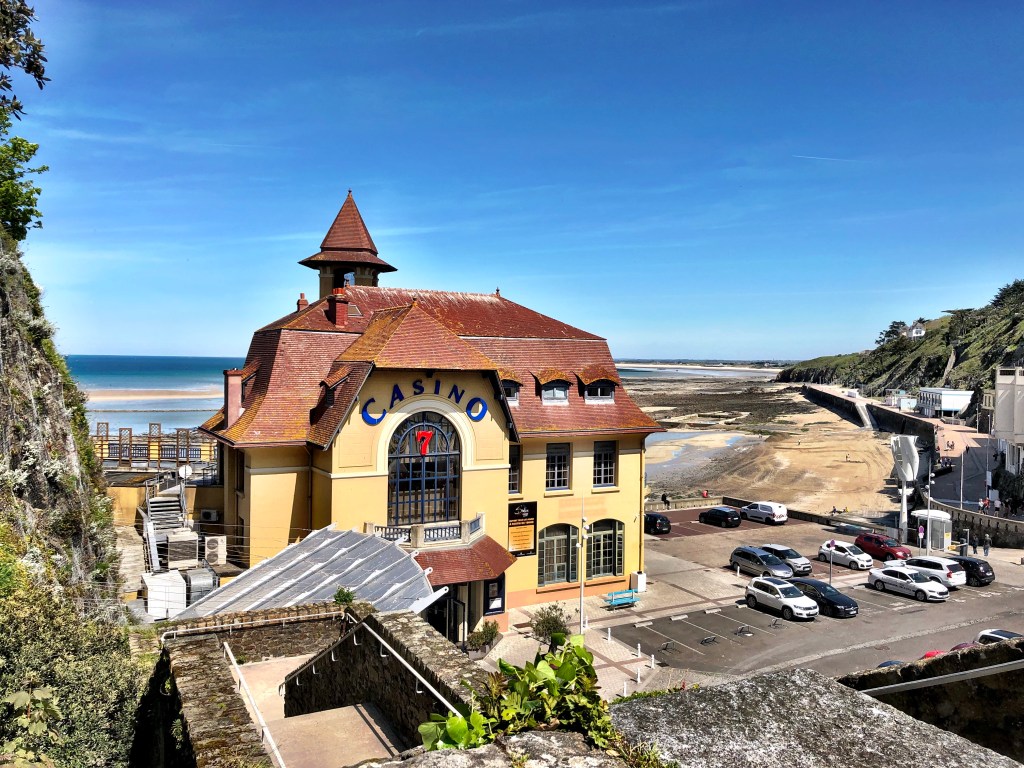
A Casino on the Shore

And that was it. Our visit to Granville was a success. And much more enjoyable than we had thought it would be. Yes, there are the endless shops and restaurants clamoring for the tourist trade, the casinos, and the crowded (albeit beautiful) beaches. And if that’s your thing, then you’ll love Granville. But this town also offers another side: beautiful views, an elegant museum, clifftop gardens, and an old town where traditional French life has persevered through the ravages of seaside weather, wars, occupation and the rush of progress to continue celebrating the good, small things in life. So, why haven’t you been there yet?

Thanks for visiting with us. See you again soon!

You Can Find Relief in the Dior House Gardens