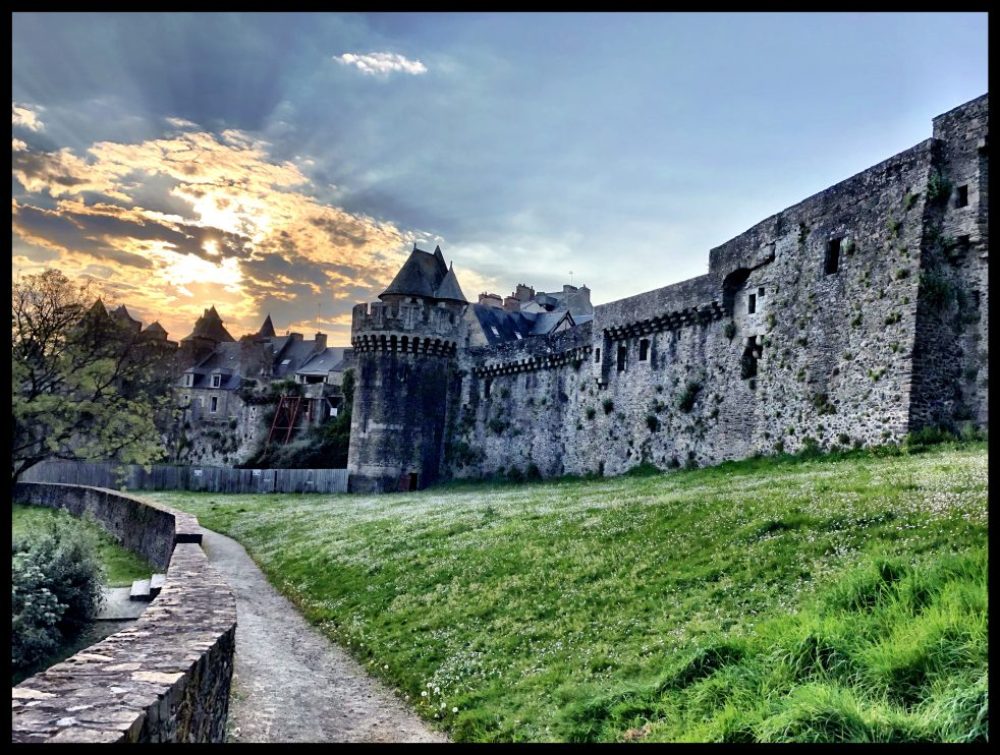
A Rough-Cut Gem in the Mayenne: le Château du Fresne

Faded Grandeur Adorning the Verdant Landscape of Mayenne (photo courtesy of the du Fresne website)

Cherie happened to be knocking around the interwebs the other day and somehow chanced upon a site for an obscure château we hadn’t heard of before: Château du Fresne. Little more than a half-hour’s drive away, this monument historique looked intriguing. So, Cherie made a quick phone call in order to arrange a tour of the place and off we went the next day.
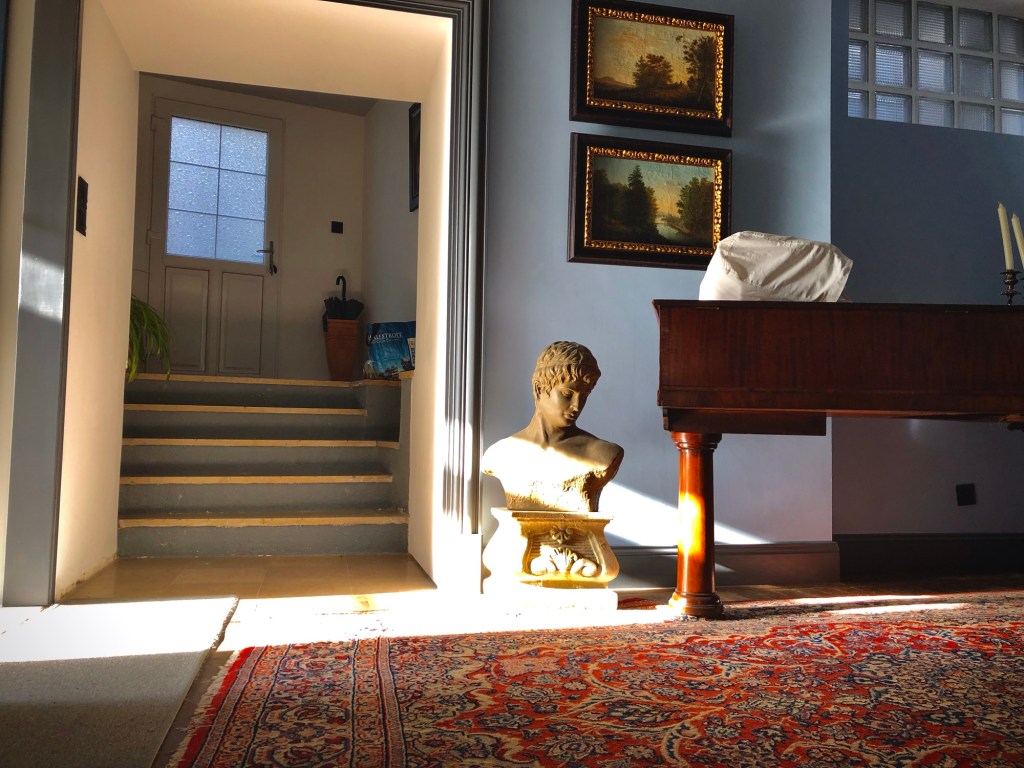
Morning Light Streaming into our Petit Salon as We Awake for Another Day of Discovery

Château du Fresne (https://chateaudufresne.org/) reposes quietly in a green valley just a few kilometers northeast of the town of Mayenne. A small, picturesque village bearing the pleasingly proud name of Champéon perches at a respectful distance just a couple of fields away. Finding the château is a bit of a challenge. As is often the case with more obscure rural destinations, Google Maps directed us down a country lane which quickly became a dirt track. We were later informed that this was the long-disused drive from the 17th century which now requires an off-road vehicle to navigate. Don’t go that way. Luckily, we have had the experience of these kinds of Google follies before and wisely turned around to seek an alternate route. We found it a few minutes later – minus the off-roading.

The Rear of the House, Protected by its Moat (photo courtesy of the du Fresne website)

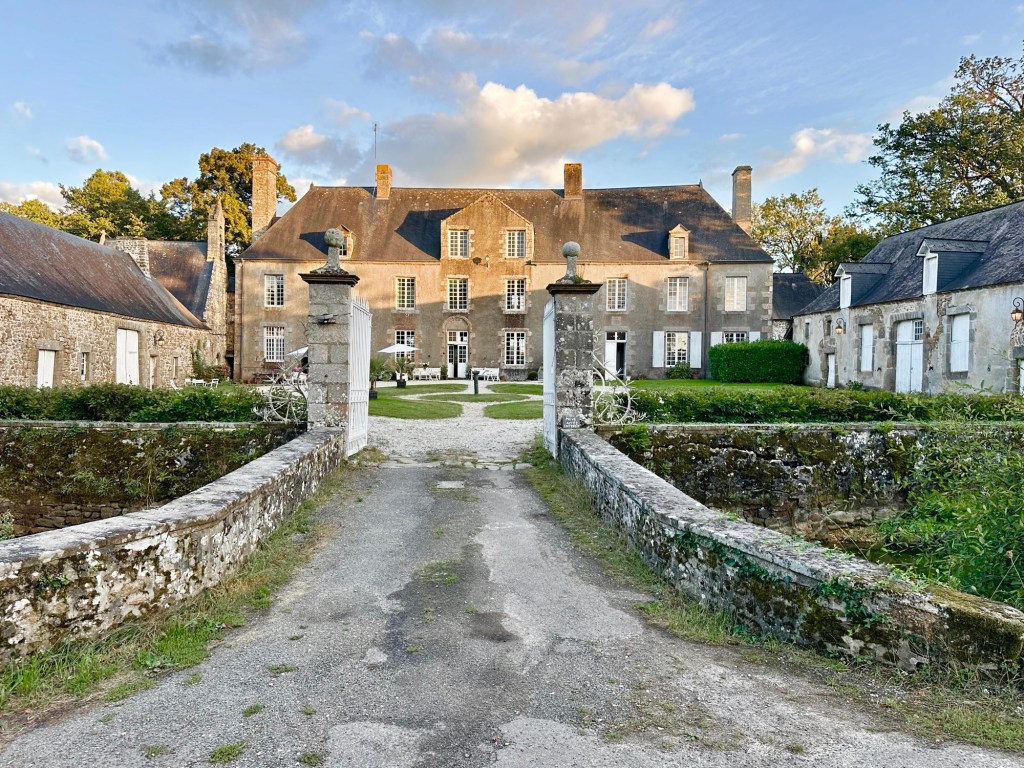
The residence and its principal outbuildings are arranged in a classic U-shape, the whole set amongst a pleasant natural setting of green fields and woods. The compound is surrounded by a substantial water moat, crossed by a stone bridge at the gates, opposite the house’s entrance. As it stands today, the house presents a restrained 18th century façade in the French country manner. It is pleasingly faded, wearing its age like a badge of honor. But the occupation of this site is said to reach back to at least the 12th century, if not earlier. Whatever the case may be, the place exudes a feeling of great age – in the best sense.
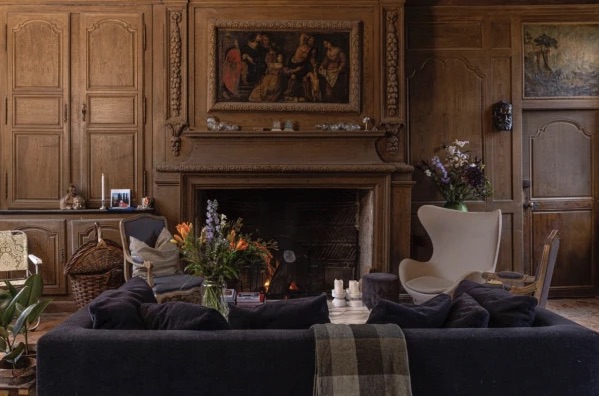
Le Grand Salon with Its Very Early Copy of Rubens’ Judgement of Solomon The Rear of the House, Protected by its Moat (photo courtesy of the du Fresne website)

Casual visitors are welcome to view the exterior and the grounds. However, if you’ve arranged for a tour (for a minimal fee) you are shown the main residential rooms in the ground floor, the chapel and the outbuildings on either side of the house. Well worth the minimal effort. The owner, Angelo, is Dutch and he splits his time between du Fresne and Amsterdam where he is occupied with the art business.
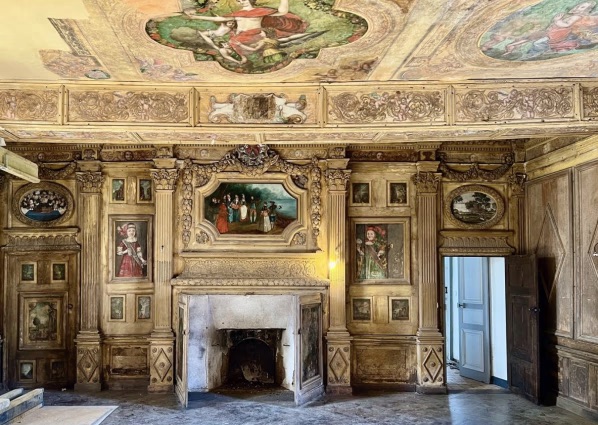
Le Chambre du Roi – The King’s Chamber (photo courtesy of the du Fresne website)
An 18th Century Addition with Its Beautiful Parquet Flooring (photo courtesy of the du Fresne website)

We liked Angelo. He greeted us in a relaxed, casual manner which immediately put us at ease. And he proceeded to give the two of us a nice tour full of interesting history and anecdotes concerning past owners. Having a shared interest in architecture, restoration and decorative arts, we discussed in detail the many historical features still prominent in the residence and the challenges they face in preserving them. It’s a daunting task, to be sure, but well worth the effort. The house possesses some exceptional architectural woodwork, with elaborate carvings and rare painted decoration in abundance.
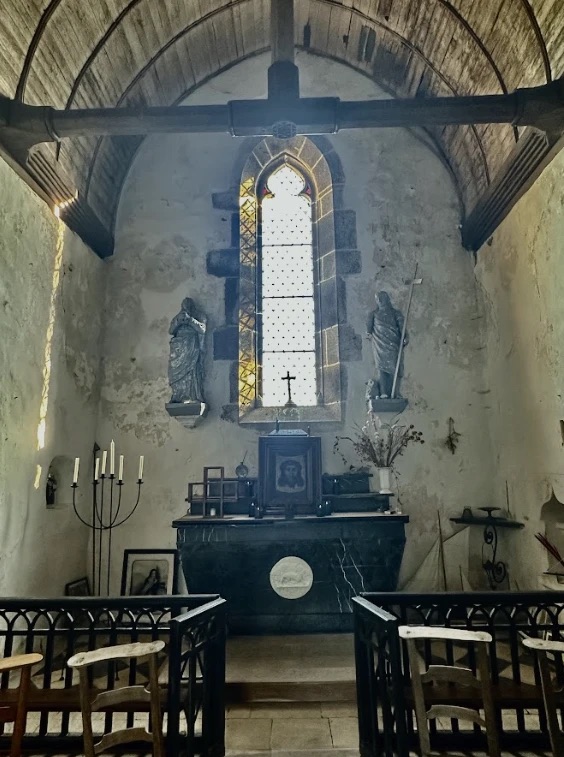
A Heavenly Space – Chapelle de Sainte Marie Madeleine (photo courtesy of the du Fresne website)

Standing at the house’s shoulder like an ancient spiritual advisor is the 12th century chapel of Sainte Marie Madeleine. It is a fine example of a medieval manorial household chapel. The chapel is intimate, comprised of a single bay with a narrow elevated gallery in the back, the whole perhaps able to seat twenty souls. Typically, the gallery is accessed by a separate doorway, probably leading to the lord’s private chambers. I could have happily lingered there for an hour or more, exploring all of the fascinating clues such buildings reveal. There remain faint hints of original painted wall decoration and structural alterations. Enough to incite the imagination to endless musings. It’s a real gem.

We also ducked in to the outbuildings which originally comprised a bakery, stables and barns. Though there is little to see in them today, these buildings demonstrate the ways in which manorial estates functioned as largely self-sufficient entities, producing, processing and consuming their own produce as well as the goods and implements needed to sustain them. The owners currently use the buildings for collaborative contemporary art exhibitions and other events. They also support an artist-in-residence program. Honestly, I can’t think of a better place to inspire the development of great art.

The Pigeonnier with the Chapel and House in the Background (photo courtesy of the du Fresne website)

Perhaps the most unique aspect of Château du Fresne is its pigeonnier. Standing upon a small artificial motte in the middle of the broad moat, this dovecote was built in 1539 to celebrate the marriage of the lord at that time, Jean d’Athenaise. The dovecote is octagonal, with timber framing and brick infill, and perched upon granite pillars. It contains enough holes to accommodate 700 nests. The right to build a pigeonnier was held only by nobility. So, this seemingly humble and functional structure was in actuality a conspicuous status symbol at the time it was built. It also produced a steady supply of eggs and meat for the household. The dovecote at du Fresne is especially picturesque, being so quintessentially French. Its graceful aging and commanding presence quietly remind us all of an age obscured by the mists of time.

As we wound up the tour, our host invited us down into the cozy old stone kitchen, a remnant of the previous medieval hall which was replaced by the current house. There we chatted with him and a few guests which had been staying in the residence. We were served some flan and lemonade while an older cousin of his relaxed in the courtyard outside with her friend. It felt as though we had been invited to a relaxing weekend gathering at a private manor. I suppose that, in a manner of speaking, we were.

We very much enjoyed our visit to Château du Fresne. It was interesting, enriching and quite friendly – a pleasant way to pass an afternoon. If you’re in or near the area, it is decidedly worth paying a call into this charming example of France’s past country life. Under the guidance of its new owners, du Fresne also appears to have gained the promise of a bright and vivacious future. It certainly deserves it. And to that end, we wish them the best of luck in their endeavors.
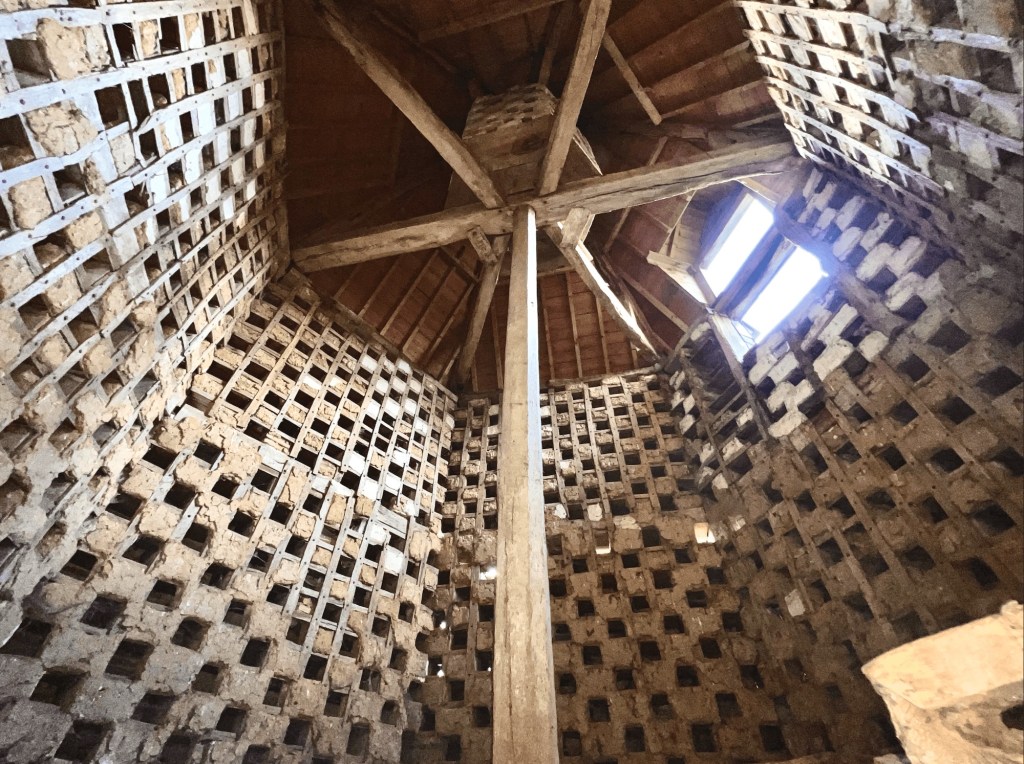
High-Rise Living for the Birds – Inside the Pigeonnier (photo courtesy of the du Fresne website)

Lassay-les-Châteaux – A Town And Two Castles

A Formidable View: Château de Lassay

This was a trip in two parts. We had our sights set on a nice little castle about which we knew very little. But the photo looked nice, so it seemed like it was worthwhile to have a look. Now, we’ve done a good bit of travelling at this point in our lives, so you would think we are experienced enough to always do a reasonable amount of research on the place we are planning to visit. At least the basics: where it’s located, how long to get there, will we have to tip the Elvis impersonator – again. Oh, and also: will the damn thing be open when we get there!? Well, this time we forgot to confirm that last tiny, but crucial detail. And that’s why this turned into a two-day adventure.

Needs Work – a Charming Fixer-Upper in Mayenne

Only an hour’s travel east of Fougères, Château de Lassay has graced the Pays de Mayenne for over five and a half centuries. At the time (May) Cherie’s mother, Valerie, was still visiting. In fact it was her last full day in France before flying back home to the U.S. She was eager for one last adventure. And Lassay seemed just right for the occasion. So, off we packed, enjoying a scenic drive through the verdant countryside of Mayenne under impossibly blue skies.

It Comes With a Town?! – Val and John Exploring the Streets of Lassay-les-Châteaux

Due to the aforementioned lack of preparation, our first surprise was that Lassay-les-Châteaux is not just a castle. It comes with a town. And a beautiful one at that! How did we not know this? Lassay is, in fact, a Petite Cité de Caractère and was voted third place this year in the nationwide Village Préféré des Français – a poll choosing the best places to live and visit in France. The latter is a big deal here in France, culminating in a big television show for the final announcement. It’s a visible demonstration of just how much pride the French take in their towns and villages. And justifiably so. Lassay-les-Châteaux is beautiful. And this town had us fully under its spell from the moment we drove in. Lovely, classic french small town architecture from all ages, set along meandering and cozy streets, tranquille and well-tended gardens, all bundled within a charming natural setting. What more could you ask for?

Sorry, We’re Closed!

A castle! That’s what. And, wow!, they have a really good one. This 15th century beauty rests comfortably in the town’s western edge, watching over its inhabitants like some ancient mythical guardian. The three of us fetched up to the small car park in front of the castle, took a bit of a walkabout around its walls and then waltzed up to the gates – only to find out that it was closed. Doh! This was to be our second, rather less happy, surprise of the day.


Denied access to the château, we sought the solace of lunch. At least the restaurants were open. As it happened, we chose badly. Our meal was quite mediocre. But at least it gave us the energy to carry on. Lassay-les-Châteaux is a great town for strolling and we enjoyed a long afternoon of admiring the beautiful street scenes on display.


The center of town covers hillsides which wrap around a small stream that gently burbles its way along at the bottom. On either side of this stream there is a very nice park. One can have a pleasant, shaded walk there, soaking in the tranquility of a small town quite at ease with itself. In addition to the more formal flower garden, there is also an animal enclosure where locals keep chickens, geese, sheep and goats. Also on display are some impressively well-tended private vegetable and pleasure gardens lining one side of the stream.

Maintenance Required – the Ruins of Château du Bois Thibault

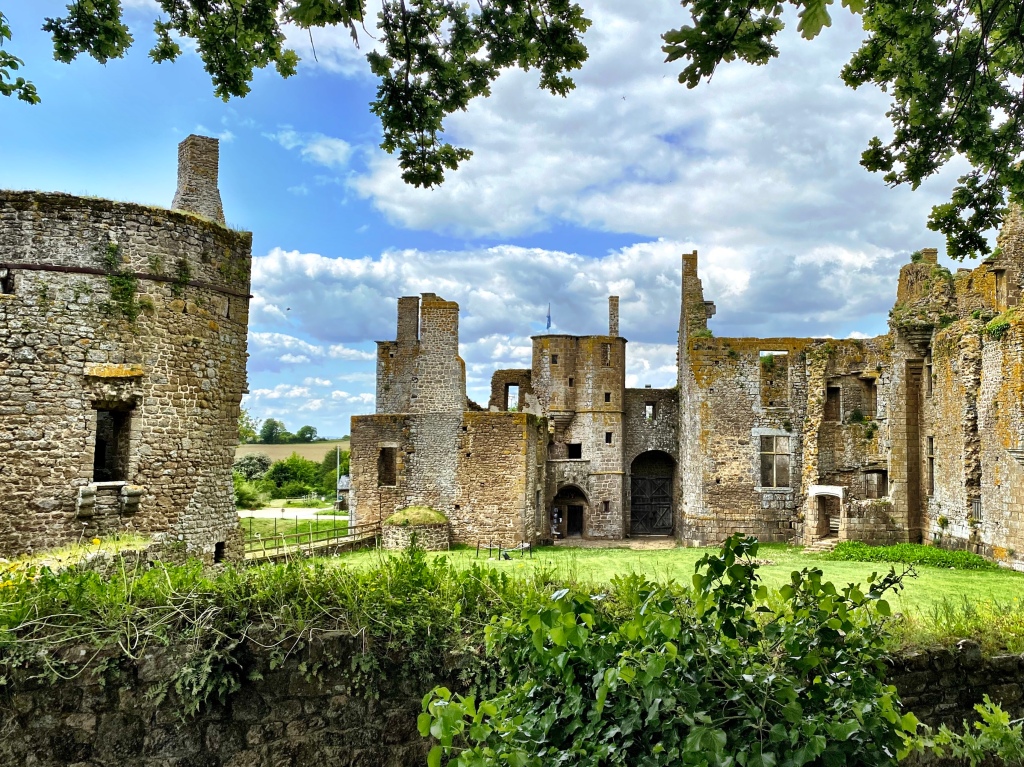
The day’s outing continued with a visit to another castle just a couple of minutes drive north of town. Château du Bois Thibault was also built in the 15th century. And, guess what? It was also closed that day. Right. Still, this wasn’t quite as harsh of a blow because Bois Thibault is a ruin so we were able to see much of it by walking around the exterior. It sits out alone in the countryside, still an impressive sentinel keeping watch over the northern approaches to Lassay-les-Châteaux. It is definitely worth seeing and we hope to return to it one day when it’s, you know, open.

Despite the disappointment of having the gates of, not one, but two castles locked against us, we still had a wonderful trip. However, revenge is a meal best served cold, but then microwaved and washed down with a nice glass of Côte du Rhône. [Or better yet, just skip the revenge (after all, it’s cold – yuck!) and go straight for the wine.] The point here is: Lassay-les-Châteaux is well worth a second look. And, more recently, after finishing up work on our holiday rental apartment, we finally got around to making our return.

Ridiculously Beautiful – the Castle Courtyard

And this time the castle was open. Le Château de Lassay is privately owned; it’s our understanding that the family maintains residence within part of the complex. Across the street from it is what must have been a large barn. Now it is the ticket office and gift shop. Purchasing our tickets, we discovered that viewing the château is by group tour only. Neither one of us is a big fan of tours. The tour guides often rush their groups through areas where they don’t have a prepared talk. And, frankly, they most often focus on subjects that we find trivial and distracting. We much prefer to explore on our own and at our own pace. Still, getting to see a medieval castle on a tour is far better than not seeing it at all. A word of warning if you are planning to visit Lassay: they do not accept card payments. Cash only. It’s the 15th century, after all!

Two of Many Towers

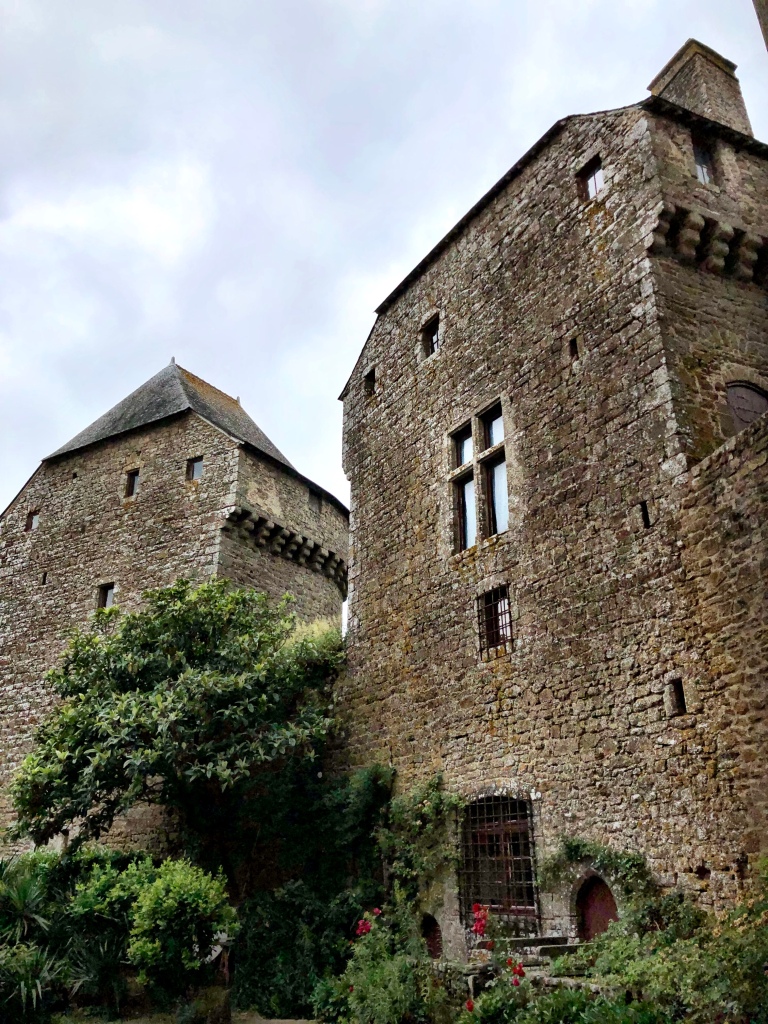
Suffice it to say, the tour of the interior is absolutely well worth any misgivings you might harbor. Lassay is a beautiful castle, still substantially complete, and contains much to offer nearly anyone. If you’re a castle nerd like me, you might as well stand in a bucket of snails and call yourself Wilma if you were to pass on the chance to see it. [No offense to any of you named Wilma – or to snails.]


While in Lassay, we had a nice lunch (at La Ruette on rue dAmbrières) and we discovered a series of medieval gardens just on the other side of the lake from the château. Lovely and tranquil. Plus, a further walk through town, taking in even more streetscapes. We love this place and we are sure to come back again and again. If you have the opportunity to visit, you really should do so. You won’t regret it.

Zen in Lassay-les-Châteaux (click/tap to play video)

Jardin de la Pellerine and Dolmen de la Contrie – Hidden Gems in the French Countryside

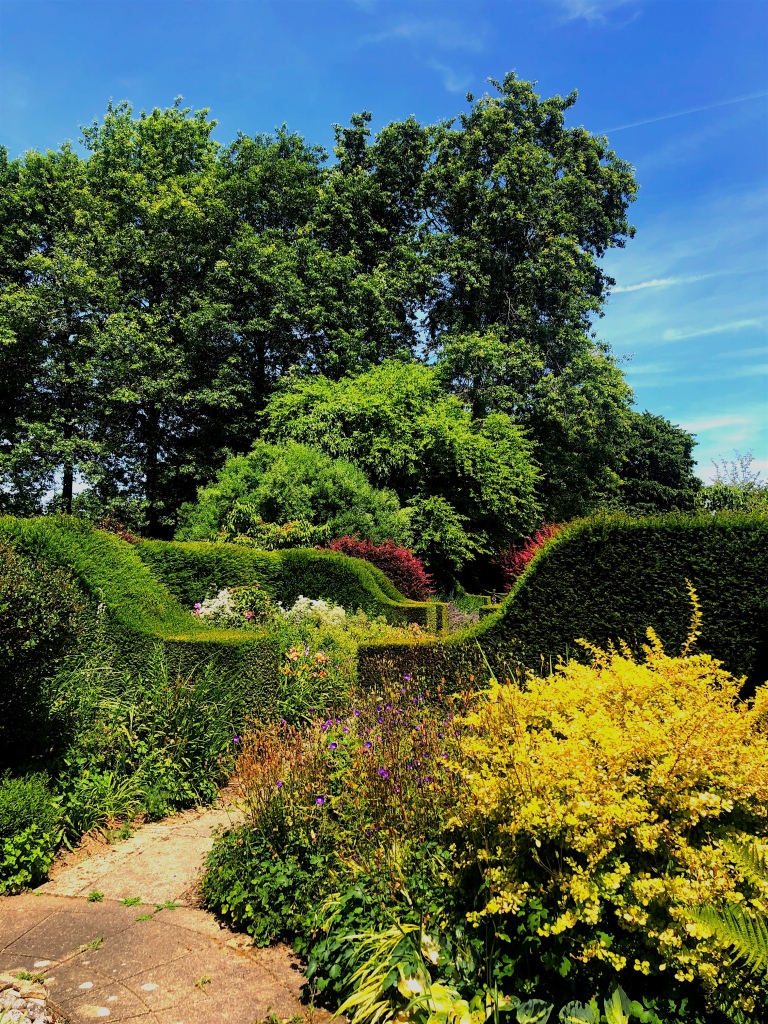
Le Jardin – So Beautiful

Whim. Such a great word. I like the sound of it. Whimsical, whimsy – those are good ones too. Good, woody sorts of words.* Words that will take you far in life. Perhaps even lead you to discover unexpected and lovely things.

Today, on a complete whim, we decided to take a short drive to the east of us, in search of two sites. To be honest, we had earlier planned to visit a town much further away. But we slept in. A lot. By the time we roused ourselves out of bed, it was much too late to get there and back in time for Saxon’s afternoon walk. We didn’t have the heart to break our dog’s schedule. He’s very punctual. So we hastily picked a couple of alternates and headed off , not really knowing what we were going to find.

Should I Stay, or Should I Go? – A Confusion of Signs at the Trailhead

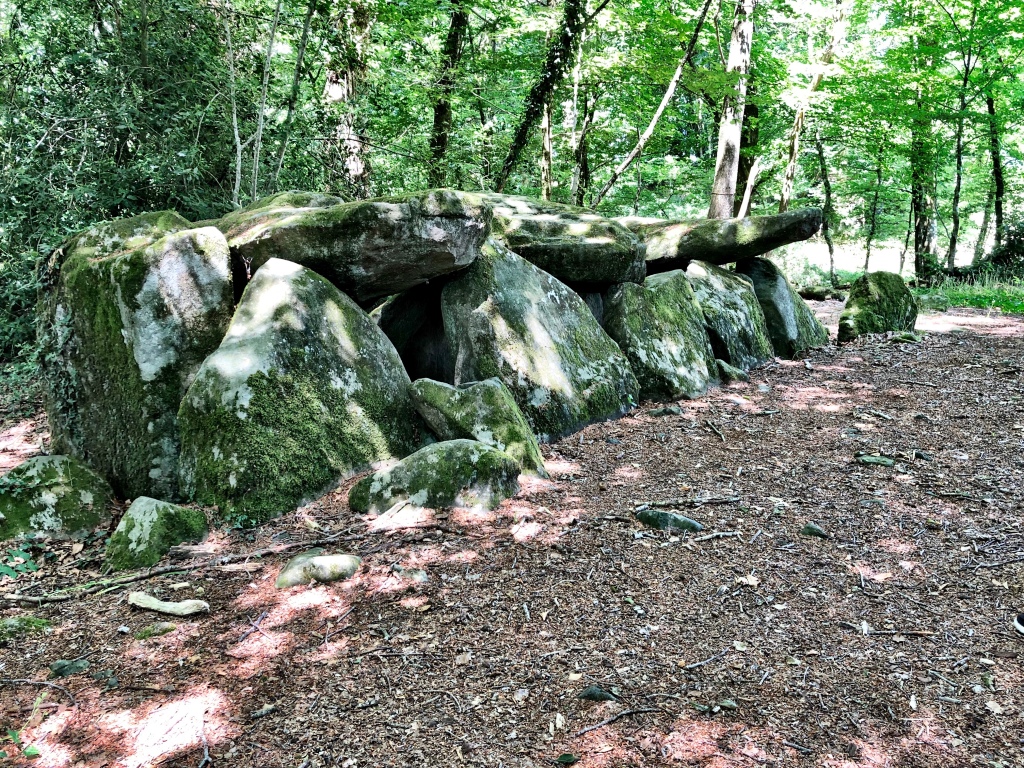
First on the agenda was an allée couverte, or dolmen. Just one of a multitude of prehistoric megaliths dotted around western France, the Dolmen de la Contrie is a burial chamber constructed sometime between three to seven thousand years ago. This particular dolmen is located Mayenne, in a wood just north of the town of Ernée. Not the easiest place to find, we followed country roads to a turnout with some aging signs which may, or may not, indicate that one is allowed to walk through private property 100 meters to the site. We were a little apprehensive, but marched down the trail which leads pleasantly through a stony wood bordering secluded pastures. It was hot, so we were glad of the shade as we trampled onward. Not a soul was about. Not even a cow.

Over the River and Through the Woods

The trail emptied into a small, open grove of ivy-covered maple and beech trees. A small, clear brook gently burbled around the edge of the grove. There, in the center, stretched the line of massive,carefully laid stones like an ancient dinosaur frozen in time. Impressive. Awe-inspiring. Astonishing. Take your pick. We’ve seen several of these prehistoric megalithic structures now, and still they do not fail to immediately bring us to a stunned silence. It is simply stupefying how clever and industrious our prehistoric ancestors could be. I cannot really articulate why, but it somehow feels important to witness their efforts, to marvel at their accomplishments. It’s a humbling but satisfying experience. And only 20 kilometers away from home. How lucky is that?


From the dolmen, we hopped back into Ernée where we slightly crashed a funeral in order to use the public toilettes by the church. We were appropriately discreet and I think we managed not to offend anyone. Needs must. Slinking away, we dashed into a boulangerie where our sad faces convinced the baker to make us an after-lunch jambon et beurre (ham and butter on baguette) sandwich which we shared in the car.

Pausing at the Garden Entrance-That-is-Not-an-Entrance

Our next target was a garden: Le Jardin de la Pellerine. Classed as a jardin remarquable it’s only 18 minutes by car from our house. We have passed the sign pointing to this garden a number of times on our way to other places, but had not before given it much regard. Still, it was intriguing. And this time we thought, “Why not?” So, a short twist through the small village of La Pellerine and then a couple of kilometers amongst the open, undulating farmlands beyond, one comes to a lovely cottage surrounded by beautiful hedges and trees.

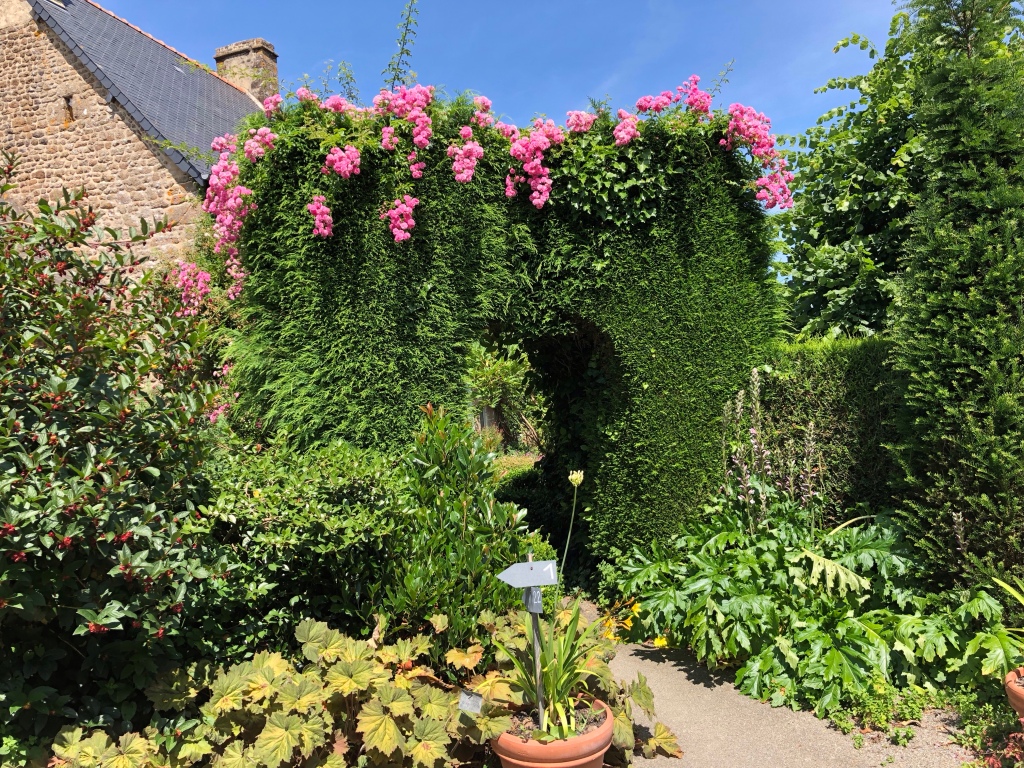
Numbered Signs and Bedazzled Arches in the Garden

Initially, we weren’t sure if we were in the right place. The French, it seems, excel in the art of subtlety when it comes to marketing. They are, in our experience, so subtle as to be positively enigmatic. Therefore the signage here (to the extent we could find it) was diminutive and somewhat confusing. But we eventually managed to work it out and we soon found ourselves at the garden’s welcome desk where we were met by yet another notice scrawled on the table: “Je suis dans le jardin … Follow the numbered signs.” Casual-cool, we supposed. We shrugged our shoulders and continued on, looking for sign number 1.

Beautiful Ornaments in the Jardin

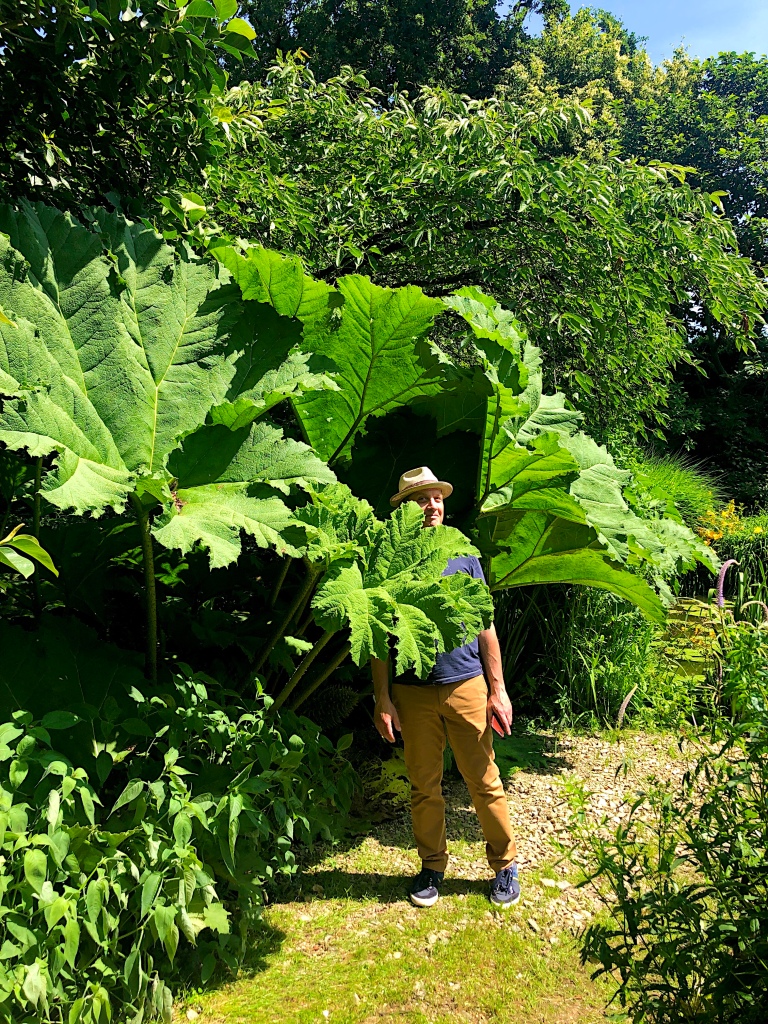
As it happened, the numbered signs pointing the way through the various areas of the garden were very regular and clear. We had the entire place to ourselves and enjoyed a tranquil meander through countless garden rooms. There was a gentle breeze bringing us a myriad of floral perfumes and a ever-changing chorus of birdsong as we feasted on the visual delicacies of carefully curated herbaceous borders. The color palettes of each space are generally subtle and very pleasing. This gardener is not aiming for the botanical fireworks of the great château gardens. No, she has wisely painted her canvas with the gentle, classically calming colors of the french countryside. It is beautifully accomplished.

Garden Gnome

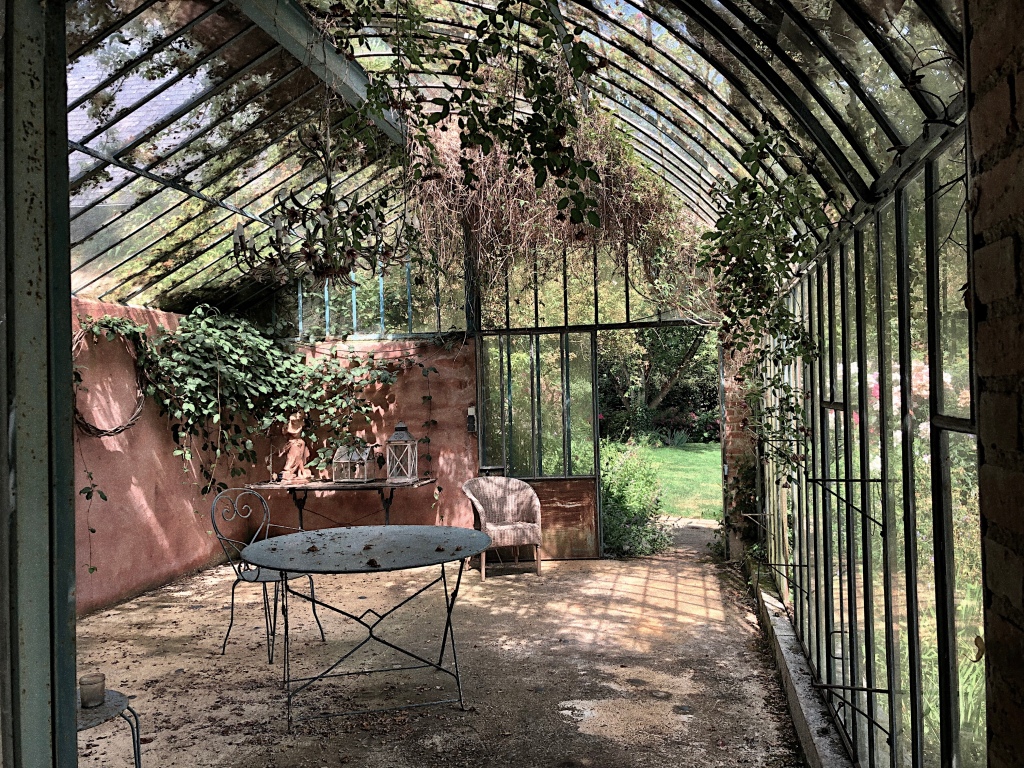
And it spreads over several acres. With her home firmly, organically situated in the center, La Pellerine expands into more open lawns, a charmingly shabby-chic conservatory, ponds, water features, bridges and woodland paths. The owner/designer has created an oasis of shaded and sun-dappled tranquility midst the vast hectares of open farm fields which surround it. The effect is magical and we thoroughly enjoyed our visit there.

The Cottage in the Distance

It was only at the end of our tour when we met the owner. She accepted our money for the entry fee with complete nonchalance while chatting with us and sharing her lovely dog, a wirehaired pointing griffon. She was quite happy to have her belly scratched – the dog, that is.

Chic Greenhouse

On all counts, our whims had paid off handsomely today. In the space of an afternoon, with minimal driving, we had sparked all of our senses and returned home feeling all the happier for it. And, we had discovered a couple of hidden gems, cultural sites which are well off the beaten track but deserving of greater attention. That, in my humble opinion, is a good day in France.

Pond, Bridge, Cottage, Person, Woman, Man, Camera, TV

*Name that Monty Python sketch. If you can, you’ve just had a very happy thought indeed. You’re welcome. If you are unaware of Monty Python, you have my sincere condolences.