Fougères: A Thousand Years of History

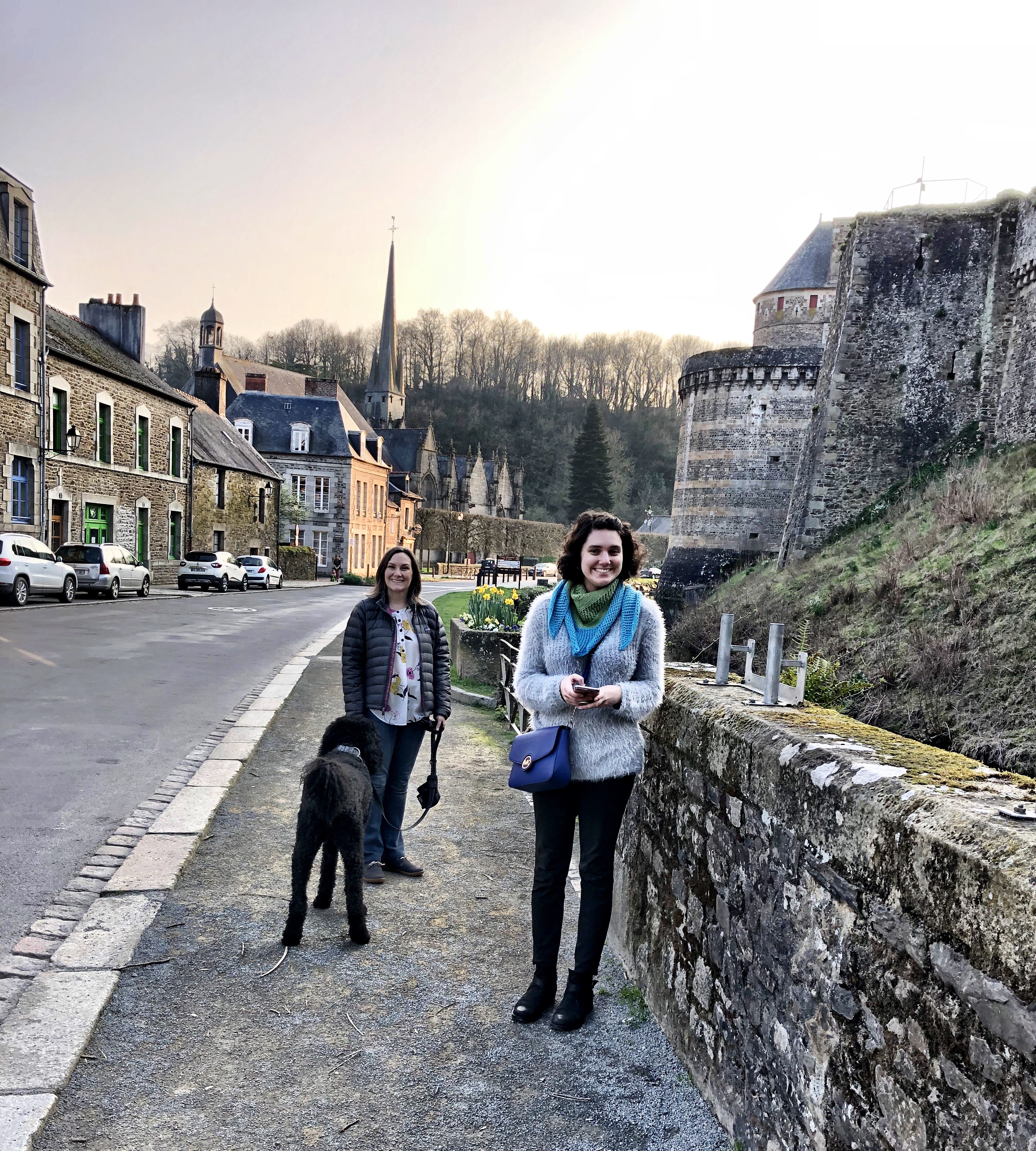
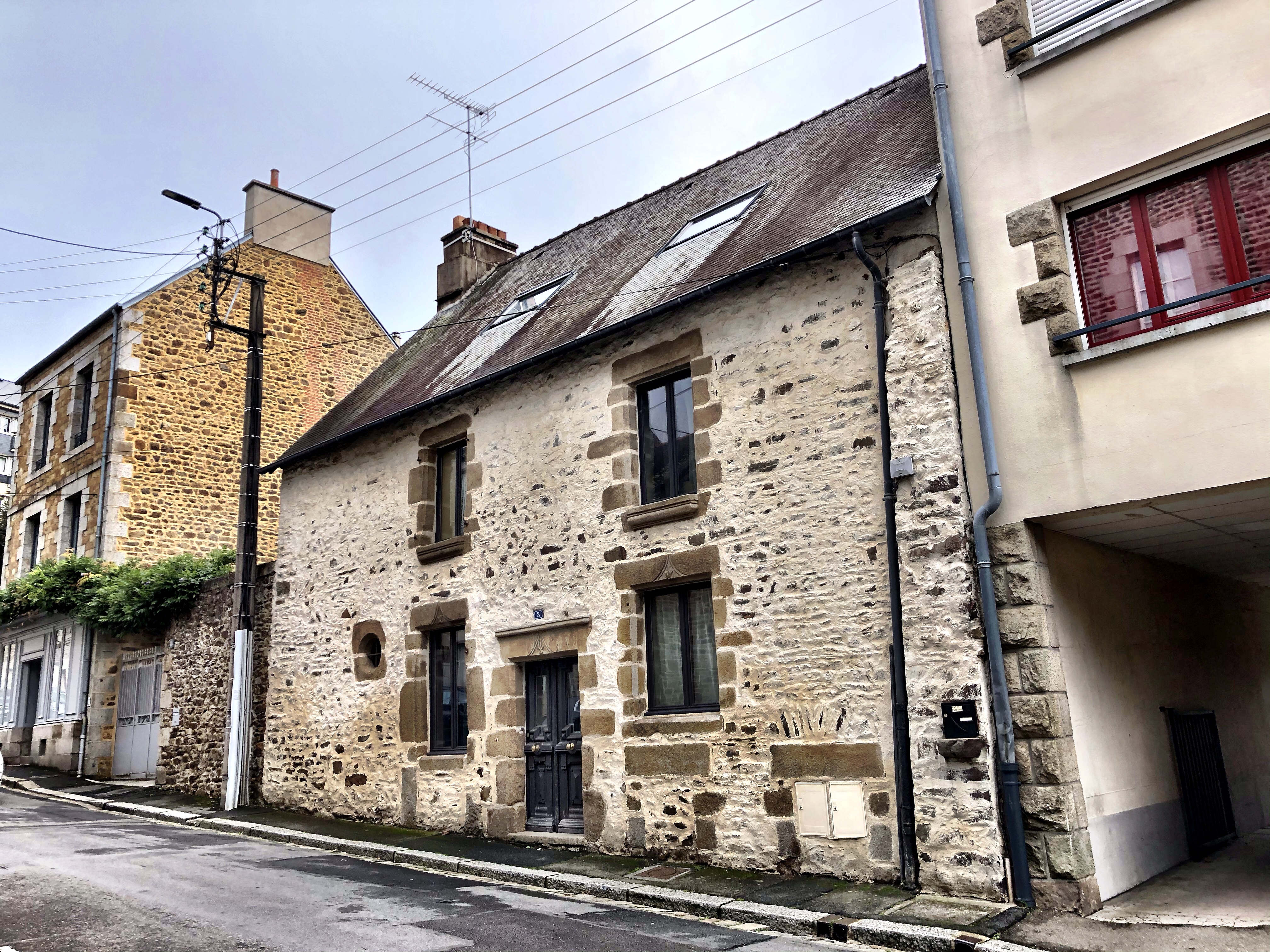
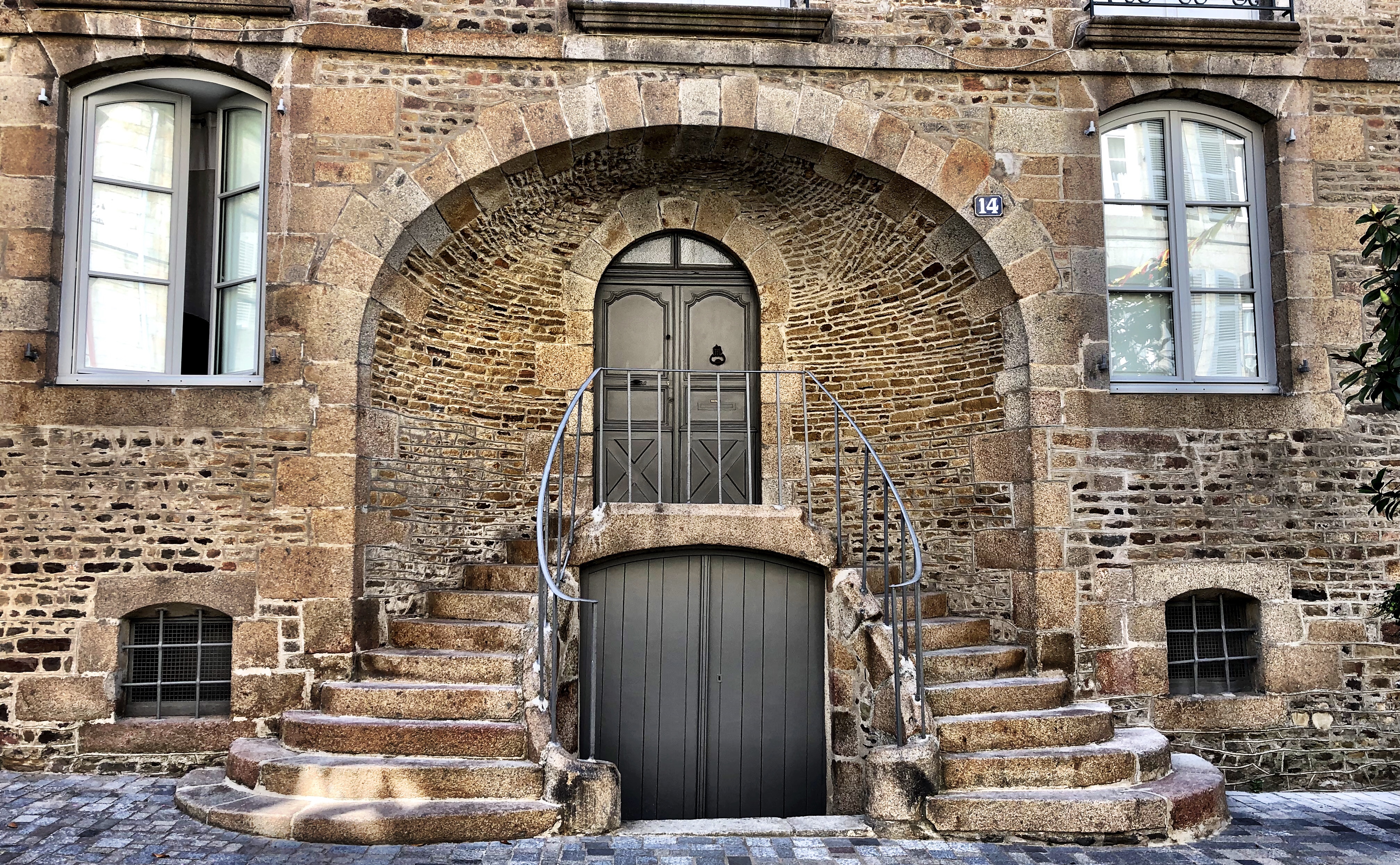
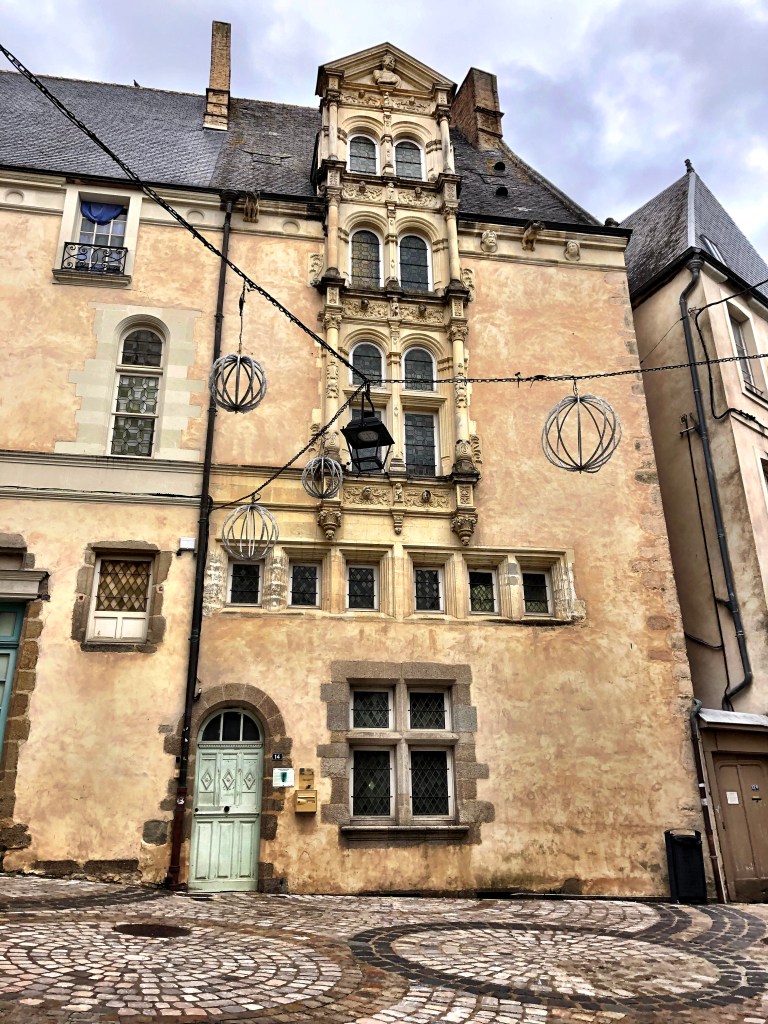
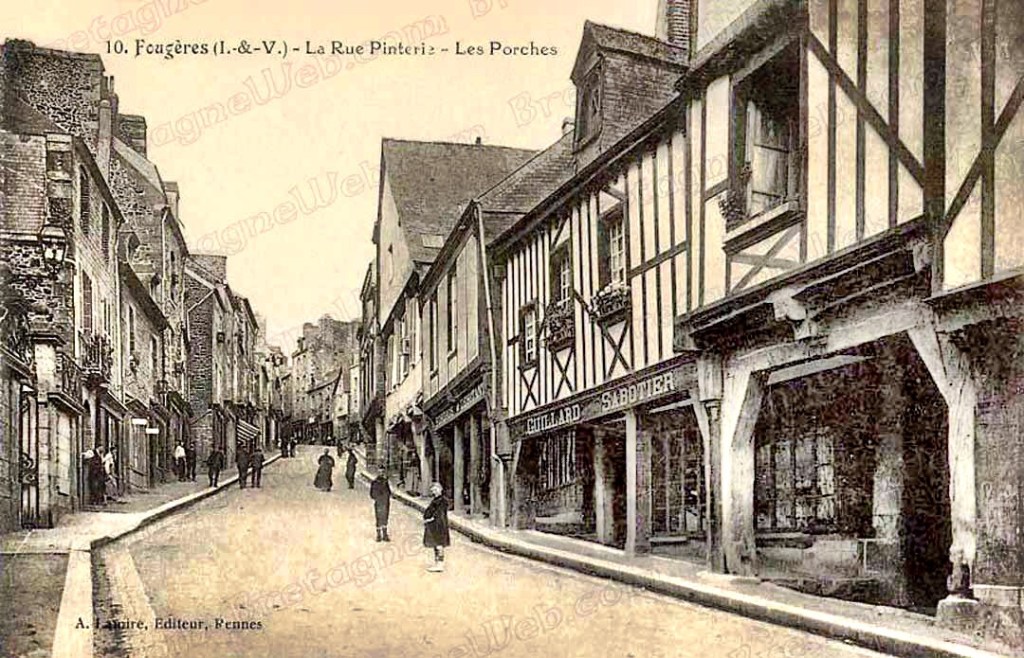
The Street Where We Live – Fougères at the Turn of the Last Century

This town is old. I mean, REALLY old. Especially for Americans who grew up in the Pacific Northwest of the United States. In Seattle, for example, you feel fortunate to step into a building constructed before the end of the 19th century; the city itself was only founded in the 1850’s. Such is the natural naïveté into which Americans are born. Cynics (like me) might simply call it willful ignorance. But, despite this disadvantage, both Cherie and I grew to develop a love of history at some point in our early lives. So, I suppose it’s no surprise that we eventually found ourselves living in a place that has a slightly longer story to tell.
Origins

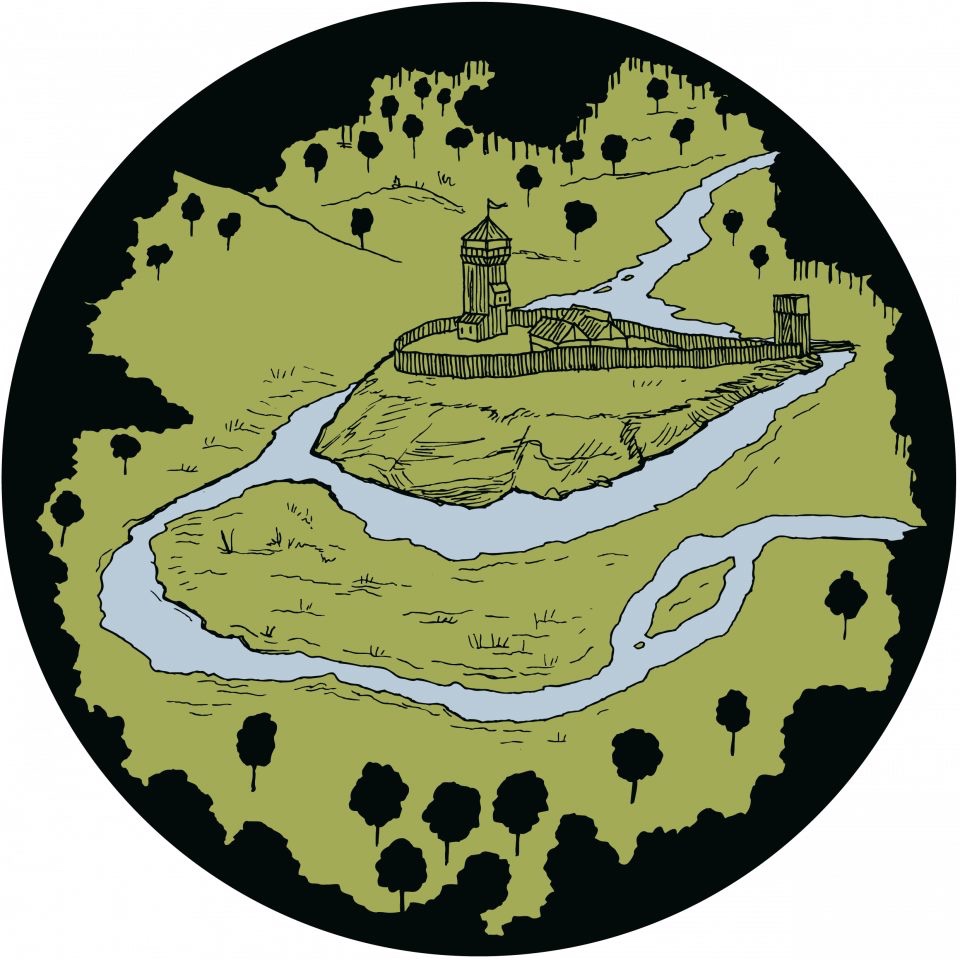
Fougères was first settled in the late 10th century, a wood palisade fort erected on a low rocky promontory around which the Nançon River (more of a creek, really) makes a loop to form a natural defensive barrier. This fort was attacked and destroyed several times over the ensuing centuries, each time rebuilt (eventually in stone) larger and more strongly than before. By the 15th century it had become the vast stone fortress that remains today.
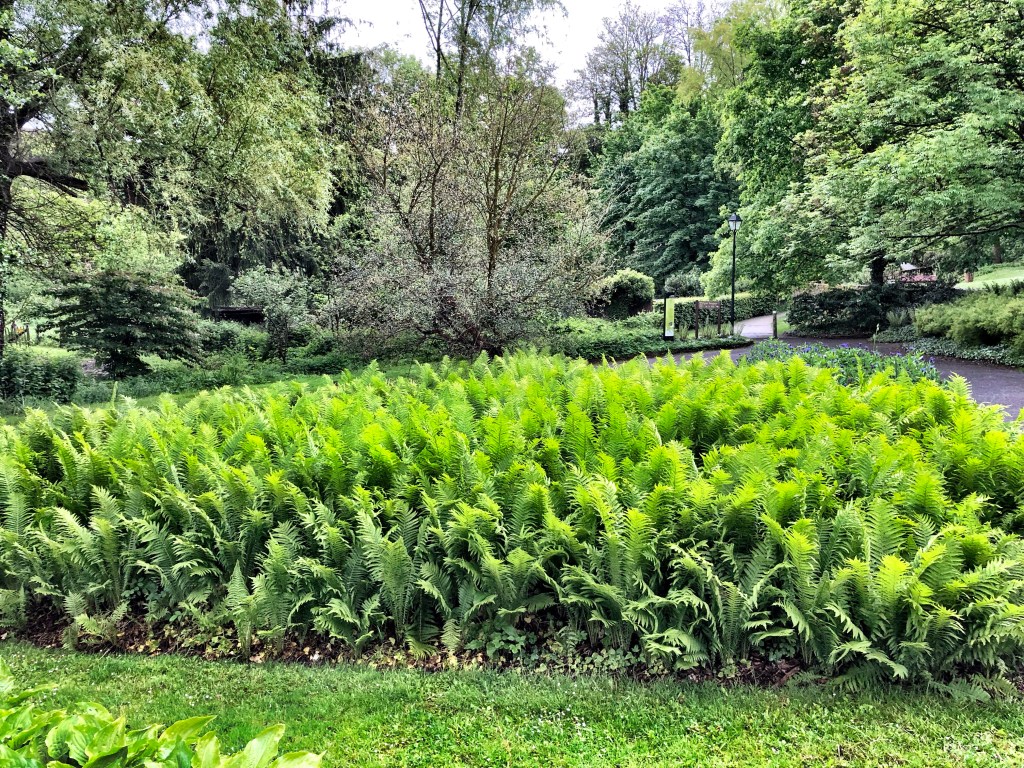
Ferns in the Park Just Below Our Tower

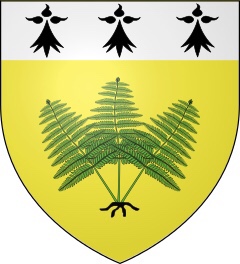
Why is it called Fougères? I’m not entirely certain. The literal meaning of Fougères is: ferns. Ferntown. Fernville. There be ferns here. Ferns ‘r’ Us. That’s the simplest explanation. Occam’s Razor and all that. But it makes sense. This area is thick with beautiful ferns of every description. We have a fair few of them in our garden. Another theory is that the name is a corruption of fous, or fossé – indicative of a gap or terraced border. Perhaps. Fougères is situated where two Roman roads had intersected, one running north/south from Nantes to Avranches, and the other east/west from Chartes to Carhaix. Moreover, it was ideally placed to guard the traditional eastern border of Bretagne, one of a string of fortifications established for that purpose in the Middle Ages.
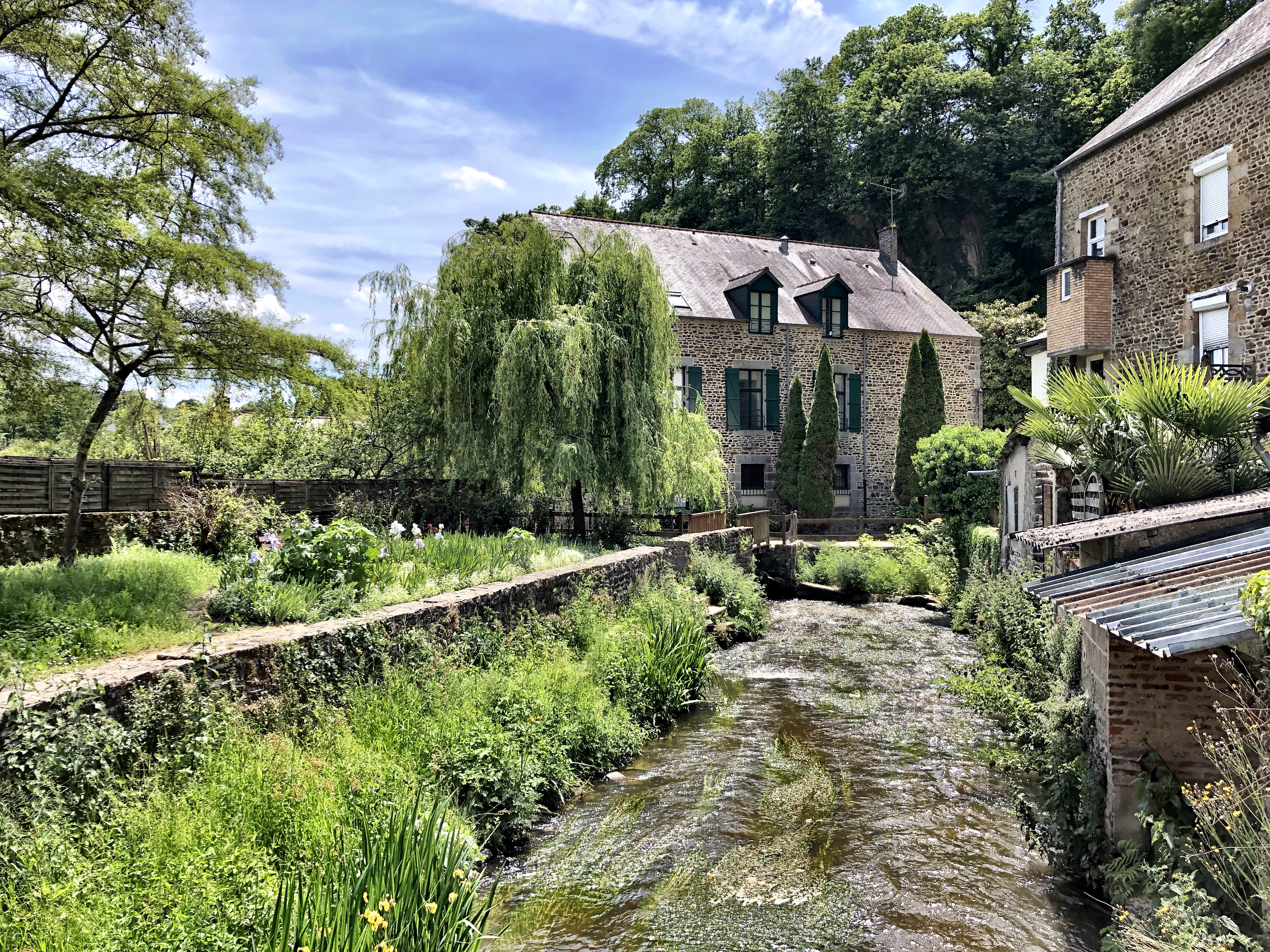

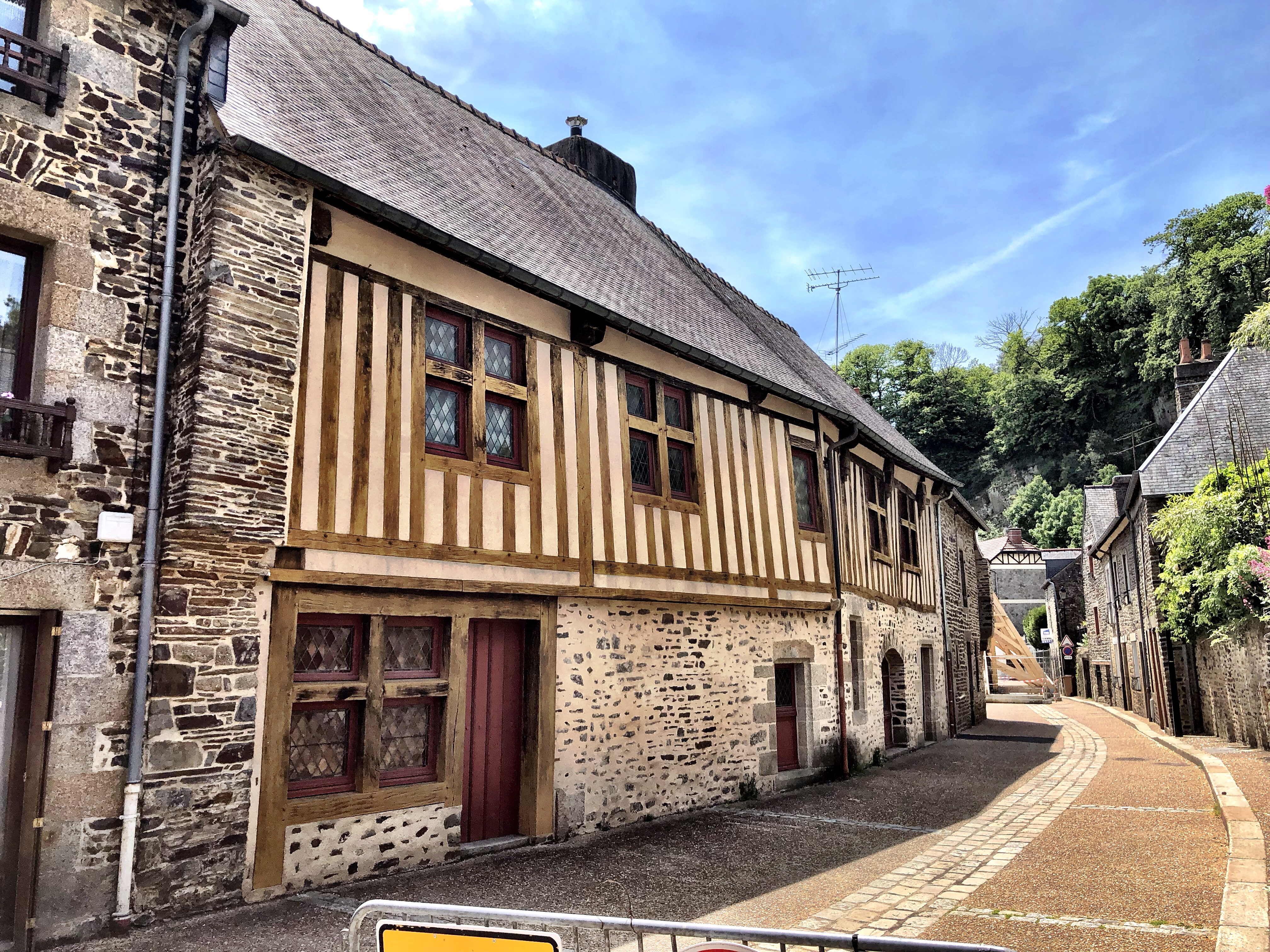
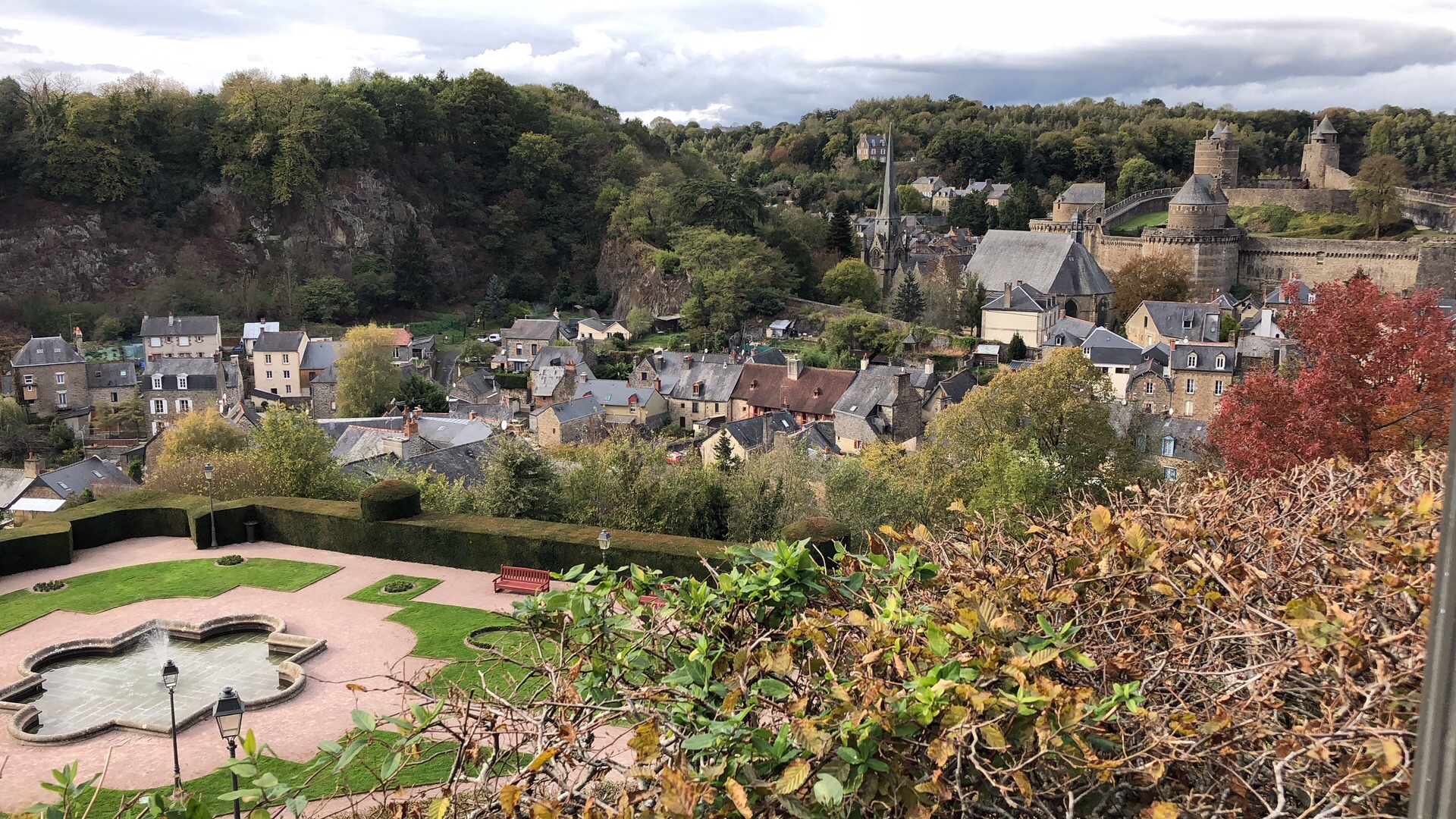
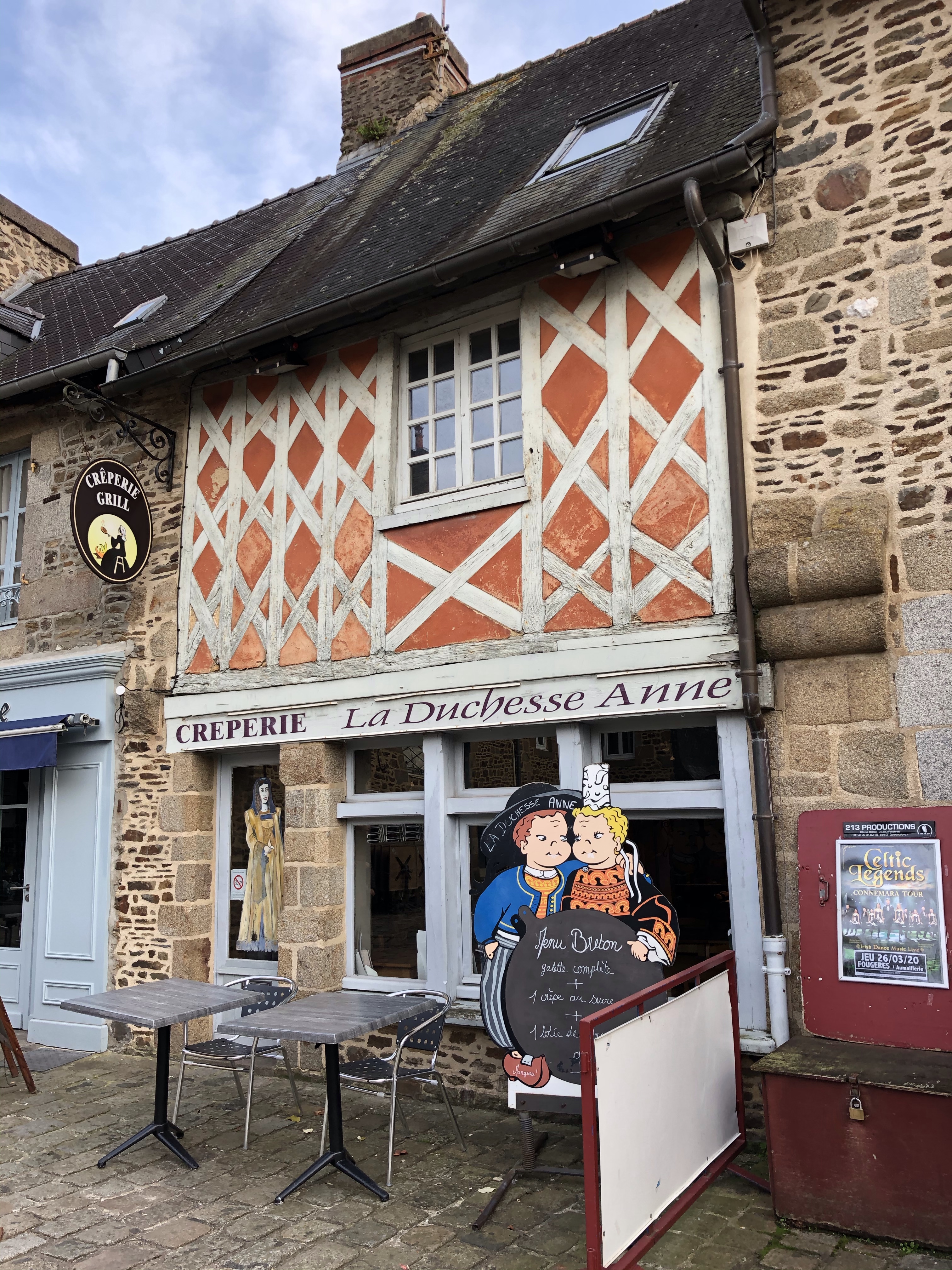
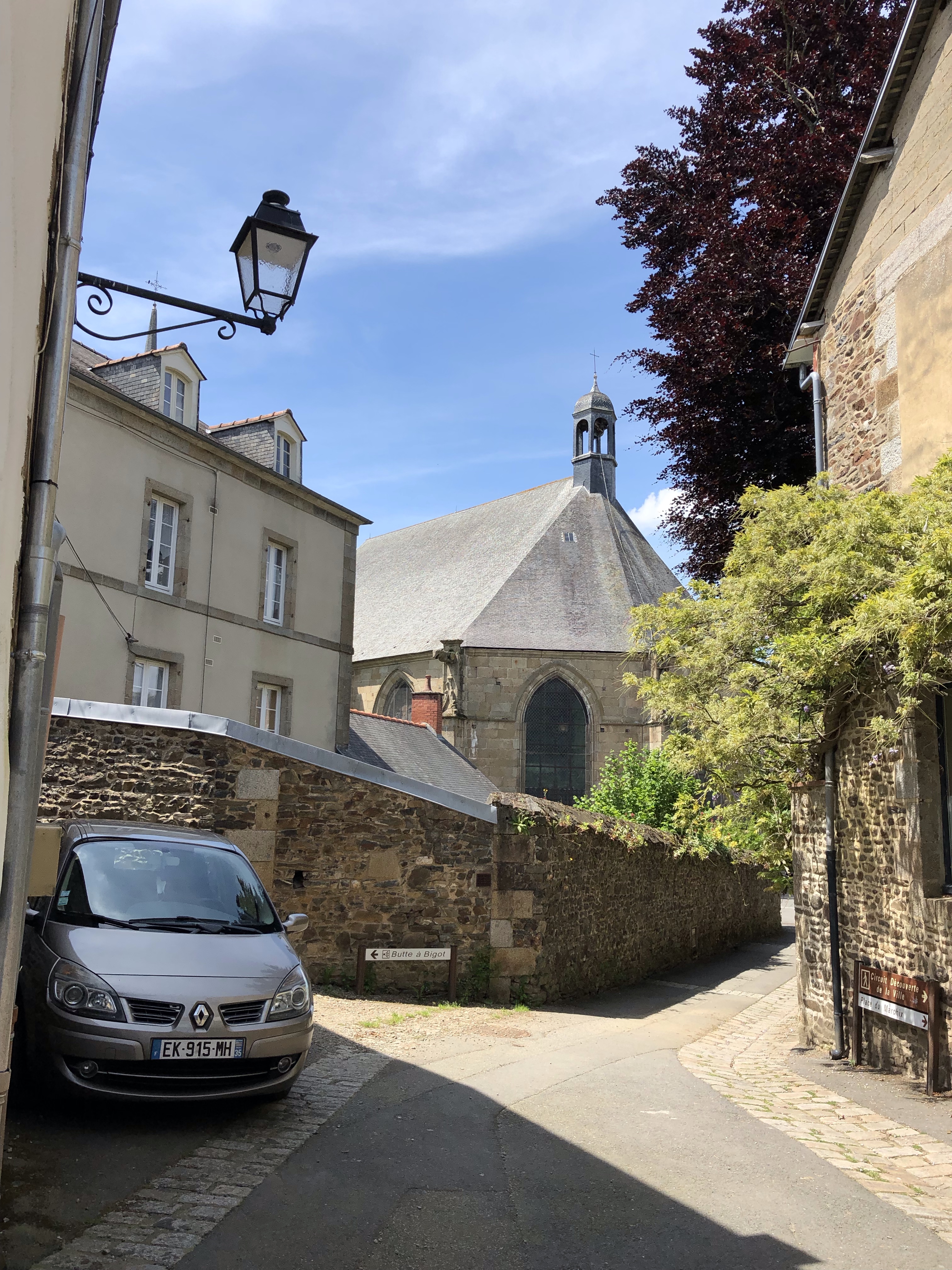
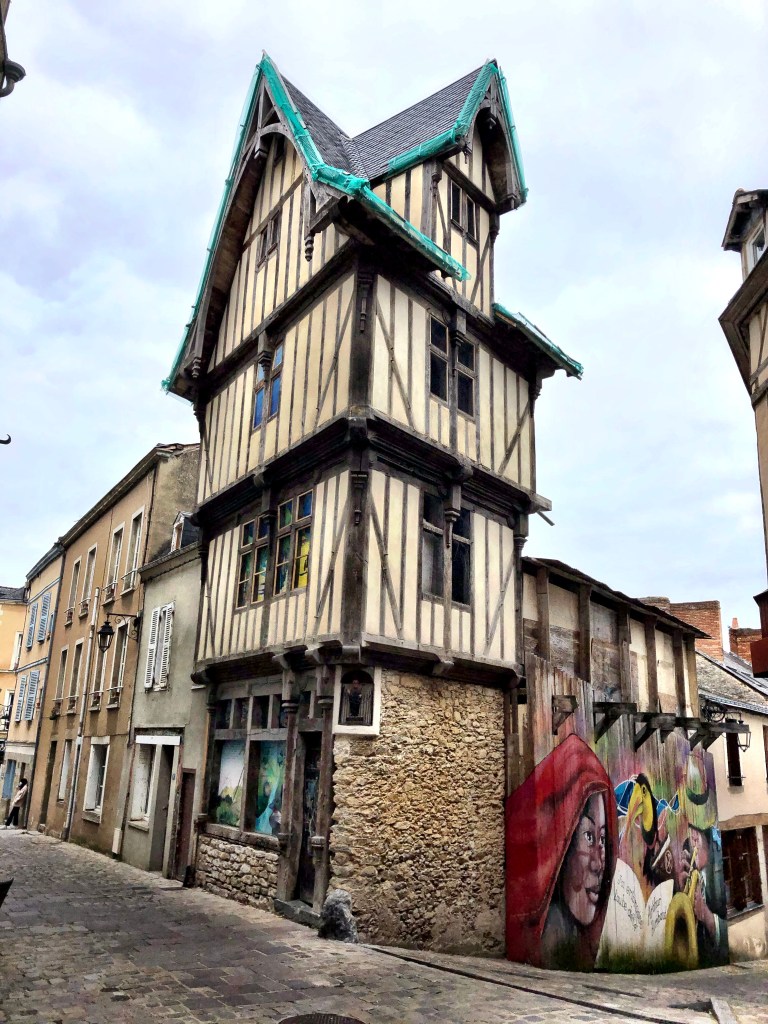
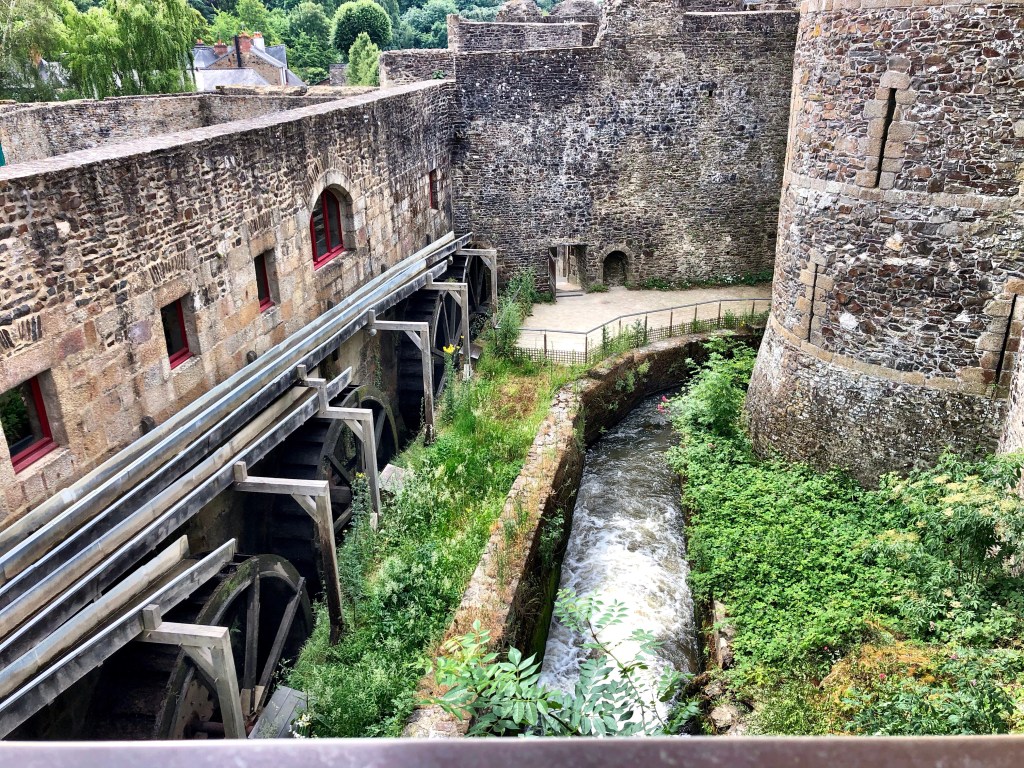
The town began as a small settlement, established in the low marshy area adjacent to the south side of the fort. This area is now known as the Quartier Médiéval (medieval quarter), or the Ville Basse (lower town), the original core of what was to become Fougères. The convenient supply of flowing water attracted tanners, dyers and drapers and these became the predominant industries in this area of the medieval town. There are still many signs of how the river was manipulated to feed the many mills and other workshops that were here. It’s also the only part of town where you can still see timber-framed buildings still standing. We often take strolls through the lower town. It has a completely different vibe: slow, quiet, relaxed. Watery. The river weaves its way through, pleasantly burbling via separate channels before they join up again as they exit the neighborhood.

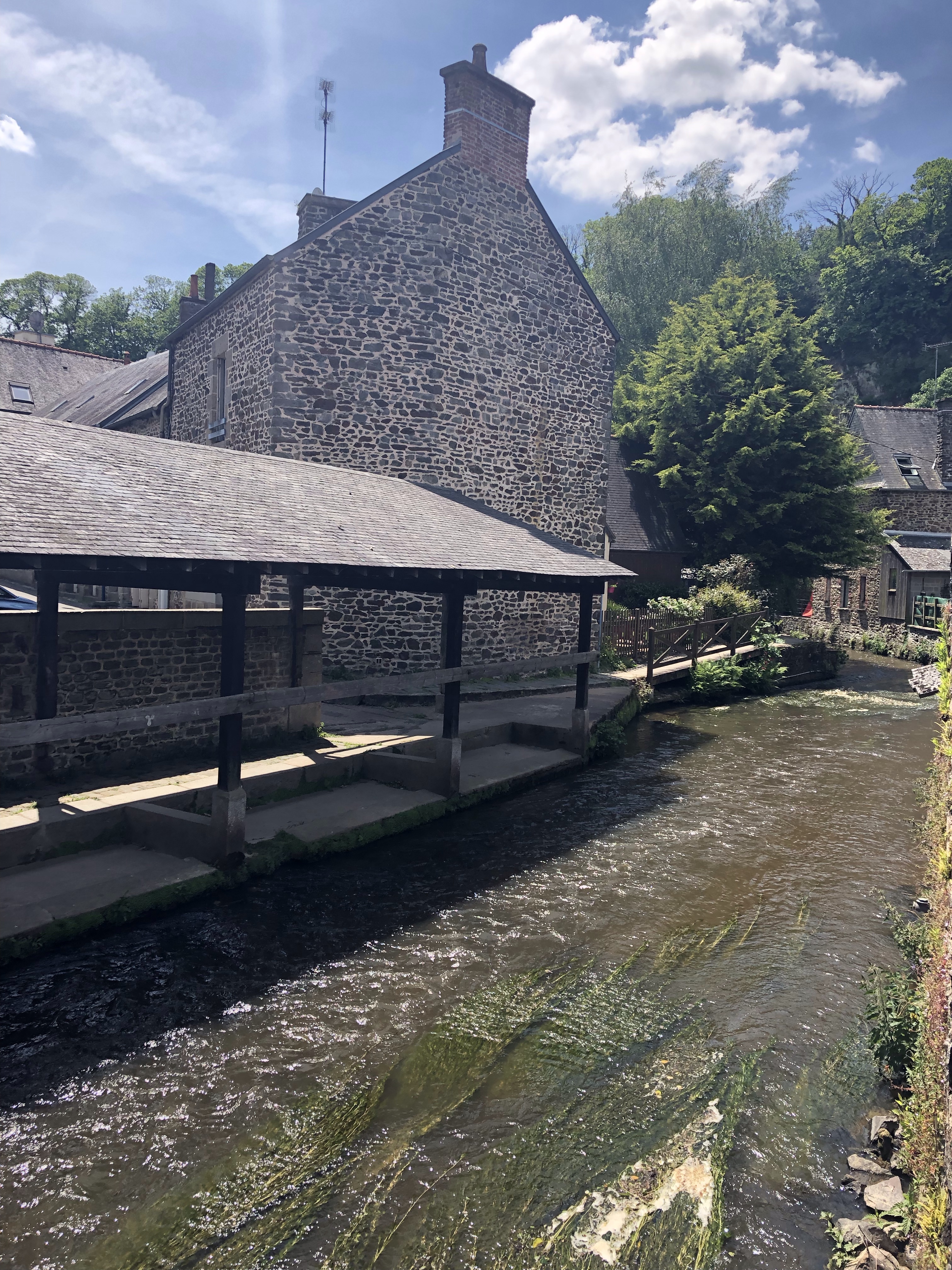
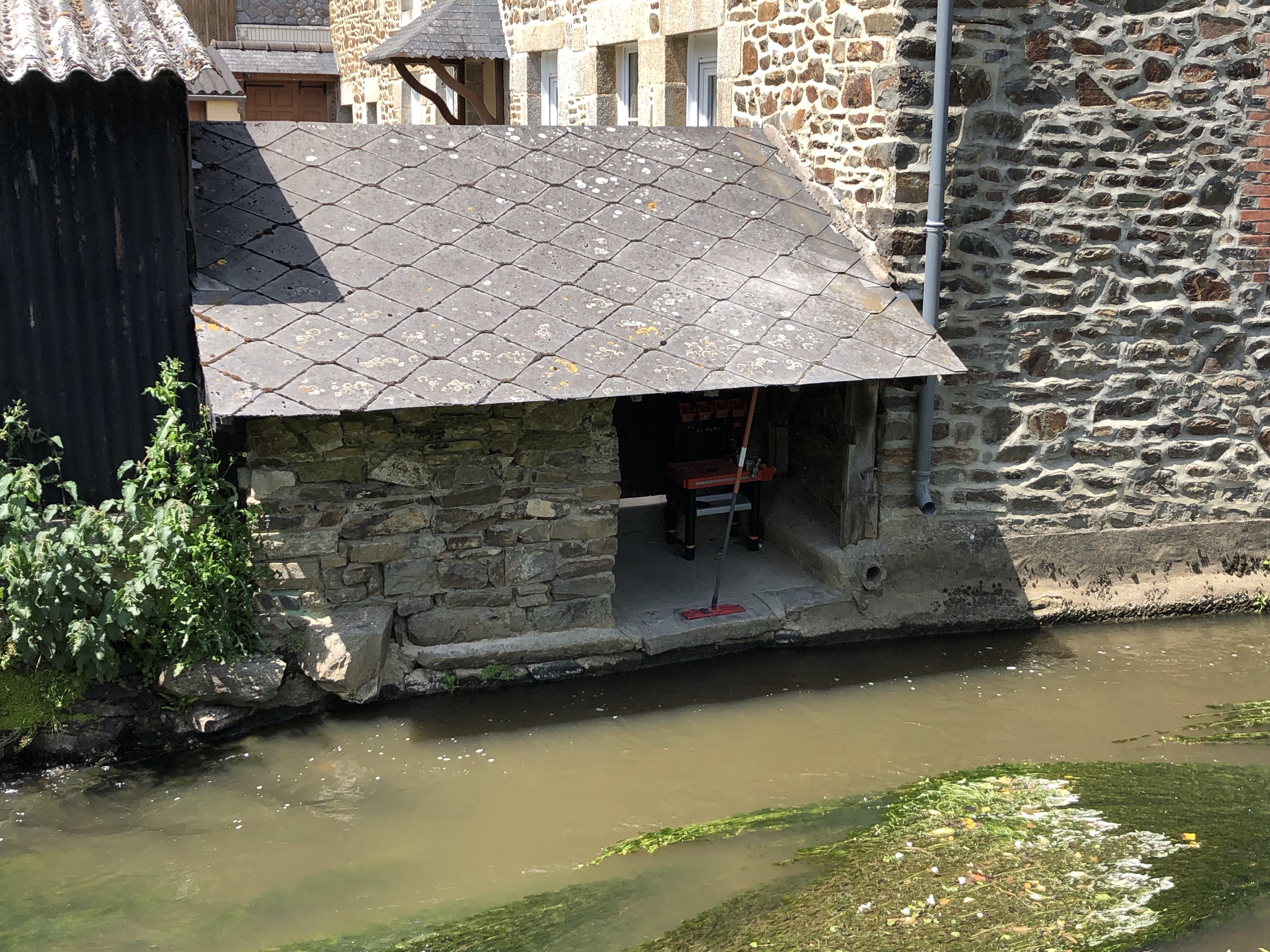
Many of the houses in the Medieval Quarter still possess their own lavoirs in their back gardens. Set low on the river channels, with paved platforms invariably roofed and open to the water, these little houses were used for doing the household laundry – many of them up to the early part of the 20th century. It’s difficult to imagine just how polluted the river must have been with all of the tanning, fulling, dyeing and washing feeding into it. You would never know it now, though. The water is now clear and home to a good number of fish and other wildlife. I am continually astounded at how resilient the natural world can be – despite our best efforts to destroy it.
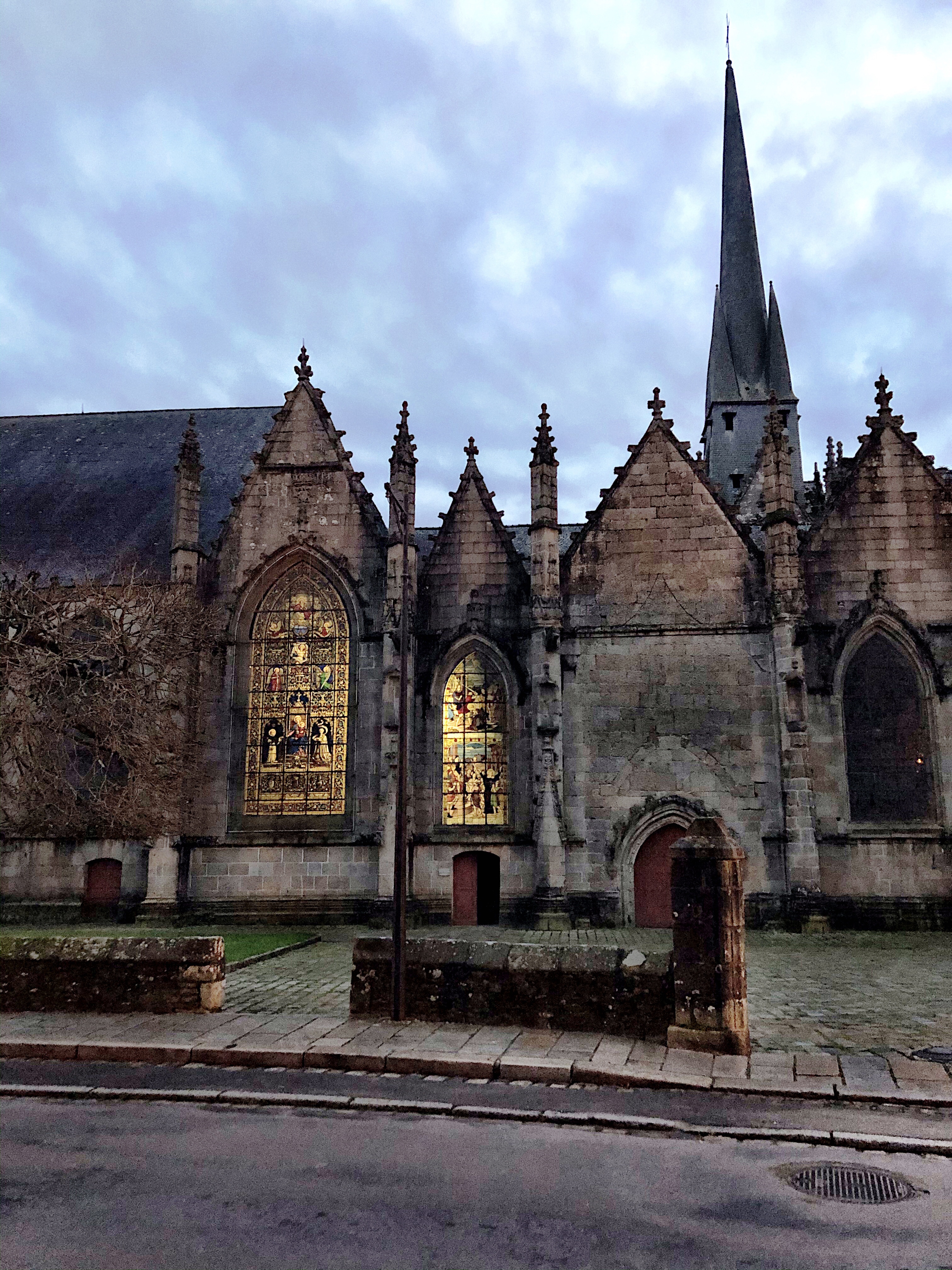
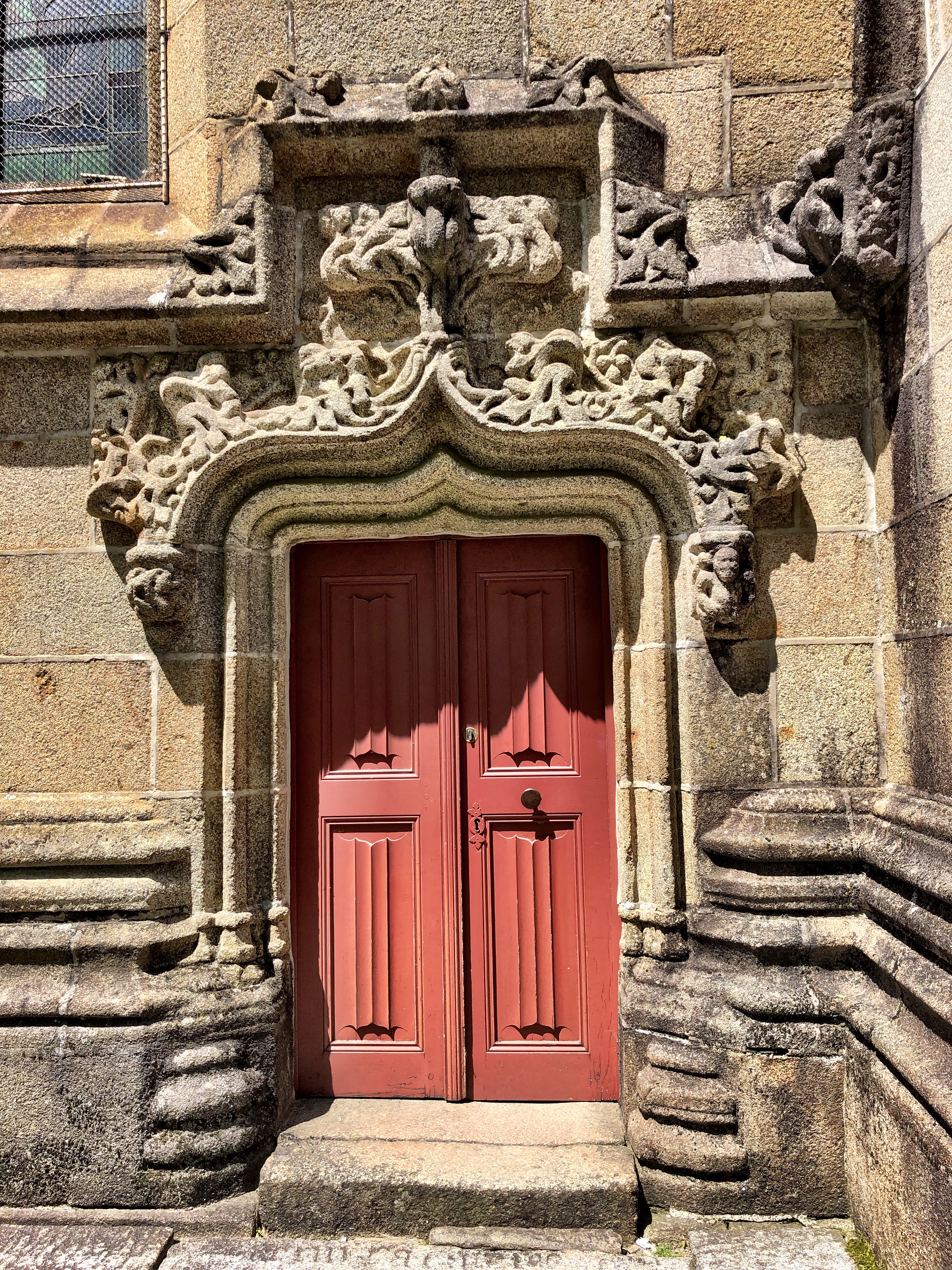
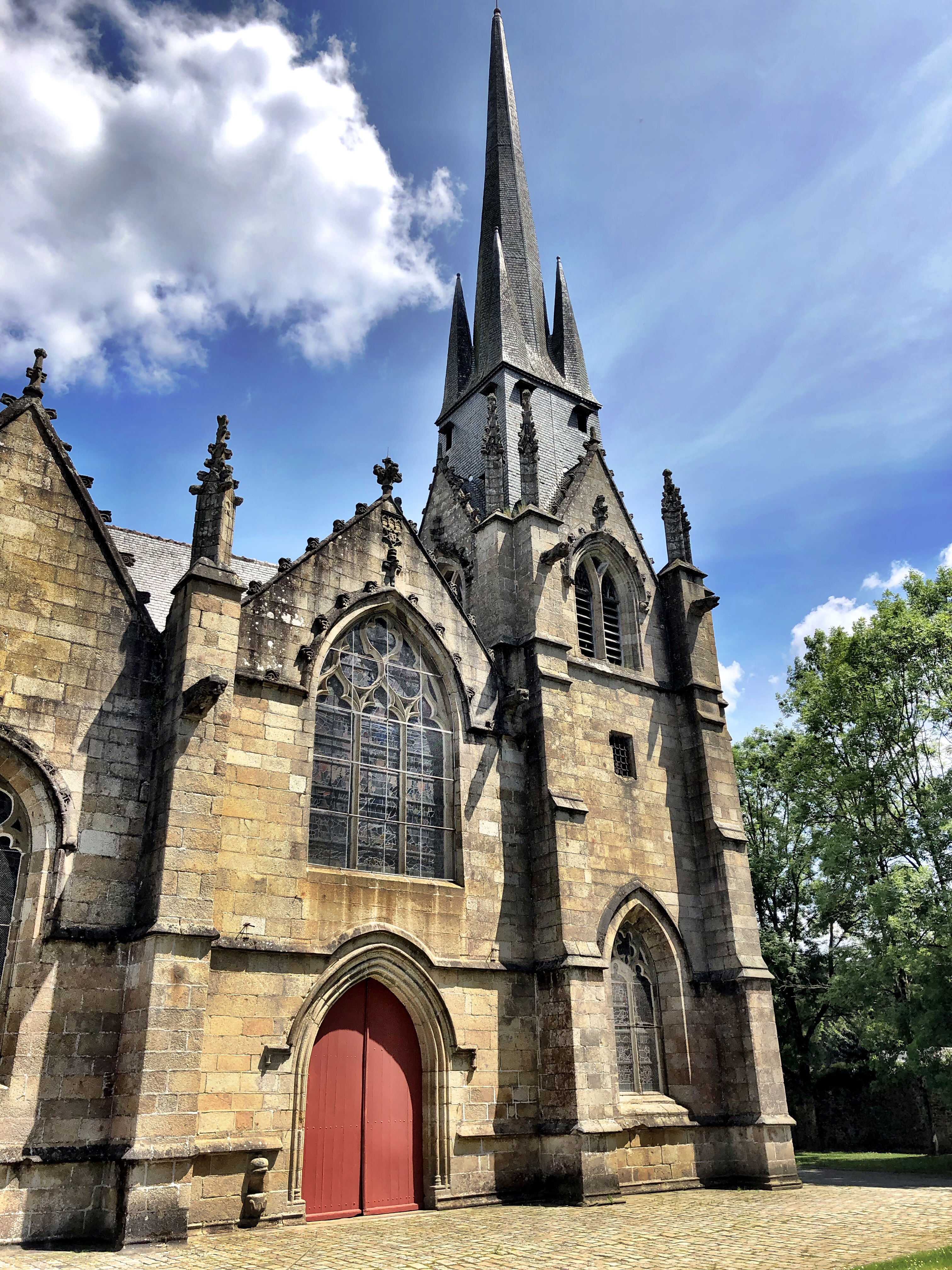
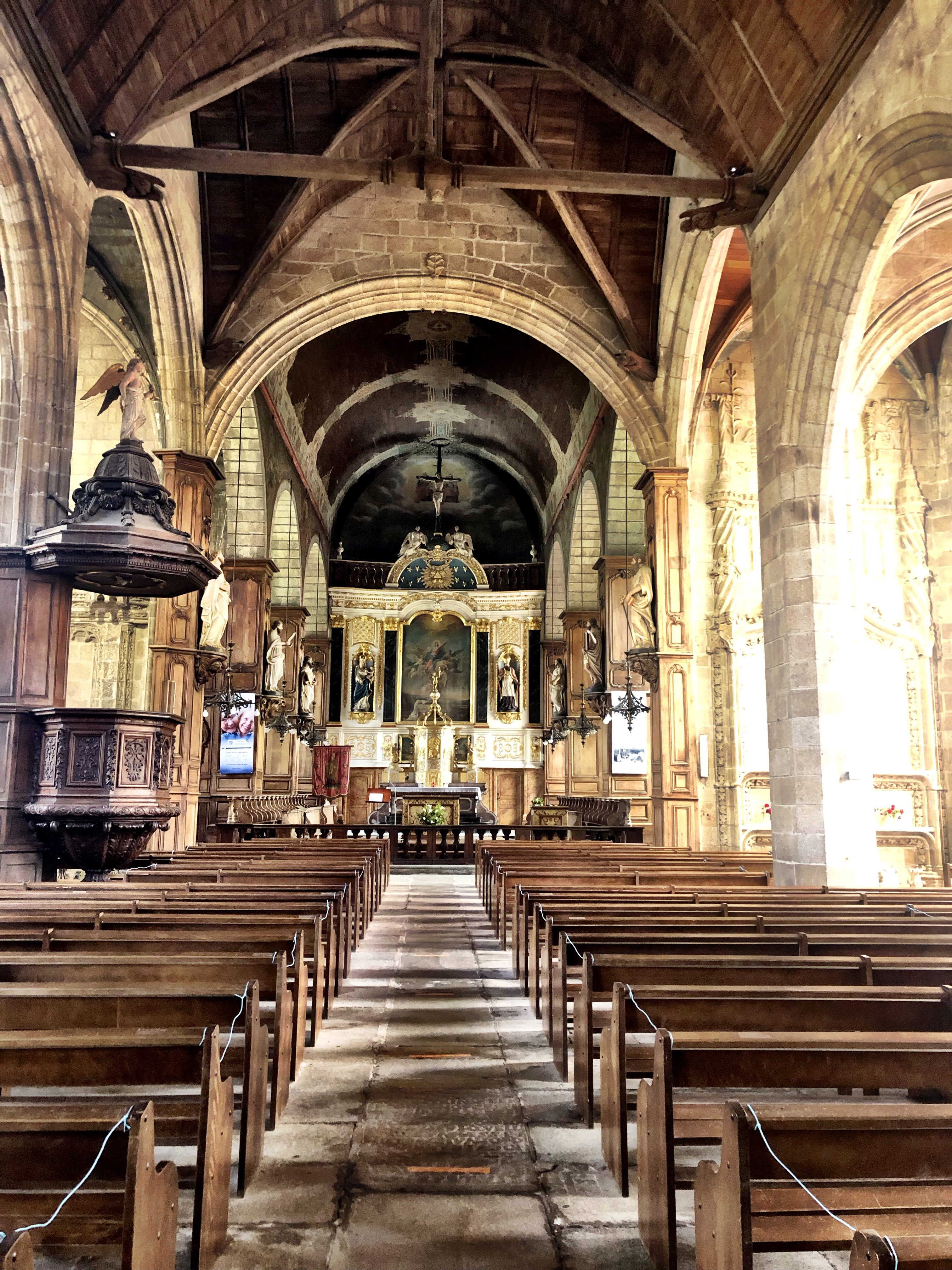
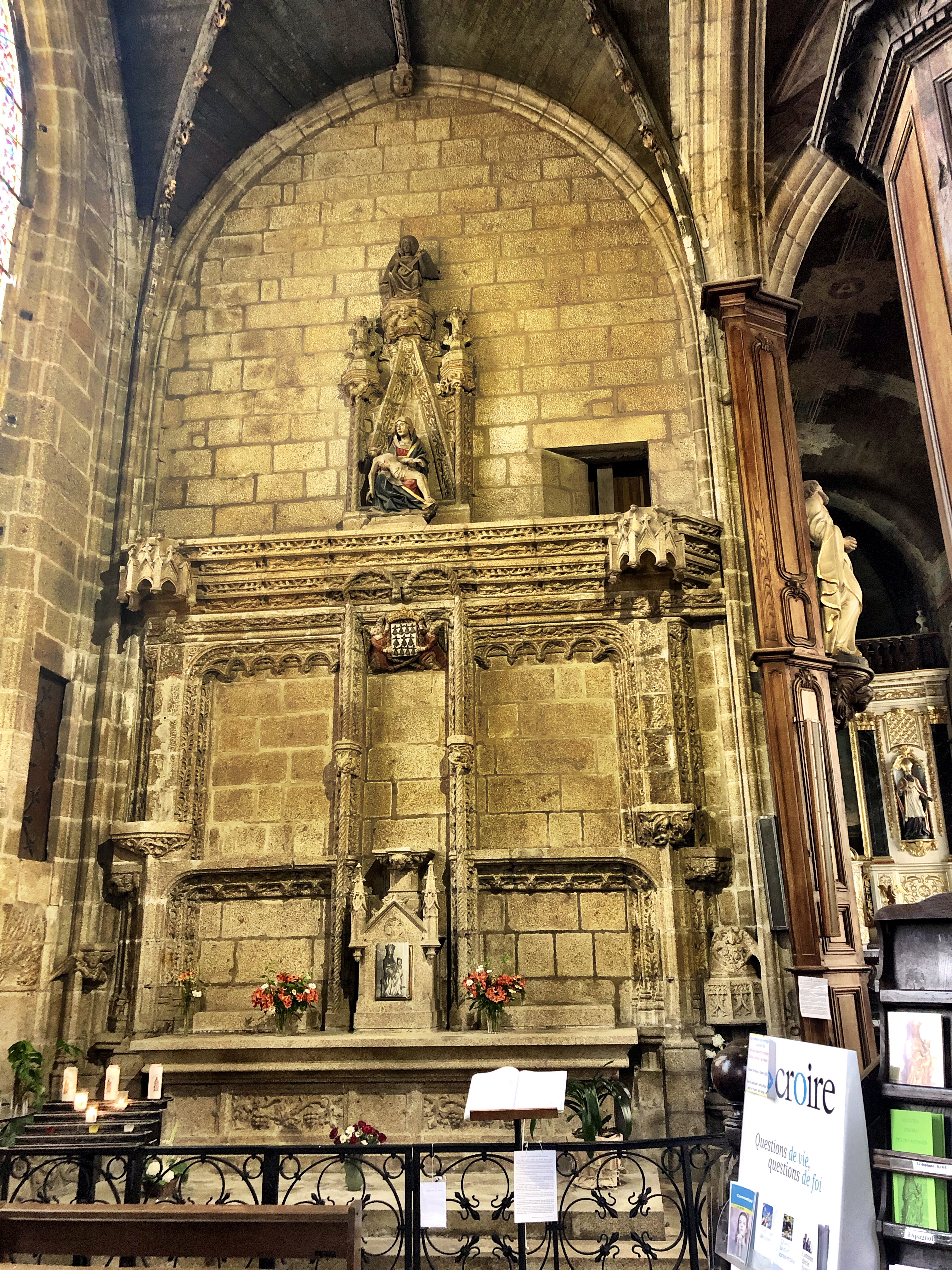
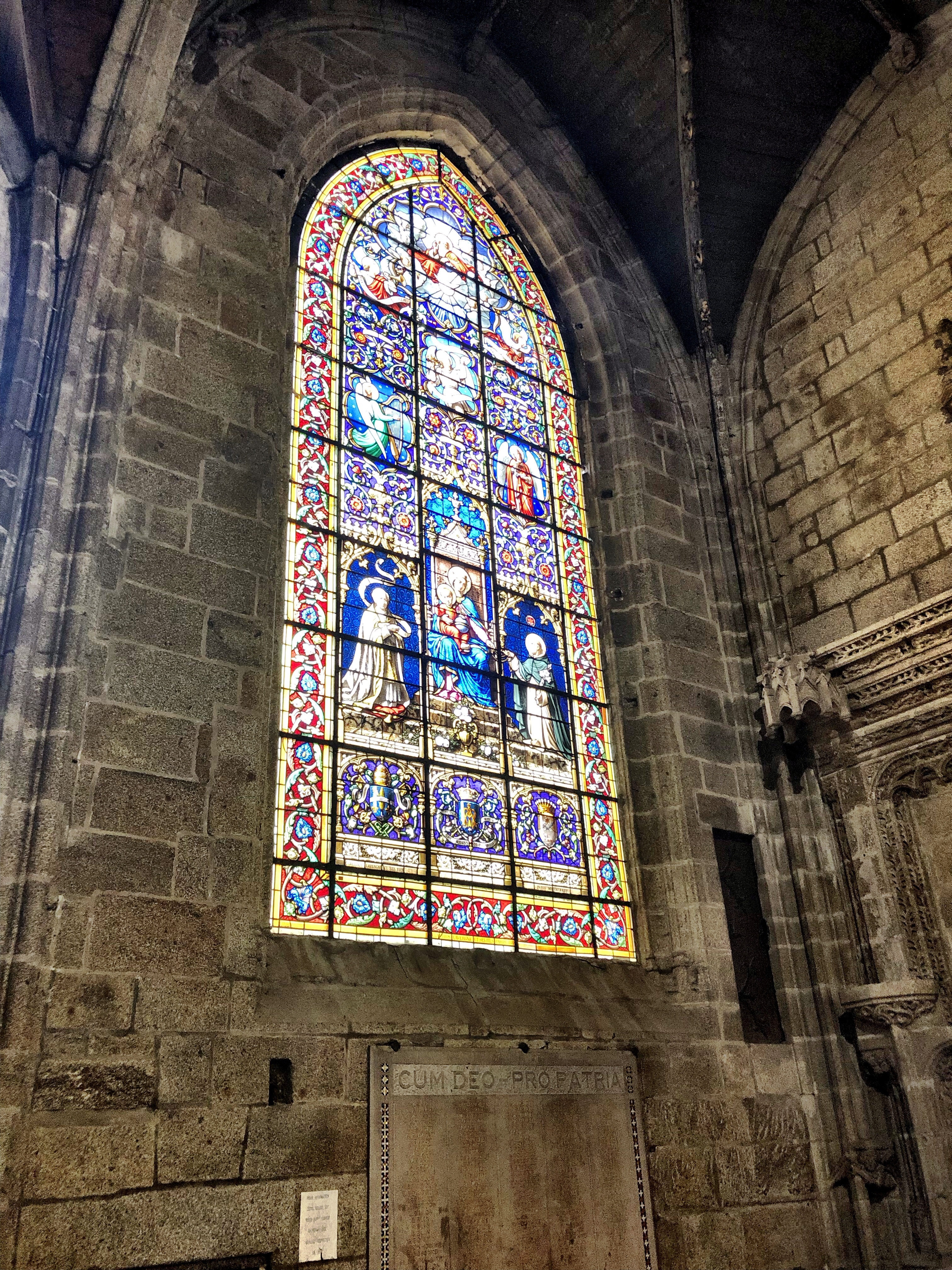
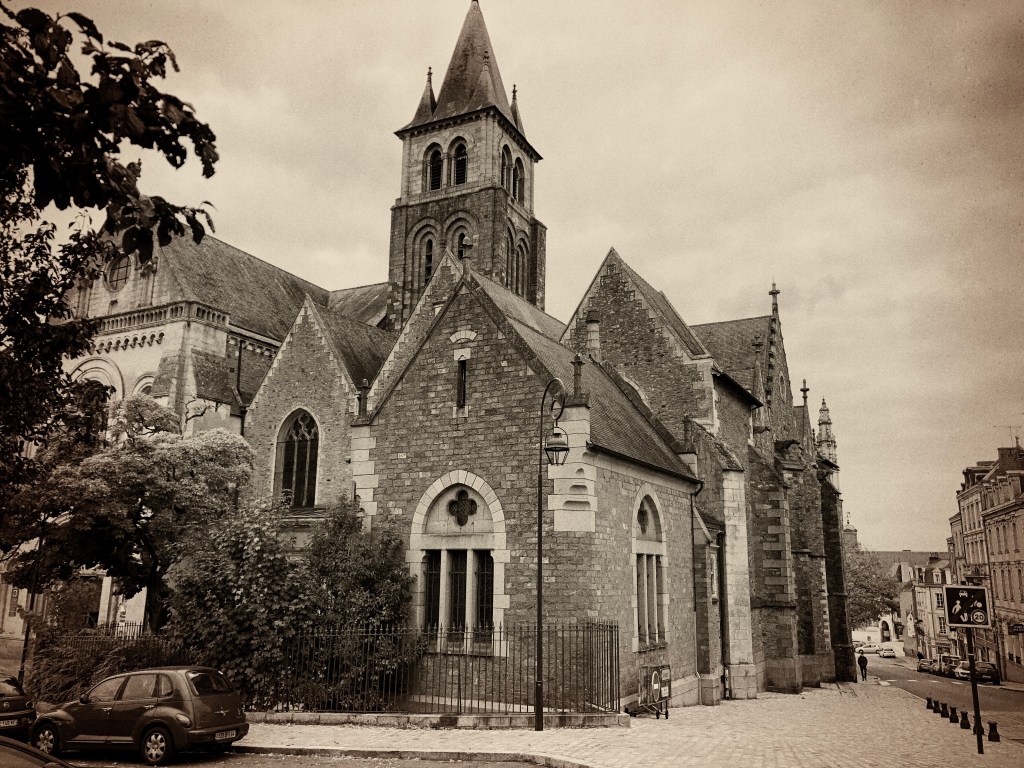
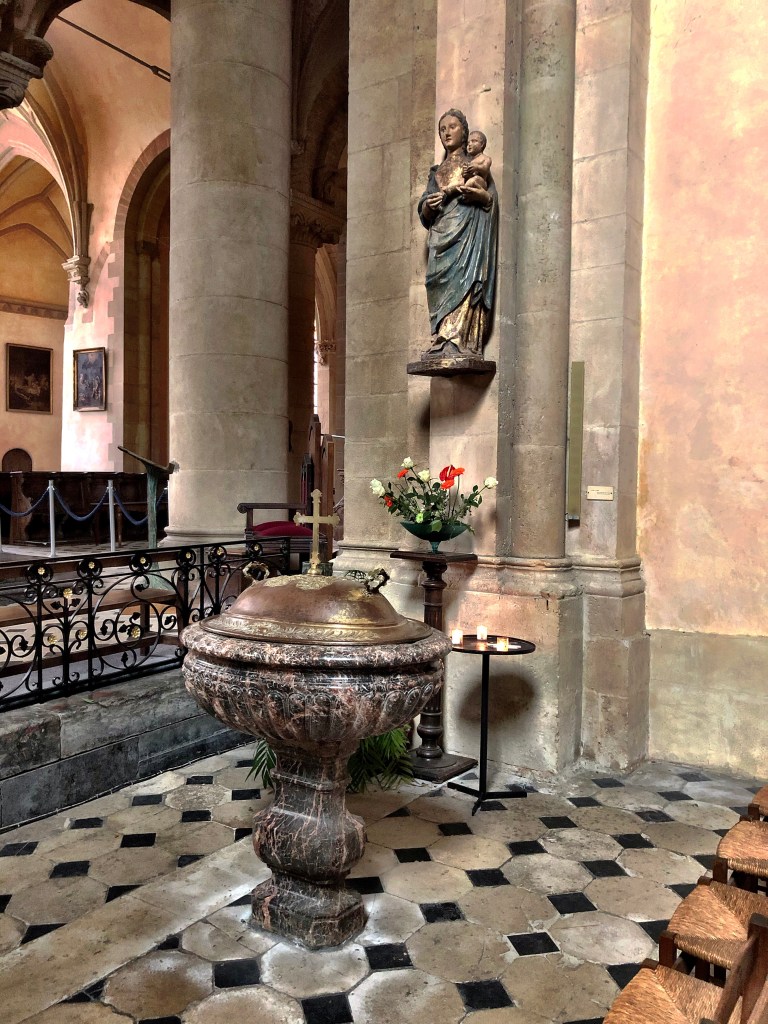
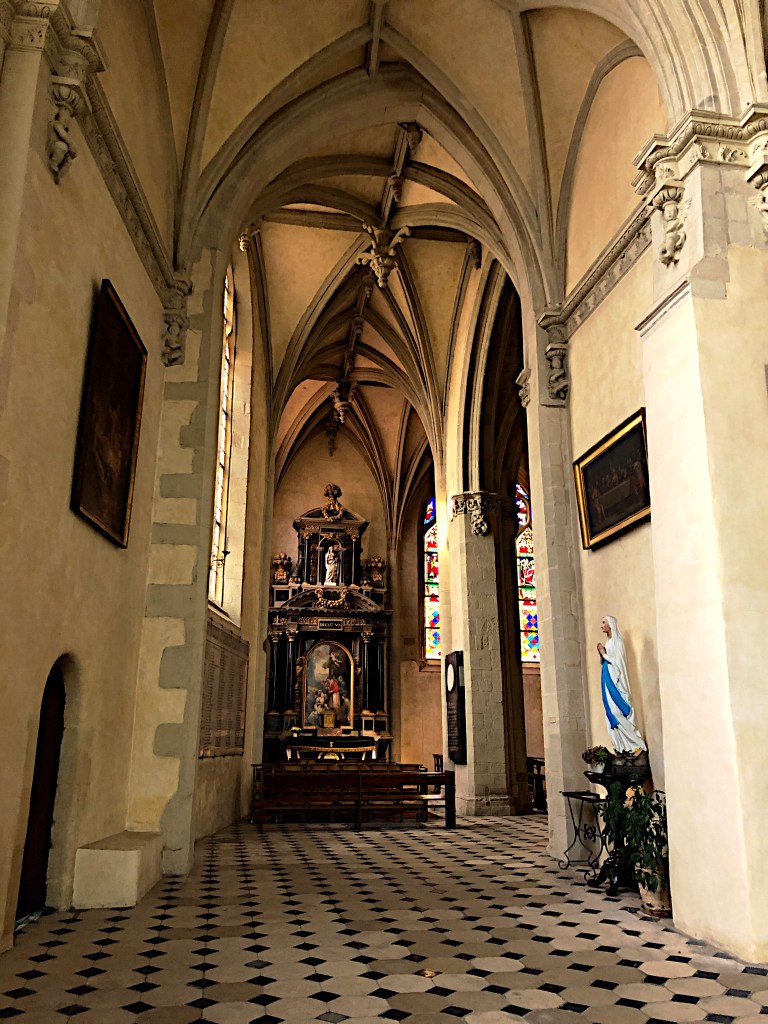
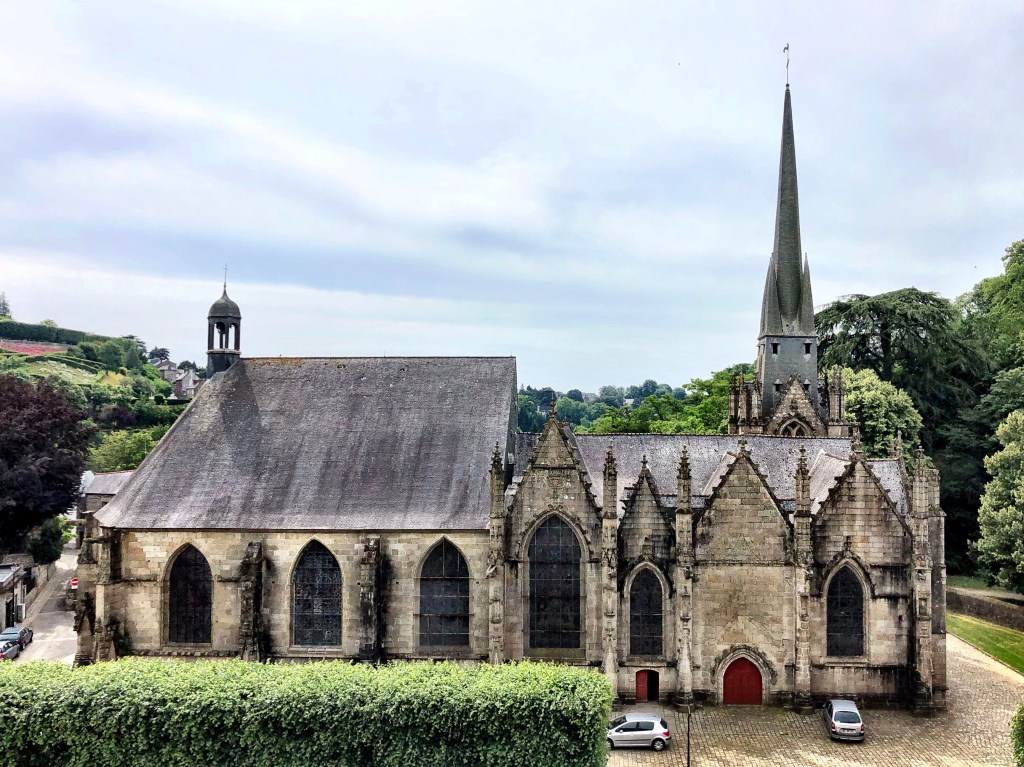
Dominating the Ville Basse is the Église Saint-Sulpice, the parish church. A beautiful edifice built from stone taken from the quarry which looms over it, this church was probably founded in the 11th century. But the current building was begun in the 1400’s with periodic alterations and additions continuing through to the 18th century. It’s a very pretty, primarily gothic structure with dozens of imaginative gargoyles and intricately carved stone decorations. And the interior is no less impressive, with both stone and wood ceilings, painted embellishments, and a pleasing array of figural and architectural carvings. With all of that, St. Sulpice has always been a workaday house of worship, serving the laborers, artisans and merchants who populated the Medieval Quarter. Now, the lower town is primarily residential. All of its former industrial activity has long since moved elsewhere. But the church remains, facing the stark ramparts of the château, its bells ringing the hours of the day as it has for centuries. As it should be. Long may it continue.
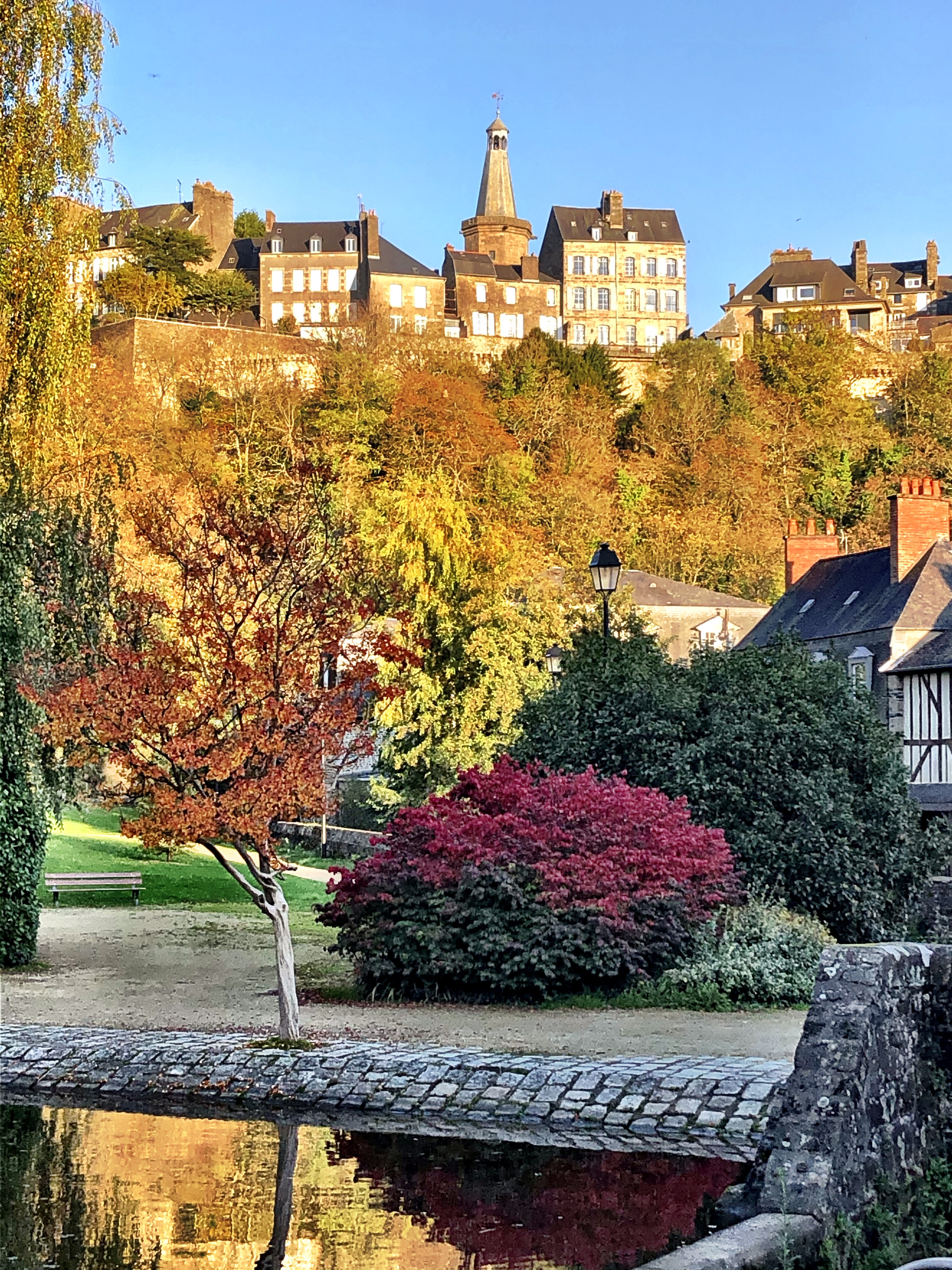
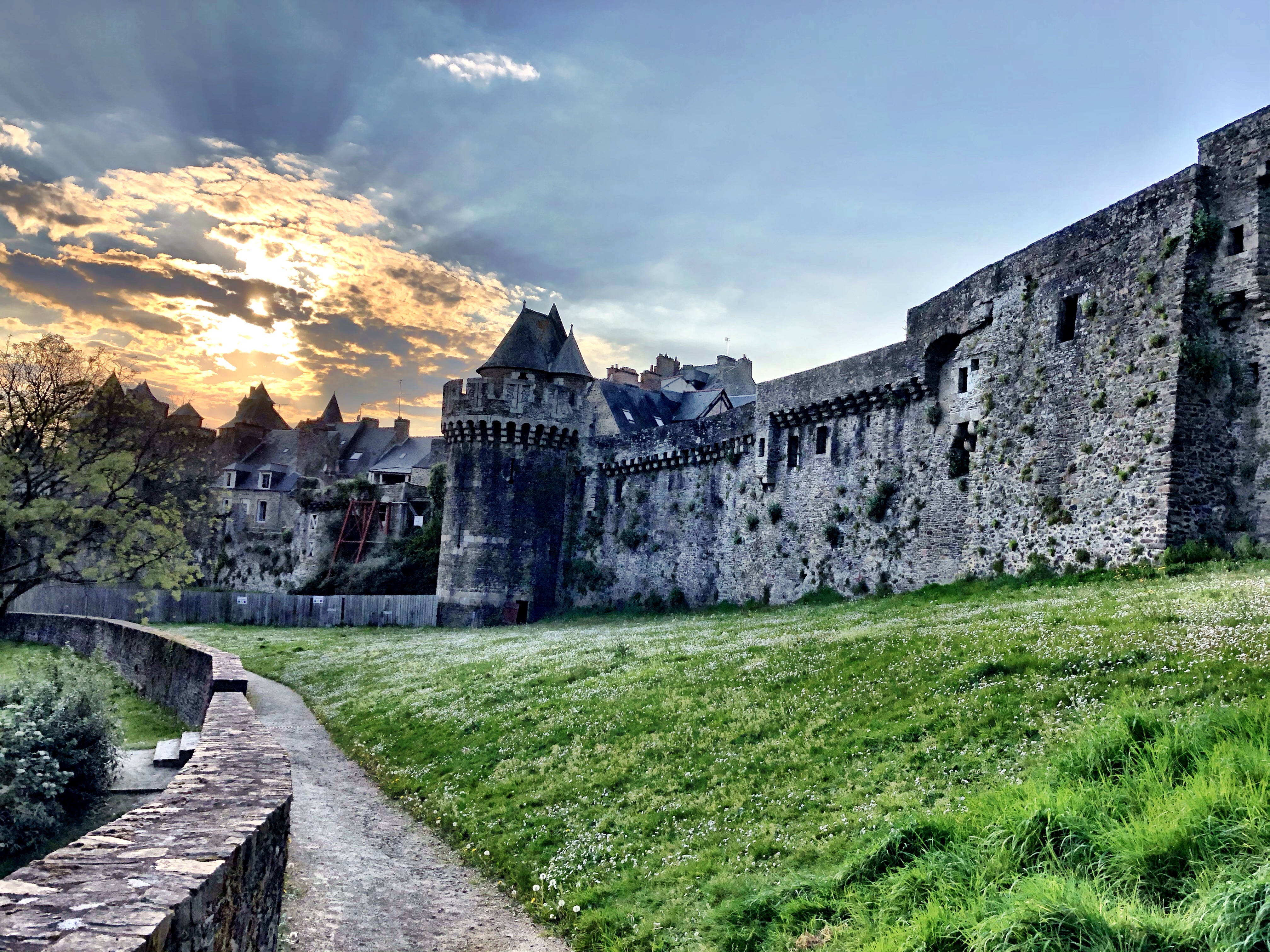
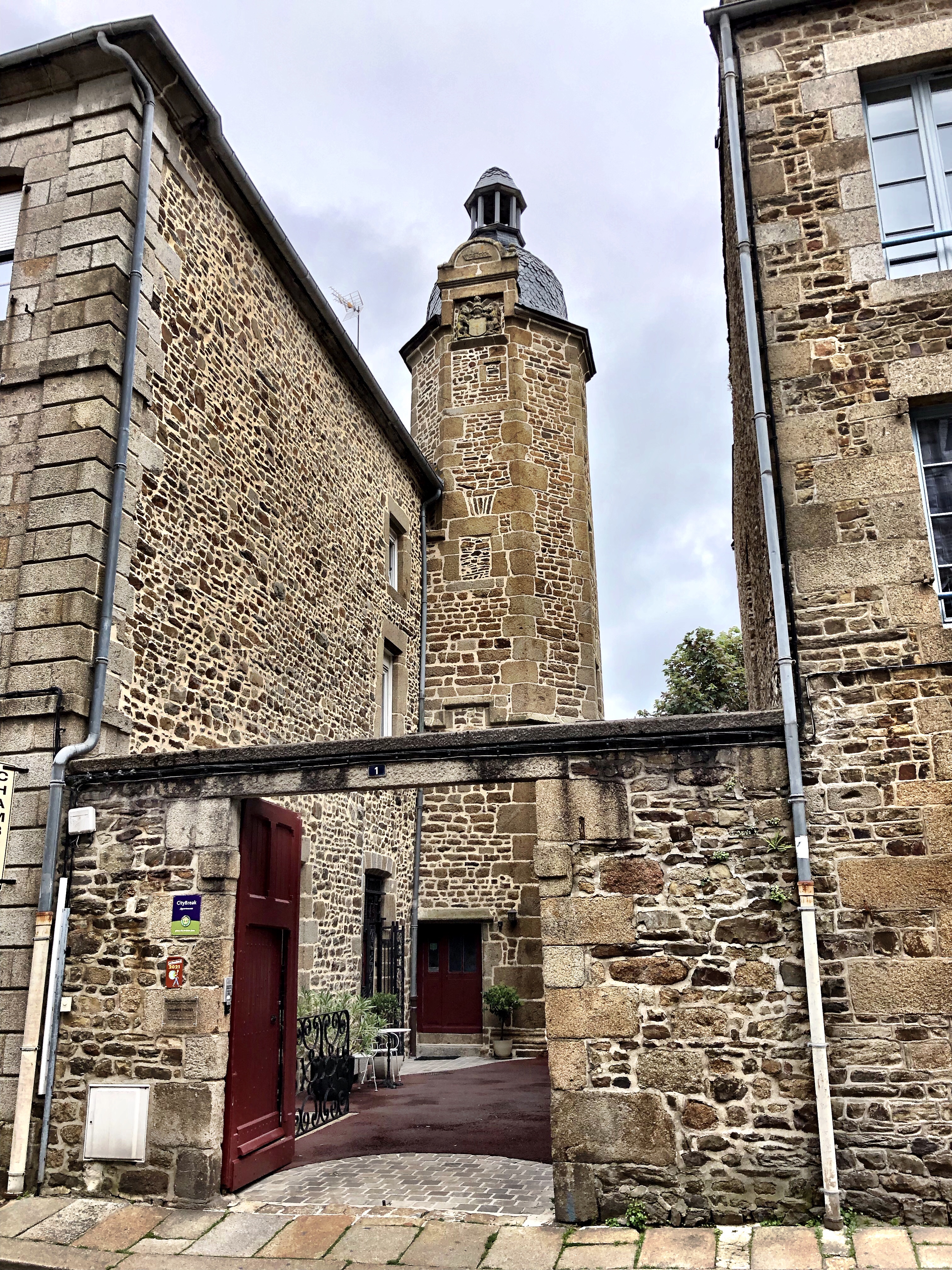
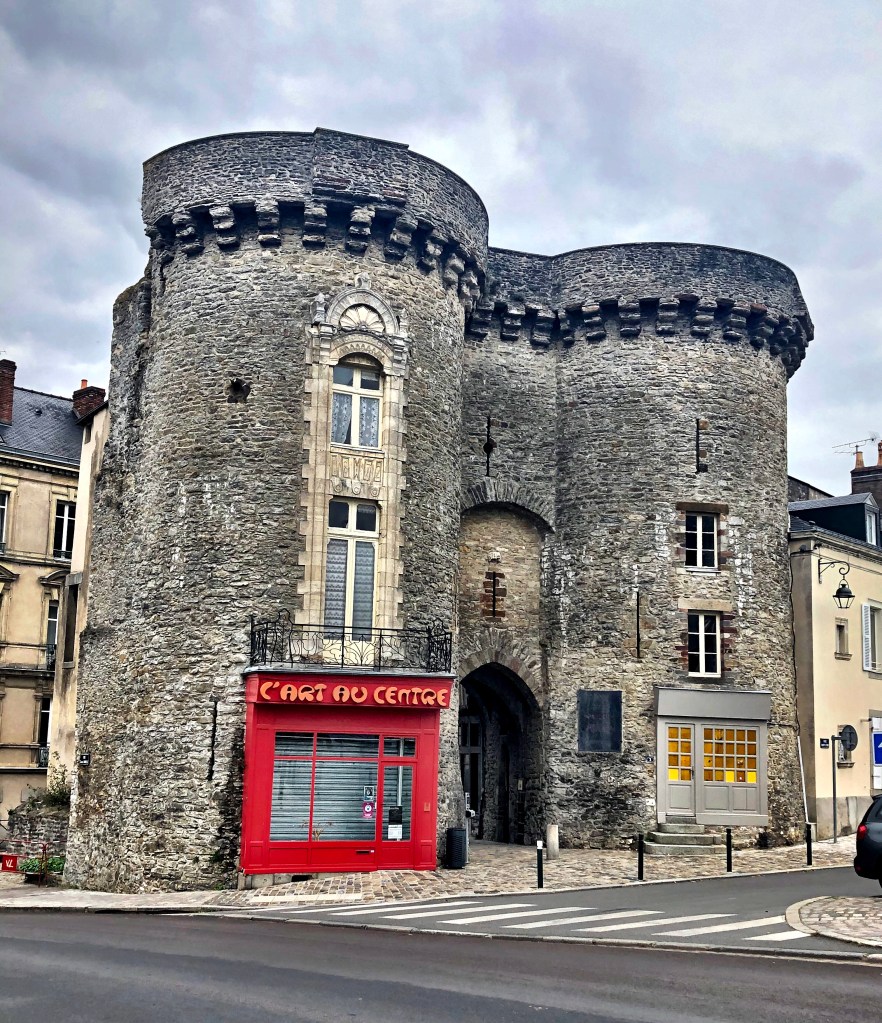
As time went on, Fougères was beginning to outgrow the fairly limited lowland space around the Nançon. By the 12th century the more prosperous inhabitants began to seek higher, less soggy ground for their homes. And so was born the Haute Ville, a rocky plateau which overlooks the meandering river and the narrow valley below. This upper town grew to become the civic focus of the settlement. Although close to, and protected by the castle below, it was to a large extent independent. Beginning in the 13th century, a defensive wall of stone was constructed to encircle the Haute Ville. Further towers (like ours!) were added in the early part of the 15th century. Unfortunately, only one of the three (or four, depending on the source) original town gates remains, but there are many sections of the wall and several towers still stand. It must have been quite impressive in the Middle Ages.
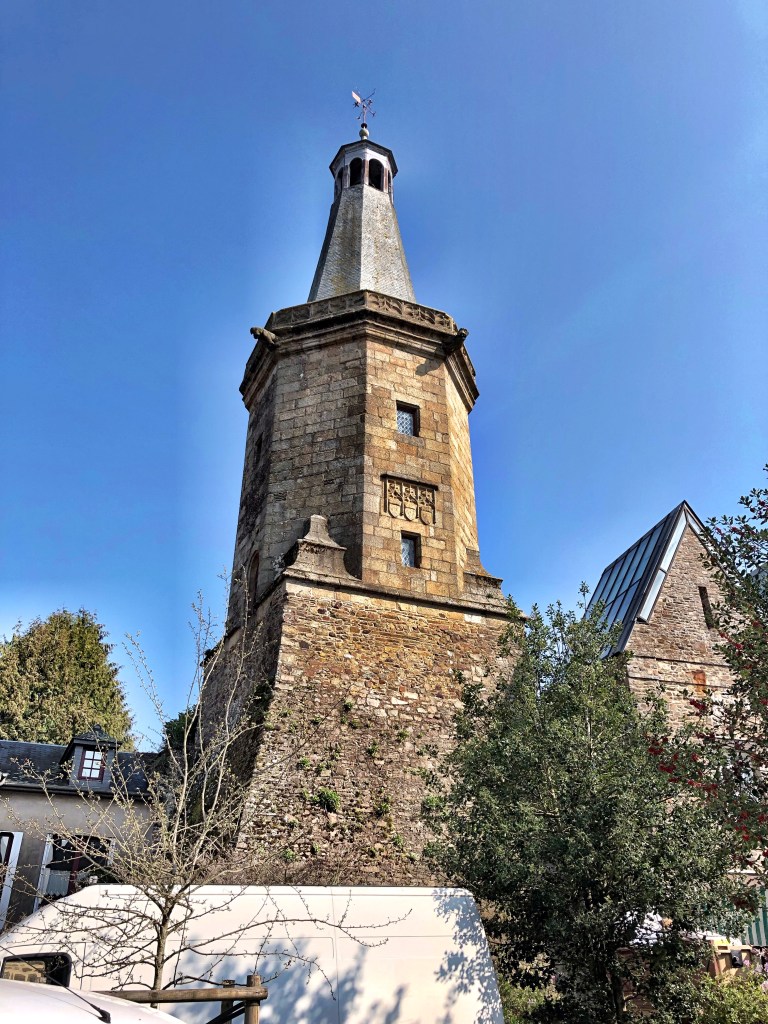

Le Beffroi: the Oldest Bell Tower in Bretagne

Eager to show their prosperity, the town’s leaders financed the construction of a beffroi (bell tower) at the end of the 14th century. Many towns did this in the Middle Ages, but only two now remain in all of Bretagne; the other one is in Dinan. The beffroi is a really interesting structure, designed solely for the purpose of showing off. Oh, and also for tolling the time of day for the populace, which it’s done continually for over five hundred years. Not only is it charming, but it’s still really useful. You always know the time of day within 15 minutes just by the sound of the bells and the number of times they chime.
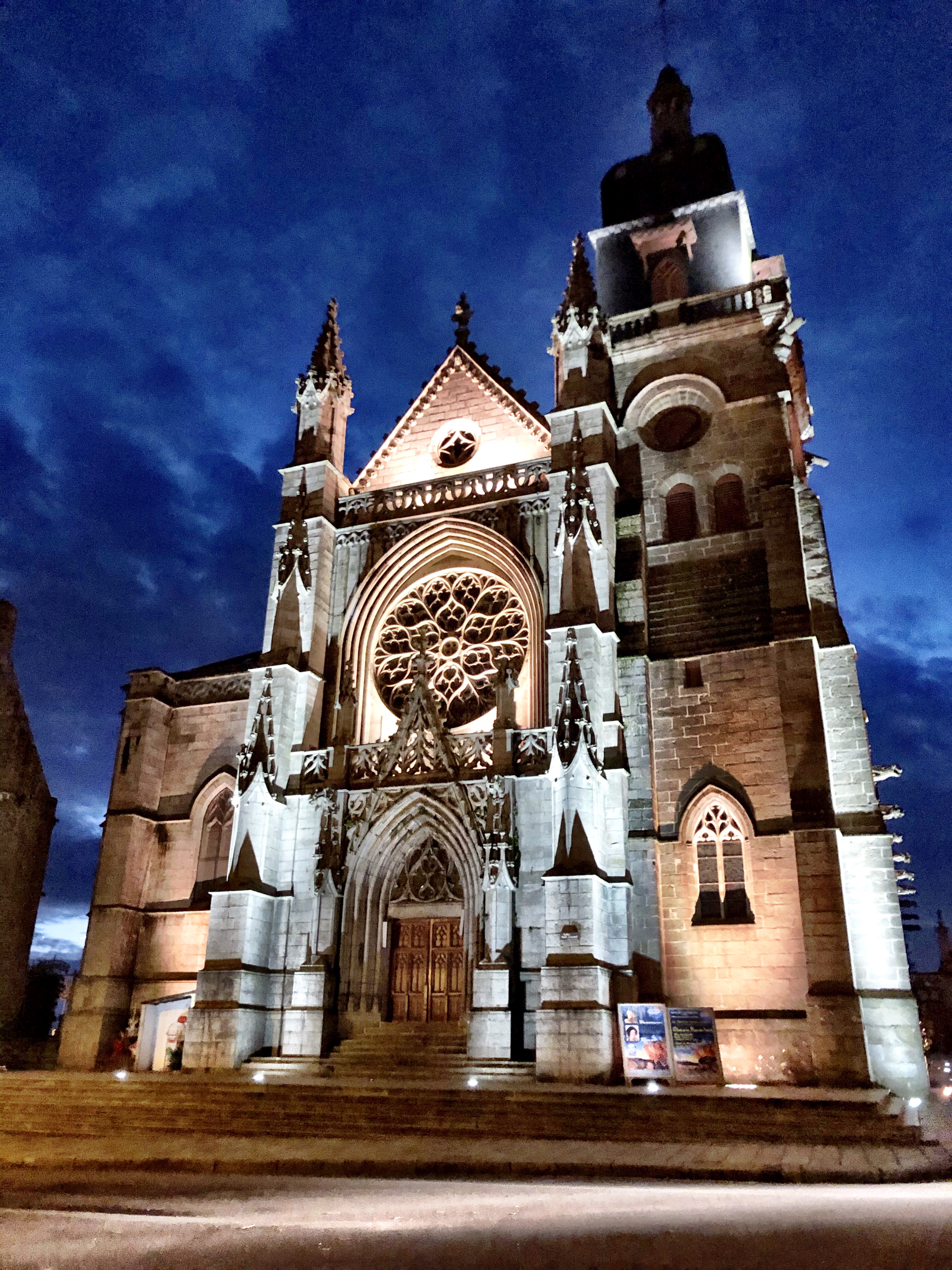
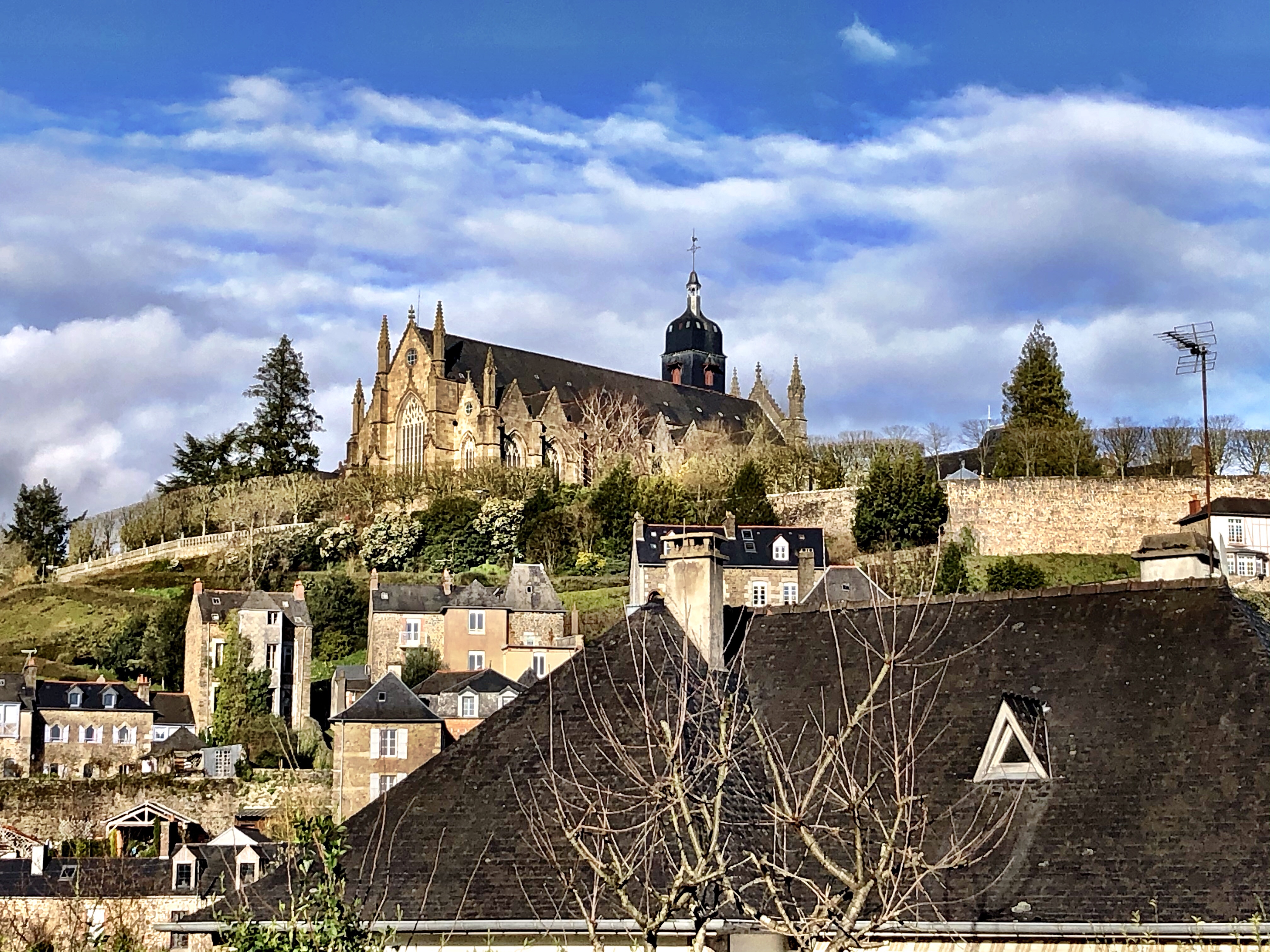
Further down Rue National from the beffroi is L’Église Saint-Léonard. This parish church is perched atop the highest point of the Haute Ville, overlooking its sister St. Sulpice and the lower town below. It was founded in the 12th century and “modernized” in the 15th and 17th centuries. In the late 18th century revolutionary zeal contributed to significant damage of St. Léonard. This later led to a major redesign and additions to the church in the following century. Today, it’s still the hub of religious worship in the center of town. Somewhat disappointingly, the interior is not particularly interesting. Probably thanks to the anti-clerical anger of the sans-culottes at the height of the Revolution.
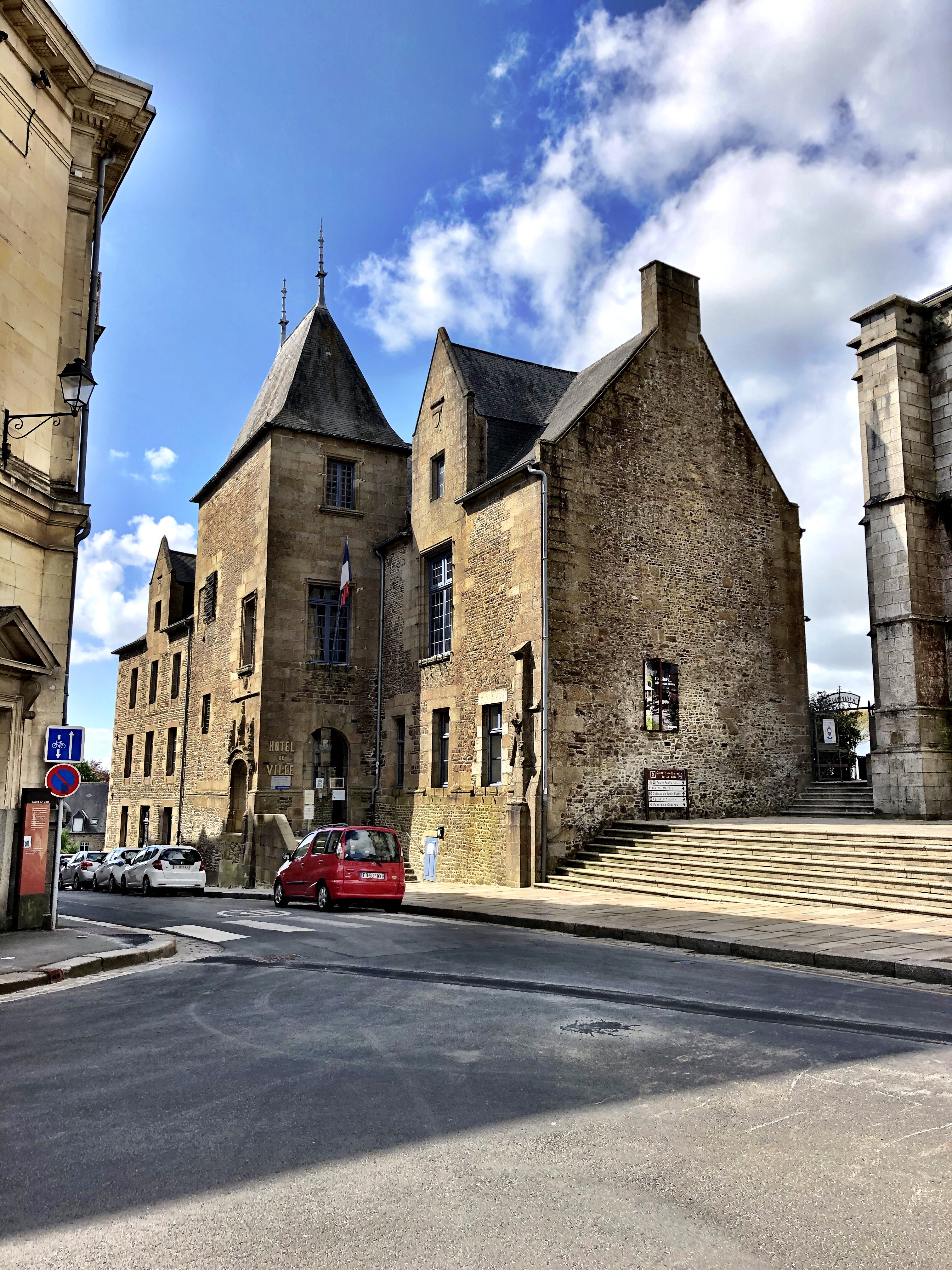
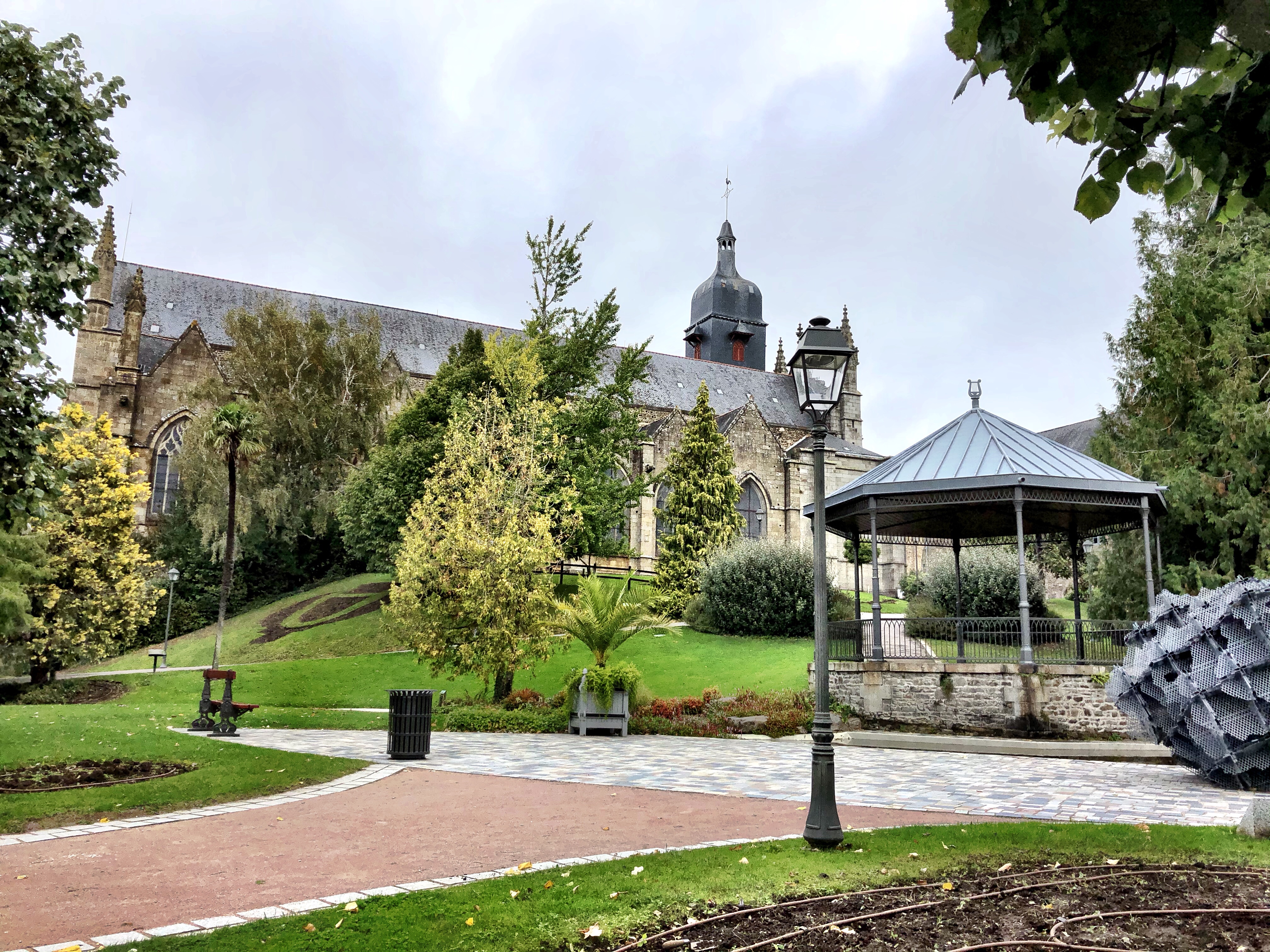
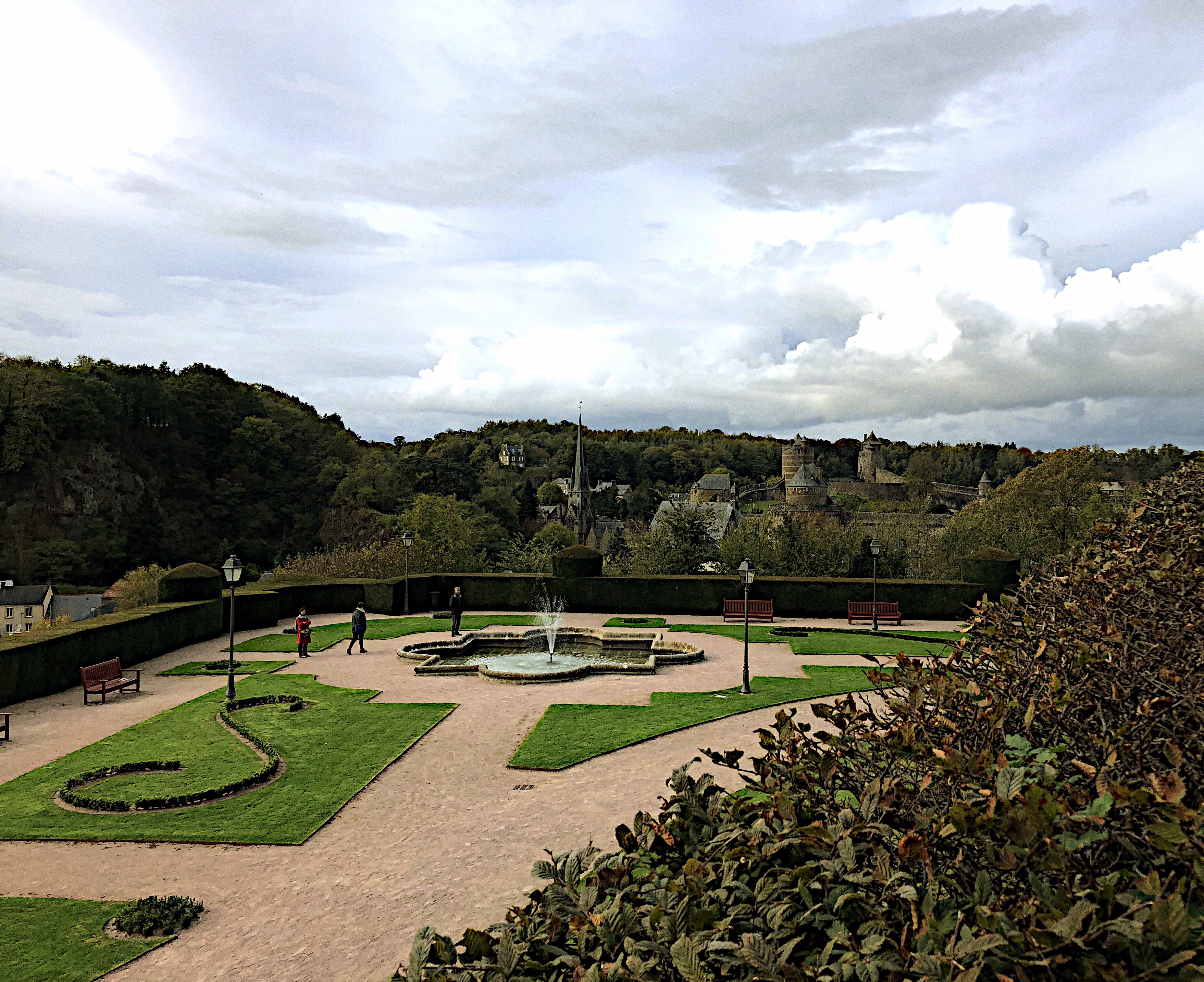
Adjacent to Saint-Léonard is the Hôtel de Ville (the town hall) and the Jardin Publique. The former was constructed in the 15th century and a nice example of administrative architecture of the time. I have personally never set foot in it, but Cherie once had to go in to arrange a street parking permit for a moving truck. The Jardin Publique is, as the name suggests, the public garden. This formal garden was established in 1766, following the removal of the town defenses in this area. It’s broad terraces trail down the southwestern slope of the promontory to the Ville-Basse and the river below. The upper levels provide for beautiful panoramic views of the lower town, the verdant countryside beyond, St. Sulpice, and the château. This garden is a lovely place to take a stroll and enjoy the views; unfortunately, we hardly ever go there because it’s one of the few places in France where dogs are inexplicably not allowed.
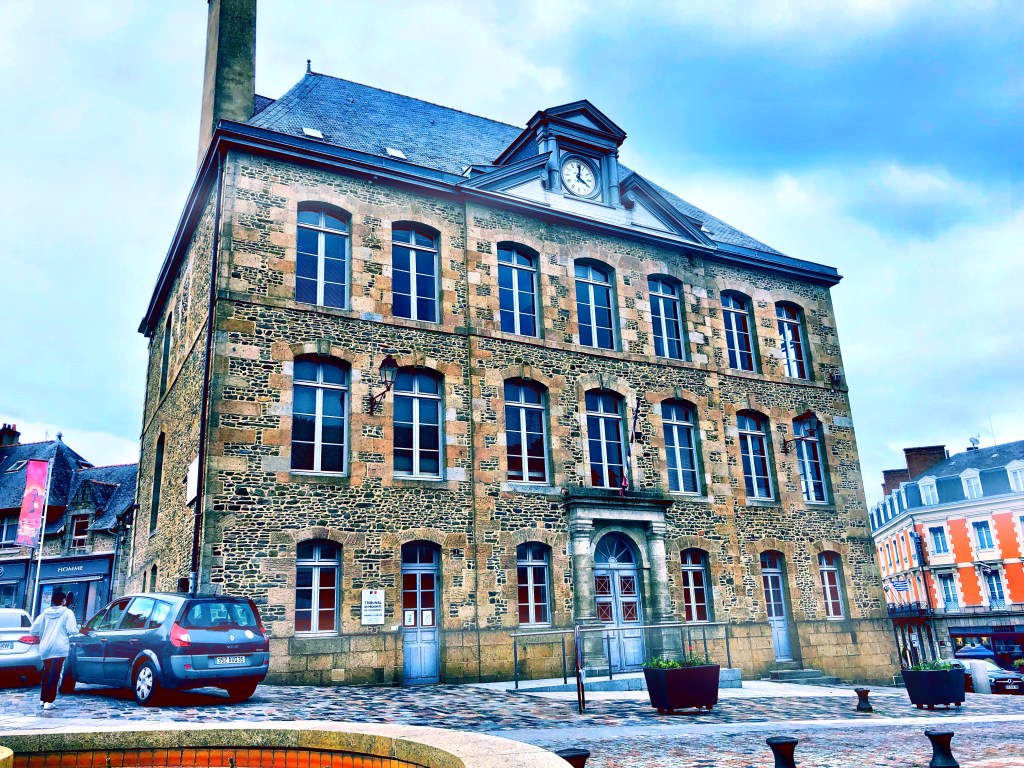
Home of the Marquis de la Rouërie, hero of the American Revolution and a Chouan leader – (Saxon Likes to Pee in the Rear Garden)

After the end of the Middle Ages and the incorporation of the Duchy of Bretagne into the kingdom of France, Fougères’ strategic importance disappeared. The château fell into disuse, then became a prison; it even housed German prisoners of war during World War I. Following centuries of numerous battles and sieges, the town enjoyed relative calm. Until the Revolution sparked the local Chouannerie counter-revolution in the 1790’s. Following their success in the Battle of Fougères in 1793, the Chouans continued to revolt against Republican forces in the area. One of their leaders was a local boy, Armand Tuffin, Marquis de la Rouërie. Before becoming embroiled in French conflicts, Tuffin had spent several years serving as an officer with American revolutionaries during the War of Independence and had become a friend of George Washington. His former home in Fougères is just up the street from our tower, now serving as a courthouse.
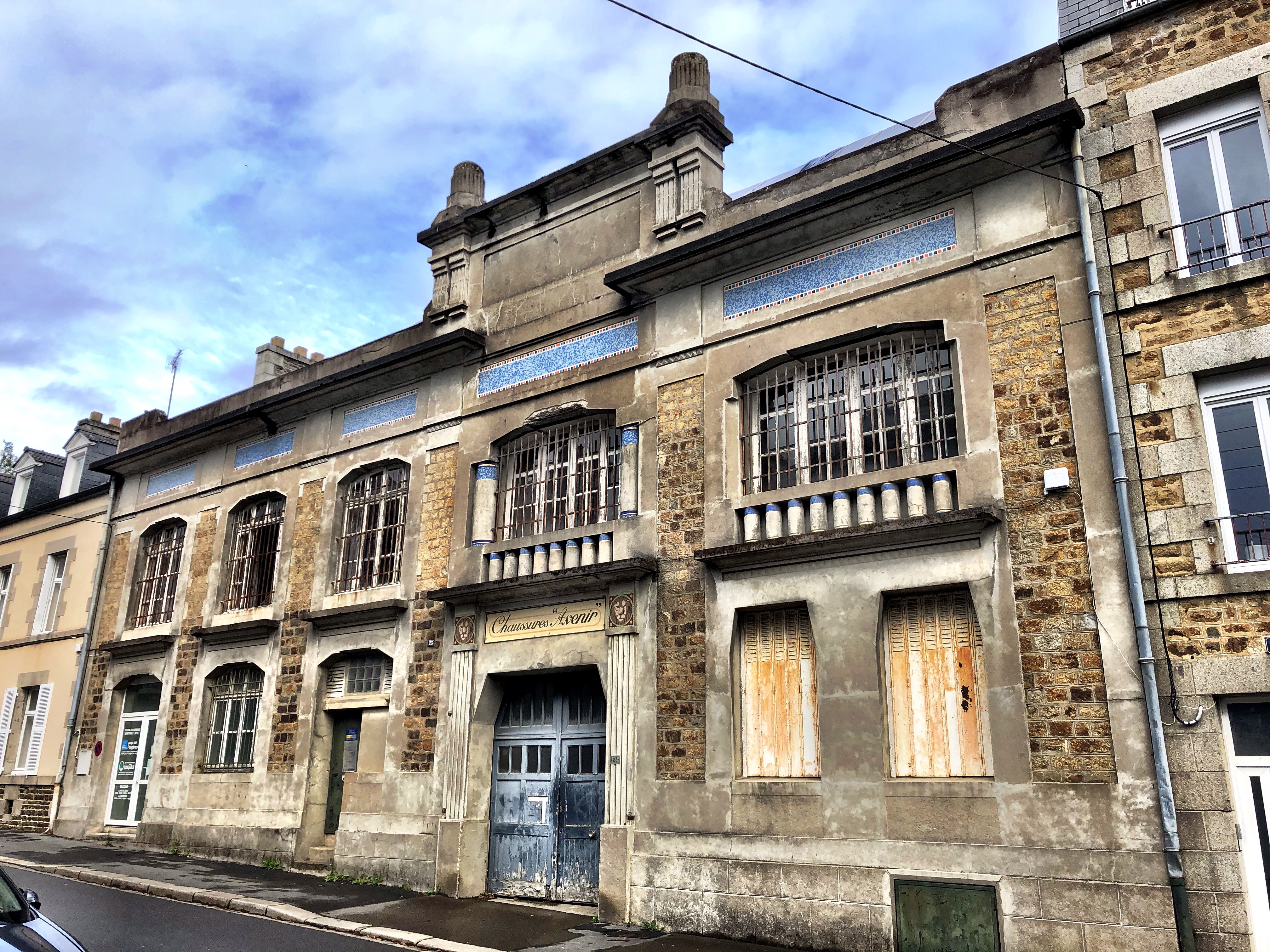
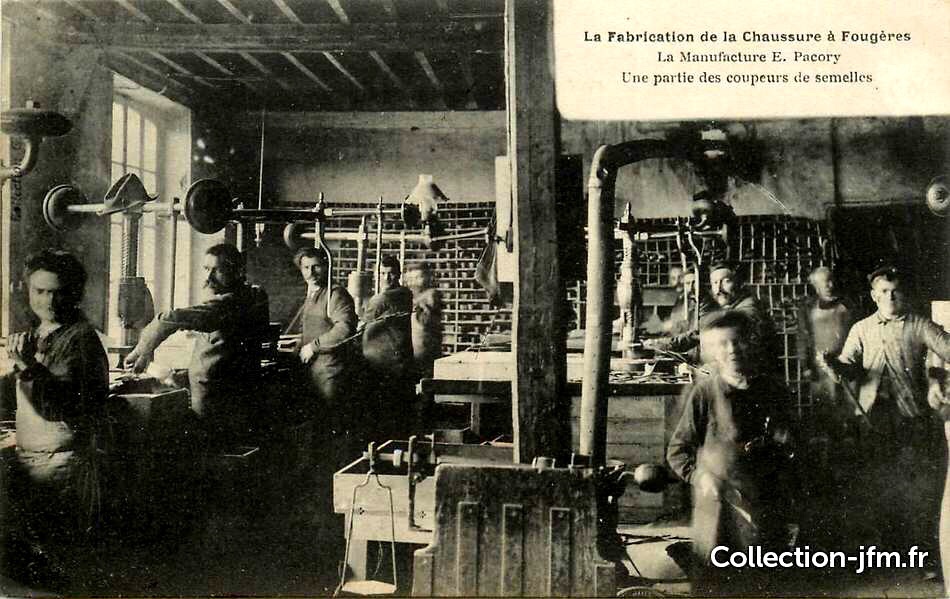
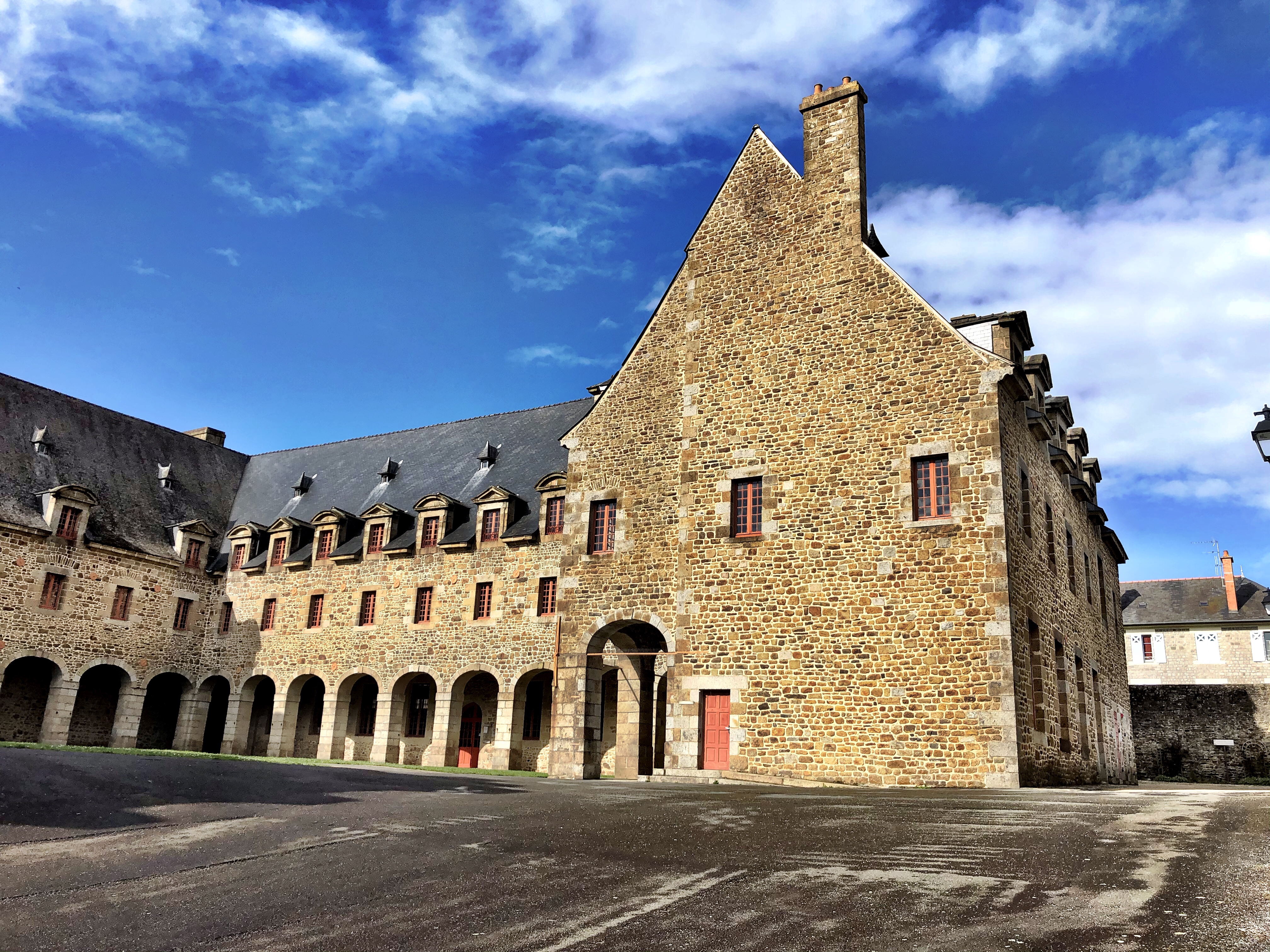
By 1800 a more peaceful existence had returned to Fougères. And the town spent the following century getting down to business. Primarily, the business of manufacturing shoes. The craft of shoe-making had a long tradition in the area, particularly the making of clogs. Indeed, the street on which we live had several clog makers (sabotiers) up to 1900. But large factories making leather shoes had become the industrial focus, dominating the local economy in the 19th and 20th centuries. At one point Fougères counted more than 60 shoe factories. Our tower was home to one of the largest: the Pacory shoe manufacturing company. Although the shoe-making industry is now almost entirely gone from the town, numerous remnants of its factory buildings are dotted throughout the area. Some of them reveal glimpses of art nouveau and art deco mosaic decoration and architecture.
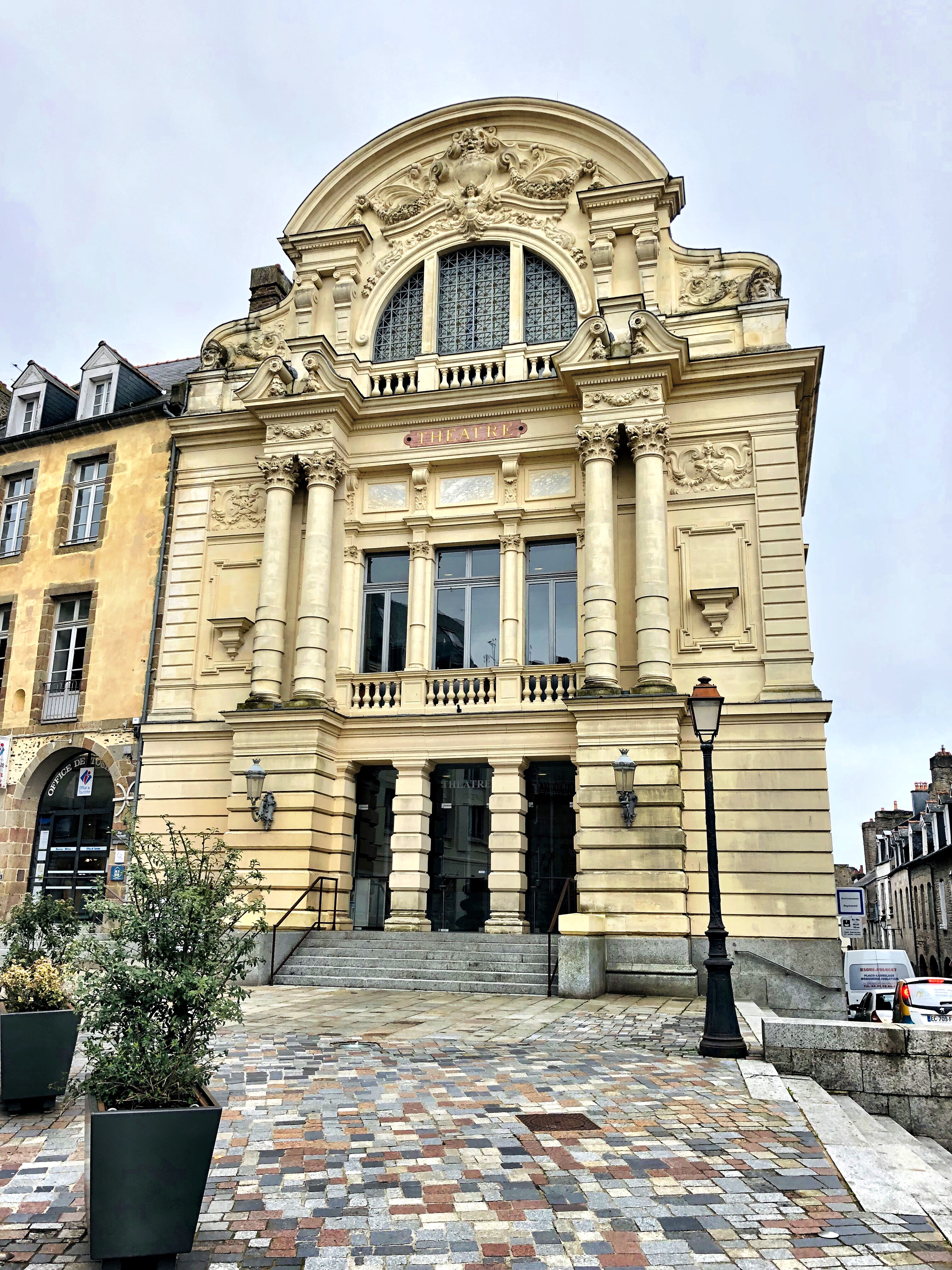

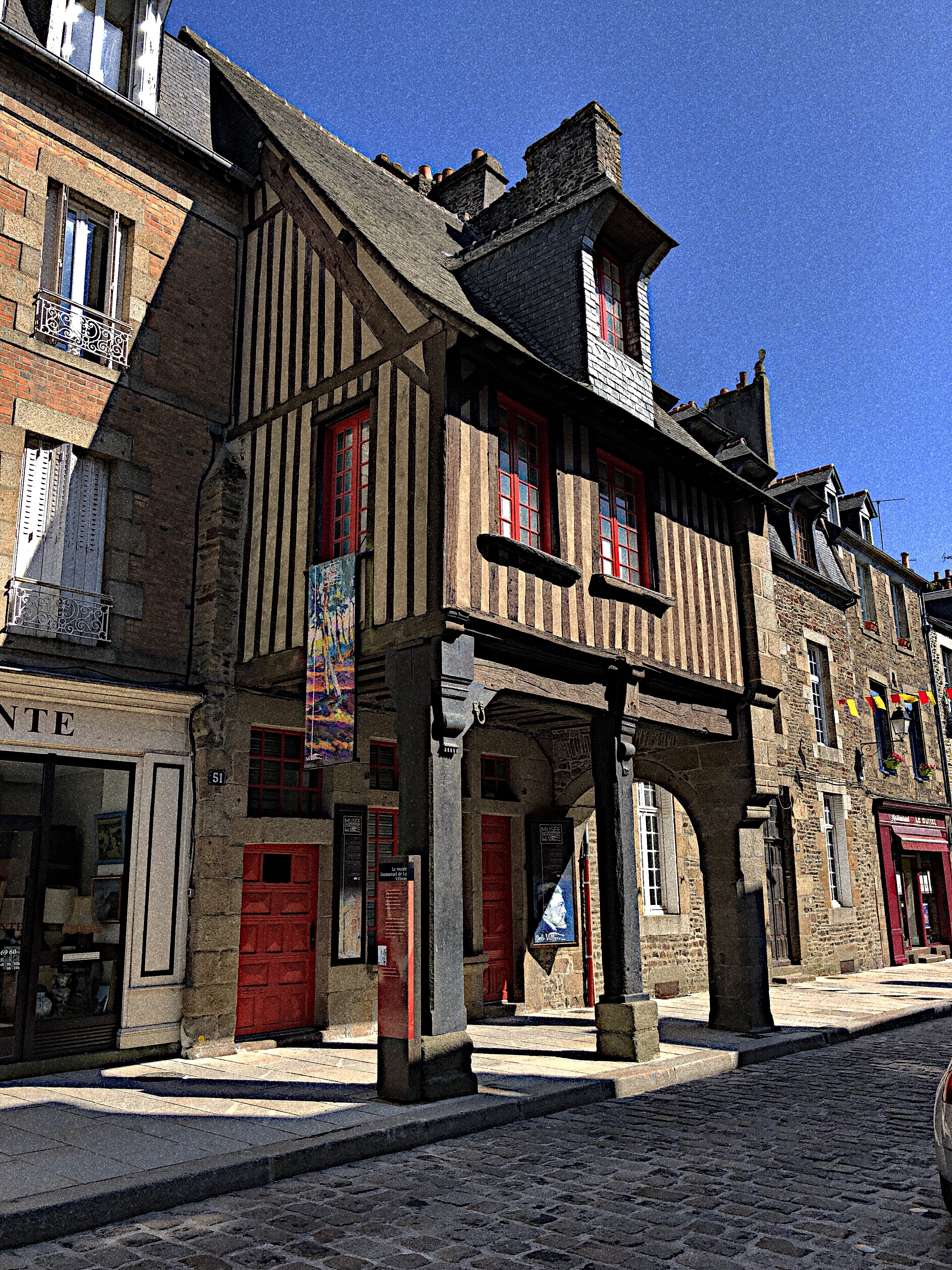
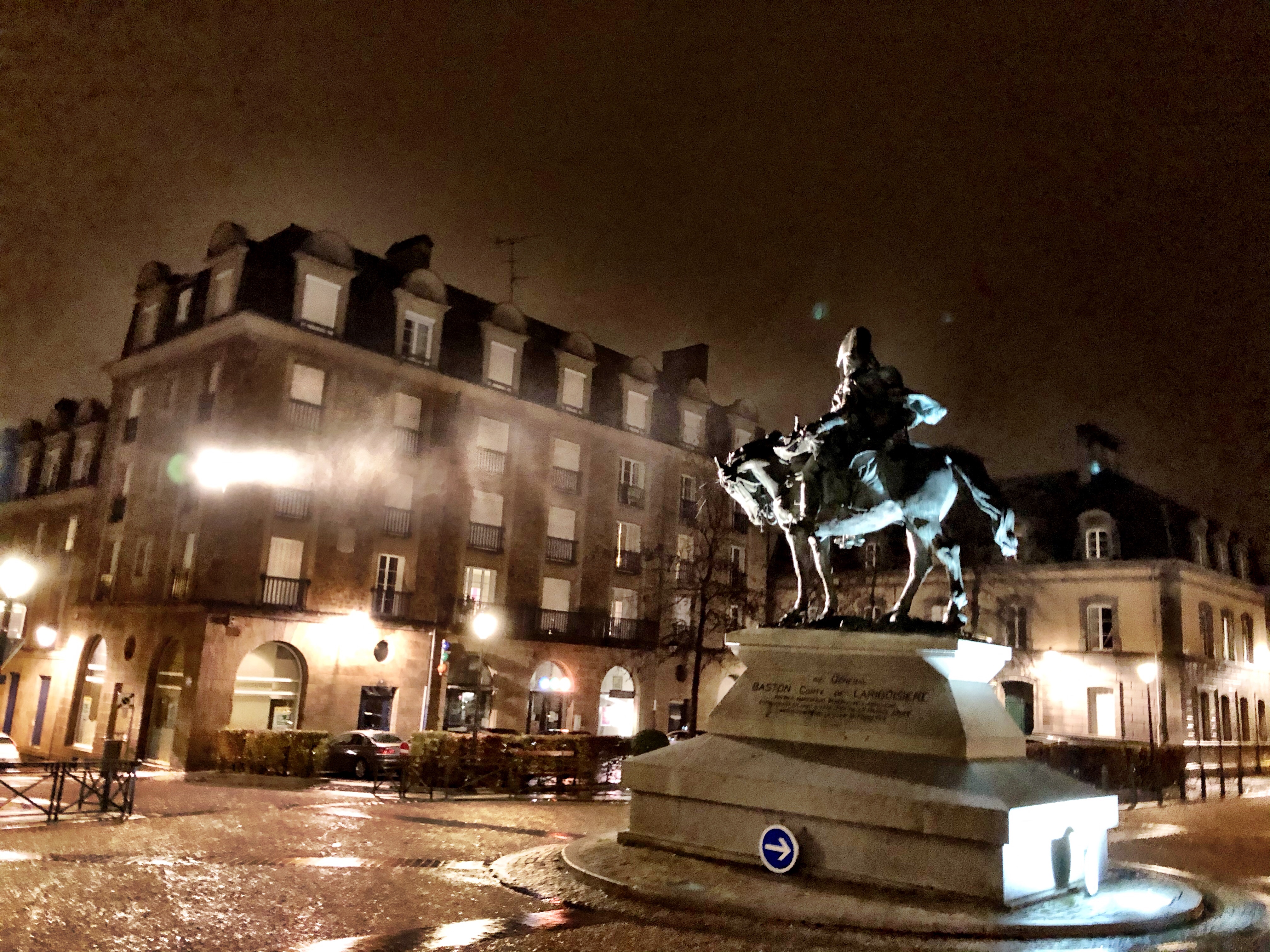
The 19th century seems to have been a good time for the town. Several literary, political and military luminaries of the time gilded the ville’s image. Victor Hugo visited his long-time mistress (Juliette Drouet) who lived in Fougères. Hugo’s fellow novelist, Honoré de Balzac, took up residence just outside of town for a time and wrote a novel (Les Chouans, 1829) which established his standing as a significant writer. The towering writer/politician/historian/diplomat, François-René de Chateau-Briand had a sister (Julie, la Comtesse de Farçy) who lived here, so he visited often; apparently, he held a low opinion of the town, finding it rather provincial and dull. The post-impressionist, Emmanuel de la Villéon, was born in Fougères. Primarily a painter of landscapes, there is a small museum dedicated to his life and works just a couple of blocks away from our house. General Baston de Lariboisière, also from Fougères, rose to prominence during the Napoleonic era, brilliantly commanding forces in the Spanish and Russian campaigns. It’s surprising how much celebrity such a small town could produce and attract. That’s all in the past, though. There are no paparazzi haunting the lanes of Fougères nowadays.
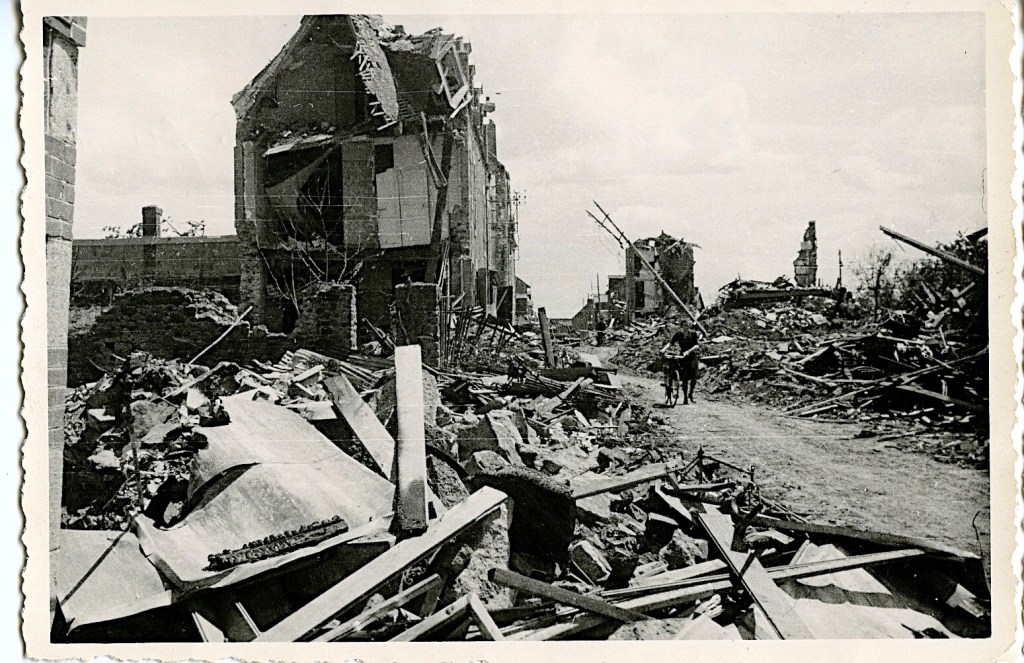
American and British Bombing Raid Devastion

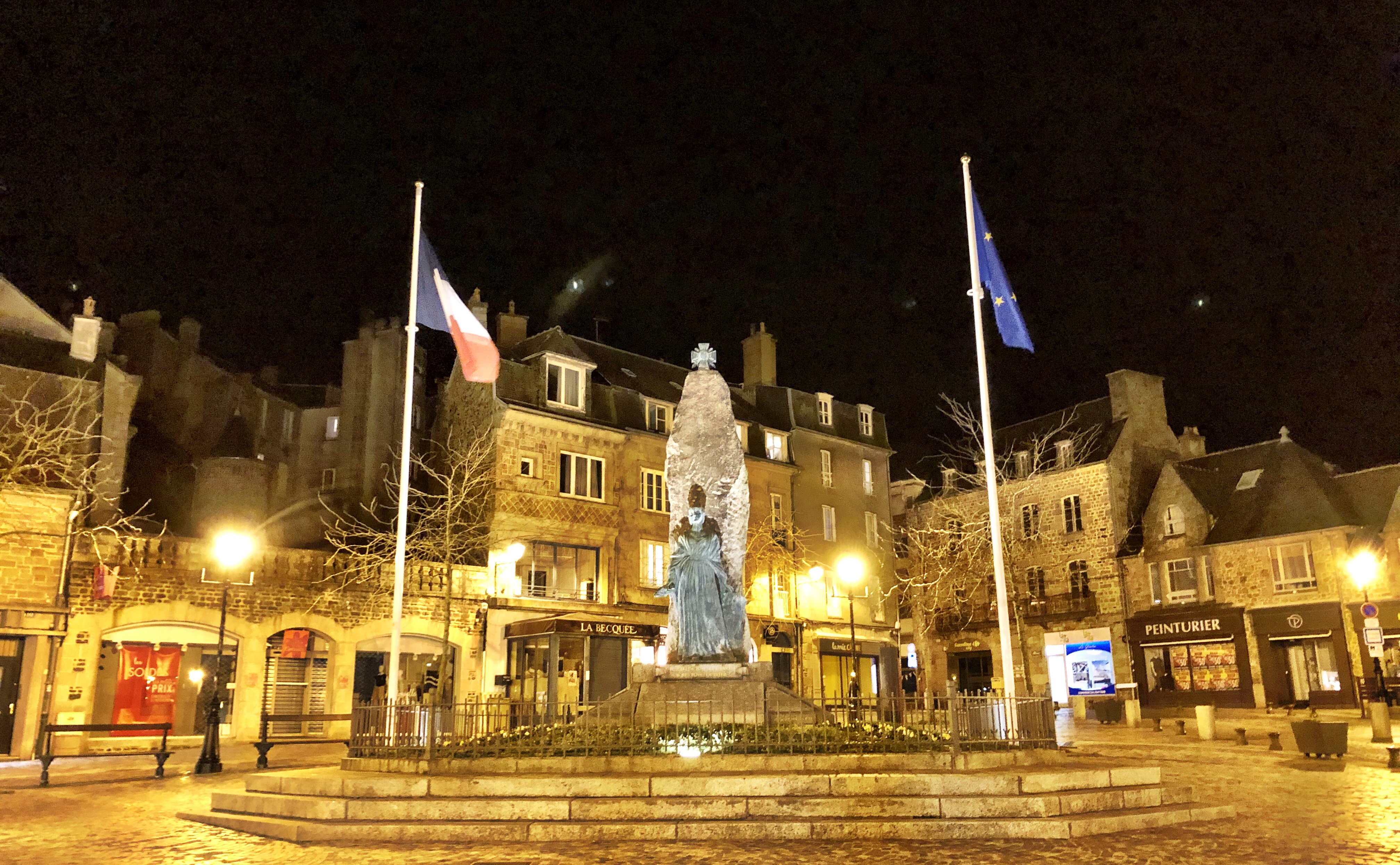
By far the lowest points in the history of Fougères the two World Wars. The town lost over 600 men to fighting during the first war. And Fougères suffered under Nazi occupation from 1940 to 1944 and a devastating Allied bombing during the D-Day invasion. There was quite an active Resistance movement here; for that reason, the town itself received the Croix de Guerre from the French government. However, perhaps most enduring communal memory of WWII here are the Allied bombings of June, 1944. As part of the Allied invasion of France, Fougères’ railroad station and factories were targeted for destruction in order to impede the ability of German forces to move and sustain themselves. An initial bombing run on June 6th failed to destroy the rail station. And so, a further attack fell upon the town on June 9th. Nearly 300 people were killed, over 400 homes destroyed, and the ville’s industry was decimated. And, yes, they finally got the rail station as well. Our own street suffered significant devastation; several of the houses to either side of our were leveled in the bombing raids. Fougères was liberated by American forces in early August, the nightmare of four years of occupation finally over.

The post-war years were a period of boom and bust for Fougères. The town prospered for a time. But the French economy slipped in the 1970’s, coinciding with a rapid fading of the local shoe manufacturing industry. In recent years things have brightened once again. No longer dependent upon a single sector, the local economy is diversifying. And, with the opening of a major motorway in 2003, connecting Fougères with the large cities of Rennes and Caen, the town is within commuting distance to a much wider catchment area of employment.

And that’s the long story of our town. A community that has witnessed, and withstood, over one thousand years of everything history can throw at it. Despite that, it’s still standing proudly and with a grace that I’m struggling to maintain at the tender age of 55. Perhaps that’s why people here are a bit more relaxed, more philosophical about life. They tend to take the long view. Not something that comes naturally to most Americans. But I’m trying to get with the program. The day that I can effortlessly shrug and patiently wait in line at the grocery checkout while the cashier and her customer take five minutes to catch each other upon on current events, I will have arrived. I’ll let you know when that happens.

Don’t hold your breath.
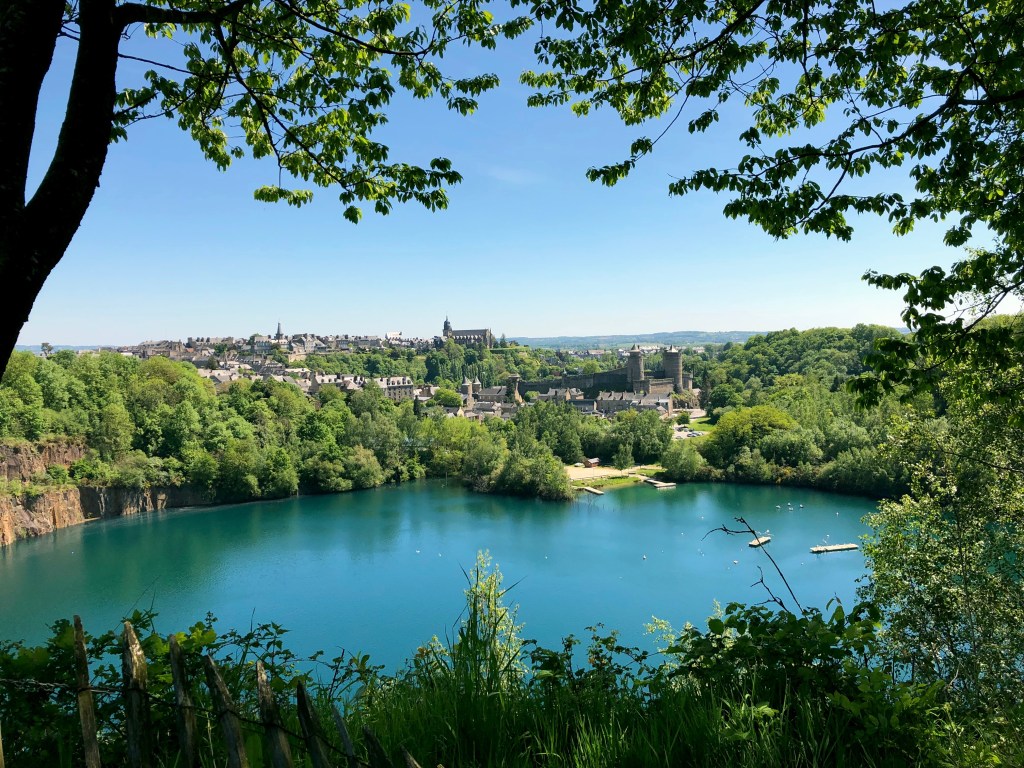

View Over the Quarry Which Supplied Most of the Stone for the Building of Fougères
The Heraldic Arms of Fougères

A Light Late Lunch in Laval

Magical Verticality: Laval’s Medieval Quarter

My love for alliteration knows no bounds. Hence, the title of this post.

Greetings from France once again. Apologies for the extended space between my posts lately. I plead mercy on two counts. Firstly, we have been rather preoccupied with our ongoing house renovations. We are so desperate to reach a point of relative normalcy with our house, that we haven’t really allowed ourselves any time to explore our surroundings.

And, second: Covid-19. Need I say more? We have seen a new surge of coronavirus in France. Accordingly, many restrictions have come into force. And rightly so, say we. Fortunately, our region of Bretagne has been, so far, less affected than other regions of France, so things are not quite as strict here as in, say, Paris or Marseille. Nevertheless, the pandemic has kept us close to home. Fougères has been our universe for the past several months.

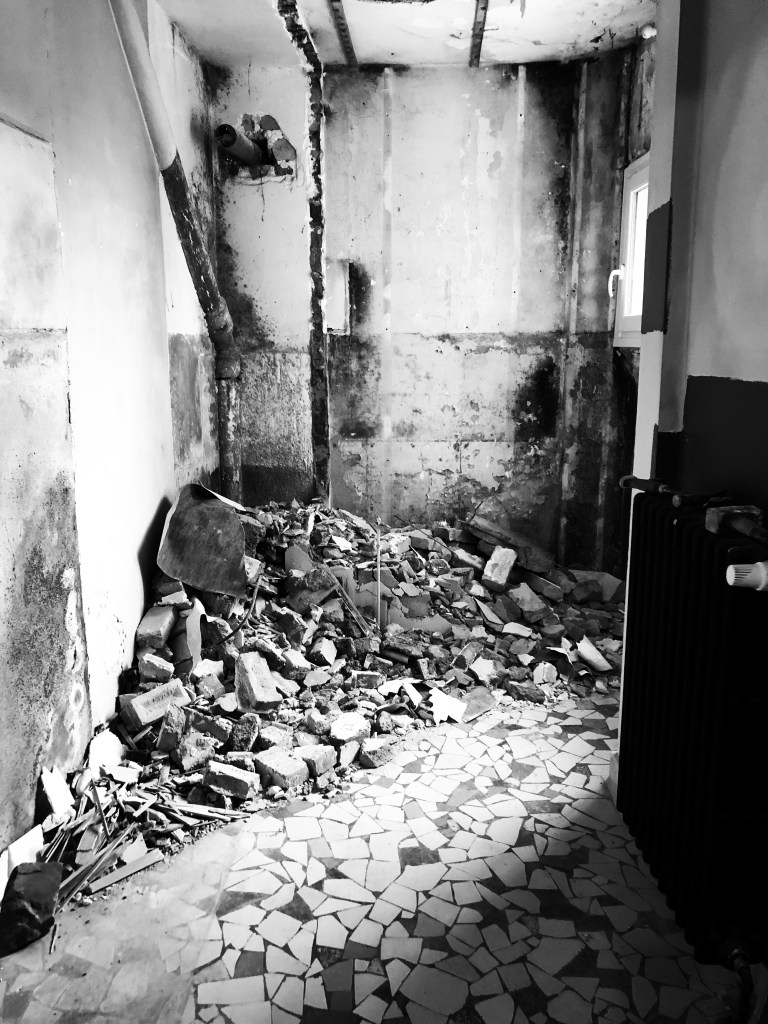
Devastation on our Doorstep: the Old Toilet and Laundry Room

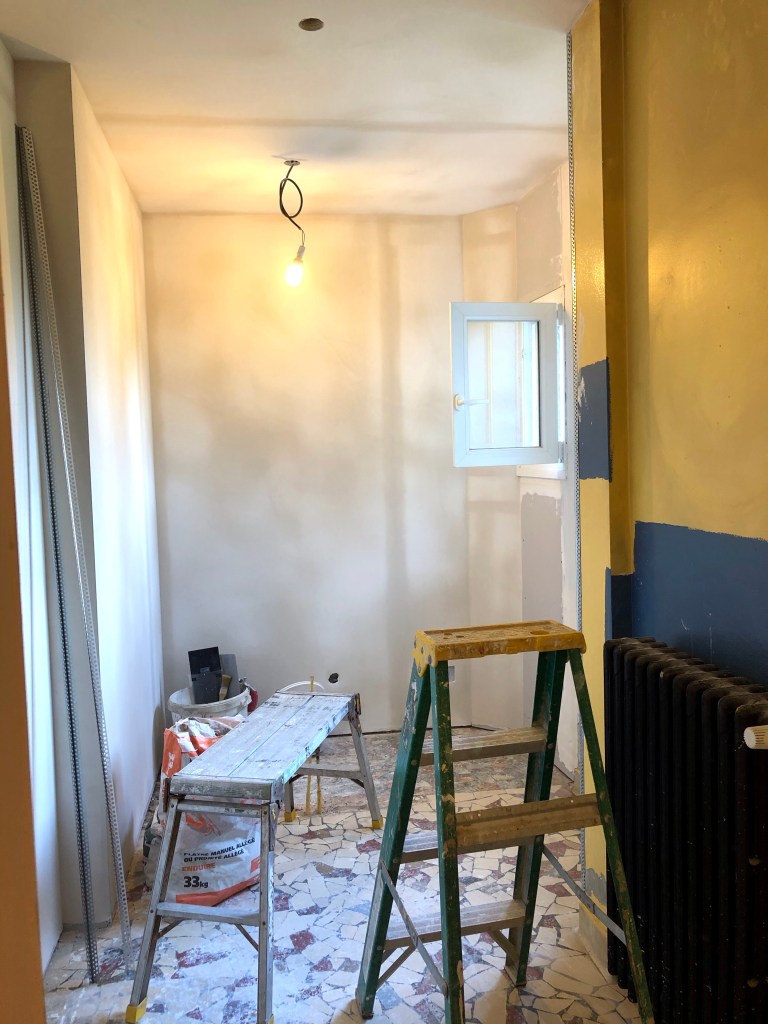
Better!

Shoveling My Mess in the Séjour

Better? Well … Getting There.

Speaking of being holed up in a half-finished house, the renovations are progressing. Some more walls have been demolished, a floor has been broken up, insulation has been blown in, lots and lots of wallboard and plaster has been put up, kilometers of electrical wire and radiator piping have been snaked, and mega-liters of paint have been splashed around – some of it even occasionally landing on a wall or ceiling. How convenient. We try to be disciplined and not rush things. But if you took a look around our séjour (living room) right now you would be able to tell that our discipline is in a precariously fragile state; we have hung paintings and placed furniture in the room, despite the fact that we still only have a subfloor down. Probably not the most pragmatic thing to do, but we desperately needed to feel at least a small sense of completion. Only one of the rooms in this house is currently not serving duty as a storage room: our master bathroom. And even that room still has work to be done on it. Oh well. I guess I can’t say we didn’t ask for it. All in all, we’re happy with the way the renovations have gone. Someday. Some day, we will have it finished and we can focus on travel a bit more.

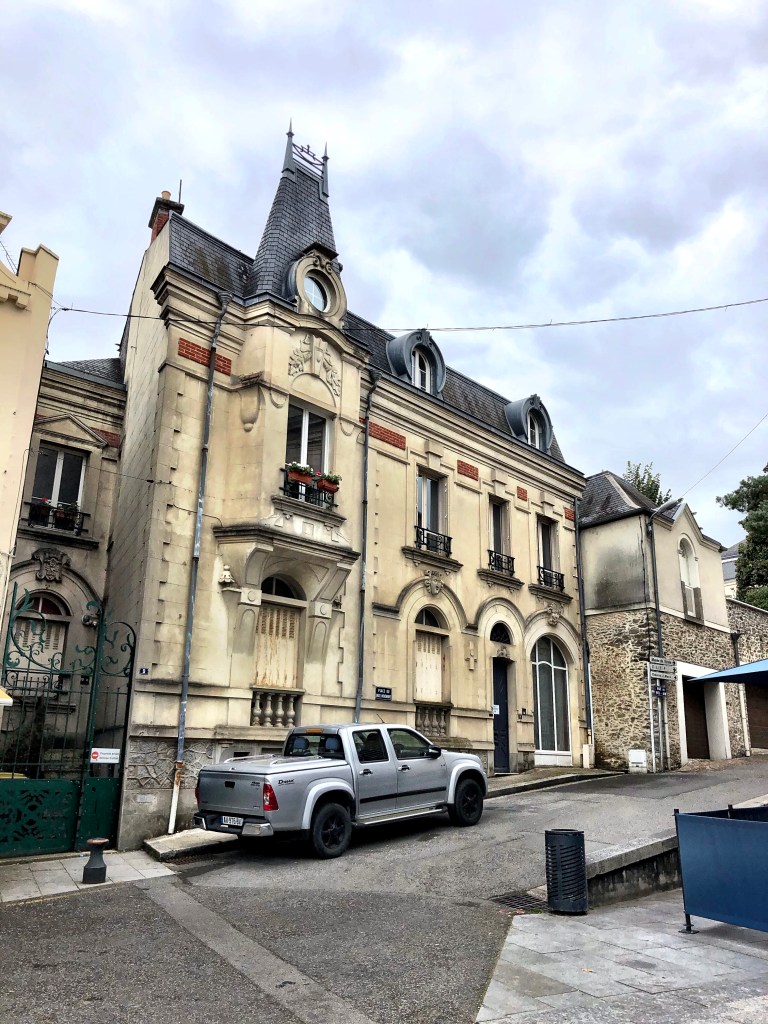
A Rare Pickup Truck On the Streets of Belle Époque Laval

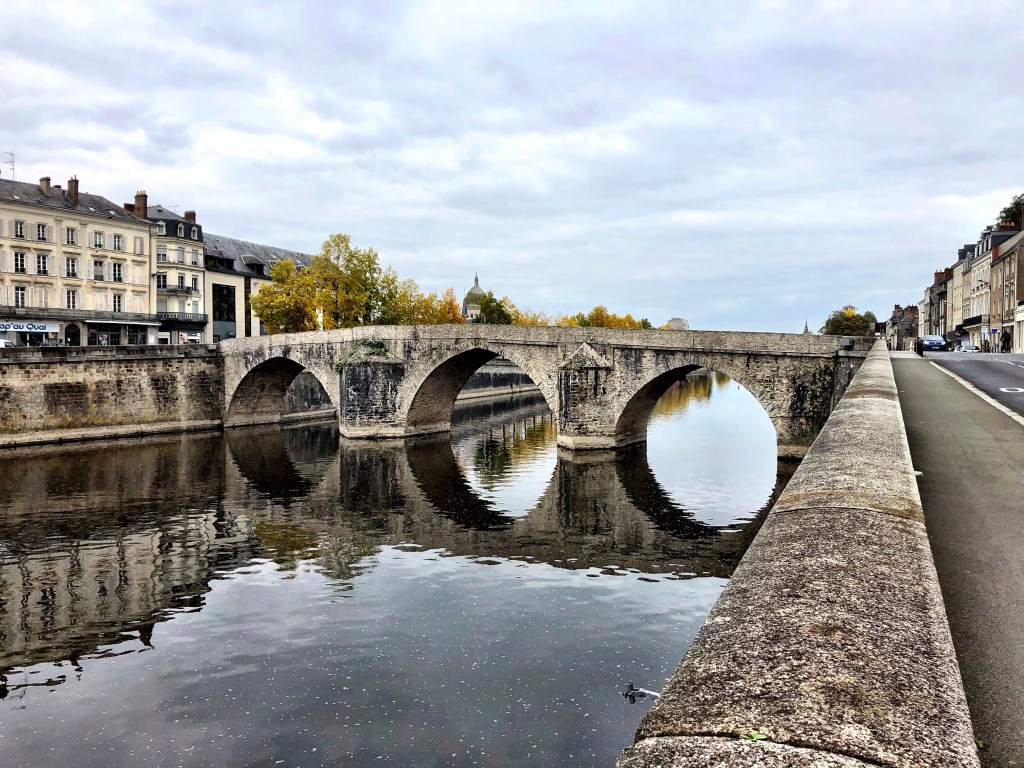
For now, our travels will have to be occasional and local. But, this being France, one never has to go far to see something extraordinary. Last weekend, we decided to visit a town in the nearby département of Mayenne (formerly the province of Maine). Laval, a mid-size town of about 49,000 people, is the capital of its département and straddles the Mayenne river running southward through its center. [see also, Mayenne in the Afternoon]. It’s just under an hour to drive from our house southeast to Laval, a picturesque jaunt through low, rolling hills with the smaller town of Ernée at midpoint in the journey. The city rises on either side of the river, a pleasing mix of townhomes, apartment buildings and businesses ranging from the 18th to late 20th century. The river itself is broad and calm as it runs under a tall rail viaduct, old bridges and a lock, lending a serene pace to the overcast Saturday afternoon of our visit.

The 13th c. Pont Vieux Spanning the Mayenne River

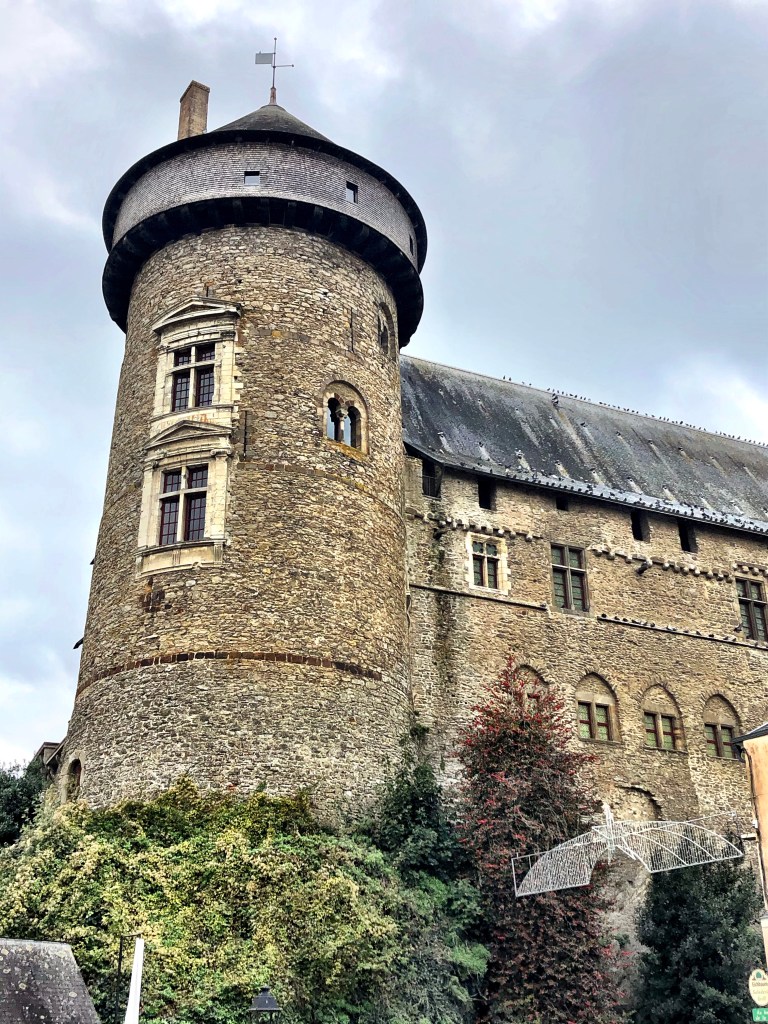
The Proud Tower – Château Laval

Perched halfway up the slope of the rive doite (right, western, bank) is the château. Begun in the 11th century, it was much modified over later periods, most notably in the 15th and 16th centuries. An impressive stone tower (constructed 1219-1220) stands at the southern end, its wooden hoardings on the top still in their original form. Renaissance window embrasures decorate its exterior, hinting at more to come in the courtyard.

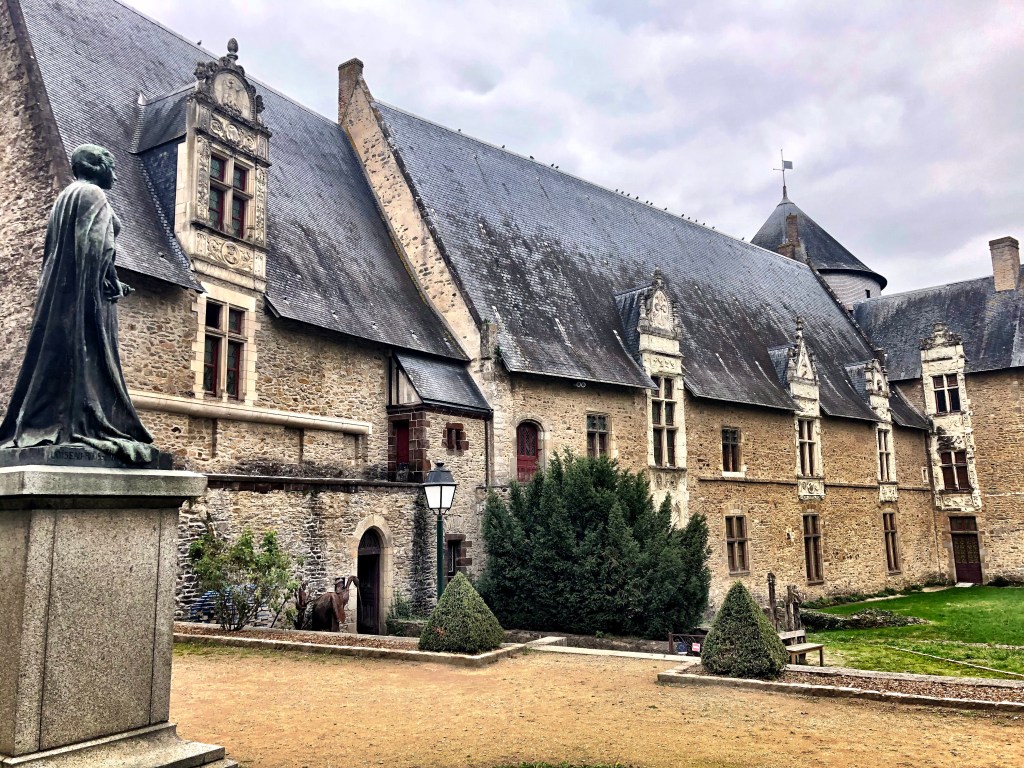
Château Elegance

Passing through a well-restored gatehouse, one comes to an assemblage of buildings forming a courtyard of beautiful renaissance harmony. The restoration of this area is visibly a work in progress, but the decorative medieval and renaissance features are on full display. Much of the original carving has deteriorated considerably, but portions have been restored handsomely. Such a great example of french renaissance architecture elegantly integrated into its gothic predecessor. We thoroughly enjoyed seeing this one.

Just What We Like

Renaissance Goodness

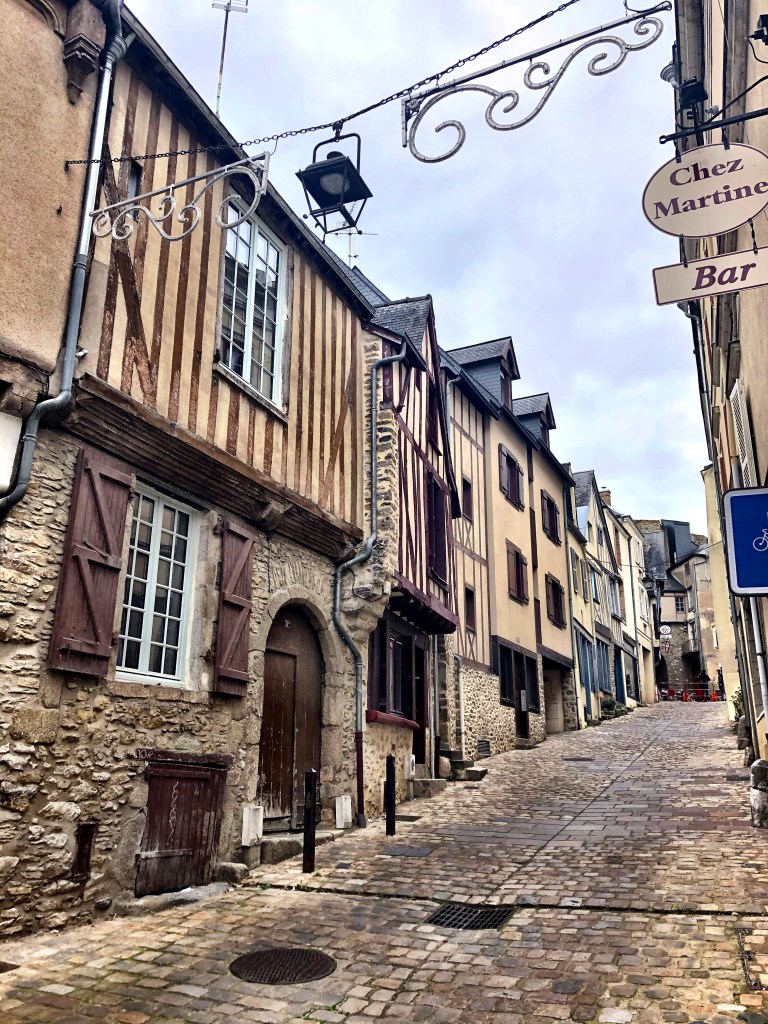
Surrounding the castle is a pleasantly extensive old town, filled with medieval and renaissance houses. It’s a feast for the eyes – especially for historic architecture fanatics like us. We spent a mesmerizing couple of hours just wandering around the quaint, narrow medieval lanes basking in the magic of the atmosphere and soaking up the inspiration we always feel in such places. Photos never really do these scenes justice. At least not the ones we take. But we hope you can get a small sense of what it is like. Honestly, you just have to visit to fully appreciate how special these places are. So unique, so evocative. It’s time travel that can’t be beat.

The Château Square

A huge cobbled square lies just to the west of the château complex, framed by beautifully restored façades containing well turned out shops, bars and cafés. By now it was after lunchtime and we realized that we had not eaten for a few hours. Still, we were determined to march onward and see more of the town. So Cherie ducked into La Maison du Pain (boulangerie) and picked up some tasty bites to go while Saxon and I waited outside.

Waiting at the Maison du Pain
(Hoping for a Treat)

This is how our visits go when we bring Saxon with us. We view the sights from outside. Yes, you can often take your dog inside bars and restaurants (not boulangeries!), but our little guy still sometimes struggles to settle down when we try it. It’s not that he misbehaves. He just finds it difficult to sit or lay down at our feet. He’s far too curious for that. Also, he has a hard time finding a comfortable spot to sit or lay down in cramped areas. Those long legs come with a price. Poor guy. The situation doesn’t bother Cherie, but I confess that it makes me anxious and I myself can never get comfortable because of it. Thus, we get a lot of meals to go when we have the dog with us. To be fair, Saxon has gotten better about relaxing in restaurants as he’s matured. Maybe by the time he is 35 years old he will have perfected the art of chill. Of course, we know he won’t live that long, but we like to delude ourselves in to thinking he will. It’s the tragic curse of the dog owner, but totally worth it.

Angling for Heaven – Cathédrale de la Trinité

Fancy Font

The Chapel Down the Aisle

Food for later in hand, we continued westward to the Cathédrale de la Trinité. This church was begun in the 11th century, but it has been much altered throughout its history. In fact, they say it did not attain its current appearance until the beginning of the 20th century. I believe it. Although the cathedral is beautiful, it’s disparate elements never quite seem to blend harmoniously. Despite not being high on the list of churches we have visited, it’s still very interesting and well worth seeing. We both found the exterior to be a pleasing sight, its many gables and discordant rooflines offering an ever-interesting skyline to the viewer.

Porte Beucheresse

Just across from the cathedral are the remains of the town’s western gate, Porte Beucheresse. It’s a beautiful but lonely gate, having long ago lost its connection to the town walls. The two adjoined towers appear to be private residences. And they have been for quite a long time; a local artist of some repute (Rousseau – the 19th century post-impressionist naïve artist, not the philosopher) grew up in one of them. Impressive even now, they must have been very imposing when the town defenses were complete. At some point, some enterprising householder inserted a grand banque of renaissance windows in the left tower. Very posh.

Pleasant Shopping

More wandering around the center of Laval brought us to more narrow lanes and quirky buildings, then down the slope to broad boulevards tastefully lined with rows of pretty shops offering everything from luxury goods to a coiffure à la mode. The quaint and tranquille medieval lanes had rapidly given way to a bustling and energetic commercial center. This area had a good vibe, too, and we enjoyed some pleasant window shopping. In fact, we decided that, along with Rennes and Vitré, Laval will be a good place to come shop for things we can’t find in Fougères.

On Marche Ensemble!

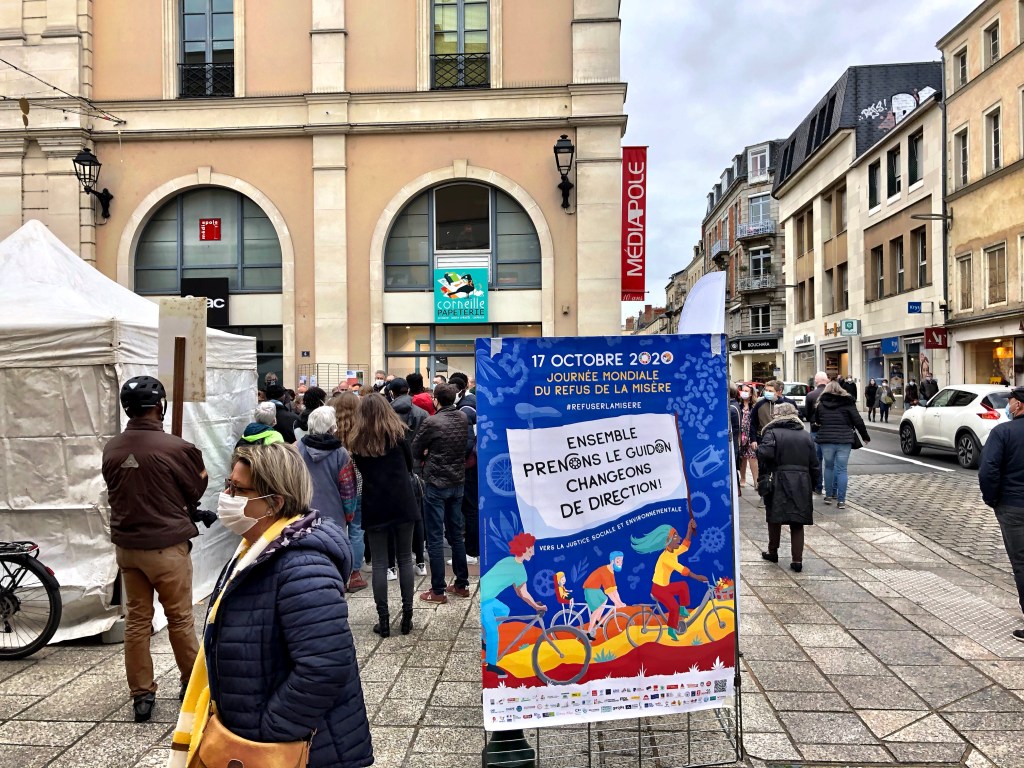
Our stomachs started grumbling, reminding us that we had yet to fill them with something. Continuing onward, we stumbled upon a sunken plaza area with a coffee shop and lots of outdoor seating. Perfect! It was quite busy, but we managed to find an outlying table and settled in. It was not cold, exactly. But cool. Hot chocolate seemed just the thing. So we ordered a couple of cups and tucked in to the filled breads (salmon and crème fraîche) we picked up earlier. While we were waiting for the chocolate goodness to appear, a small manifestation (protest) marched into one end of the plaza and speakers with bullhorns began to lead chants and make speeches. The crowd was earnest but civil. It made me reminisce fondly about our former home of Seattle. But it is also quintessentially French. They are born agitators and will protest anything, anytime, with great verve. For some reason, it makes me happy to see. They exercise their right to disagree freely, en masse, as seriously as Americans take shopping. It’s right up there with the daily baguette and sneering at the English.

Über Chocolate

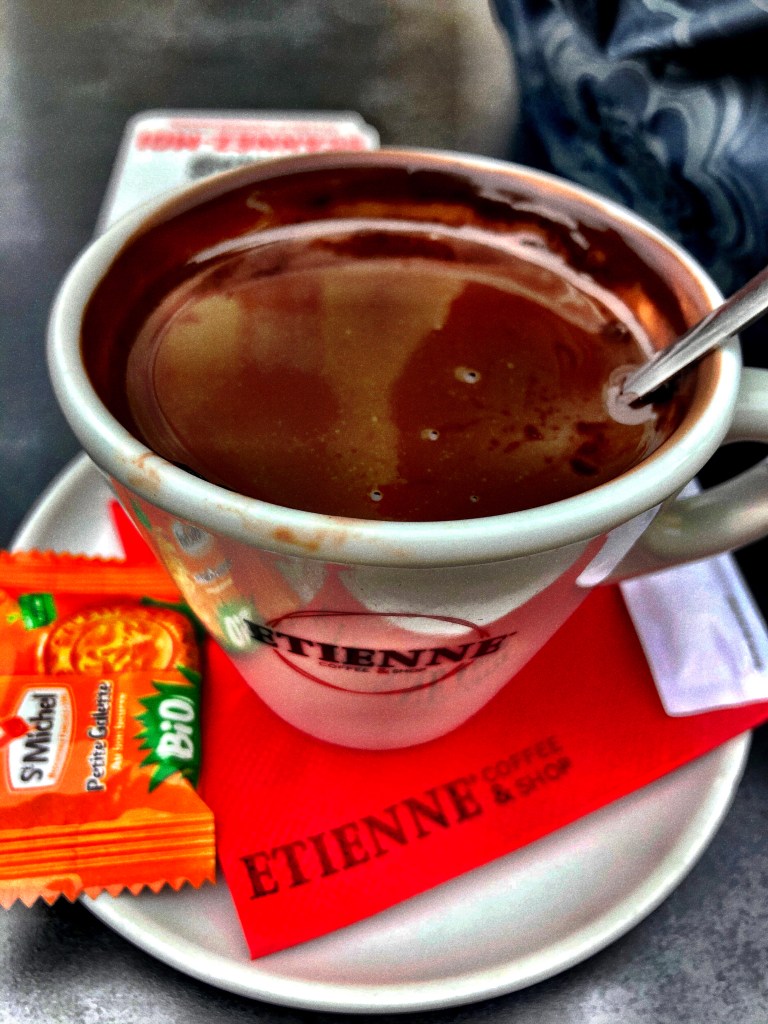
Our hot chocolate arrived in two small cups on saucers and, as always, with a small cookie on the side. Picking up my cup, I noticed that the luscious brown liquid inside didn’t move. Not a ripple. I put my small spoon in to stir and realized that the drink was thick, viscous. Cherie and I debated as to whether it was chocolate pudding or a chocolate bar, freshly melted from the microwave oven. Technically, it was liquid, although my spoon probably would have stood up in it if it had been plastic. To our surprise, the thick gloop in our cups was delicious. Velvety, smooth and creamy. But not overly rich and just the right touch of sweetness without being overpowering. In fact, it was really excellent. We settled in to happily sip our chocolate goo and munch away at our lunch while the pleasing sounds of other chatting tables and the protest filled the air. So French, and so soul-satisfying.

Oblivious to History – Shredding Before the Medieval Ramparts

We had satisfied our stomachs, so they were no longer complaining. [See? Protesting works!] A few meters away was a long stretch of medieval wall remaining from the town’s defenses so we took some time to check it out, trying to imagine how it must have looked in its heyday.

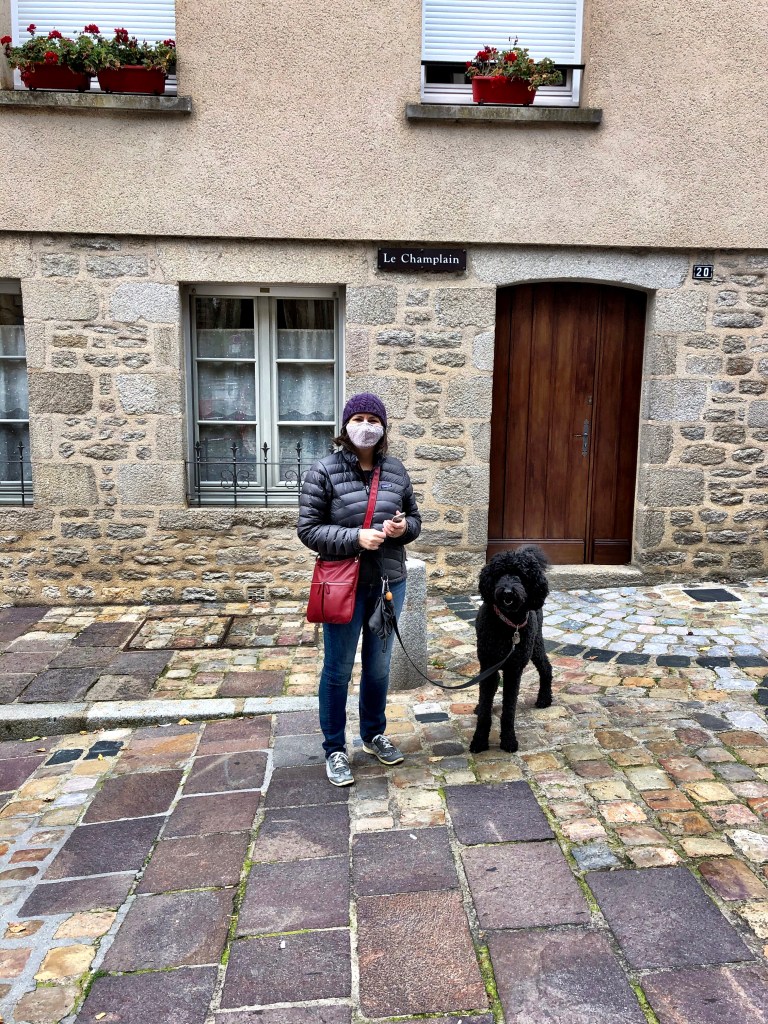
Cherie and Saxon, Masked Up and Ready to Explore

By the time we explored a bit further, the afternoon was waning and Saxon was ready for a rest. Laval has much more to offer. In particular, several romanesque churches and abbeys. But they would have to be for another day. It’s not far away from home, after all. We thoroughly enjoyed our few hours in this interesting historical town on the Mayenne. If you are ever in the area, we highly recommend a visit. You won’t be disappointed.

By the way, we enjoy reading your comments. Let us know what you think – good or bad. We can take it. Or, if you have any stories of France you would like to share, we would love to read them.

As always, take care and good health to you all.

Carousel in a Parking Lot

The Castle Down the Block

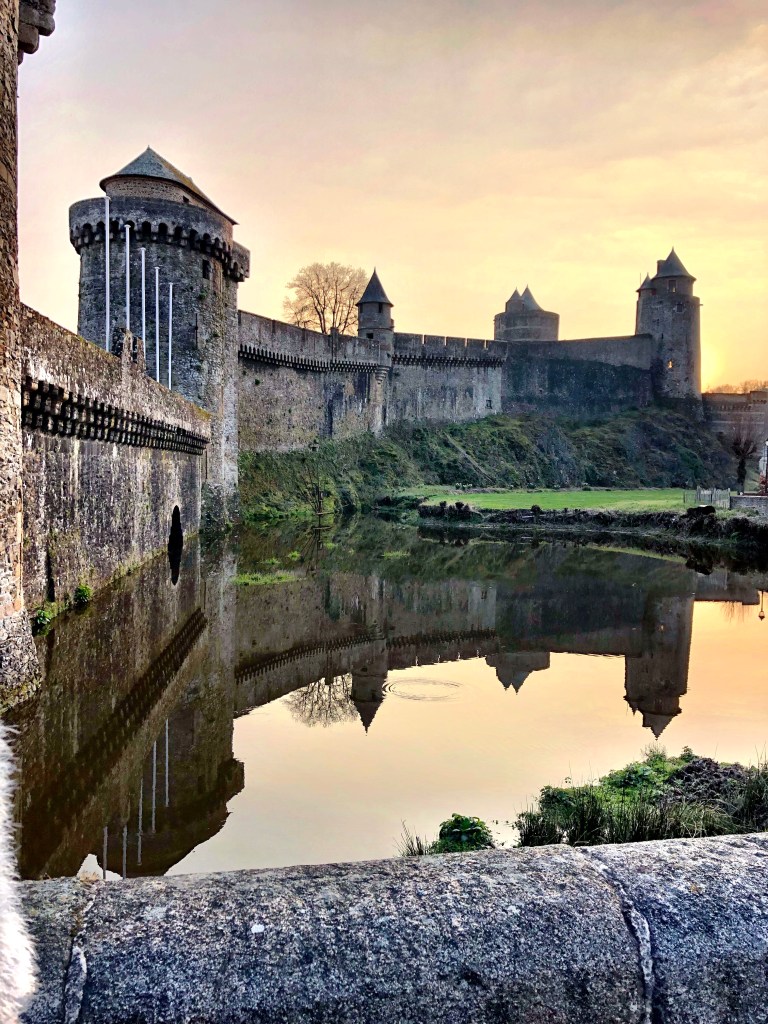
Le Château de Fougères Reflecting Upon Its Long History

We live within spitting distance of a castle. Well, okay, you would have to be an Olympic-level expectorator in order to fling a globule far enough to hit the château from our house. But it’s literally just down the street, about a three-minute walk. And we have the privilege of seeing it pretty much every single day. Given that we are so fortunate to be in such an enviable position, I thought it was high-time to dedicate a post to the spectacular medieval monument in our backyard.

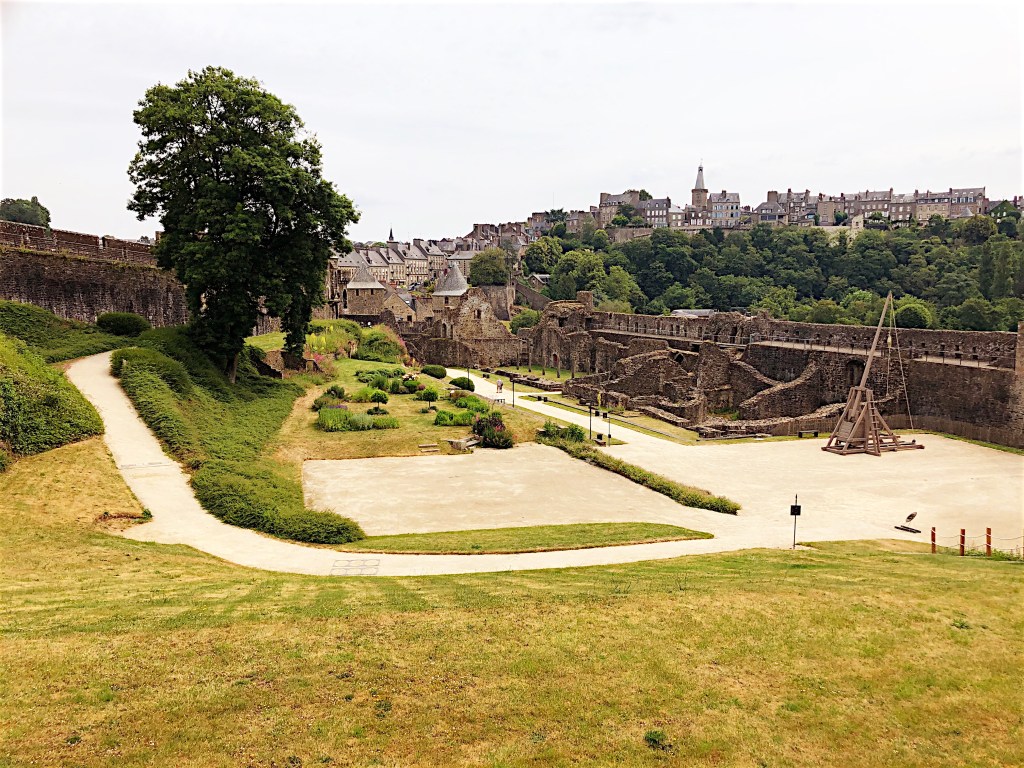
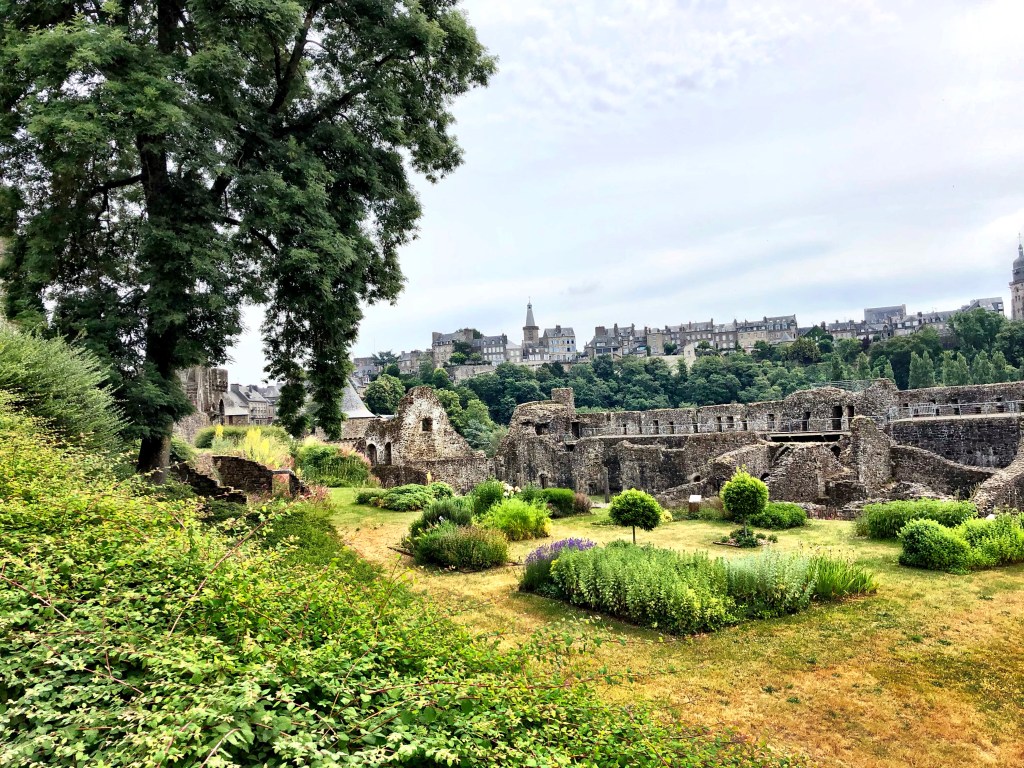
The Main Bailey. La Plus Grande?

Not surprisingly, our neighborhood castle is locally known as Le Château de Fougères, usually accompanied by the subtitle: la plus grande forteresse d’Europe (the largest fortress in Europe). Now, I have to say that I’m a bit skeptical as to whether the claim to be the largest fortress in Europe is true. The walls of the castle encompass an area of two hectares. [For the people living in the three remaining countries still desperately clinging on to imperial measurements – United States, Liberia and Myanmar – this is essentially the equivalent of five acres.] The massive fortifications of Carcassonne springs to mind. But the boast might just be true. By a technicality. In carefully specifying that the Château de Fougères is the largest fortress (i.e., only the area within the walls of the castle itself), they are excluding any fortifications which include any part of a village, city or town. While Carcassonne’s town walls encompass a much larger area, the castle (fortress) itself is much smaller than Fougères. Clever, eh? A crafty bit of marketing worthy of P.T. Barnum himself.

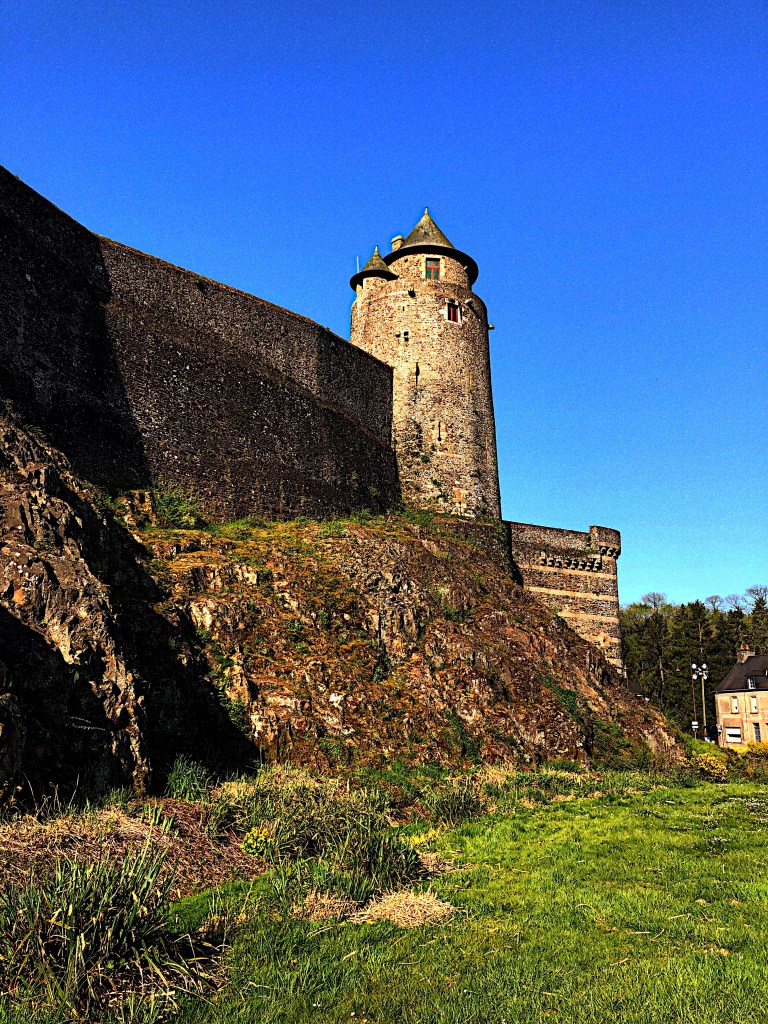
A Castle on the Rocks

The château sits upon a rocky promontory which was almost completely encircled by the Nançon river. It’s an unusual site for a castle. Medieval fortresses were generally placed on high ground or a position which afforded broad vistas in all directions, the theory being that it was better to see and be seen for long distances. The Château de Fougères is sited in a place which has none of those characteristics. It huddles down in a cramped little river valley which is almost totally surrounded by tall hills on nearly all sides. Indeed, the upper town which it guards sits loftily on a much higher plateau overlooking its protector. One would normally expect to two positions to be reversed.

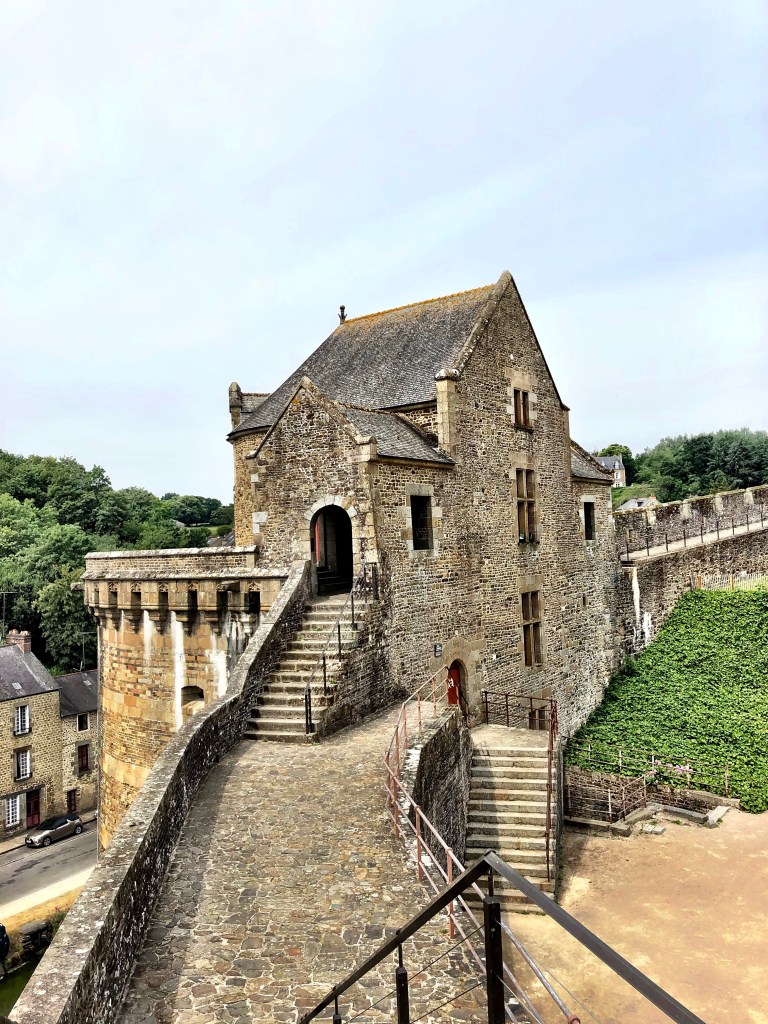
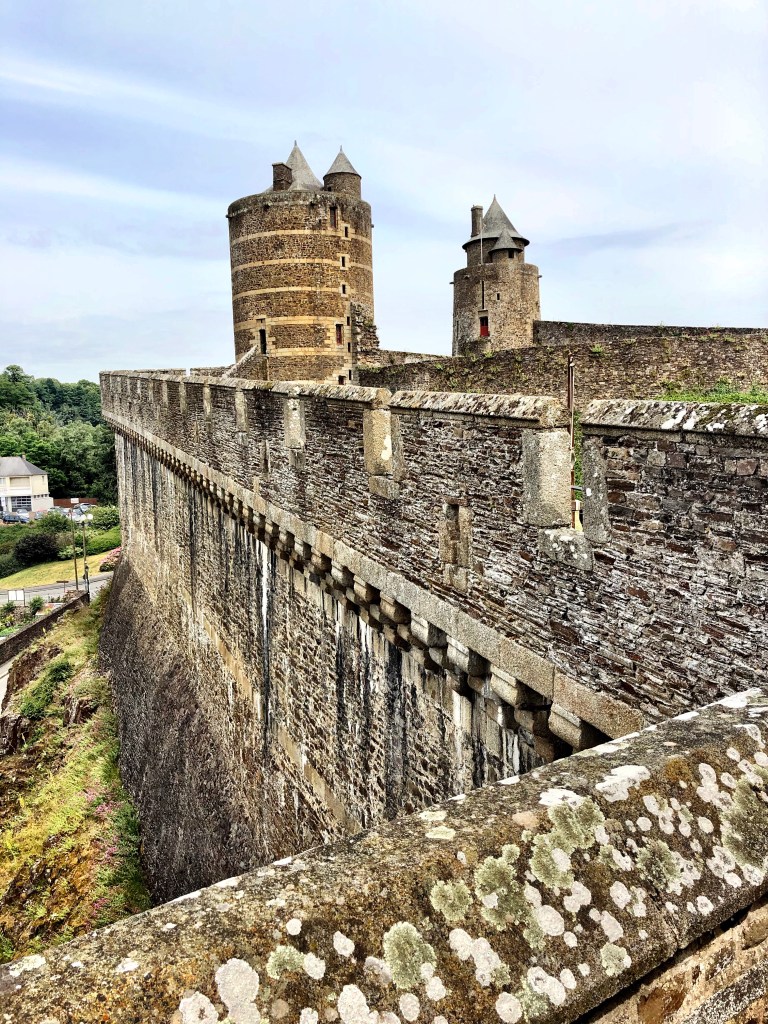
A Stopping Point Along the Ramparts

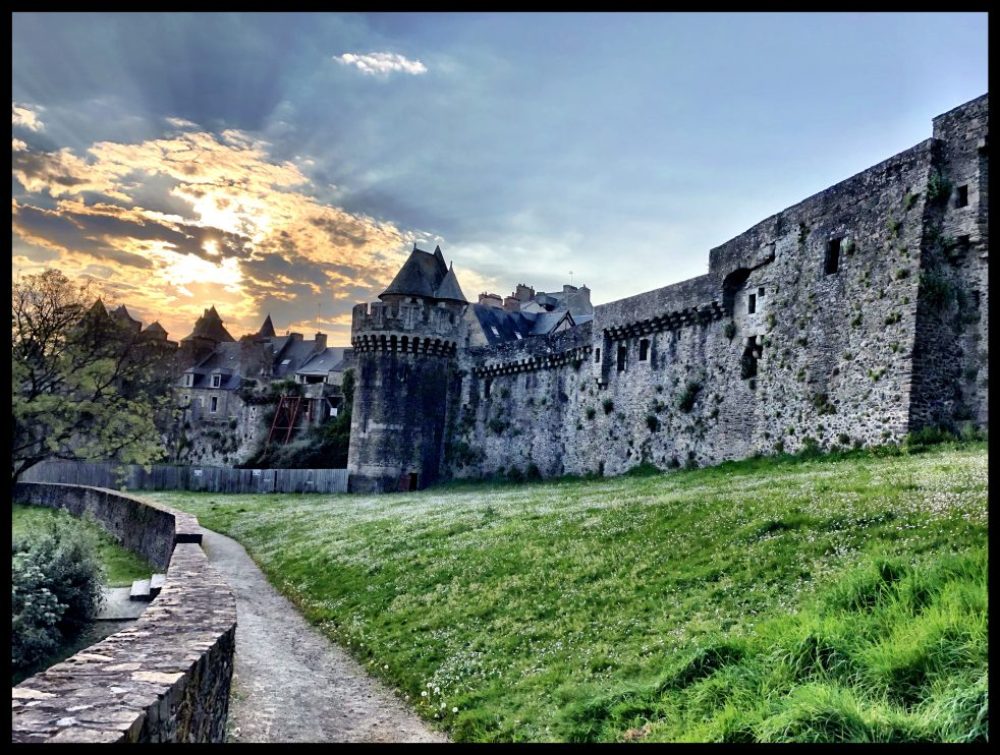
Notwithstanding its low position, the fortress presents a grand and imposing edifice on all sides. As you drive toward town from the west, crest the hill and descend into the Nançon valley, the vast walls and towers suddenly reveal themselves. Wow!” Was all we could manage to utter when we first laid eyes on it. To be honest, I think I actually said something like “Holy shit!” (Cherie managed to keep it clean – I’m definitely the potty-mouth in the family). As if it needed it, the deep grey local stone lends a somber and forbidding aspect to the structure; the ultimate in local sourcing, the stone for the castle was quarried just a few meters away in the surrounding hillsides. In fact, the largest of these quarries was still in use until the beginning of this century.

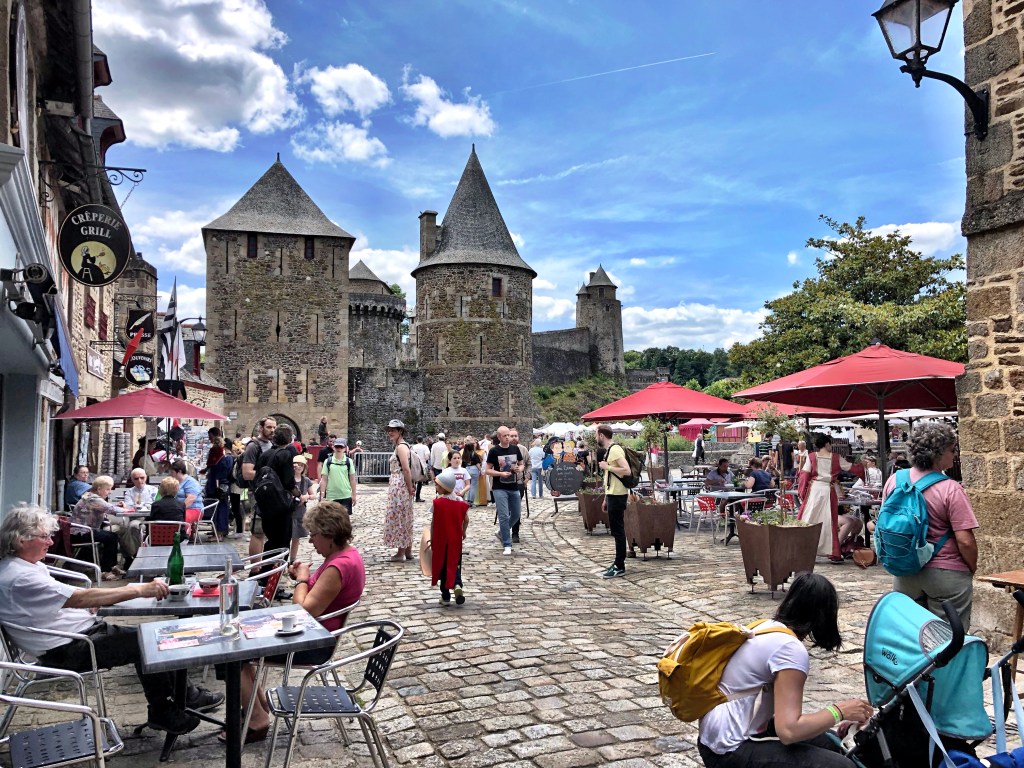
A huge postern gateway stands elevated at the highest point of the rocky promontory on the west end of the rectangular fortress, but the main entrance is situated on the eastern end, looking out on a lovely cobbled square with stone and timber-framed buildings home to souvenirs shops, bars and restaurants. Inside the first gate is an outer bailey, completely surrounded by fortified walls and towers. This leads through to another gateway and the larger, main bailey where the lord’s hall and various other buildings were located. Tragically, the once grand hall was destroyed in the early 19th century; only the foundations and a few other elements of this structure now remain. The main bailey gradually slopes upward to a small inner bailey in the east end. This is where the first defensive structure is thought to have been erected.

View from the Central Bailey, the Haute-Ville Looming in the Distance
Angles and Curves: High Atop the Castle Ramparts

There has been some form of fortified enclosure at the current site of the castle since at least the 11th century. It likely began as a timber tower or hall surrounded by a wooden palisade. In the Middle Ages it was a strategically important site, standing on the eastern marches of Bretagne as a bulwark against all-comers, usually the English or the French Crown. Fougères was one of a string of several fortresses sited all along the border between what had been an independent duchy and France. Over a period of some 700 years, the château was beseiged on numerous occasions. As far as I can tell, it was taken at least five times – once by a spanish mercenary. The last storming of the gates was done by the Chouans and Vendéans in 1793 during the counter-revolutionary struggle gripping France at the time. This castle has seen a lot of action. It’s a miracle that it still stands.

In the Time Before Covid-19

But its life wasn’t over after the 18th century. Oh no. In the 19th century the château became a private prison and, following that, housed a shoe factory. Just like our tower. The town purchased the entire site in 1892 for the current equivalent of €280,000 and restoration began over the ensuing decades. It has always been a major tourist attraction; even in the 19th century it was visited by the likes of Balzac and Victor Hugo. But now it’s more popular than ever. Particularly in the summer, the castle is heaving with visitors. We buy a season pass for a ridiculously low price (something like €17) so we can walk in whenever the mood strikes us. It’s nice and quiet in the off-season so sometimes we virtually have the place to ourselves.

Tourists Like the Show …
But the Toilet Facilities are Horrendous!

The substantial walls are strengthened by formidable towers, most of which you can tour. They have been beautifully restored and contain interesting sound and light shows illustrating the history of the castle and marches of Bretagne. One can also walk a good portion of the ramparts and the views of the surrounding town are exceptional.

The Wheels on the Mill go Round and Round

Also of note is the adjacent mill house (just inside the lovely 15th century town gate of Notre Dame) featuring four waterwheels; there has been a mill attached to the castle since the 12th century. And the beautiful 14th century Eglise St. Sulpice, just across the street from the château is well worth a visit in its own right.

Église St. Sulpice

We feel so fortunate to have such an important, impressive and beautiful castle virtually on our doorstep. So far, it never fails to cause us to gasp in awe. And I doubt it ever will. Shame on us if we should ever come to take it for granted. We love taking Saxon for a walk around the château in the quiet of the evening as the fading light heightens the mysterious ambiance of the walls and towers looming overhead. It’s a terribly overused cliché, but I can think of nothing better than to describe these walks as “magical”. I hope you all have the opportunity to experience it as we do.

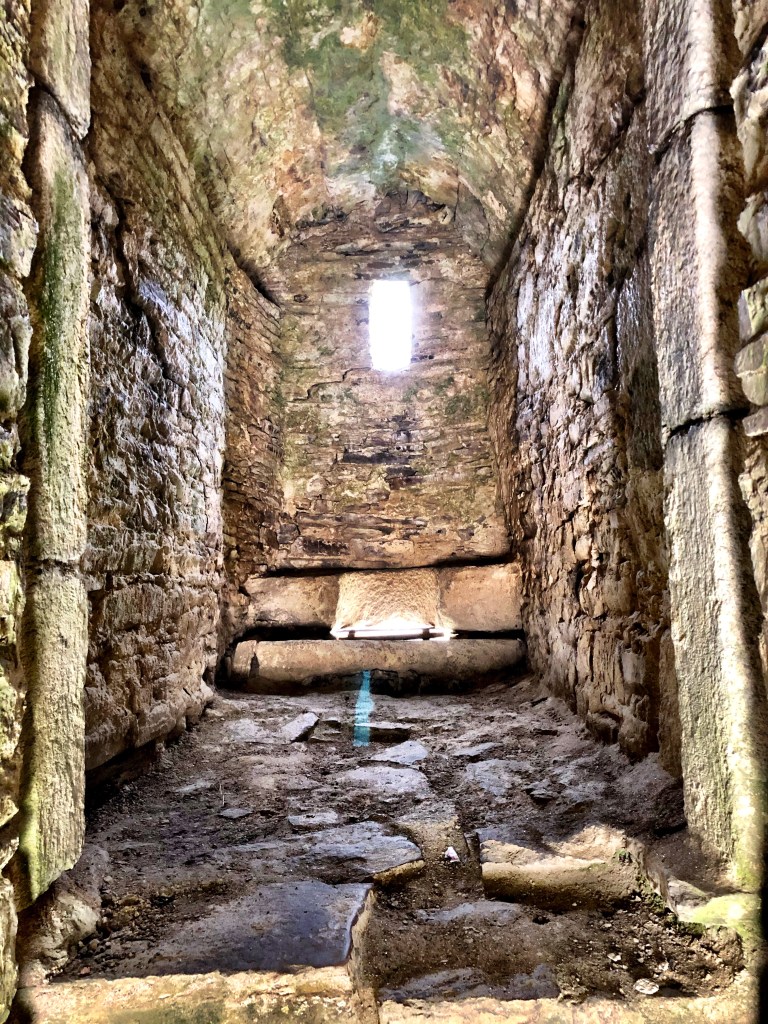
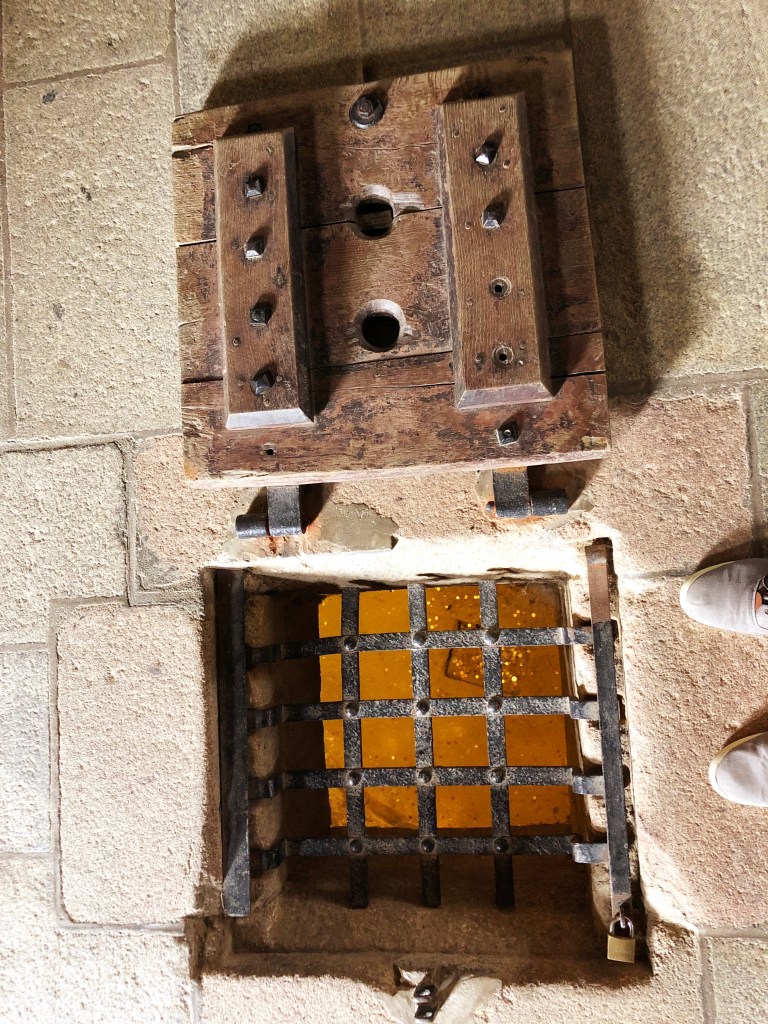
Don’t Forget the Oubliette!: a Place for Prisoners in a Hole Underfoot.