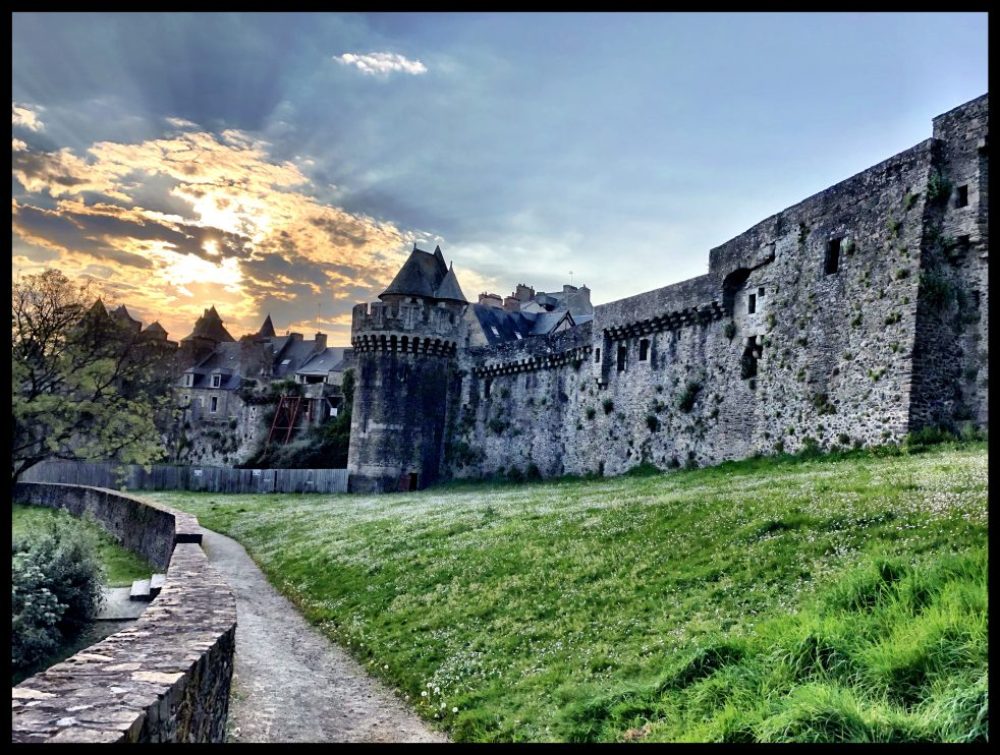

In yet another hastily planned exploration, last week we found ourselves in Normandy (Normandie) in two cities either side of the mouth of the Seine. Most of our destinations these days seem to be chosen for us. Fate, it seems, decided that this time we should visit the area around the mouth of the Seine River. Actually, it was equal parts fate and a cruise ship line that governed our destiny on this particular occasion.
Allow me to explain.
We ended up in this area of France because two of Cherie’s family relations had been taking a cruise around the British Isles, the Channel and the North Sea. After visiting England, Scotland, Ireland and Norway, their one port of call in France was to be Le Havre for one day. One day. In Le Havre. Why? I don’t know. Of all the ports in western France, Le Havre is perhaps not one which immediately springs to mind for tourism. Particularly if you have only one day to spend in France.
Being a major port, the city suffered horribly during World War II. Thousands of citizens were killed and a large part (80%) of the city was destroyed by Allied bombing in September, 1944. Following the war the city was rebuilt by the modernist architect Auguste Perret. If you are a lover of post-war reinforced concrete structures, then Perret is your man and Le Havre is the destination for you. It is chock full of brutal, heavy, conformist buildings. Massive industrial, commercial and residential blocks dominate the huge harbor. Granted, Le Havre is the second largest port in France. So some of that naturally accrues to a port’s requirements.
Full disclosure: Cherie and I share a nearly universal distaste for post-war architectural design. Our assessment of Le Havre is therefore not without the influence of our strong opinions on the subject.
Granted, further in from the enormous quays, the city becomes somewhat less concrete-y and the architecture reduces in mass and form to a more human scale. Unfortunately, this exchange also comes with a more gritty atmosphere. Our impression was that Le Havre is simply down on its luck. On the whole, it’s struggling a bit, despite the obviously vibrant industrial and maritime trade activity on display.
Honorable mention goes to Le Havre for a bright, modern tram system which threads through the city and links up with the central train station. And we found the population of the city to be encouragingly diverse and energetic. So, who knows? Maybe Le Havre has a bright future in store.
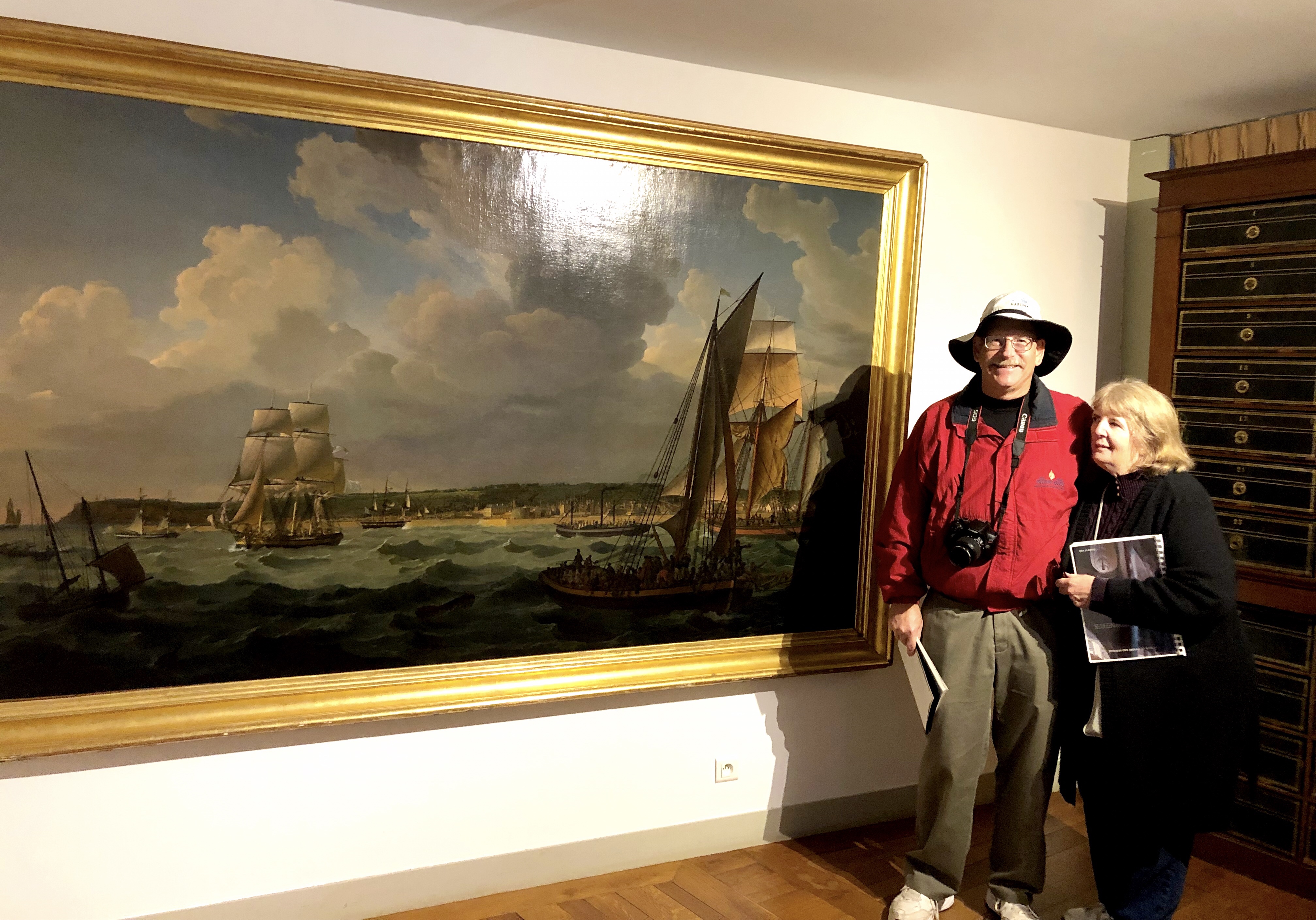
So, Cherie and I hastily booked a hotel and did the four-hour drive up to Normandie on the afternoon before we were to hook up with Rod and Kathy Gish. Our dog Saxon accompanied us because our friends in Malestroit who usually watch him for us were out of town. It was a pleasant drive through beautiful countryside. This was our first time exploring Normandie. Although it was quite a brief and focused visit, we saw enough to know that we will return many more times. Our impending move to Fougères will bring us to within less than an hour’s drive from Normandie’s southern border.
Rod is a second cousin to Cherie on her mother’s side of the family. He and his wife Kathy are now both retired and decided to make what is perhaps their once-in-a-lifetime trip to Europe together this year. Cherie had been in communication with them and we were happy to find that we could meet up on their one day in France. We were to be their tour guides in a place that we had never been to. Tricky.
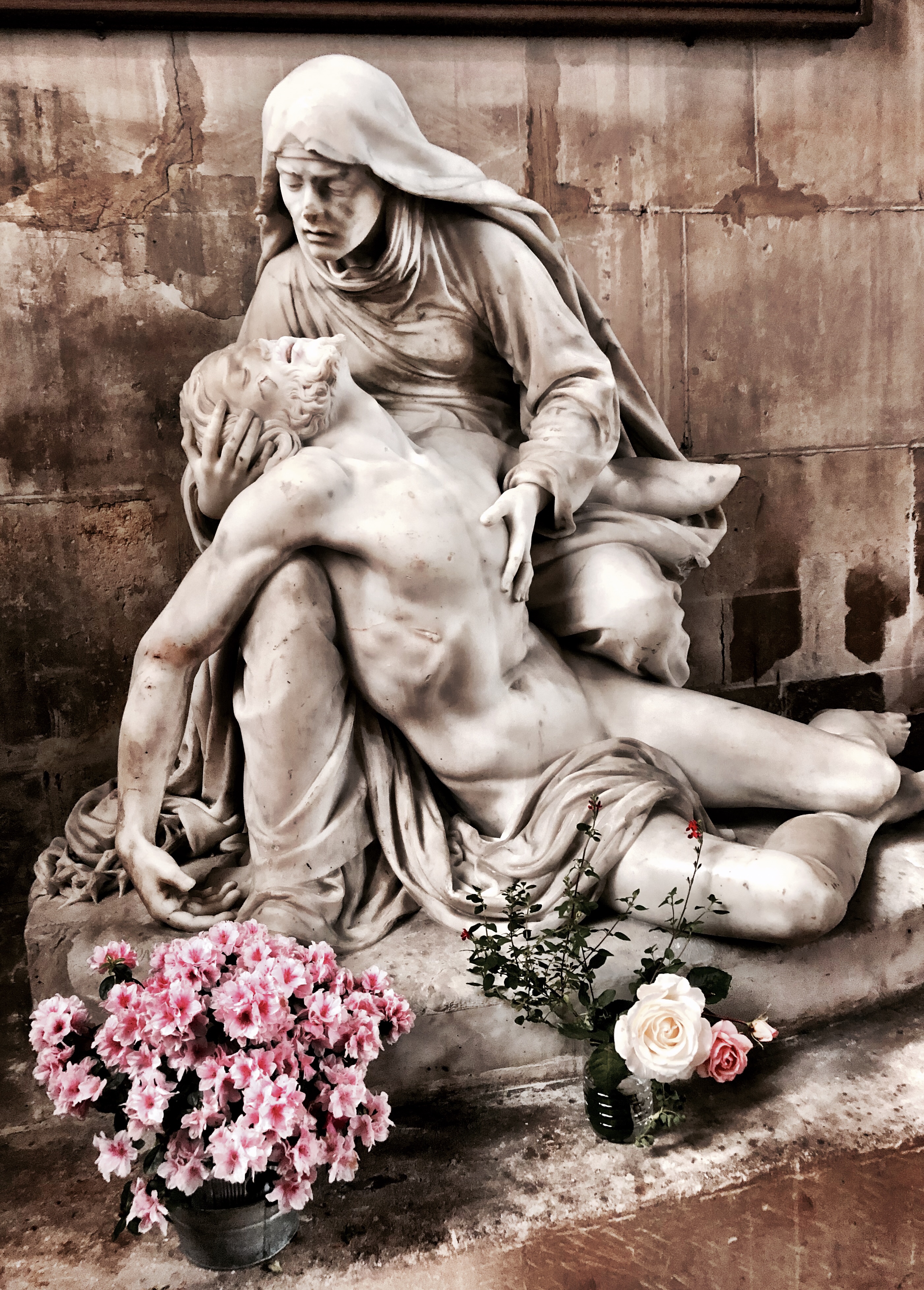
The morning of their visit, Cherie left me to hang out with Saxon while she met Rod & Kathy for some morning sightseeing. First, a visit to one of the few old buildings of La Havre to have survived the destruction of the war: the cathedral of Notre Dame du Havre. Reporting on the ground indicates that this is a lovely 16th and 17th century church with an attractive Baroque façade.
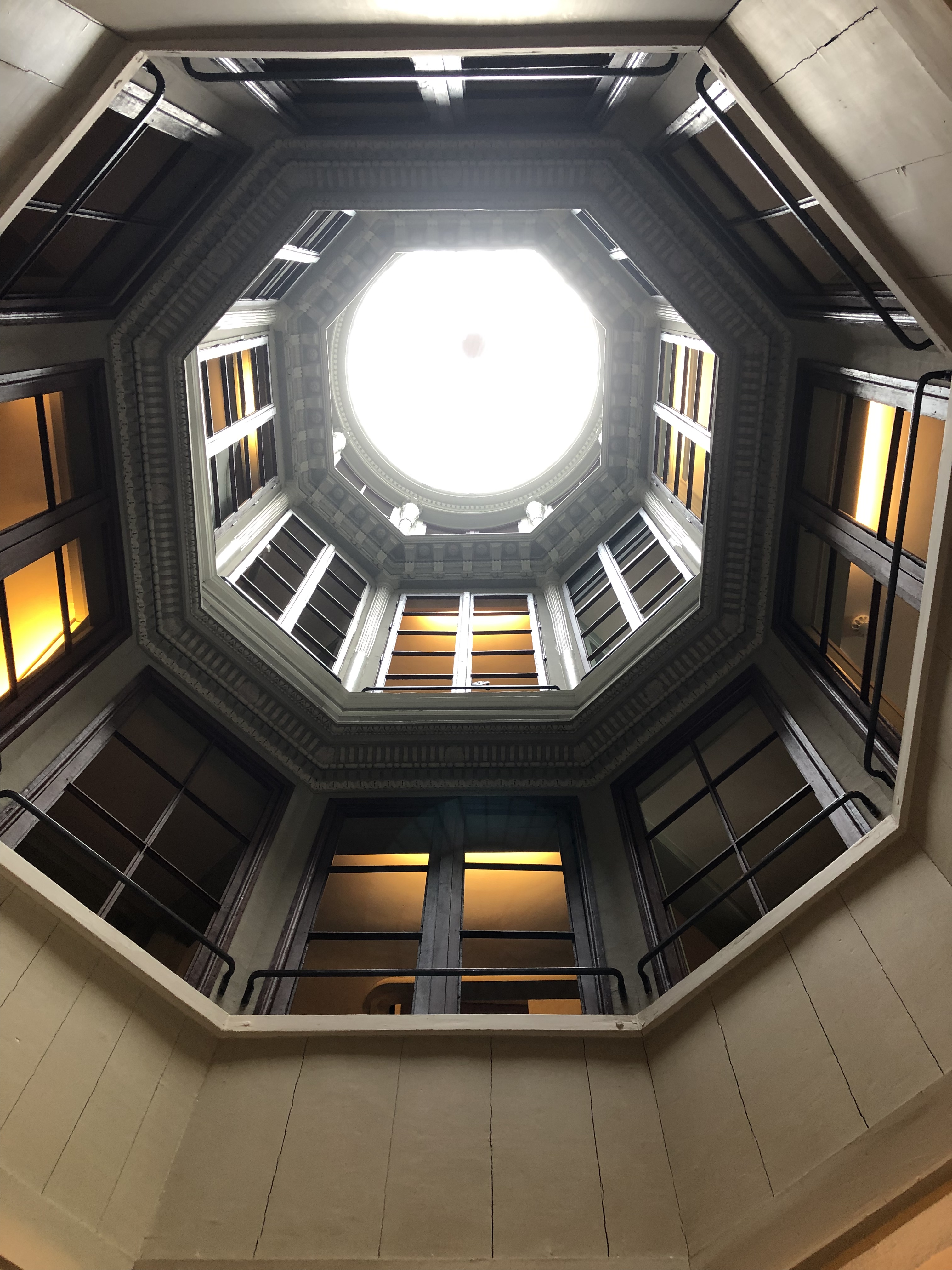
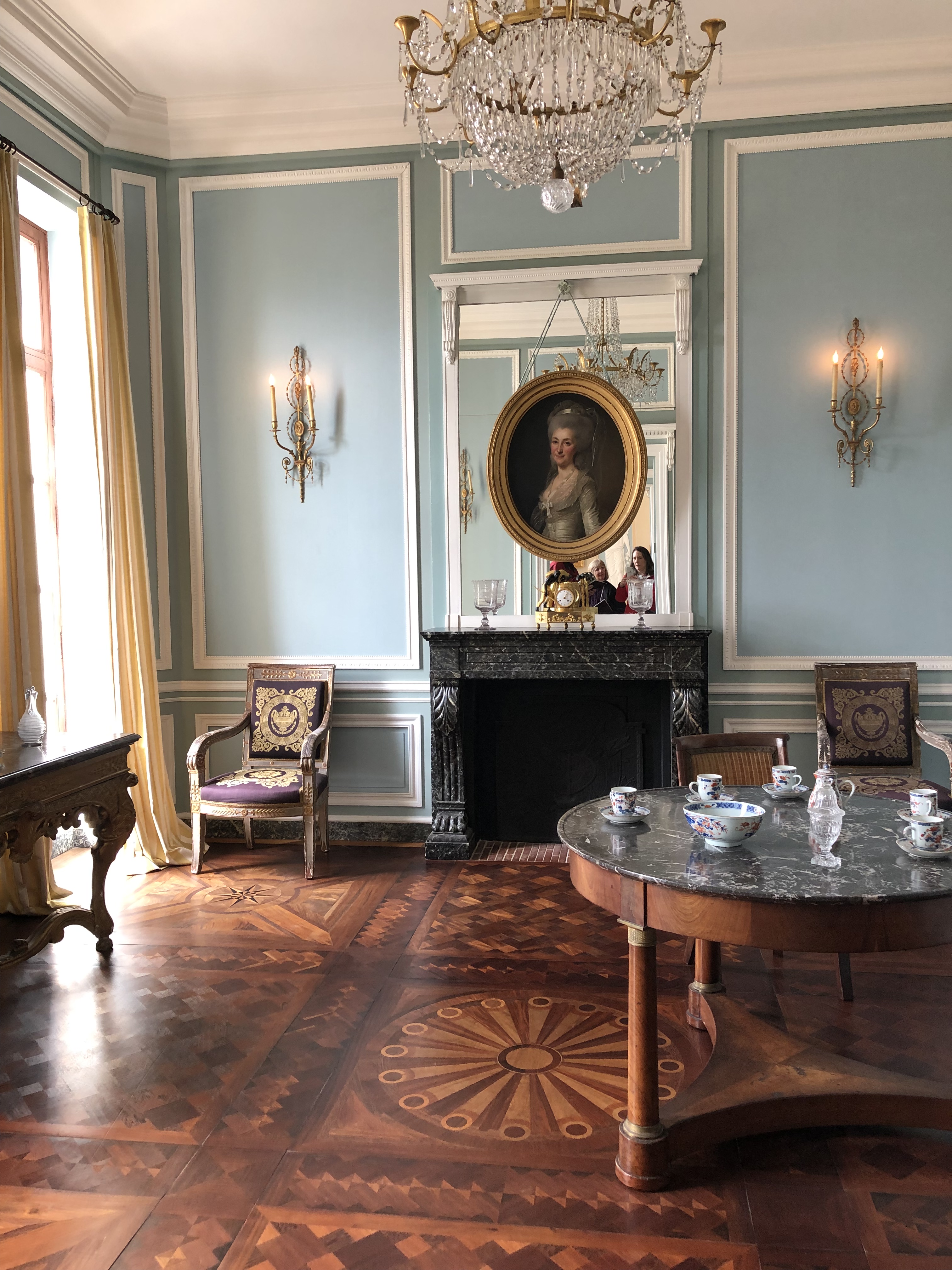
Next on the tour of Le Havre was La Maison de l’Armateur, an 18th century residence built overlooking the harbor. The primary feature of this home is a remarkable octagonal light well. As you can see from the photo above, it runs vertically for several floors, providing illumination into the center of the structure. The rooms are arranged around the well, accessed by open galleries on each level. It’s a beautiful and very practical arrangement. And the technique is, in various forms, frequently mimicked today. The house has been restored and is now a museum, decorated in 18th and 19th century furnishings and décor. A lovely example of the domestic architecture of this region.
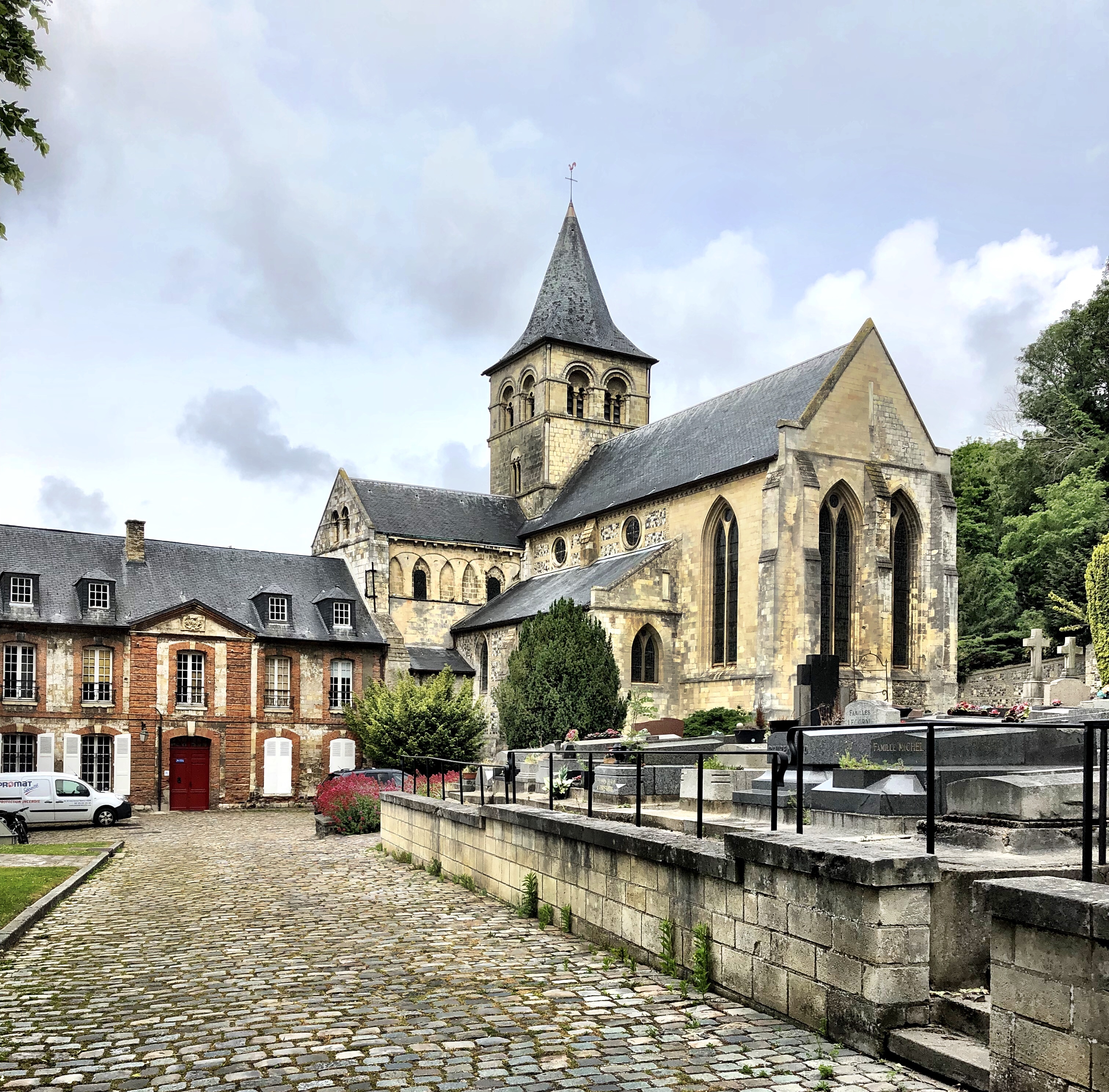
Sitting higher up the slopes of the white stone hills is the Abbaye de Graville. Although this monastery dates back to the 10th century, the current buildings which comprise the complex range from the 11th through 19th centuries. A strong specimen of Norman romanesque architecture, the abbey also houses a good collection of medieval sculpture and hosts concerts and temporary expositions throughout the year.
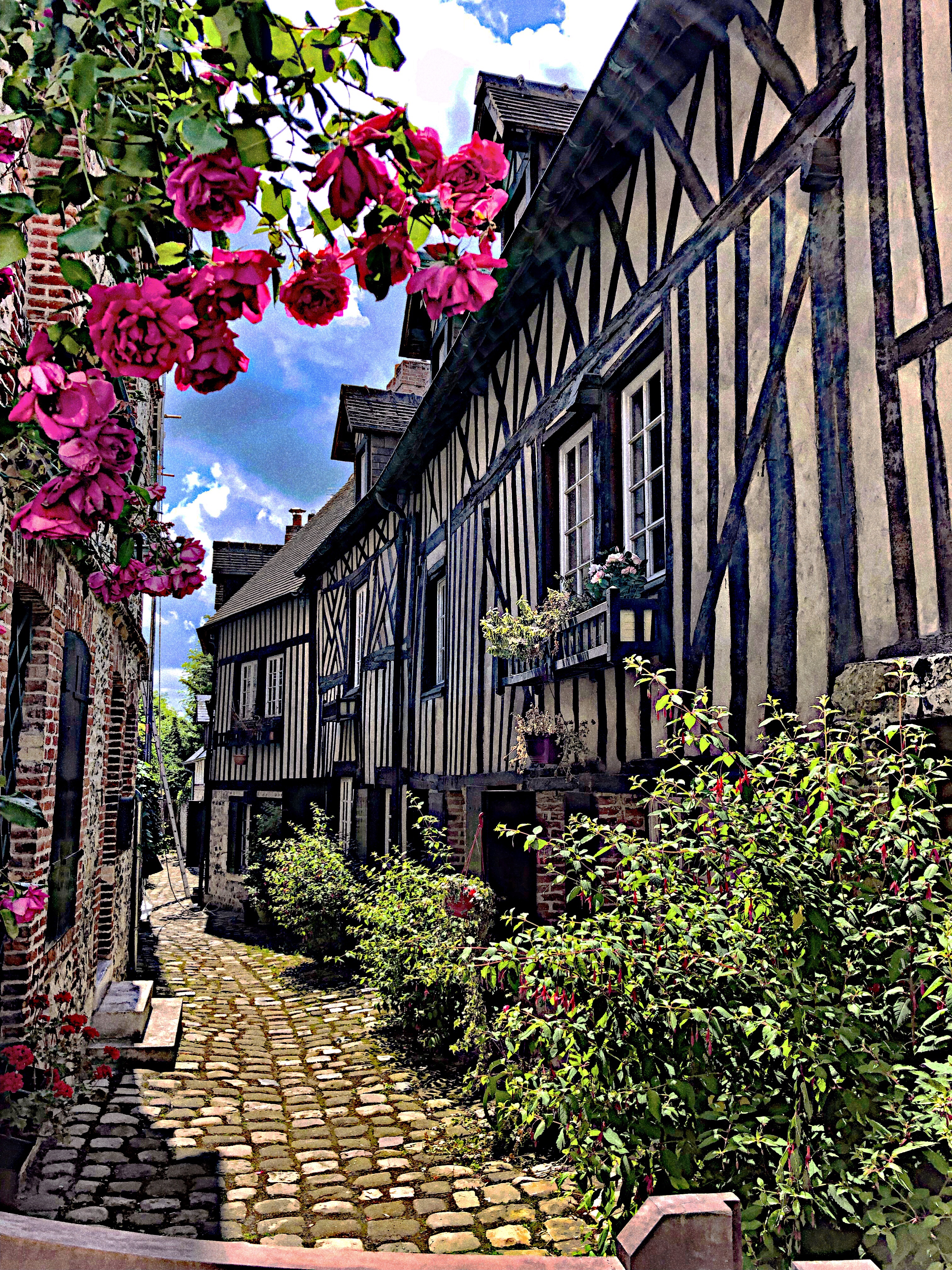
Before we left for Normandie, we had done a bit of reconnaissance on Le Havre. Hmnnn … what to do? We did not want to leave Rod & Kathy with gritty, industrial Le Havre as their only impression of France. To be sure, it’s never good to whitewash a place either. Not all of France (or any other country, for that matter) is all quaint cottages, castles, sunshine and baguettes. It’s a real place with real people and all that that entails. So it was appropriate that they should see a representation of France unwashed, as it were. But, being rather proud of France, we wanted to balance that reality with another aspect of the country. Conveniently, we found it in Honfleur.
So, the place that Cherie and I had booked was in the center of Honfleur and we conspired to kidnap Rod & Kathy so that they could catch a glimpse of a different side of France.
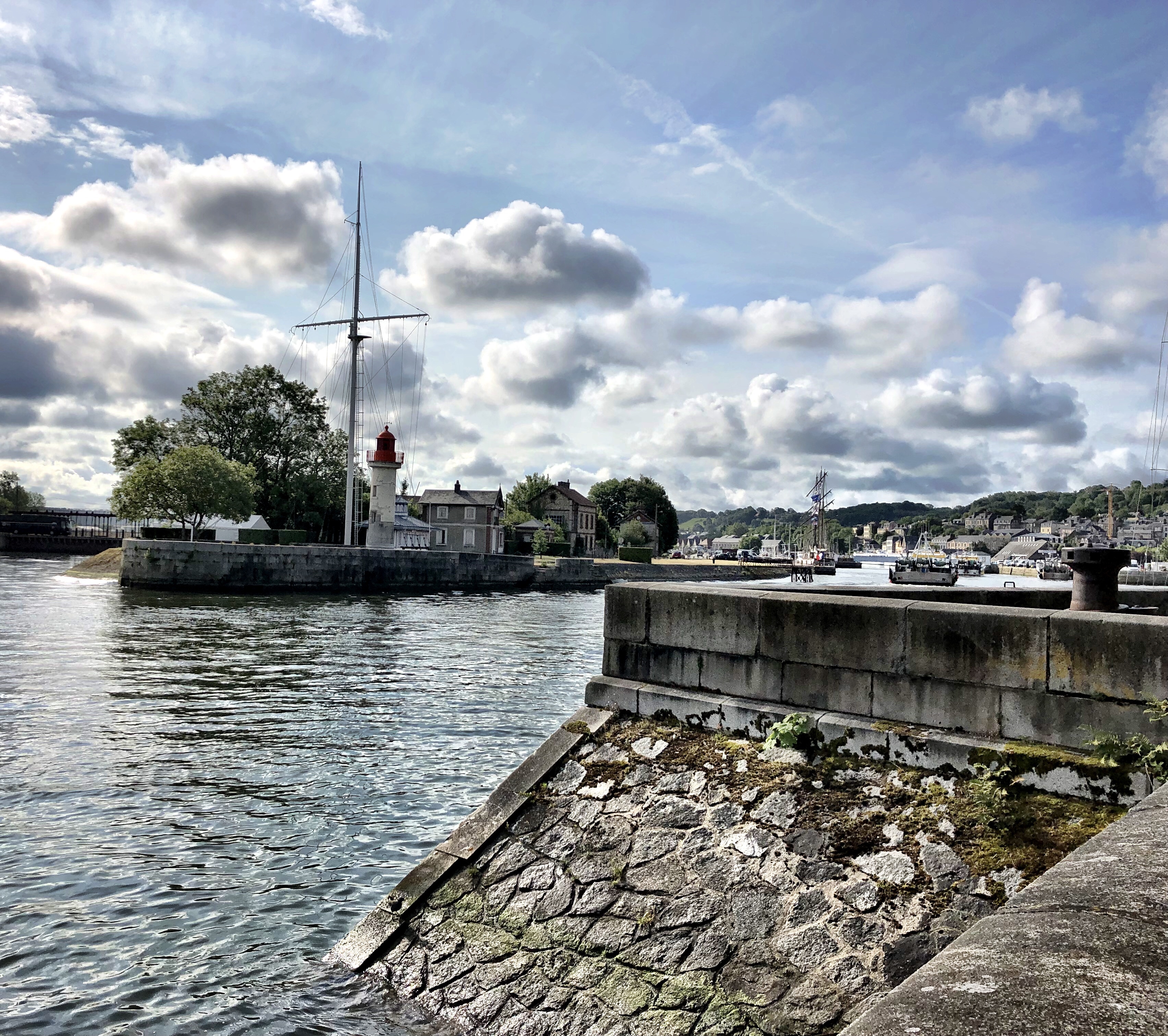
The port town of Honfleur stands on the southern side of the Seine estuary, opposite of Le Havre to the north. Honfleur is an old and beautiful town, its half-timbered blocks of homes and shops linked by cobbled streets meandering gently around the harbor. It seems to have largely retained its old architecture. The picture it presents is therefore more harmonious, the mix of building styles more natural, organic.
Le Havre is very popular with tourists who are injected by the boatload (literally) from cruise ships. Because of that, it can be fairly hectic around the inner harbor area where it is aggressively geared toward catering to day-trippers who are short on time and who are generally disinclined to stray very far from the reassuring comfort of menus printed in their own language. I get that. But it is not our kind of scene. Cherie and I typically avoid highly touristy attractions. Sometimes, though, sights are so special that we go anyway. And, despite ourselves, we generally enjoy the spectacle. It’s like watching an ant colony at work – if ants filled their tunnels with little ant-stands selling cheap tchotchkes and outdoor ant-cafés offering bad service and even worse food at double the prices the local ants pay for some of the best ant-cuisine to be found two tunnels away at Aunty-Ant’s Colony Kitchen.
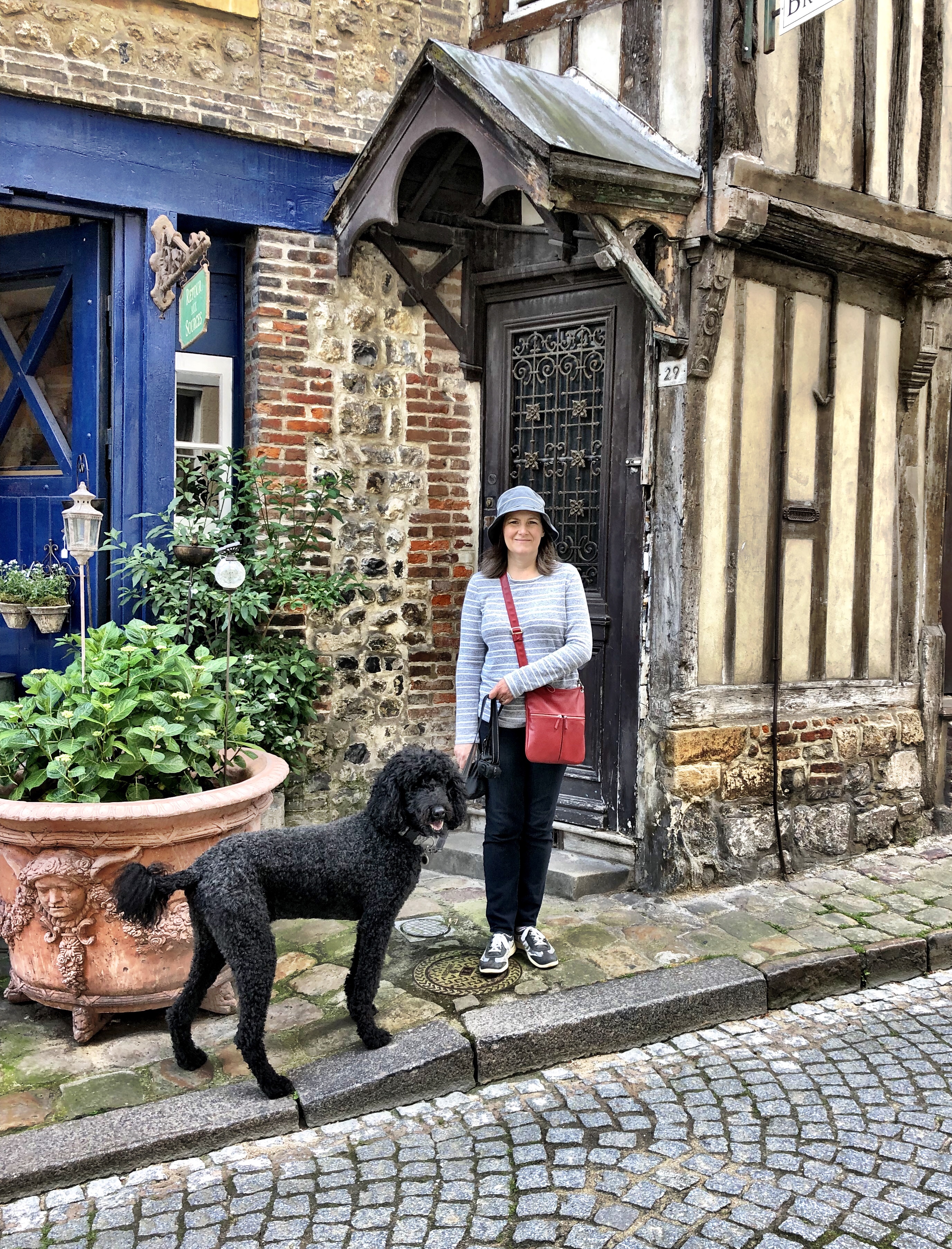
On top of it all, we happened to be in Normandie during the commemoration of the 75th anniversary of D-Day. Even though Honfleur is a fair jog from the Cotentin Peninsula and the beaches where the principal landing took place, the crowds in town were boosted with numbers of reenactors in various uniforms and civilian dress from the 1940’s. [I hesitate to call them celebrants because it doesn’t seem quite appropriate to celebrate such an important, dreadful and devastating event. Perhaps commemorants is a more fitting term.] As a result, we ran into countless American, Canadian and German visitors – most of whom stopped us to have a cuddle with Saxon and take his photograph. When you are walking with a standard poodle, you become invisible. The dog sucks up all the attention. It’s like hanging out with George Clooney; you might as well strip naked and sing the hallelujah chorus – no will notice you anyway.
After having been in our more isolated corner of France for several months now, we found the frequent sound of Americans somewhat jarring. We’re just not used to hearing it anymore. British accents, yes. But we hardly ever hear American accents in Bretagne. Particularly in Malestroit. In Fougères we’ve been told by several locals that we are the first Americans they’ve talked to. And that’s just fine with us.

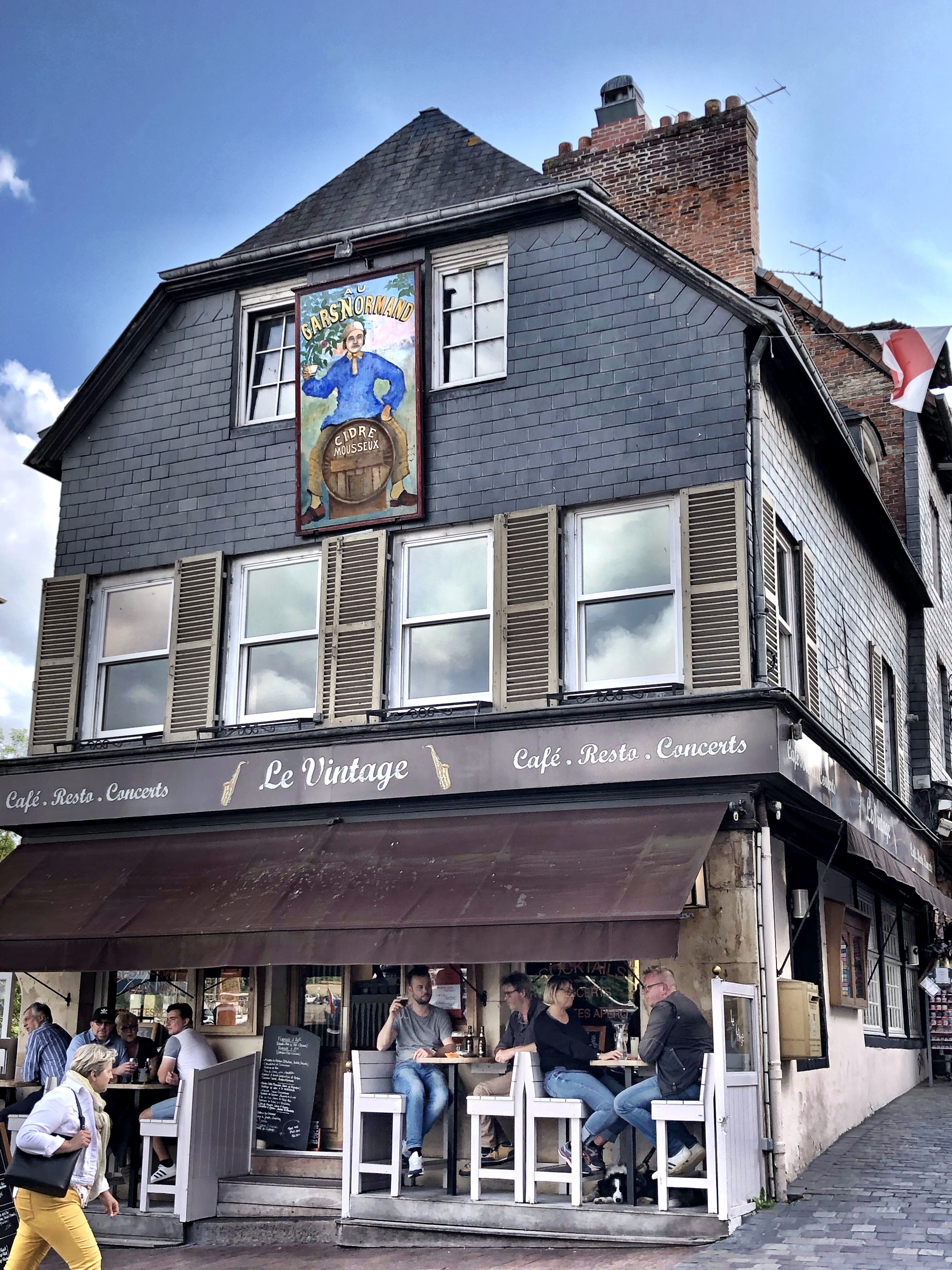
But in spite of, or perhaps as a consequence of this, one can wander the back streets of Honfleur and enjoy a remarkably serene, tranquil atmosphere. The town is quaint, but in a more urban way. The oldest houses are medieval and renaissance, with stone foundations and half-timber (French: colombage, or, pan de bois) upper stories. There are many surviving examples in Honfleur and, mixed with the later 18th and 19th century buildings, they leave a very pleasing impression of a bygone era.
Our kidnapping plan in full swing, Saxon and I joined the party and we all walked around the old harbor area. We looked at some shops and had lunch at a rather touristy café. We feel a little guilty about the café because the food was really not up to normal french standards. My fault because I chose it, thinking that Rod and Kathy would enjoy eating with a view of the harbor. Surely now their lasting impression is: “What’s all the fuss about french food?” Big fail. Worse yet, they very kindly bought that lunch for us. Mea maxima culpa.
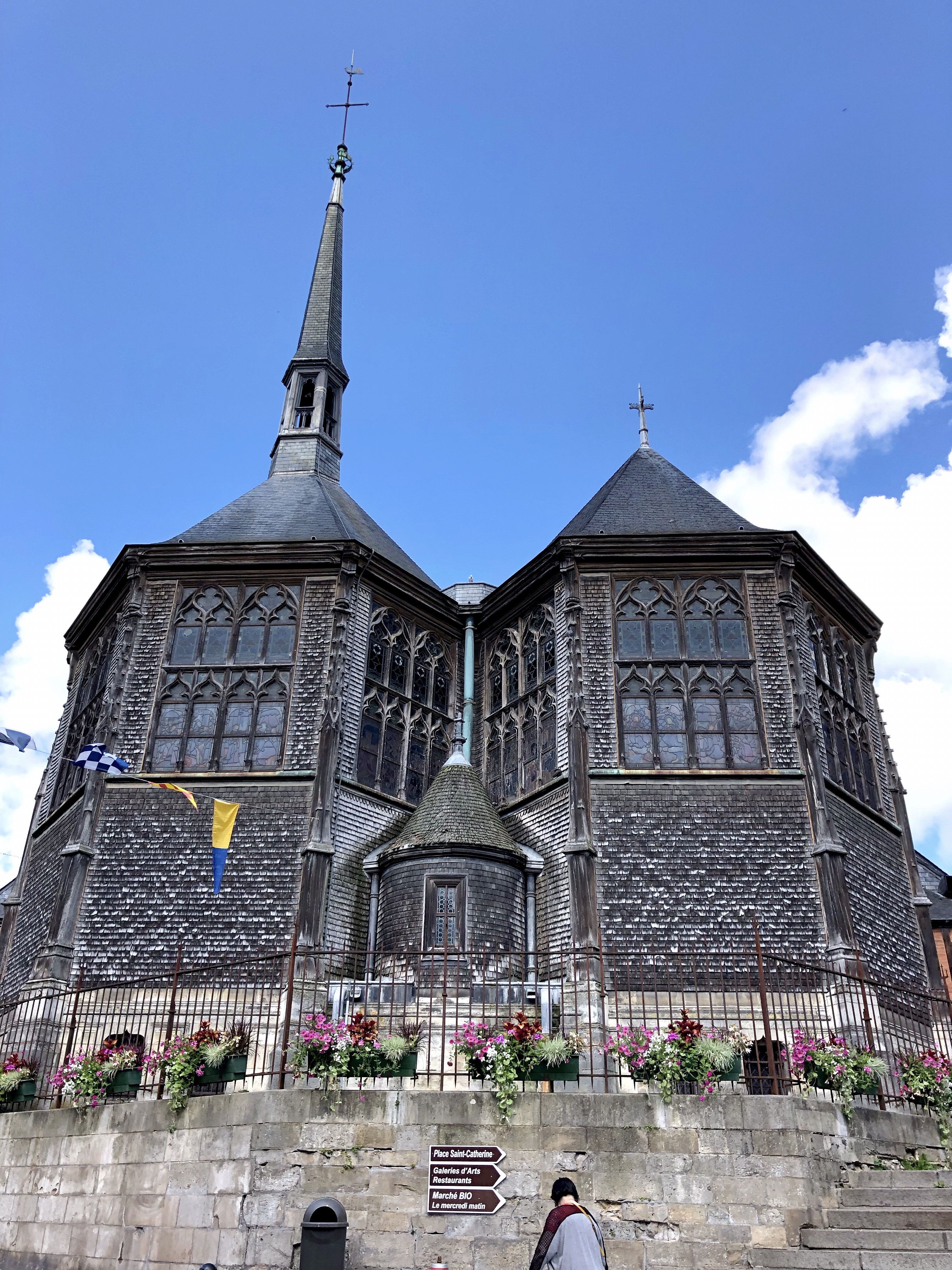
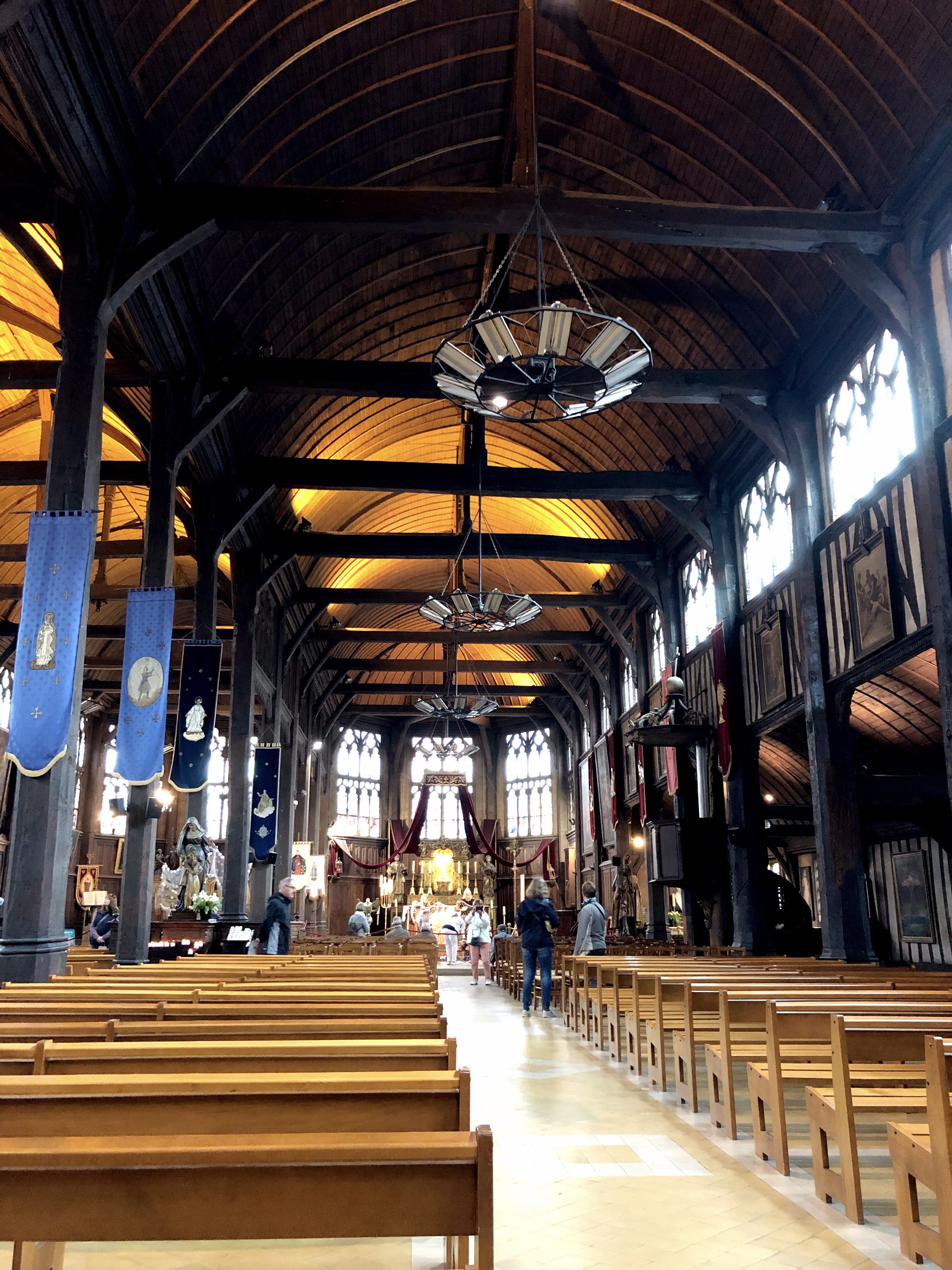
After our lunch, we strolled over to the Église Sainte-Catherine, a 15th century church constructed entirely of wood. It is, in fact, the largest wooden church in France, the town harnessing the considerable boat-building skills of the local craftsmen after the previous stone church had been destroyed during the Hundred Years’ War. It’s a beautiful accomplishment, the main structure being a double-aisle hall with side-aisles to north and south. The double-vault ceiling is like two upside down ships’ hulls and there is a clerestory at the top of the walls through which light fills the space, filtering through finely-carved wooden tracery spanning the entire length of the nave and apse. It was really special to see and I think Rod and Kathy found it inspiring.
Equally notable is the church’s bell tower, also constructed of wood. It stands separately from the church, just across the square. Apparently, the stone house upon which the wooden tower is situated was the bell-ringer’s residence. I wonder if the house came with earmuffs? The bell tower is so venerable and evocative of how the daily rounds of life must have turned for the inhabitants of Honfleur over so many centuries.
Sadly, we had to say goodbye to Rod & Kathy as the afternoon drew to a close. They had to return to their cruise ship by the early evening. Their vessel was sailing off to Southampton, England in order to fly out the next day to their next destination: Iceland. We had a nice visit and really enjoyed exploring Le Havre and Honfleur with them. One day in France is a heartbreakingly short time. We hope that we helped to make their few hours here an enjoyable and enriching experience.
For our part, we really enjoyed our own short visit to the area. Honfleur, in particular, is yet another place we hope to return to someday. It was such a pleasant place to visit and the people so friendly and welcoming. Highly recommended!

 Finding Our France