You might not have guessed by the lack of posts recently, but the past few weeks have been marked by quite a bit of activity for us. Nothing big. Nothing grandiose. Just busy with lots of smaller errands. Who knew retirement would be so exhausting?
It started several weeks ago with a flash trip to New York. You may have noticed in your own lives that financial institutions can be wonderful things: safeguarding your hard-earned money, investing for your future, contributing to the well-being of a thriving economy. But most of all, they make your dealings with them a bureaucratic misery. In this instance, all we wanted to do was move some money from one part of the bank to another. Sign a paper here, shake a hand there. Easy-peasy, right? “Absolutely,” says our kindly bank representative. “We just need you to do it in person. In the United States.”
“You are aware, kind sir, that we live in France, yes?”
“Yes.” (We had a vision of him distractedly searching for a summer home in the Hamptons as we spoke.)
“Right. Fantastic. Excellent news. Thank you very much Mr. Banker Person. We’re so privileged to have our life savings accepted into your caring, lovingly manicured hands. We would be more than happy to travel several thousand miles in order to ensure that your hallowed institution is not in any way inconvenienced.”
“Okay. See you soon. Have a nice day.” (Hmmnnn, that ‘cozy, light-filled, six-bedroom beach cottage with bags of character’ looks quite nice …)
At least one of us had to make a trip to the U.S. for the sole purpose of signing a paper. We decided that New York would be the least inconvenient destination as it is the shortest flight and would be the easiest to navigate around. Cherie has a pronounced dislike of flying, to say the least. Saxon even more so. It therefore fell to me to make this administrative leap across the ocean.
Actually, for all of my complaints, I’ve always wanted to visit New York. Crazy, I know, but I’ve never been. So, I hopped the TGV (high-speed rail – Train à Grande Vitesse) in Rennes for a two-hour journey to Charles de Gaulle airport outside of Paris. A few short hours later I was in Manhattan. A great city. Gritty. Filled with people from all walks of life mixing together. Lots of energy and creativity. Just the way I like it. Even though I grew up a country boy, surrounded by woods and fields and farms, I really like big cities and feel quite at home in them. New York fits me very well.

So, on the morning after my late-night arrival, I enjoyed a wander around the Bowery where I found a great little café for breakfast. And they had bacon. Bacon! How I miss american bacon. In France, honest-to-goodness bacon is a rare commodity. You will find pig meat offered to you in a thousand different ways here. All of them excellent. The french love pigs and eat a much greater variety of all they can offer a nation of gourmandes. But american style bacon is not one of them. When you do find it, it’s generally a pale reflection of the good stuff. Needless to say, I ordered a side of bacon. And relished every bite.
My business at the bank later that morning took all of an hour. And it was about as interesting as you might imagine. Enough said. The upside was that I was then presented with an entire afternoon and evening to do with as I wanted. This was my chance to combine two things close to my heart: public transit and museums. Free to geek out to my heart’s content, I hopped the subway north to the Upper East Side, fended off a couple of insistent (although surprisingly entrepreneurial) street hustlers, and climbed the steps to an institution which I had always wanted to visit: the Metropolitan Museum of Art. I was not disappointed.
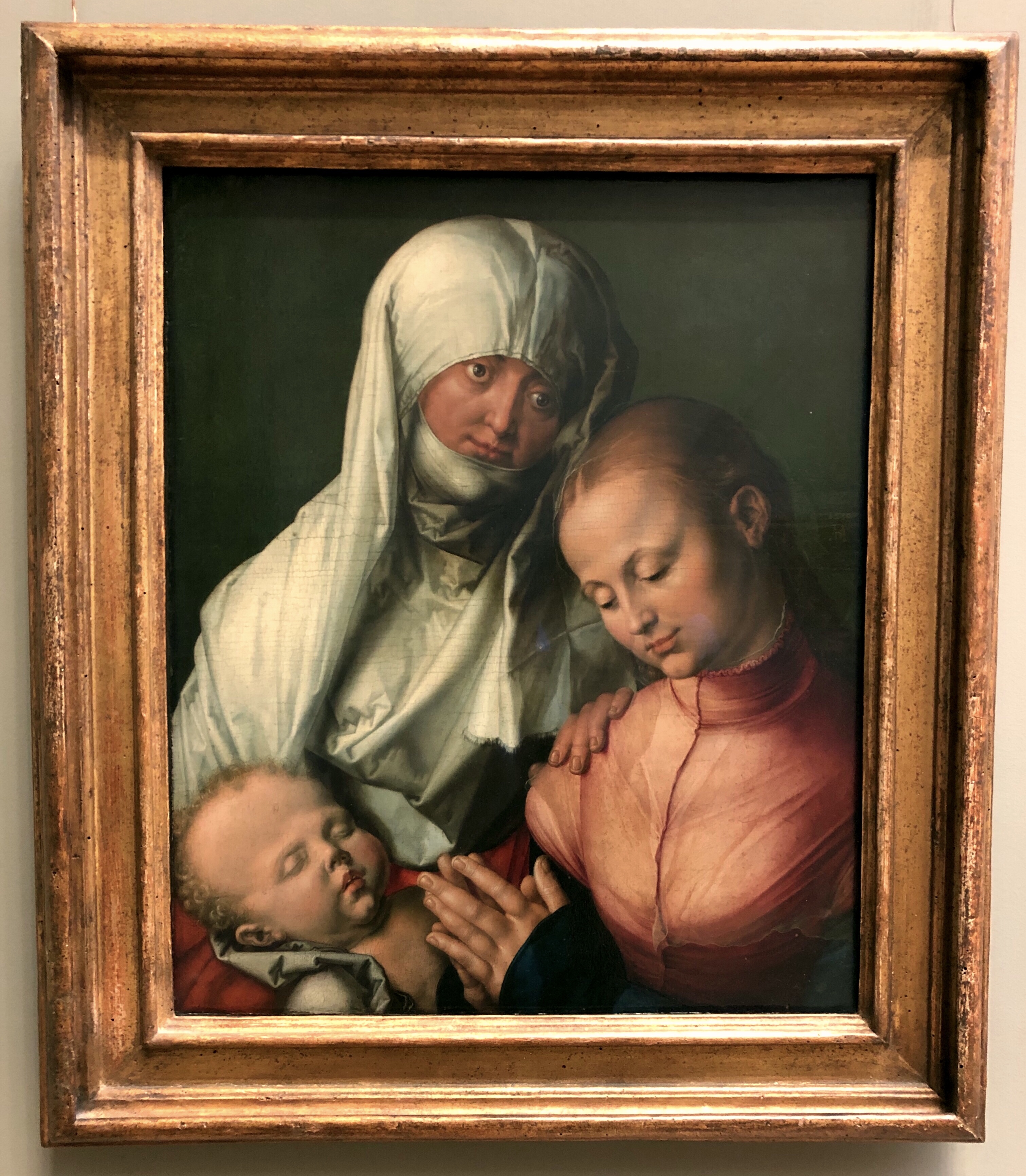
The Met is easily one of the top five best museums I have ever encountered. The medieval and early modern collection alone is vast and comprehensive. Cherie loves museums too. But she is not ridiculous like I am. A couple of hours in any given museum and she is ready to find a café for tea and yummy cake. Quite sensible. I spent over five hours in the Met, never once stopping for scones. Who needs a pastry with milky tea when you can stare at the miracle of Dürer’s painting technique? Food for the soul, man! Food for the soul. I would have stayed longer, but they finally kicked me out of the building. Something unreasonable about closing time or some such. At any rate, it was brilliant and made the ridiculous proposition of travelling to New York from France for the sole reason of signing a paper seem not so silly after all.
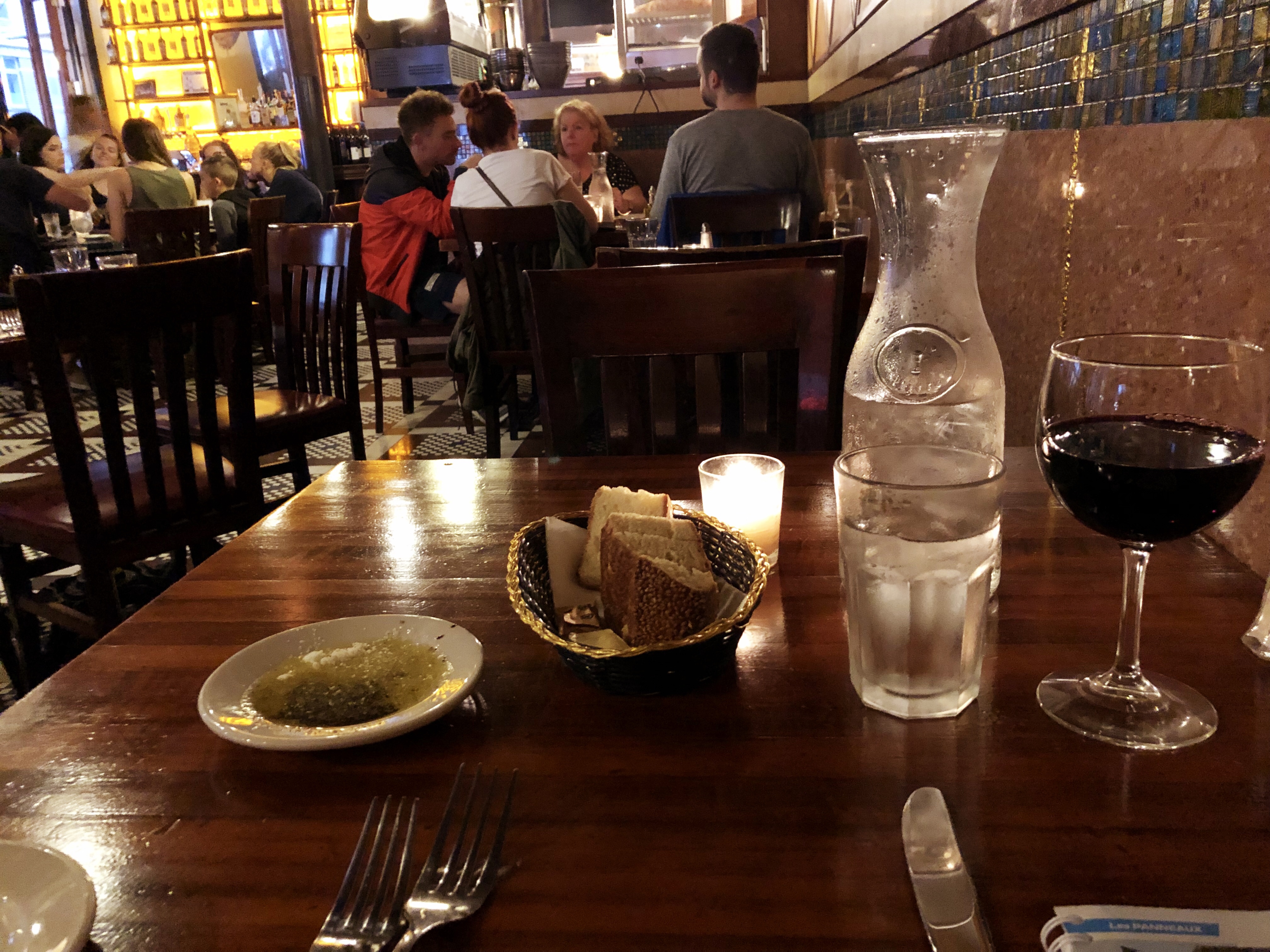
After my marathon at the Met, I took the opportunity to wander through Central Park, take the subway back to Lower Manhattan and have a nice italian dinner in, where else?, Little Italy. Just enough time for me to take a rideshare to Newark airport for my red-eye flight back to Paris. By early evening I was back home in Malestroit. I had only been gone not much more than a day-and-a-half. Even though it was kind of a grind, the opportunity to visit New York was really enjoyable.
So, with the paper signed, we were in business. Right? Nope. At it turned out, a further step was required: we needed to sign a further financial form. The good news was that we would not have to make another jaunt across the Atlantic Ocean. It was only necessary for us to have our signatures notarized. Phew! That was welcome news indeed. Problem is, there is no such thing as a Notary Public in France. At least not that is recognized by U.S. financial institutions — well, not ours, anyway. After some digging, Cherie discovered that we could have documents notarized at at U.S. diplomatic station. Sweet! There is a U.S. Consulate in Rennes. That’s only an hour’s drive away. Here’s the bit where the bad news comes in: only the consulates in Paris, Strasbourg and Marseille provide notary services. Bugger!

Forced to make a trip to Paris. Oh the hardship, the cruelty of it all. How the Fates had so unkindly laid their displeasure upon us. Life can be hard. But sometimes we just have to face up to it like adults and persevere. Another whirlwind visit planned. This time together. Dropping Saxon off with our very generous and dog-adoring neighbors (thank you Jean and Adrian!), we comfortably careened our way to Paris on the TGV, and thankfully slowed to a full stop before crashing through the train station barrier at Gare Montparnasse. [Our tickets, by the way, were seriously inexpensive. €130 standard fare, round trip, for the both of us. I love this country.]
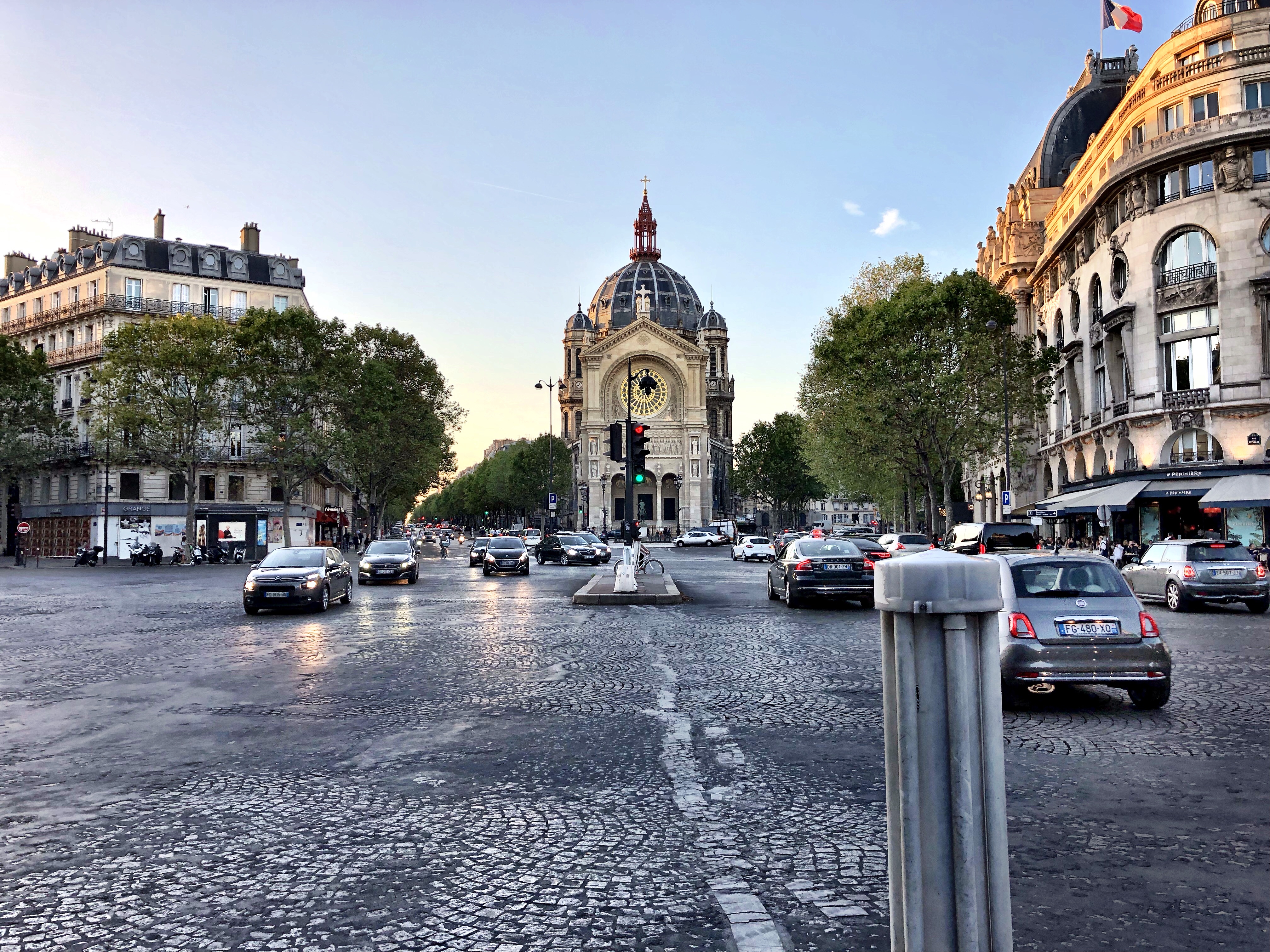
I don’t know how anybody could not love Paris. I kid you not. There is something seriously out of sorts with your soul if come away from Paris thinking “meh!”. It’s a truly wonderful city. Full of beauty and character. There is also a quiet and yet forceful confidence which pervades, a relaxed energy. Parisians seem to stroll through their city in such an assured manner regardless tasks they are engaged in; as though they are perpetually on their way to an evening concert in the park. Paradoxically, there is also a cacophony of spirit that, though often heard, is sometimes simply felt. Everyone here has things to do. People to see. And, most importantly, matters to discuss – for hours on end. Conversation in France is a professional sport. And Parisiens are the World Cup champions. If you ever want give your French language skills a challenge, strike up a conversation in Paris. Pro tip: 1.) apply extra deodorant beforehand and 2.) set your facial expression to “feign comprehension”. [Even if they know you are faking it, they don’t seem to care; they’ll happily carry on regaling you with lighting-fast monologue as long as you display even the faintest hint of interest.]
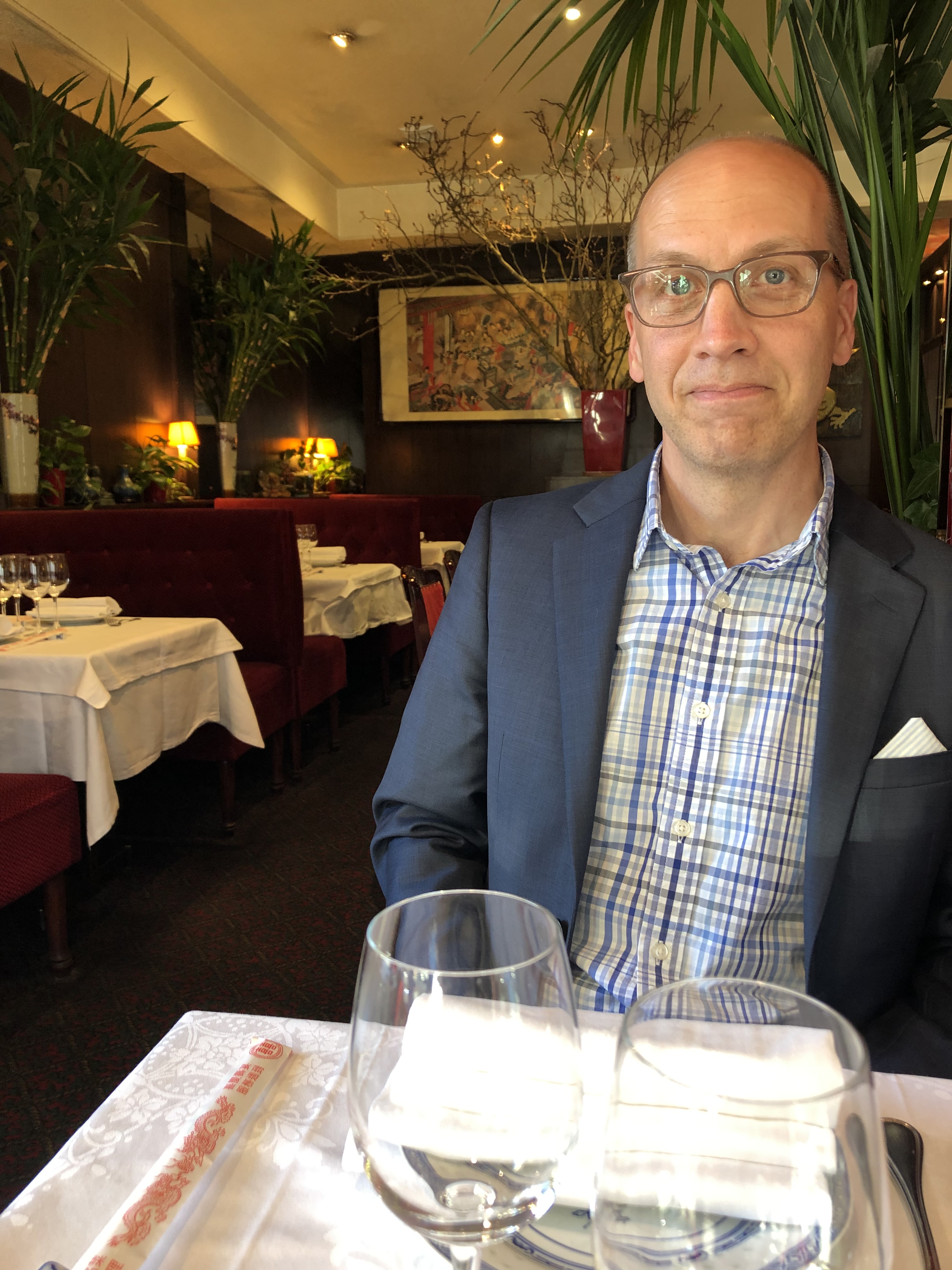
On the day we arrived, we took the Metro from the train station to our hotel in the 8th arrondissement. There, we dropped our shared suitcase (we like to travel light if we can) and, as it was lunchtime, searched for somewhere to eat. Little did I know, but Cherie had already spied a Chinese restaurant just around the corner from our hotel. Like bacon, asian food can be difficult to come by in our neck of the woods so we are always on the lookout for it. I guess we never fully appreciated how fortunate we were to be surrounded by such a variety of really good asian food restaurants while living in Seattle. Well, we certainly appreciate it now. The Chinese restaurant near our hotel was good. Not great, but good enough to satisfy our longing. In fact, Cherie was later regretting that we hadn’t taken advantage of the dim sum offerings they had at the restaurant. So much so that we went back to the same place for dinner that evening. Lack of Chinese food addressed? Check.
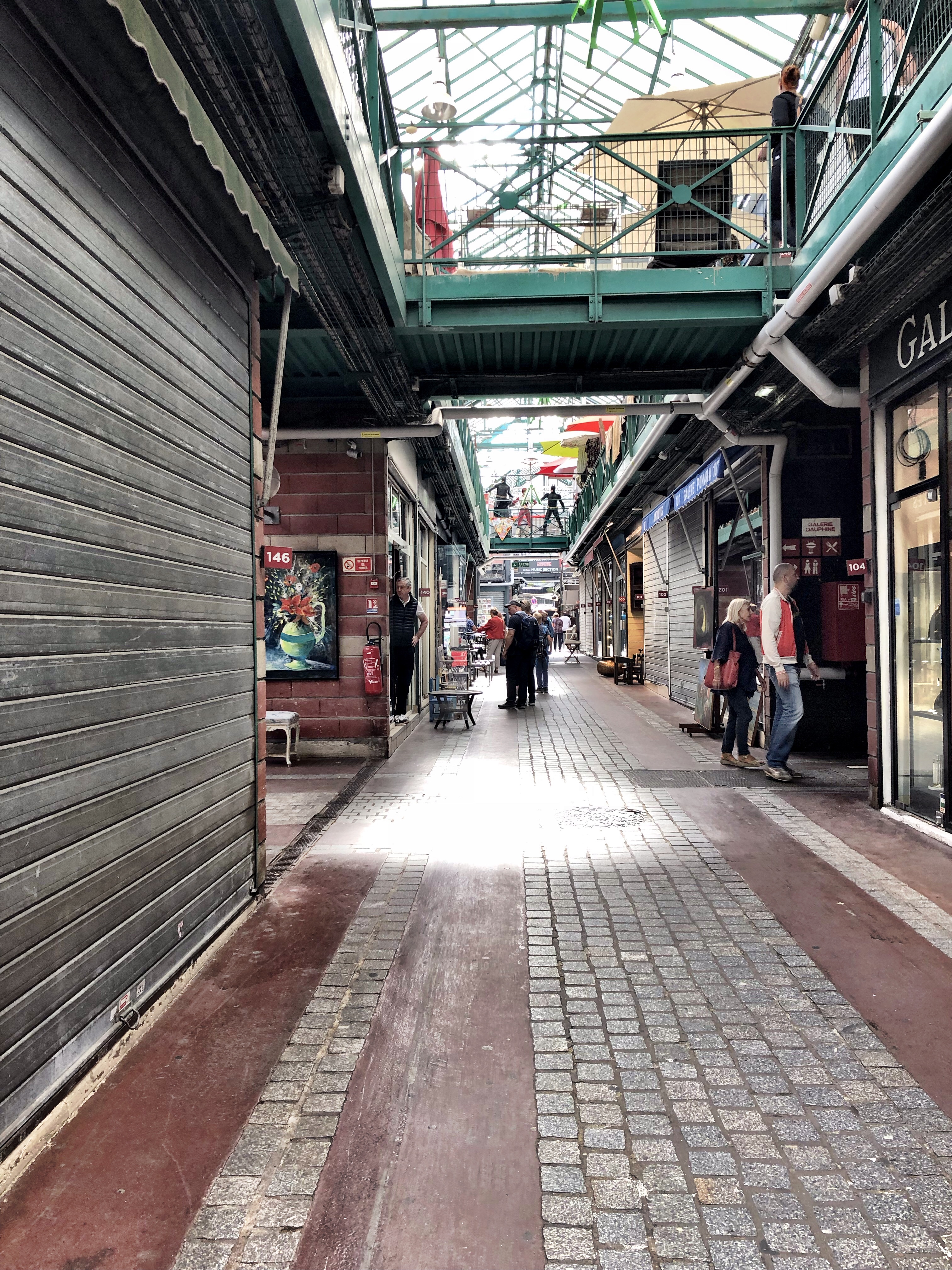
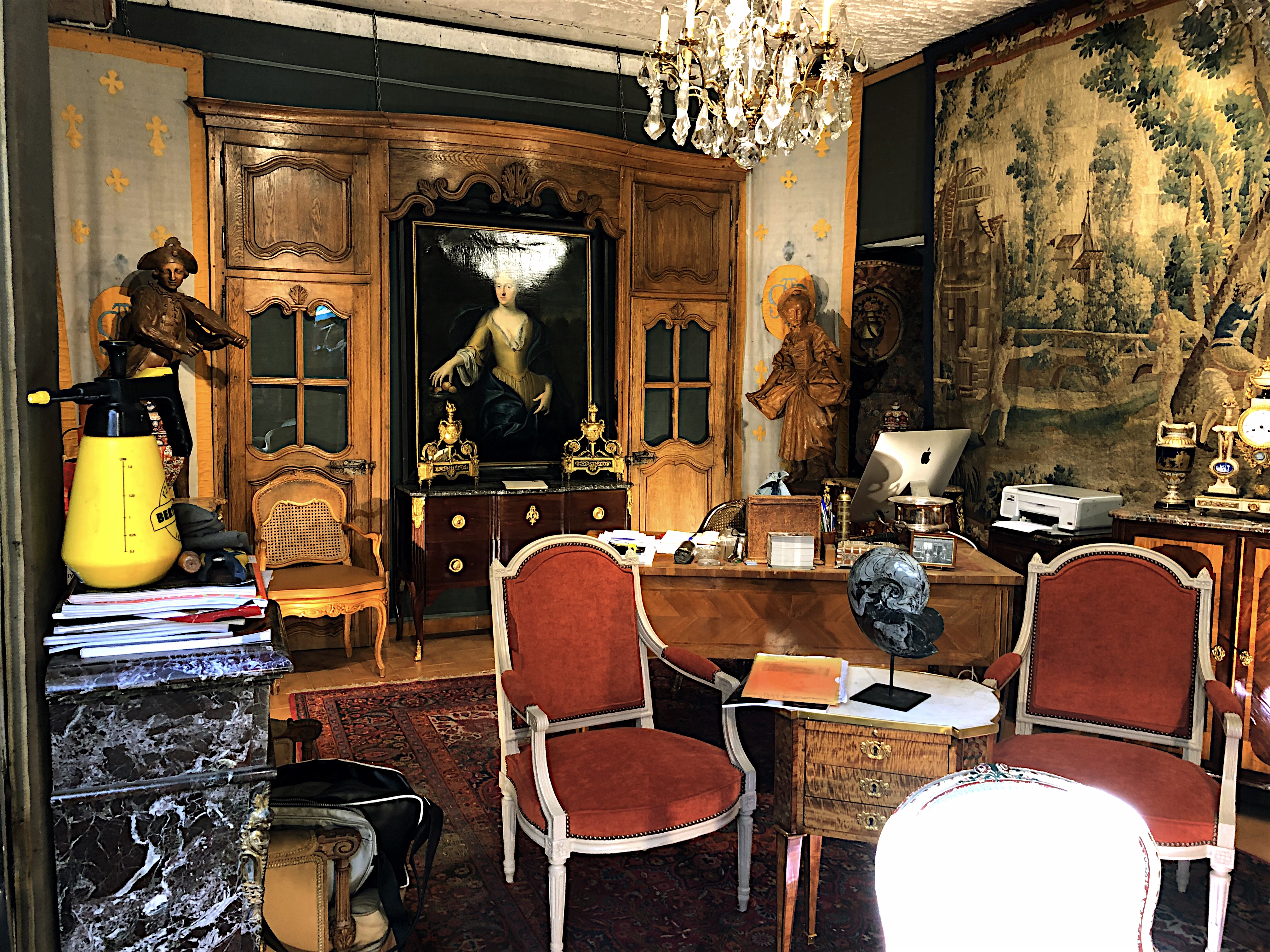
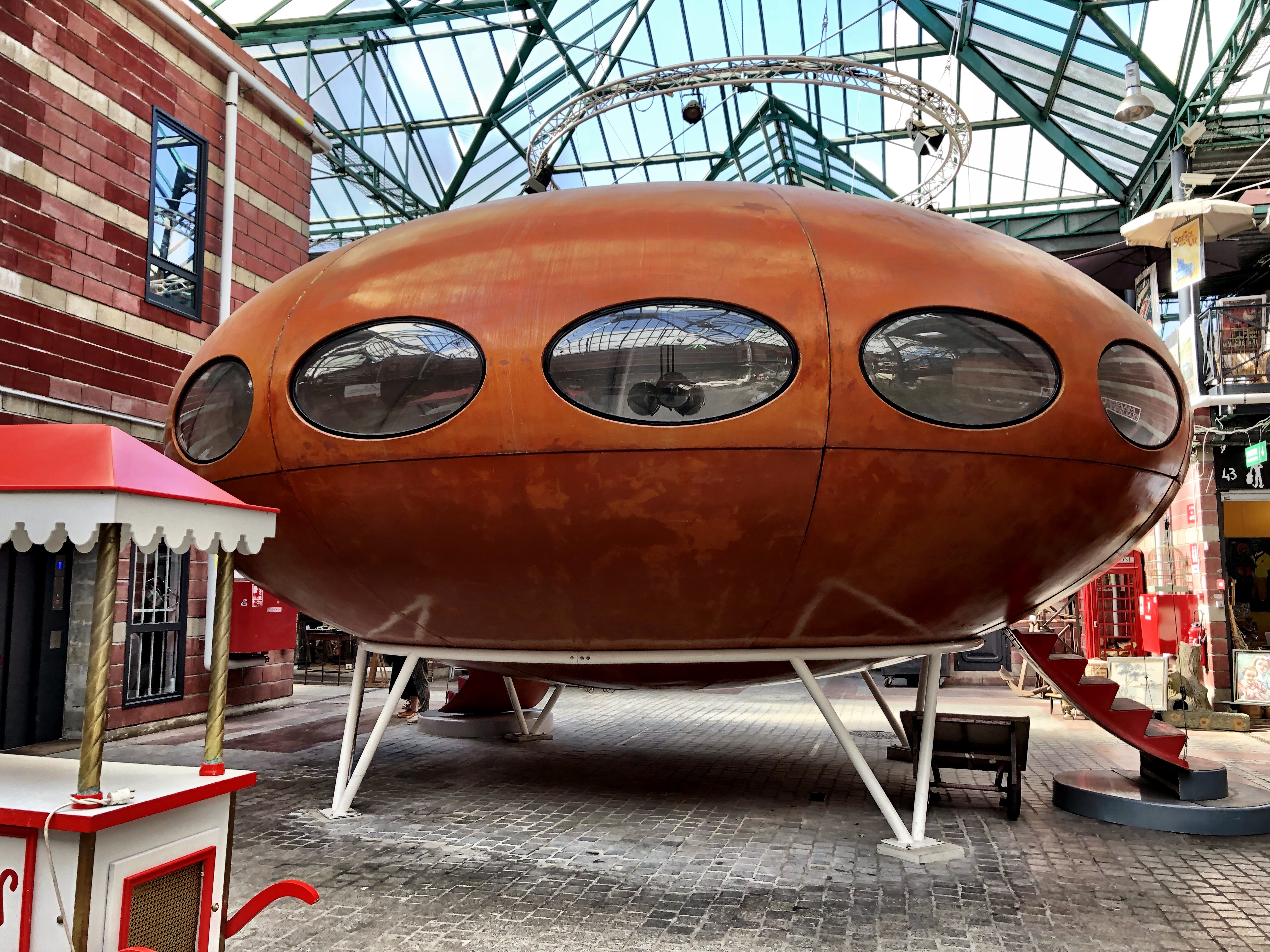
After lunch we engaged Paris’ excellent Metro system again to travel to Saint-Ouen area in the north of the city. This is where the famous Paris flea market (Le Marché aux Puces) is held – the largest in the world, or so we have been told. Whether it’s true or not, it certainly is extensive. We spent a find afternoon of rummaging through posh antique shops to junk stalls and everything in between. I’m pretty sure you could find just about anything at the Marché aux Puces if you looked long enough. We were there on a Monday, so it was not crowded at all. So large is the market that, even after a few hours, we had barely scratched the surface. Of course, a good 45 minutes to an hour of that was spent chatting to an antique dealer who cheerily engaged us in conversation. Well, mostly he talked and we smiled, nodded our heads and said “Oui” a lot. In that time, we managed to discuss politics, philosophy, food, architecture, art, friends and family. He was a lovely guy, clearly a contender as a starter for the city team in conversation.

The following day we had an appointment at the the U.S. Embassy to get our signatures notarized. On our way we grabbed two of the best pains au chocolat we have ever had and ate them as we strolled through the Jardins des Champs-Élysée on a sunny August morning. We arrived outside a heavily guarded building to find a long line of people queued up outside the gates along the tree-lined street in various states of being ranging from nervous, anxious, irritated and desperate. Regardless of their varying emotional states, everyone shared in the pervading sense of confusion. Yes, we thought. This must be the place.
As with most things American, the whole affair was hopelessly disorganized. No one knew what they were supposed to do or where to go. Were we in the right line? Do we wait to be called? No one knew. Officials of any kind were conspicuously absent; when they deigned to come around at all, they would randomly shout conflicting information adding further confusion to the already-bewildered group of people in their charge. Cherie and I stood in line for a while, trying in vain to detect some pattern or form of logic as to who was allowed in, why, and in what manner. Failing that, Cherie left me to hold our place in line while she skipped up to the front to seek guidance. It turned out that, because we were American citizens and we had an appointment, we were allowed to enter directly.
I should reiterate that all of this took place outside, on the sidewalk opposite the embassy. The point of entry to the building was a detached gate area across the street, covered by a marquee where private security guards performed an initial security screening and attempted to address the concerns of frazzled patrons trying to navigate a clearly broken system run by, well, nobody, it seemed. We were feeling fortunate that the weather was pleasant. Had it been raining or if had been in the midst of one of the brutal series of heatwaves which plagued Paris this summer, I think these poor contractors would have had a riot on their hands. We would have taken photos of this interesting scene, but anyone who even briefly pointed a lens in the general direction of the embassy was met with a stern warning from gun-toting guards. Neither one of us was willing to end up in Guantanamo Bay just for the sake of a colorful photo.
With guilty consciences we skipped past the long queue, breezed through security and finally made it to an area that can only be best described as a Paris branch of your state Department of Motor Vehicles. Rows of windows faced by even more rows of chairs, several roped lanes for queueing, announcements over crackling speakers and dozens of people whose former confusion and anxiety were now replaced by frustration and boredom in equal measures. For us the path was relatively straightforward and we didn’t have to stand in any more lines. Just wait for our number to be called. It still took a couple of hours, but we finally got our signed document notarized. Emerging into the sunlight of Parisien freedom, we hot-footed it away as quickly as we could, relieved that we had, once again, managed to overcome a bureaucratic hurdle.
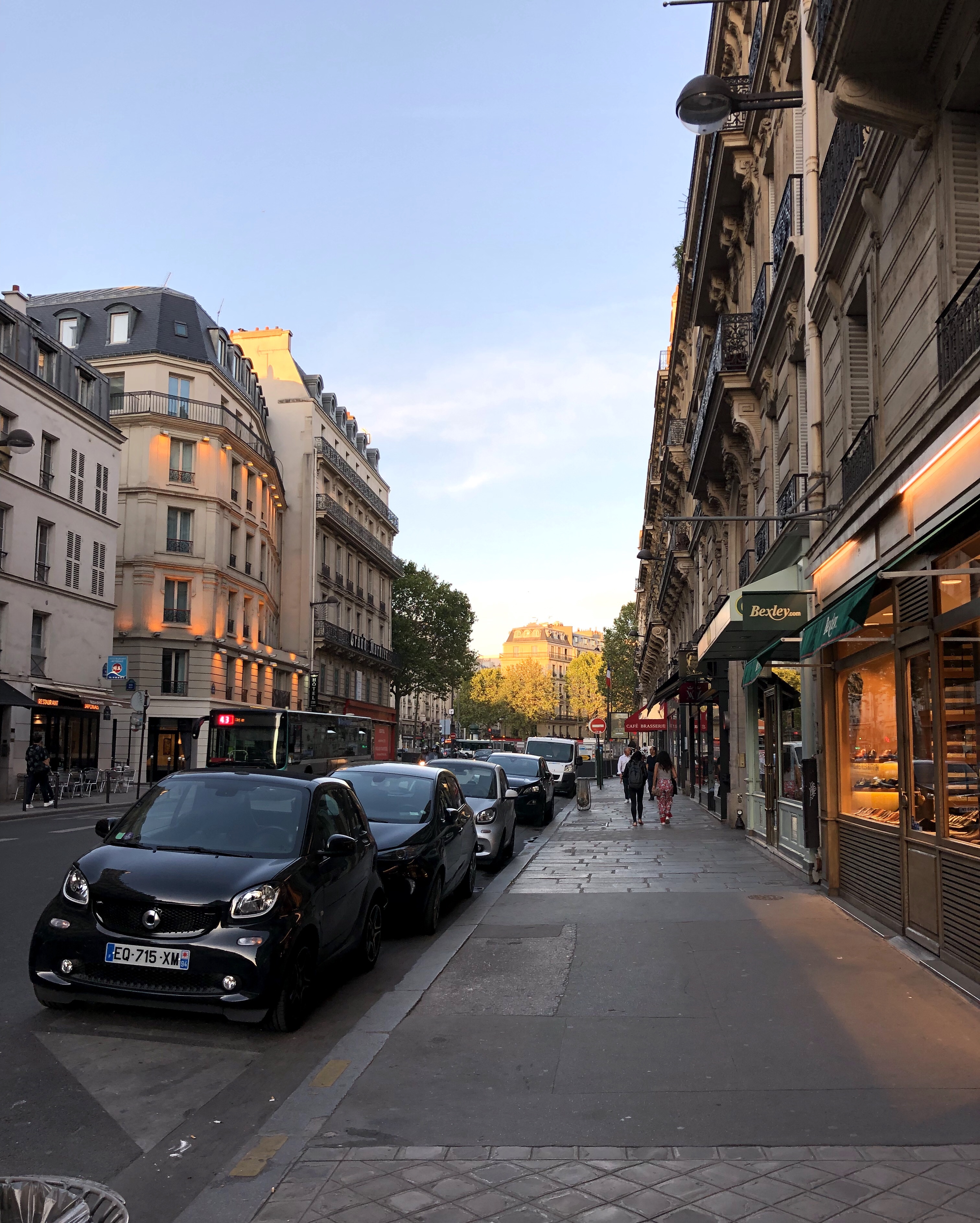
Business was finished. Time for some fun. We quickly made our way across the Seine from the Place de la Concorde to the Left Bank and headed east. With reluctance, we passed the Musée d’Orsay following the Rue de Lille through beautiful beaux-arts buildings the street-levels of which were filled with high-end antiques and art shops. We longed to step into the Orsay and the many shops. But we knew that, if we had, it would be the day gone. Which would normally have been just fine with us but we already had tickets for another attraction: Sainte-Chapelle.
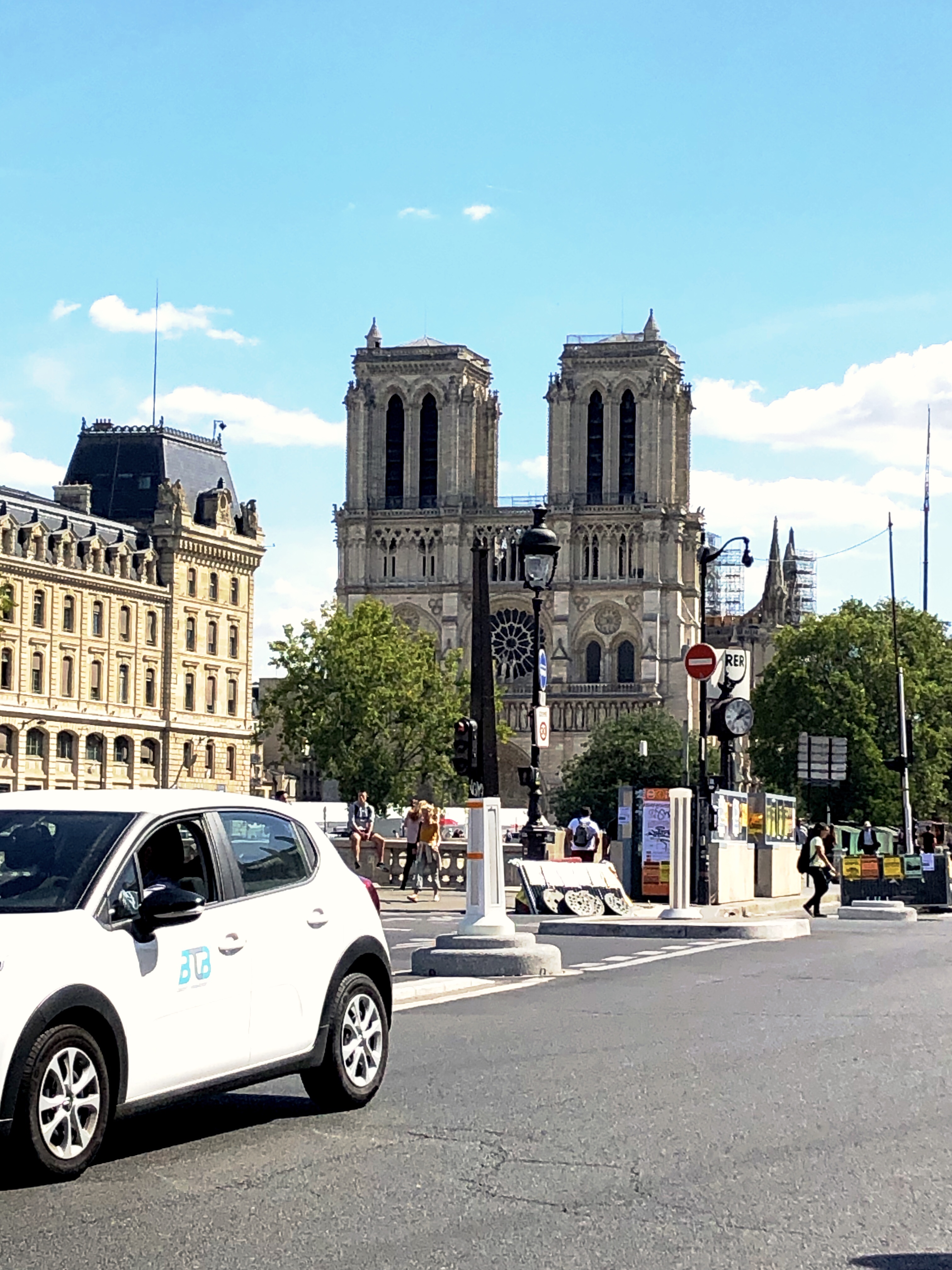
On the way we stopped into a nice little bistro for lunch before crossing over Pont Saint Michel to the Île de la Cité. This island is where Notre Dame cathedral is located. From afar we could see this beautiful monument’s sad state after the devastating fire of earlier this year which, amongst other things, destroyed the roof over the nave and toppled the spire. Having both seen Notre Dame in its former glory, we didn’t have the heart to take a closer look.

Sobered by tragic damage to Notre Dame, we continued on to Sainte Chapelle, a 13th century royal chapel built by King Louis IX in order to house his treasured relics: a portion of the “True Cross” and the “Crown of Thorns”. It’s a beautiful chapel which suffered terribly at the hands of French Revolutionaries at the end of the 18th century as they vented centuries of built-up resentment of the Catholic Church’s vast wealth, power and political machinations. Not without a little controversy, the chapel was restored in the later 19th century with what some consider to have been a heavy hand. A good deal of the damaged or missing stonework was replaced, the designs often deriving from what is felt to have been misguided research. The attempt by these well-intentioned 19th century restorers was to reintroduce the splendor of the original chapel. Whether or not one agrees with the historical accuracy of the restoration, it’s hard to argue that they did not live up to putting the magic back into the old place. It is simply stunning.

Further pro tip: buy your tickets for Sainte Chapelle online. This allows you to avoid the long lines for purchasing tickets at the site itself. This time, instead of feeling guilty as we did at the embassy, we waltzed smugly right past scores of people directly to the entrance. No line at all. Guilt-free.
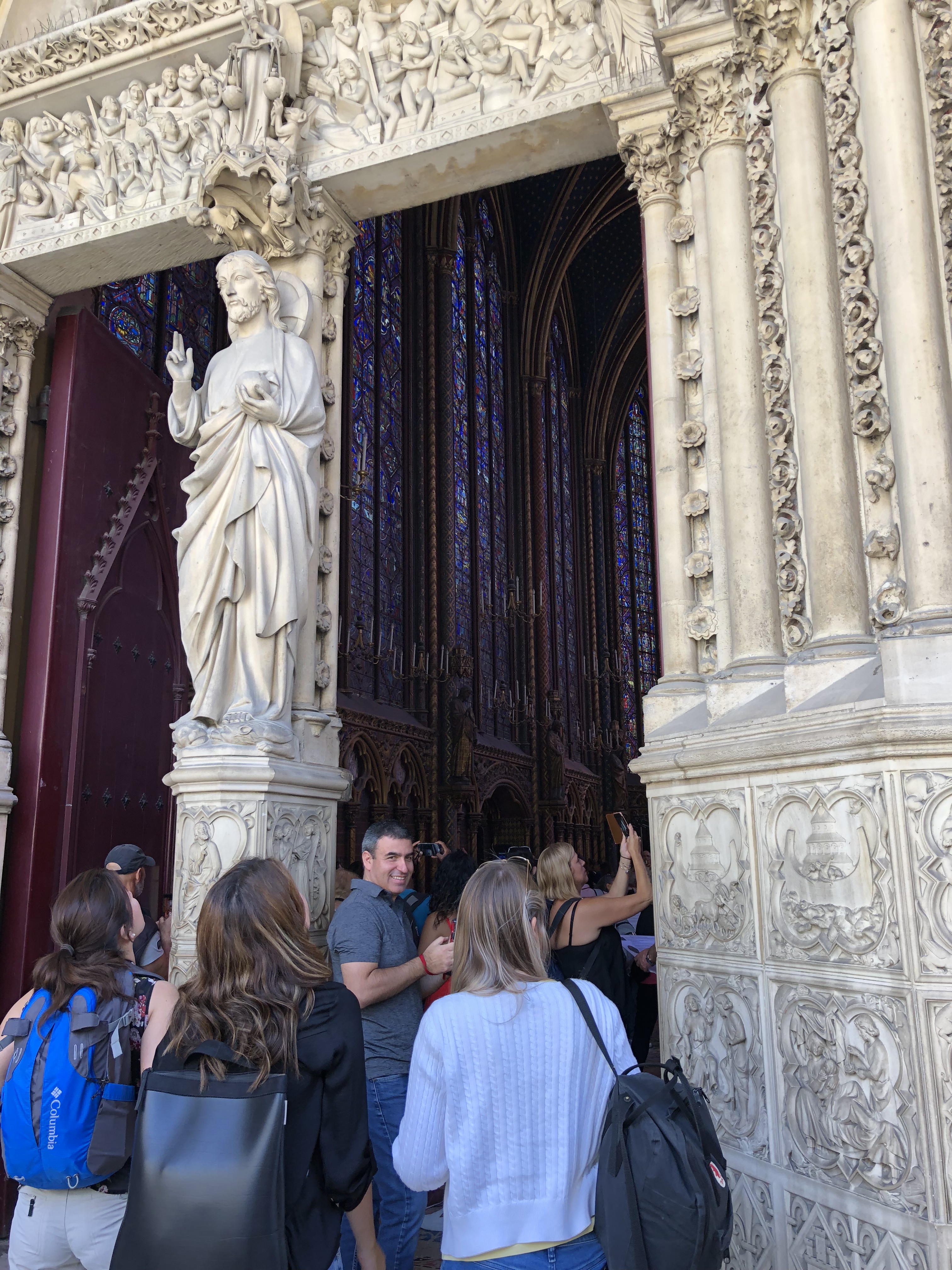
As beautiful as the chapel is, it’s somewhat diminished by the hordes of visitors filling every square inch of it. It’s a little difficult to fully appreciate the true architectural and historical glory of the edifice when you are constantly interrupted by foolish statements like “Why don’t they have an elevator here?”, or “It would be totally rad to have a bubble party in here, right?” Ugh! Americans, no less. It makes one despair.
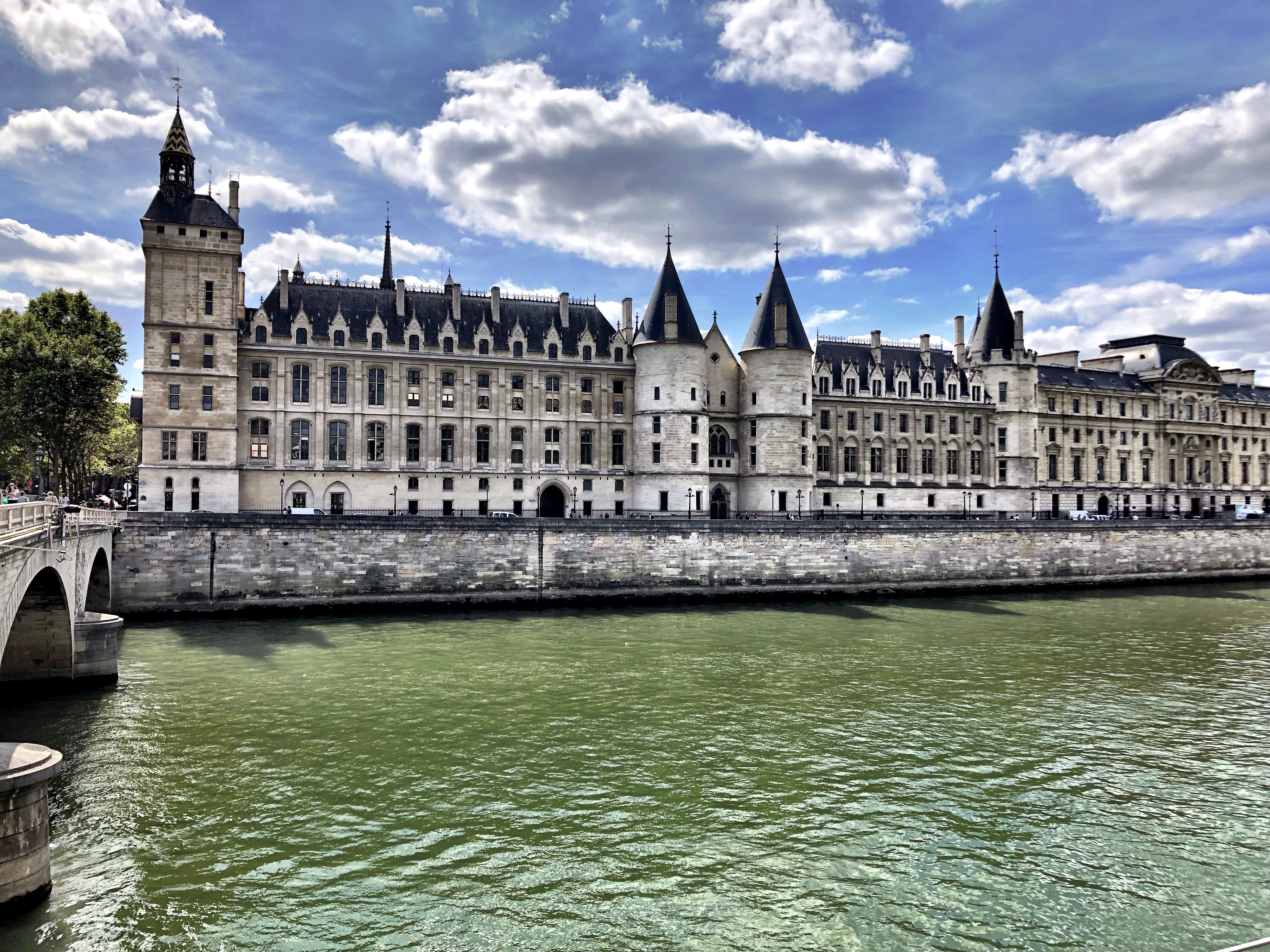
Despite the minor irritations, we were so glad to have seen it. Sainte Chapelle is truly a special place. Just across a courtyard is the Conciergerie. In the Middle Ages it began as a royal palace. In the fourteenth century it began to be transformed into a prison and was eventually to become during the Revolution the infamous site where victims of the Reign of Terror were held, most of whom were then marched to the guillotine. Marie Antoinette was amongst them and visitors can see the cell where she was held, some of her personal items, and the prison chapel where she is memorialized. I found it a bit creepy. But it was interesting and important to see.
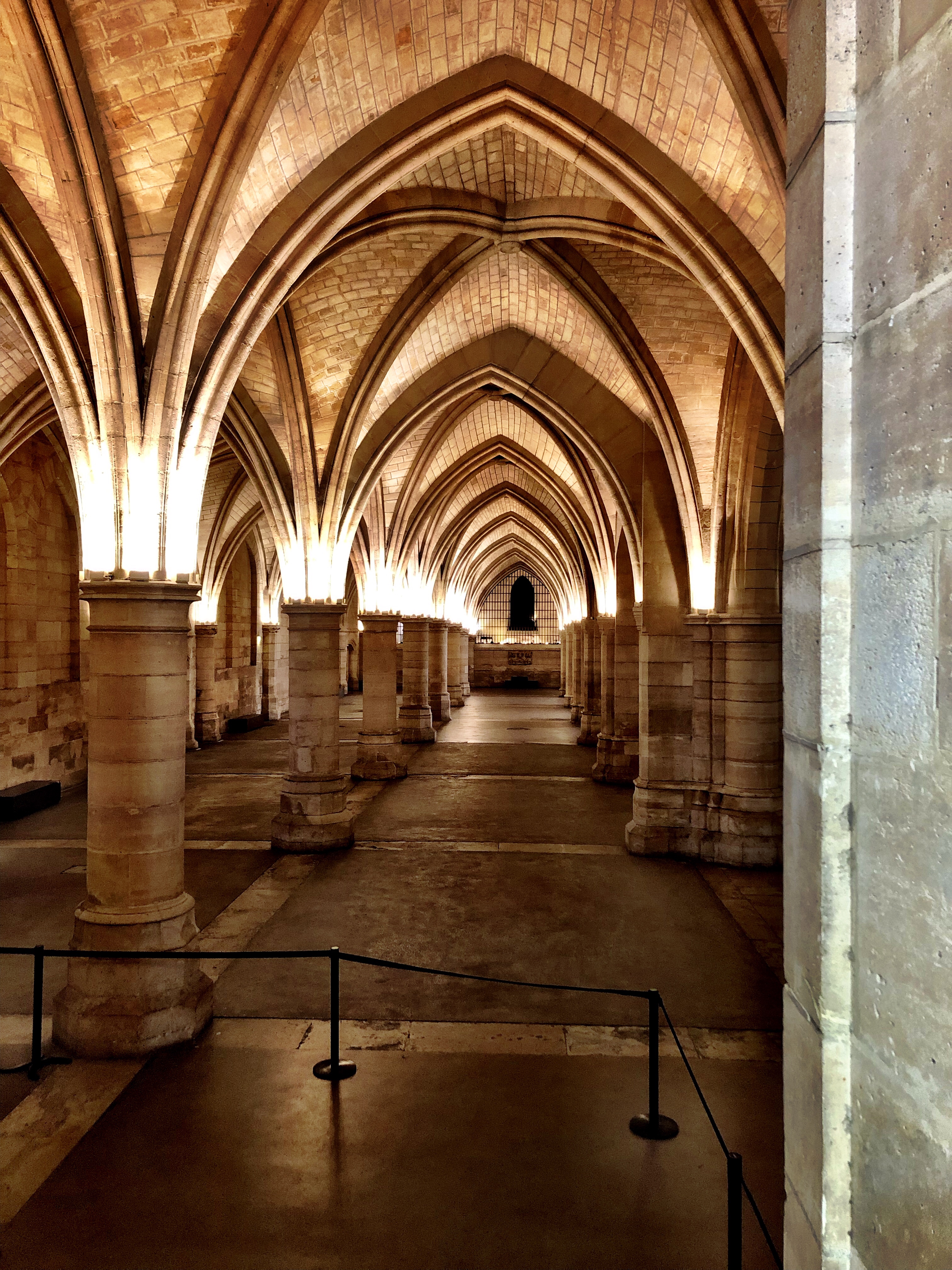
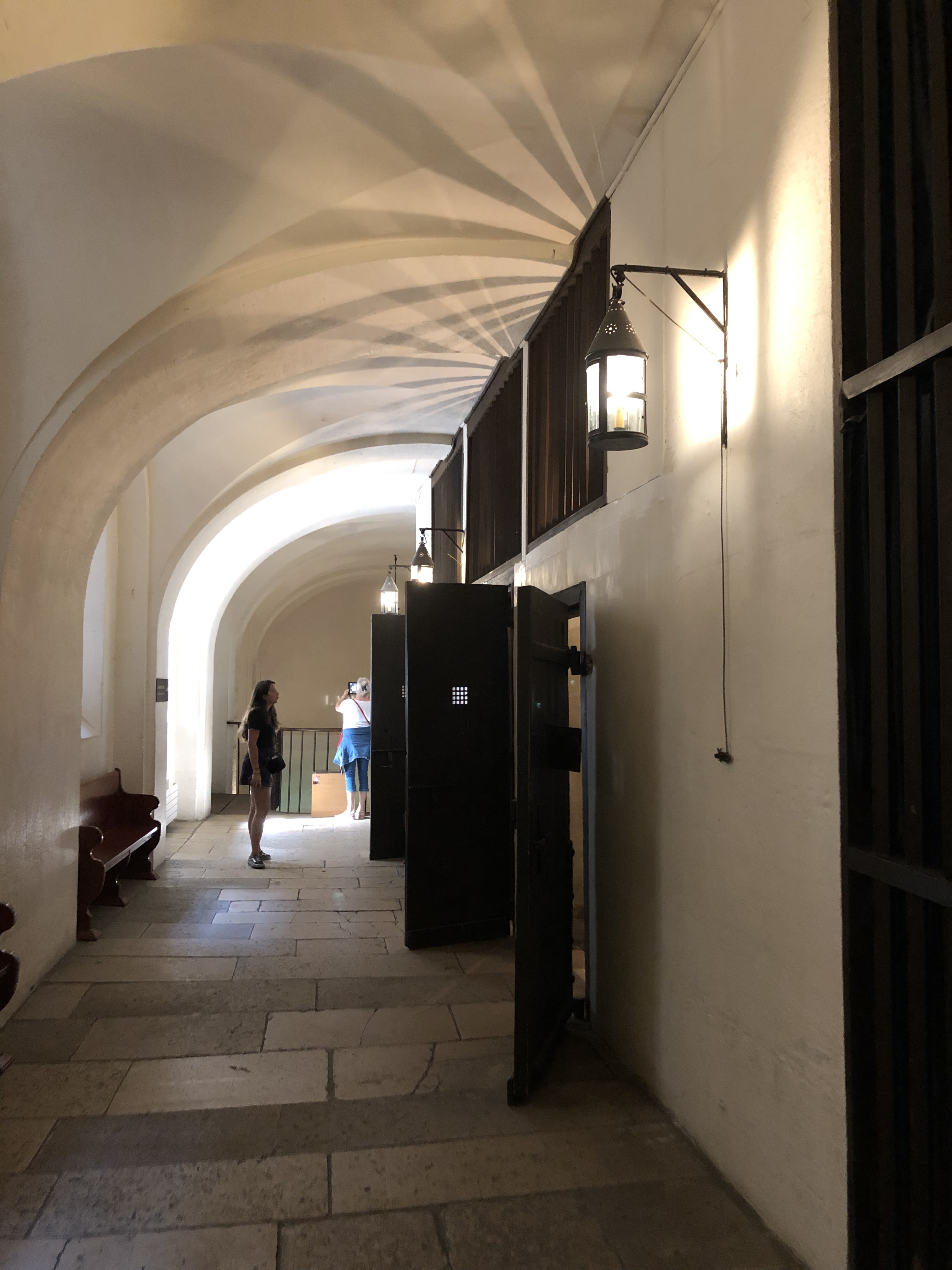
For most of its history during the Middle Ages, the Conciergerie was a busy palace and royal administrative center, teaming with nobility, soldiers, diplomats, administrators and petitioners. Only a small portion of the Conciergerie is open to visitors. But one of these areas is huge room called The Hall of the Soldiers, a massive, colonnaded space stretching 64 meters in length and 25 meter wide; it is located directly under the Great Hall and was used as a dining area for the over 2,000 servants required to keep the place ticking. The chill of winter was kept at bay with four monster fireplaces. Equally impressive is the adjacent kitchens. They include another four huge fireplaces which are each big enough to hold a dining table with seating for six.
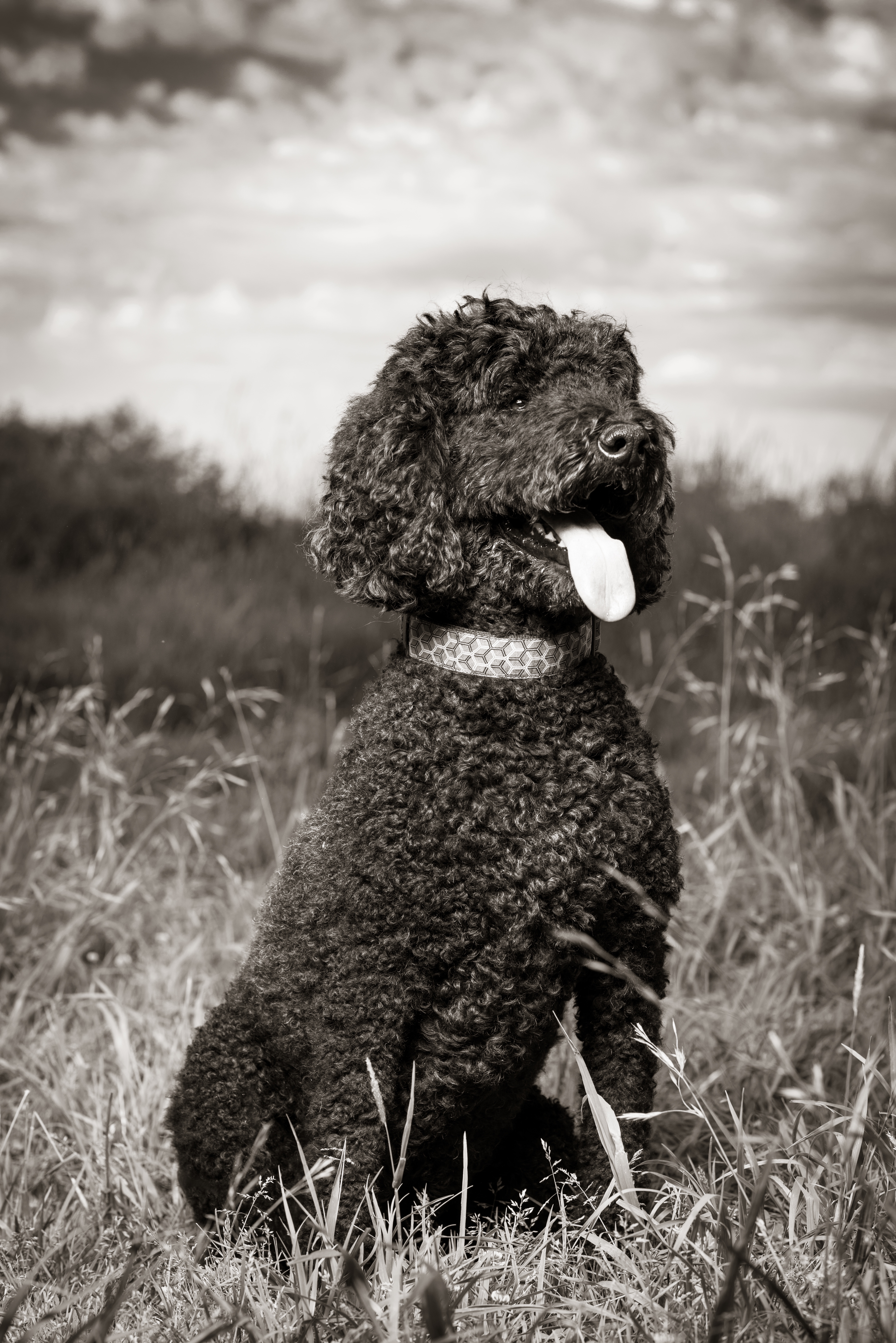
Unfortunately, our time in Paris ran out and we had to get the train back home in order to break Saxon away from the greedy clutches of his adoring admirers, Adrian and Jean. It’s great that he really loves them and he’s quite happy to be in their home. But we also have to admit that it is satisfying to see him so overjoyed to welcome us back, springing up and down, snorting with happiness, and tail working so hard that we fear he will wag himself apart. It never ceases to warm our hearts. We loved our little Paris break and we hope to enjoy many, many more in that wonderful city.
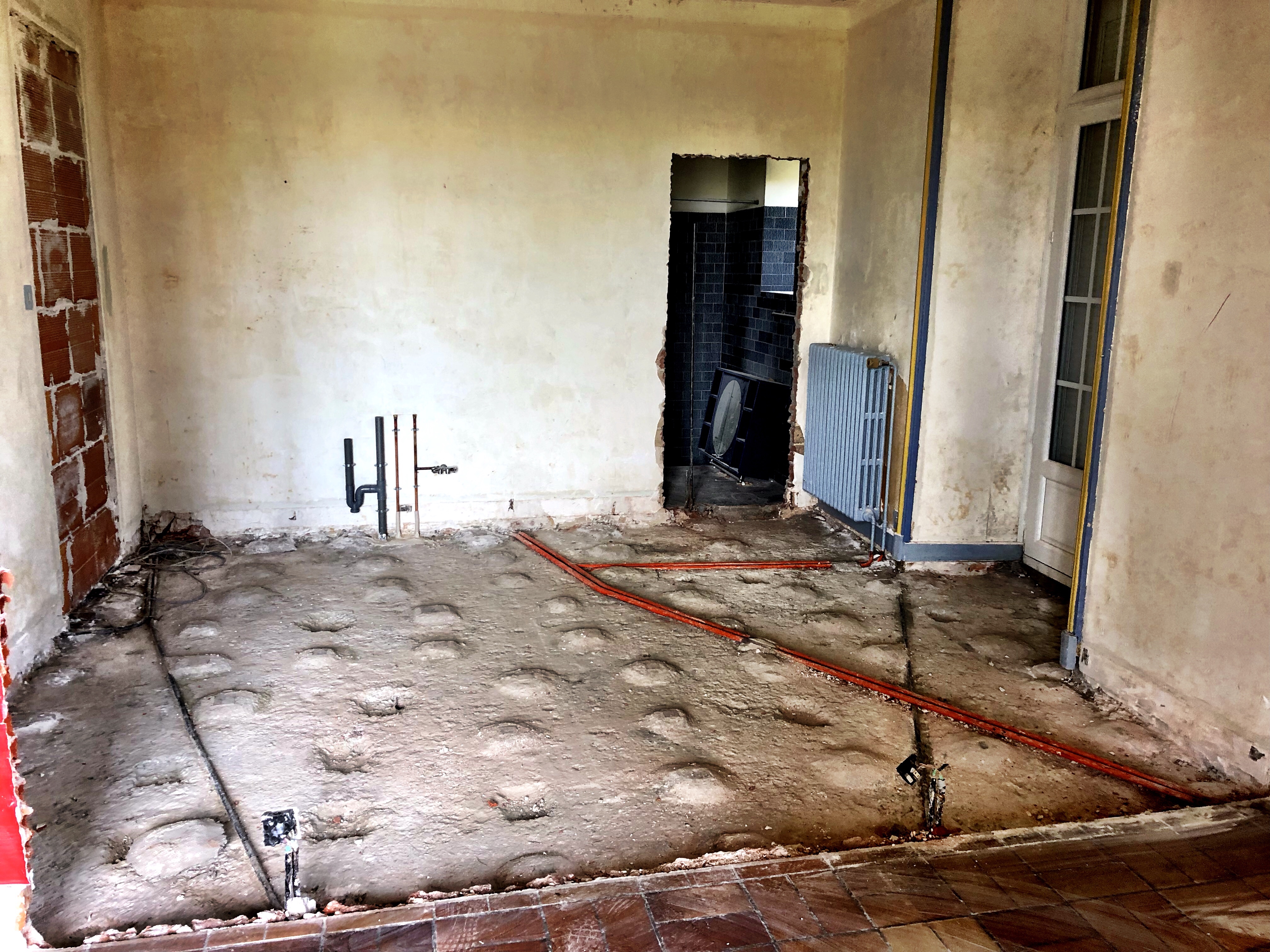
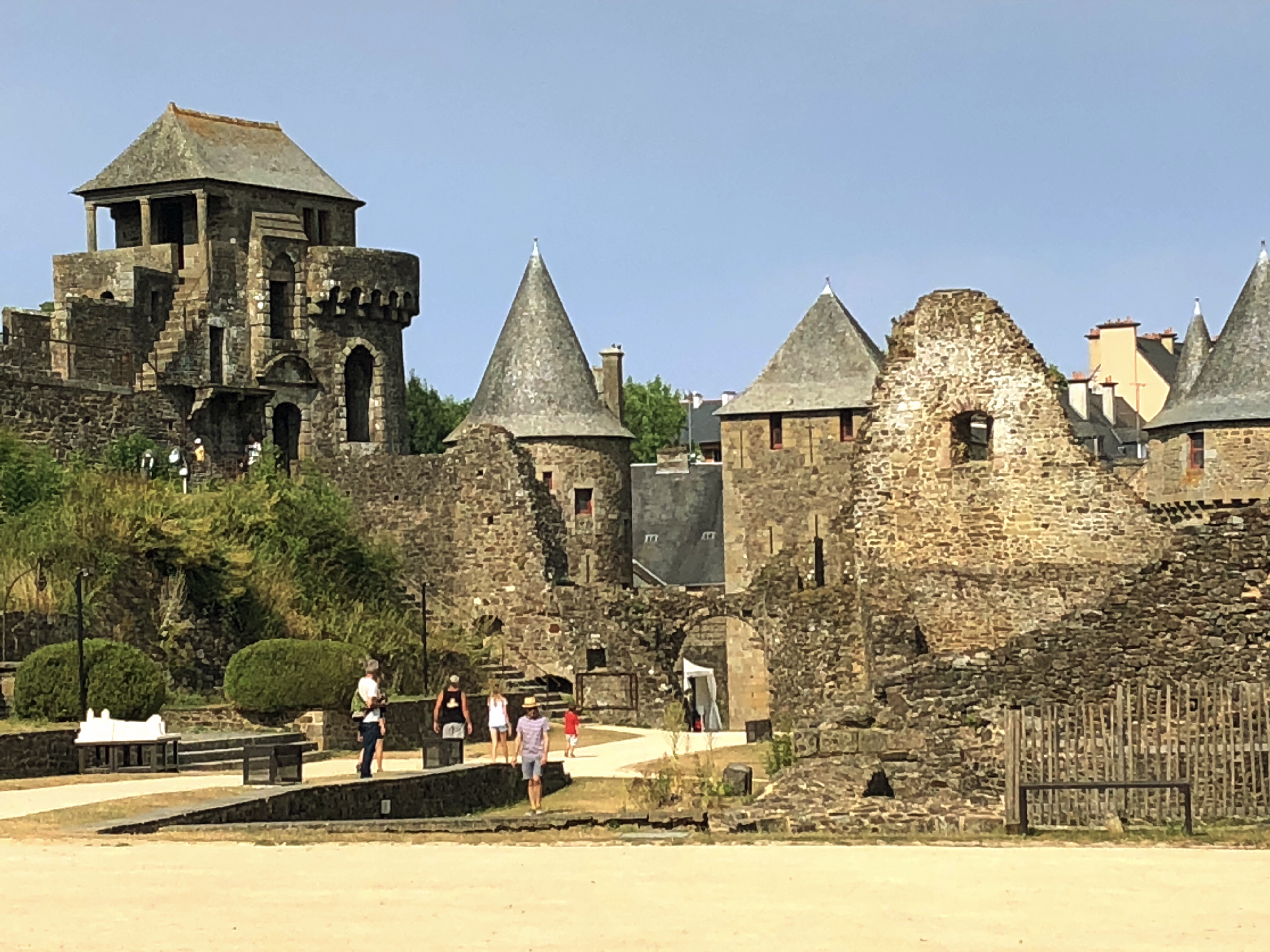
Amongst all of this is grinding reality of our house project, a glacial exercise in equal parts anticipation and frustration. Over the summer we have been waiting helplessly for our project manager to find builders and get work started. We don’t mind living there while work is going on, but I hope you’ll agree that we can’t do so without a bedroom, working bathroom, and functional kitchen. To all intents and purposes, we have none of those right now. But finding artisans who are qualified to work on a 15th century monument and who have space in their schedules to fit us in has proven extremely difficult. And so we wait.
To keep ourselves from going mad we have been doing as much preparatory work as we think would be useful. An earlier post showed us removing wallpaper and chiseling out plaster moulding. But there’s only so much of that kind of thing we can do. There are other tasks, though. Such as finding the right flooring we need. As those of you who know us might already have noticed, we are fairly determined and particular about the way we decorate. This house being so much more special than all of the rest, we have struggled to find just the right floor covering we want.
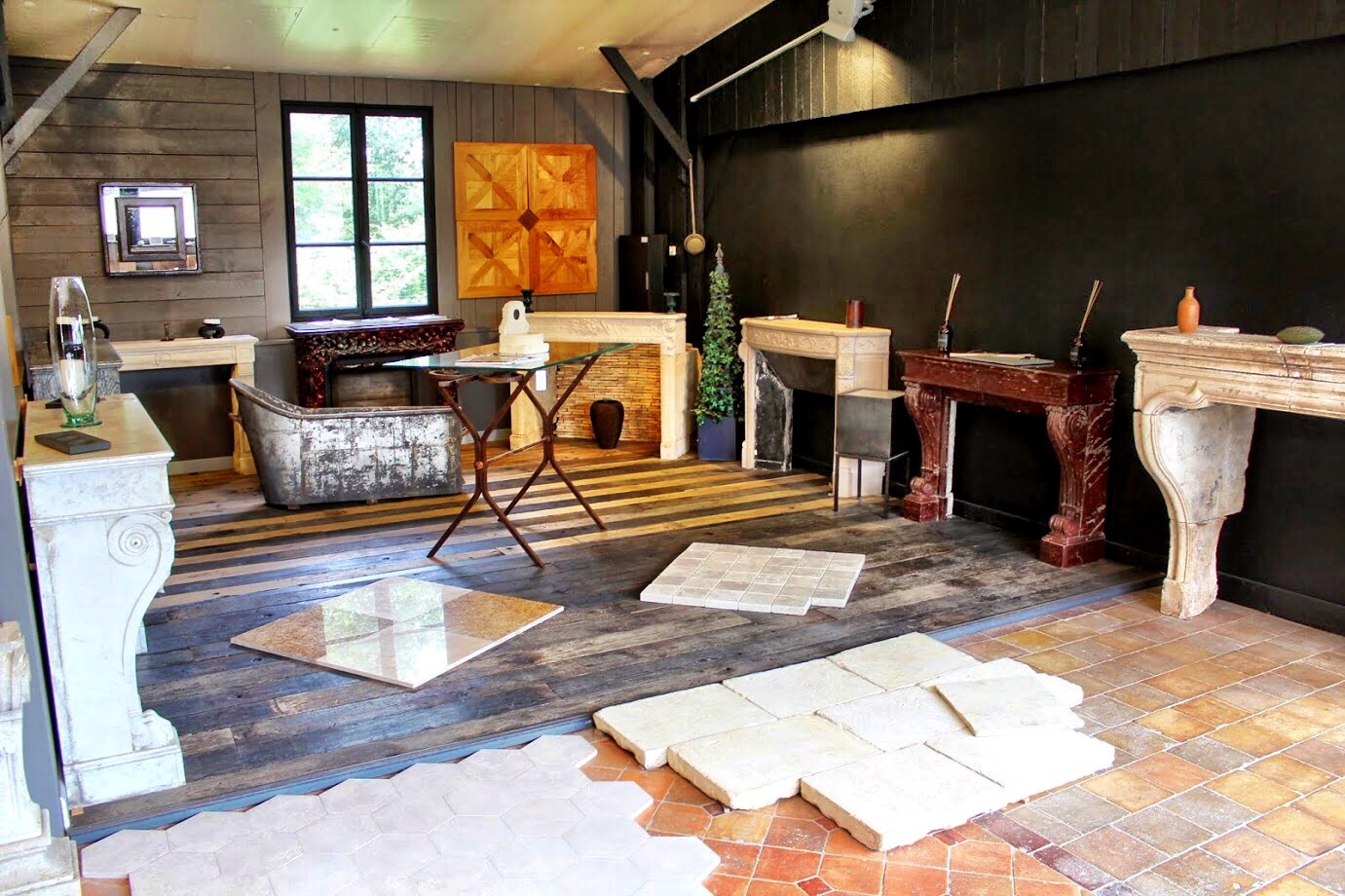
We only needed to find two types of flooring: clay tiles for the kitchen, chapel and master suite bathroom; and stone slabs for the entry, rampart passageway and guest bathroom. After months of searching, we finally found a company that appeared to have what we wanted. A quick check indicated that their closest showroom was in the département of Loire-et-Maine – a two hour drive east from Malestroit. What with working on the house in Fougères every week, interspersed with the many administrative errands we had been having to run throughout the spring and summer, our enthusiasm for making the drive to this showroom in the Pays de la Loire in the hope that they would actually have what we wanted was somewhat dampened. Nevertheless, the areas of the house so critical to finish so that we could move in had to have flooring installed before they could be completed.
Fortifying ourselves with tea and fresh pastry, we trundled into the car and tottered through the lovely rural countryside of eastern Bretagne on our way to the flatter, more open lands of the western Loire region. As is usual, it was a pleasant drive past countless picturesque farms and hamlets interspersed with the winding roadways threaded through quiet country villes sporting their ubiquitous stone parish churches, bar/tabacs, boulangeries, boucheries and mairies [combination bar/tobacco shops, bakeries, butchers, and town halls].

At length we found our way to the stone yard. Filled with clay tiles, stone slabs, paving, curbstones, and cobblestones, this place is a floor designer’s dream, especially for traditional and historic properties. Despite our novice language skills, we managed to discuss our needs with a salesman quite handily and we came away with samples of a terre cuite (fired clay) tile and a smaller stone paving that we felt might work. After months of deliberating and struggling to find flooring on which we could both agree, we were convinced we had finally made a real breakthrough.
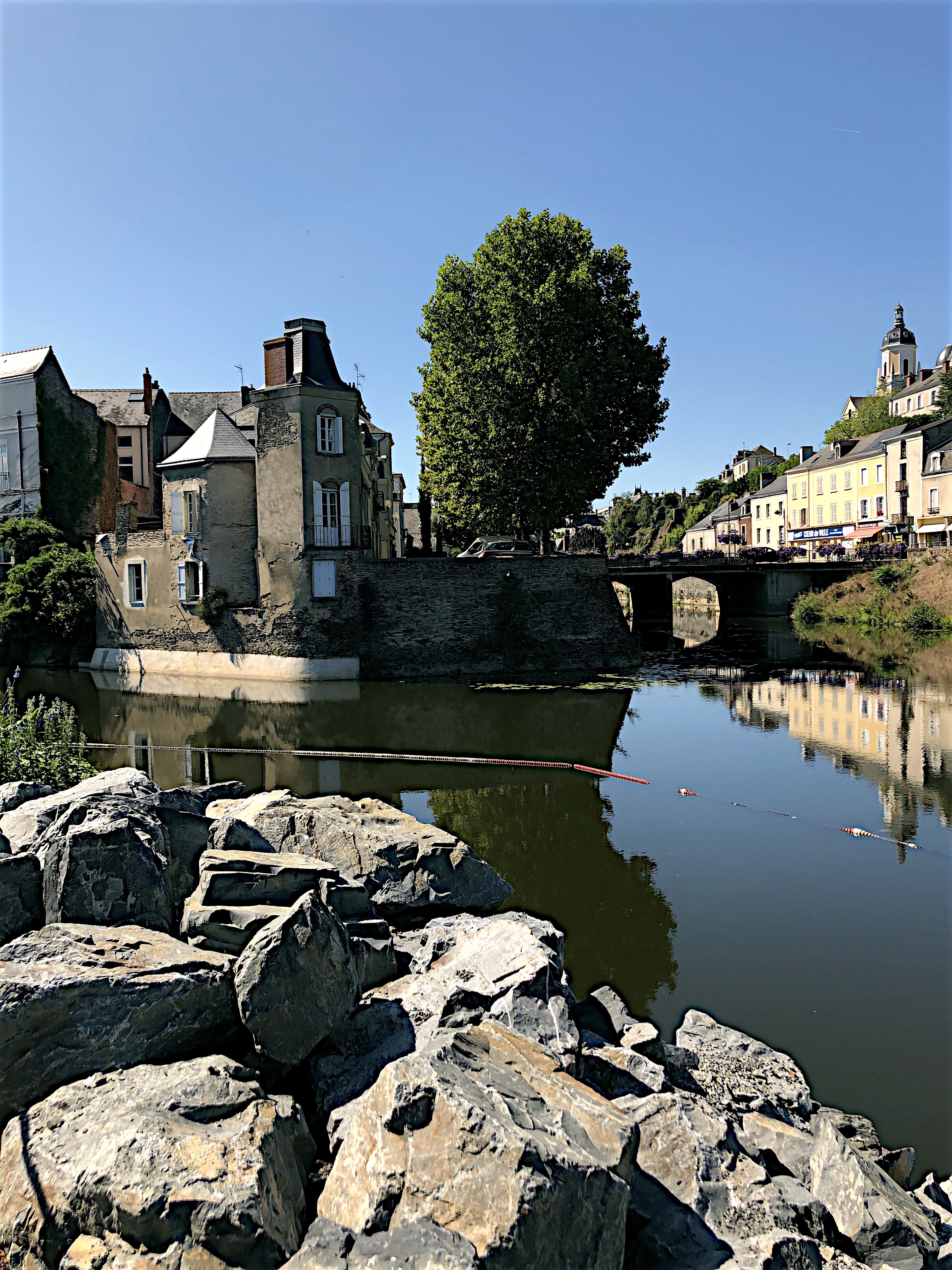
Filled with a sense of accomplishment we stopped off at the nearby town of Segré for a quick bite to eat. It’s a pretty town perched above and upon the confluence of two rivers (Oudon and Verzée). The sacred lunch hour had long passed so we grabbed something from a boulangerie and found a nice spot at little marina along the river where we munched contentedly and enjoyed the sleepy sights and sounds of an August day under the shade of a towering oak tree standing nearby. Honorable mention goes to the amazingly good crumble that Cherie chose for our dessert. Miam, miam! [Editor’s note: “miam, miam” is the french equivalent of “yum, yum”, something really tasty. For drinks, it is “glou, glou” – not quite as catchy to our english-speaking ears, but it gets the idea across.]
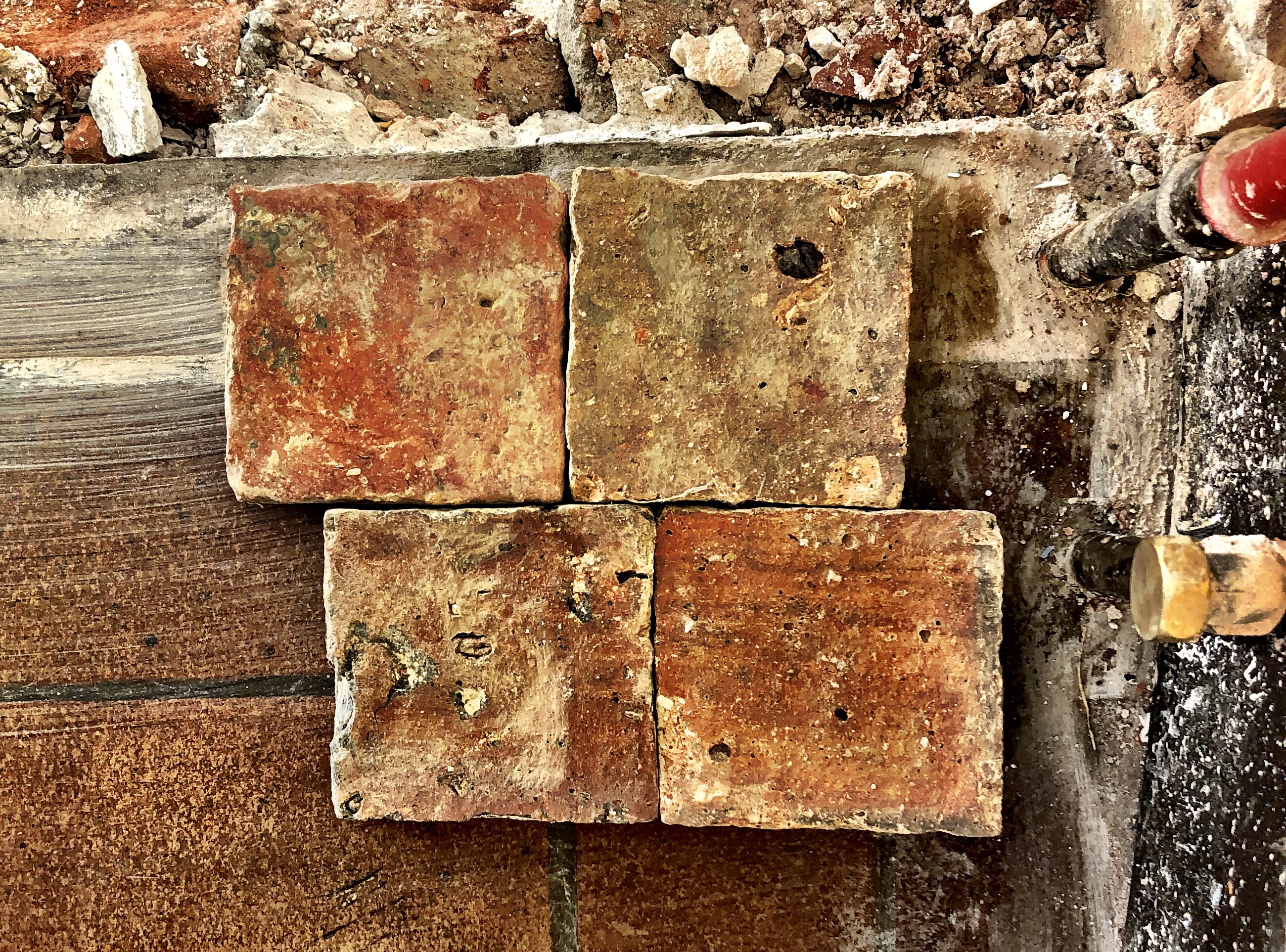
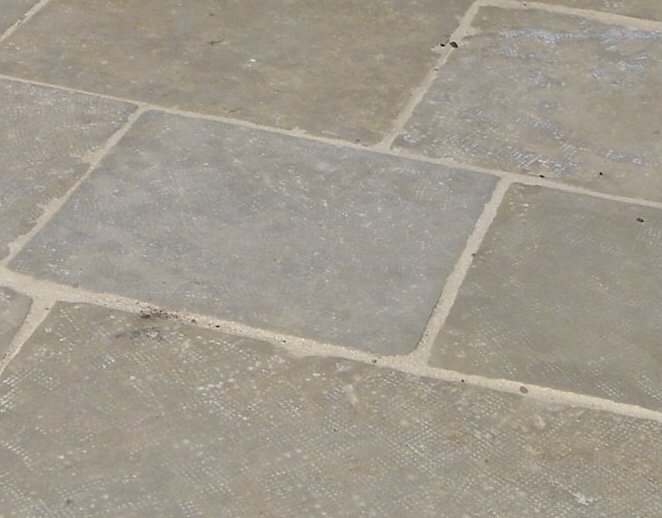
We victoriously brought the tile samples back home. And almost immediately we realized that, while we liked the clay tiles, we both preferred stone with a more aged appearance and in much larger slabs. As often happens with us, we had both been too concerned with hurting each other’s feelings and so ended up choosing a stone that we each thought would make the other one happy. We need to stop doing that. So, more research and a week later we found ourselves back at the same stone yard again, invigorated with fresh perspective. This time we found what we both truly wanted. Phew! Stone yards are hard (pun intended). But we got there in the end. Now we have all of our flooring settled. If only we can find someone to install it …
Lastly, while all of this was going on, the both of us made separate appointments to the Préfecture in Rennes in order to apply for our Cartes de Séjour. This would allow us to extend our visas to stay in France for another year. So, no big woop. We’ve only bet the rest of our lives on living in France. Not to mention having bought a house here. No pressure. To say that we were a little anxious about it would be a massive understatement. Thankfully, our respective interviews went well and we seemed to have prepared all of the required paperwork correctly (thanks to Cherie’s meticulous research). We each left with an approved temporary visa. The official Carte is supposed to arrive in a couple of months. Talk about relief! We both shed a couple pounds of worry over that one. So, we’re happy to report that we are good for yet another year in France. We’re not entirely certain, but we think that we can apply for permanent residency after three years of this. We can’t wait!
So, that very long account is the tale of the many travels and errands we found ourselves engaged in over the summer. It’s been interesting, frustrating, energizing, exasperating, encouraging, exhausting and rewarding – all at the same time. As the autumn approaches, we look forward to more wonderful surprises as our new life in France continues. We hope you keep following and we love to read your comments. Keep them coming!




 Finding Our France