The Castle Down the Block

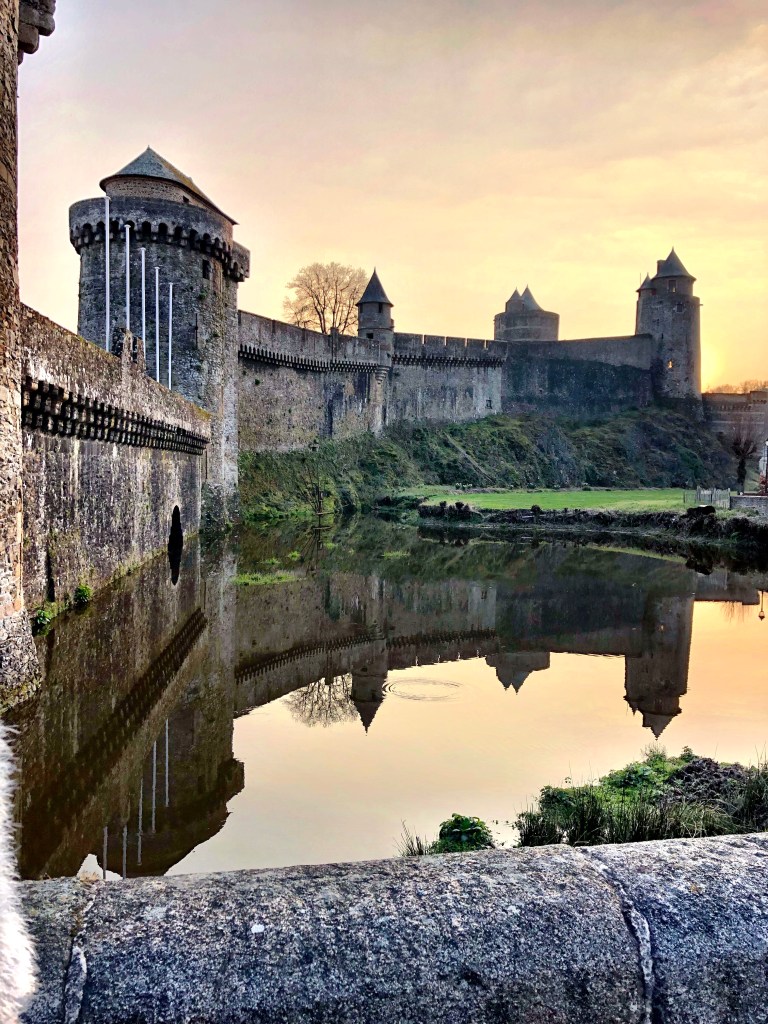
Le Château de Fougères Reflecting Upon Its Long History

We live within spitting distance of a castle. Well, okay, you would have to be an Olympic-level expectorator in order to fling a globule far enough to hit the château from our house. But it’s literally just down the street, about a three-minute walk. And we have the privilege of seeing it pretty much every single day. Given that we are so fortunate to be in such an enviable position, I thought it was high-time to dedicate a post to the spectacular medieval monument in our backyard.
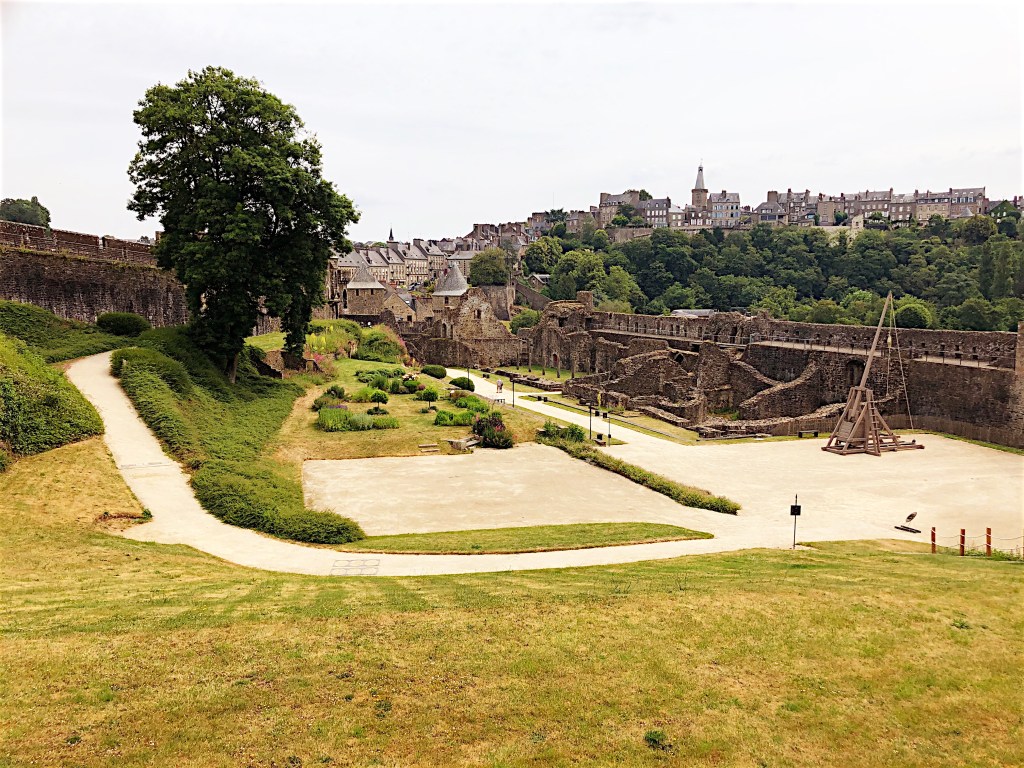
The Main Bailey. La Plus Grande?

Not surprisingly, our neighborhood castle is locally known as Le Château de Fougères, usually accompanied by the subtitle: la plus grande forteresse d’Europe (the largest fortress in Europe). Now, I have to say that I’m a bit skeptical as to whether the claim to be the largest fortress in Europe is true. The walls of the castle encompass an area of two hectares. [For the people living in the three remaining countries still desperately clinging on to imperial measurements – United States, Liberia and Myanmar – this is essentially the equivalent of five acres.] The massive fortifications of Carcassonne springs to mind. But the boast might just be true. By a technicality. In carefully specifying that the Château de Fougères is the largest fortress (i.e., only the area within the walls of the castle itself), they are excluding any fortifications which include any part of a village, city or town. While Carcassonne’s town walls encompass a much larger area, the castle (fortress) itself is much smaller than Fougères. Clever, eh? A crafty bit of marketing worthy of P.T. Barnum himself.
A Castle on the Rocks

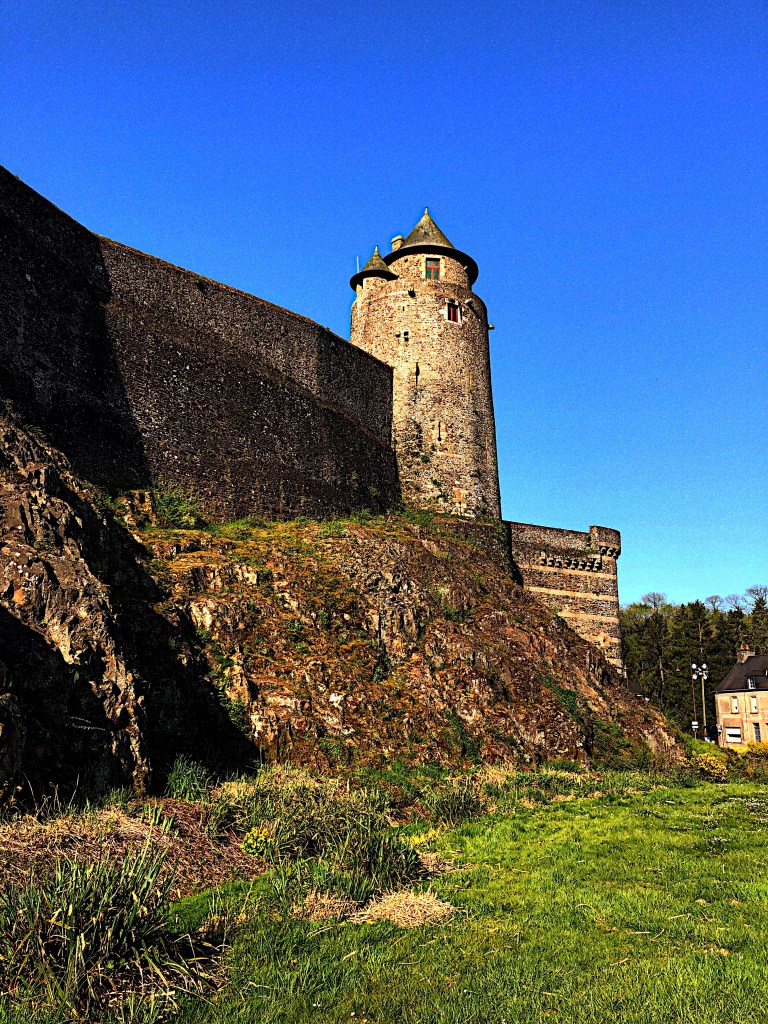
The château sits upon a rocky promontory which was almost completely encircled by the Nançon river. It’s an unusual site for a castle. Medieval fortresses were generally placed on high ground or a position which afforded broad vistas in all directions, the theory being that it was better to see and be seen for long distances. The Château de Fougères is sited in a place which has none of those characteristics. It huddles down in a cramped little river valley which is almost totally surrounded by tall hills on nearly all sides. Indeed, the upper town which it guards sits loftily on a much higher plateau overlooking its protector. One would normally expect to two positions to be reversed.
A Stopping Point Along the Ramparts

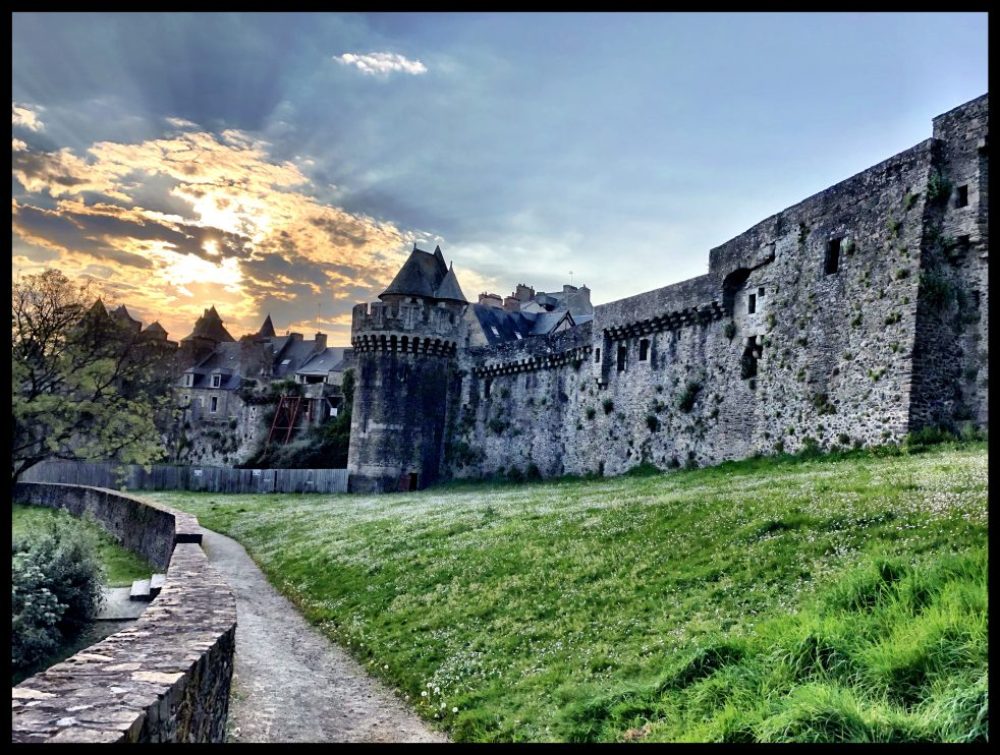
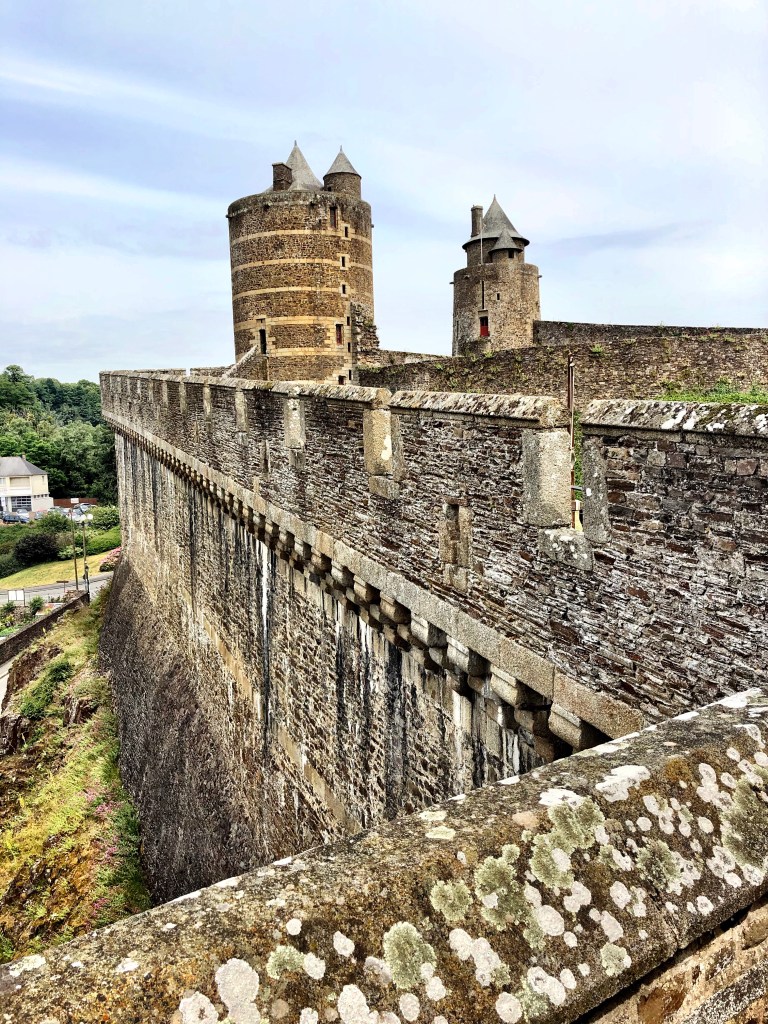
Notwithstanding its low position, the fortress presents a grand and imposing edifice on all sides. As you drive toward town from the west, crest the hill and descend into the Nançon valley, the vast walls and towers suddenly reveal themselves. Wow!” Was all we could manage to utter when we first laid eyes on it. To be honest, I think I actually said something like “Holy shit!” (Cherie managed to keep it clean – I’m definitely the potty-mouth in the family). As if it needed it, the deep grey local stone lends a somber and forbidding aspect to the structure; the ultimate in local sourcing, the stone for the castle was quarried just a few meters away in the surrounding hillsides. In fact, the largest of these quarries was still in use until the beginning of this century.

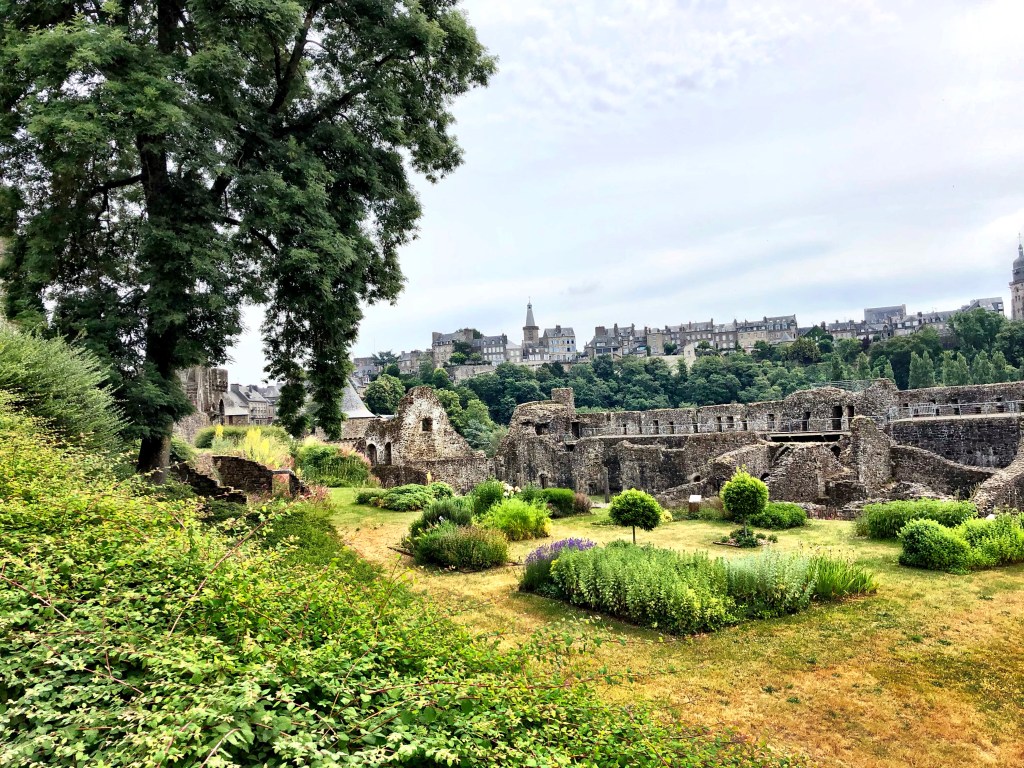
A huge postern gateway stands elevated at the highest point of the rocky promontory on the west end of the rectangular fortress, but the main entrance is situated on the eastern end, looking out on a lovely cobbled square with stone and timber-framed buildings home to souvenirs shops, bars and restaurants. Inside the first gate is an outer bailey, completely surrounded by fortified walls and towers. This leads through to another gateway and the larger, main bailey where the lord’s hall and various other buildings were located. Tragically, the once grand hall was destroyed in the early 19th century; only the foundations and a few other elements of this structure now remain. The main bailey gradually slopes upward to a small inner bailey in the east end. This is where the first defensive structure is thought to have been erected.
View from the Central Bailey, the Haute-Ville Looming in the Distance
Angles and Curves: High Atop the Castle Ramparts

There has been some form of fortified enclosure at the current site of the castle since at least the 11th century. It likely began as a timber tower or hall surrounded by a wooden palisade. In the Middle Ages it was a strategically important site, standing on the eastern marches of Bretagne as a bulwark against all-comers, usually the English or the French Crown. Fougères was one of a string of several fortresses sited all along the border between what had been an independent duchy and France. Over a period of some 700 years, the château was beseiged on numerous occasions. As far as I can tell, it was taken at least five times – once by a spanish mercenary. The last storming of the gates was done by the Chouans and Vendéans in 1793 during the counter-revolutionary struggle gripping France at the time. This castle has seen a lot of action. It’s a miracle that it still stands.
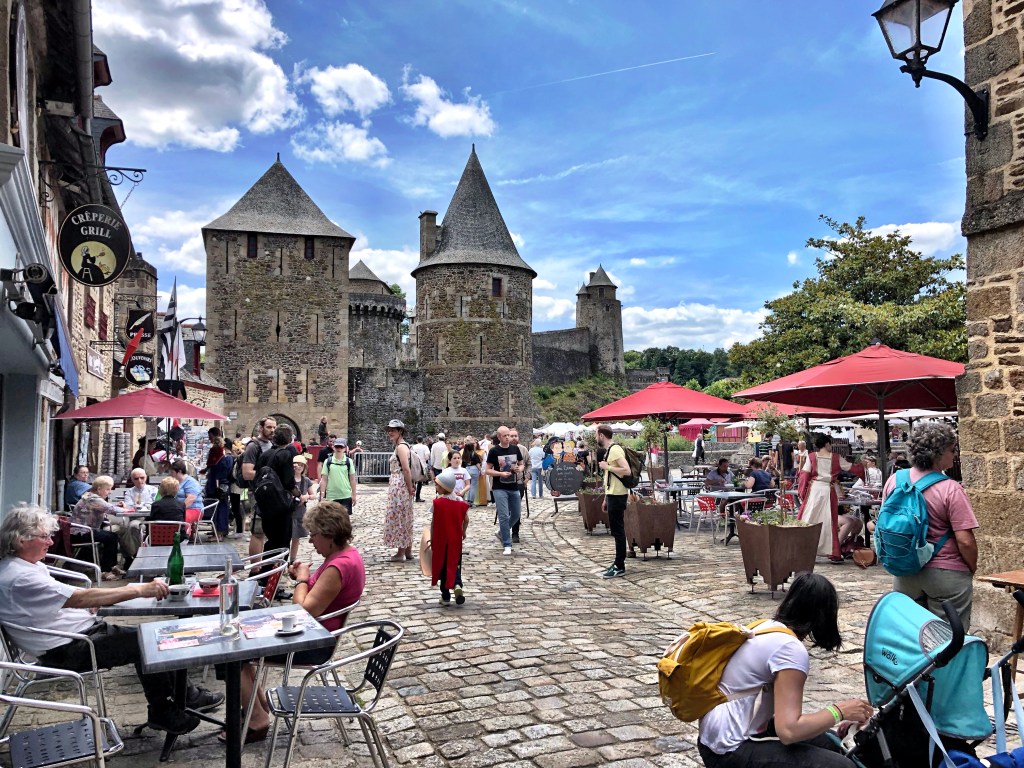
In the Time Before Covid-19

But its life wasn’t over after the 18th century. Oh no. In the 19th century the château became a private prison and, following that, housed a shoe factory. Just like our tower. The town purchased the entire site in 1892 for the current equivalent of €280,000 and restoration began over the ensuing decades. It has always been a major tourist attraction; even in the 19th century it was visited by the likes of Balzac and Victor Hugo. But now it’s more popular than ever. Particularly in the summer, the castle is heaving with visitors. We buy a season pass for a ridiculously low price (something like €17) so we can walk in whenever the mood strikes us. It’s nice and quiet in the off-season so sometimes we virtually have the place to ourselves.

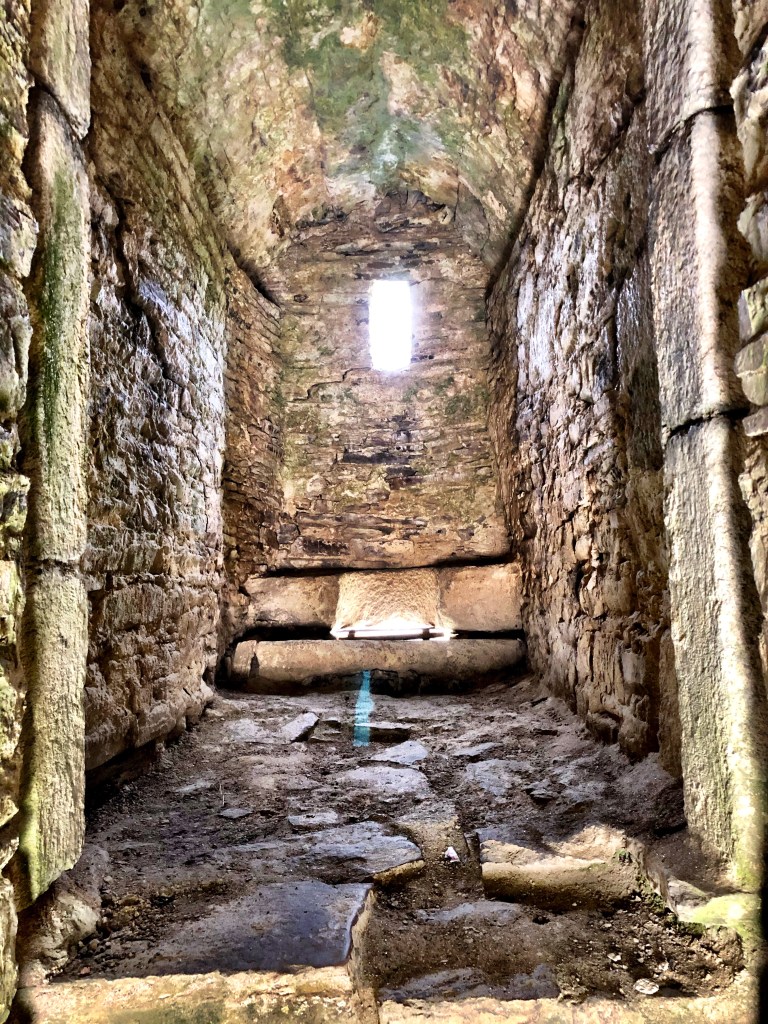
Tourists Like the Show …
But the Toilet Facilities are Horrendous!

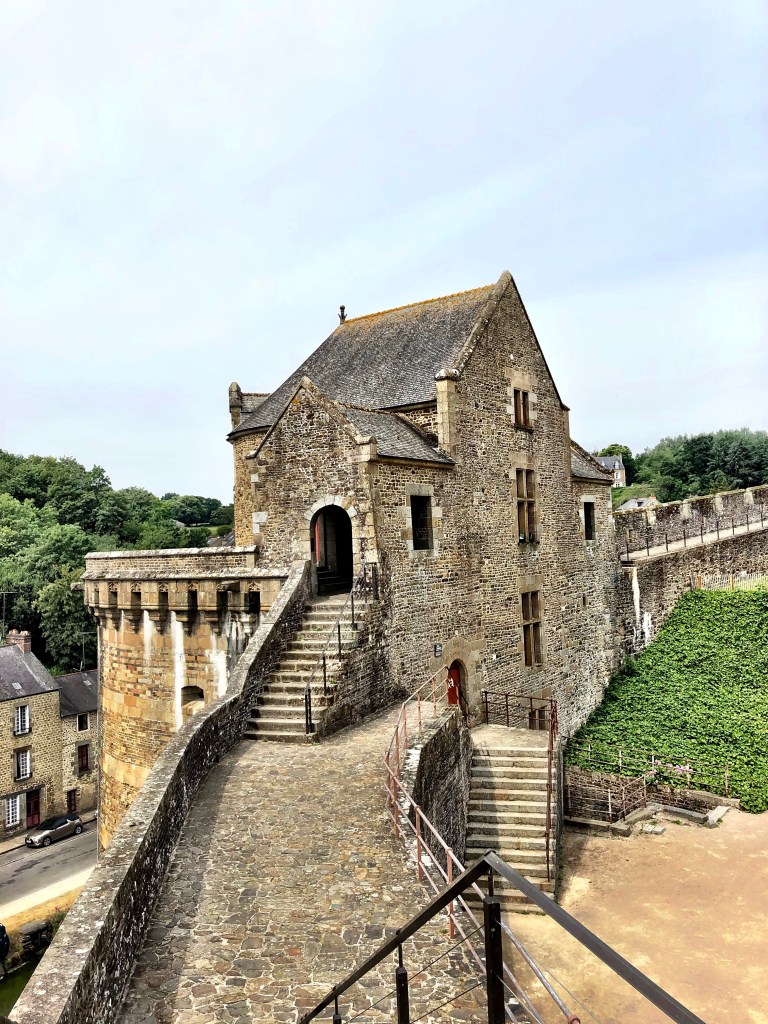
The substantial walls are strengthened by formidable towers, most of which you can tour. They have been beautifully restored and contain interesting sound and light shows illustrating the history of the castle and marches of Bretagne. One can also walk a good portion of the ramparts and the views of the surrounding town are exceptional.
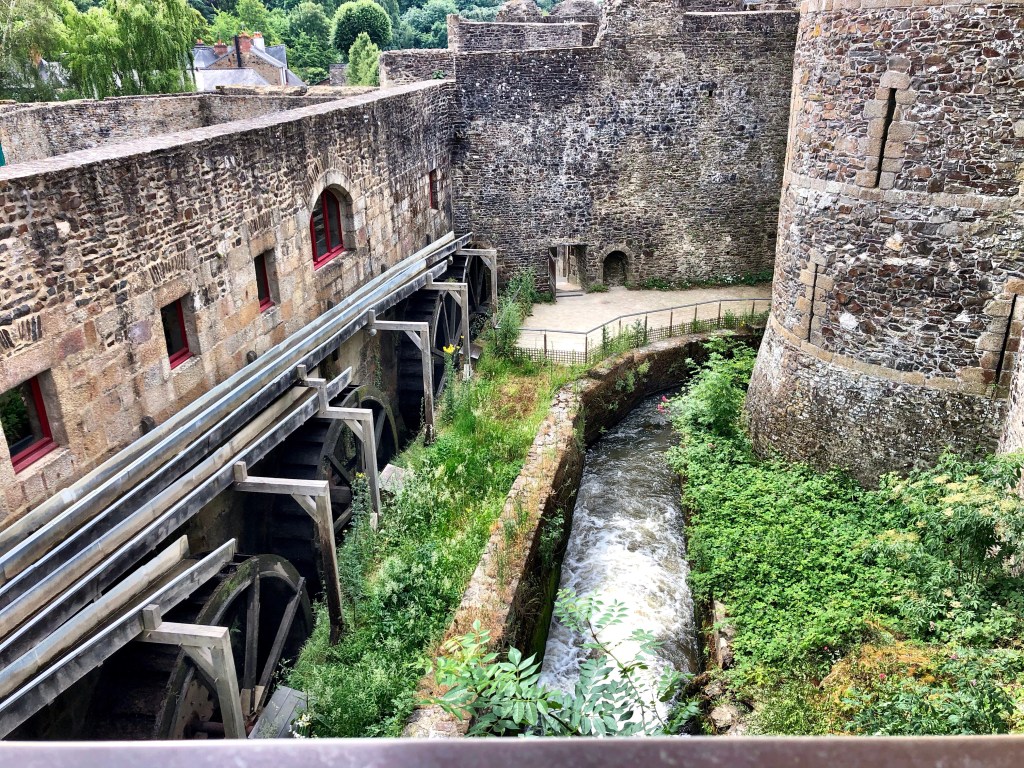
The Wheels on the Mill go Round and Round

Also of note is the adjacent mill house (just inside the lovely 15th century town gate of Notre Dame) featuring four waterwheels; there has been a mill attached to the castle since the 12th century. And the beautiful 14th century Eglise St. Sulpice, just across the street from the château is well worth a visit in its own right.
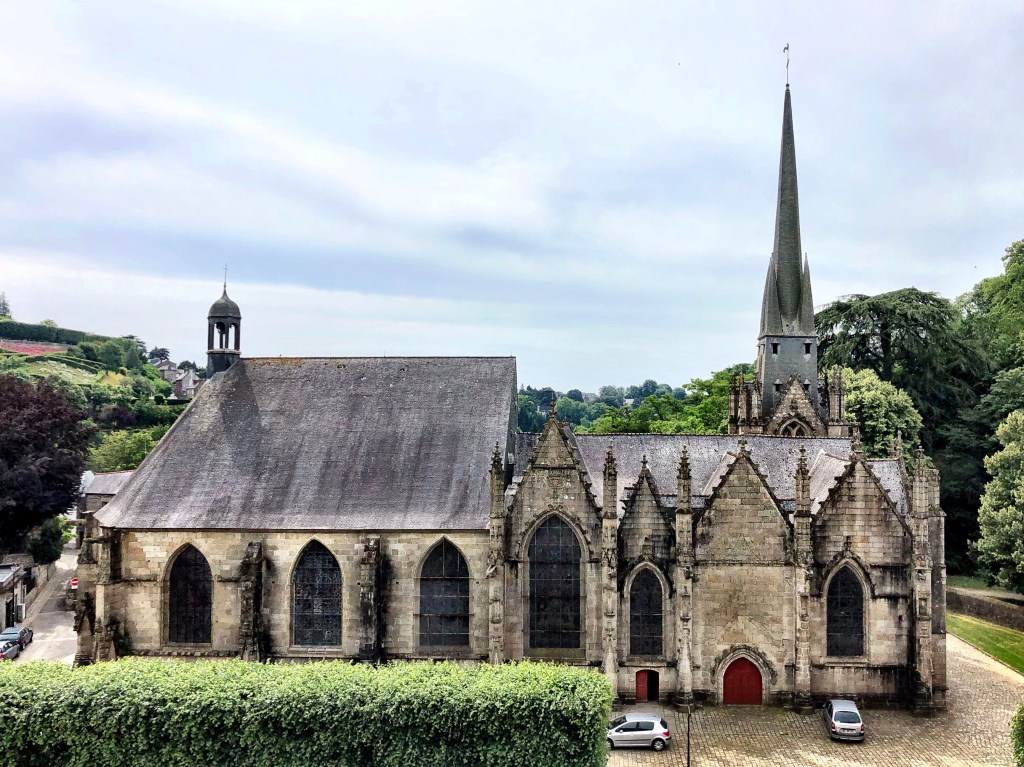
Église St. Sulpice

We feel so fortunate to have such an important, impressive and beautiful castle virtually on our doorstep. So far, it never fails to cause us to gasp in awe. And I doubt it ever will. Shame on us if we should ever come to take it for granted. We love taking Saxon for a walk around the château in the quiet of the evening as the fading light heightens the mysterious ambiance of the walls and towers looming overhead. It’s a terribly overused cliché, but I can think of nothing better than to describe these walks as “magical”. I hope you all have the opportunity to experience it as we do.
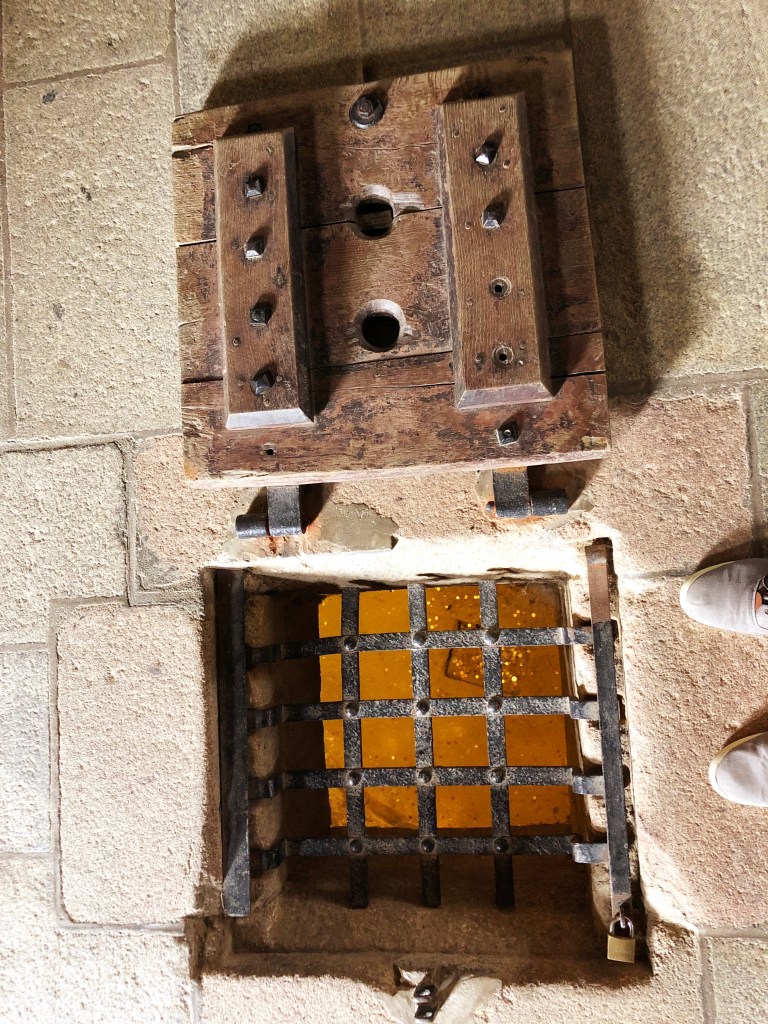
Don’t Forget the Oubliette!: a Place for Prisoners in a Hole Underfoot.

Mayenne in the Afternoon

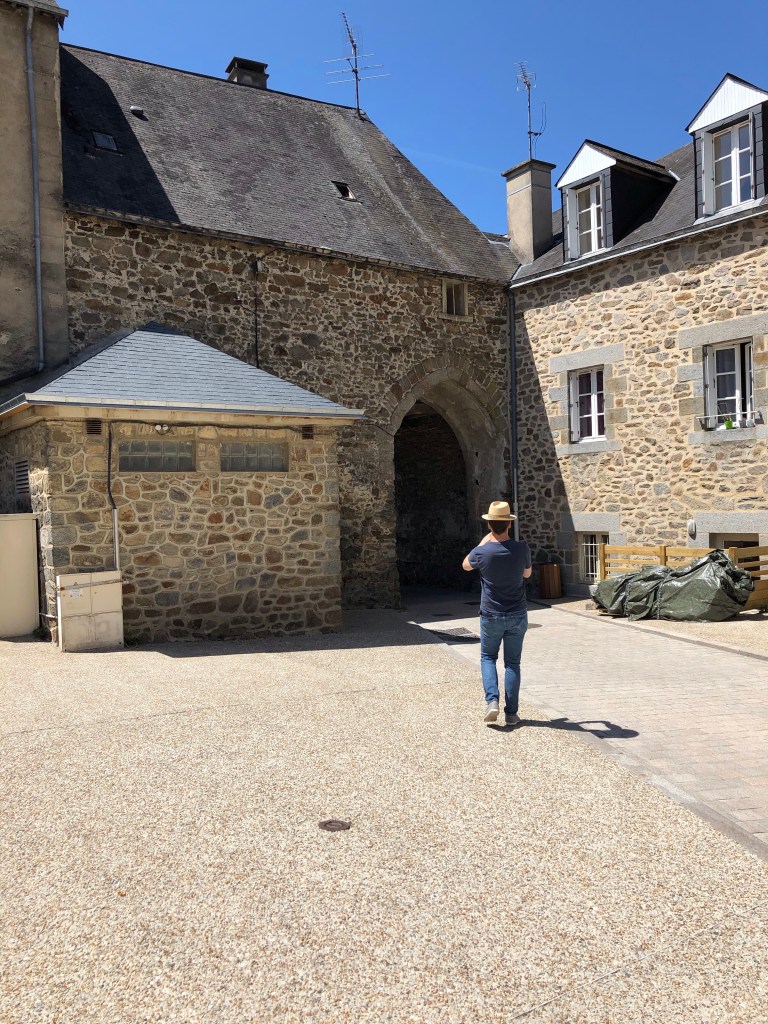
Hidden Courtyard Gem – Mayenne

Cabin fever had finally gotten the best of us last weekend. Trying our utmost to stay at home, isolate as much as possible, wear our masks, and do our part to keep ourselves, our neighbors and the country safe from Covid-19, we had not really traveled anywhere to sight-see since the pandemic began. But working on the house non-stop had been getting monotonous. Our retirement plan had always been to intersperse home projects with travel. So, finally, we forced ourselves to put down the tools and hit the road.

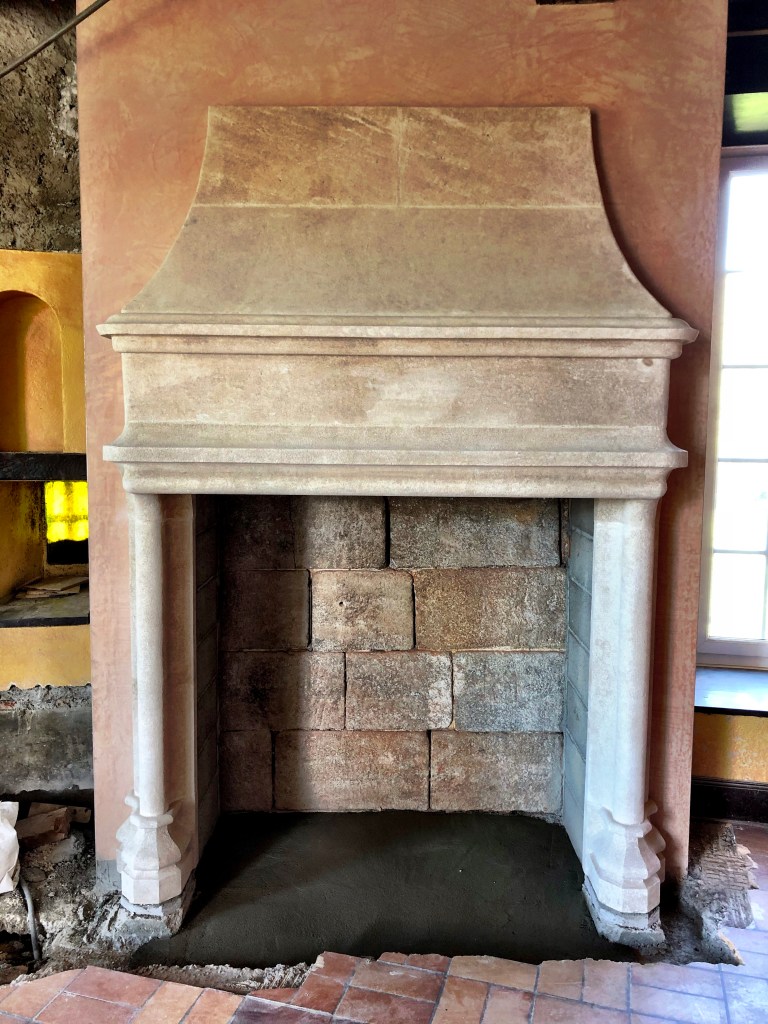
Our New Stone Fireplace is Finally In

We only had an afternoon and we didn’t want to go far. Somewhat at random, we spotted a town named Mayenne on the map. It’s a medium-sized town to the east, about 44 kilometers from Fougères. Google told us that there is a château in the center of the ville which was all either of us needed to know. Mayenne it was!

I Love a Good Archway

The day was lovely. Sunny. Blue skies. Winding country roads. Very french-y and just what the doctor ordered. We knew that we would be visiting a museum at the château so we left Saxon at home to guard our little tower. Besides, he doesn’t do well in warm weather so it was better for him to remain inside the cool of the stone walls.

Mayenne, the town, is situated alongside Mayenne, the river, which runs through Mayenne, the departement. They really like the way Mayenne sounds.

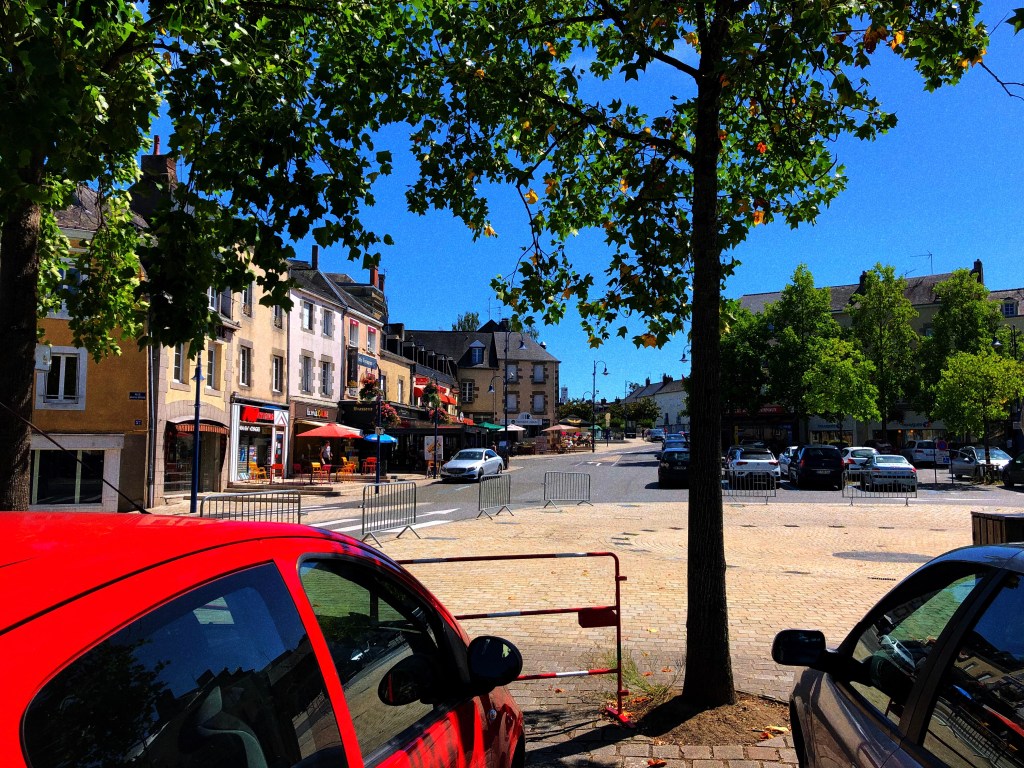
Blue Skies And Belle Façades

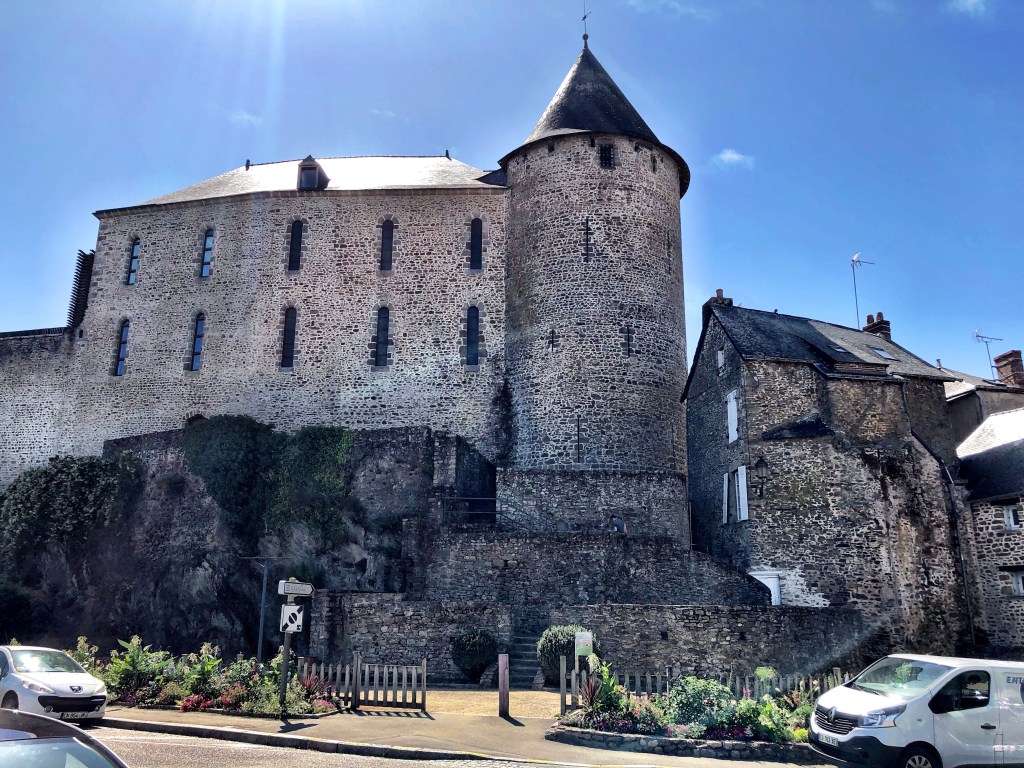
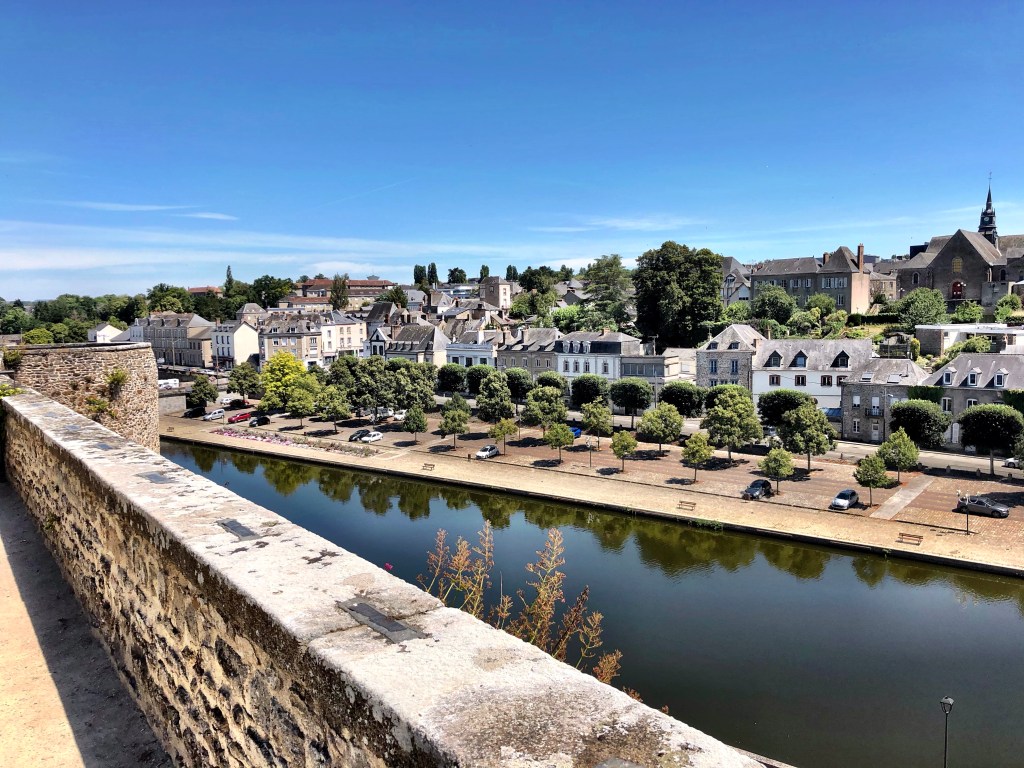
We maneuvered our way into the old town and found a shady spot to park the car. After getting our bearings, we made directly for the château. The château sits on a bluff running alongside the waterway which bisects the town as it makes its way south to eventually flow into the Maine and then Loire rivers. There has been a castle in this spot in Mayenne since at least the beginning of the 10th century. And before that there had been a Roman fort controlling the area. Remarkably, one can see elements from all of these periods in the remnants of the edifice which still stands today. The building houses a very good museum with a small but well-curated collection of artifacts on display representing the history of the local area. The architecture is varied and in good repair following recent restoration/preservation work. And we had the place virtually all to ourselves. Which is a shame, really. These museums rely heavily on the income they receive from tourist admissions in order to maintain the sites and carry out research. Like all museums and historical attractions, they will undoubtedly suffer a dramatic deficit in their funding due to the effects of the pandemic.

The Château
Medieval Hall
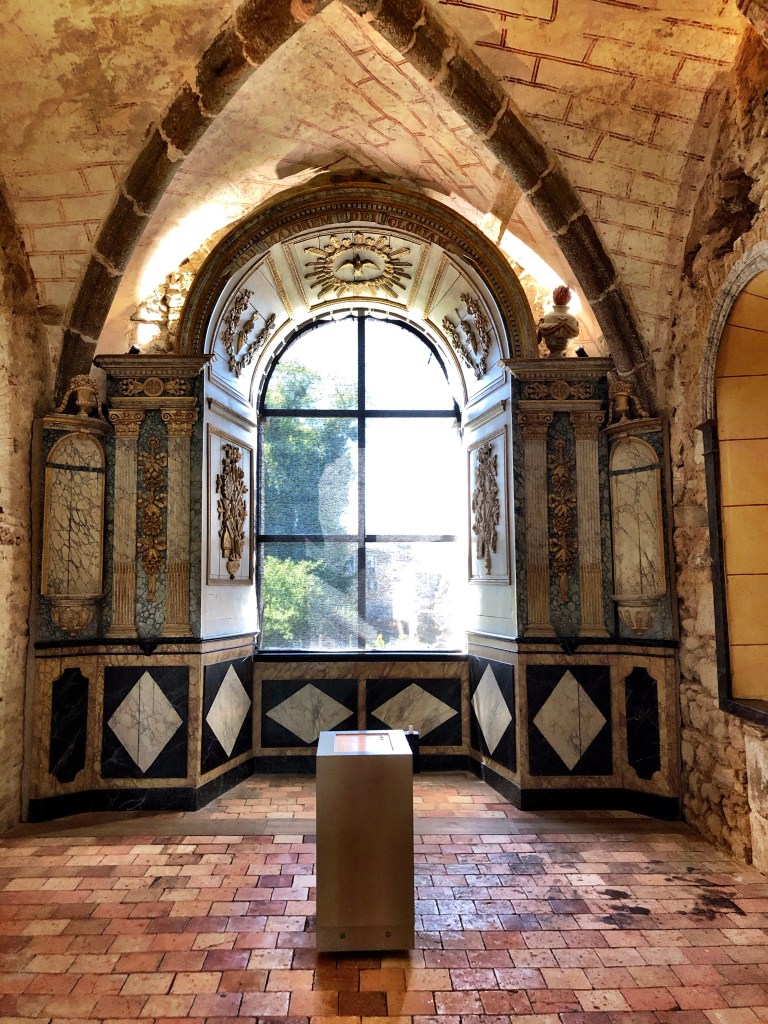
19th Century Prison Chapel. Note the Remnants of Medieval Ceiling Decoration.

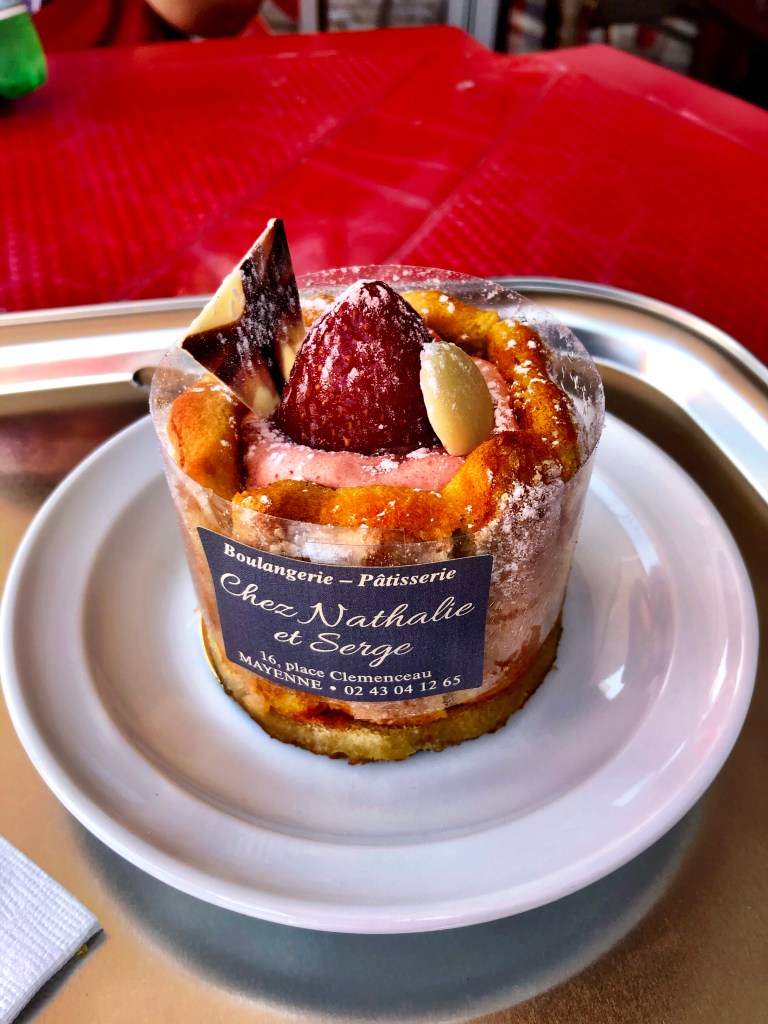
After the museum, we wandered around the streets of the old town. Then our stomachs reminded us that we hadn’t eaten lunch and demanded attention. We never argue with our appetites. So, we found a nice boulangerie, grabbed some quiches, drinks and dessert (duh!), and spend some quality french time in the square just watching the world go by. I highly recommend it.

No Lunch Without Dessert!

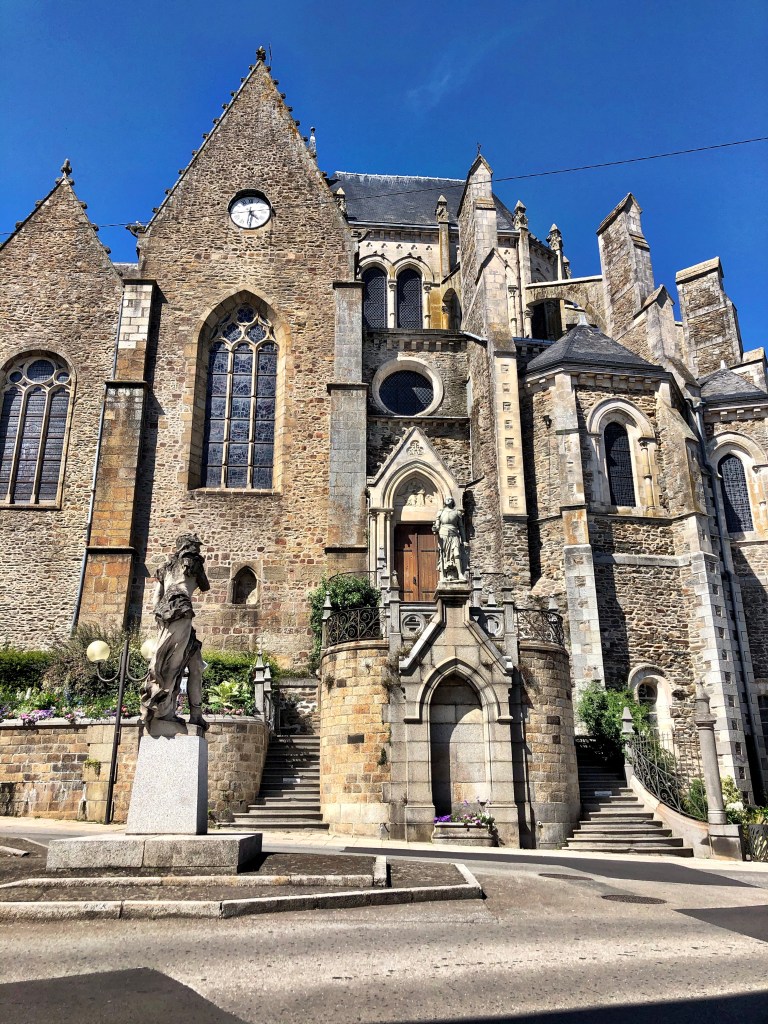
Our stomachs satiated, we strolled around a bit more, happening upon a church. The Basilica of Notre-Dame yields an impressive appearance on the exterior, boasting flying buttresses enfolding a large apsidal eastern end and an impressive stairway. However, we found the interior to be somewhat wanting. Only elements of the nave piers and some scant carving remain of the original 12th century building. The majority of the church appears to be a 19th century reconstruction. Still nice, but a little disappointing. Are we getting too picky now that we’ve been in Europe for almost two years? Perhaps. But I would say that it is rather a case of becoming more discriminating.

Basilica Notre-Dame

Although we only allowed ourselves three or four hours in Mayenne, our visit was rewarding and relaxing. Just the thing we needed. It’s a pretty town with lots of shops and some lovely-looking restaurants that we will have to sample the next time we find ourselves in the area. It felt good to stretch our legs a bit and indulge in our craving for the history and beauty of France. This country never disappoints.

View From the Château Rampart Across the Mayenne River

Waiting for La Poste

Waiting … Waiting …

Not much to report, really. But an update on our tower renovation is in order. And I thought I would end with an observation on a mundane aspect of daily life here in France that we found to be, well, a little different.

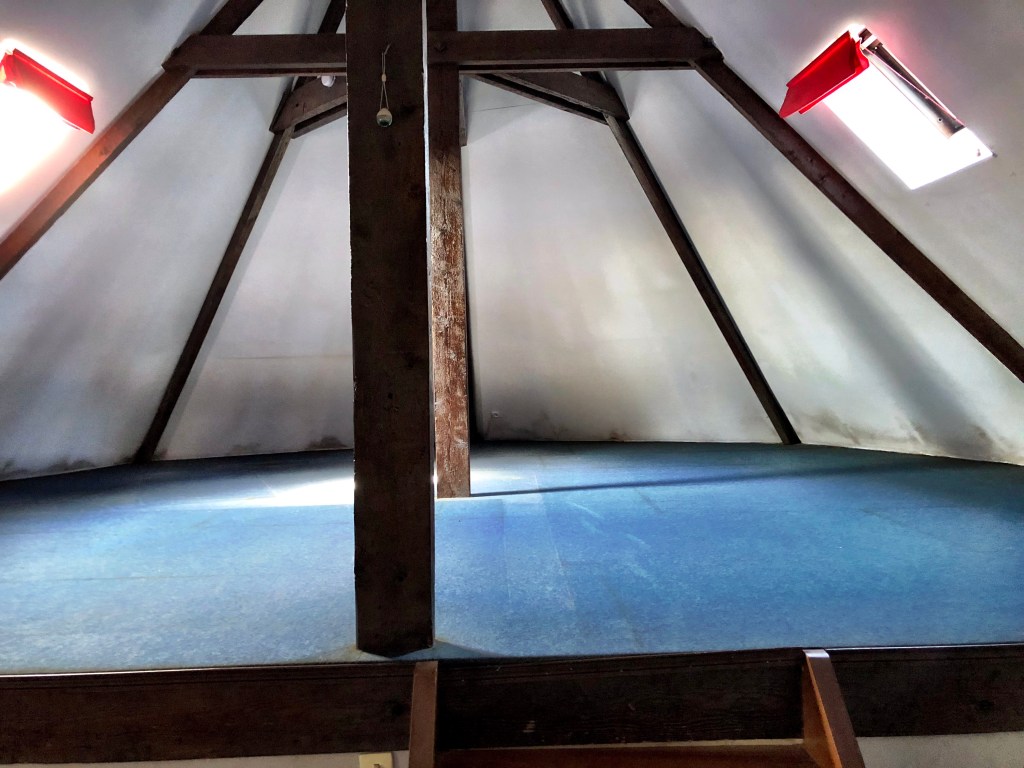
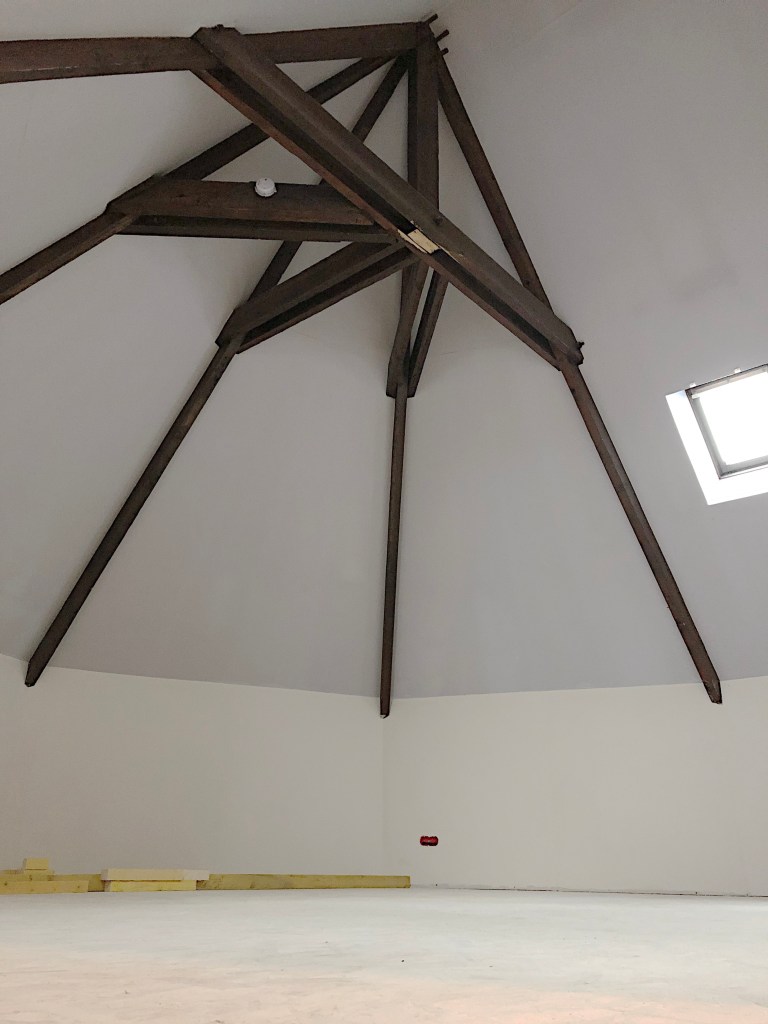
The Covid-19 solitude continues unabated although we ourselves have enjoyed the company of the two builders who have been working away in the upper level of the tower. Despite delays in obtaining materials, a situation completely beyond their control, Stuart and Kelson have managed to beat what was once an ill-conceived attic space from the 90’s into a much more functional and beautiful master suite. Gone is the raised stage-like platform that beat like a drum every time someone took a step on it. Our two british ex-pats have been able to lower the floor, transforming an awkward lean-to into much more useable floor space and head height around the perimeter. The “open concept” bathtub and washbasin in the orchestra pit has been, thankfully, wiped from memory too. Now, there is a definable bedroom, closet and bathroom – all on the same level.

The Blue Stage – Our Bedroom Before Renovation
Now More Lofty-er!

It’s Beginning to Look Like a Bedroom

As you can see, there is still much to do. Flooring, for a start. But Cherie and I plan to lay it down ourselves. We hope to have that done in a month or two. Our other british ex-pat, Mark, handles the plumbing and electrics. He will be coming in the next few days to complete all of the electrical and plumbing tasks that remain to be done. Still, we are excited to finally see so much progress. The once-tired and neglected top floor will soon be our most private inner-sanctum. A warm and inviting place where we can – and will – sleep in until the crack of noon. And when I say “we”, I really mean Cherie. She is truly a world-class sleeper. Our new master suite will be a perfect place for her to get lots of practice.

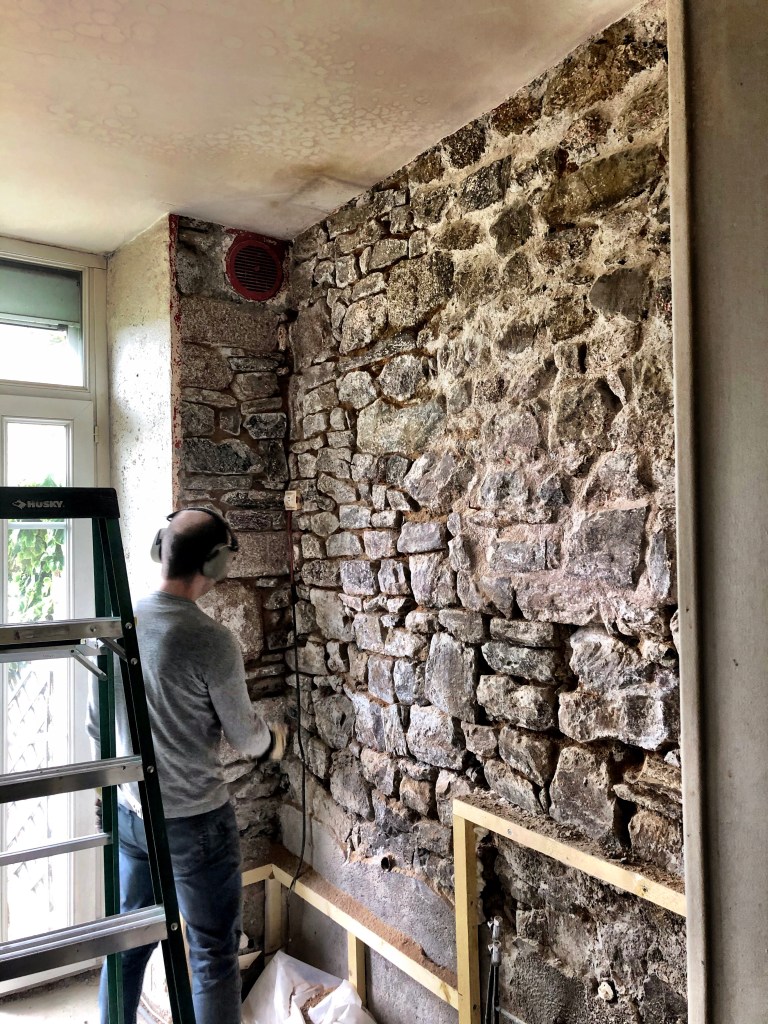
Progress on the Stone Wall!

Speaking of Covid, France will be slowly easing its lockdown measures on the 11th of May. We will now be able to travel up to 100 kilometers (62 miles) away from home and many more businesses will begin to resume trade. This is exciting for two reasons. First, and most importantly, the easing is confirmation that the death rate from this horrid disease has been steadily declining in France. So, too, have the rates of new infections and patients requiring intensive care treatment. At long last!

For us, the easing is also exciting because for the past couple of months, we have only been able to obtain building supplies by delivery. The irony of having all of this time on our hands but no way to get the things we need to work on the house has been a little frustrating.

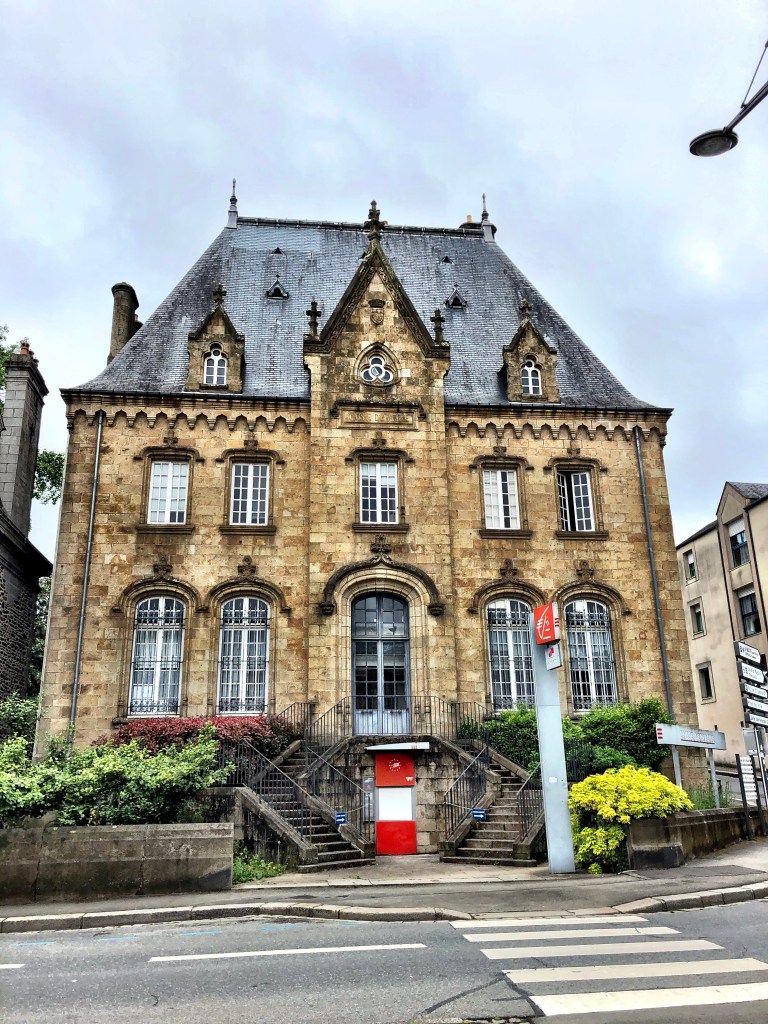
Sightseeing Close to Home: A Beautiful Bank in our Neighborhood

Which brings me to the subject of deliveries in France. Having purchased an embarrassing number of items online from a comprehensive array of sources (from large online-only retailers all the way down to private individuals), we now feel that we have earned some authority on the subject.

At its core, there is an inherent contradiction at play in France when it comes to delivering packages. On the one hand, french delivery services display an almost fanatic concern to inform you about the status of your package. Ordered a pair of tweezers? Prepare to receive an almost daily onslaught of emails, voicemails and text messages (SMS) updating you on the progress (or not) of your precious purchase. On the face of it, this might sound like extraordinary customer service. And I suppose it would be if the were providing information that actually matters. But 90 percent of the time, they are just getting in touch to inform you that the thing they told you yesterday hasn’t changed. Great. Thanks for that. I mean, we’re not expecting a life-saving kidney in the mail. Relax, guys.

And, like the boy who cried wolf, this surfeit of useless correspondence lulls you into a state of complacency, bordering on apathy. After a while you no longer read or listen – straight to the delete button. But the annoying thing is that, occasionally, they will slip a crucial nugget of information into one of these messages that changes everything. “Thank you once again [for the sixth time] for your purchase of the tweezers. We are pleased you chose to shop with us. As a welcome gift, we are offering you 10% off your next purchase.” and then “Unfortunately our delivery service informs us that they are unable deliver packages to your area. We have canceled your purchase and will refund your money [which may take weeks].” Wait, what? Why didn’t you know this three weeks ago when we ordered the tweezers and provided you with our address? Did things like this happen before we had the Internet? I don’t remember. But it makes one question whether or not we are actually better off now than we were before the ubiquity of online services.

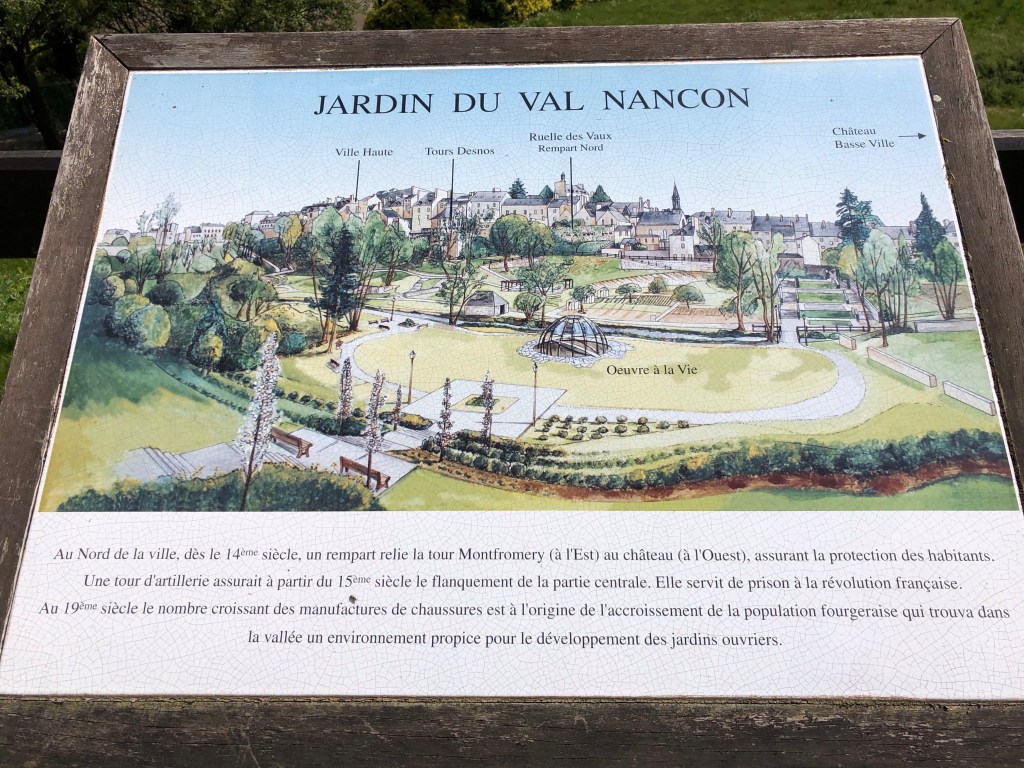
An Information Sign Across the Park from Our Tower (Tour Desnos)

As the expected time for delivery approaches, the second phase of concern kicks in. You begin to receive anxious messages from the couriers, requesting that you assure them you will be home on the day of delivery. This might be just once, but can be several times. You know, in case you’ve had any sudden change in plans that might inconvenience them and disrupt the entire chain of delivery across France. Couriers here become distraught at the mere possibility that there may be an unexpected hitch. And, if you’re not home to receive delivery, forget about it. They will almost never leave the package on your doorstep. It’s just not a thing here. The only time they will leave a package is if it is small enough to fit through your mail slot, or if you have a lockable package box (which, to be fair, many french people do). On the up-side, this practice eliminates the porch-pirate industry. But it makes receiving a package delivery another one of those all-day affairs – like having cable installed, or waiting for an electrician to show up.

Beautiful in Her Solitude – A View of Fougères from the West

Here’s where the contradiction comes in. In spite of all the confirmations and reconfirmations, during which you have nearly sworn on a stack of holy relics that you will be available to receive delivery of your package, they may, or may not actually show up. And this, ironically, does not seem to cause them any concern at all. All of the carefully scheduled, confirmed, reconfirmed, earnest affirmations and reassurances in the world will not (and often won’t) guarantee that your package will show up on the appointed day, let alone within the appointed delivery window. You may even receive a call from the driver on the day of the scheduled delivery, informing you that he or she will be there in an hour. But then, nothing. They might show up the next day or two, or later reschedule for delivery the next week (after which comes another series of emails, calls and texts).

This all holds true, whether it be private couriers or the national post system. So far, we cannot find any pattern in this delivery chaos. It’s a mystery to us. So much so that we now call it: French Roulette. You just never know if your package will show up when expected, or even at all. I acknowledge that this is definitely a first-world problem. In the scheme of things – especially in this time of pandemic – it’s a rather trivial annoyance. But it does tie up a surprisingly considerable amount of time and effort. And we are retired. I can’t imagine how people manage it when they have busy lives with work and children.

This is why many tend to make use of points relais. A point relais is often a retail business which maintains a side hustle in acting as a depot to receive package deliveries. We’ve chosen this option many times and it’s generally quite reliable. A point relais can be found anyplace from a large supermarket down to a mom and pop tabac shop. We have picked up packages from florist shops, tailors, home decor stores, and grocery stores. It’s not a huge deal, I suppose. Just different. And that’s one reason we moved to France: something different.

Take care. Be Safe. Peace, and good health to you all.

If you feel the need for a moment of zen, I recommend tapping on the video below:

Snacking en plein air