It was the middle of the week. We had finished yet another changeover for our holiday rental the previous day. Feeling a little tired, we decided that a quick exploration would be just the ticket to revive our spirits. The other day I had seen a short video online about a town which looked kind of interesting. Winding streets. Centuries-old architecture. A history reaching back for centuries. Definitely our kind of place. The ville of Moncontour has attained the coveted designations of being a Petite Cité de Caractère, as well as one of Les Plus Beaux Villages de France. Not bad, we thought.
The Old Town Defences
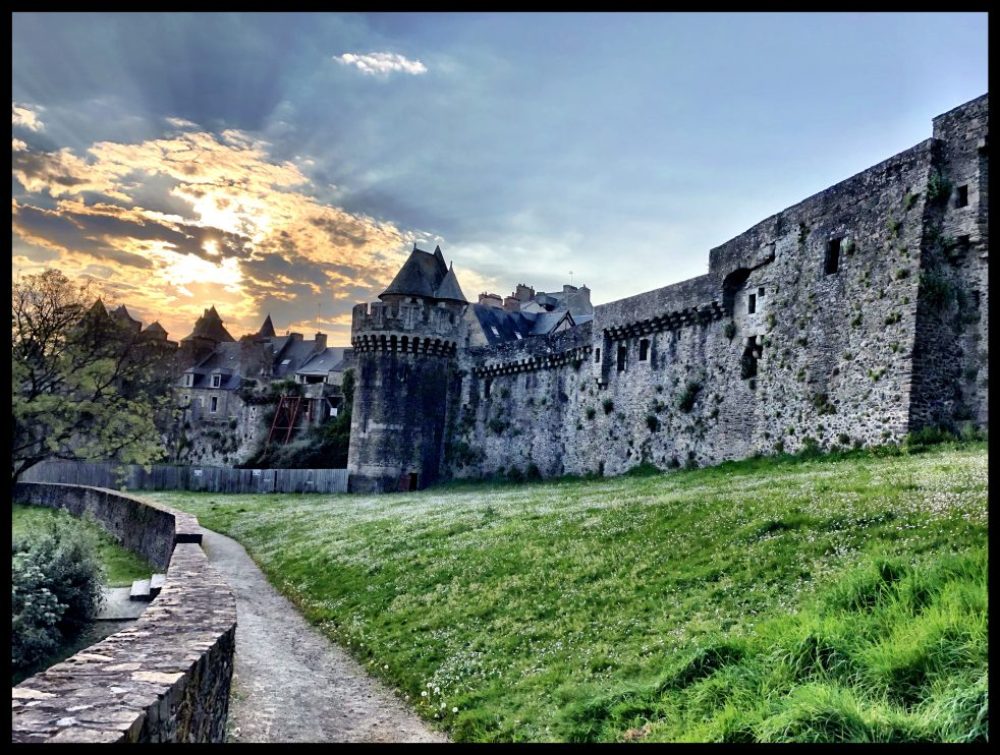
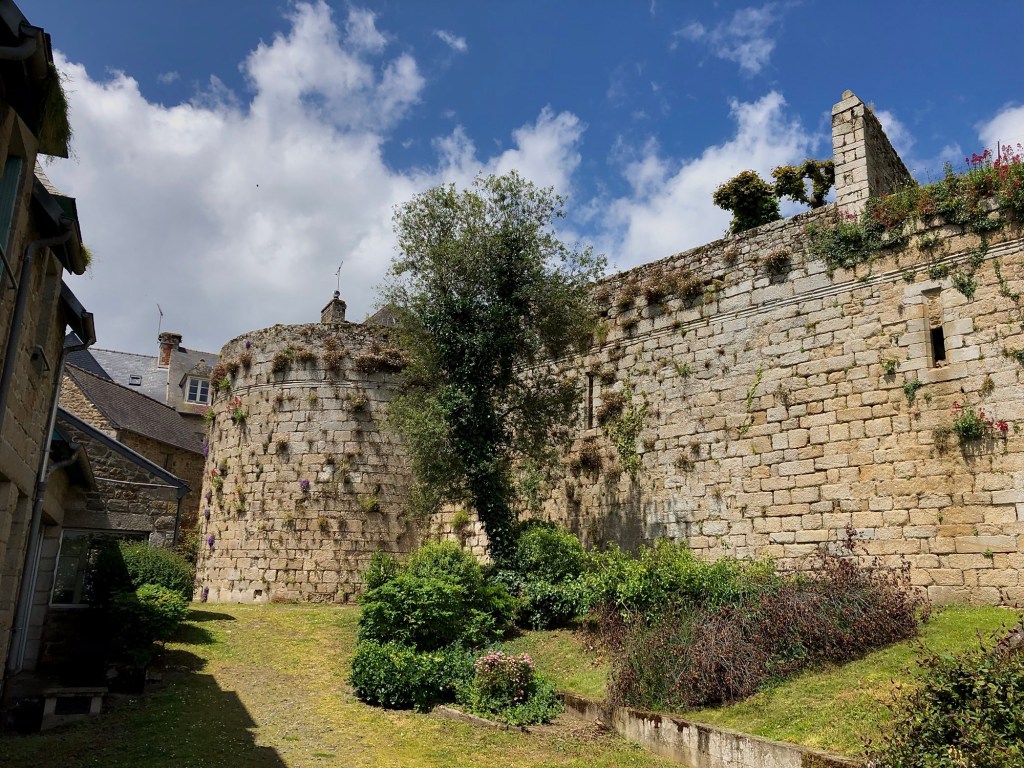
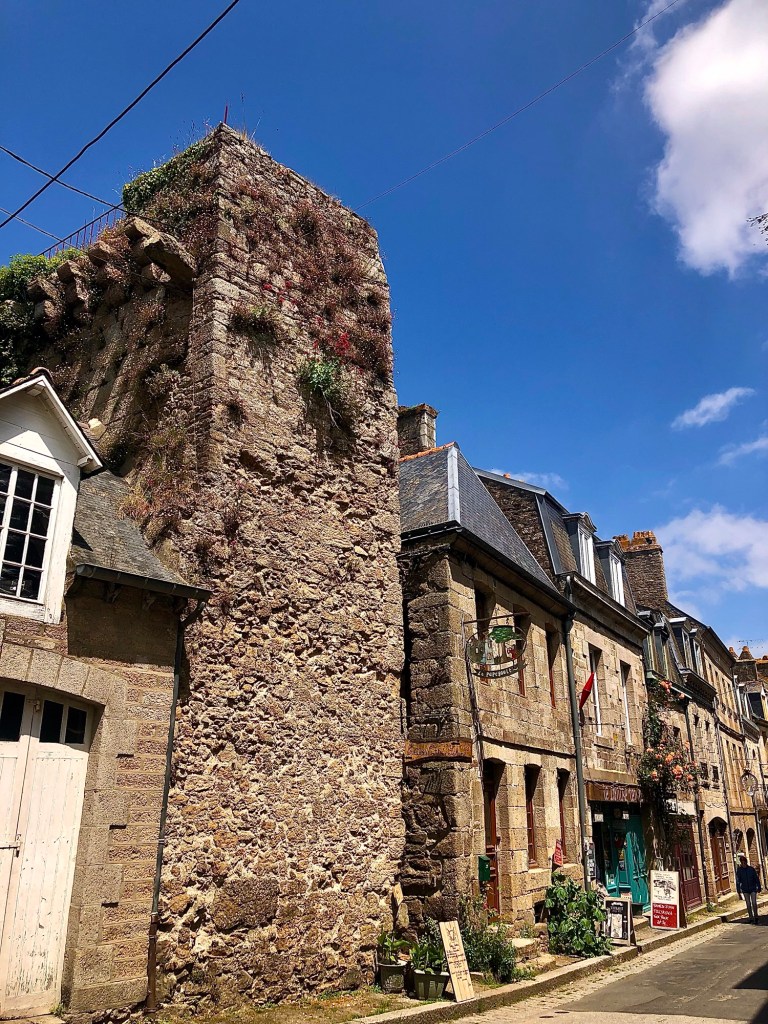
It seems that there was a settlement at Moncontour as early as the 7th century. The later medieval town developed on top of a narrow, rocky escarpment situated at the confluence of two small rivers. Its purpose was to guard the western approaches to Lamballe, then the capital of the area known as Penthièvre. The ville was encircled with strong stone ramparts and round towers, clinging to the steep slopes that tumble down to the waters below.
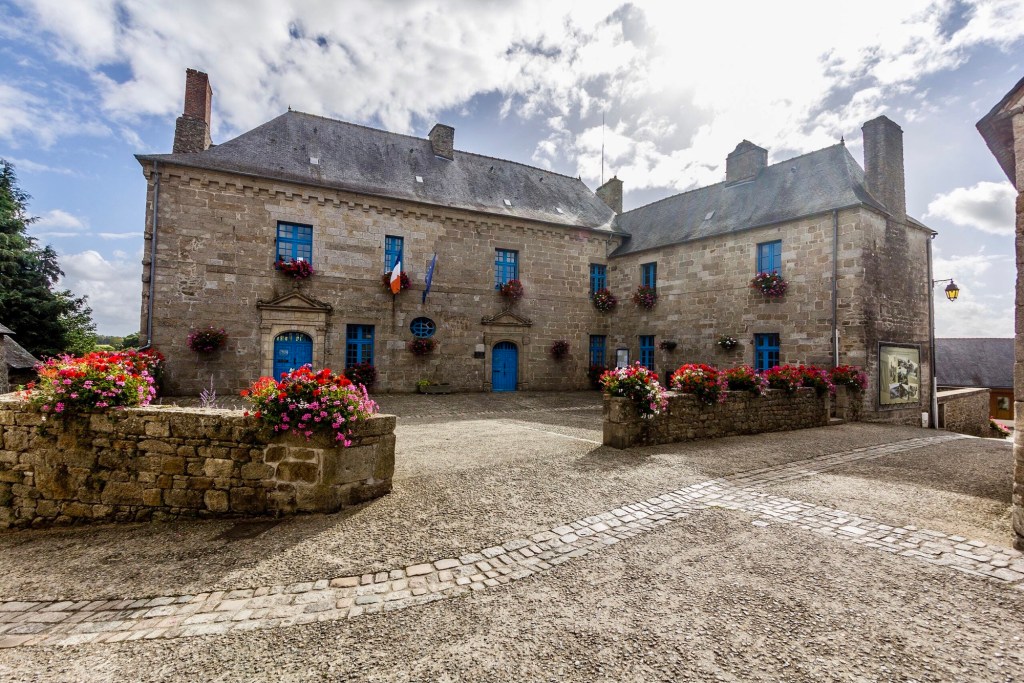
L’Hôtel Kerjégu (now the Mairie) – a 17th c. Testament to Moncontour’s Past Grandeur
Although the town expanded through the centuries, it appears to have changed little since the 17th and 18th centuries. In the past, it thrived on the weaving of linen and hemp cloth, exporting these goods through the ports of St. Malo and Lorient to Spain and the Indies. By the 1790’s, the town boasted more than 2,000 inhabitants. But a slow decline over the ensuing two centuries reduced the population significantly. By 2021, only 745 people made Moncontour their home.
Once We Were Giants
From Fougères, we drove an hour-and-a-half westward to Moncontour. It sits about 24 kilometers south of Saint-Brieuc in pretty countryside, surrounded by rocky hills and steep-sided vales. One enters by climbing up the ramp-like approach that mounts the side of the escarpment. Once on top, you are surrounded by lovely old buildings. Once regal and proud to display their proprietor’s success, many of the ancient homes now bear a patina of diminished fortune and a want of population to support them. For the visitor, it presents a charming age and is pleasantly evocative of the past centuries. However, I am not so sure it is as reassuring to those who live there.
Commerce
Moncontour is not a town for shopping. There are precious few shops, though we did pass by a fine-looking bookshop. If you are looking for something sweet to take home (or eat in the street if you can’t wait), then the patisserie on Rue Notre Dame is quite good. We bought a rather delectable slice of chocolate torte there and, quite proud of our restraint, managed to wait until we got home to eat it.
Beauty is All Around You in Moncontour (click each photo to enlarge)
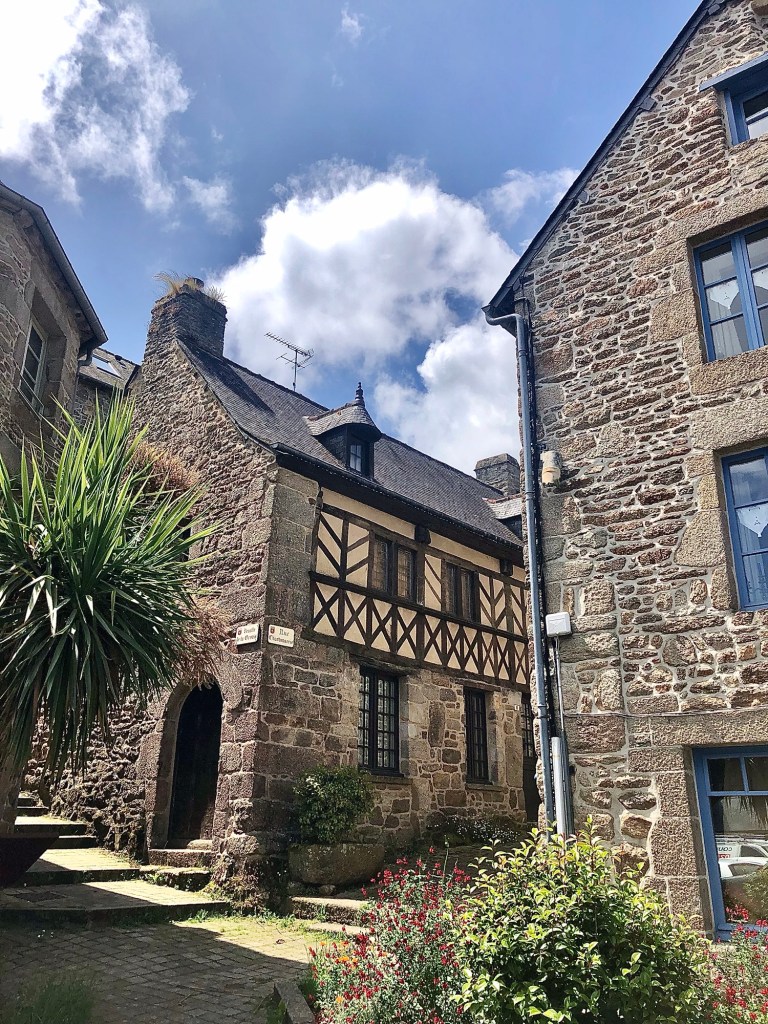
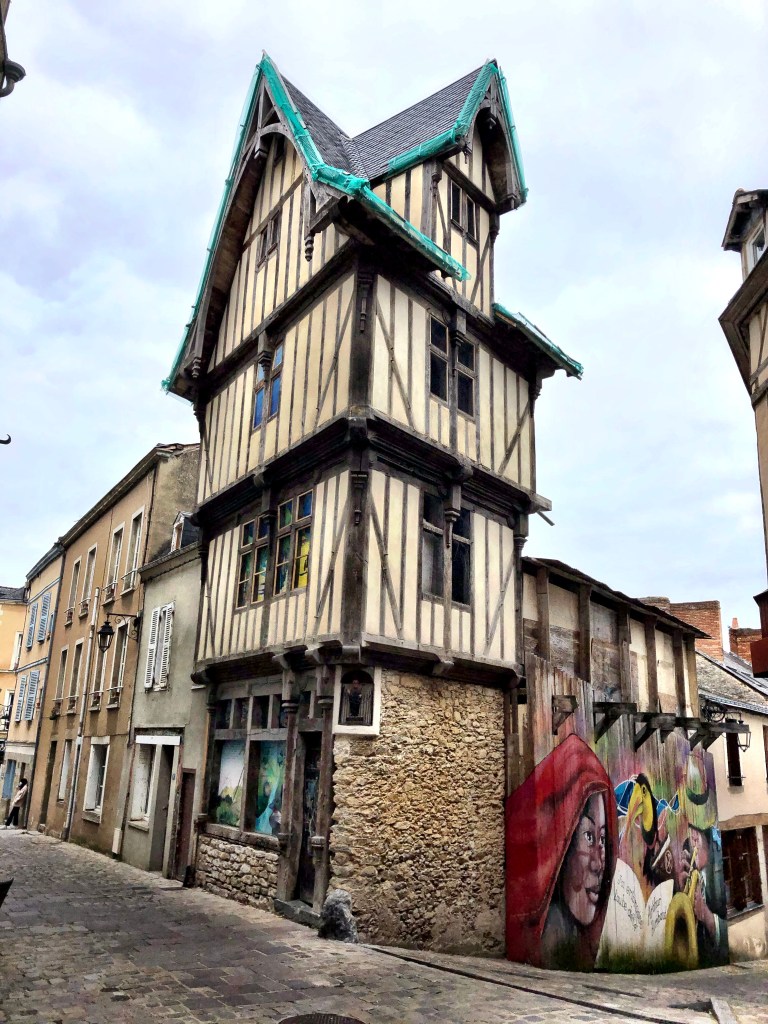
The real show in this lovely little town is the ambiance. We simply let ourselves wander down the quiet lanes, admiring the many stone and half-timbered buildings which line them. A good number of the homes and shops are well-kept, lovingly maintained and restored. But many others, sadly, stand empty, a bit worn down and sagging as the accumulating years threaten to melt them away. Fine examples ranging from the 14th through the 18th century await any lucky wanderer who cares to appreciate the art and skill of those past artisans.
Saint Mathurin’s Church (click each photo to enlarge)
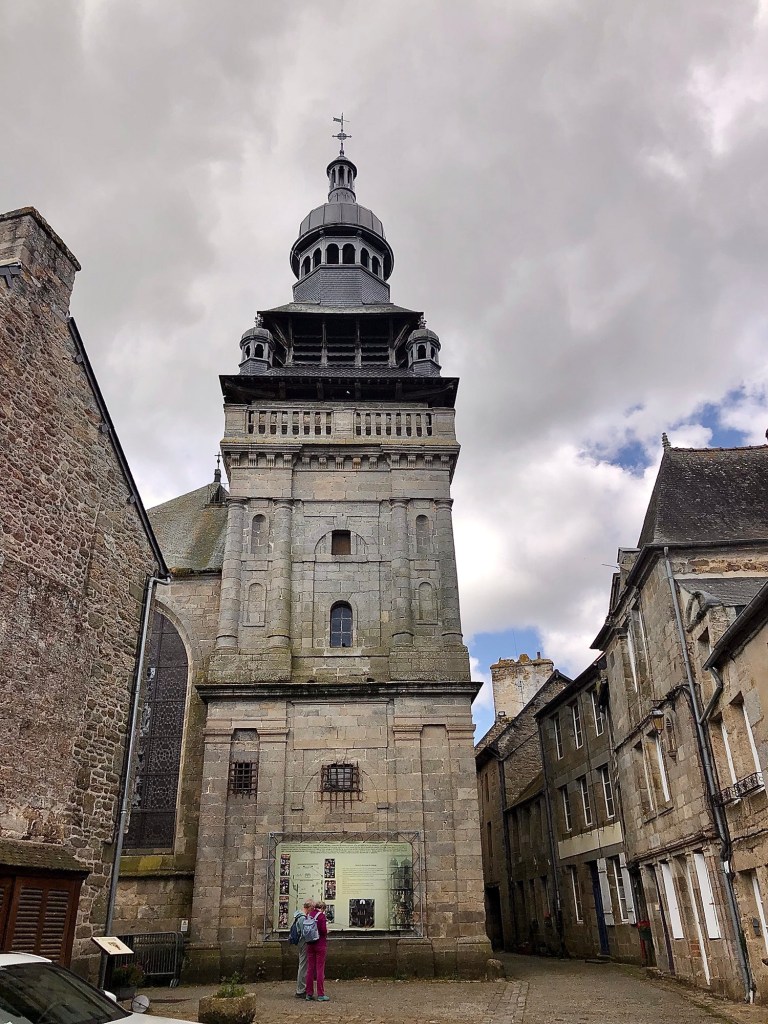
Possibly the star of the panoply is the church. L’Église St. Mathurin proudly anchors the center of town, a broad square affords a pleasing view of the church’s west front and its bell tower projecting skyward. The building’s constituent parts cover the early 16th to 18th centuries and somehow with age have combined into a harmonious assemblage. We were dazzled by the several 16th century stained glass windows still intact and seemingly as fresh as the day they were made.
By the time we arrived in Moncontour, we were feeling quite hungry. And, thankfully, it was right at the beginning of the sacred two-hour lunchtime which our fellow French citizens observe with meticulous regularity. In fact, lunchtime might just possibly be the only event about which they are so precise. Excepting, perhaps, the Tour de France.
Really Good Burgers from the Wizard of Les Remparts
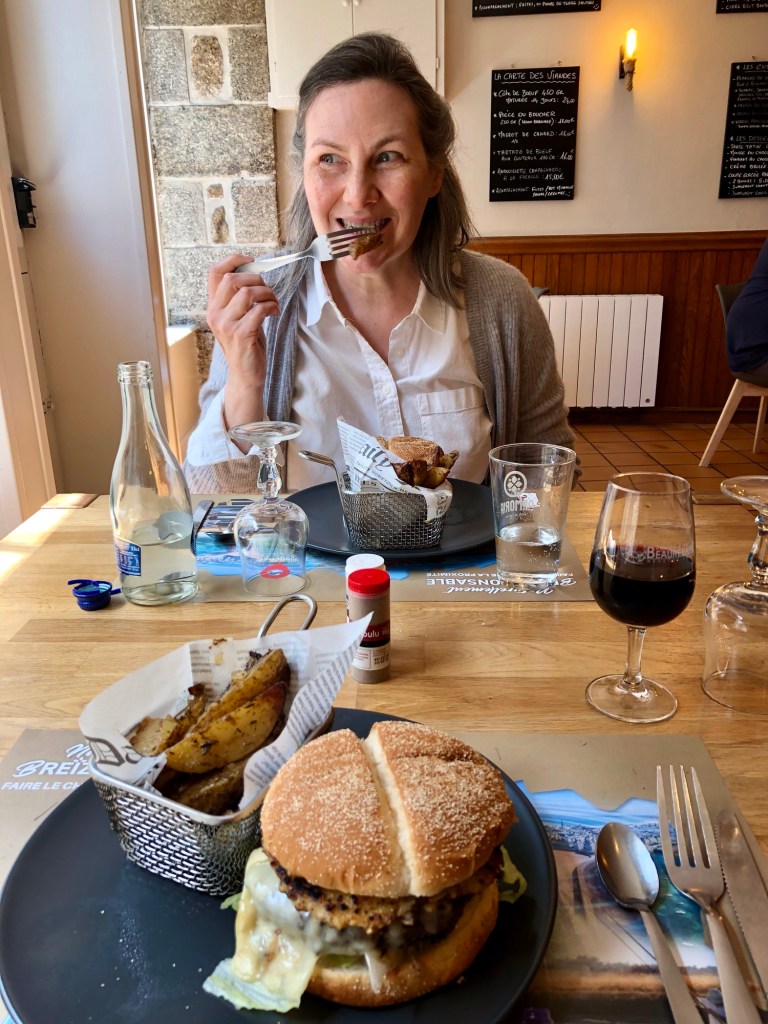
Not intending to miss out, the two of us cast our keen eyes about the town, searching for our next meal. As you might imagine might be the case in such a small town, the choice was limited. Luckily for us, Cherie thought we should try a little place just up the street on Rue de l’Union: les Remparts. Unassuming in the extreme, the place was almost entirely full. We were shown to one of the last open tables by what turned out to be the sole owner/chef/bartender/server/and dishwasher. This man did it all, and he was nothing short of a phenomenon. We counted 7 tables and 18 diners, six of whom were a group of hungry construction workers. Despite a surprisingly extensive menu plus daily specials, he took orders, poured drinks, cooked, served meals and took payment – all in the time you would expect of at least three or four normal human beings working flat out. Moreover, the food was quite good and well-presented. Needless to say we were well impressed. It was a performance worthy of a Nobel Prize. Do give this restaurant a try if you visit.
We had a fine time in Moncontour. Relaxed, eminently picturesque, it’s one of those many places in France where you feel really fortunate to be a traveler. We’re glad we came and thankful that towns like this exist.
We did a fun thing yesterday. We went to Normandie and visited the medieval abbey of Lucerne. This artfully stacked pile of stones is only about an hour’s drive northwest of Fougères. Although it was perhaps a bit warm for Cherie’s taste, the weather was otherwise perfect. Most of the drive is easy, but the last few kilometers takes you though pretty country lanes which wind their way through verdant, hedgerow-enclosed pastures and timeless farmsteads that appear to have stood in place since the last ice age. These narrow country roads, we noted, were very well kept indeed. The verges were mown with immaculate precision. And all of the power and communications lines were neatly strung on regular rows of slim steel posts flanking the way. From what we’ve seen, the vast majority of infrastructure in France is well-maintained and well-presented. But the roads in this area were above and beyond the call. Impressive. And endearing. It was a fine way to approach a medieval abbey.
Approaching the Abbey Gate
Having made our way through the very rural, very farm-y swells of low hills and valleys, lushly festooned with the bounty of the summer season, we abruptly hove into view of the abbey. A nice little parking lot awaits visitors directly across the road from the site’s entrance. But it’s the magnificent gate lodge that immediately caught our attention. It’s rare to see one so largely intact. Big. Stone. Looming. This gate entrance to the monastery says, “All ye who enter here, be thou humble.” And we were humbled. Not only by its age, but also by its gravity and the relative purity of the medieval architecture. Walking though the portal brings you to the welcome/ticket/gift shop packed with a good selection of interesting books, pantry items, toys, and historic reproductions. In fact, we left the abbey with a bagful of jams, honey, a medieval glass and some assorted gifts. The profits from the shop go to the ongoing restoration of the abbey, so it’s all for a good cause. We really love these places: the history, the heritage, the beauty of human endeavor. If only we as a species would turn more toward creating beauty instead of miring ourselves in ugly words and deeds.
Panorama of the Fish Ponds with the “New” (18th c.) Abbot’s Lodge (left), and Farm Outbuildings
I should pause here and impart a little history. L’Abbaye de la Lucerne de Outremer was founded in the 12th century as a Praemonstratensian abbey of canons regular. If you already know about canons regular, you are either: 1. One of them (in which case, your supreme level of self discipline simultaneously shames AND annoys me), or 2. Already a past Jeopardy champion (also shamed and annoyed), or 3. A super nerd like me (and you have my condolences). The Praemonstratensian order of monastic canons began in Prémontré, France just a few years prior to the founding of the abbey at Lucerne. Unlike monks, canons regular are ordained priests. But, in the same way as monks, they choose to live together in a community guided by a monastic rule – in this case, the Rule of St. Augustine. To all intents and purposes, the canons lived lives quite similar to monks – and continue to do so in our own times.
Bits and Pieces. Note the Abbey’s Aqueduct (center). [Click on photos to enlarge.]
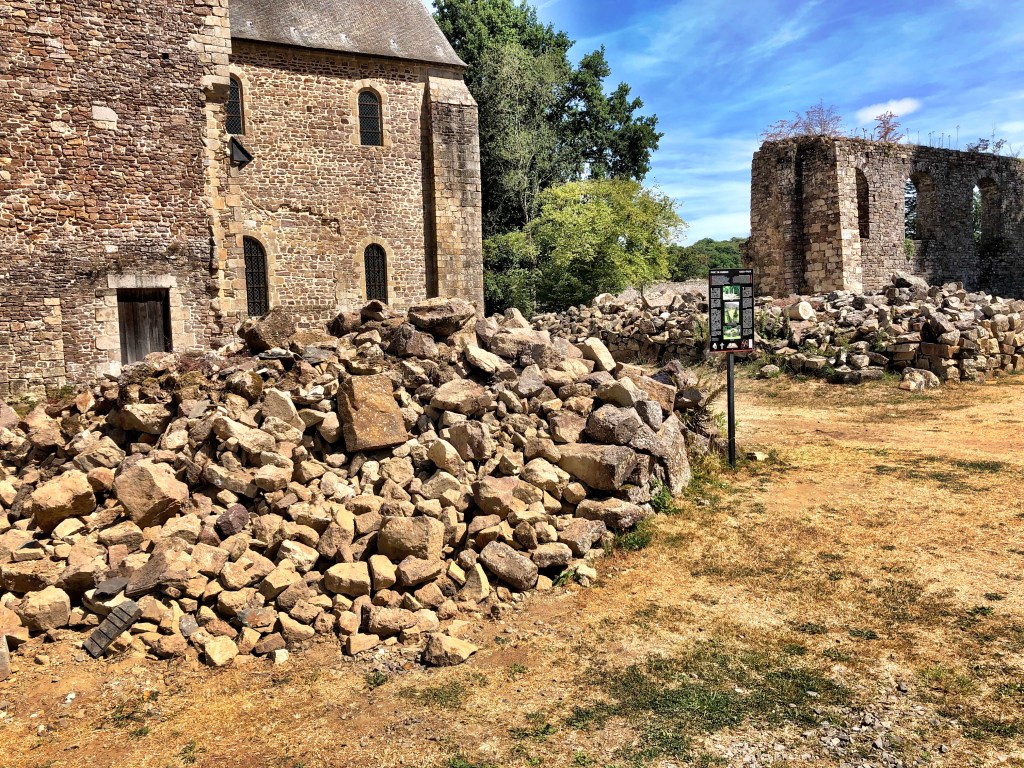
Unfortunately, the French Revolution was a pretty rough time for the Church. Many churches and monasteries were seized, ransacked, and their inhabitants thrown out. Often relegated to use as warehouses, prisons, barns, stables, grain stores, cider houses, smithies, or simply no use at all, countless numbers of these beautiful ecclesiastical buildings in France were left to decay or be stripped of their materials through the 19th century. Such a shame. L’Abbaye de la Lucerne was no exception. It was closed in 1790 and sold off to a local landowner. By the 1840’s the religious buildings of the abbey complex had already suffered extensive damage. As the 20th century rolled on, many of the structures were only visible as piles of stones. It was not until 1959 when a benevolent foundation was formed for the purpose of restoring the church and other monastic buildings, as well as reestablishing the community of canons. Since then, this foundation has completed a remarkable amount of work. Large sections of buildings have been entirely rebuilt, using as much of the remaining materials as possible. I am very much a stickler for the use of proper restoration techniques and and materials. So I was quite pleased to see that the restoration work at Lucerne appears to have been conducted with great care.
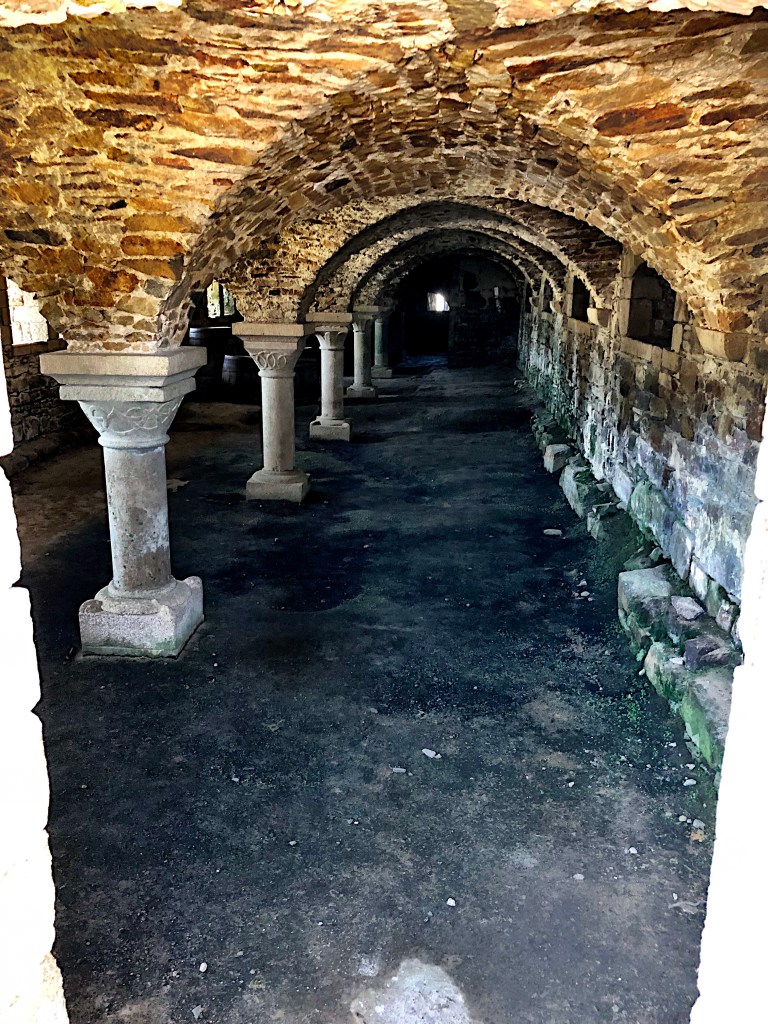
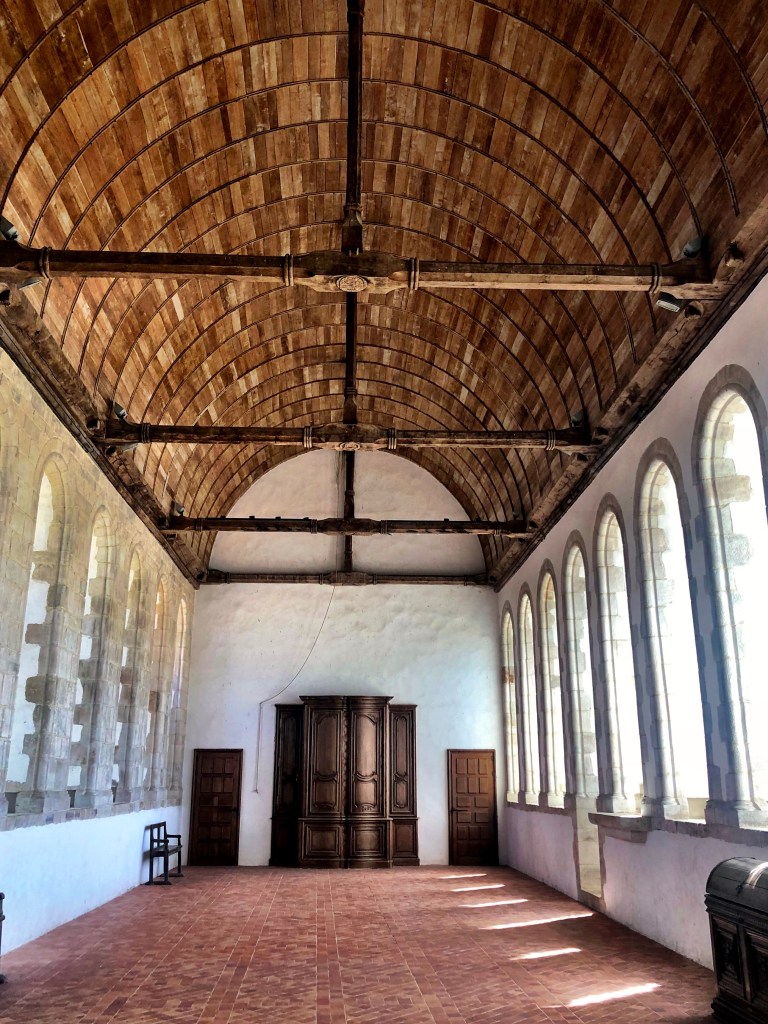
Clockwise from Top Left: Refectory Undercroft; Restored Refectory; Nave of the Abbey Church; Poor St. Sebastian about to be riddled with arrows; M. C. Escher-like stairway to the dormitory; West entrance to the Abbey Church. [Click on each photo for a larger image.]
This abbey is very much alive. Not only is the abbey church still active with regular masses, but the entire complex serves as host to concerts, lectures, demonstrations, classes and other events. No, you’re not likely to catch the Rolling Stones’ “Yes, Actually, We’re Still Alive” world tour at Lucerne, but you can hear some lovely classical and cultural music. While exploring the abbey church, we happily came upon a small group of musicians rehearsing medieval and later Armenian songs. Beautiful.
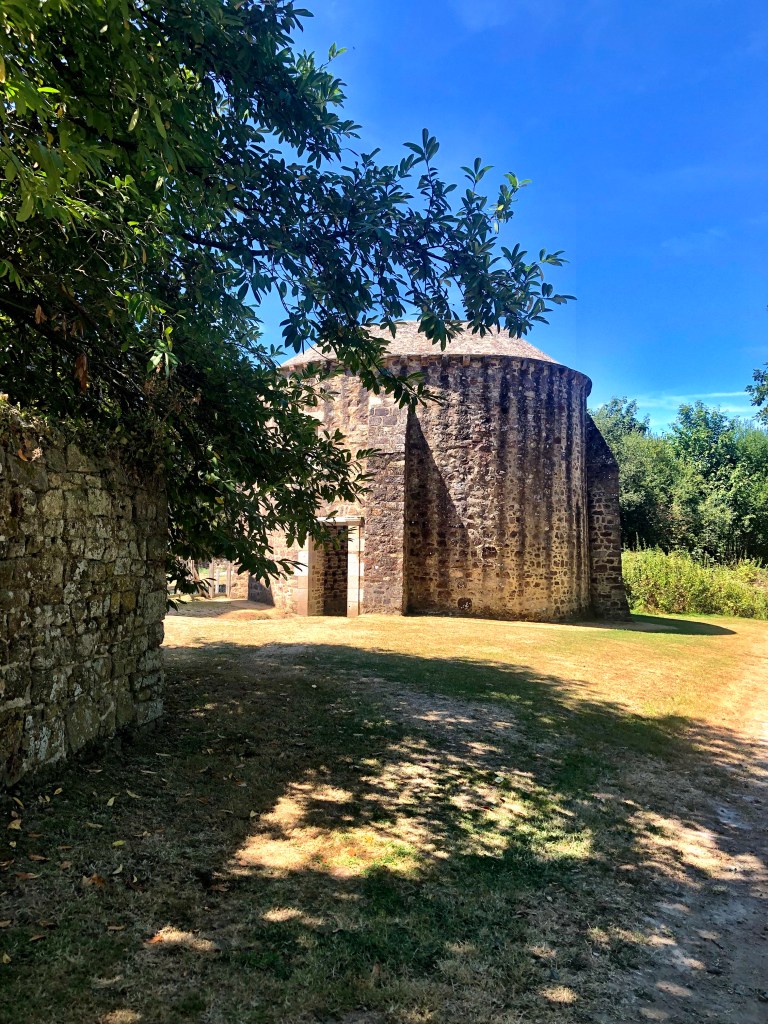
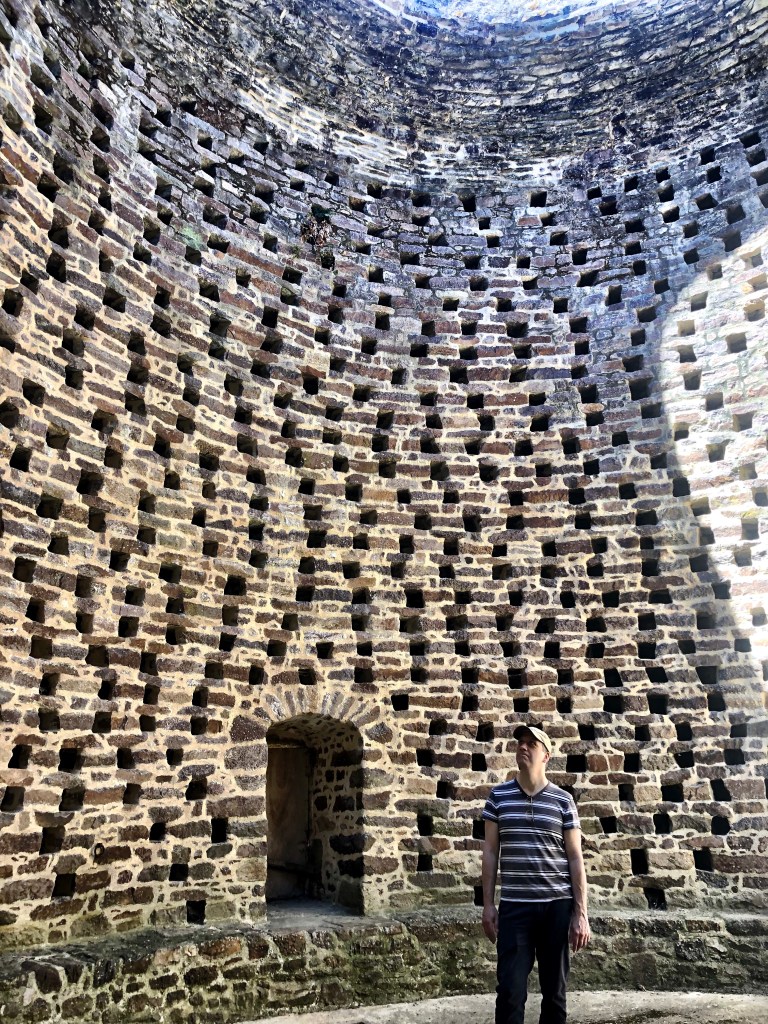
A Pigeon Fancier’s Paradise – The Dovecote [Click on the photos to see larger versions.]
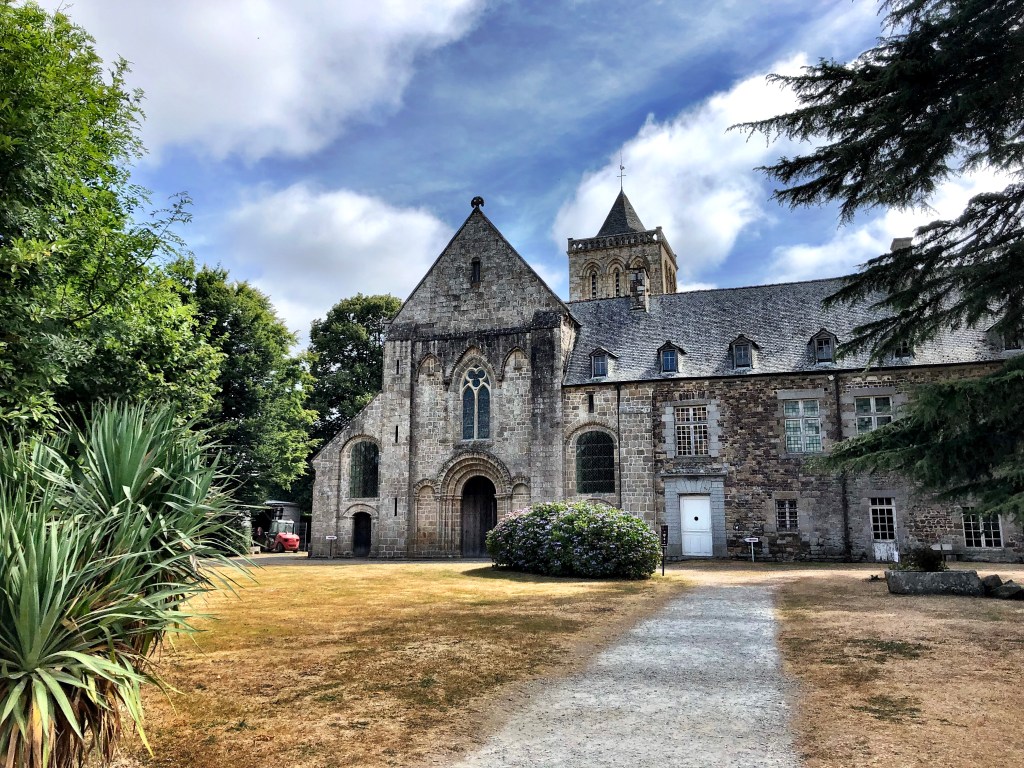
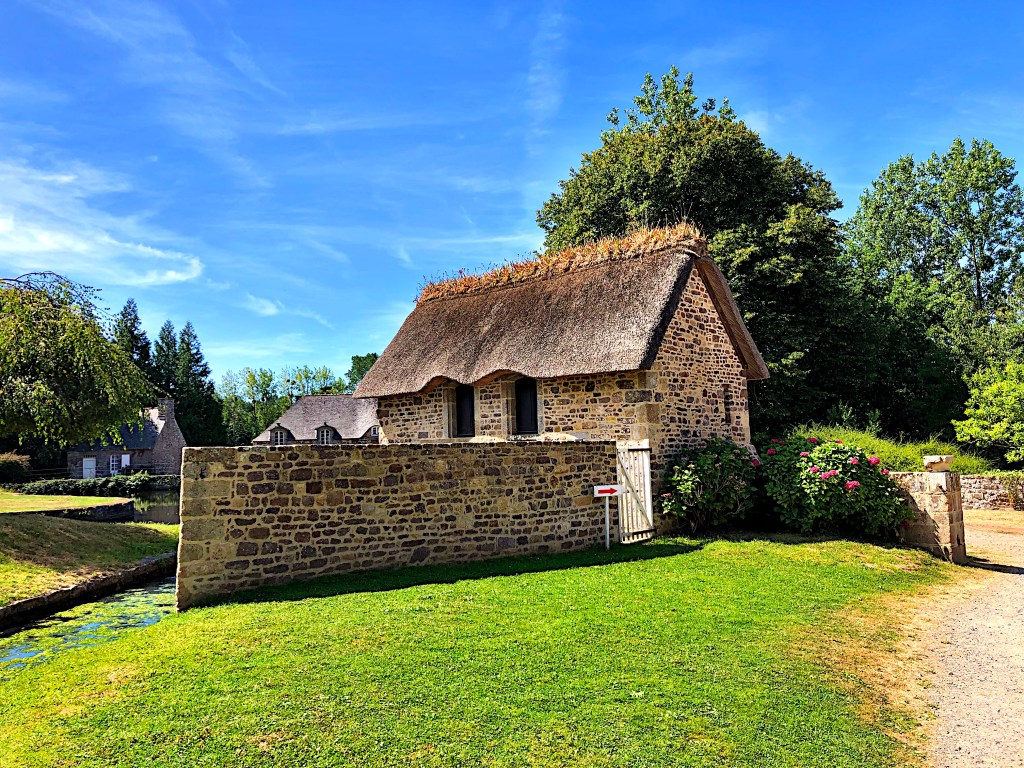
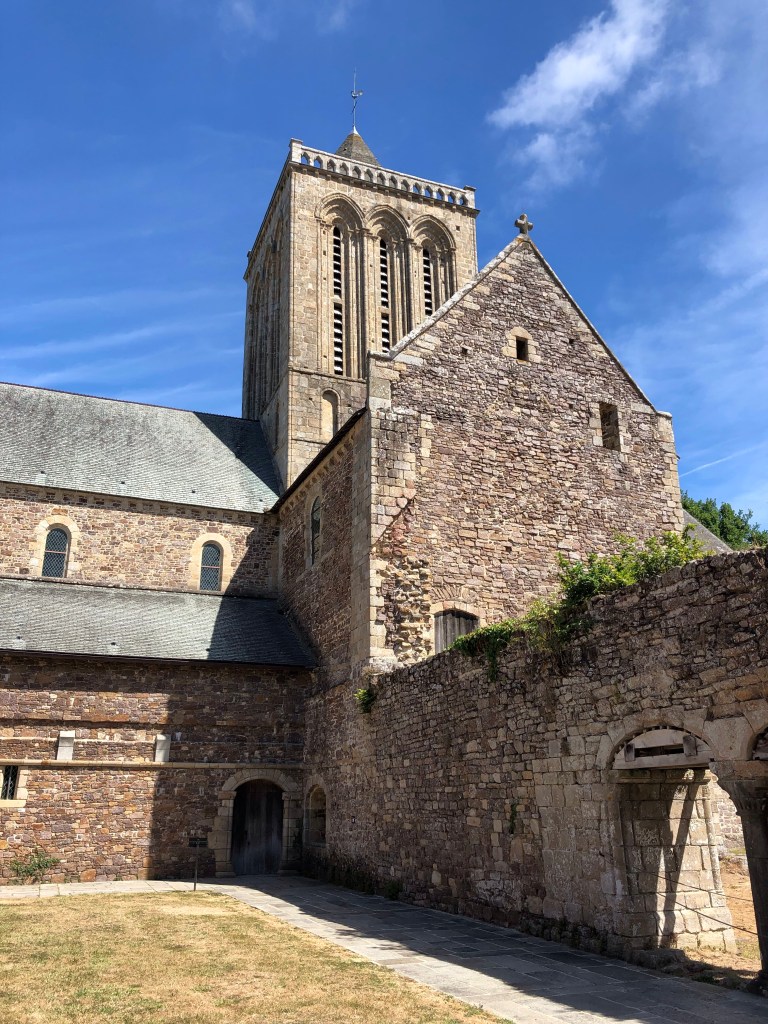
As an example of Norman romanesque religious architecture, l’Abbaye Sainte-Trinité de Lucerne d’Outremer is not to be missed. But even if that holds no interest for you, the simple beauty, the serenity, and the deep sense of history of this place should be more than enough reward for a visit. We thoroughly enjoyed our exploration of the abbey and its grounds – from the long meandering aqueduct which fed the monastery’s many needs for fresh water, the remnants of cider presses in the old orchards, the thatch-roofed Swan House, and the tranquil complex of fish ponds, to the towering stone dovecote (with accommodation for up to 3,000 birds), there is so much to feast your eyes upon. If you should ever have a chance to see it yourself, your heart will surely thank you.
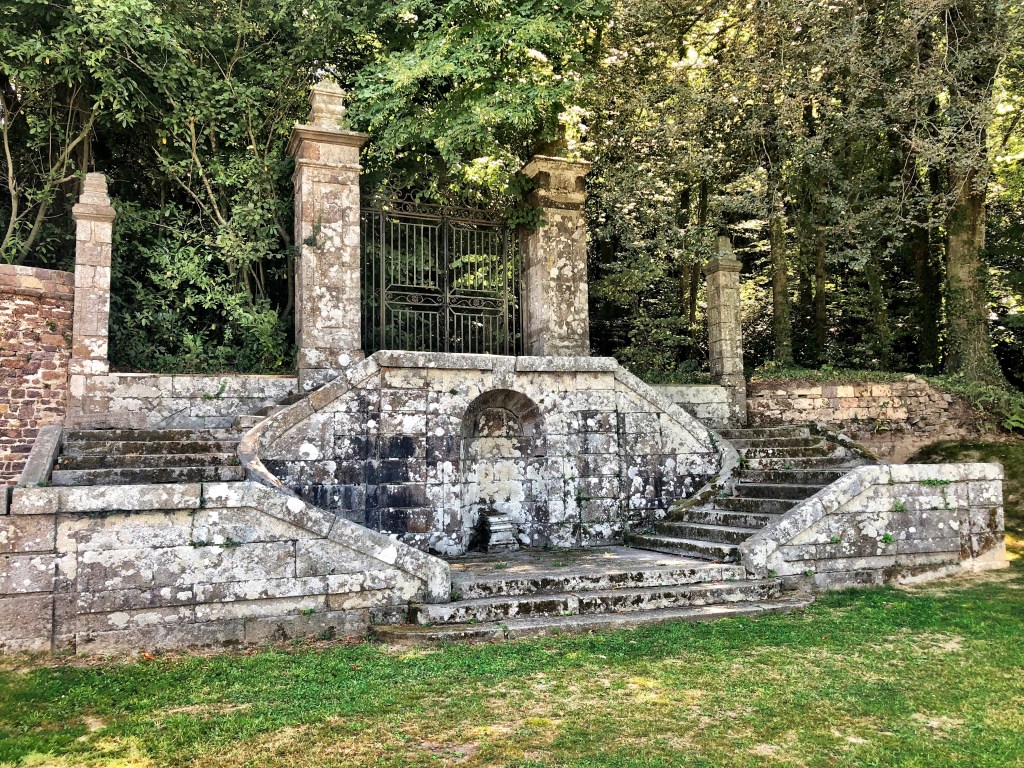
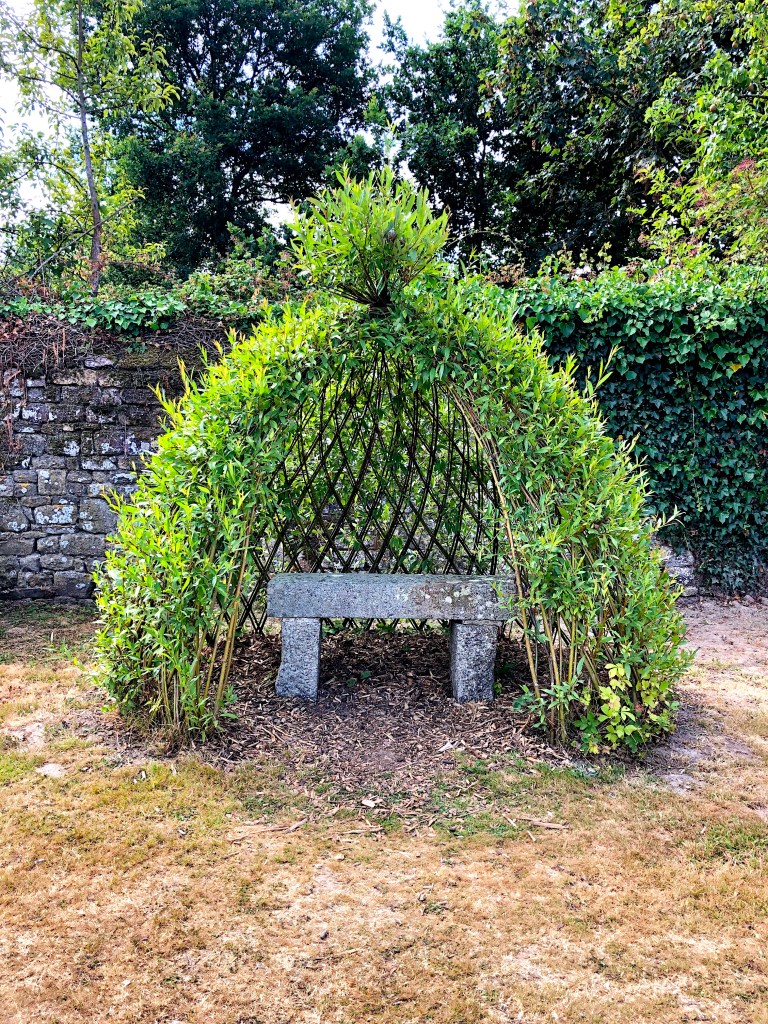
Seriously, How Cute is That? – The Swan HouseThe Woodland GateA Bower of Willow in Which to ReflectView From Within the Cloister
My love for alliteration knows no bounds. Hence, the title of this post.
Greetings from France once again. Apologies for the extended space between my posts lately. I plead mercy on two counts. Firstly, we have been rather preoccupied with our ongoing house renovations. We are so desperate to reach a point of relative normalcy with our house, that we haven’t really allowed ourselves any time to explore our surroundings.
And, second: Covid-19. Need I say more? We have seen a new surge of coronavirus in France. Accordingly, many restrictions have come into force. And rightly so, say we. Fortunately, our region of Bretagne has been, so far, less affected than other regions of France, so things are not quite as strict here as in, say, Paris or Marseille. Nevertheless, the pandemic has kept us close to home. Fougères has been our universe for the past several months.
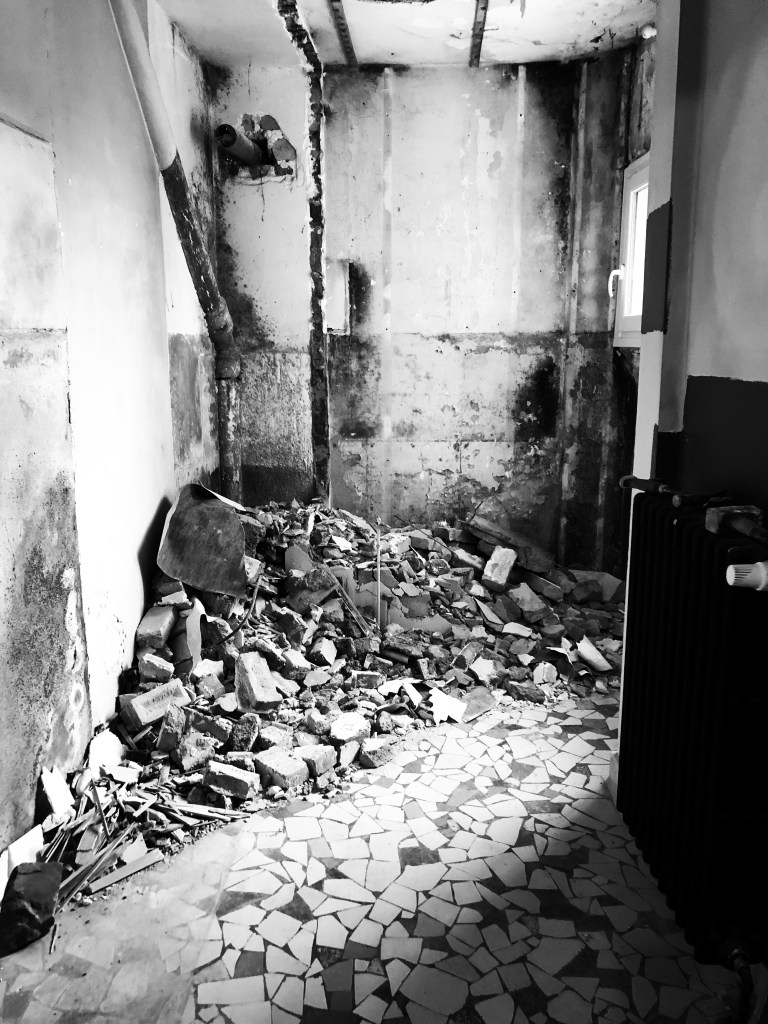
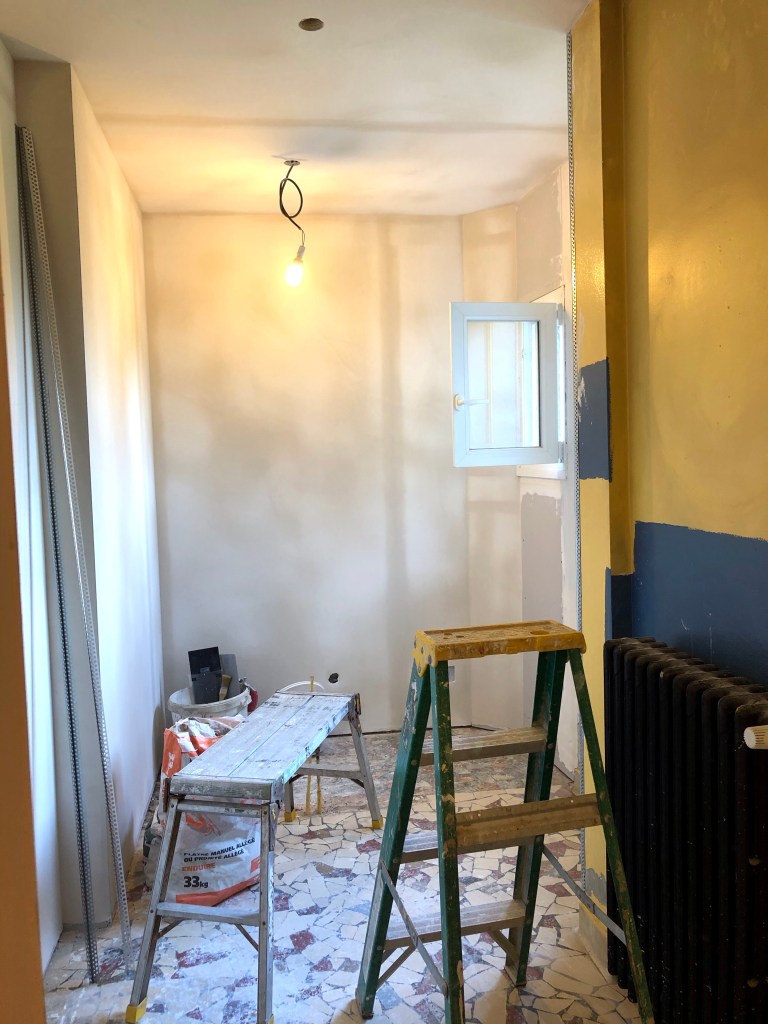
Devastation on our Doorstep: the Old Toilet and Laundry RoomBetter!Shoveling My Mess in the SéjourBetter? Well … Getting There.
Speaking of being holed up in a half-finished house, the renovations are progressing. Some more walls have been demolished, a floor has been broken up, insulation has been blown in, lots and lots of wallboard and plaster has been put up, kilometers of electrical wire and radiator piping have been snaked, and mega-liters of paint have been splashed around – some of it even occasionally landing on a wall or ceiling. How convenient. We try to be disciplined and not rush things. But if you took a look around our séjour (living room) right now you would be able to tell that our discipline is in a precariously fragile state; we have hung paintings and placed furniture in the room, despite the fact that we still only have a subfloor down. Probably not the most pragmatic thing to do, but we desperately needed to feel at least a small sense of completion. Only one of the rooms in this house is currently not serving duty as a storage room: our master bathroom. And even that room still has work to be done on it. Oh well. I guess I can’t say we didn’t ask for it. All in all, we’re happy with the way the renovations have gone. Someday. Some day, we will have it finished and we can focus on travel a bit more.
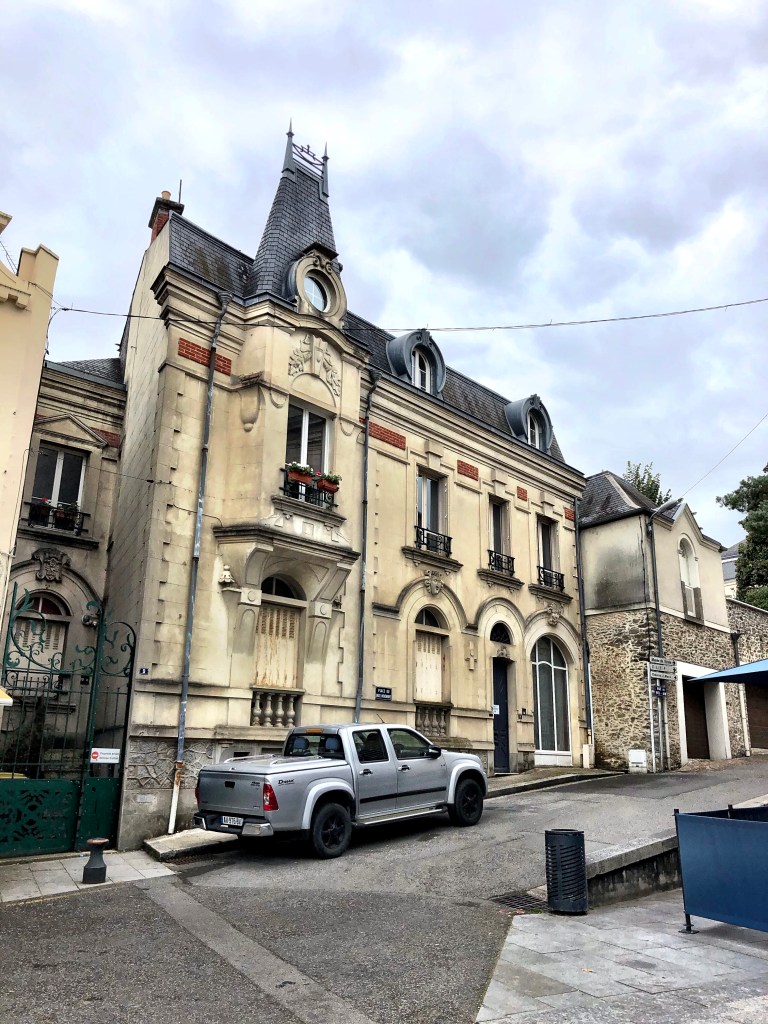
A Rare Pickup Truck On the Streets of Belle Époque Laval
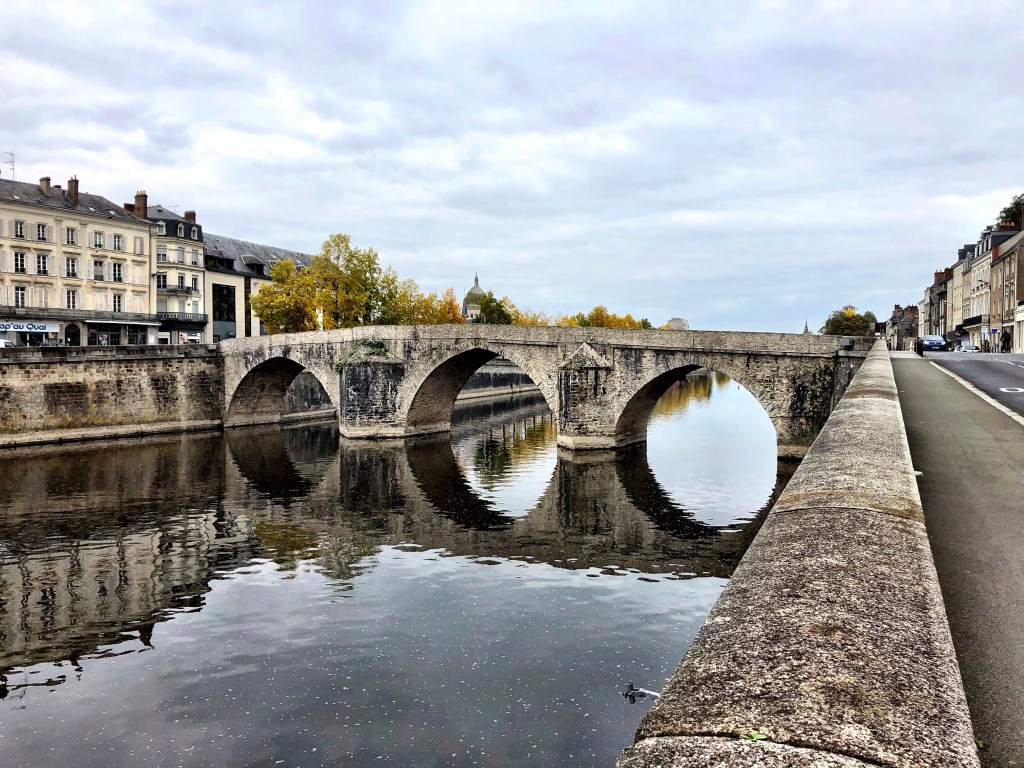
For now, our travels will have to be occasional and local. But, this being France, one never has to go far to see something extraordinary. Last weekend, we decided to visit a town in the nearby département of Mayenne (formerly the province of Maine). Laval, a mid-size town of about 49,000 people, is the capital of its département and straddles the Mayenne river running southward through its center. [see also, Mayenne in the Afternoon]. It’s just under an hour to drive from our house southeast to Laval, a picturesque jaunt through low, rolling hills with the smaller town of Ernée at midpoint in the journey. The city rises on either side of the river, a pleasing mix of townhomes, apartment buildings and businesses ranging from the 18th to late 20th century. The river itself is broad and calm as it runs under a tall rail viaduct, old bridges and a lock, lending a serene pace to the overcast Saturday afternoon of our visit.
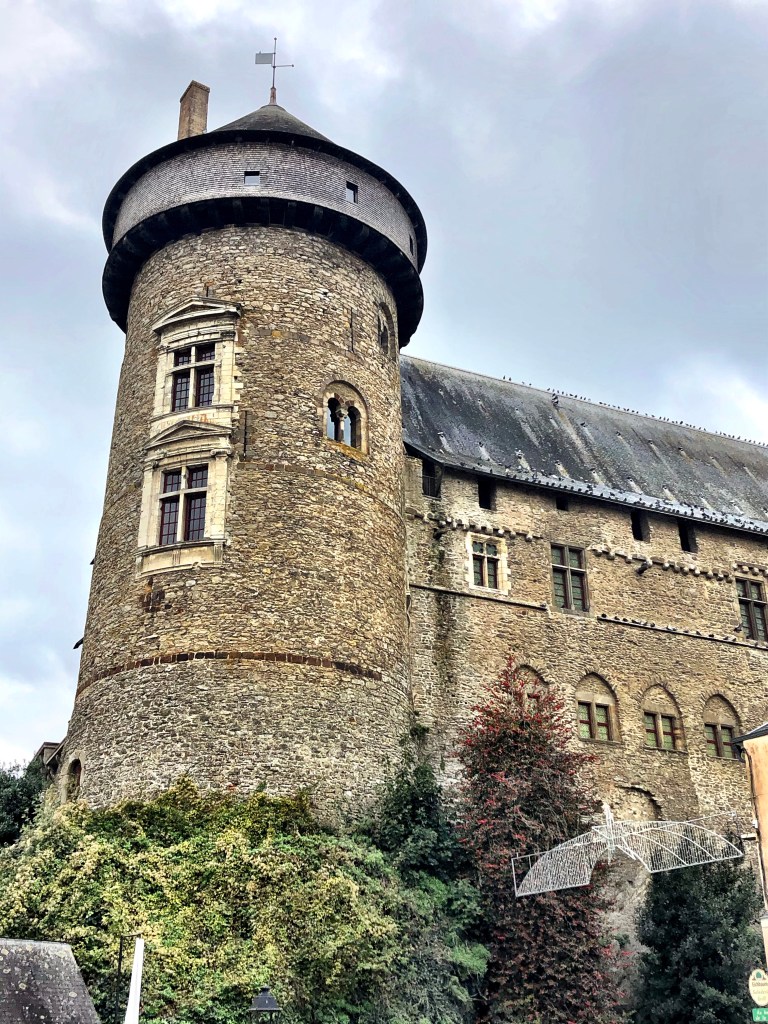
The 13th c. Pont Vieux Spanning the Mayenne RiverThe Proud Tower – Château Laval
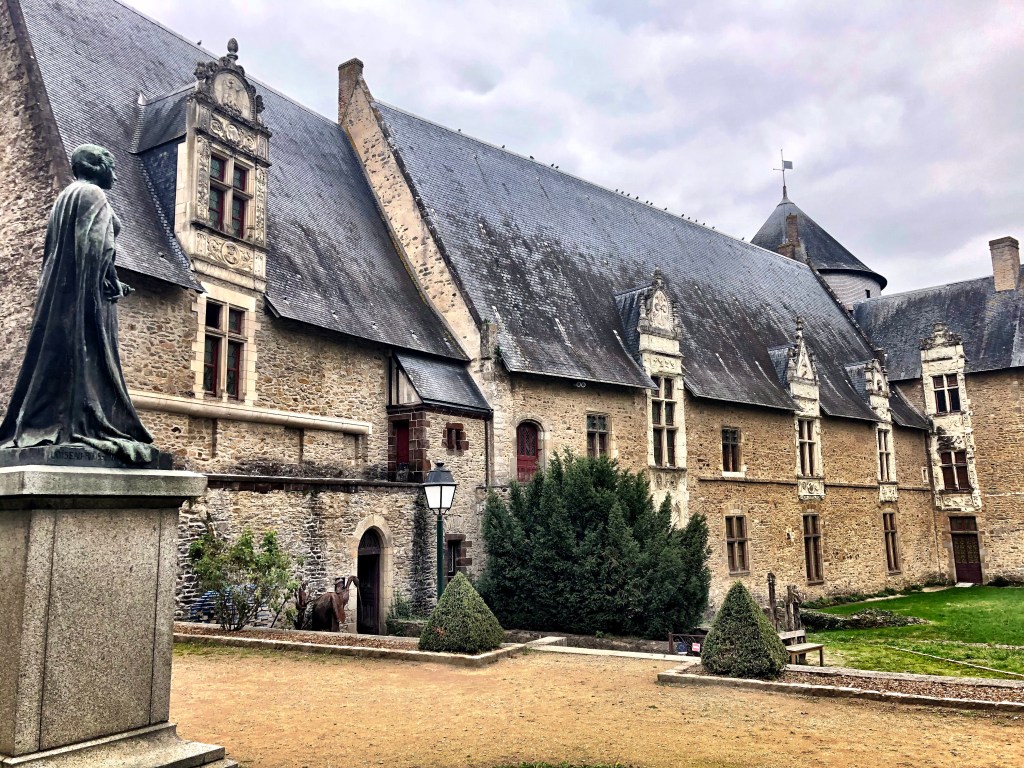
Perched halfway up the slope of the rive doite (right, western, bank) is the château. Begun in the 11th century, it was much modified over later periods, most notably in the 15th and 16th centuries. An impressive stone tower (constructed 1219-1220) stands at the southern end, its wooden hoardings on the top still in their original form. Renaissance window embrasures decorate its exterior, hinting at more to come in the courtyard.
Château Elegance
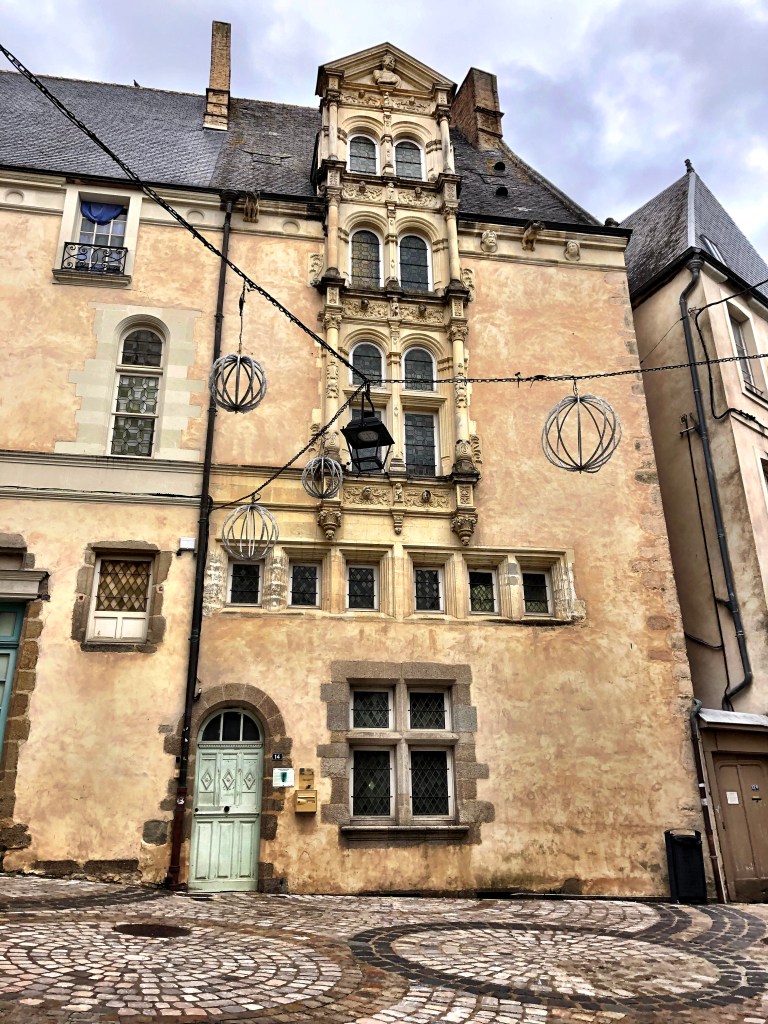
Passing through a well-restored gatehouse, one comes to an assemblage of buildings forming a courtyard of beautiful renaissance harmony. The restoration of this area is visibly a work in progress, but the decorative medieval and renaissance features are on full display. Much of the original carving has deteriorated considerably, but portions have been restored handsomely. Such a great example of french renaissance architecture elegantly integrated into its gothic predecessor. We thoroughly enjoyed seeing this one.
Just What We LikeRenaissance Goodness
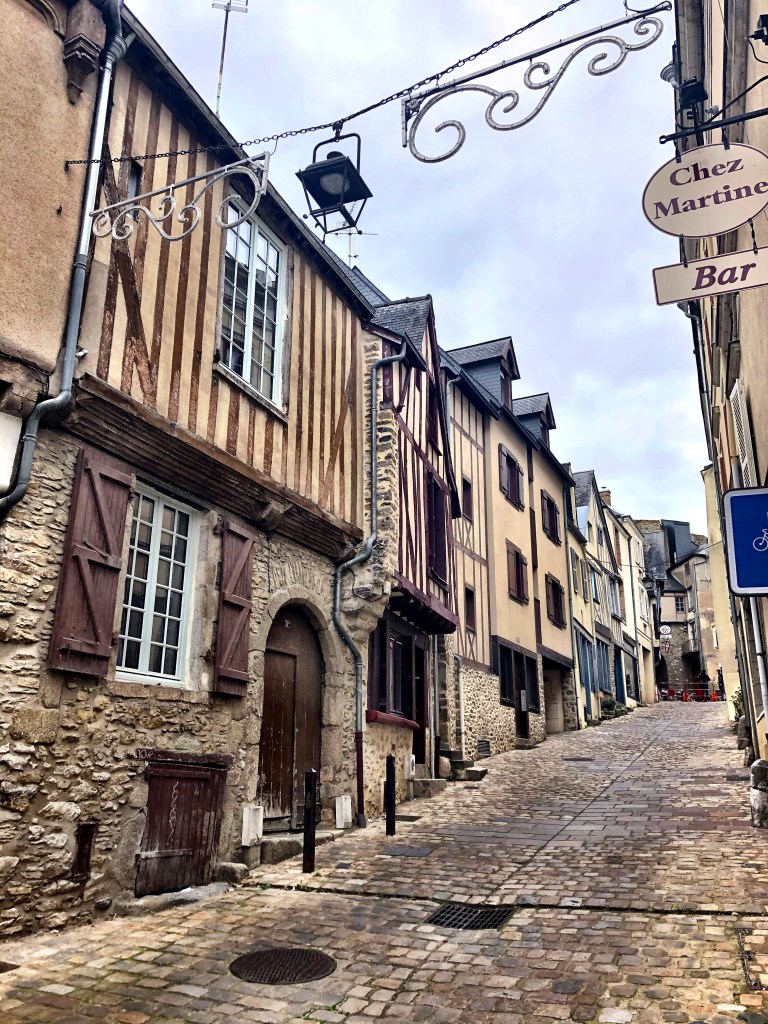
Surrounding the castle is a pleasantly extensive old town, filled with medieval and renaissance houses. It’s a feast for the eyes – especially for historic architecture fanatics like us. We spent a mesmerizing couple of hours just wandering around the quaint, narrow medieval lanes basking in the magic of the atmosphere and soaking up the inspiration we always feel in such places. Photos never really do these scenes justice. At least not the ones we take. But we hope you can get a small sense of what it is like. Honestly, you just have to visit to fully appreciate how special these places are. So unique, so evocative. It’s time travel that can’t be beat.
The Château Square
A huge cobbled square lies just to the west of the château complex, framed by beautifully restored façades containing well turned out shops, bars and cafés. By now it was after lunchtime and we realized that we had not eaten for a few hours. Still, we were determined to march onward and see more of the town. So Cherie ducked into La Maison du Pain (boulangerie) and picked up some tasty bites to go while Saxon and I waited outside.
Waiting at the Maison du Pain (Hoping for a Treat)
This is how our visits go when we bring Saxon with us. We view the sights from outside. Yes, you can often take your dog inside bars and restaurants (not boulangeries!), but our little guy still sometimes struggles to settle down when we try it. It’s not that he misbehaves. He just finds it difficult to sit or lay down at our feet. He’s far too curious for that. Also, he has a hard time finding a comfortable spot to sit or lay down in cramped areas. Those long legs come with a price. Poor guy. The situation doesn’t bother Cherie, but I confess that it makes me anxious and I myself can never get comfortable because of it. Thus, we get a lot of meals to go when we have the dog with us. To be fair, Saxon has gotten better about relaxing in restaurants as he’s matured. Maybe by the time he is 35 years old he will have perfected the art of chill. Of course, we know he won’t live that long, but we like to delude ourselves in to thinking he will. It’s the tragic curse of the dog owner, but totally worth it.
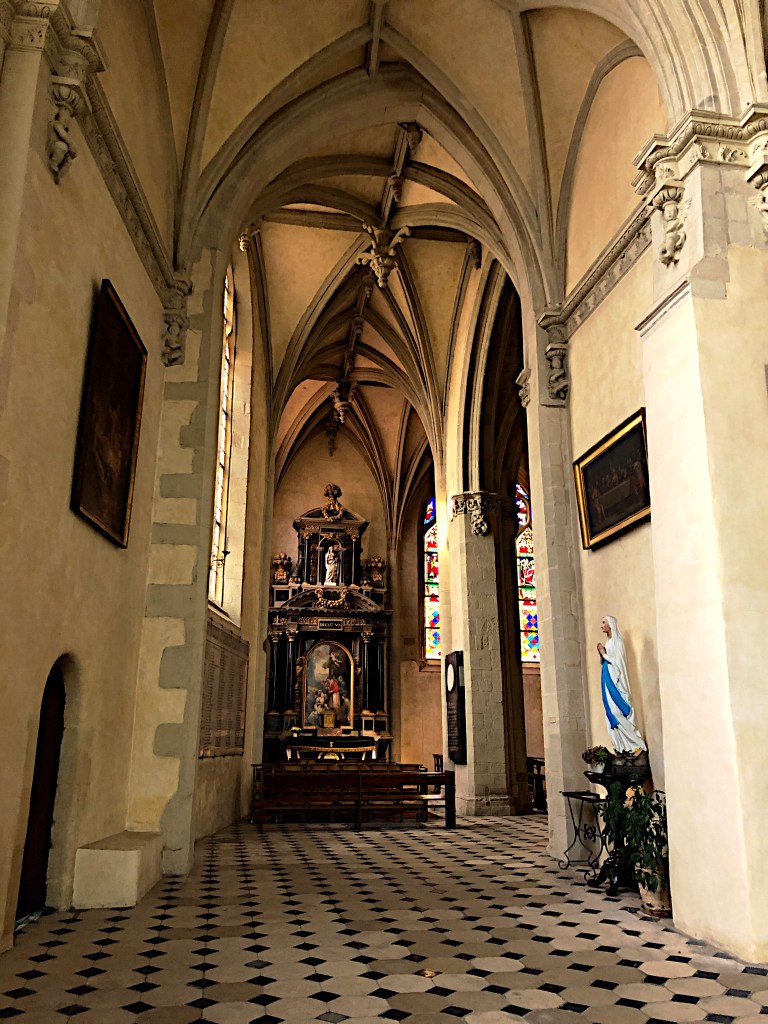
Angling for Heaven – Cathédrale de la Trinité Fancy FontThe Chapel Down the Aisle
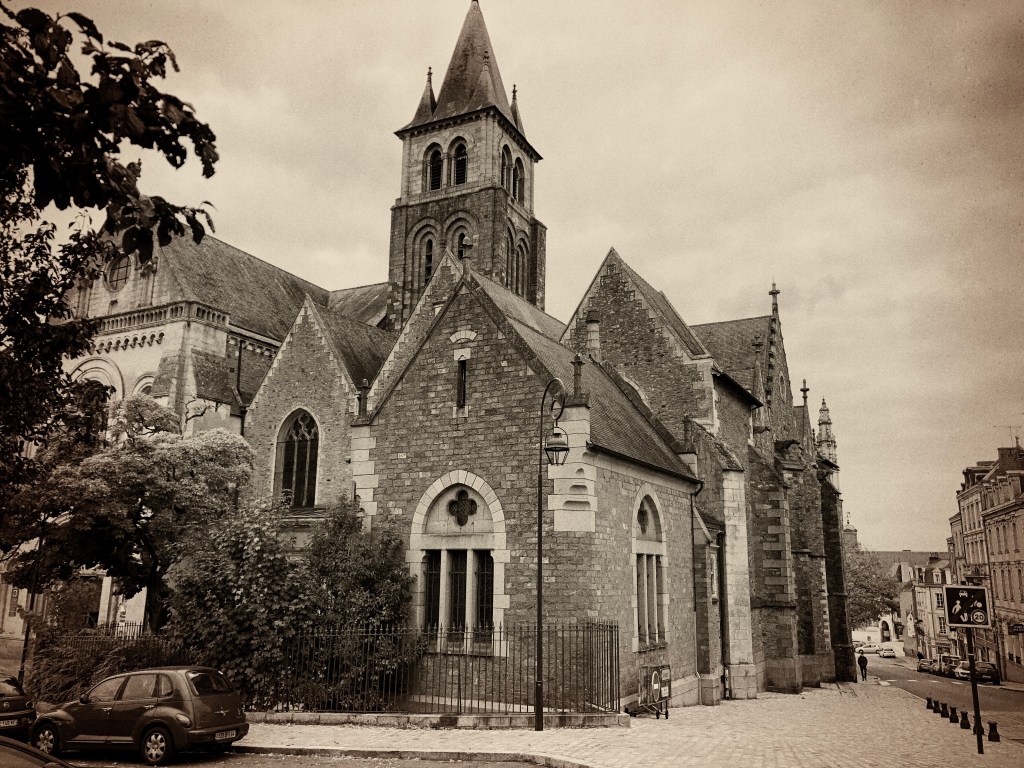
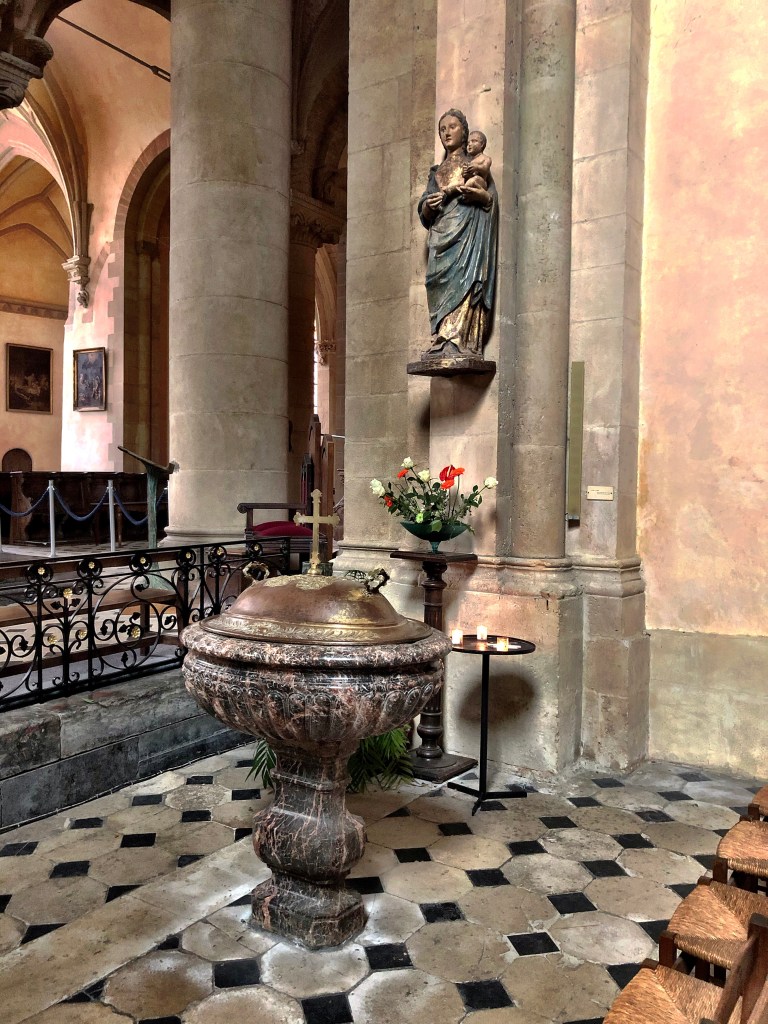
Food for later in hand, we continued westward to the Cathédrale de la Trinité. This church was begun in the 11th century, but it has been much altered throughout its history. In fact, they say it did not attain its current appearance until the beginning of the 20th century. I believe it. Although the cathedral is beautiful, it’s disparate elements never quite seem to blend harmoniously. Despite not being high on the list of churches we have visited, it’s still very interesting and well worth seeing. We both found the exterior to be a pleasing sight, its many gables and discordant rooflines offering an ever-interesting skyline to the viewer.
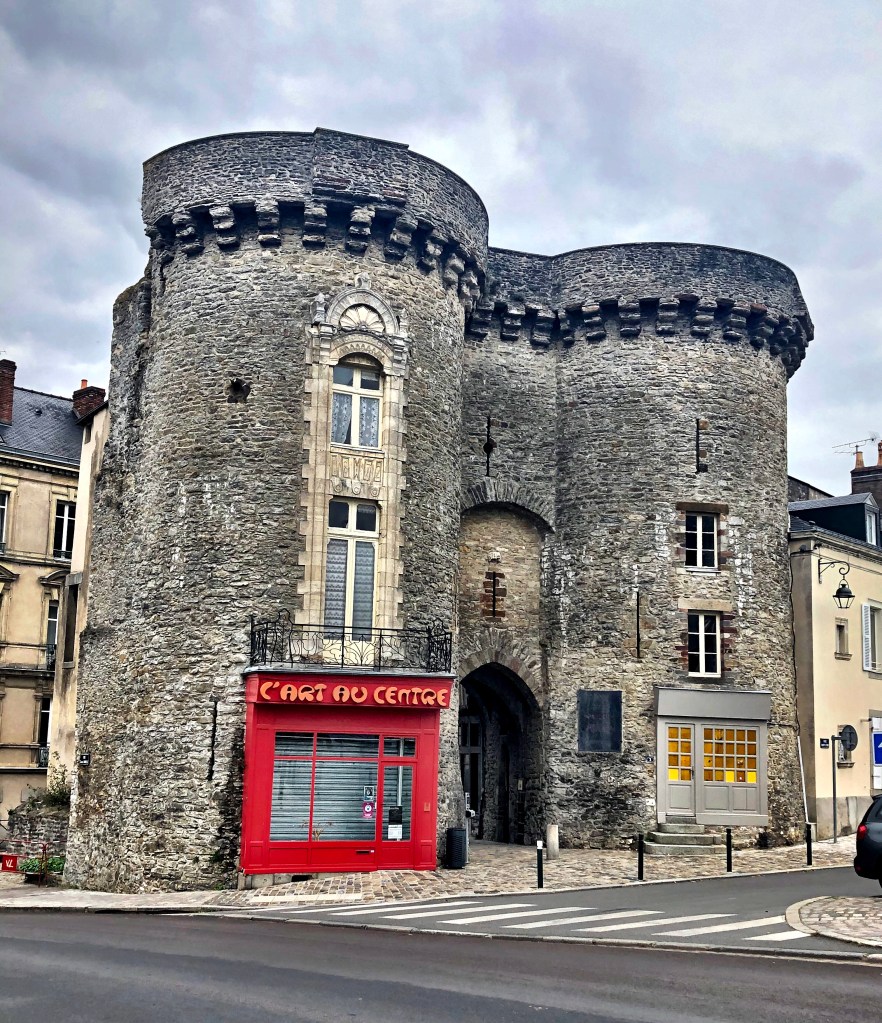
Porte Beucheresse
Just across from the cathedral are the remains of the town’s western gate, Porte Beucheresse. It’s a beautiful but lonely gate, having long ago lost its connection to the town walls. The two adjoined towers appear to be private residences. And they have been for quite a long time; a local artist of some repute (Rousseau – the 19th century post-impressionist naïve artist, not the philosopher) grew up in one of them. Impressive even now, they must have been very imposing when the town defenses were complete. At some point, some enterprising householder inserted a grand banque of renaissance windows in the left tower. Very posh.
Pleasant Shopping
More wandering around the center of Laval brought us to more narrow lanes and quirky buildings, then down the slope to broad boulevards tastefully lined with rows of pretty shops offering everything from luxury goods to a coiffure à la mode. The quaint and tranquille medieval lanes had rapidly given way to a bustling and energetic commercial center. This area had a good vibe, too, and we enjoyed some pleasant window shopping. In fact, we decided that, along with Rennes and Vitré, Laval will be a good place to come shop for things we can’t find in Fougères.
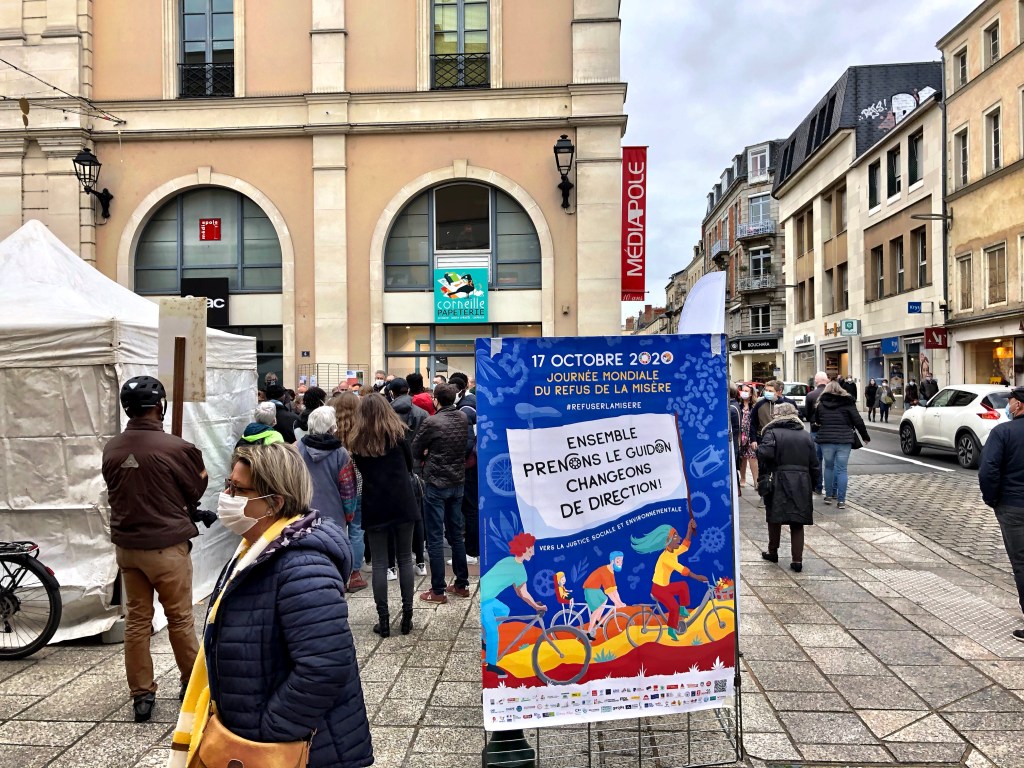
On Marche Ensemble!
Our stomachs started grumbling, reminding us that we had yet to fill them with something. Continuing onward, we stumbled upon a sunken plaza area with a coffee shop and lots of outdoor seating. Perfect! It was quite busy, but we managed to find an outlying table and settled in. It was not cold, exactly. But cool. Hot chocolate seemed just the thing. So we ordered a couple of cups and tucked in to the filled breads (salmon and crème fraîche) we picked up earlier. While we were waiting for the chocolate goodness to appear, a small manifestation (protest) marched into one end of the plaza and speakers with bullhorns began to lead chants and make speeches. The crowd was earnest but civil. It made me reminisce fondly about our former home of Seattle. But it is also quintessentially French. They are born agitators and will protest anything, anytime, with great verve. For some reason, it makes me happy to see. They exercise their right to disagree freely, en masse, as seriously as Americans take shopping. It’s right up there with the daily baguette and sneering at the English.
Über Chocolate
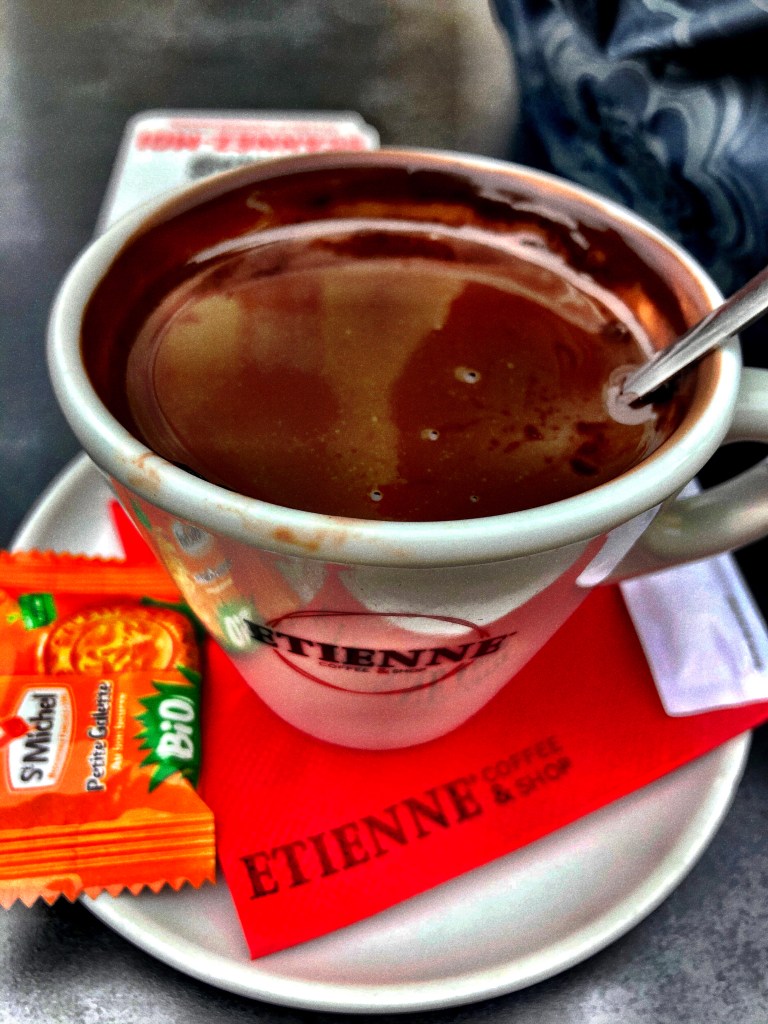
Our hot chocolate arrived in two small cups on saucers and, as always, with a small cookie on the side. Picking up my cup, I noticed that the luscious brown liquid inside didn’t move. Not a ripple. I put my small spoon in to stir and realized that the drink was thick, viscous. Cherie and I debated as to whether it was chocolate pudding or a chocolate bar, freshly melted from the microwave oven. Technically, it was liquid, although my spoon probably would have stood up in it if it had been plastic. To our surprise, the thick gloop in our cups was delicious. Velvety, smooth and creamy. But not overly rich and just the right touch of sweetness without being overpowering. In fact, it was really excellent. We settled in to happily sip our chocolate goo and munch away at our lunch while the pleasing sounds of other chatting tables and the protest filled the air. So French, and so soul-satisfying.
Oblivious to History – Shredding Before the Medieval Ramparts
We had satisfied our stomachs, so they were no longer complaining. [See? Protesting works!] A few meters away was a long stretch of medieval wall remaining from the town’s defenses so we took some time to check it out, trying to imagine how it must have looked in its heyday.
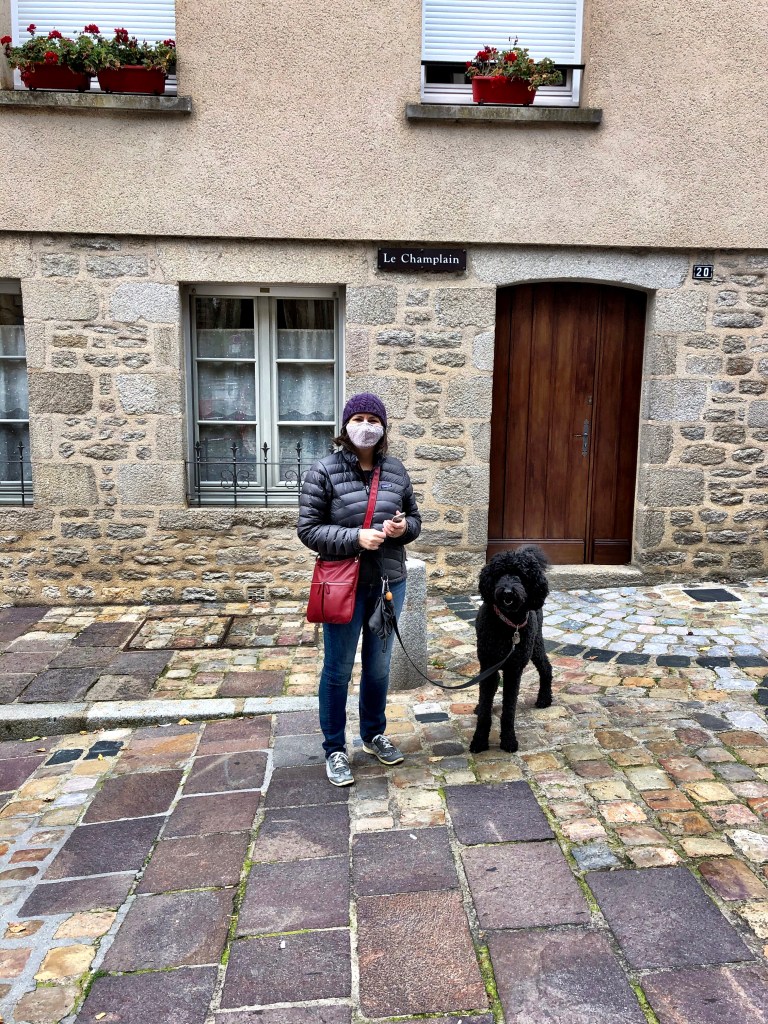
Cherie and Saxon, Masked Up and Ready to Explore
By the time we explored a bit further, the afternoon was waning and Saxon was ready for a rest. Laval has much more to offer. In particular, several romanesque churches and abbeys. But they would have to be for another day. It’s not far away from home, after all. We thoroughly enjoyed our few hours in this interesting historical town on the Mayenne. If you are ever in the area, we highly recommend a visit. You won’t be disappointed.
By the way, we enjoy reading your comments. Let us know what you think – good or bad. We can take it. Or, if you have any stories of France you would like to share, we would love to read them.

















 Finding Our France