Cabin fever had finally gotten the best of us last weekend. Trying our utmost to stay at home, isolate as much as possible, wear our masks, and do our part to keep ourselves, our neighbors and the country safe from Covid-19, we had not really traveled anywhere to sight-see since the pandemic began. But working on the house non-stop had been getting monotonous. Our retirement plan had always been to intersperse home projects with travel. So, finally, we forced ourselves to put down the tools and hit the road.
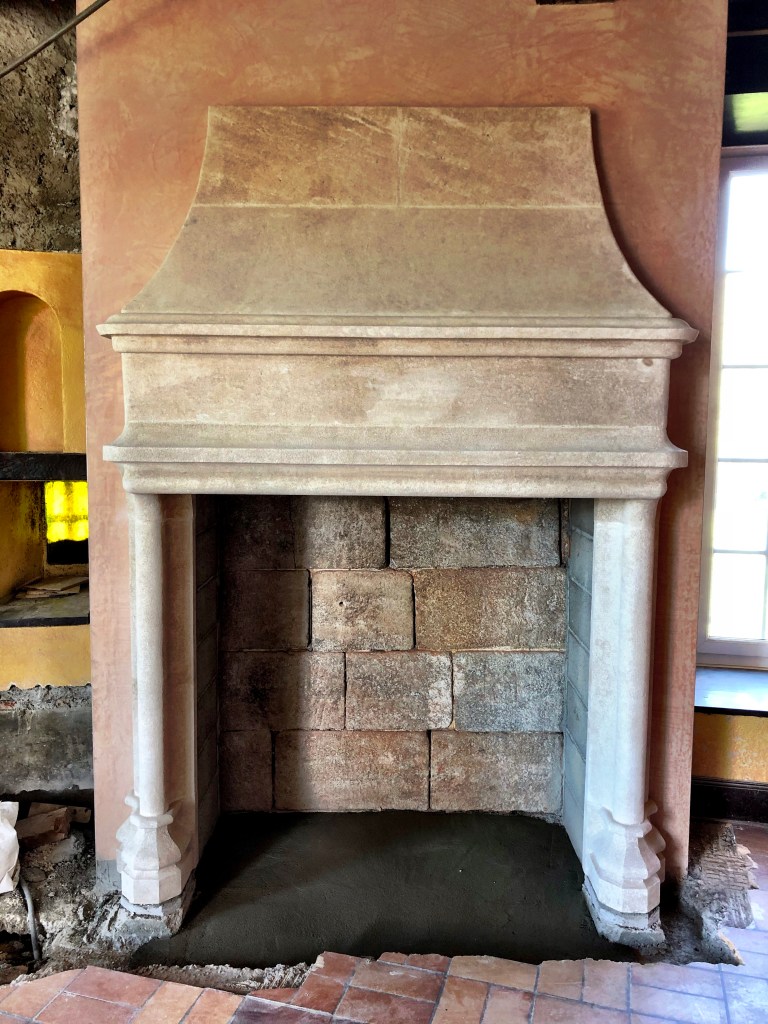
Our New Stone Fireplace is Finally In
We only had an afternoon and we didn’t want to go far. Somewhat at random, we spotted a town named Mayenne on the map. It’s a medium-sized town to the east, about 44 kilometers from Fougères. Google told us that there is a château in the center of the ville which was all either of us needed to know. Mayenne it was!
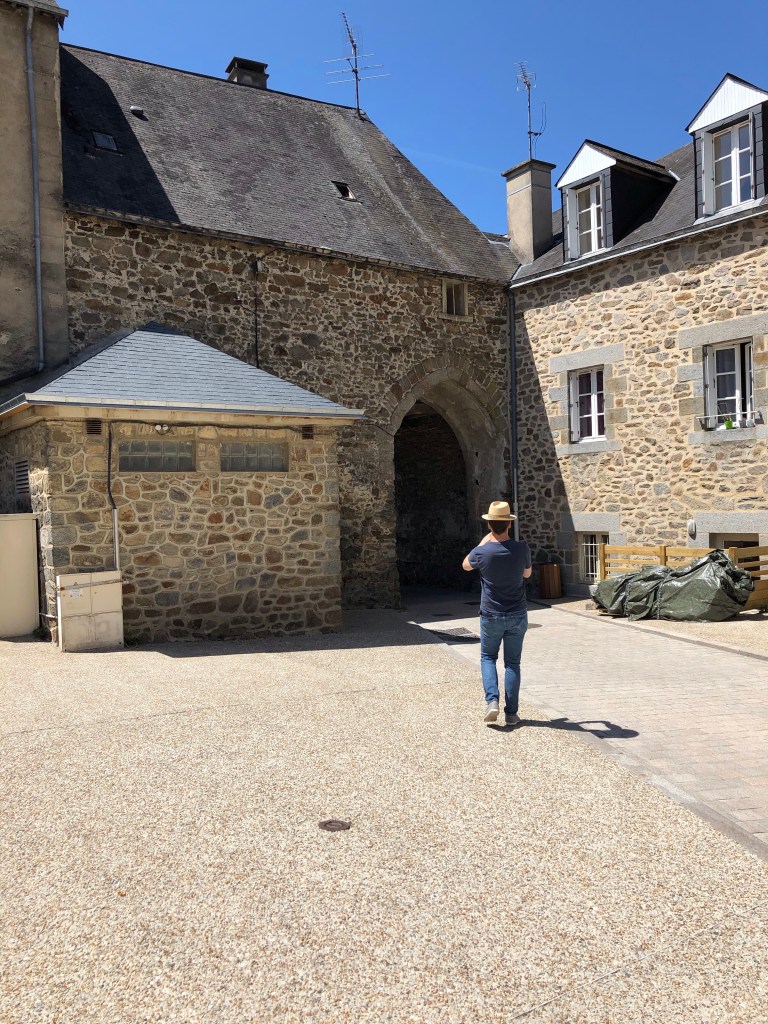
I Love a Good Archway
The day was lovely. Sunny. Blue skies. Winding country roads. Very french-y and just what the doctor ordered. We knew that we would be visiting a museum at the château so we left Saxon at home to guard our little tower. Besides, he doesn’t do well in warm weather so it was better for him to remain inside the cool of the stone walls.
Mayenne, the town, is situated alongside Mayenne, the river, which runs through Mayenne, the departement. They really like the way Mayenne sounds.
Blue Skies And Belle Façades
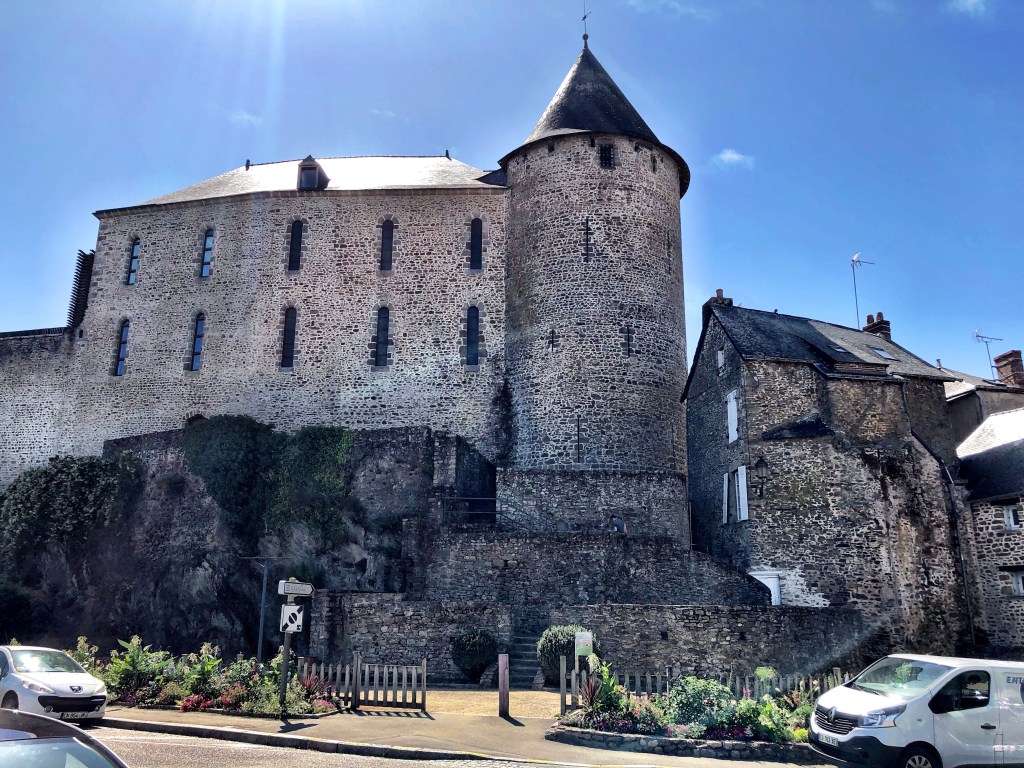
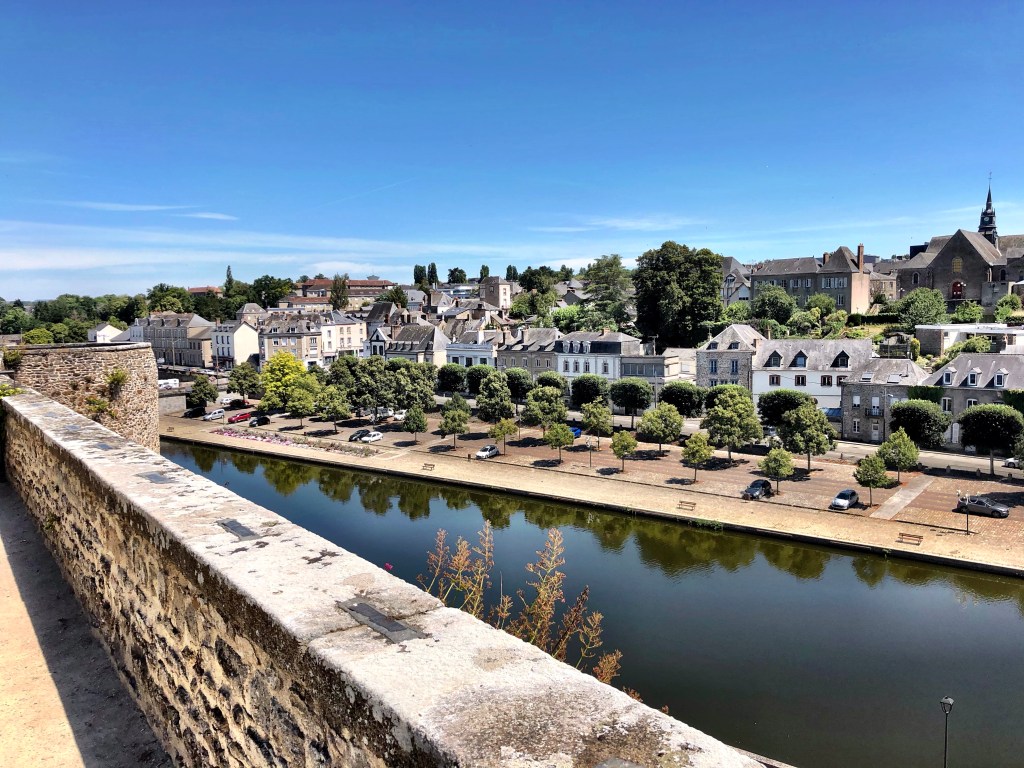
We maneuvered our way into the old town and found a shady spot to park the car. After getting our bearings, we made directly for the château. The château sits on a bluff running alongside the waterway which bisects the town as it makes its way south to eventually flow into the Maine and then Loire rivers. There has been a castle in this spot in Mayenne since at least the beginning of the 10th century. And before that there had been a Roman fort controlling the area. Remarkably, one can see elements from all of these periods in the remnants of the edifice which still stands today. The building houses a very good museum with a small but well-curated collection of artifacts on display representing the history of the local area. The architecture is varied and in good repair following recent restoration/preservation work. And we had the place virtually all to ourselves. Which is a shame, really. These museums rely heavily on the income they receive from tourist admissions in order to maintain the sites and carry out research. Like all museums and historical attractions, they will undoubtedly suffer a dramatic deficit in their funding due to the effects of the pandemic.
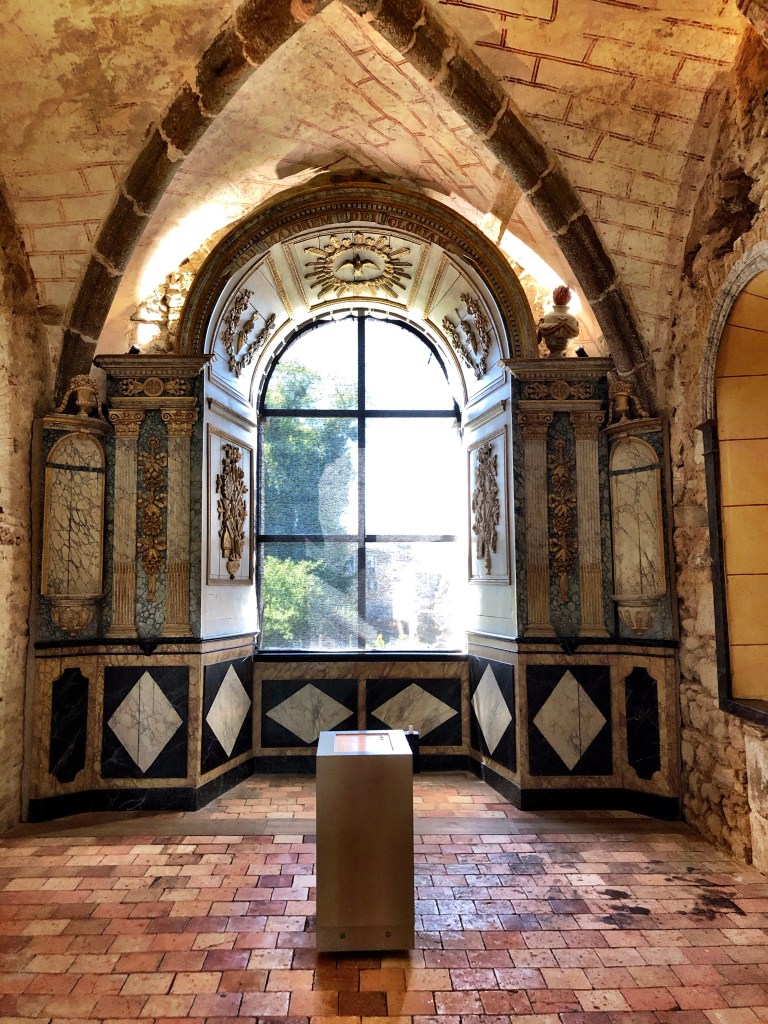
The ChâteauMedieval Hall19th Century Prison Chapel. Note the Remnants of Medieval Ceiling Decoration.
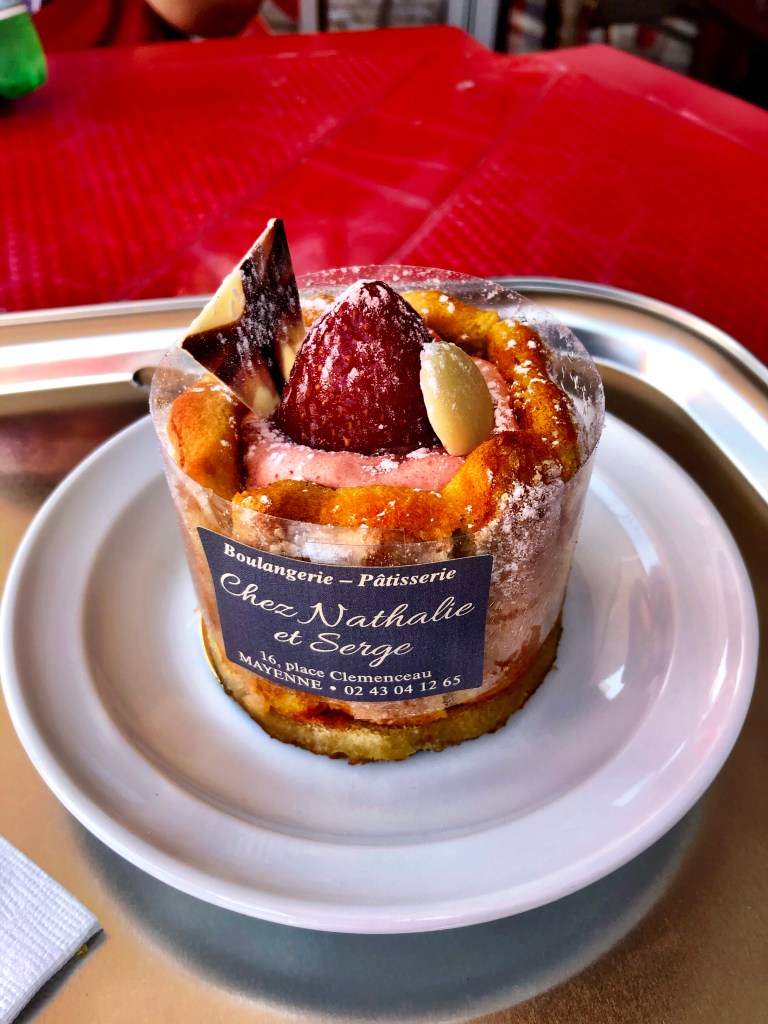
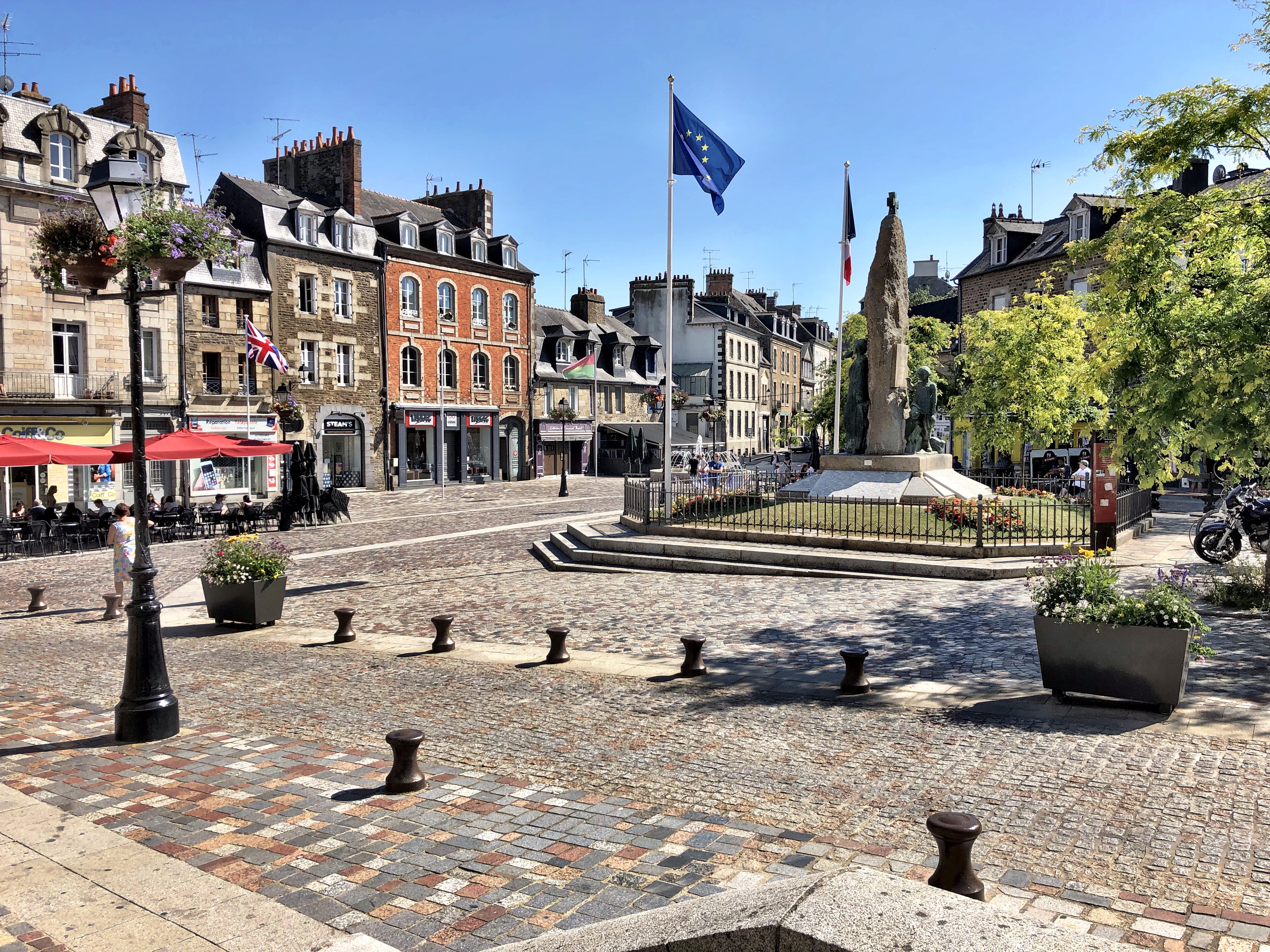
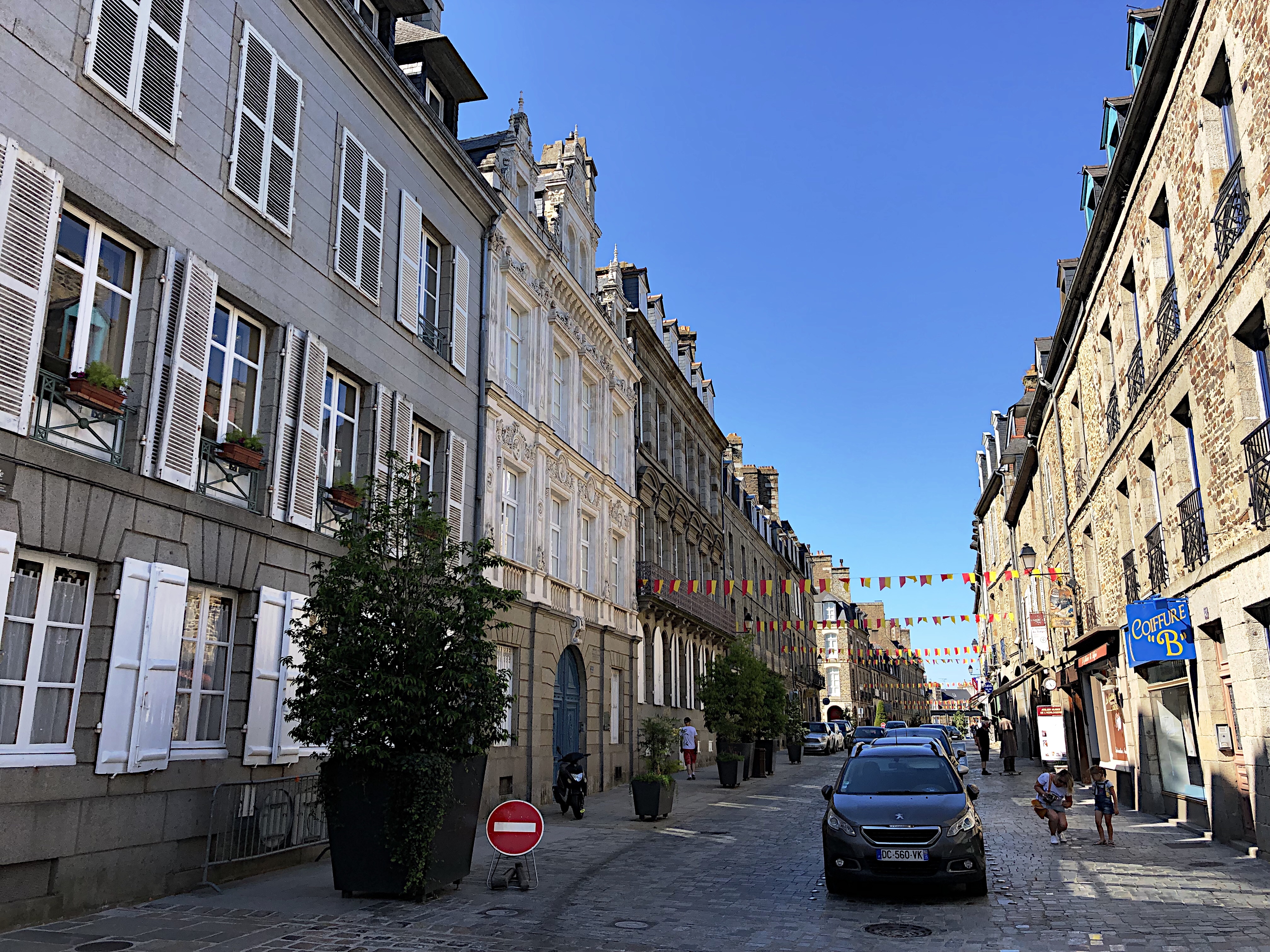
After the museum, we wandered around the streets of the old town. Then our stomachs reminded us that we hadn’t eaten lunch and demanded attention. We never argue with our appetites. So, we found a nice boulangerie, grabbed some quiches, drinks and dessert (duh!), and spend some quality french time in the square just watching the world go by. I highly recommend it.
No Lunch Without Dessert!
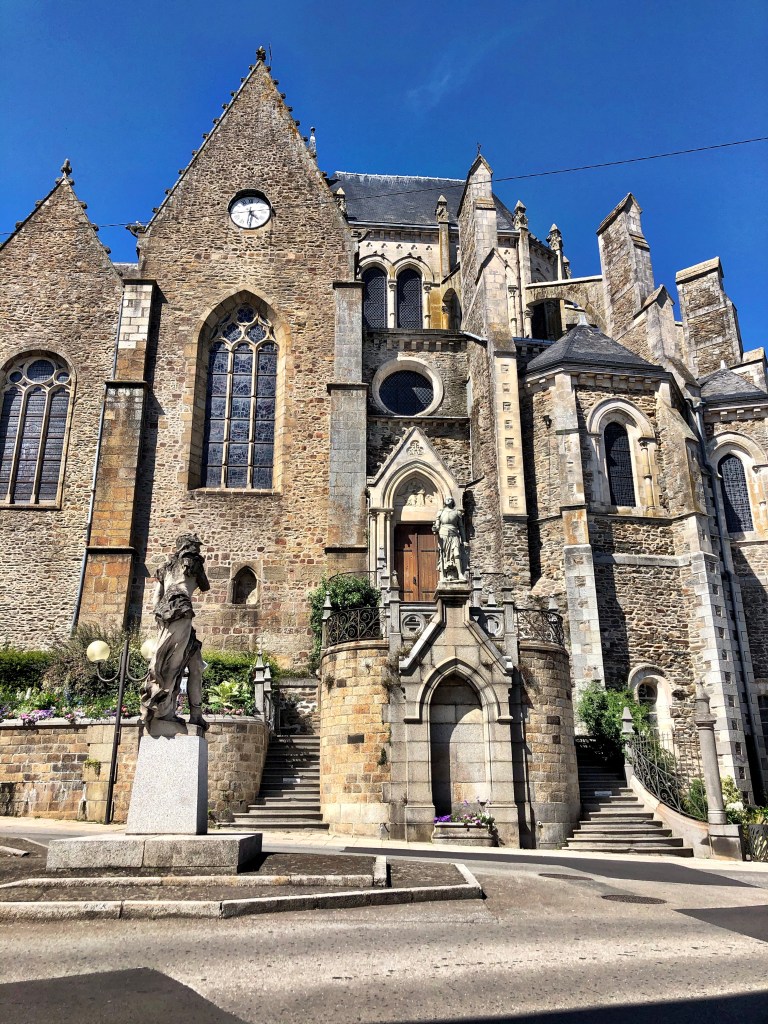
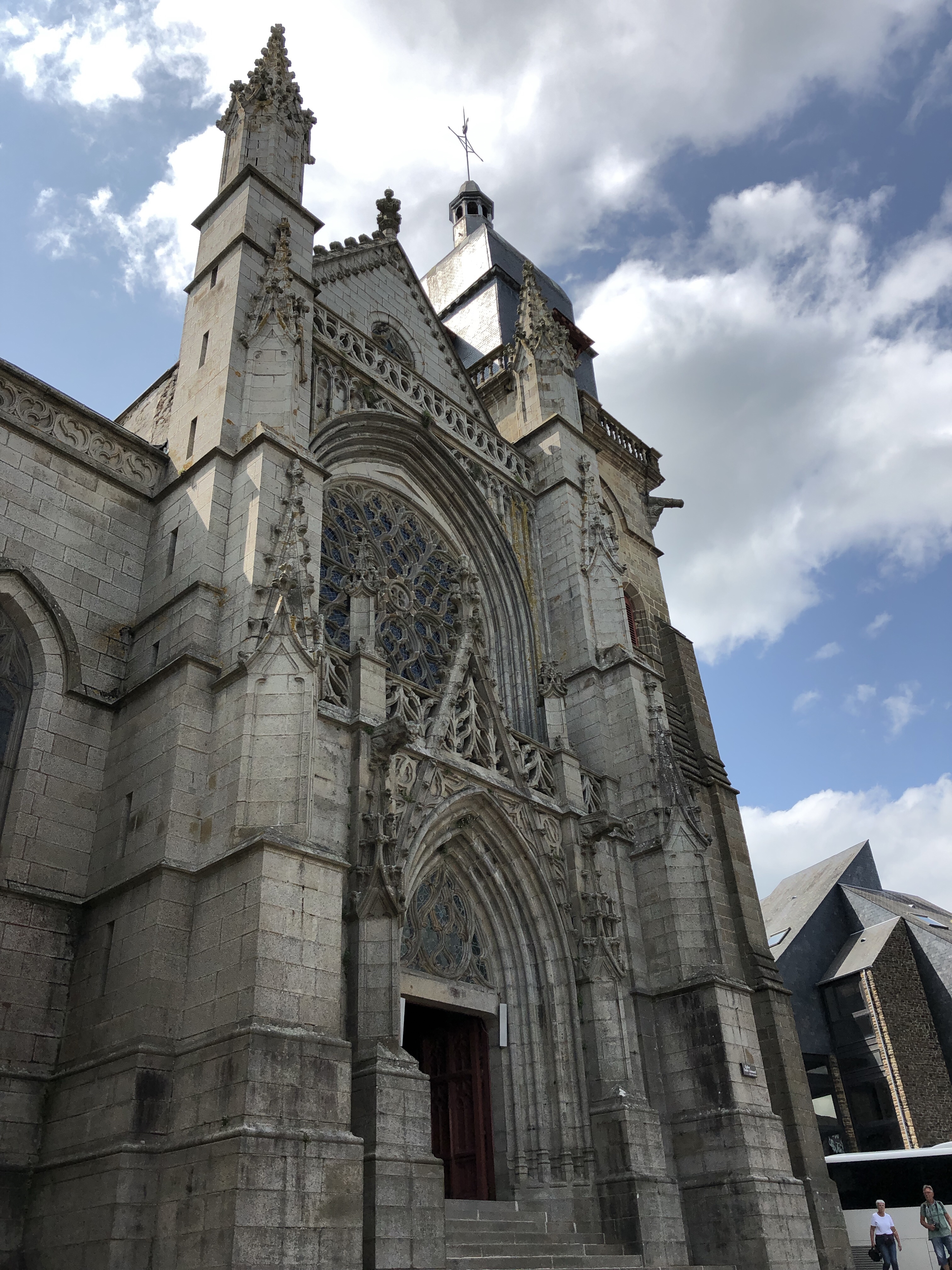
Our stomachs satiated, we strolled around a bit more, happening upon a church. The Basilica of Notre-Dame yields an impressive appearance on the exterior, boasting flying buttresses enfolding a large apsidal eastern end and an impressive stairway. However, we found the interior to be somewhat wanting. Only elements of the nave piers and some scant carving remain of the original 12th century building. The majority of the church appears to be a 19th century reconstruction. Still nice, but a little disappointing. Are we getting too picky now that we’ve been in Europe for almost two years? Perhaps. But I would say that it is rather a case of becoming more discriminating.
Basilica Notre-Dame
Although we only allowed ourselves three or four hours in Mayenne, our visit was rewarding and relaxing. Just the thing we needed. It’s a pretty town with lots of shops and some lovely-looking restaurants that we will have to sample the next time we find ourselves in the area. It felt good to stretch our legs a bit and indulge in our craving for the history and beauty of France. This country never disappoints.
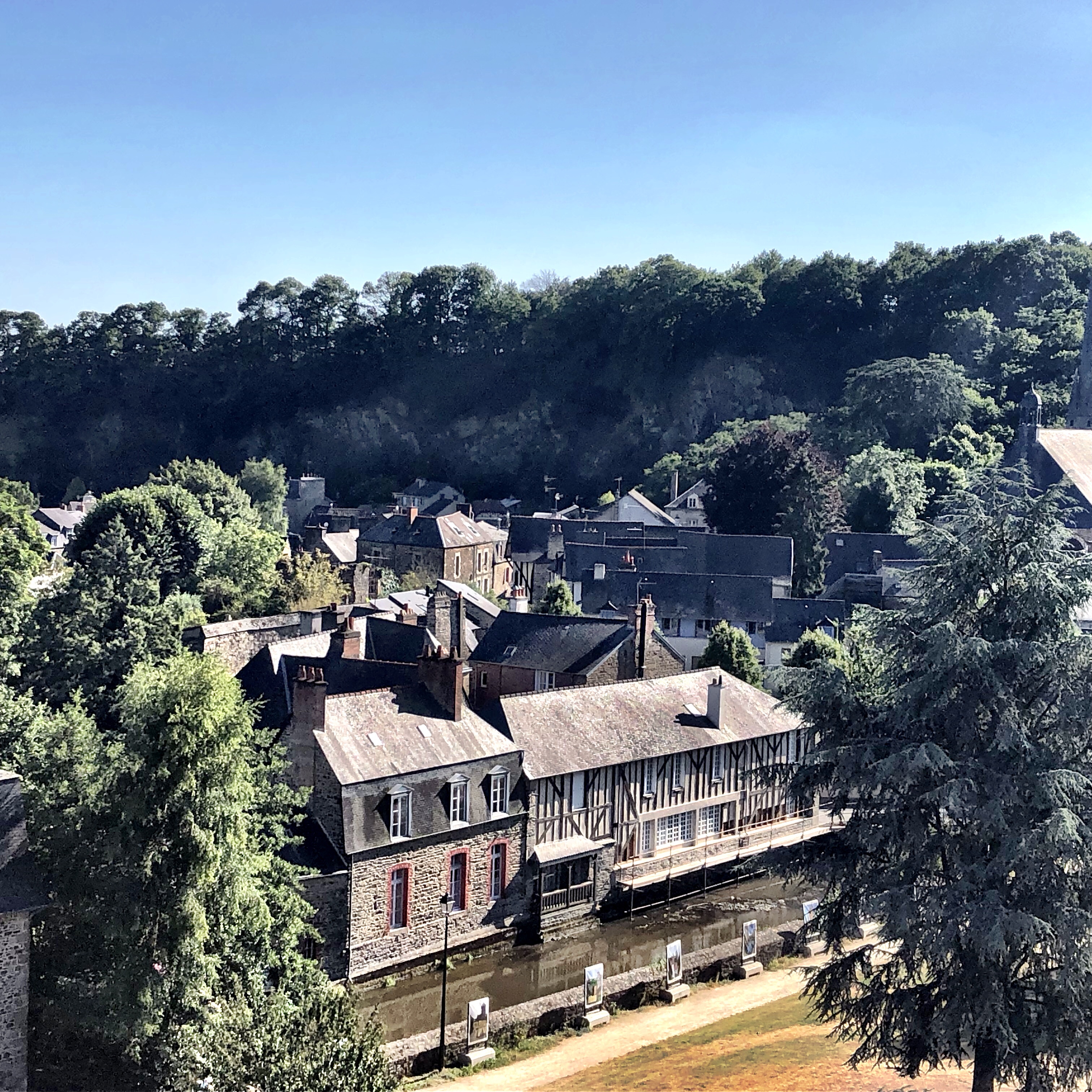
View From the Château Rampart Across the Mayenne River
As a certified Tolkien geek, I was bemused last year when Cherie and I first came across a road sign announcing that the next exit would lead one to Elven. How cool is that?, I thought. But we were on our way to Vannes down the road at the time so we didn’t stop to investigate. A couple of weeks later we discovered that there is a town called Rohan not too far away. Elves, Rohan. Surely we have discovered Middle Earth!
No elves!
After a few further drive-bys (we always seem to be on our way to Vannes for one thing or another) we finally decided to check out this magical-sounding town of Elven. Would there be houses of sinuous design as at Rivendell? Perhaps timeless glades of statuesque mallorn trees such as would be found in Lothlorien?
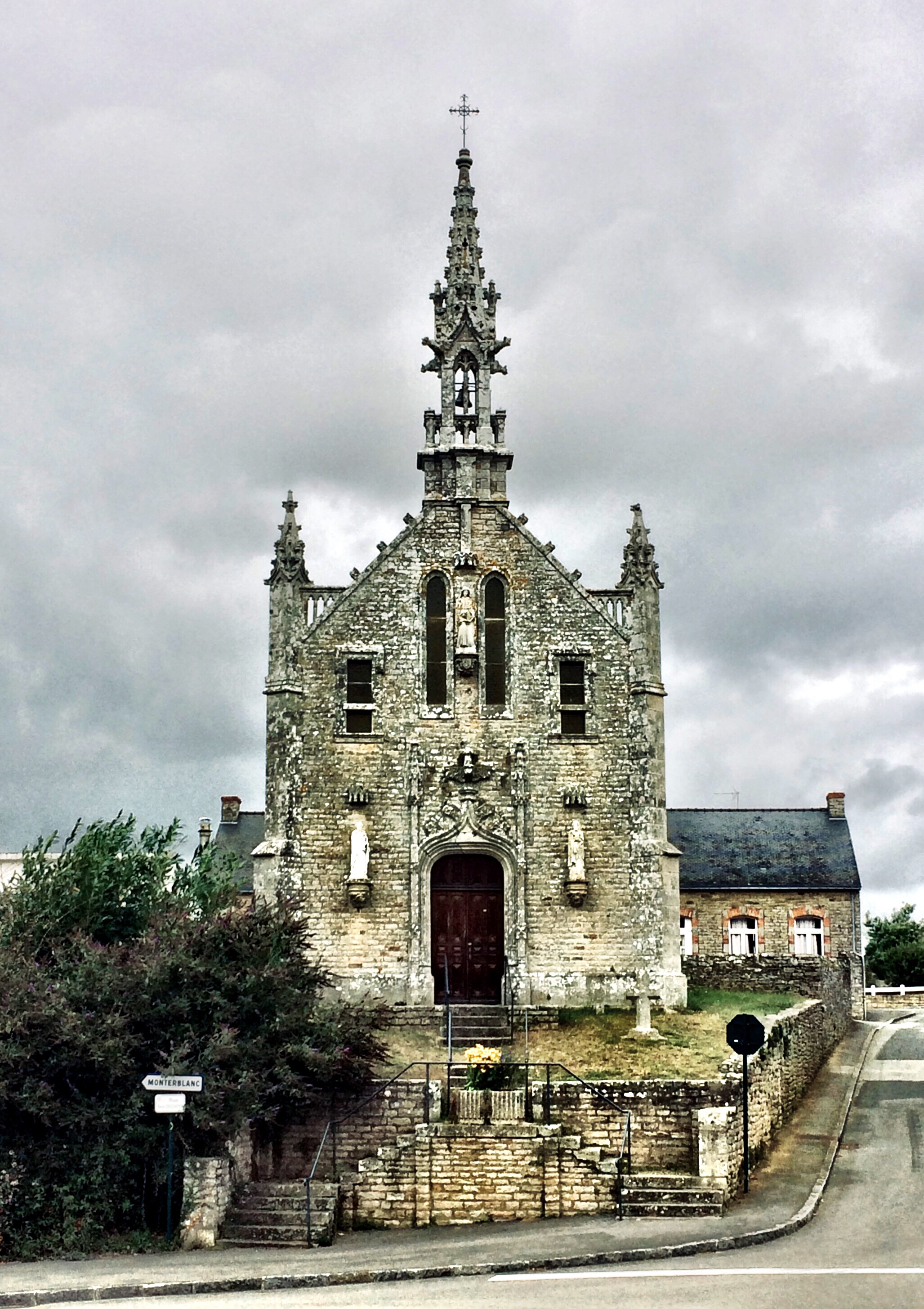
Nope. Elven is really just an average French town. We stopped and had a walk around its small center, grabbed a couple of sandwiches and pastries and noted that the town unfortunately appears a bit down on its luck. We discovered a nice little chapel on a knoll and the parish church was undergoing an extensive restoration. But apart from that, we found nothing of particular interest. And definitely no sign of elves. How disappointing.
But. We also saw signs for the Tours d’Elven, or the Forteresse de Largoët. [Tours is French for “towers”] Despite the different names, these appeared to refer to the same site. Intrigued, we attempted to find it. Or them. Or whatever “it” was. Following the signs will get you nowhere. Literally. But with the help of Google Maps we were able to track it down. Finally, we had found it. Unfortunately, we found it out of season. A long rural driveway brought us to a lovely gatehouse with a not-so-lovely paper sign suggesting we try again a few months later, in springtime. This place was proving harder to get into than the Black Gate of Mordor.
One thing led to another and we had many distractions (see previous posts) to keep us away from the mysterious towers in the forest and we had nearly forgotten about them. But last weekend we were wanting to take a walk somewhere new. Suddenly I recalled the mythical Tours d’Elven. Quick, we thought, we had better seek them out before they disappear for yet another off-season hiatus. So we launched the Audi southward from Malestroit, tingling with the anticipation that, at last, we might finally catch a glimpse of this legendary place, shrouded by ancient charms as it was in the misty forest.
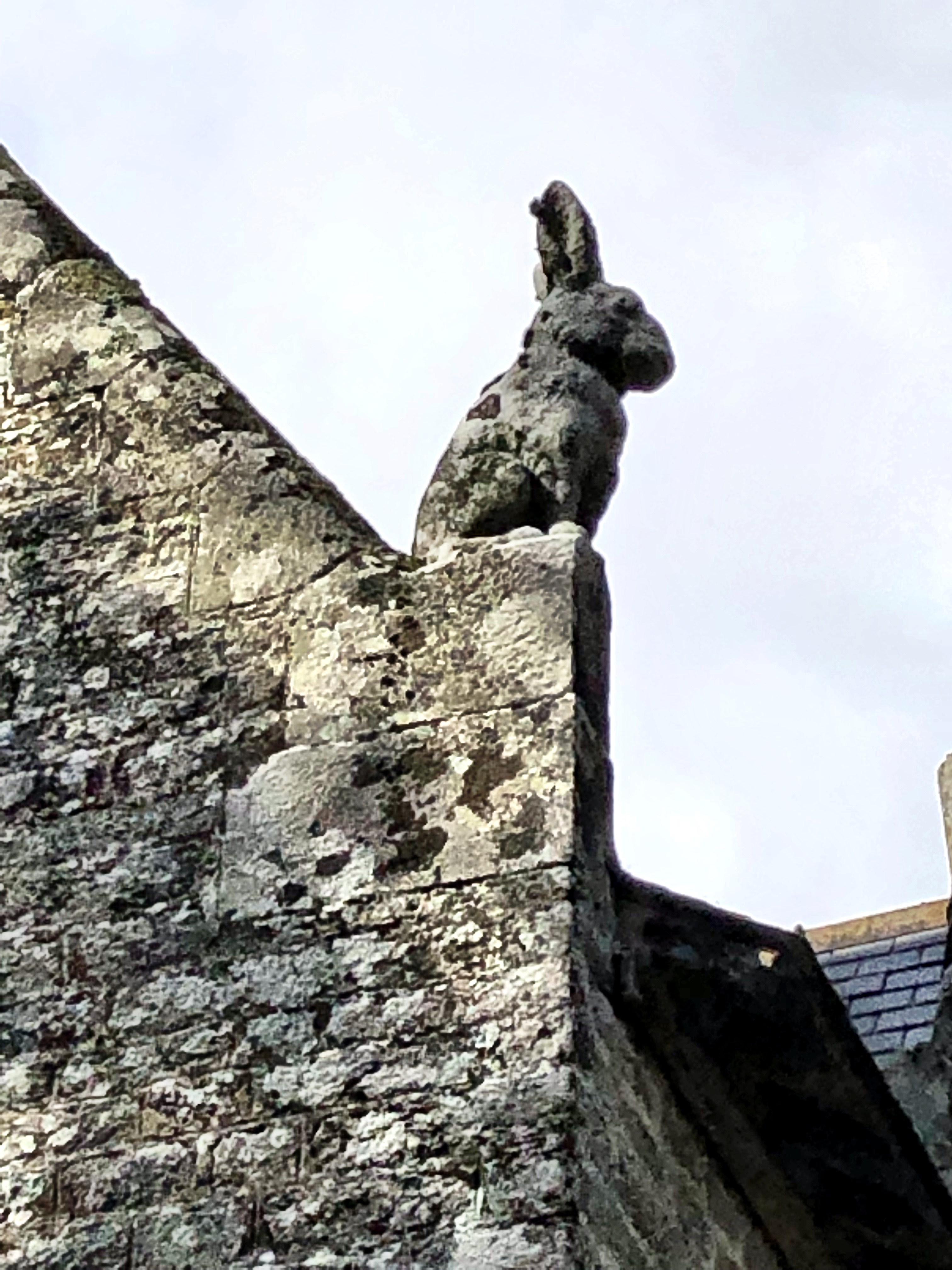
Just a Little GatehouseRabbit Sentinel
This time, Fortune favored us. We arrived to find the gates open and welcoming – as long as we plunked down our five euros each, that is. Tickets in hand, we discovered that this is a privately-owned monument. The gatehouse/ticket office was built in the beginning of the 20th century as part of a regeneration of the property. It’s a beautiful stone cottage with classic, stately lines mottled with lichens and well settled into the landscape. One peculiarity of the gatehouse are the several stone hares which decorate the gable ends and entrance stairway. They’re beautifully carved. A bit fanciful and, in one case, energetically straddling the bannister leading up the stairway to the front door in a way for which bunnies are well-known.
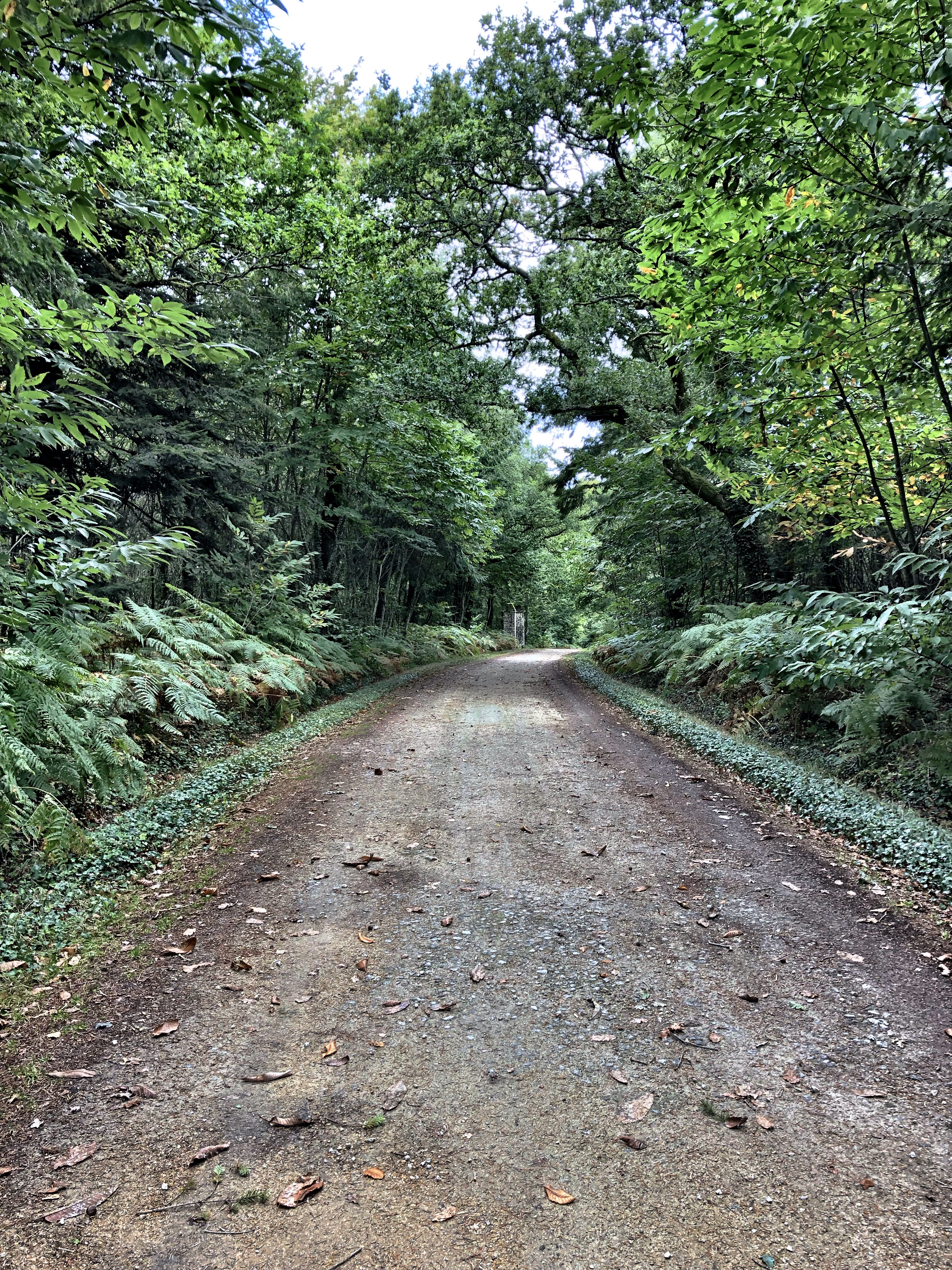
The Forest Way
Past the gatehouse a gravel road led us on a tranquil stroll through woodland filled with chatter of songbirds. In the distance, we could hear the baying of hounds on the hunt. Not surprising this time of year. The French are mad about hunting (also fishing). It’s not uncommon to come across an organized hunting party while driving country roads. They usually place a couple of warning signs on the roadside to let people know that there are armed enthusiasts milling about in a nearby wood or field. Proceed at your own risk. The sound of gunshots is fairly common out here in the wilds of Bretagne. It makes hiking the trails a more piquant experience.
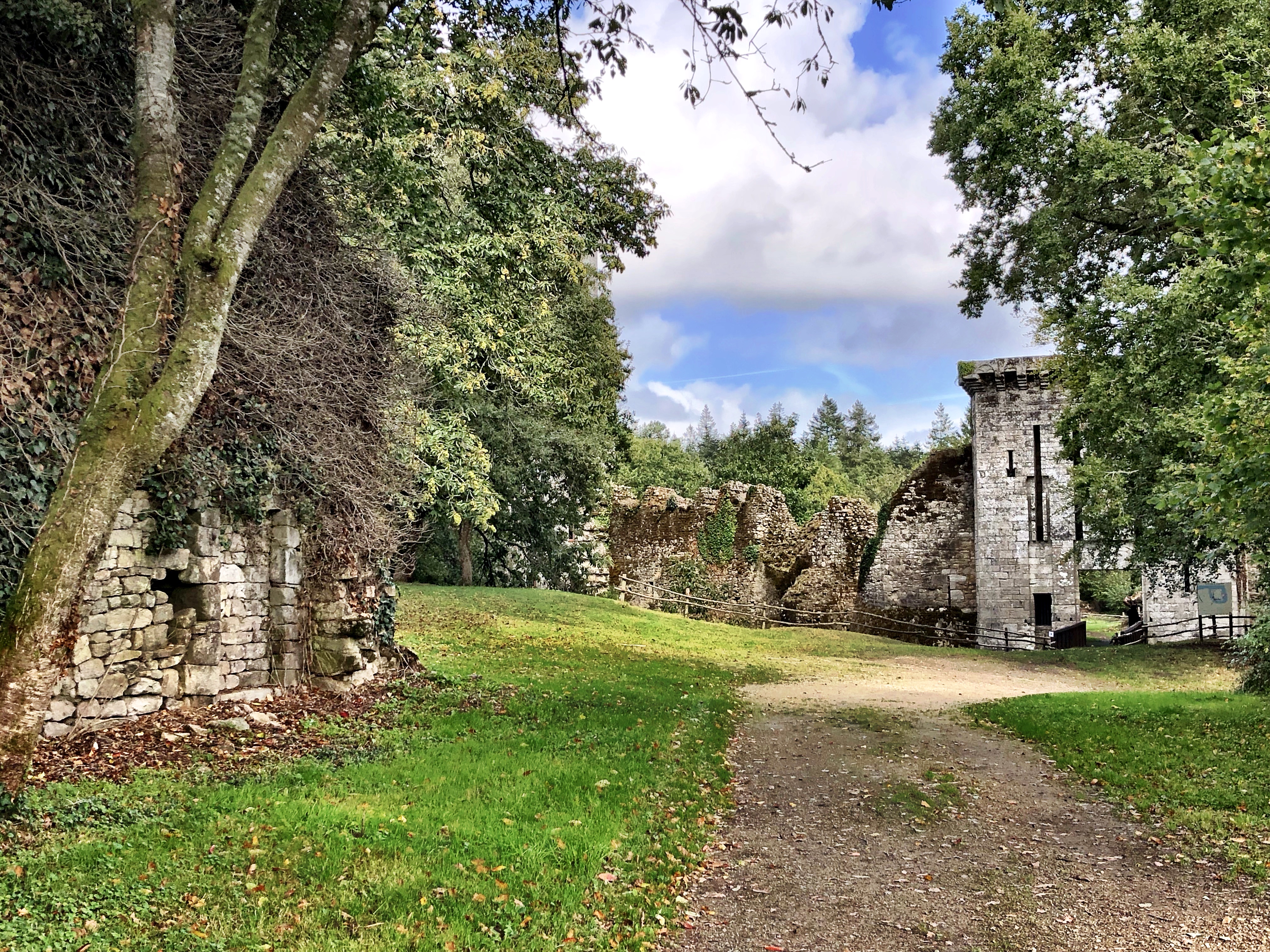
A Promise of Majestic Ruins
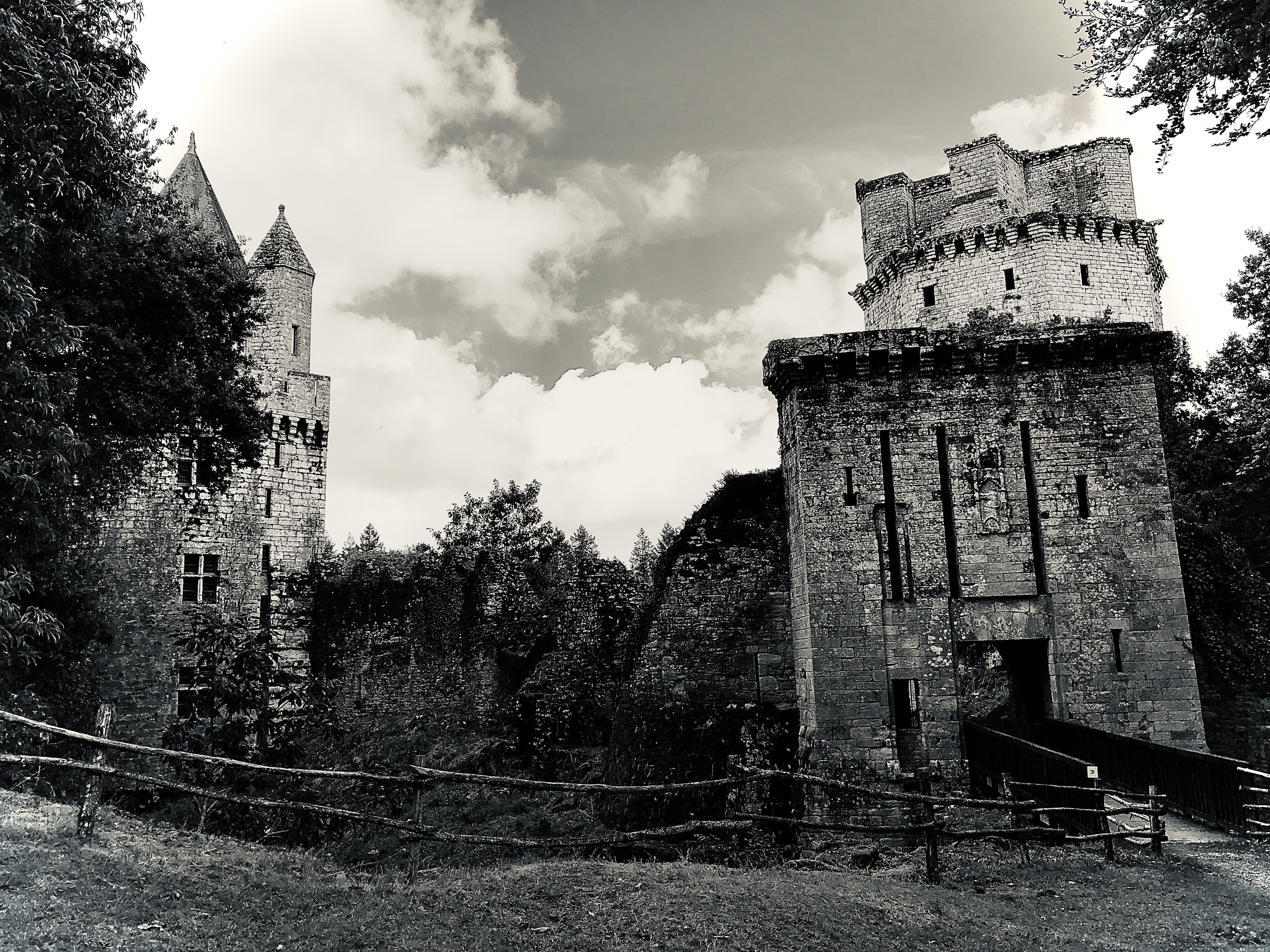
Suddenly we emerged into a clearing filled with majestic medieval ruins. We assumed there would be a few remnants of broken wall jutting out from a tumble of brambles. We were mistaken. Confronting us at the end of the road was a moat guarding a stone gatehouse, behind which rose two massive towers. “Quelle surprise!”
“None Shall Pass!” A Formidable Gate
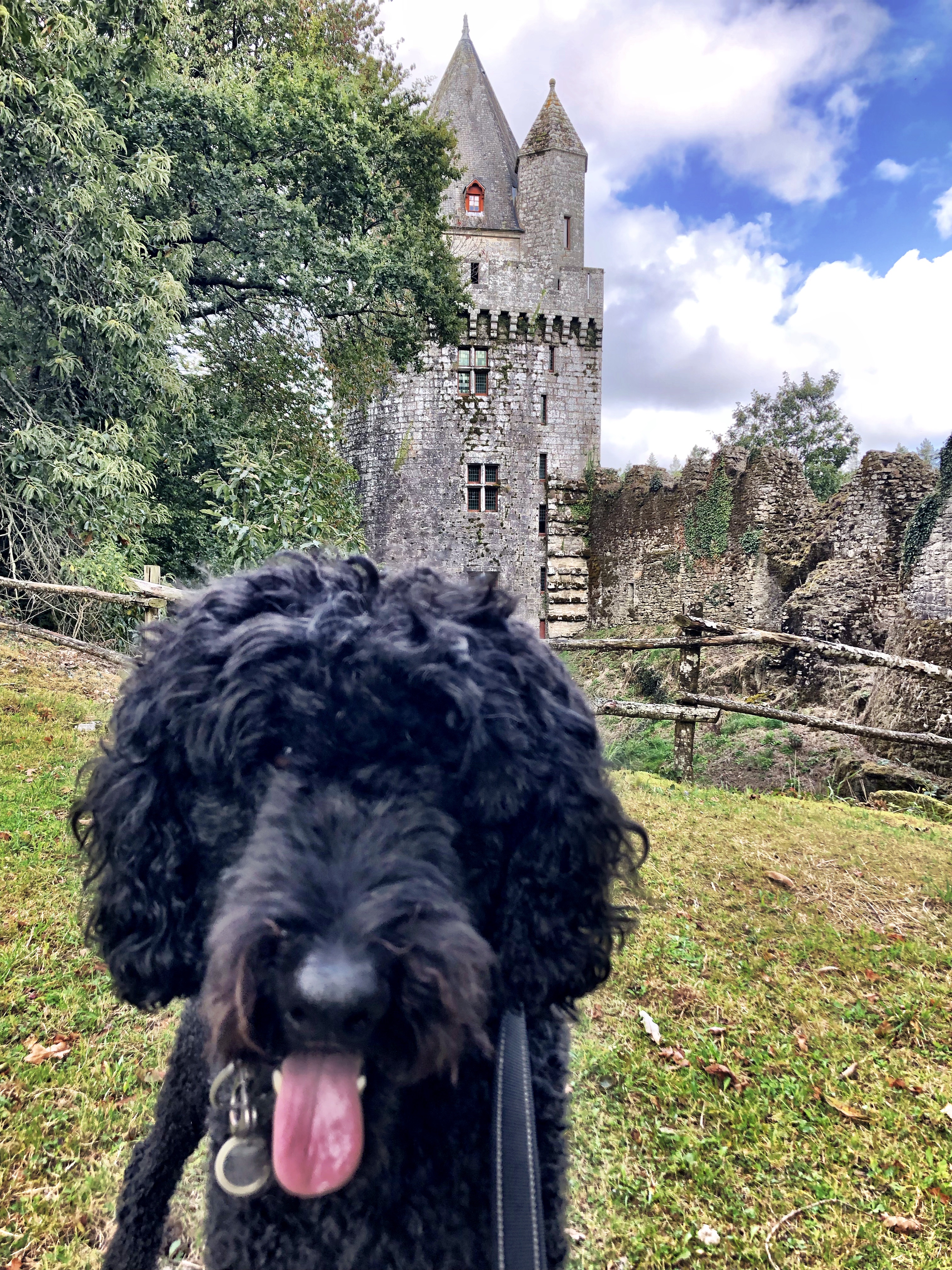
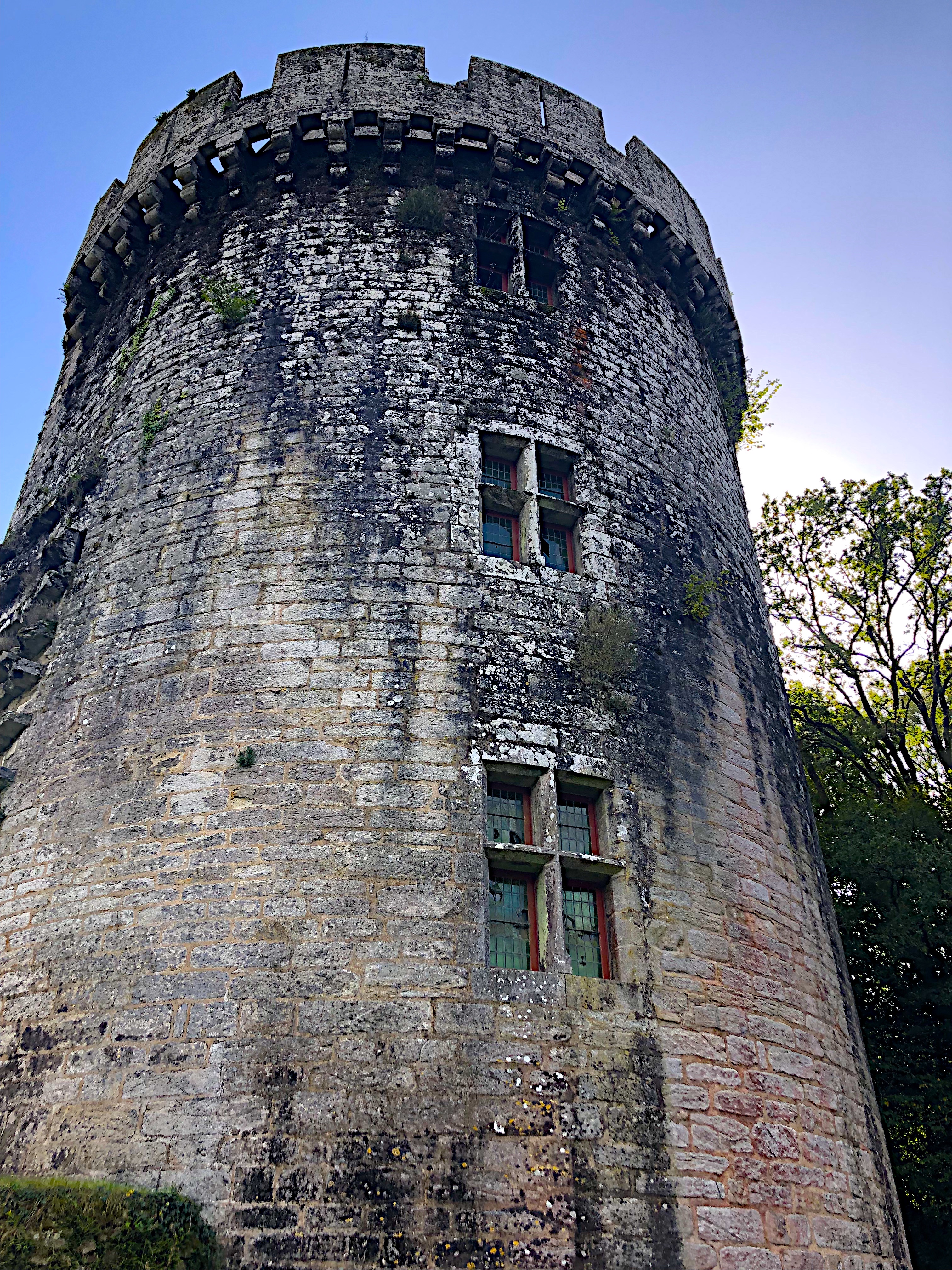
The Forteresse de Largoët is a compact site, much of it in ruins, but dominated by its two magnificent towers which still reach to their original heights. The castle was primarily built in the 15th century and, at one time, formed a small island surrounded by a water-filled moat on three sides and a small lake on the other. The rear elements of the gate (two flanking towers) date from the 13th century. It’s the only gate complex that I’ve ever seen which has arrow slits opening into the gate passage itself. Ingenious and, I imagine, quite effective if attackers ever managed to batter the gate down and get into the passage.
The Donjon
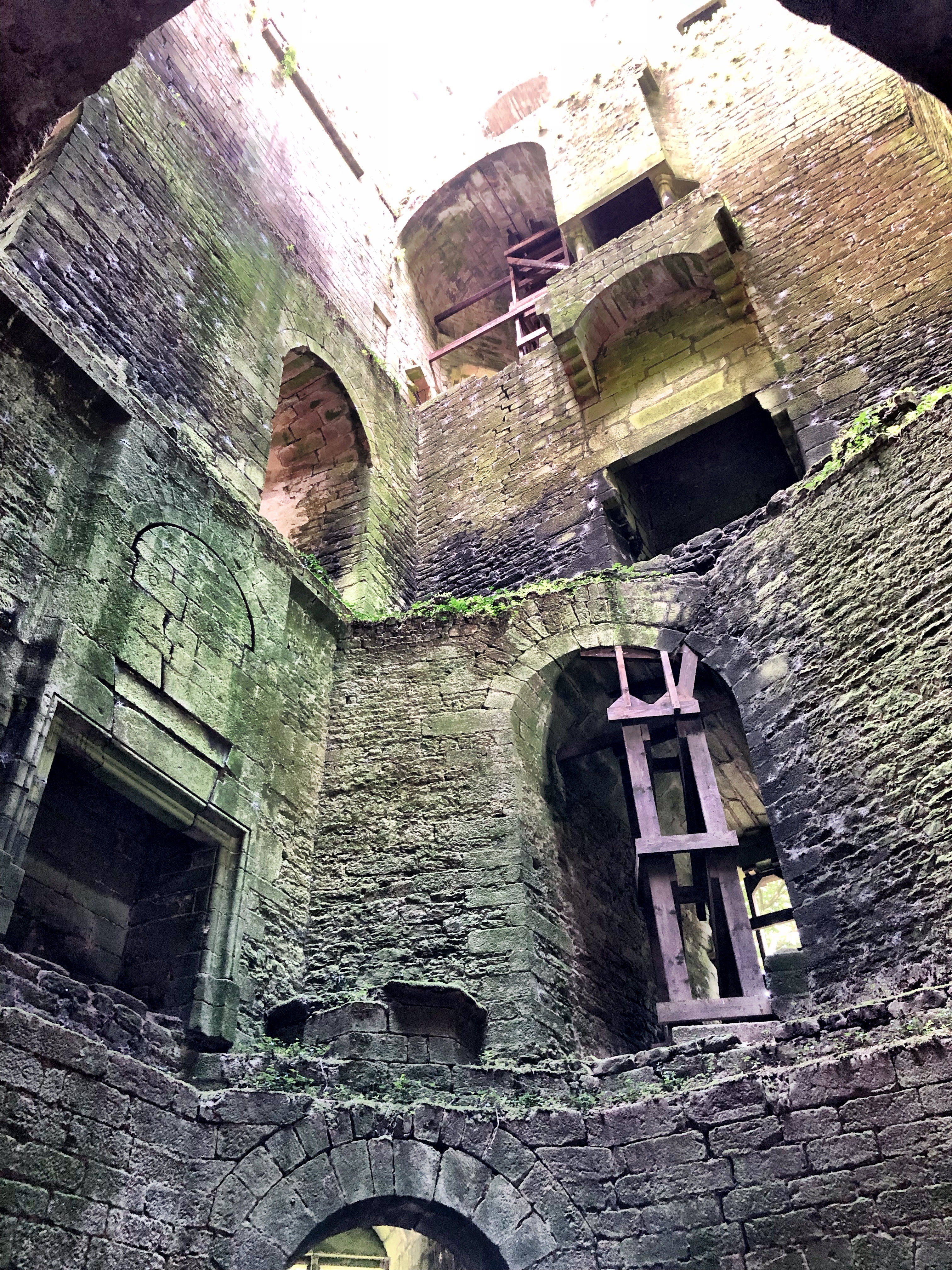
The main tower (the donjon) is open to the public. It’s also open to the rain, the snow, the wind, and pigeons – sadly, it has no roof. So it is somewhat of a shell. But one can still wander about, investigate its many alcoves. [“You use this word, alcoves?” – that’s for all of you In Bruges fans. If you are not a fan of this movie, well … it beggars belief.] There are also two winding stairways which climb nearly the full height of the tower. At each level you can gaze out over the beautiful forest and lake, or wander into empty spaces still containing fireplaces, window seats, garderobes (medieval toilets), arched ceilings and wonderfully carved doorways. The larger halls and chambers of the two central cores running vertically through the donjon apparently had wooden floors which long ago rotted away, leaving precipitous views of fireplaces and other elements now hanging in mid air.
Fireplaces in the Sky
Despite its partly ruinous nature, the donjon is really impressive. Seven floors. Forty-five meters tall! It’s huge. And it must have been mind-numbingly expensive. Elaborately decorated with gargoyles, stepped machiolations, molded edgings, the entirety of the exterior and interior is faced in fully-dressed stone. None of your cheap rubble construction at Largoët.
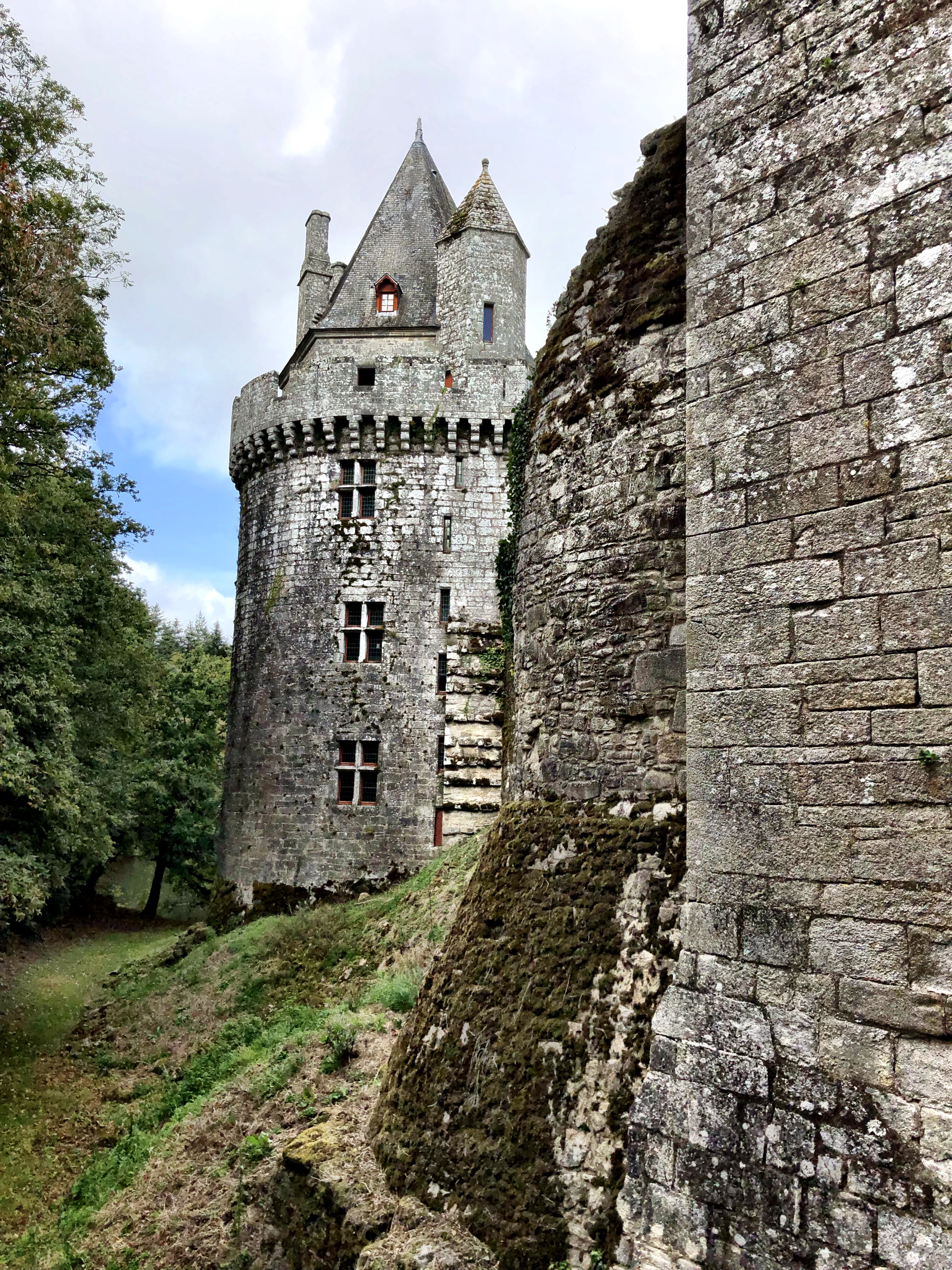
La Tour Ronde
The other tower, the Tour Ronde, is less statuesque than the donjon, but it, too, is beautiful and imposing. It was restored in 1905 when the top bits were reconstructed and used as a residence for some time. Unfortunately, this tower is closed to the public so we weren’t able to have a peek inside.
Dog & Castle
It’s easy to imagine how this castle in the woods must once have looked. In spite of the many ruins, the remains are substantial enough to allow one to form a full image of its walled might when the complex was complete and filled with the many inhabitants who must have lived and worked there. For the lords of Largoët it was surely a life lived in the height of fashionable architecture and security. Exciting as it is to explore such amazing sites, I am always left with a bit of sadness that a building of such beauty, so cleverly conceived, and having required such effort to complete, could be left to fall into ruin, largely forgotten or, at the least, discounted. A place no longer valued. To me, it’s a form of disrespect. Not just to the noble elites who conceived and enjoyed the many advantages of such a place, but also to the countless men and women whose names we will never know – those who toiled to build, maintain, and serve the Forteresse de Largoët. We could certainly do them more honor.
The Sun Sets on Largoët
As for the elves? Not a one. Nor dwarves, hobbits, orcs or goblins. Not even an ent in the woods did we see. We certainly found the two towers. But Middle Earth? Well, I guess my search continues. Nonetheless, we had a fine day and we were so happy we persevered in our quest to find this place. Should you ever find yourselves in this magical part of the world, you will not regret a visit to the Elven Towers.
In the Jardin du Nançon, Our New Home in the Background
Where? Well, one of the benefits of being quite new to France was that we held no preconceived ideas about which area would be the best for us. So, pretty much all of France was in our sights. Of course, many of you are familiar with our preference for cooler climes. Thus we did have some bias against southern France. Apart from that, we were keeping an open mind.
We also knew that we preferred to live in an urban setting if possible. Having lived – and loved – our lives in the heart of Capitol Hill in Seattle, we didn’t think that we could trade away the liveliness and convenience of having services, entertainment and restaurants within easy walking distance of our doorstep. Not that it had to be a large city like Paris or Lyon. But we hoped we could find at least a medium-sized town which offered an urban ambiance. Malestroit is a lovely, lovely town. And, compared to most American towns of similar size, it packs quite a punch in terms of services, commerce and events. Even so, it’s a little too quiet, a little too insular to suit our taste.
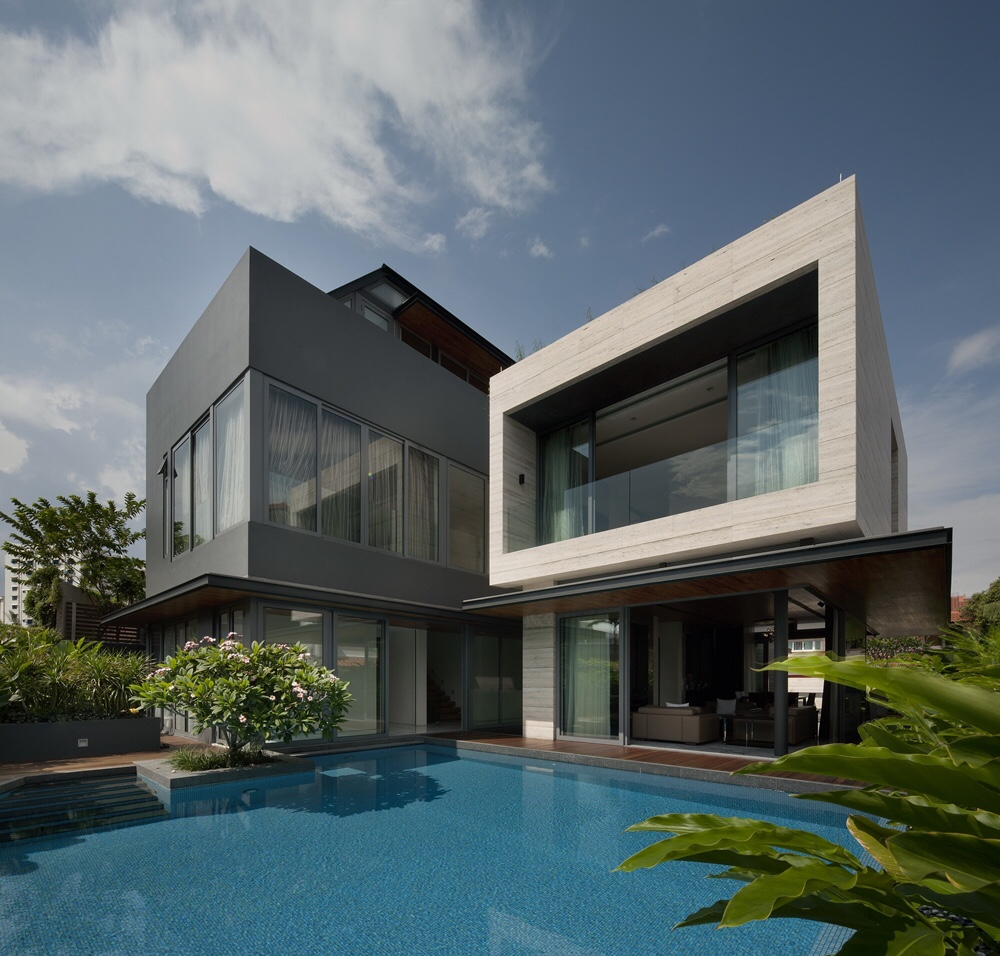
By far the most important criteria for finding a place to live was the house itself. Cherie and I are both massive enthusiasts for architecture – as long as that architecture was built before 1940. Apologies to all of you lovers of mid-century modern and later styles, but we find nearly all of that to be appallingly cold, unimaginative, without soul. It’s lucky that we both tend to gravitate toward the same types of buildings. Generally, the older the better. Although I suppose we would both draw the line at stone-age cave dwellings. Give us a medieval or renaissance abode any day. A neo-gothic or Palladian pile? Sign us up. For us, a minimalist concrete box with “clean lines” doesn’t hold any appeal. To put it another way, we prefer Glen Close to Kim Kardashian; Rembrandt to Rothko; Bach to Satie.
NOT on the Agenda!
Looking for properties here in France is a bit more of a random affair. One does not enlist an agent who will help you search for you dream home, arrange viewings and accompany you to the property. Nope, that’s all up to you. Here, each agent holds a certain inventory of homes for sale and they will only show you those properties. So, if you see a property you like, you must contact the particular agent who represents the owner of that property; they generally seem to accompany you to view the house – which is a bonus when compared to the U.K. where they only set up the viewing but you are on your own with the property owner or renter (as the case may be) to view the house.
In essence, there is no one on your side. No one to represent your interests when searching for properties. If you are lucky, the home owner’s agent will be reasonably objective and help you out, but they are under no obligation to act in your best interests. I suppose that when buying properties in the U.S. we had been a bit coddled with the real estate structure in place there. And because of that, we had come to expect that same form of adult supervision in property searches everywhere. But it’s just not so. In France, you must be more actively involved. Once you accept that, the process is really not too difficult.
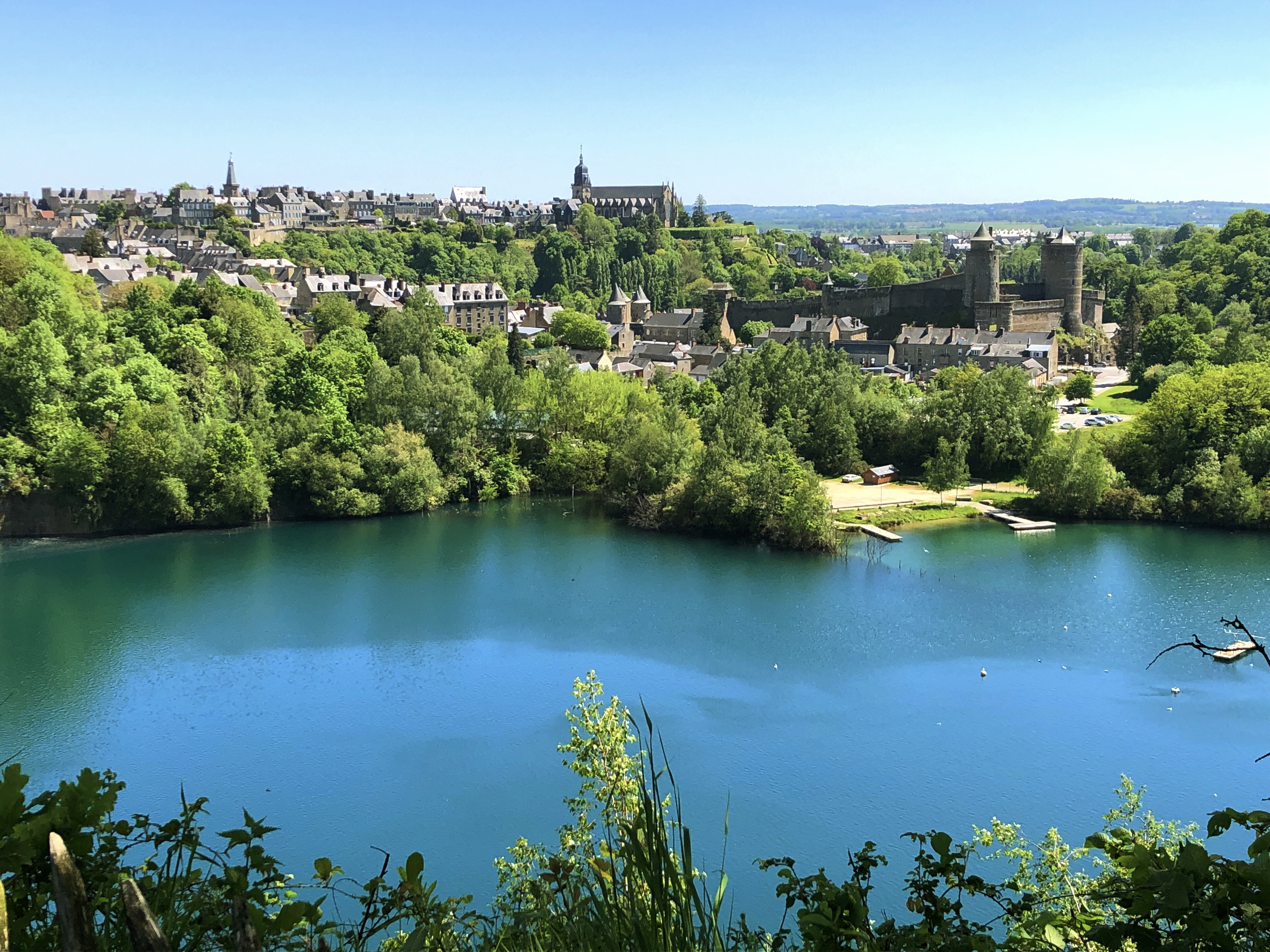
Fougères in the Distance
We began our search right away – just a couple of weeks after we settled in to our rental house in Malestroit. Online, we searched through thousands of properties. No joke. Thousands. There is a website here called Le Bon Coin. It’s the basic equivalent to Craig’s List in the U.S. This site has both private and professional home sales on it and ended up being the best resource for our initial search.
After finding a few likely candidates, we would call the agents or owners to arrange a viewing. Even though we considered properties throughout France, we ended up looking almost exclusively in Bretagne. To a significant extent, it was just easier to travel back and forth in the space of one day. We had no one to watch Saxon so he would have to come along on overnight forays. Was it practicality or laziness? Maybe a little of both. But in our defense, Saxon doesn’t like to ride in the car – it’s uncomfortable for him and makes him a little carsick as well. So it’s best for everybody if we avoid long drives anyway.
The Widely-Traveled Valerie Living it Up in South Africa
In the midst of our search, Cherie’s mother, Valerie (“Val”), came to visit us. She is an ardent house junkie. So she quite happily joined us on several property viewings throughout Bretagne and the Loire Valley. We all had a fun time crawling, climbing, snaking through ancient houses that were sometimes barely standing.
Just before Val arrived, we happened upon a property in the northeast corner of Bretagne in the medium-sized town of Fougères. Both of us liked it and we thought it would be worth a second look while Val was here to give us the benefit of her opinion. She has a keen eye and we wanted her take on it. At second look, we liked it even more. Val was convinced it was the place for us. Cherie loved it so much that it brought tears of joy to her eyes. Nevertheless, we tried to remain pragmatic; we looked at a few more properties. But, in the end, nothing matched the house in Fougères.
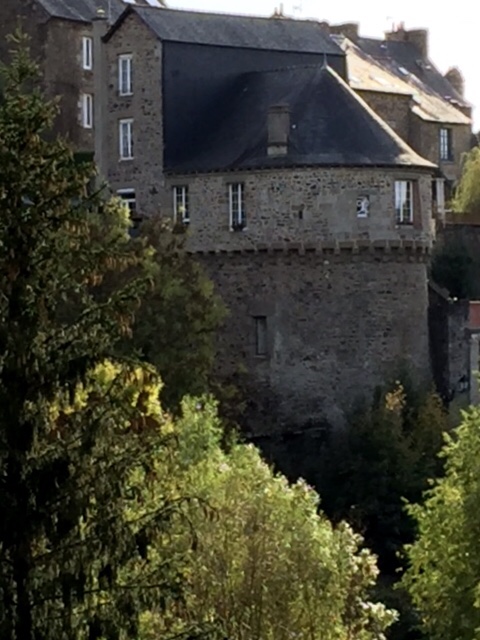
La Tour Desnos from the Northeast
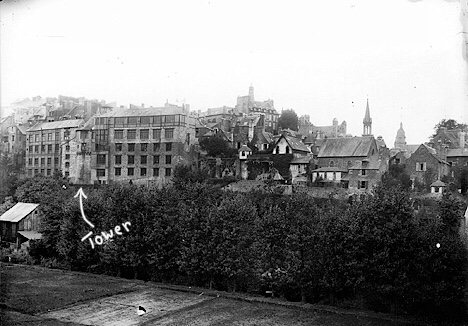
L’Usine Pacory: 19th Century View of the Pacory Shoe Factory Enshrouding the Tower
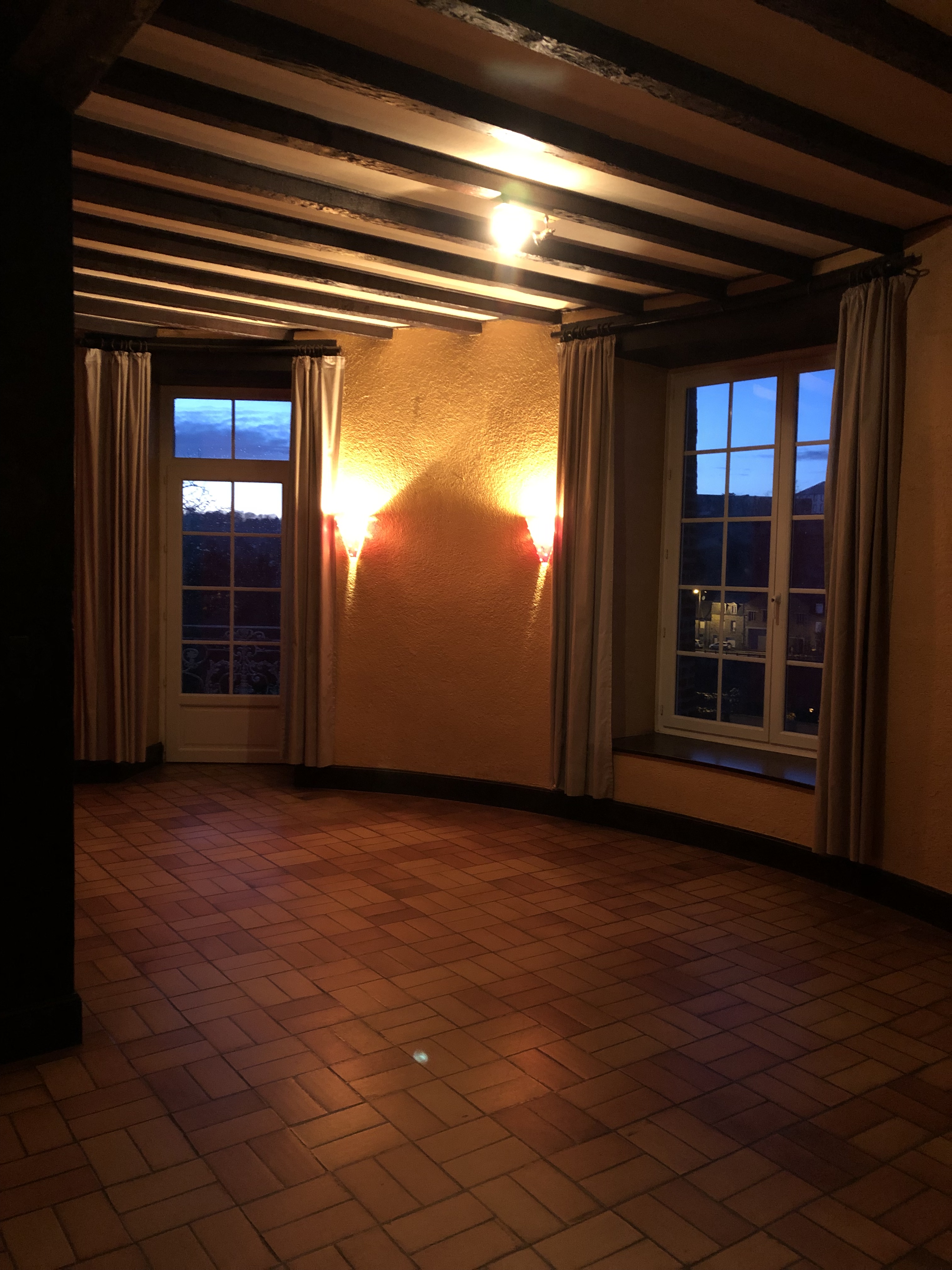
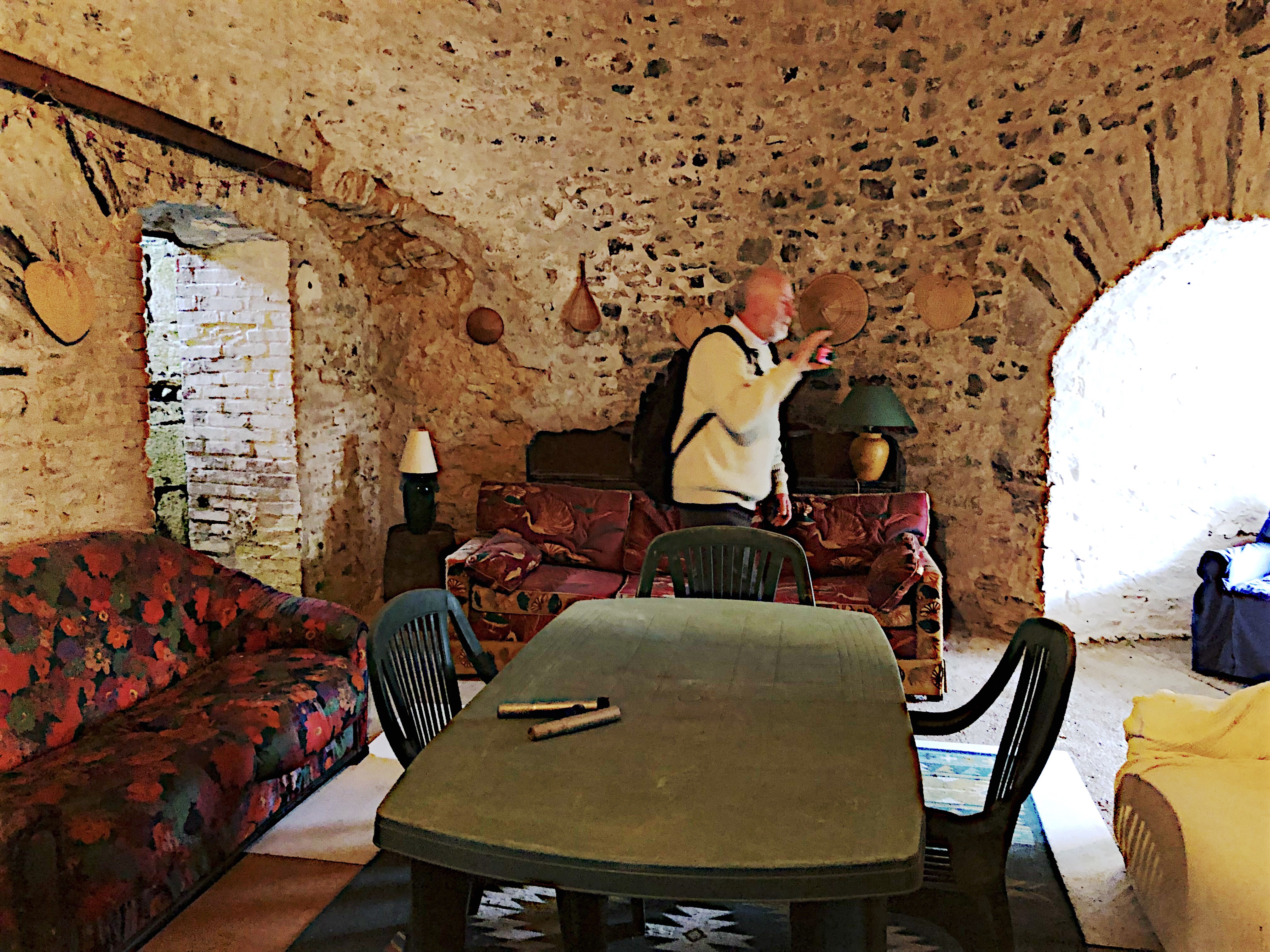
This is the state in which the tower remains today. There is a single, main floor, finished for living, with two bedrooms, a kitchen, shower room, separate toilet, laundry area, and a living room. And the top floor under the semi-conical roof, was used by the former owners as a third bedroom. The two levels below the main floor remain unfinished. There is also a small remaining portion of industrial building attached to one side of the tower containing two levels, each of which are also unfinished.
The Entry Hall with a View Toward the Front Door
Former Bed Chamber. To Be Transformed into a Kitchen
Living Room with Views Over the Park
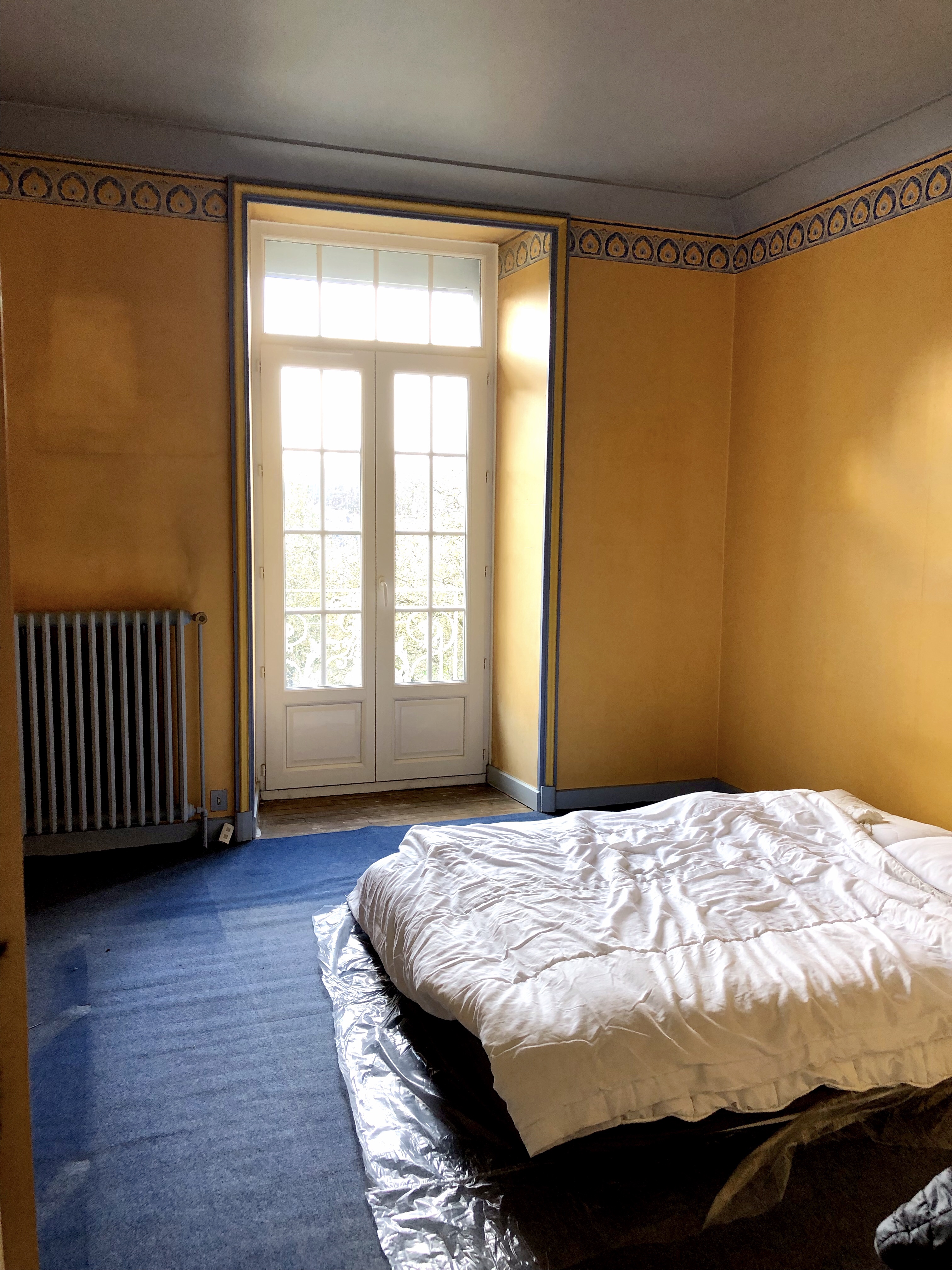
Attic Space to Become a Master Suite
The “Chapel” (So-Called) Constituting the Second Level of the Tower. A Future Sitting Room
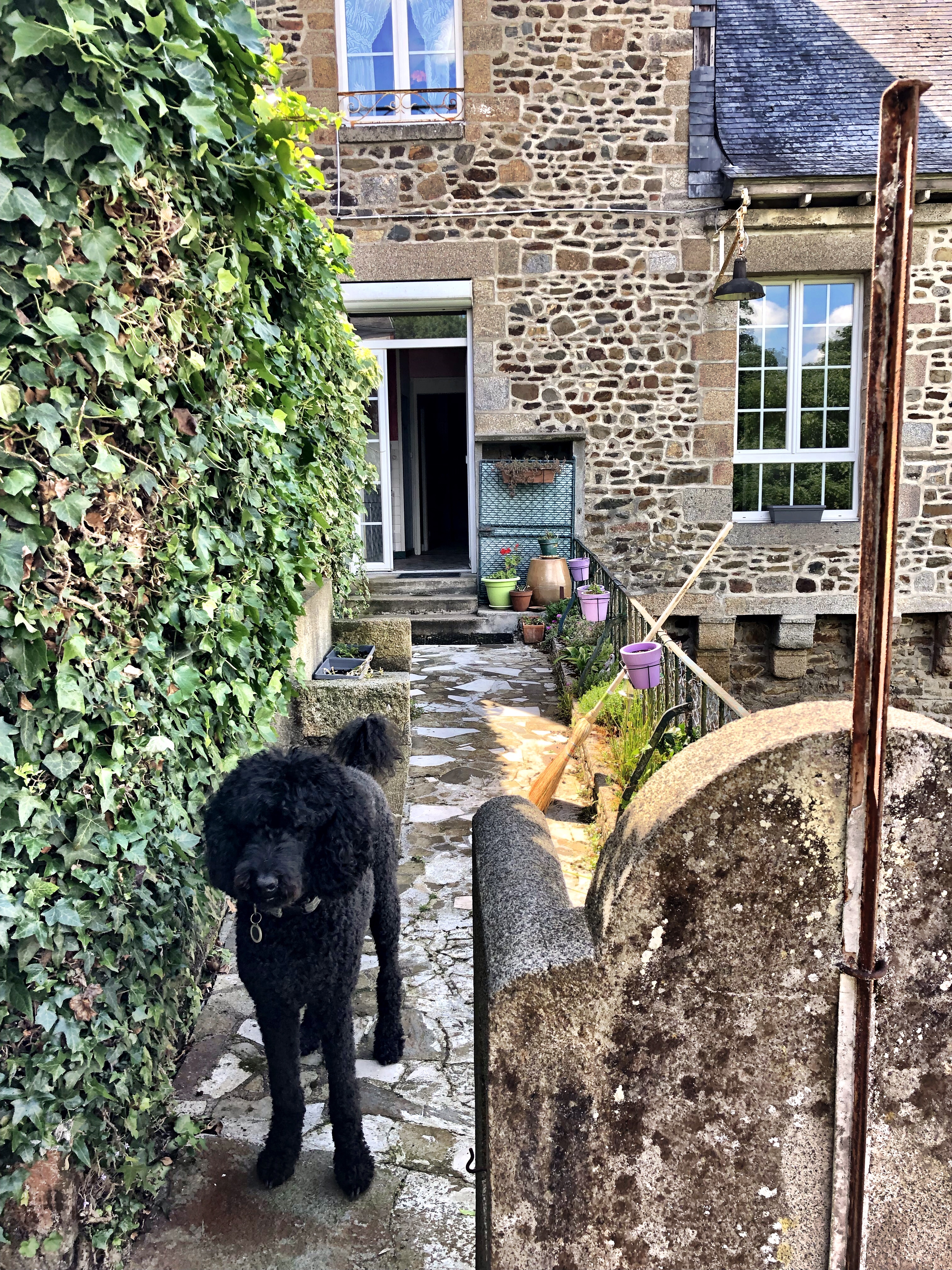
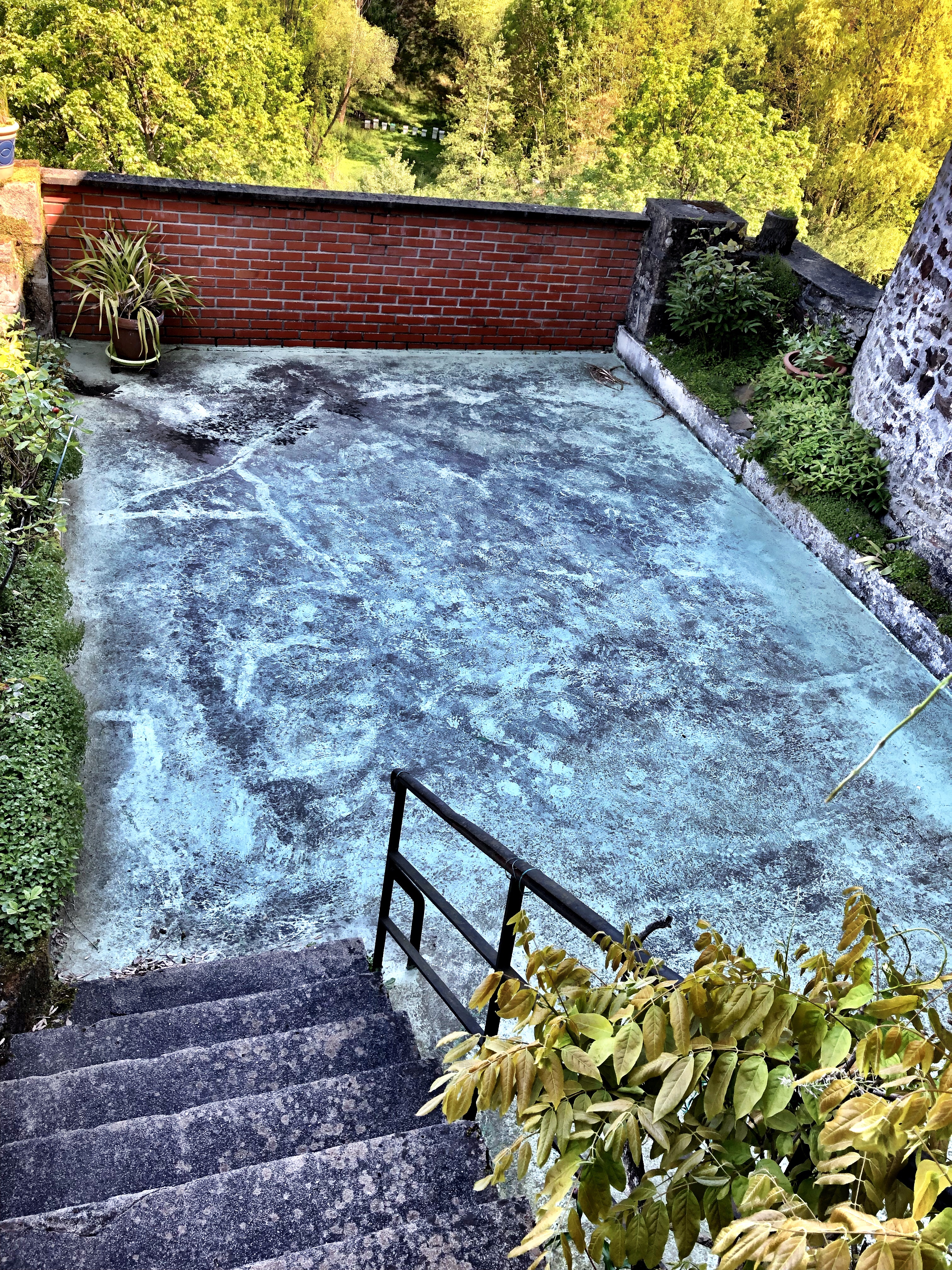
The tower stands against a slope. As a consequence, the main floor is on the third level of the structure. The entry into this main floor is level with a small courtyard and short drive which leads to the main street: Rue de la Pinterie. The base of the tower opens on to a pathway and looks out over a park, Le Jardin du Nançon. There is a bit of outside space, broken up into four areas. Two of these are paved terraces (the Upper Terrace and the Sun Terrace), while two others are small garden spaces (the Jardin and the Potager).
Saxon Posing on the Upper Terrace
The Sun Terrace (in the Shade)
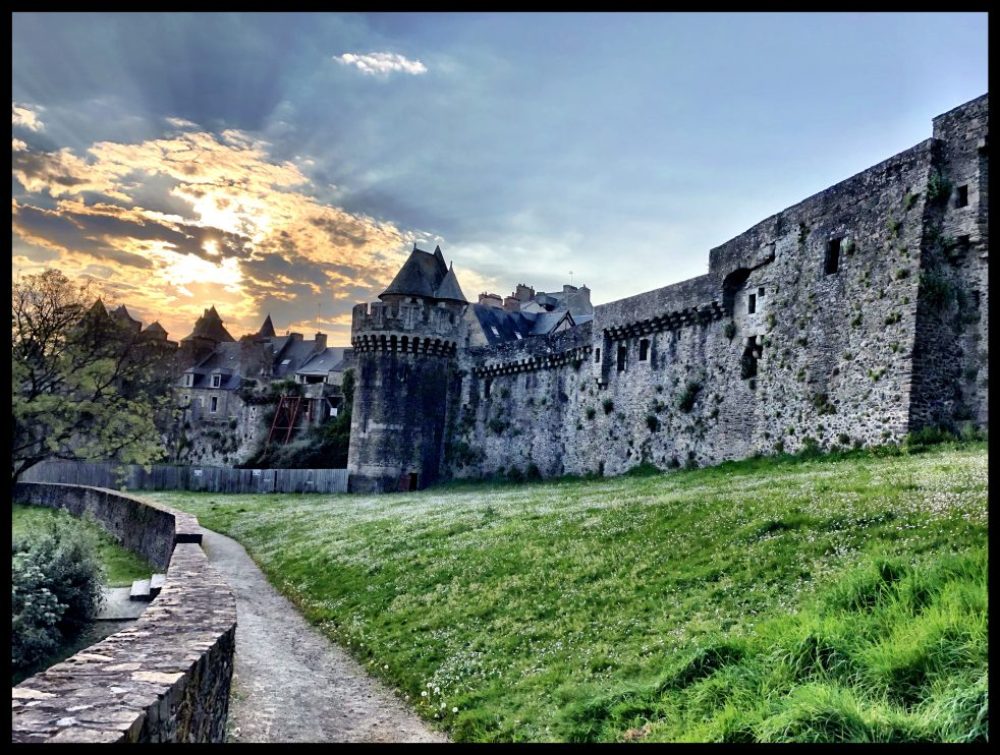
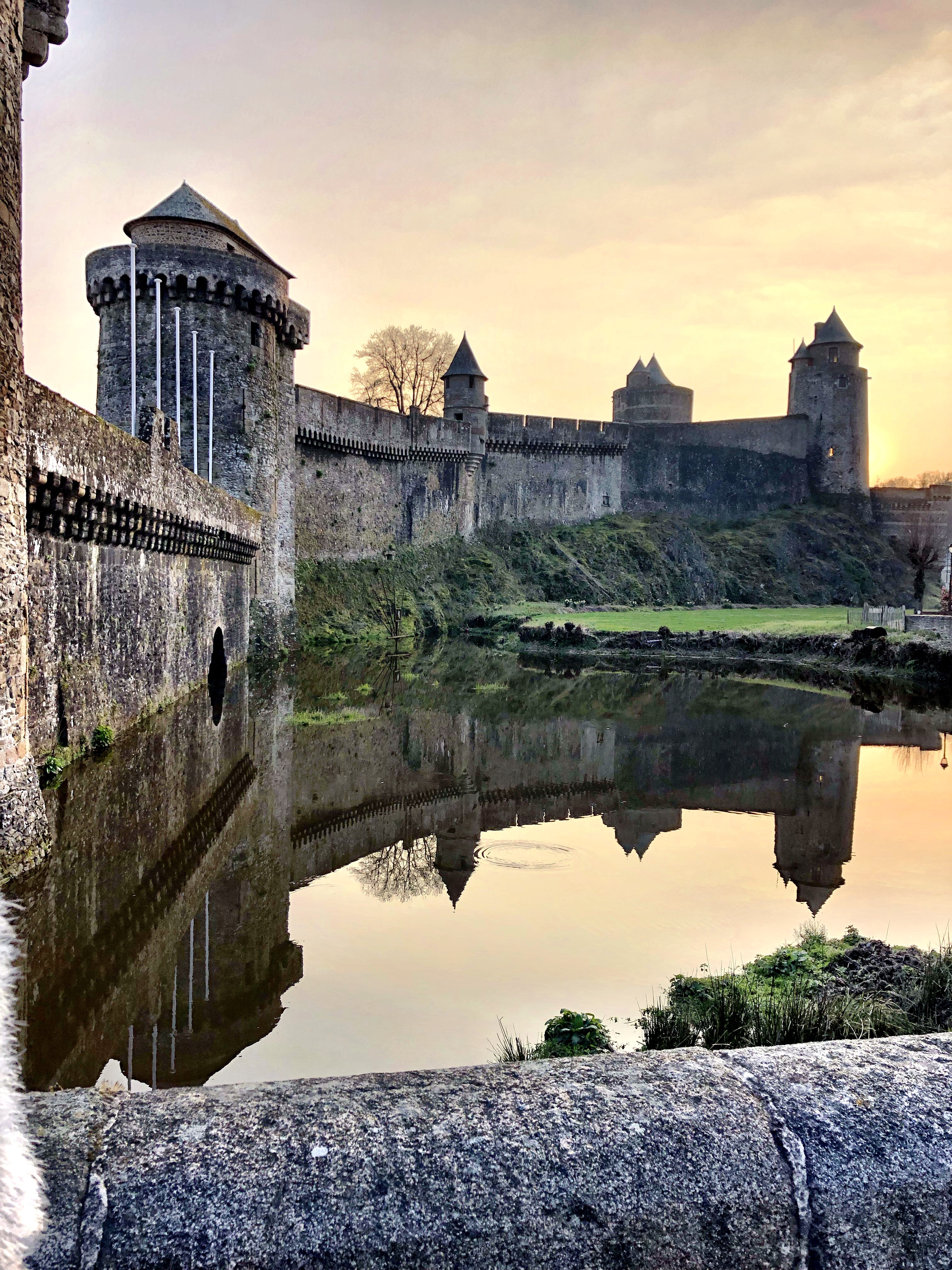
We couldn’t have found a better location for our house. It is situated directly in the heart of Fougères. This allows us to walk to restaurants, grocery stores, pharmacies, the theater, post office, the mairie (town hall) and, most importantly: the boulangerie. We are just steps away from Fougères’ large Saturday market. Moreover, I am able to trot down our street directly to the Château – one of the largest surviving medieval fortifications in Europe.
Little Courtyard, Drive and Gate to the Street (View from Our Front Door)
And yet with all of this convenience, the house itself is well off the street, isolated in its little courtyard. The other side of the property overlooks a large park through which meanders the Nançon river (really little more than a creek). The park is pretty and quiet. And the best part is, we have a lovely park as our back yard without having to maintain it ourselves. Sweet! So, for us, La Tour Desnos (we think it’s pronounced “day-know”) is pretty much perfectly situated.
Rue de la Pinterie: View from Just Outside Our Driveway Gate
Fougères (pronounced “foo-jehr”) itself is a town of about 21,000 citizens. It’s a 30 minute drive southwest to Rennes, the largest city in Bretagne. The town has a theater, multiplex cinema, numerous restaurants, cafes and bars, shops and services of all kinds – pretty much everything one normally needs in daily life. The only amenity our new town lacks is a train connection. There used to be one. But, as with countless other towns and villages throughout France, its rail line was shut down decades ago. Luckily we can at least catch the high speed rail (in France it’s called the TGV) in nearby Vitré 20 minutes to the south, or at the main station in Rennes. So it won’t be too much effort to conveniently explore the country by France’s excellent rail system.
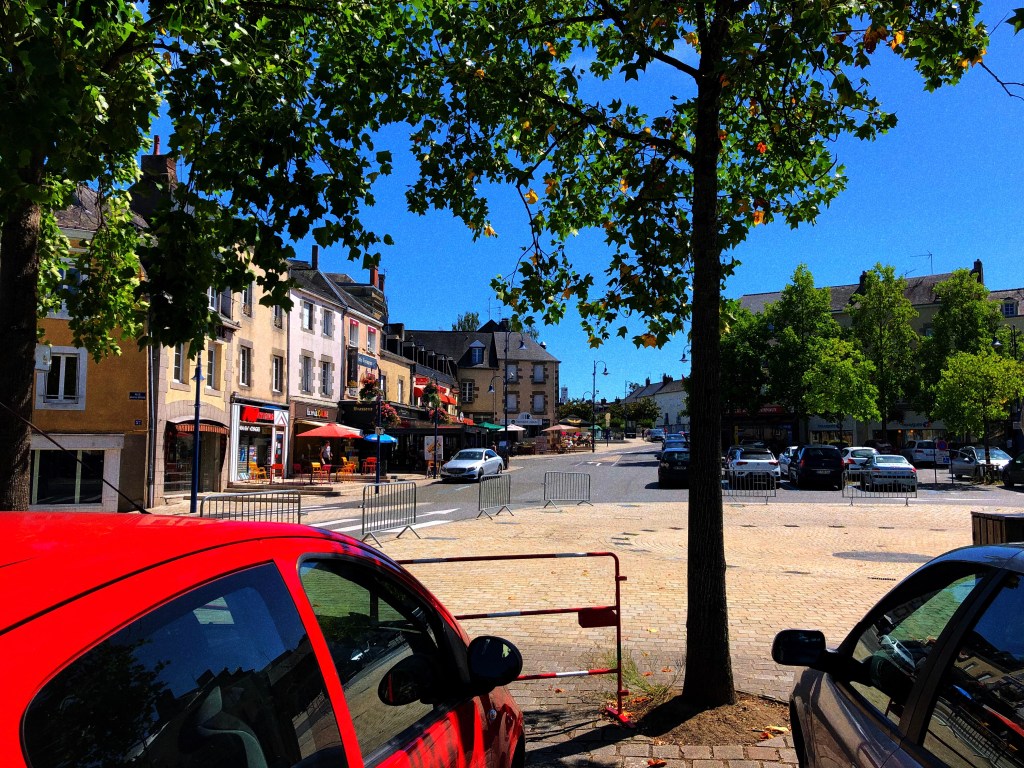
Place Aristide Briand (a Two-Minute Walk from Our Home)
Rue Nationale
Église Saint-Léonard
Beffroi: A 14th c. Bell Tower We Can Hear from Our House (Don’t Worry – It’s a Good Thing!)
You may have noticed that we haven’t moved into our new home yet. That’s because we decided to make some changes to the layout on both the main and top floors. We’re also removing an external staircase, installing a new internal staircase, creating two bedroom suites, installing new electrics and plumbing, making minor repairs to the roof and sun terrace, building a covered passage between the tower and industrial building and fitting out a couple of workshop areas.
Terminus of Rue de la Pinterie (Our Street) at Château de Fougères
La Ville Basse: The Medieval Quarter of the Lower Town
As things progress on the house, I will provide additional Renovation Updates. In the meantime, we continue to pinch ourselves, feeling incredibly fortunate to own such an ancient piece of France’s historical patrimony. We feel terribly privileged to be the custodians of La Tour Desnos for this chapter in its long story. And I hope to be able to dig more deeply into the tower’s past history. Once I have compiled a more detailed story, I’ll share it with you all.
I’ll leave you with just a few more photos of some highlights from our new home town:
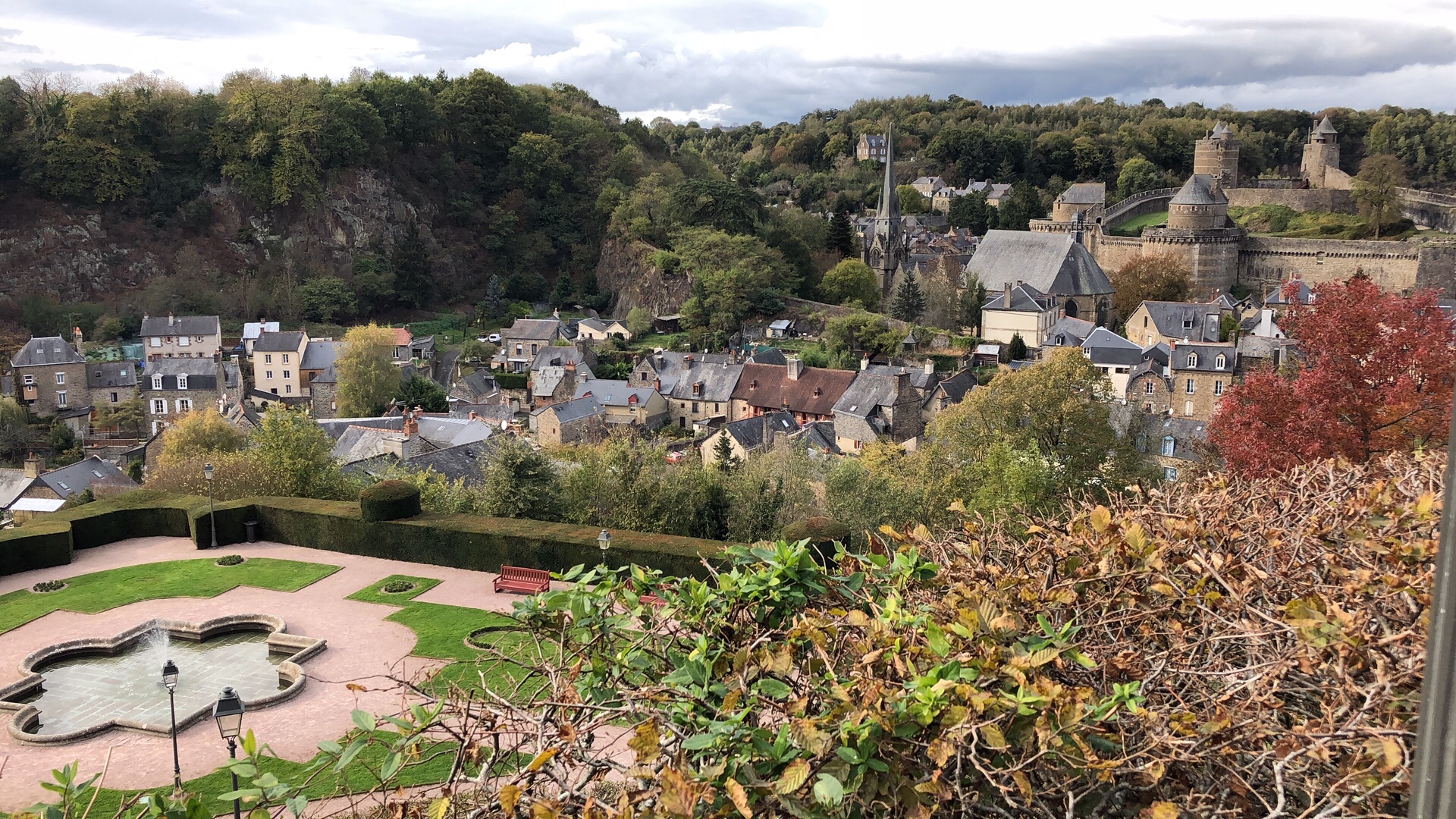
Le Jardin Publique Overlooking the Lower Town and Château
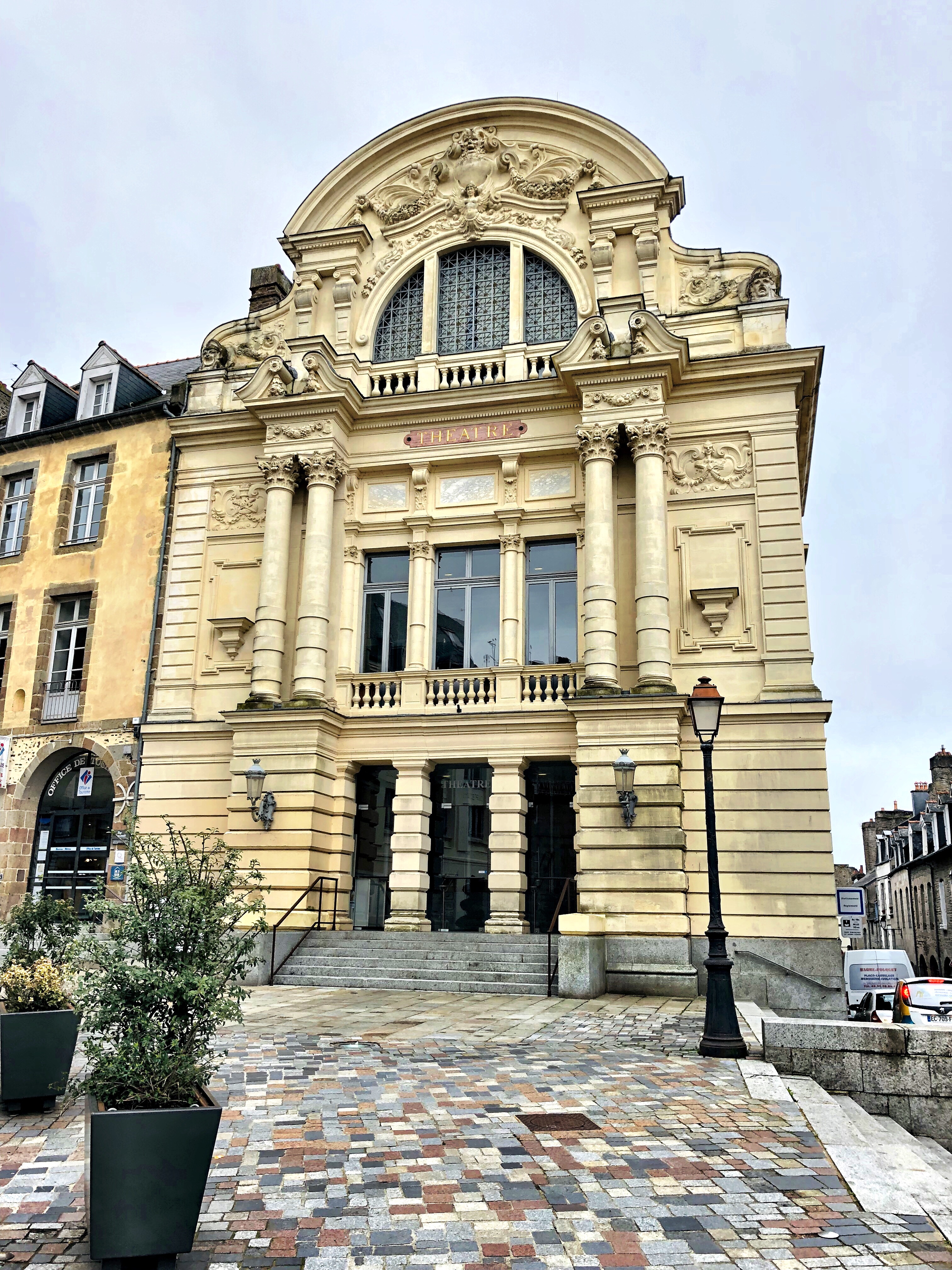
Victor Hugo Theater (a One-Minute Walk from Our House)












 Finding Our France