Lassay-les-Châteaux – A Town And Two Castles

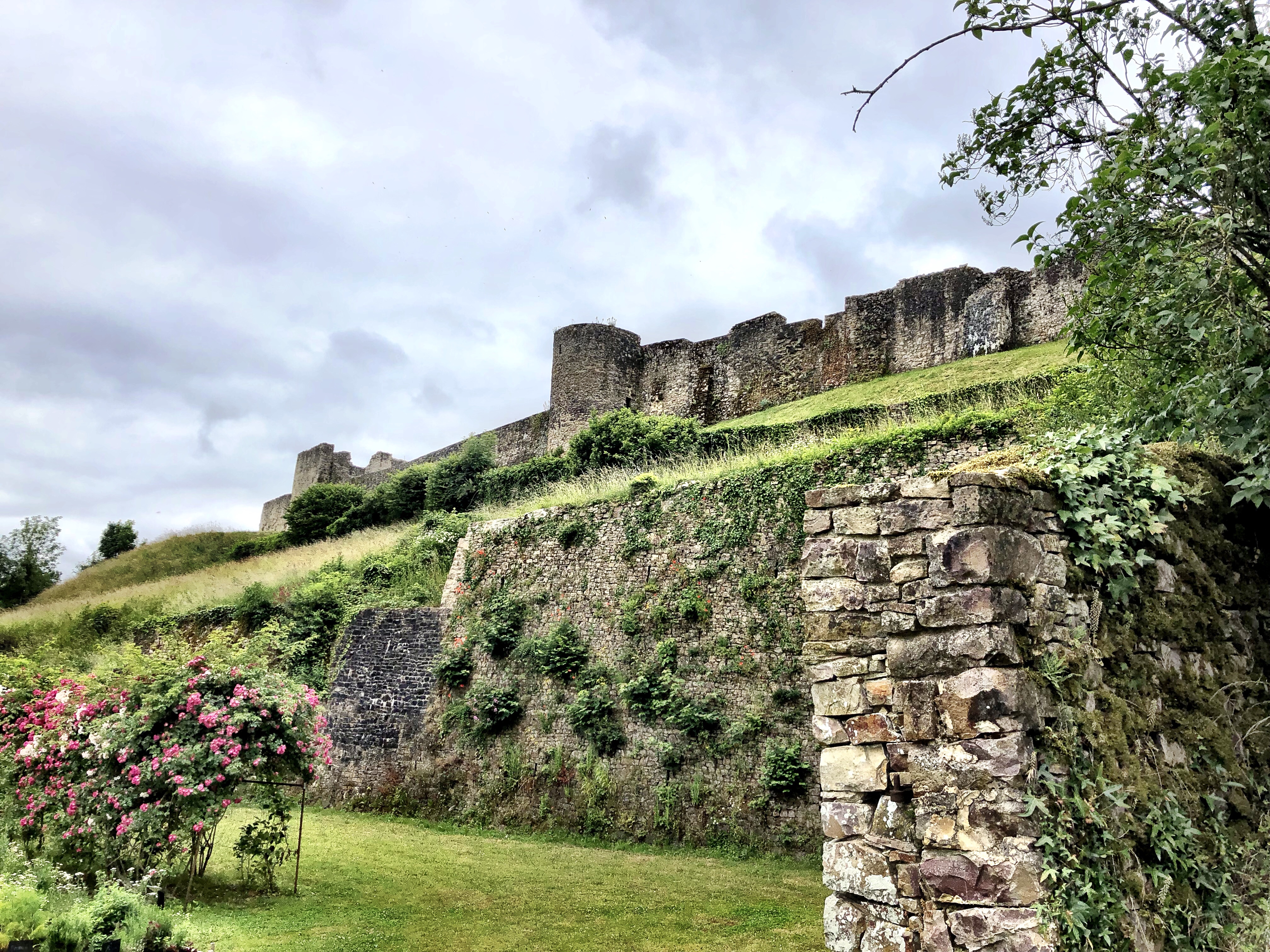
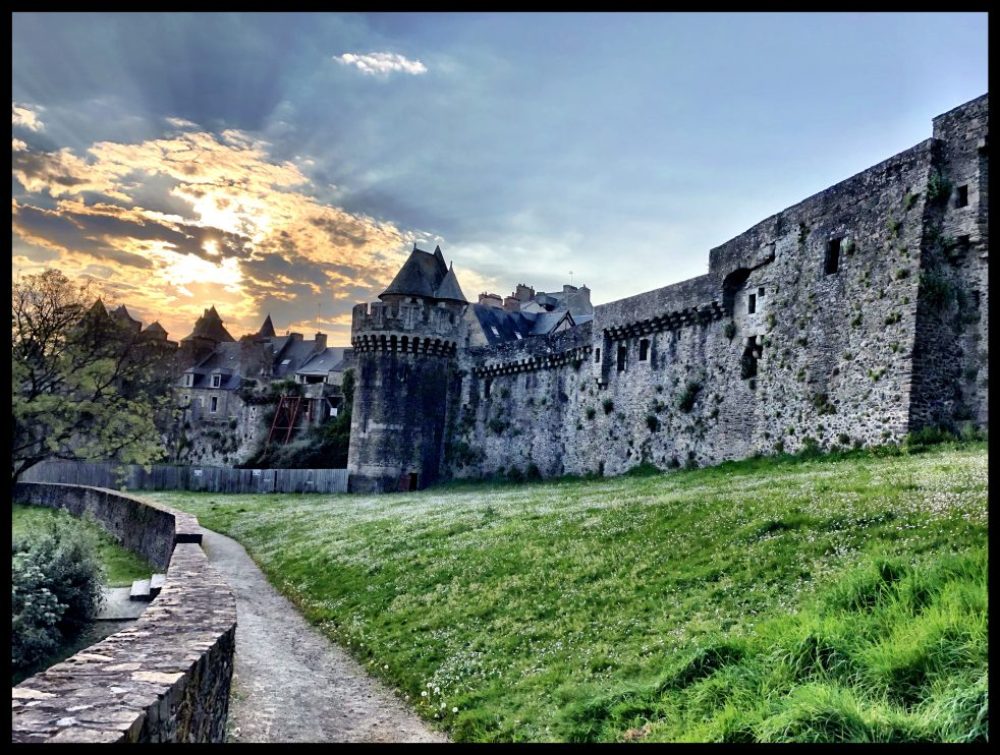
A Formidable View: Château de Lassay

This was a trip in two parts. We had our sights set on a nice little castle about which we knew very little. But the photo looked nice, so it seemed like it was worthwhile to have a look. Now, we’ve done a good bit of travelling at this point in our lives, so you would think we are experienced enough to always do a reasonable amount of research on the place we are planning to visit. At least the basics: where it’s located, how long to get there, will we have to tip the Elvis impersonator – again. Oh, and also: will the damn thing be open when we get there!? Well, this time we forgot to confirm that last tiny, but crucial detail. And that’s why this turned into a two-day adventure.
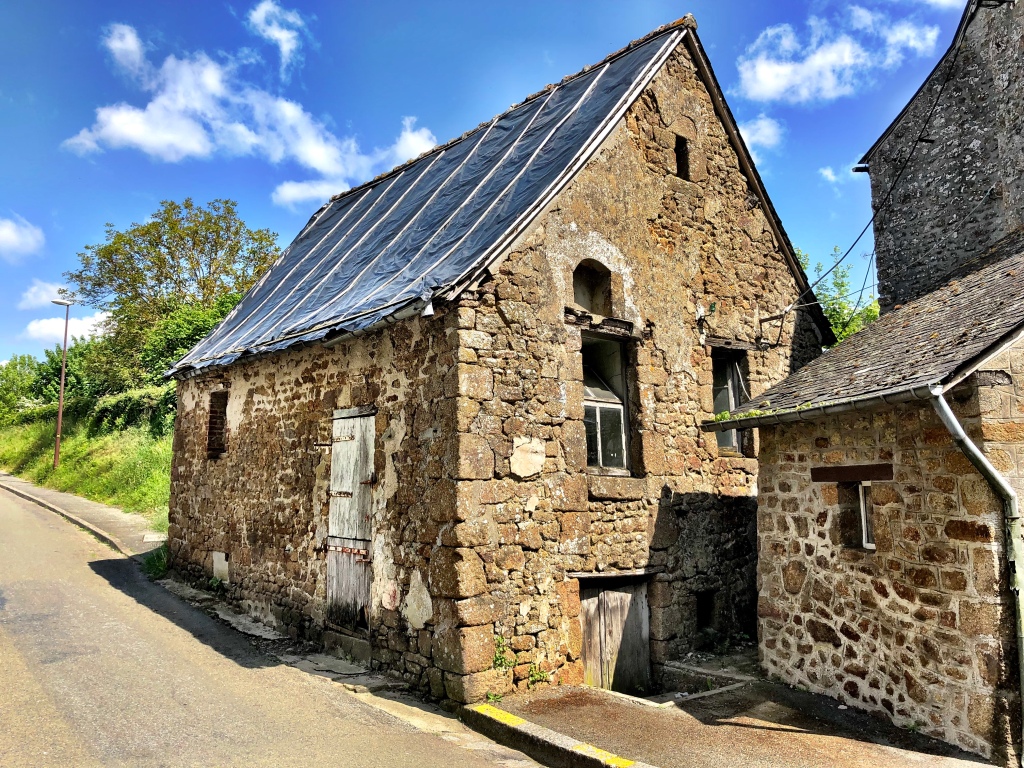
Needs Work – a Charming Fixer-Upper in Mayenne

Only an hour’s travel east of Fougères, Château de Lassay has graced the Pays de Mayenne for over five and a half centuries. At the time (May) Cherie’s mother, Valerie, was still visiting. In fact it was her last full day in France before flying back home to the U.S. She was eager for one last adventure. And Lassay seemed just right for the occasion. So, off we packed, enjoying a scenic drive through the verdant countryside of Mayenne under impossibly blue skies.
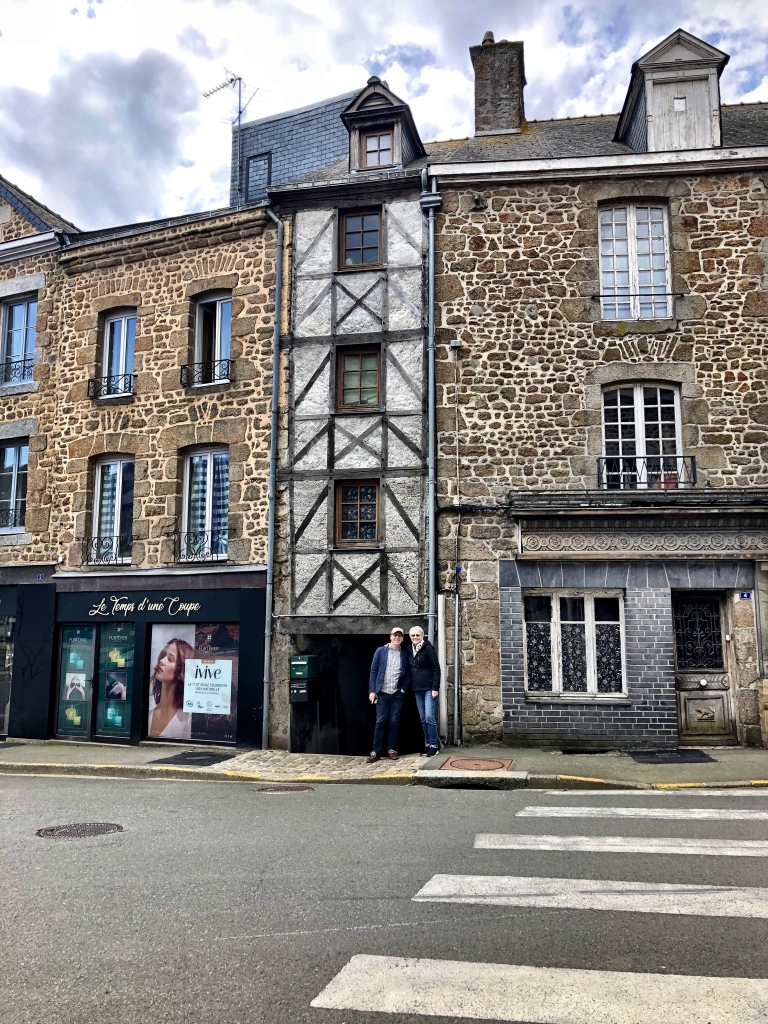
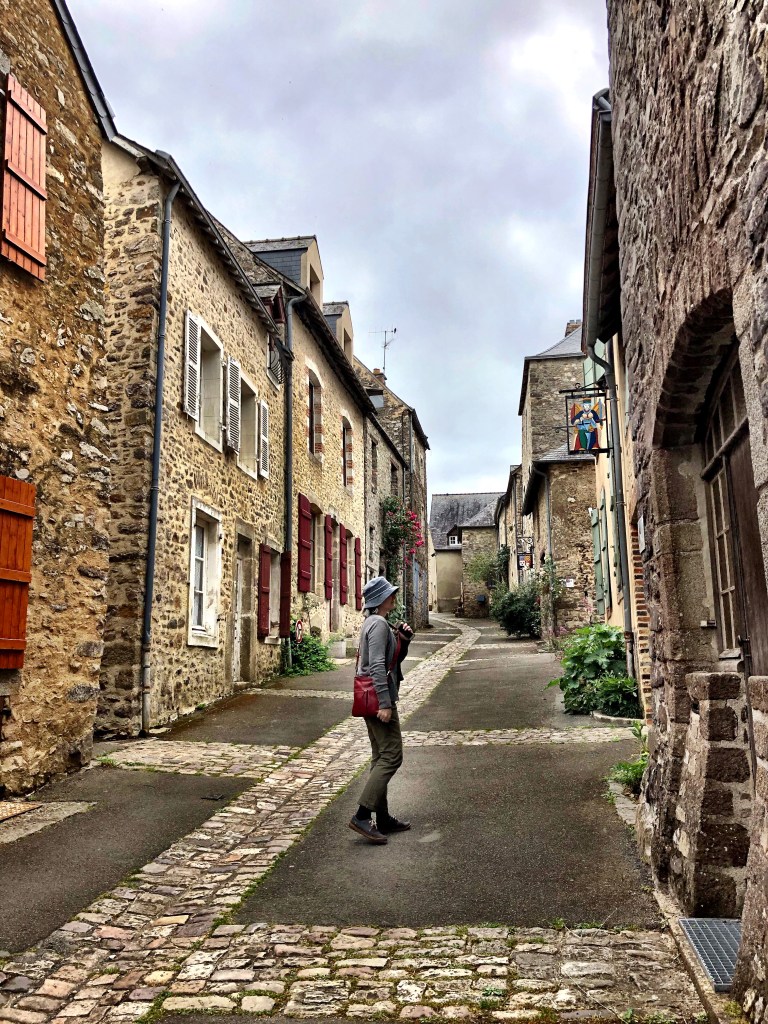
It Comes With a Town?! – Val and John Exploring the Streets of Lassay-les-Châteaux

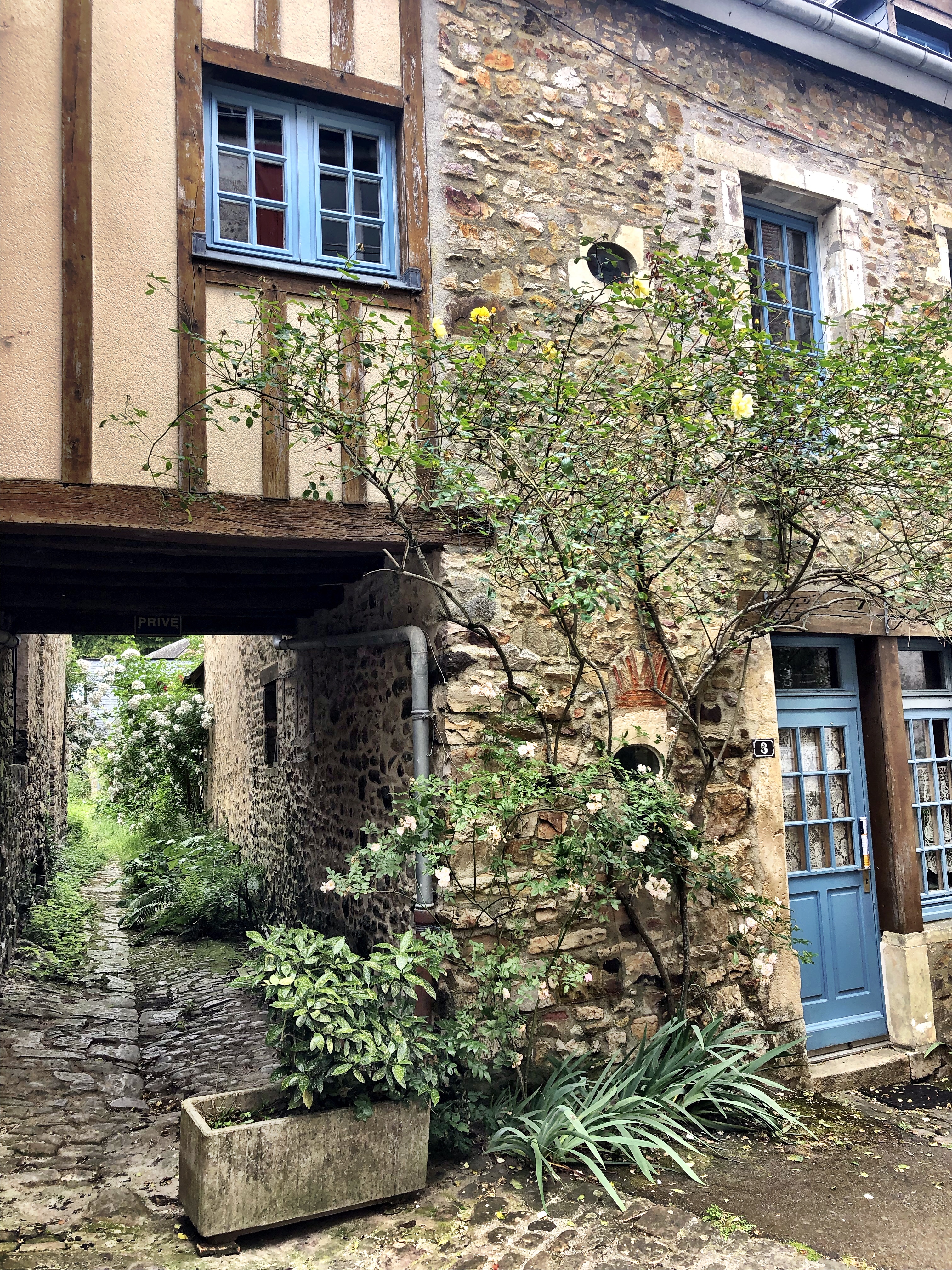
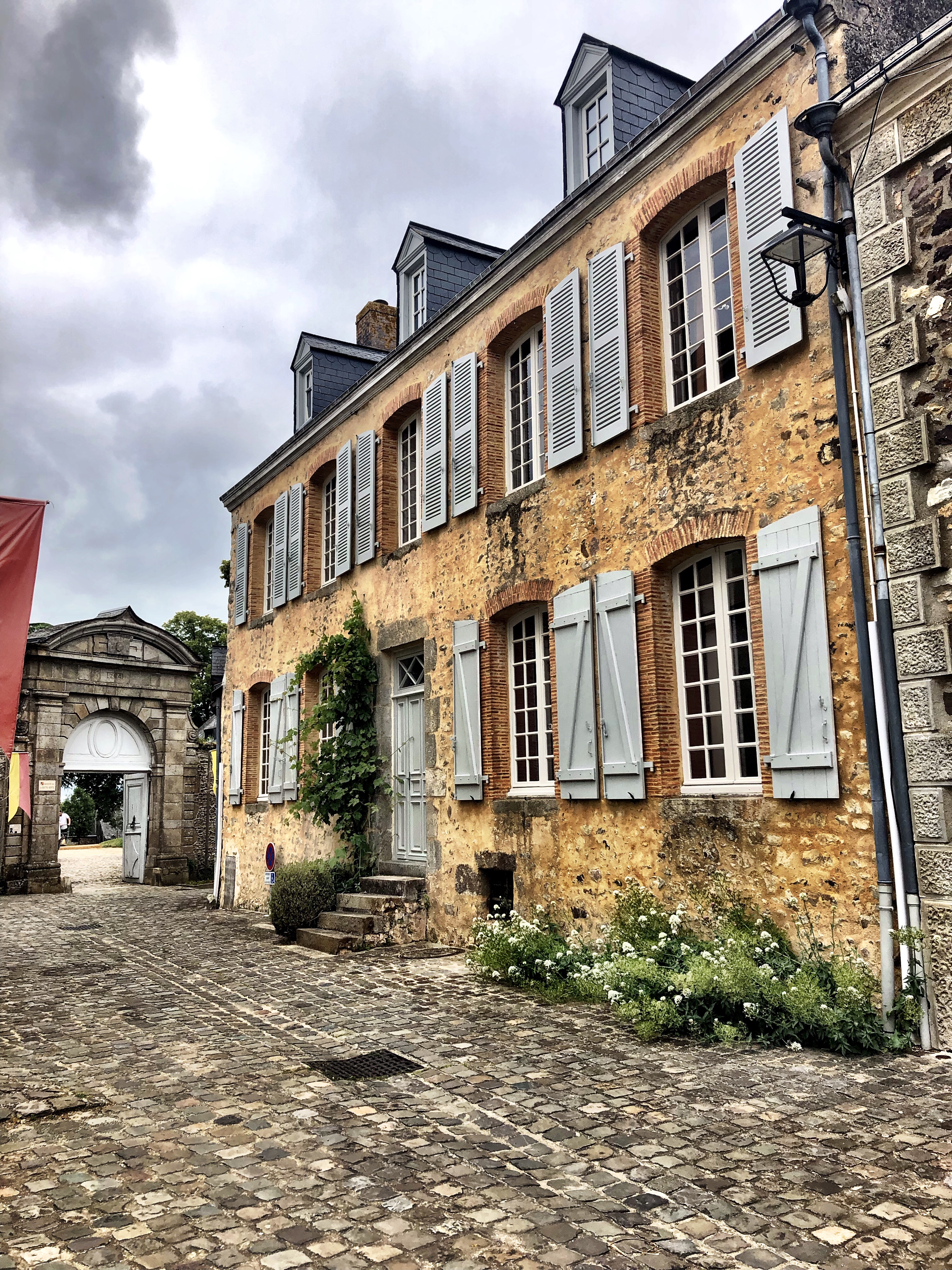
Due to the aforementioned lack of preparation, our first surprise was that Lassay-les-Châteaux is not just a castle. It comes with a town. And a beautiful one at that! How did we not know this? Lassay is, in fact, a Petite Cité de Caractère and was voted third place this year in the nationwide Village Préféré des Français – a poll choosing the best places to live and visit in France. The latter is a big deal here in France, culminating in a big television show for the final announcement. It’s a visible demonstration of just how much pride the French take in their towns and villages. And justifiably so. Lassay-les-Châteaux is beautiful. And this town had us fully under its spell from the moment we drove in. Lovely, classic french small town architecture from all ages, set along meandering and cozy streets, tranquille and well-tended gardens, all bundled within a charming natural setting. What more could you ask for?

Sorry, We’re Closed!

A castle! That’s what. And, wow!, they have a really good one. This 15th century beauty rests comfortably in the town’s western edge, watching over its inhabitants like some ancient mythical guardian. The three of us fetched up to the small car park in front of the castle, took a bit of a walkabout around its walls and then waltzed up to the gates – only to find out that it was closed. Doh! This was to be our second, rather less happy, surprise of the day.


Denied access to the château, we sought the solace of lunch. At least the restaurants were open. As it happened, we chose badly. Our meal was quite mediocre. But at least it gave us the energy to carry on. Lassay-les-Châteaux is a great town for strolling and we enjoyed a long afternoon of admiring the beautiful street scenes on display.


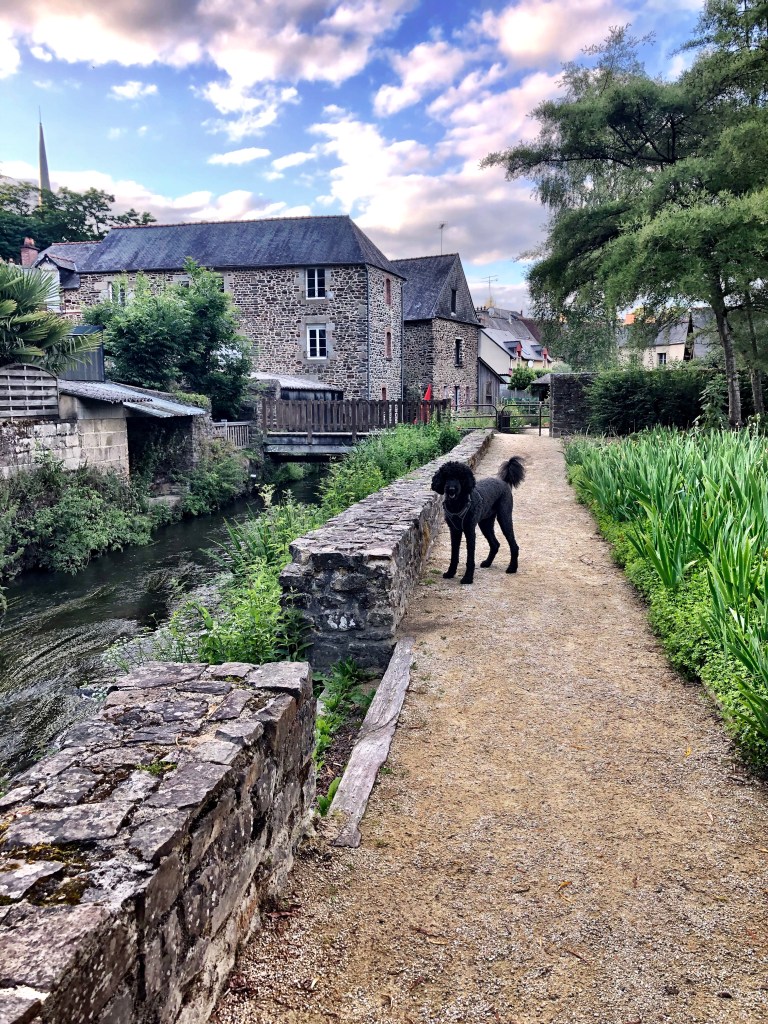
The center of town covers hillsides which wrap around a small stream that gently burbles its way along at the bottom. On either side of this stream there is a very nice park. One can have a pleasant, shaded walk there, soaking in the tranquility of a small town quite at ease with itself. In addition to the more formal flower garden, there is also an animal enclosure where locals keep chickens, geese, sheep and goats. Also on display are some impressively well-tended private vegetable and pleasure gardens lining one side of the stream.
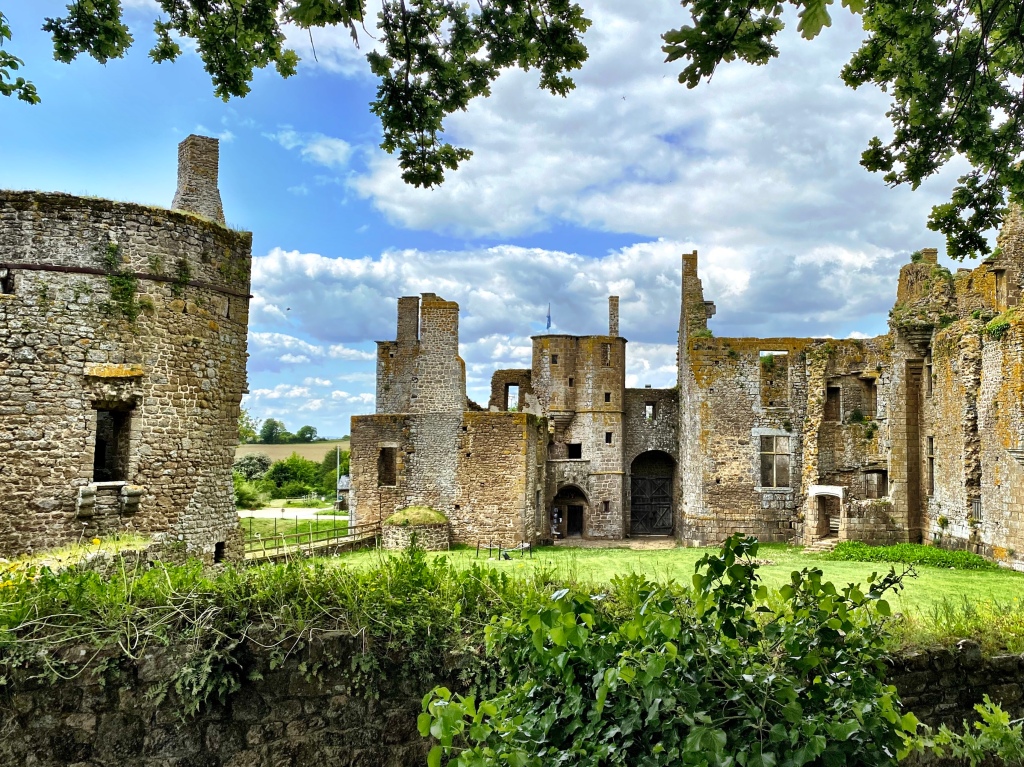
Maintenance Required – the Ruins of Château du Bois Thibault

The day’s outing continued with a visit to another castle just a couple of minutes drive north of town. Château du Bois Thibault was also built in the 15th century. And, guess what? It was also closed that day. Right. Still, this wasn’t quite as harsh of a blow because Bois Thibault is a ruin so we were able to see much of it by walking around the exterior. It sits out alone in the countryside, still an impressive sentinel keeping watch over the northern approaches to Lassay-les-Châteaux. It is definitely worth seeing and we hope to return to it one day when it’s, you know, open.

Despite the disappointment of having the gates of, not one, but two castles locked against us, we still had a wonderful trip. However, revenge is a meal best served cold, but then microwaved and washed down with a nice glass of Côte du Rhône. [Or better yet, just skip the revenge (after all, it’s cold – yuck!) and go straight for the wine.] The point here is: Lassay-les-Châteaux is well worth a second look. And, more recently, after finishing up work on our holiday rental apartment, we finally got around to making our return.

Ridiculously Beautiful – the Castle Courtyard

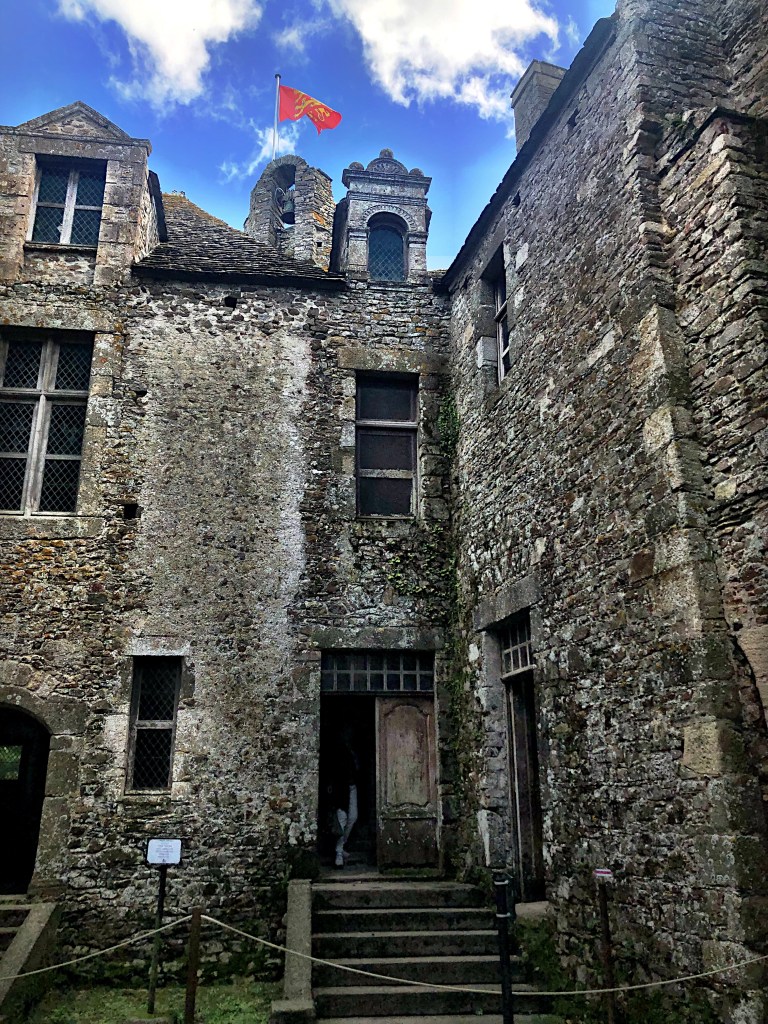
And this time the castle was open. Le Château de Lassay is privately owned; it’s our understanding that the family maintains residence within part of the complex. Across the street from it is what must have been a large barn. Now it is the ticket office and gift shop. Purchasing our tickets, we discovered that viewing the château is by group tour only. Neither one of us is a big fan of tours. The tour guides often rush their groups through areas where they don’t have a prepared talk. And, frankly, they most often focus on subjects that we find trivial and distracting. We much prefer to explore on our own and at our own pace. Still, getting to see a medieval castle on a tour is far better than not seeing it at all. A word of warning if you are planning to visit Lassay: they do not accept card payments. Cash only. It’s the 15th century, after all!
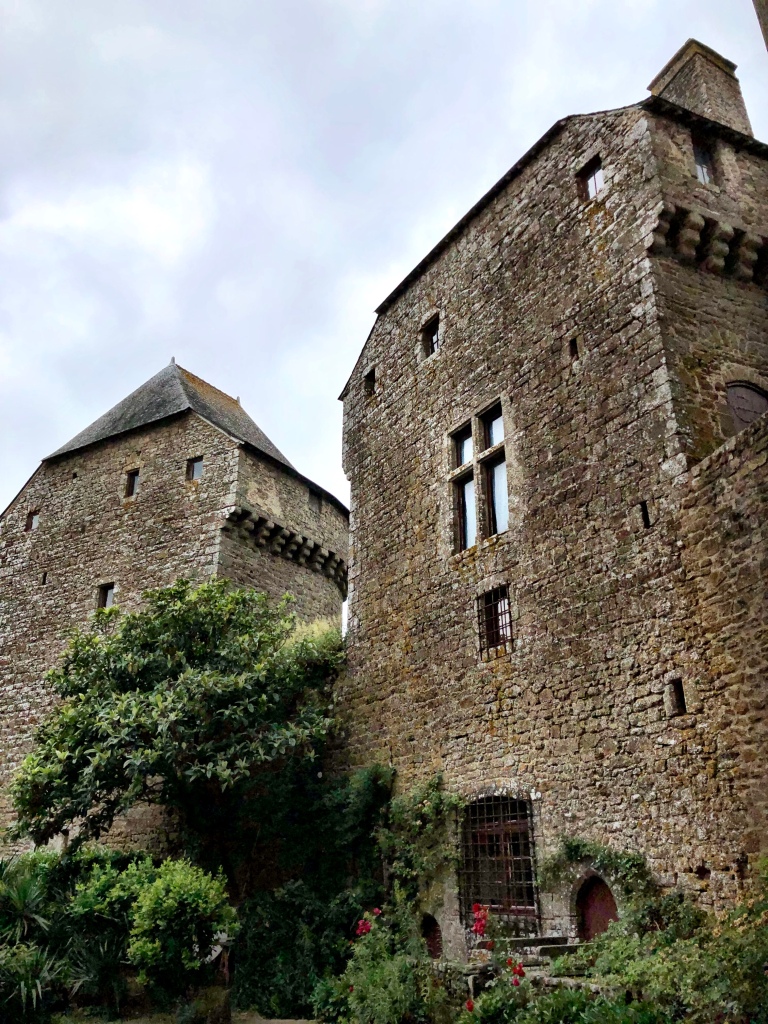
Two of Many Towers

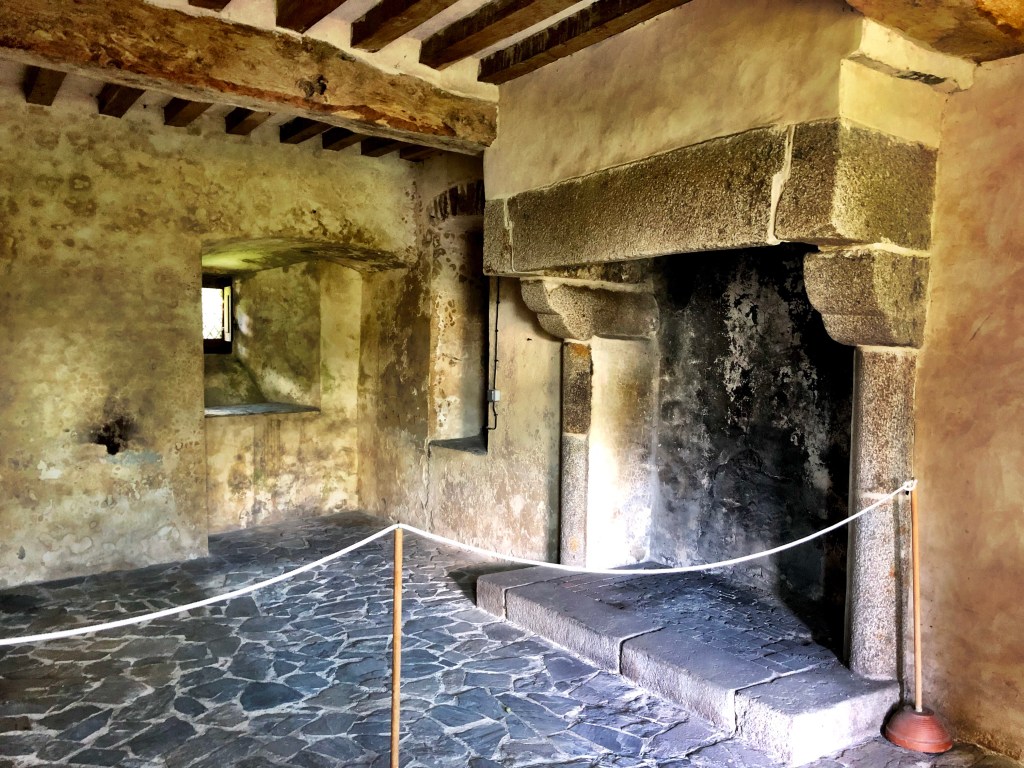
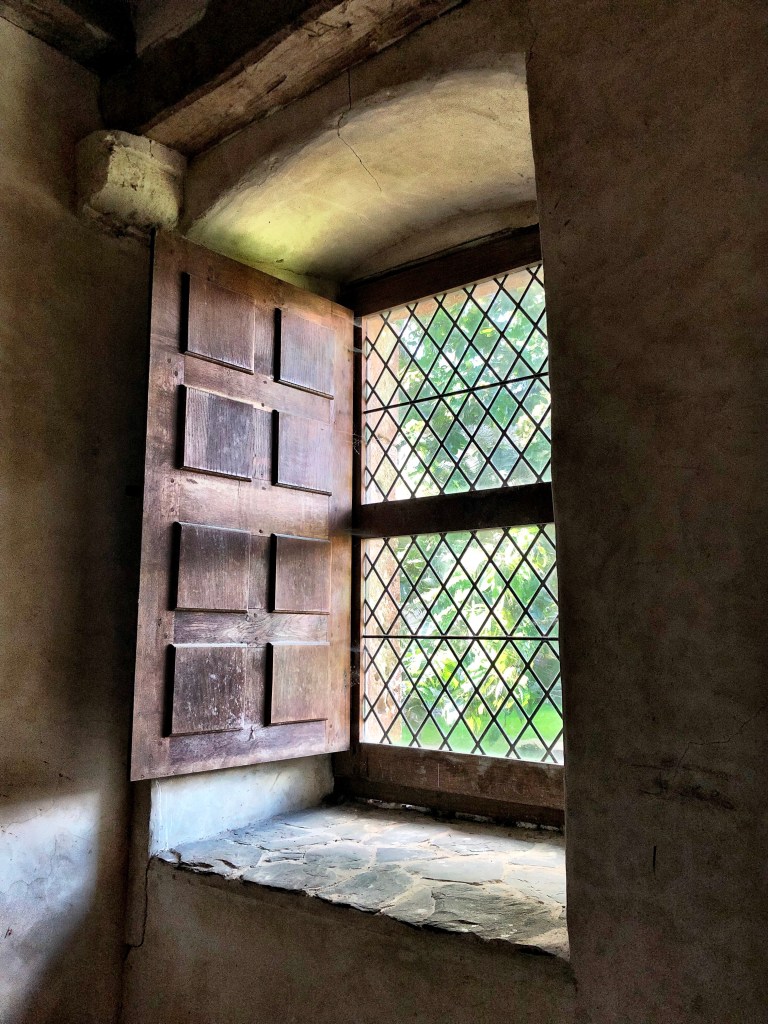
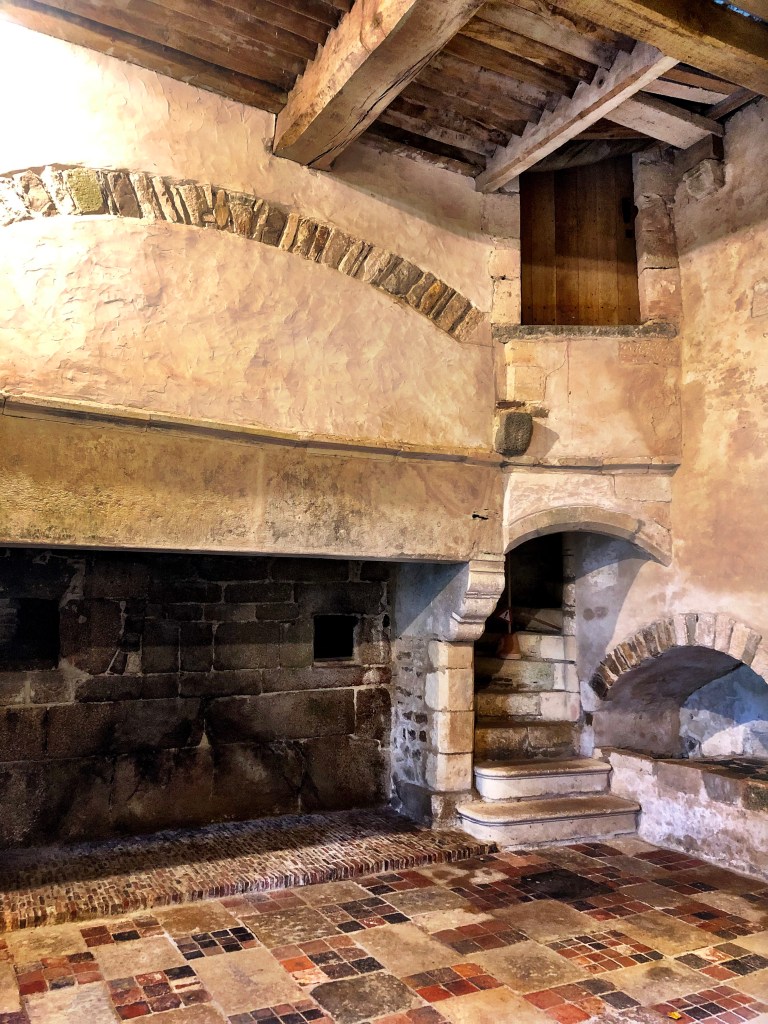
Suffice it to say, the tour of the interior is absolutely well worth any misgivings you might harbor. Lassay is a beautiful castle, still substantially complete, and contains much to offer nearly anyone. If you’re a castle nerd like me, you might as well stand in a bucket of snails and call yourself Wilma if you were to pass on the chance to see it. [No offense to any of you named Wilma – or to snails.]


While in Lassay, we had a nice lunch (at La Ruette on rue dAmbrières) and we discovered a series of medieval gardens just on the other side of the lake from the château. Lovely and tranquil. Plus, a further walk through town, taking in even more streetscapes. We love this place and we are sure to come back again and again. If you have the opportunity to visit, you really should do so. You won’t regret it.

Zen in Lassay-les-Châteaux (click/tap to play video)

The Red Road to Pirou

The Châtelet in the Marsh: Château de Pirou

The day began with rain. Then wind. Then drizzle. Then more rain. But we had a plan, and we were going to stick to it. As it happened, two-thirds of us didn’t actually crawl out of bed that morning until eleven o’clock. Or so. I guess I hadn’t realized that that was part of the plan. But that’s often how our plans go. So I should have known better. Nevertheless, we managed to get out of the door and on the road by half past noon.
The plan? Oh yes, the plan. We had decided to track down a small moated castle in Normandie. The current Château-fort de Pirou has its origins in the 12th century, but it replaced an 11th century wooden fort which itself was built upon a former viking encampment. So goes the story, anyway. The site sits in a flat, marshy part of the Cotentin peninsula, just a couple of kilometers from the broad, sandy beaches of the seaside town of Pirou and some 18 kilometers northwest of Coutances. For us this was about a one hour and thirty minute drive through pleasant countryside, filled with cows (lots of cows), horses and the occasional human.

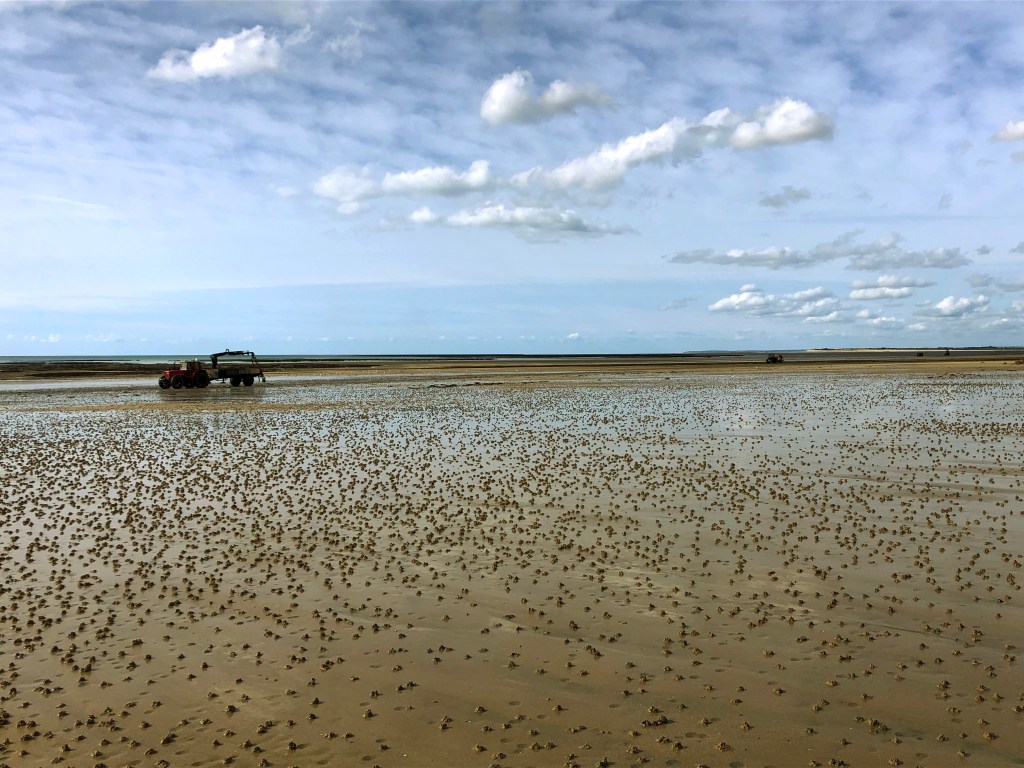
Harvesting Shellfish on the Plage de Pirou

After turning west off the A84 autoroute at Villedieu-les-Poêles-Ruffigny, we began to notice that several of the roads were paved with a red surface. It seemed to be a fairly common material in this part of Normandie. Strange. At first, I assumed that this must be the dominent color of the local stone which they use to pave the roads. But none of the structures in the area displayed any red-hued stone; all of them were built in the same gray, black and honey colored stone as we see in Fougères. So, what is the reason? I still don’t know. If any of you know why these Norman roads are red, send us a comment. For now, it will have to remain a mystery.

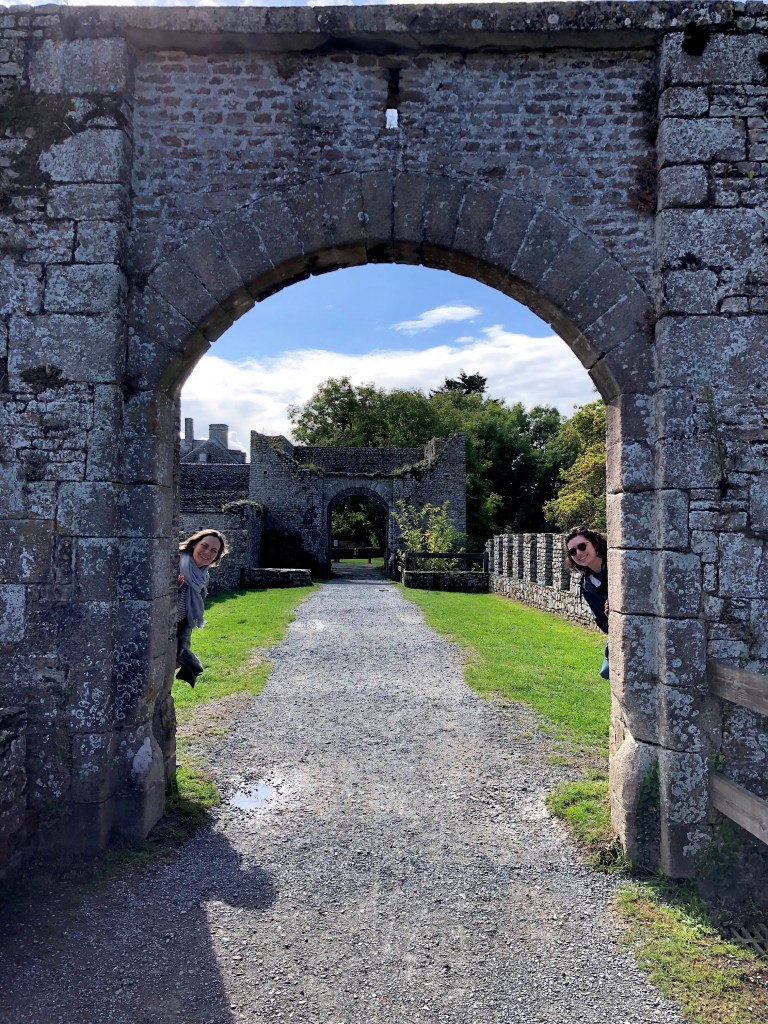
We Found It! – Cherie and Jessica at the First of Four Existing Gates

Honestly, the tracking down part of our plan was quite simple. Ten seconds on a mapping app did the trick. Sometimes I miss the romance and challenge of spotting a destination on a large, detailed paper map. It’s so much more fun. And exciting when you manage to locate your target and plan your own route of travel to it. But Google was to be our guide on this day, though I often wonder if the route which it (he, she, they?) gives us is really the most direct. After it has directed us down the third goat track, through a farm yard, and over a dodgy narrow bridge, it begins to feel like the artificial intelligence is just messing with us. I suppose robots have to enjoy their work too.
Beauty and the Beast – Jess Tames the Minotaur in His Maze at the Parc Botanique de Haute Bretagne

This outing was extra special because we got to share it with Cherie’s niece, Jessica. She came from the U.S. to visit us for a few weeks. We love having her around. Plus, she is a very fine knitter and she kindly knitted a cardigan for Cherie and a hat for me. So, win/win, I say. Anyway, we have been wandering all over the place, eating and sightseeing our way across eastern Bretagne and southern Normandie. It’s been a great time.

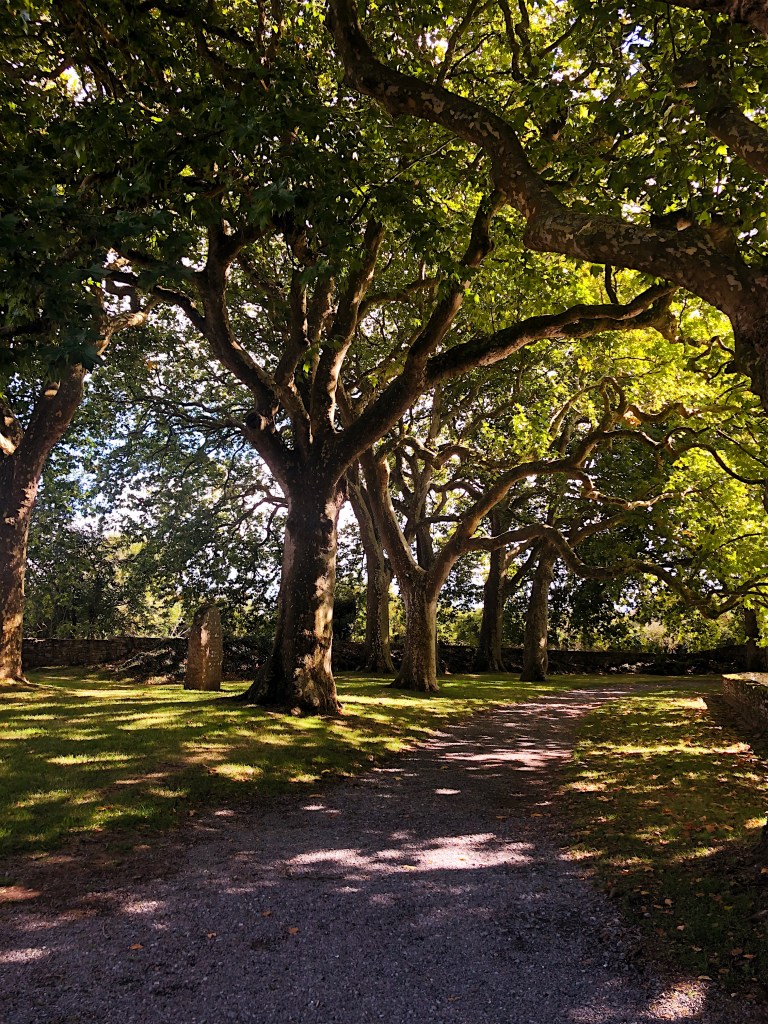
A Serene Walk Towards the Outer Courtyard

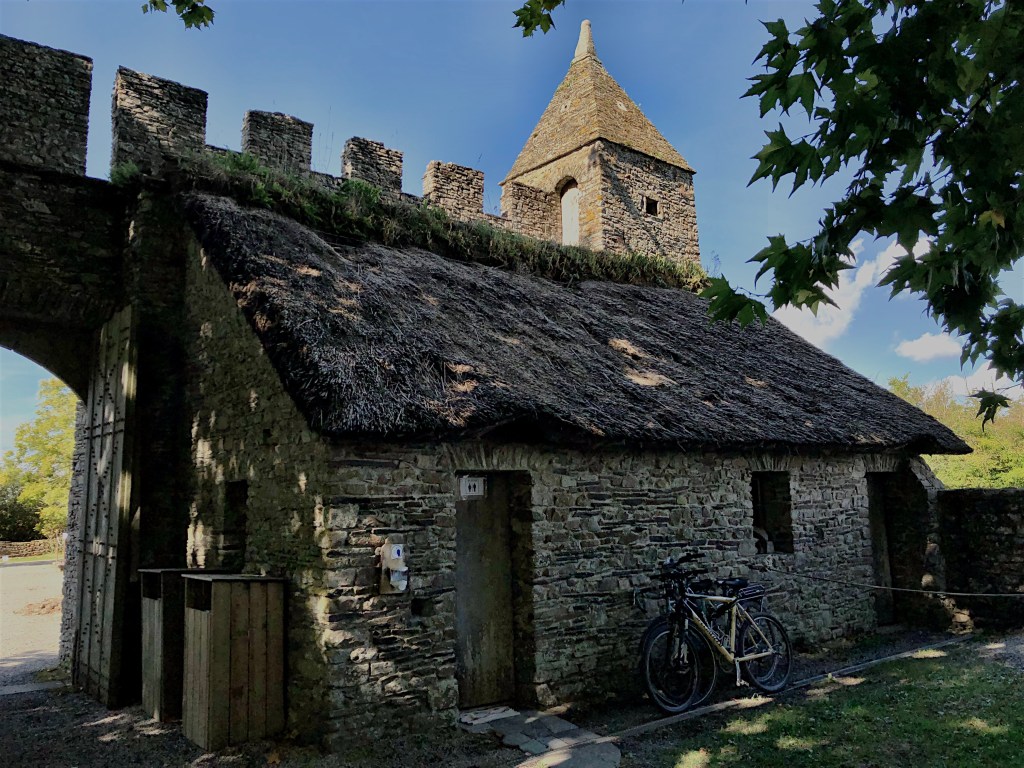
Eventually, the sun came out and we fetched up to the castle. A series of humble fortified gateways leads the visitor (or invader) into an outer courtyard. This grassy area is lined with large, mature plane trees through which the dappled sunlight shone pleasantly on this day. The gateways are not grand, but handsome and cozy, and appropriate to the scale of the castle itself. We found them to be very charming and powerfully evocative of what a perilous environment it must have been for the lords of this land – not to mention for the countless others who lived outside these walls.

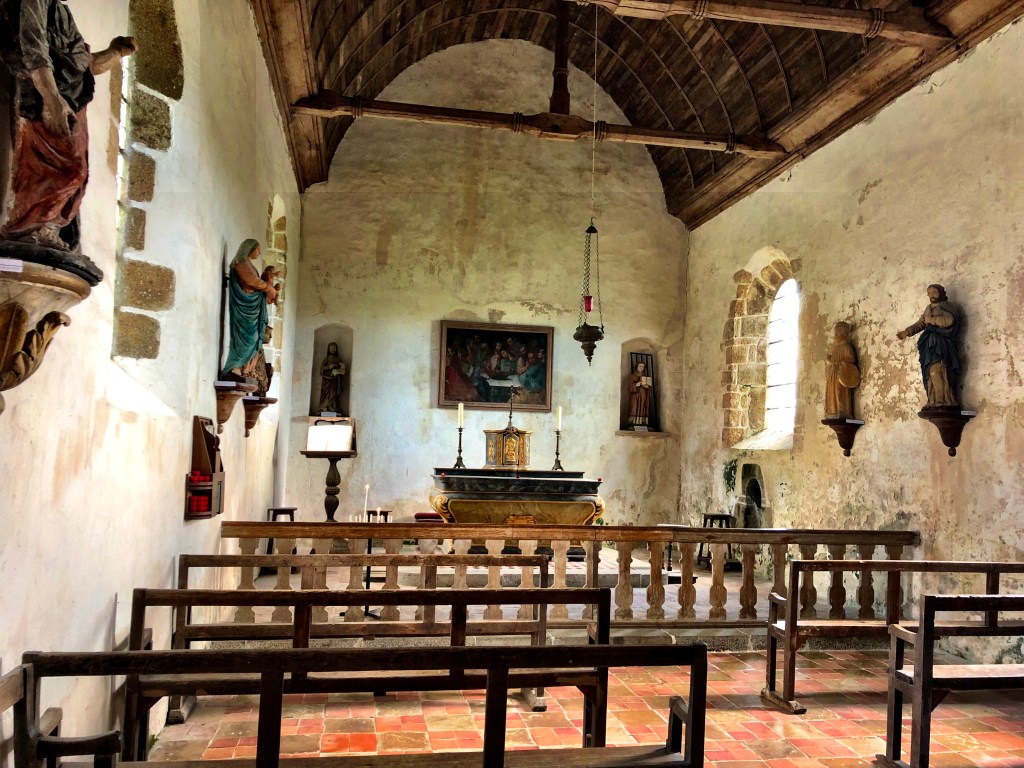
St. Lawrence’s Chapel

The outer courtyard contains a number of outbuildings, including a bakehouse, a cider house, a chapel, a courthouse and farm buildings. You can visit all of them. Of note is the chapel (rebuilt in the 1640’s) which has been fully restored. It contains several nice religious sculptures ranging from the 14th to the 19th centuries, a baroque painted alter table, and pleasant leaded glass windows with decorated panes.

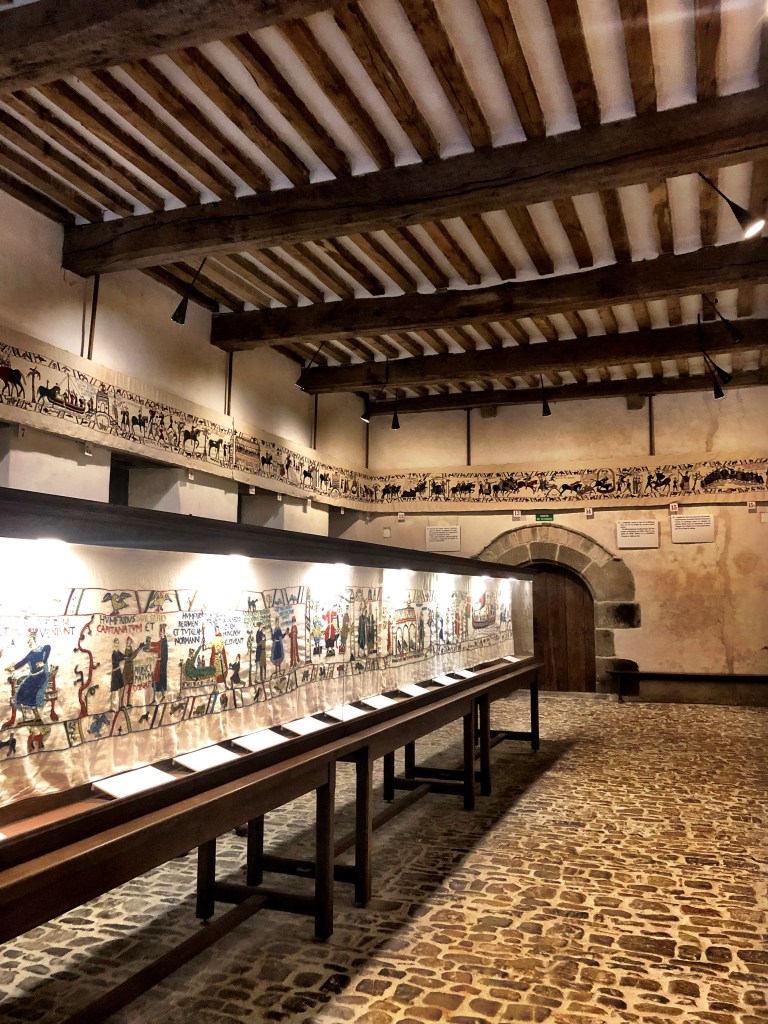
Longest Comic Strip Ever – The Pirou Tapestry

Pirou is also the proud owner of a 58 meter long linen cloth embroidered in the style of the famous Bayeux Tapestry. [Yes, technically, this is an embroidery, NOT a tapestry.] This one depicts the history of the Normans. It was wonderfully created by a local woman (Thérèse Ozenne) in the 1970’s. In fact, it took her sixteen years. Yet it remains unfinished. It’s a remarkable feat and the entire tapestry is nicely displayed, wrapping around the walls and center of the Salle des Plaids (courthouse).

The Central Fortification (right), Encircled by the Moat and the Outbuildings

The primary enclosure, the castle itself, is entirely encircled by a water moat. When we visited, the surface of the water was a bright, almost fluorescent green from the algae, mirroring the color of the foliage above. Very pretty. A 17th century stone bridge replaced the earlier drawbridge, leading through a narrow covered gateway into the small castle courtyard. The courtyard is fully enclosed by buildings and wall. Many of the older portions of the castle are accessible, having undergone a considerable amount of restoration to their medieval origins. The way through also leads visitors to the wall walk above where one can appreciate the views not only of the château grounds, but of the surrounding countryside as well.


Our visit to Pirou was a completion of a tour, of sorts. You might recall our earlier post regarding Lucerne Abbey [Monastic Intentions: Abbaye de Sainte-Trinité de la Lucerne d’Outremer]. That and Château de Pirou were the two properties purchased and set upon a path to restoration by Abbot Marcel Lelégard. This priest fell in love with these properties and endeavored to save them from almost certain ruin. Both were, in fact, already largely in ruins when he purchased the abbey in 1959 and the castle in 1966. Abbot Lelégard organized volunteers to begin the clearing and reconstruction of these historic properties, eventually establishing a formal foundation for continued administration and ongoing conservation/restoration. My hero!

Inside the Fourth Gate

For castle enthusiasts, I couldn’t recommend Pirou more. It’s one of the best little medieval castles I’ve ever visited. Quirky, characterful, and quite old, there is an atmosphere of mellow history about the place which we found to be very entrancing. It’s a place which sits apart from the modern world in the best manner possible, creating – or perhaps, maintaining – a unique historical microclimate. One that should be preserved forever, in my opinion. It’s thanks to the hard work and determination of many dedicated people that Pirou remains. We felt privileged and very fortunate to have experienced it for ourselves.

Gatehouse (Within the First Gate)

Sweet Sainte-Suzanne


Late spring is lovely in Bretagne. June has seen our little jardin leap into exuberant life. The bushes have been humming with several varieties of bees (bumble and honey) as well as hover flies and lots of songbirds. Martins are screaming overhead in daredevil acrobatics; we never cease to wonder at their flying skills. And the flowers are ornamenting the landscape, subtly perfuming the cool mornings with their calming scents, painting in broad strokes of reds, whites, yellows, purples and oranges. The sun is putting in extra hours now, rising early in the mornings and glowing long into the evenings when the long shadows trail away from the many trees that ring our tower. It’s my favorite time of year.


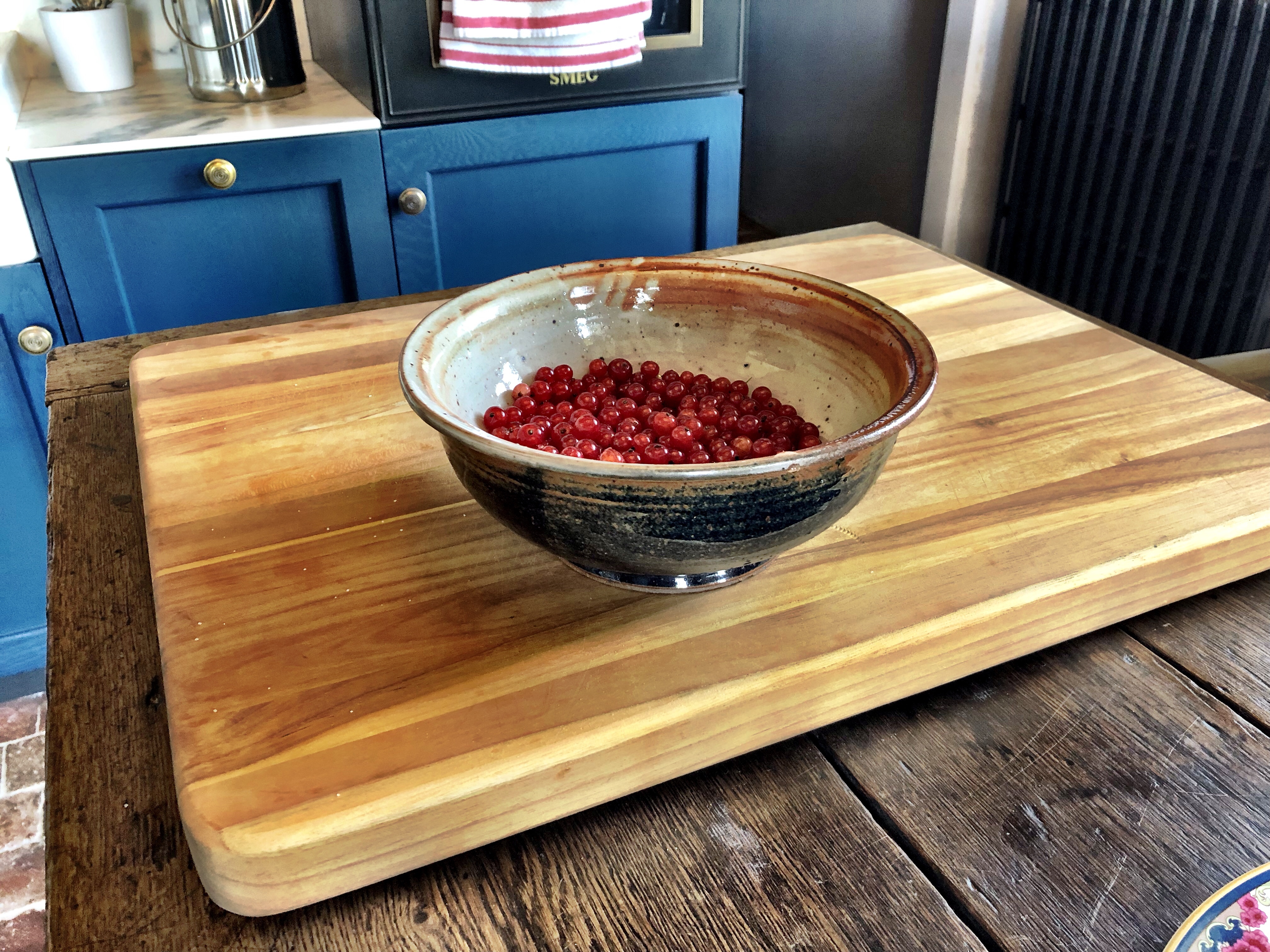
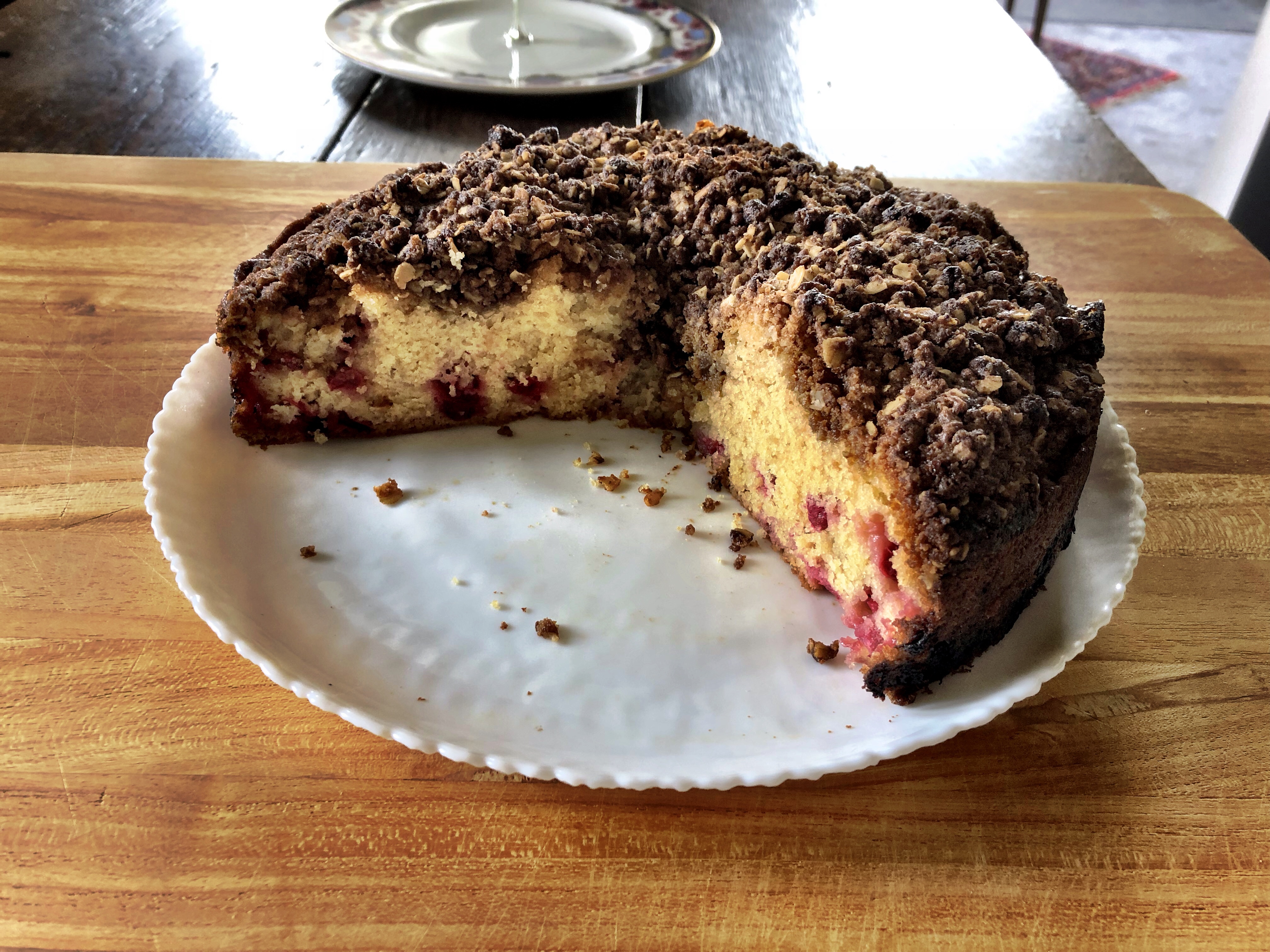
Puttering around in the jardin is my way of doing work around the house that I enjoy, while simultaneously avoiding the more pressing work that I should actually be doing instead. It’s easy to get sidetracked down there. Especially in the spring when it’s so lovely and there is so much to do. Today, I was surprised to find that the red current bush we inherited had produced quite a good crop of berries. Long strings of red pearls hung like Christmas ornaments within the green leafy covering which hides them from view. I picked them all and collected them in the straw hat I was wearing. Later on, I made a cake with them and it was delicious. But more than that, it was satisfying. For we had grown them ourselves. It’s a minor achievement, we know. But we find more and more that it’s the little things which give us so much joy. I would bet that it’s much the same for you.

Saxon Enjoying the Spring Weather in Fougères

As is often the case, the house projects were getting to be a bit of a chore. And we said to each other, “Hey, we live in France. There’s some pretty nice things to see here. Why don’t we go see some more of it?” Congratulating ourselves on some first-class reasoning, we hopped into the car (freshly topped up with electricity) and headed east over the border into the wilds of Mayenne.

So Beautiful! (The Town’s Not Bad Either). Cherie Exploring Sainte-Suzanne

This time, our target was the town of Sainte-Suzanne. About 60 kilometers west of Le Mans and 40 kilometers east of Laval, Sainte-Suzanne is in the region of Pays de la Loire. By car the trip takes around an hour and 20 minutes of pleasant driving. It’s another one of those many fortified hill-towns born in times long ago when living on a more easily defensible high point allowing you to see your enemies coming from miles away was an idea well worth considering. The small but energetic river Erve courses around the western side of the rise, through a steep-sided and green-wooded cleft in the rocky terrain where it once powered several mills.


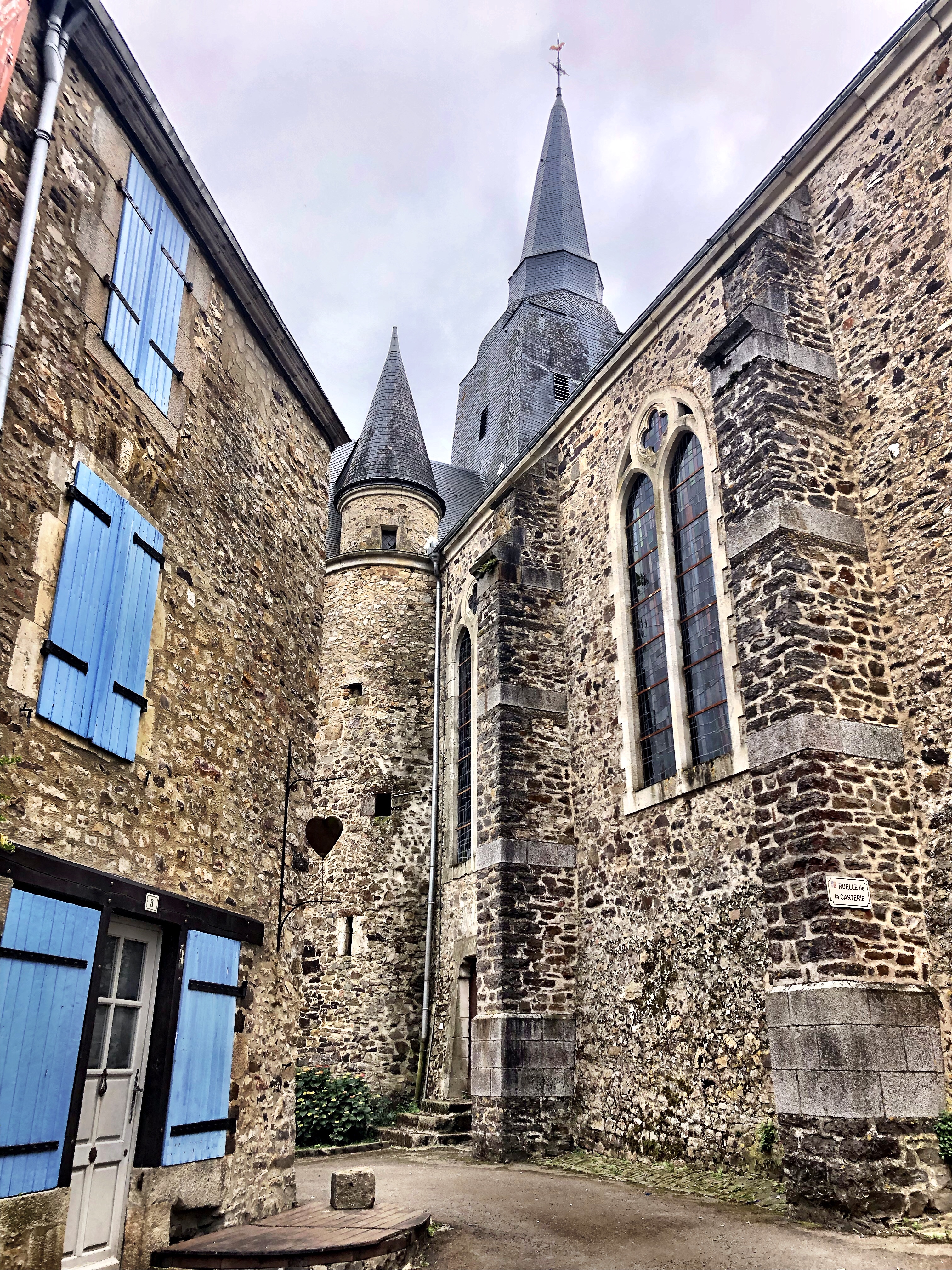
This is a place of ancient history, going back to at least the pre-roman period. There is a small part of the town’s rampart walls which is thought to be of celtic origin. But the greater bits of visible architecture in Sainte-Suzanne range from the 11th through the 19th centuries. It’s a lovely little town, rightfully earning its place amongst the ranks of Les Plus Beaux Villages de France. It’s a compact place. The cobbled streets wind through handsome and well-kept stone buildings. A few nice shops line the central area and a lovely square. Several cafés and bistros offer a satisfying selection of food and drink, all of them with pleasant outdoor seating. Sainte-Suzanne welcomes a fair amount of tourists, but it’s, thankfully, not touristy. You won’t find much in the way of kitschy souvenirs there. The town is clearly aware that it is a destination spot, but there is little in the way of overt exploitation of the fact. Instead, there is a quiet feeling of welcome and self-assurance. Nice.

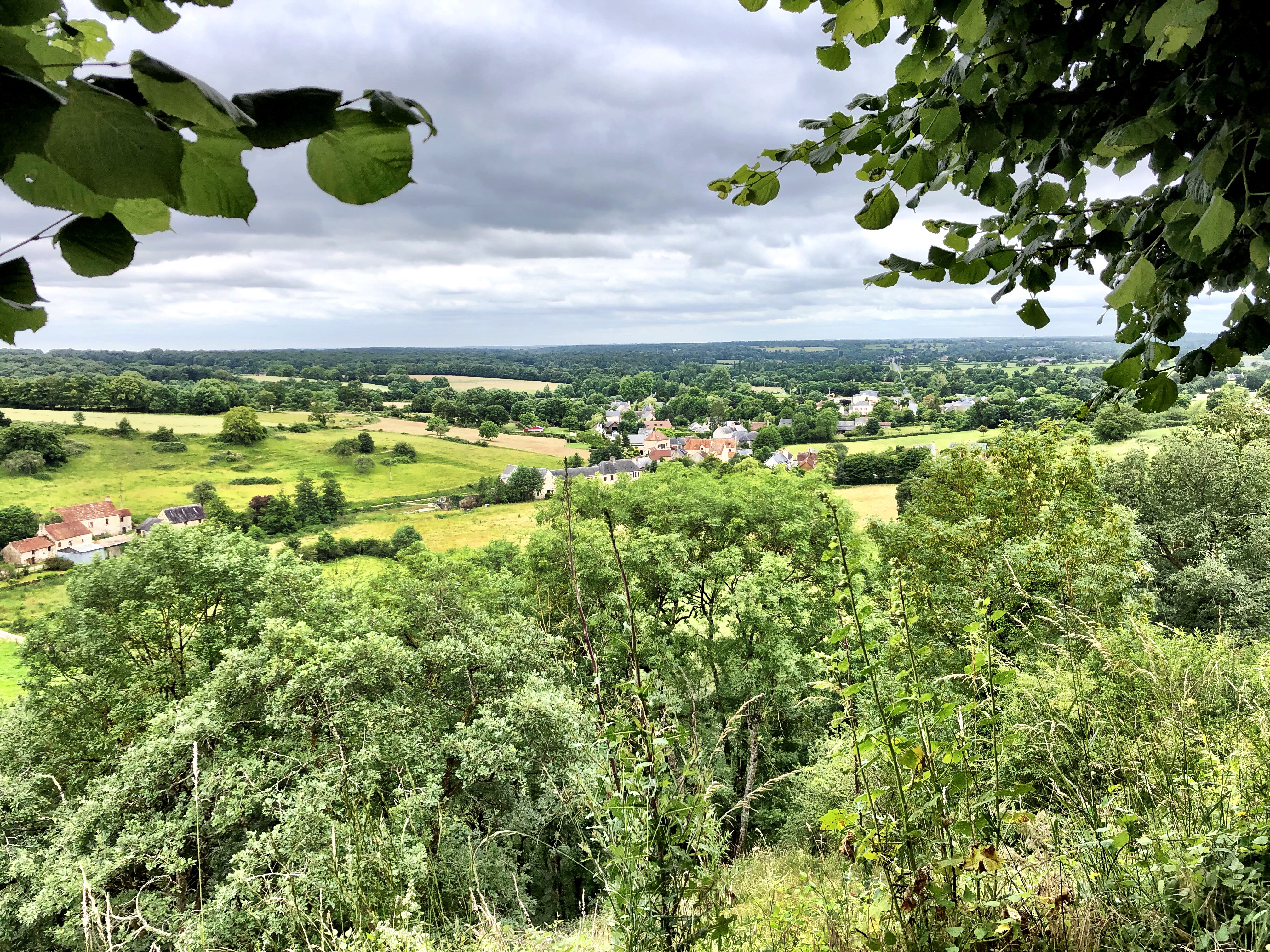
Will We Ever Get Used to Such Views? Doubtful.

As soon as we parked the car, we wandered toward a chemin (a pathway) which follows the line of defensive walls encircling part of the town. Not only are the walls and houses which have been built into it over the centuries interesting to view from the outside, but walking the path also offers lovely views of the surrounding countryside laid out below. It’s quite a pretty landscape: verdant valleys and rolling hills with patchworks of grasses, wildflowers and deciduous trees through which run vigorous, sparkling streams. We found a strategically placed bench to eat some sandwiches we had brought with us and enjoyed the pastoral view.

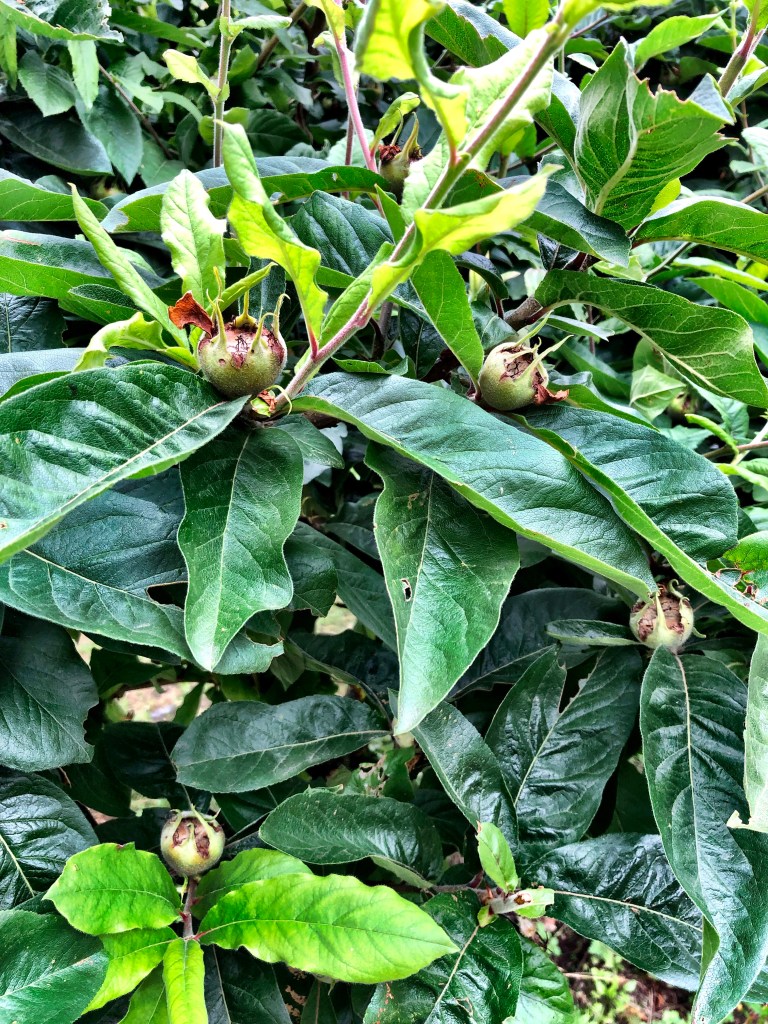
Medlars Beginning to Take Shape in the Medieval Garden

The locals maintain a medieval garden on a terraced bit of land below the ramparts. There they cultivate an admirable number of plants: herbs (medicinal and culinary), flowers, vegetables, berries and nut and fruit trees. We were particularly impressed with the sheer variety of fruit trees which included apples, pears, apricots, cherries – they even had quince and medlar trees. I had never seen a medlar tree before, so I was especially glad to have checked out this garden. A special shout out to our friend Adam from Idaho who recommended an app (Seek) that was of tremendous help in identifying some of the more rare varieties to be found there.

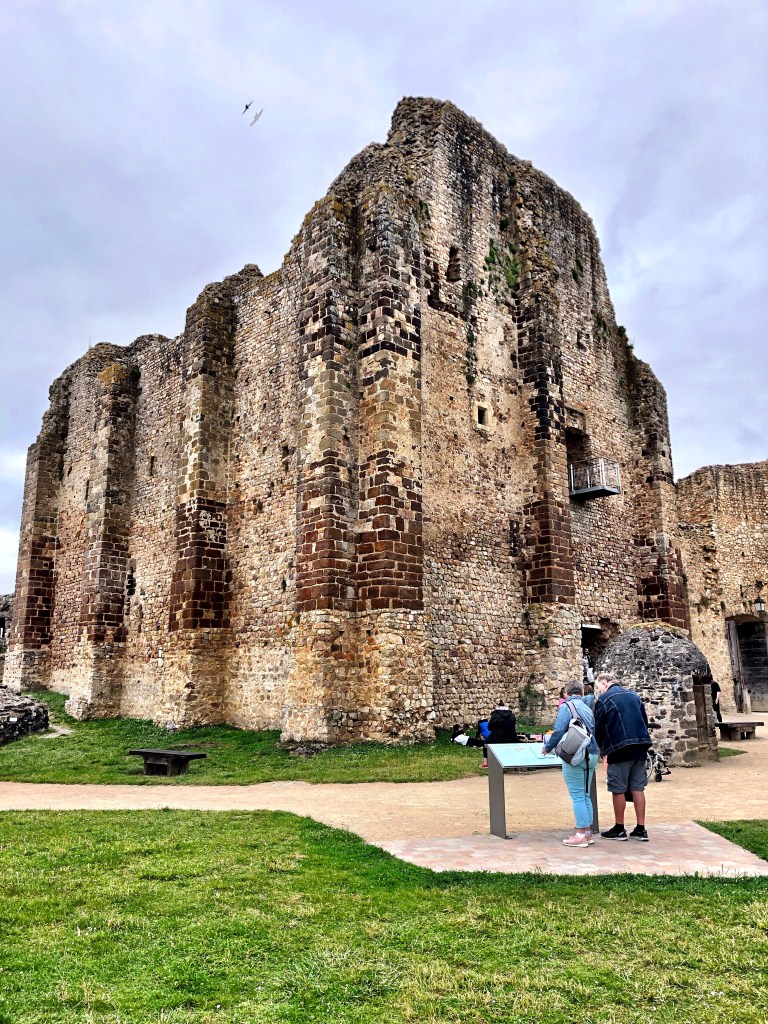
The 11th Century Donjon

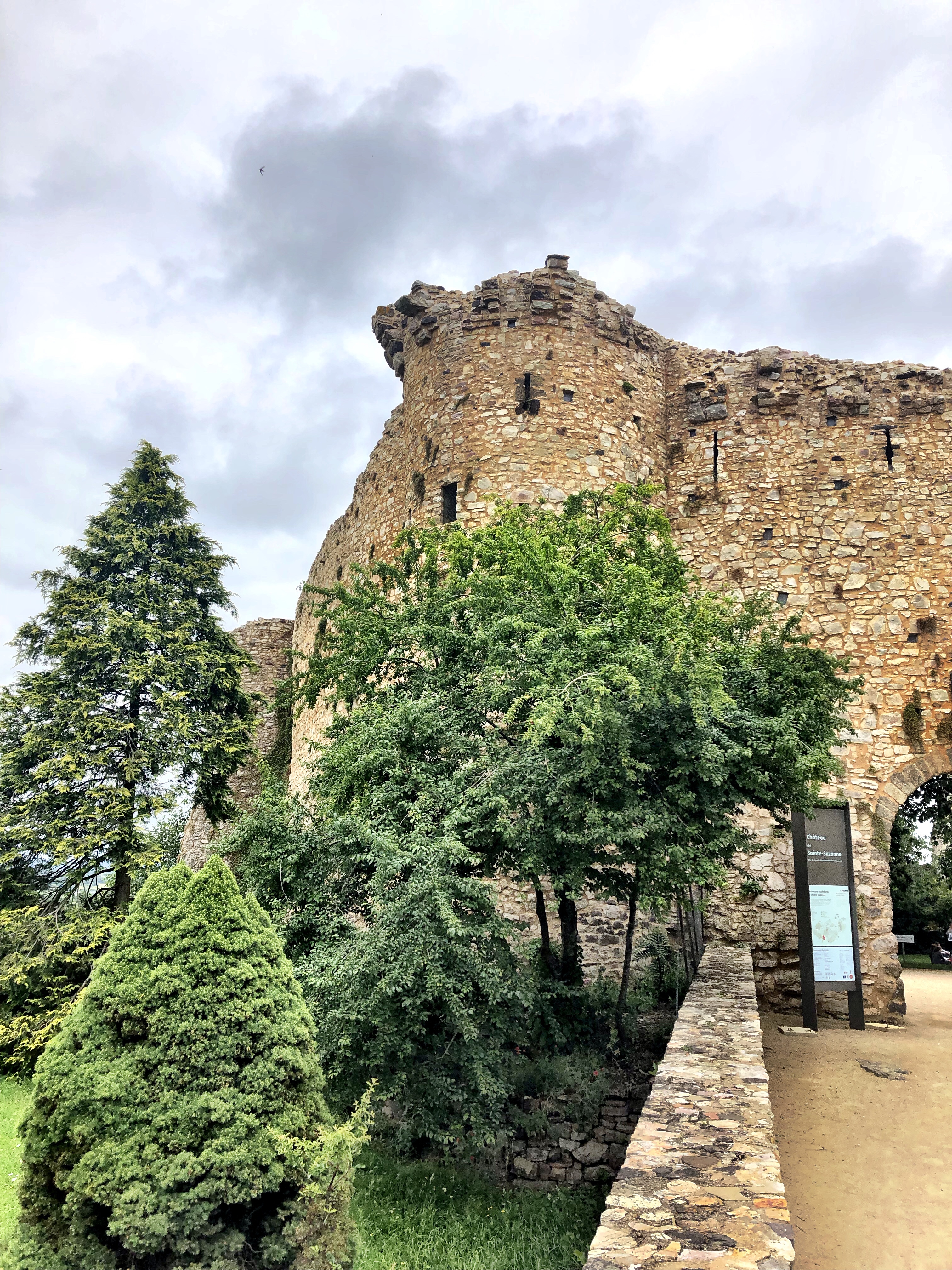
Integral to the town is the château. Begun in the first half of the eleventh century as a donjon (a single large square tower), it was expanded in the 12th, 13th and 15th centuries to form a stone fortified enclosure. It is now a ruin, but substantial parts of the castle remain standing. They have cleverly built a set of metal walkways and stairways within the shell of the donjon which allow visitors to climb up the several levels of the Norman-period building. Just think, this structure was here when William (Guillaume) duke of Normandy and king of England (i.e., The Conqueror) laid siege to Sainte-Suzanne. He tried for three years (1083-1086) to take the town, but never succeeded. It was the only time he had ever failed in such an endeavor. There is still a place outside of town which is called Le Camp des Anglais, recalling the memory of the site where William’s forces established their base. The château should not be missed. Particularly because entry is free!


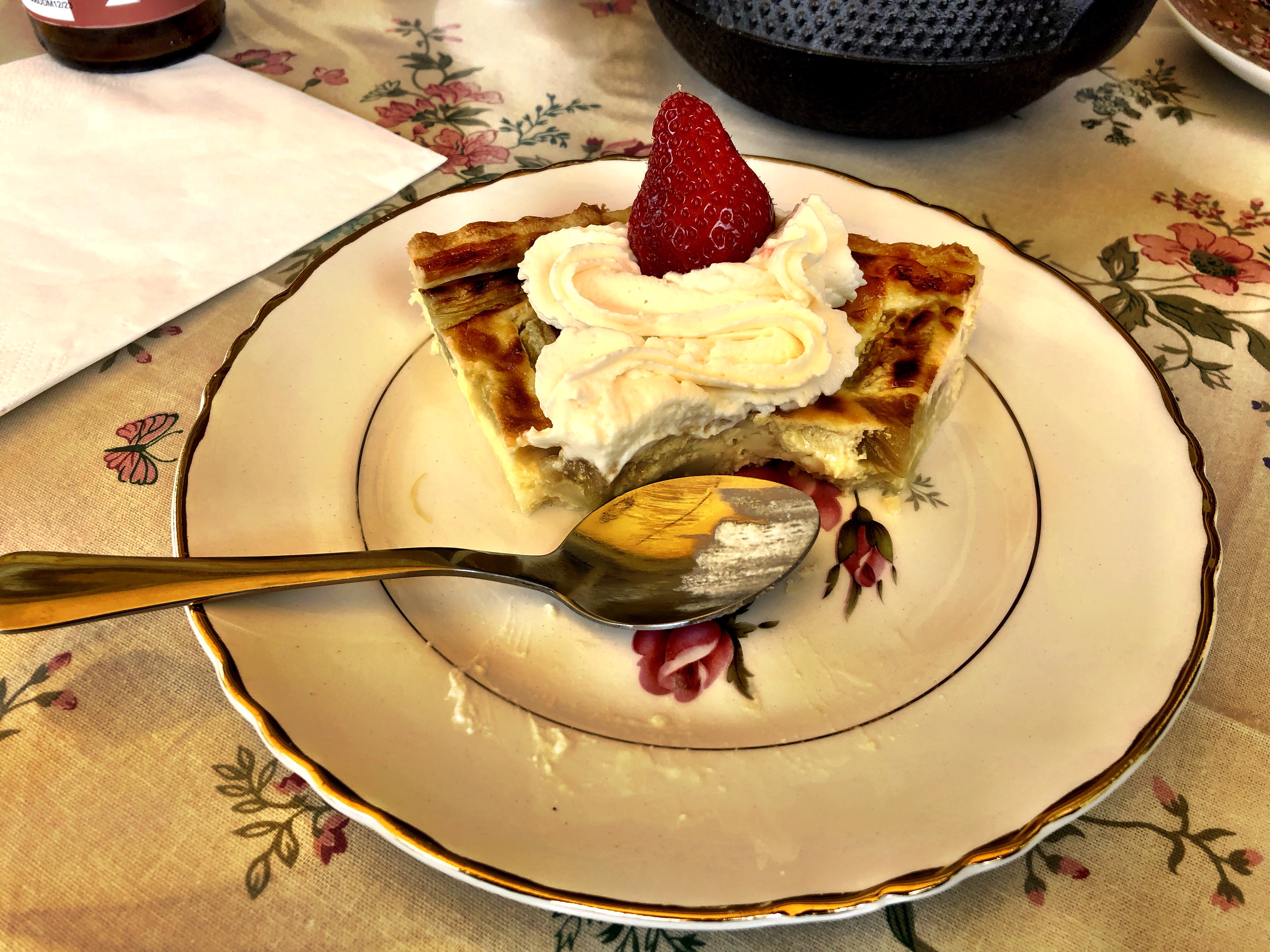
Touristing is thirsty work! So we stopped in at a nice little épicerie which also happened to have table service right on the square. Cherie had tea and I had an excellent local beer. Yes, France is justly famed for its wine. And I take full advantage of that happy circumstance. But I must also observe that they produce some very fine beer as well. We both shared slices of rhubarb tarte. Made in-house, it was a custardy, yummy treat which we enjoyed as the weekday afternoon quietly meandered on. Probably much as it has in Sainte-Suzanne’s square for centuries on end. It was pretty great.

An Ancient Wonder of the World (I’m Only 56)

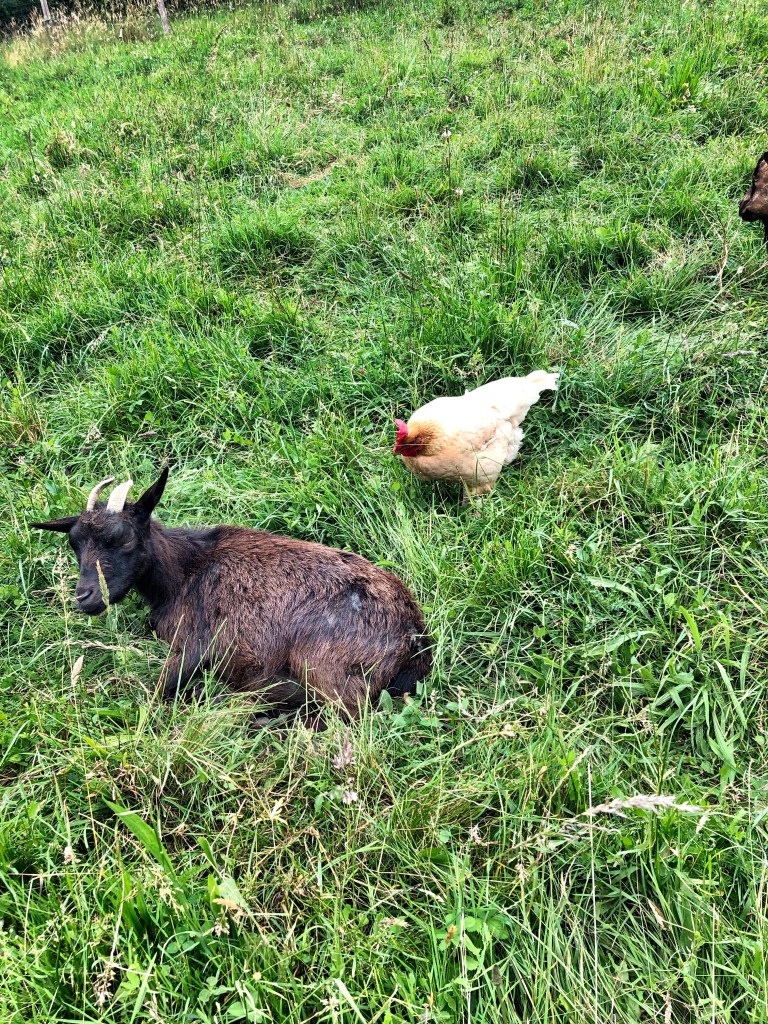
Not more than a couple of kilometers from town is a prehistoric site called Le Dolmen des Erves. Always keen to see a very old pile of rocks, we stopped by on our way out of town. This neolithic stone monument is literally plonked down in the middle of several animal pens. A narrow path between the pens of nonplussed chickens and goats leads you to a tremendous sight: huge slabs of stone laid horizontally on top of equally huge slabs sunk vertically into the ground to form a sort of covered corridor. When built, it would likely have been covered by smaller stones or earth to form a mound with an enclosed chamber inside in order to contain burials. The remains of fourteen individuals (9 adults and 5 children) have been found within. It is amazing to us how many of these prehistoric megalithic monuments are still to be found in This part of France. They are everywhere. And so impressive to see in person. Truly, the photographs do not do them justice.


Sainte-Suzanne is indeed a plus beau village. And we really enjoyed our visit there. Every time we go somewhere like this we learn so much about French history and culture. We can’t get enough of it. And there is so much to see. We’ve barely scratched the surface. Luckily for us, we’ll be living here for a very, very long time. Thanks again, dear reader, for taking time out of your busy lives and allowing us to share our lives and travels in France with you. It’s a real privilege to have you along with us. Talk to you soon!

French Farmyard Chill by the Dolmen