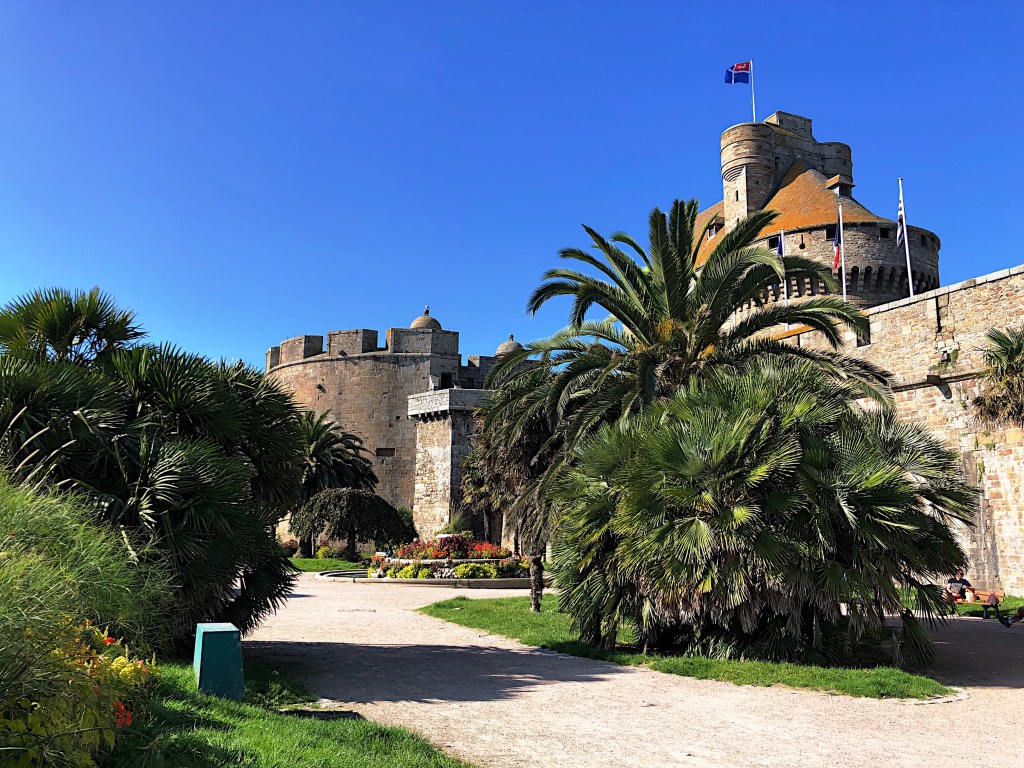
A Sunny Day in Saint-Malo


Palm Trees and Impenetrable Walls: Saint-Malo

It seems like we only really drop our preoccupation with the tower when we have visitors. Having Valerie stay with us has been a real catalyst for us to go sightseeing. Happy days! Yesterday, we awoke to beautiful October weather. Clear blue skies, warm but fresh temperatures, occasional gentle breezes – absolutely beautiful. And this time the city of Saint-Malo was our target for exploration.
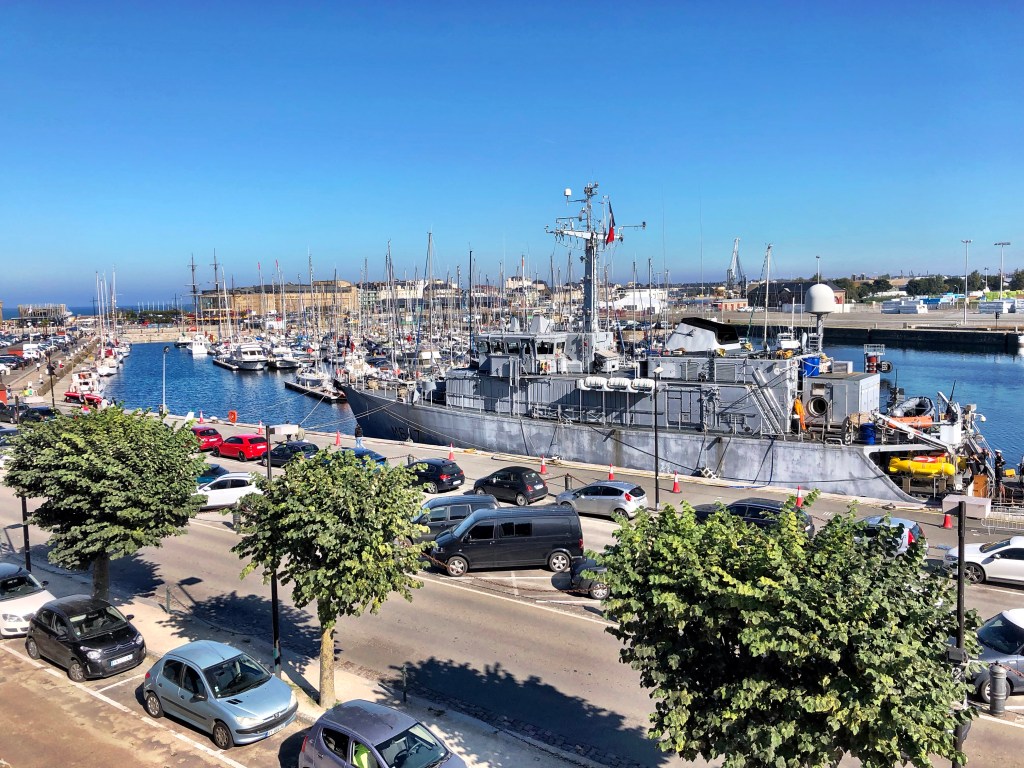
Acres of Harbor: A French Naval Vessel Amongst a Fleet of Fishing Boats

St. Malo is a city of around 135,000 people in the metropolitan area. It’s a port city, situated on the northeastern coastline of Bretagne at the mouth of the Rance estuary. Wider St. Malo is quite spreading, but the old city, the Intra-Muros, is compact, easily walkable, and confined within the still-complete circuit of city walls which define it. It’s essentially surrounded on all sides by water, a combination of the ocean and a series of large harbors. There is a large fishing fleet, a naval station, marinas for pleasure boats, and a significant ferry terminal – all hugging the walls of the old town. From here, you can catch daily ferries to the U.K. (Portsmouth or Poole), or the Channel Islands. So, even though the center within the wall is largely given over to tourism, there is a good deal of serious business going on just outside.
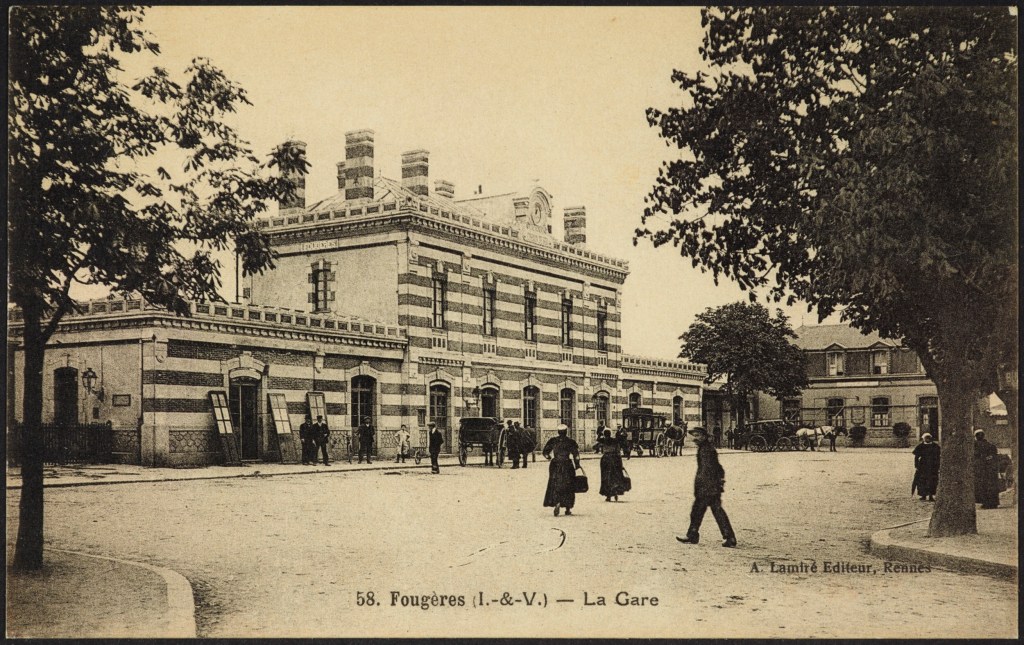
What Was Lost: The Old Train Station in Fougères

There are direct TGV trains from St. Malo to Rennes, Paris, Brest, etc. But, sadly, not to Fougères. Our town has no train service at all, which is a real disappointment. Like many places in the world, a thorough lack of vision led to the cessation of passenger train services in Fougères in 1972. So, we drove. It’s only 1h25m by car to St. Malo, a nice northwesterly drive through rolling countryside. The outskirts of St. Malo are full of business parks, a massive water park, subdivisions and the like. Not particularly awe-inspiring.
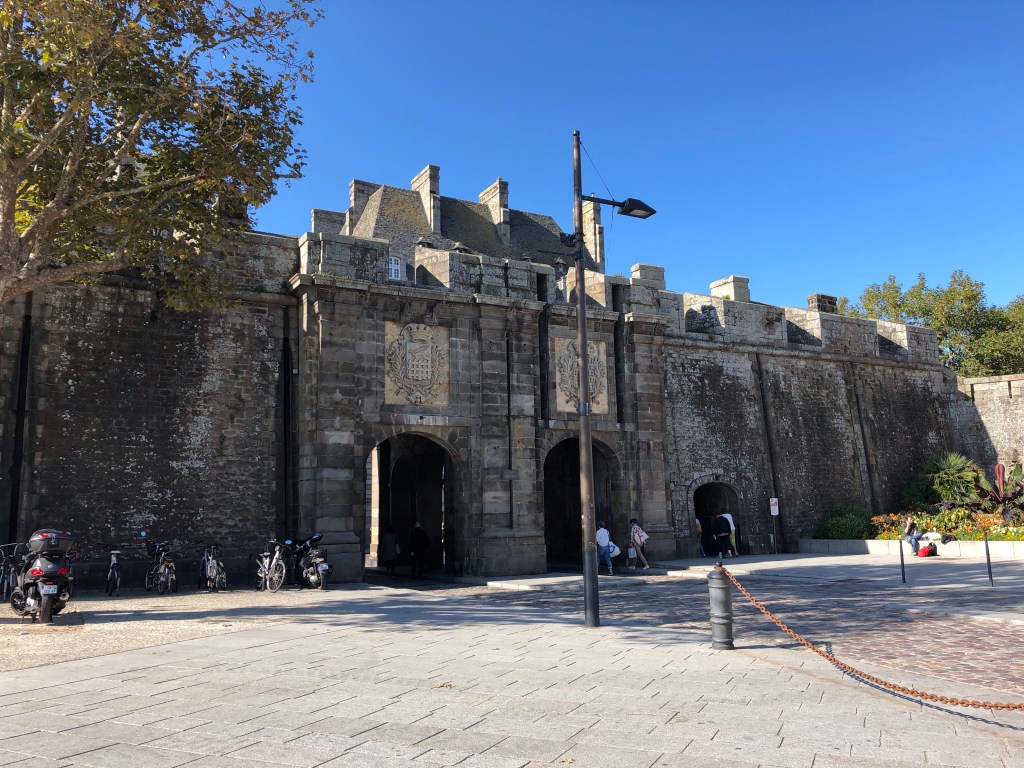
Porte Saint-Vincent


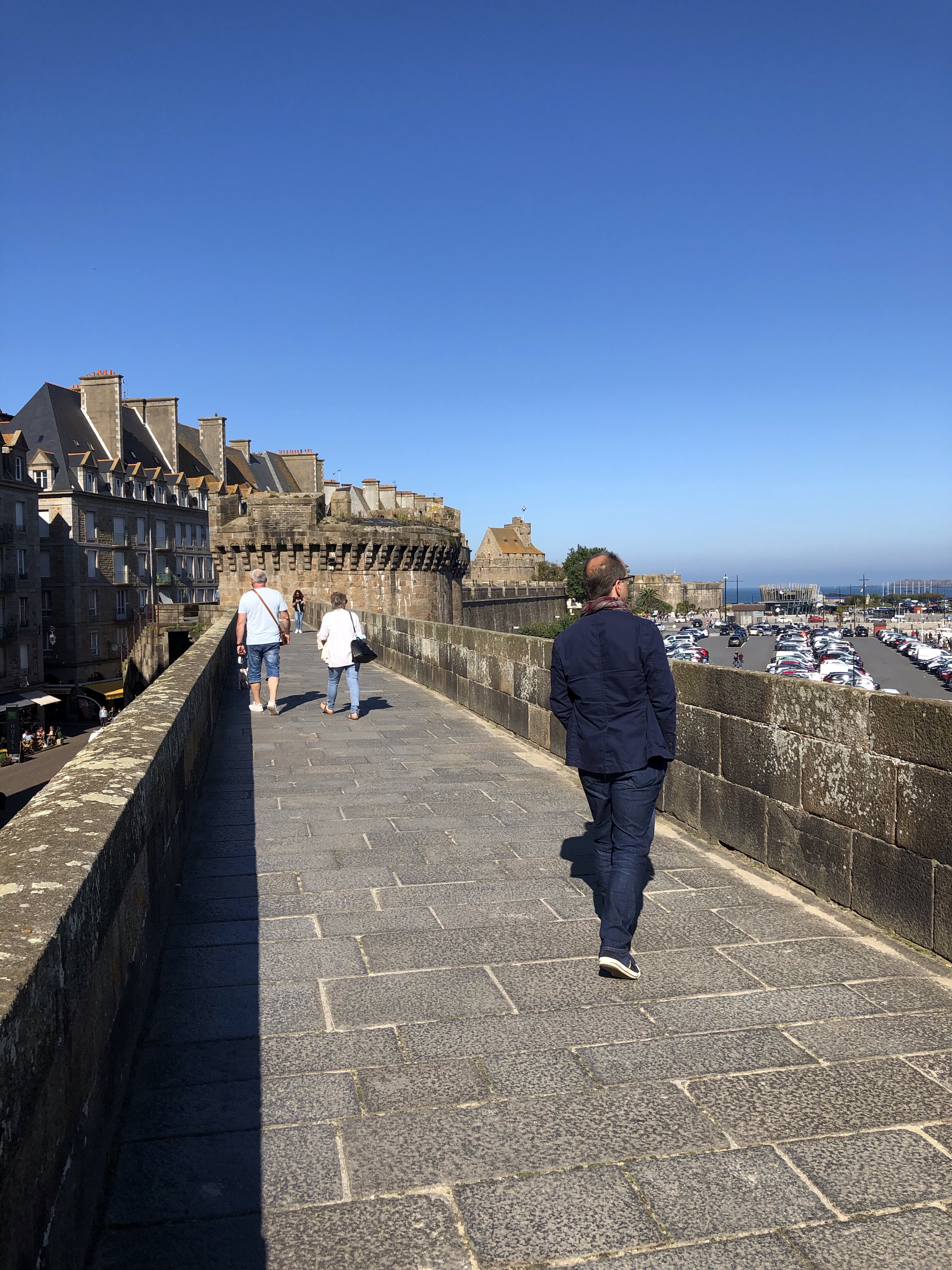
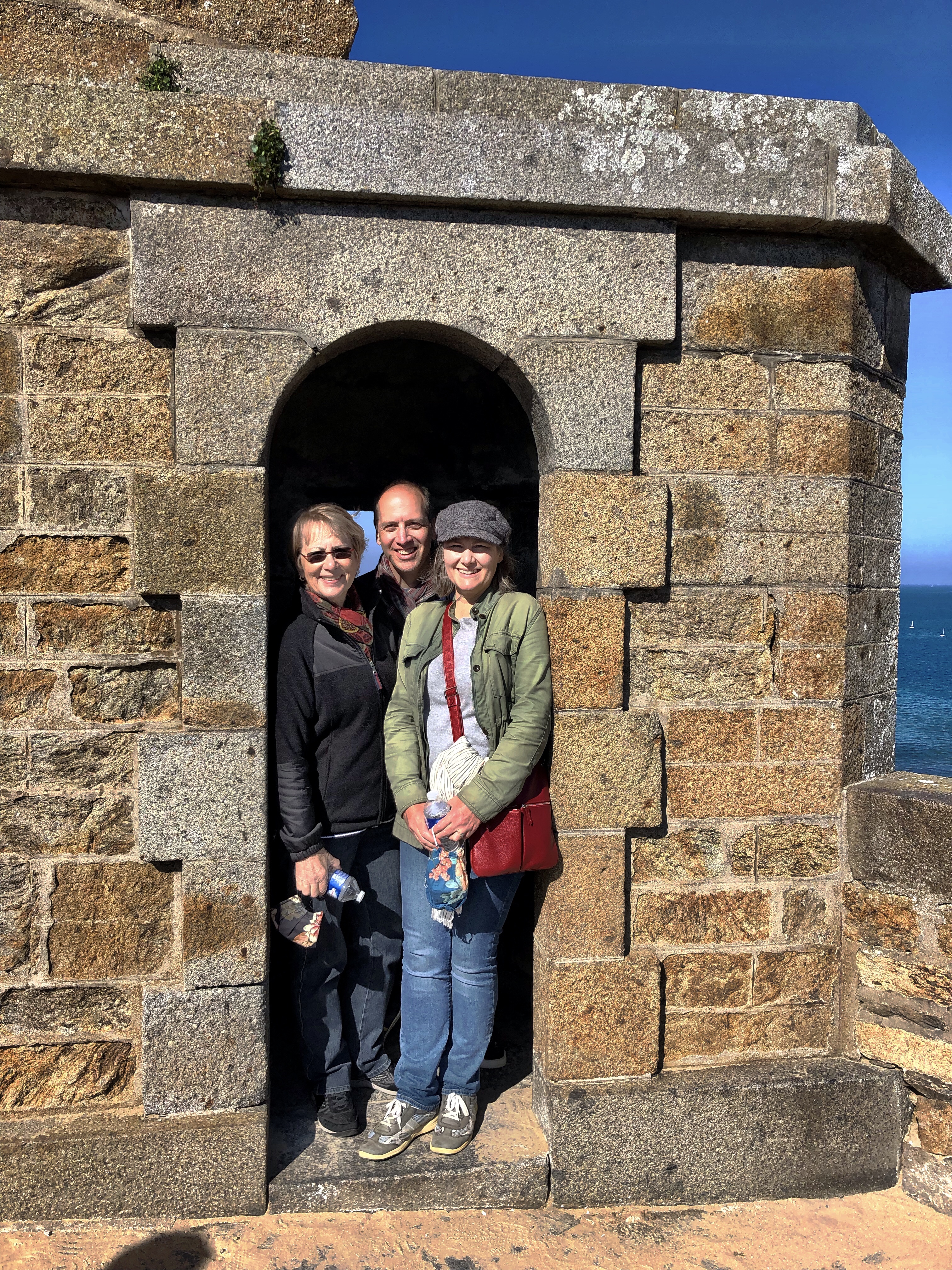
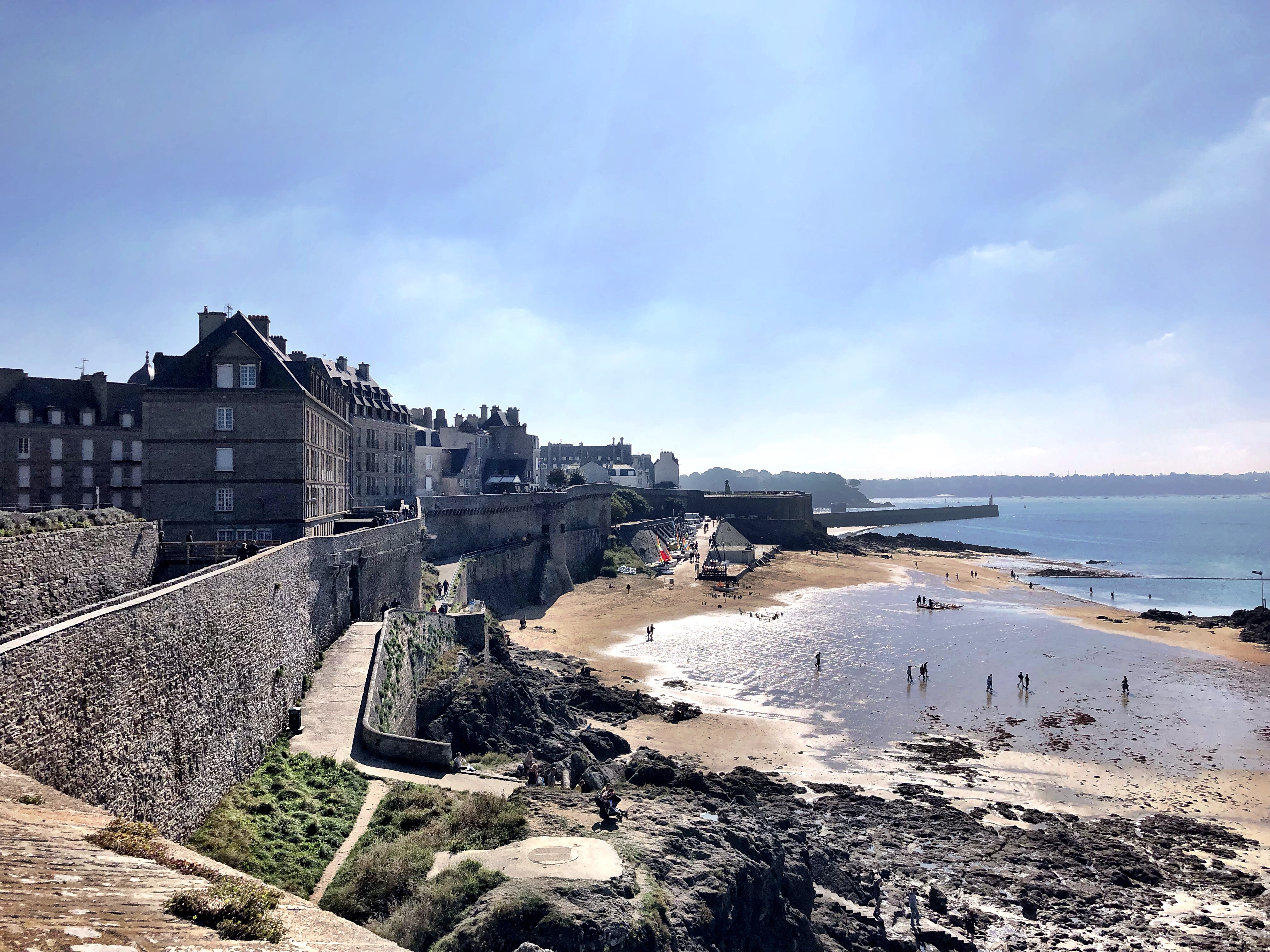
Once past the detritus of modern sprawl, we came upon a 17th century vision: the old fortified city of St. Malo. It’s really beautiful and impressive. The original walls, devised by Louis XIV’s famed military engineer, Sébastian Le Prestre de Vauban, still encircle the original town. These formidable defenses erected to shield the inhabitants from English ambitions and to guard the surrounding waters for their naval and fishing fleets. The entire circuit is some 2 kilometers and it’s possible walk the ramparts nearly the entire way. So, we did. It was a glorious stroll, with magnifient views along every single section of the walls.
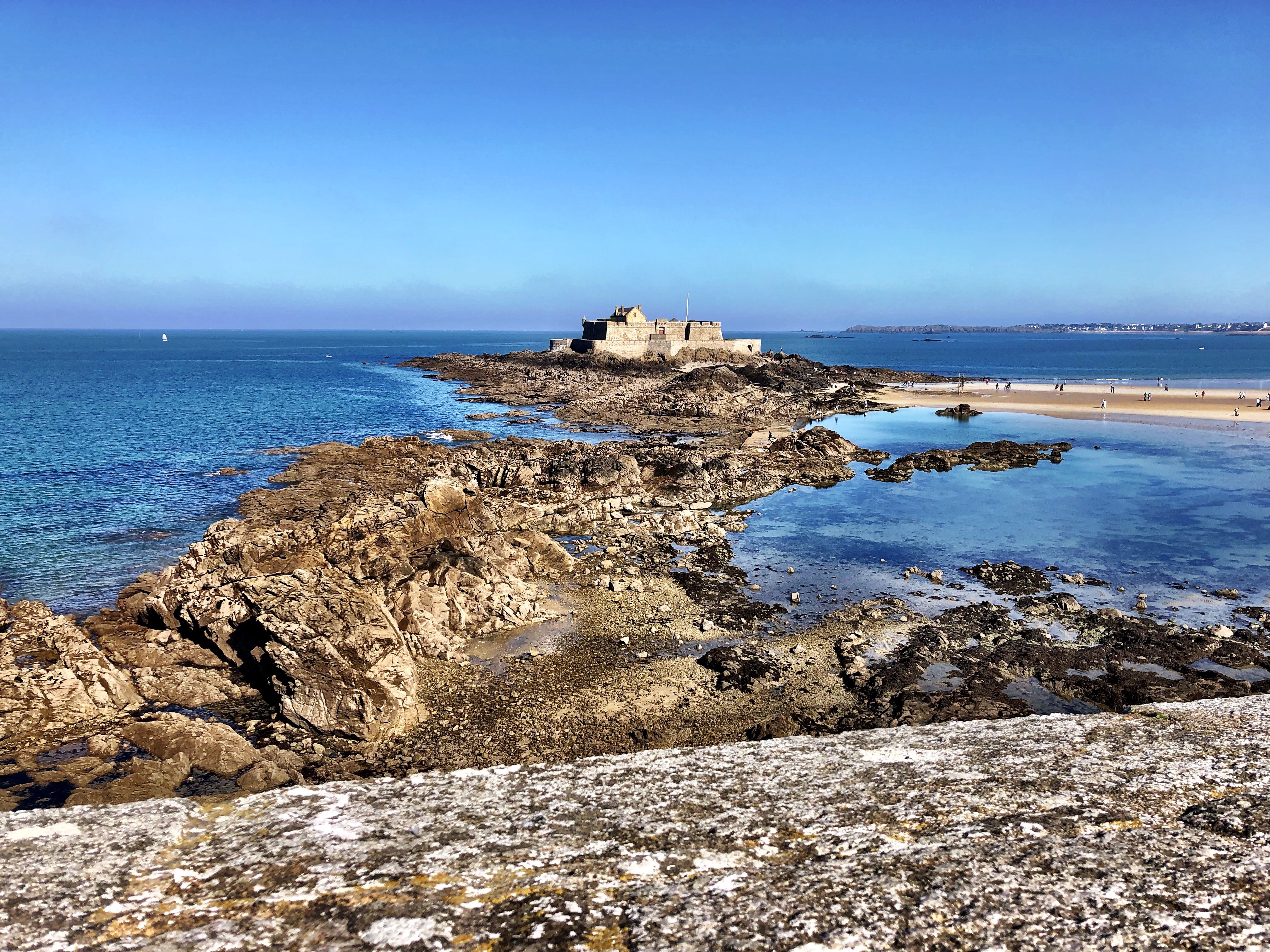
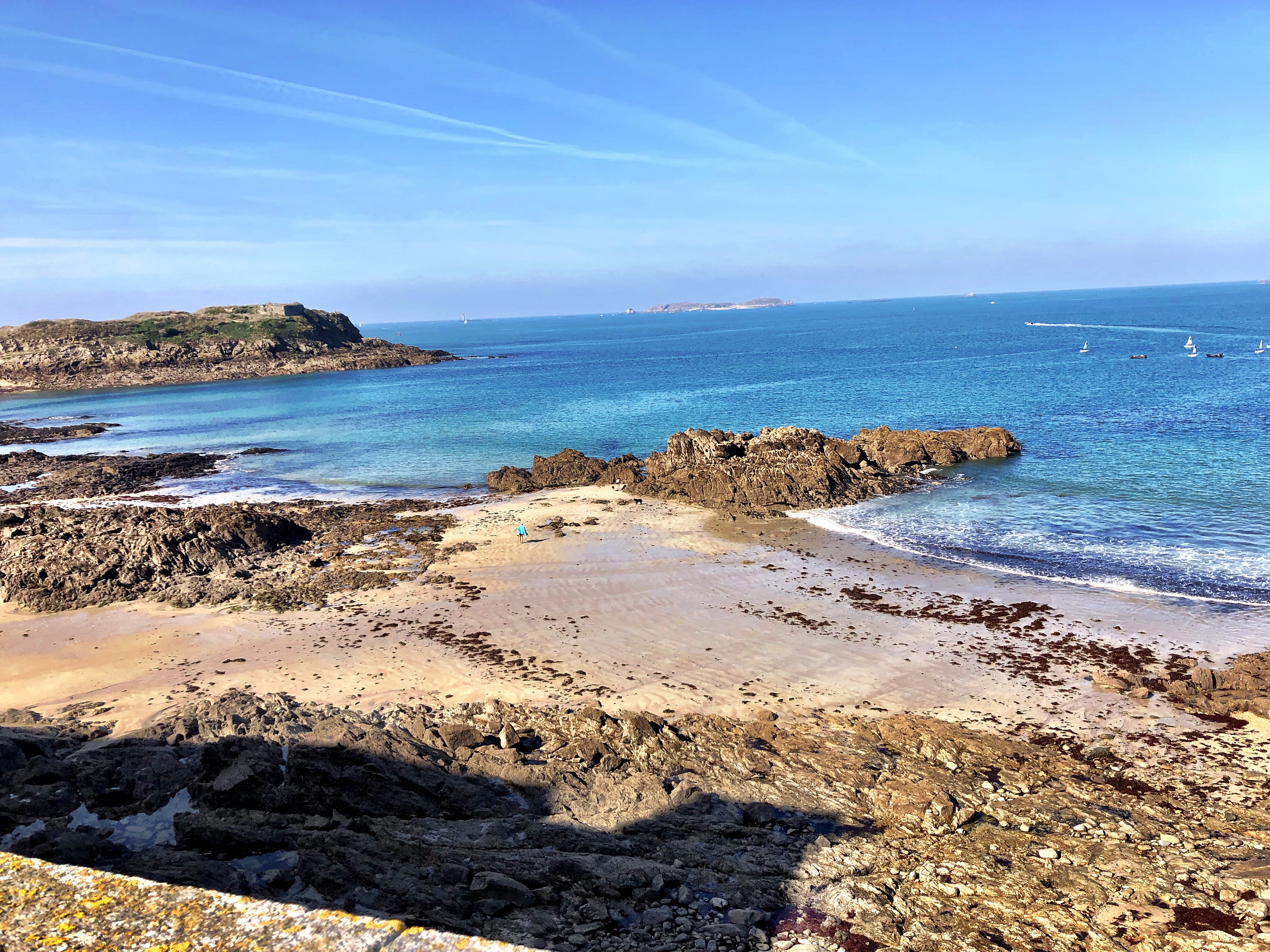
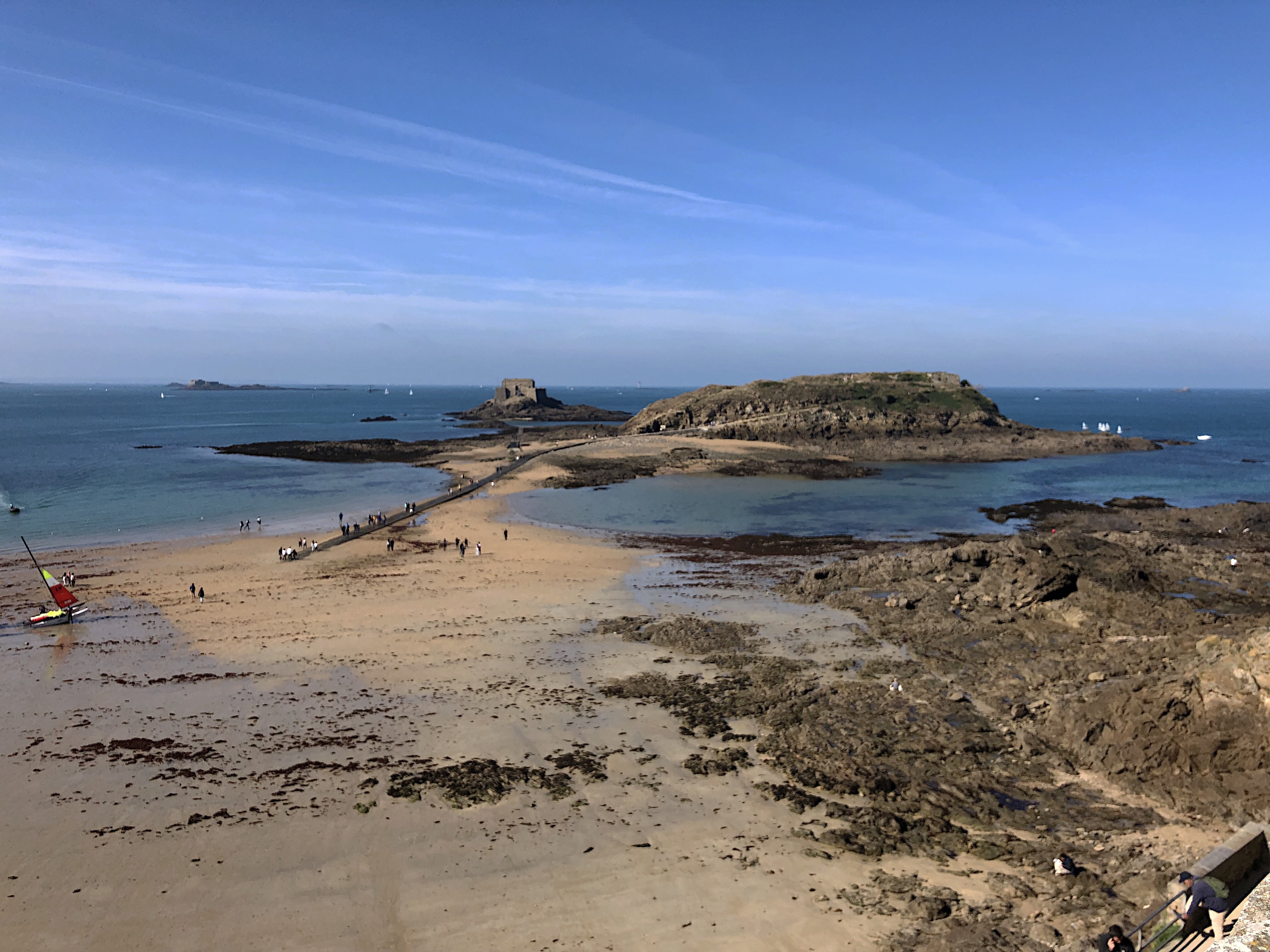
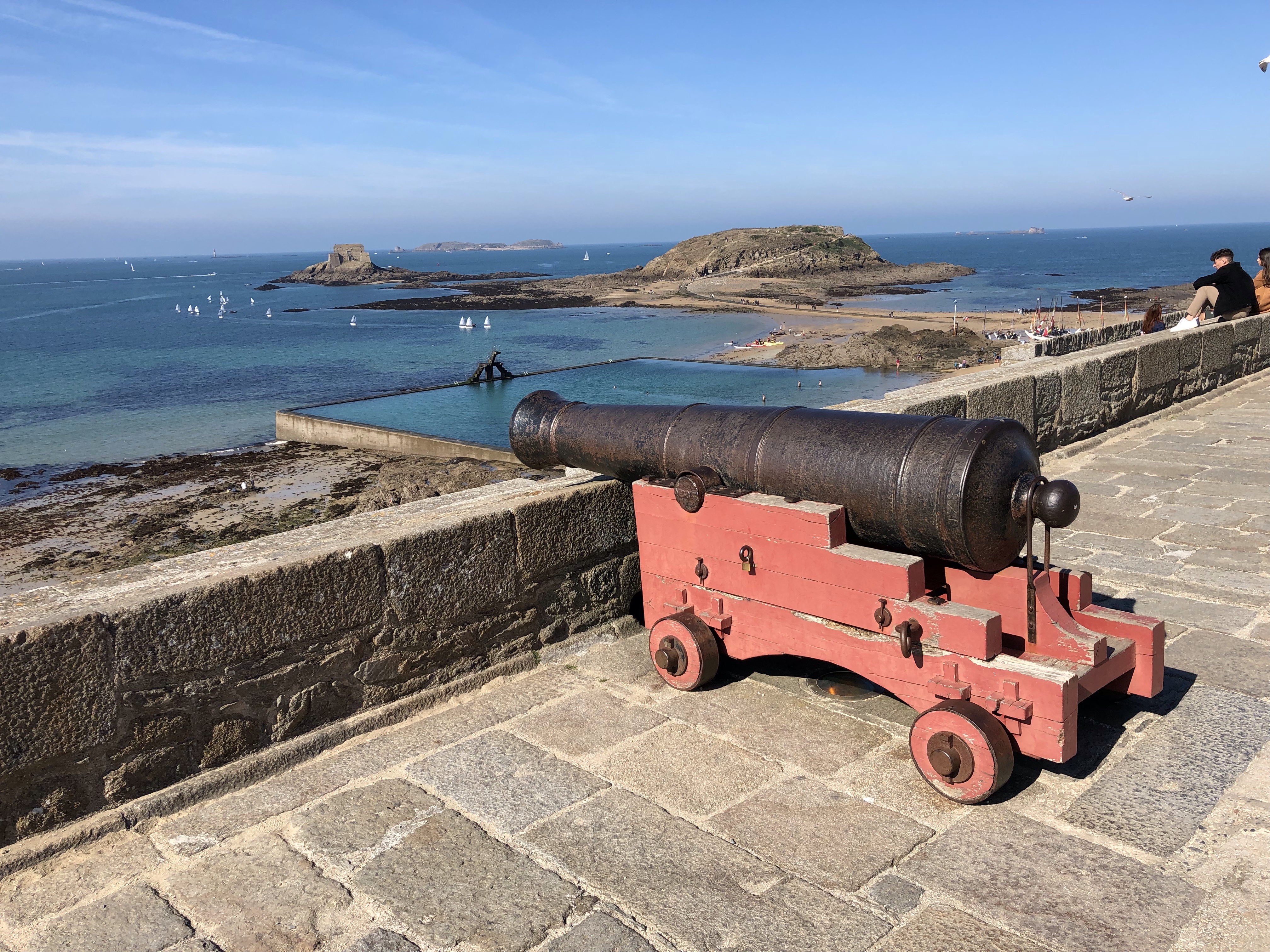
In particular, the ocean views are tremendous. The azure waters surround numerous small rocky islands, many of them topped with smaller forts and gun platforms. There are several stretches of sandy beach at the foot of the walls, punctuated with rocky patches strewn with tidal pools and low-lying causeways leading out to a couple of the islands offshore. Much of this is under water for part of the time. St. Malo experiences a huge tidal range of 13 meters! We were lucky enough to see it at low tide. There is also a large saltwater pool on one of the beaches, complete with several high-dive platforms at various levels. It was nice to see that locals and visitors alike enjoy these beaches, including several dogs happily frolicking in and around the water.
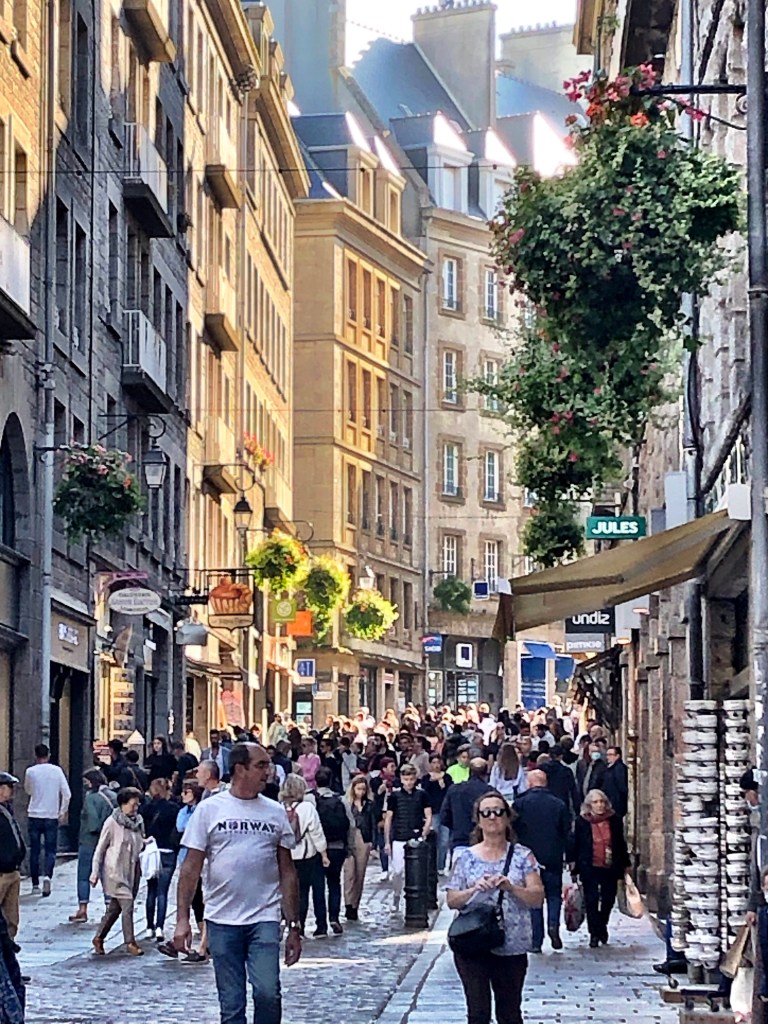
Run for Your Lives!: Tourists on Parade
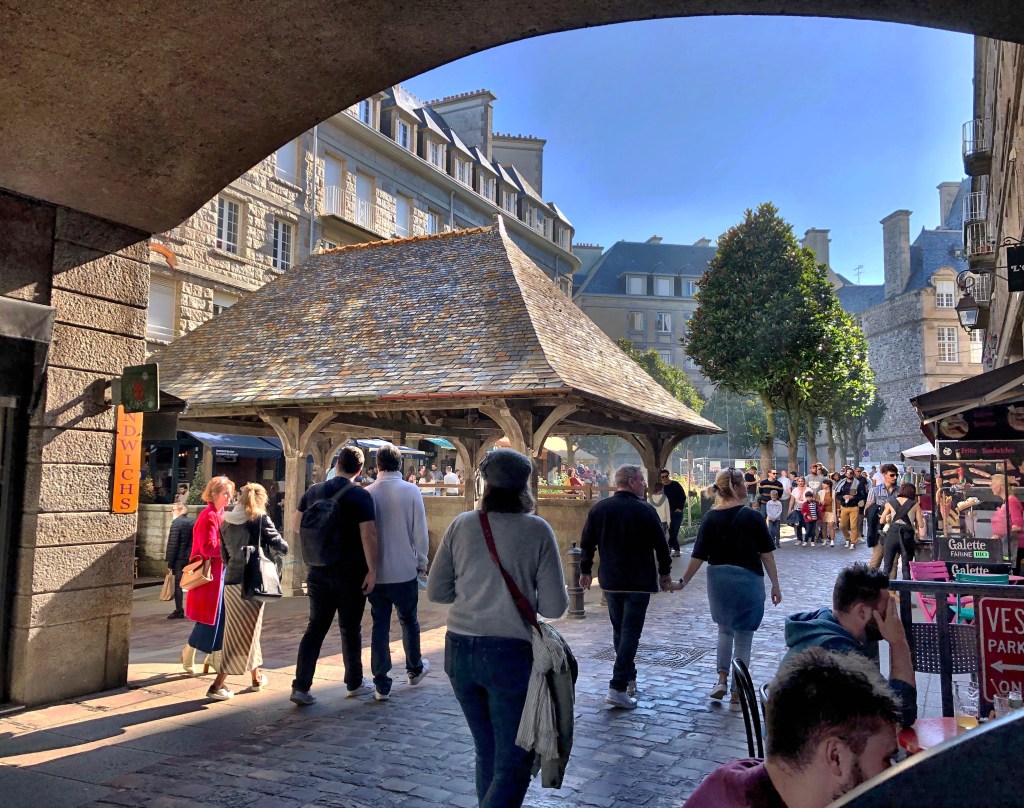
Cherie Leading the Way into a Pictoresque Square

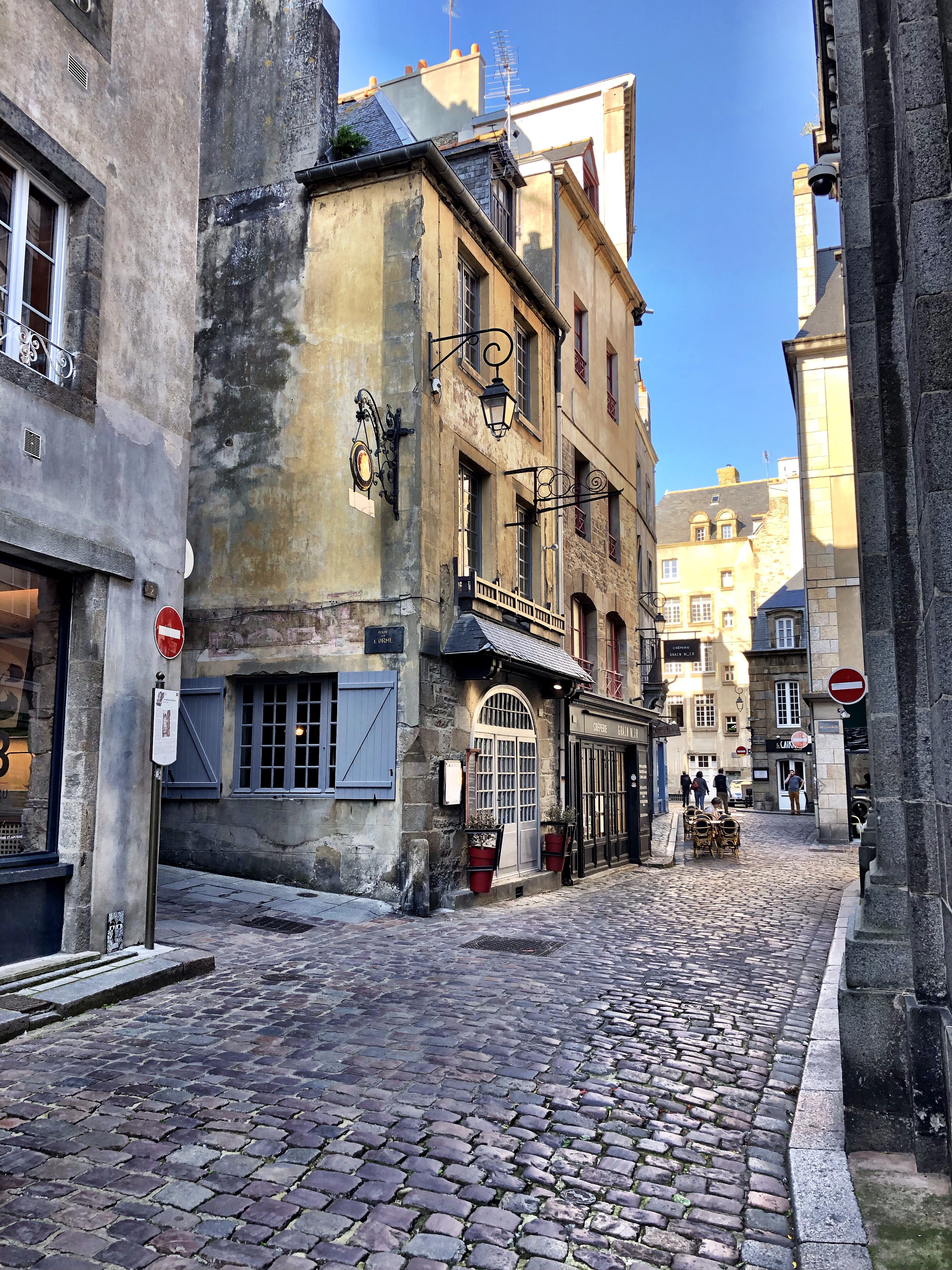
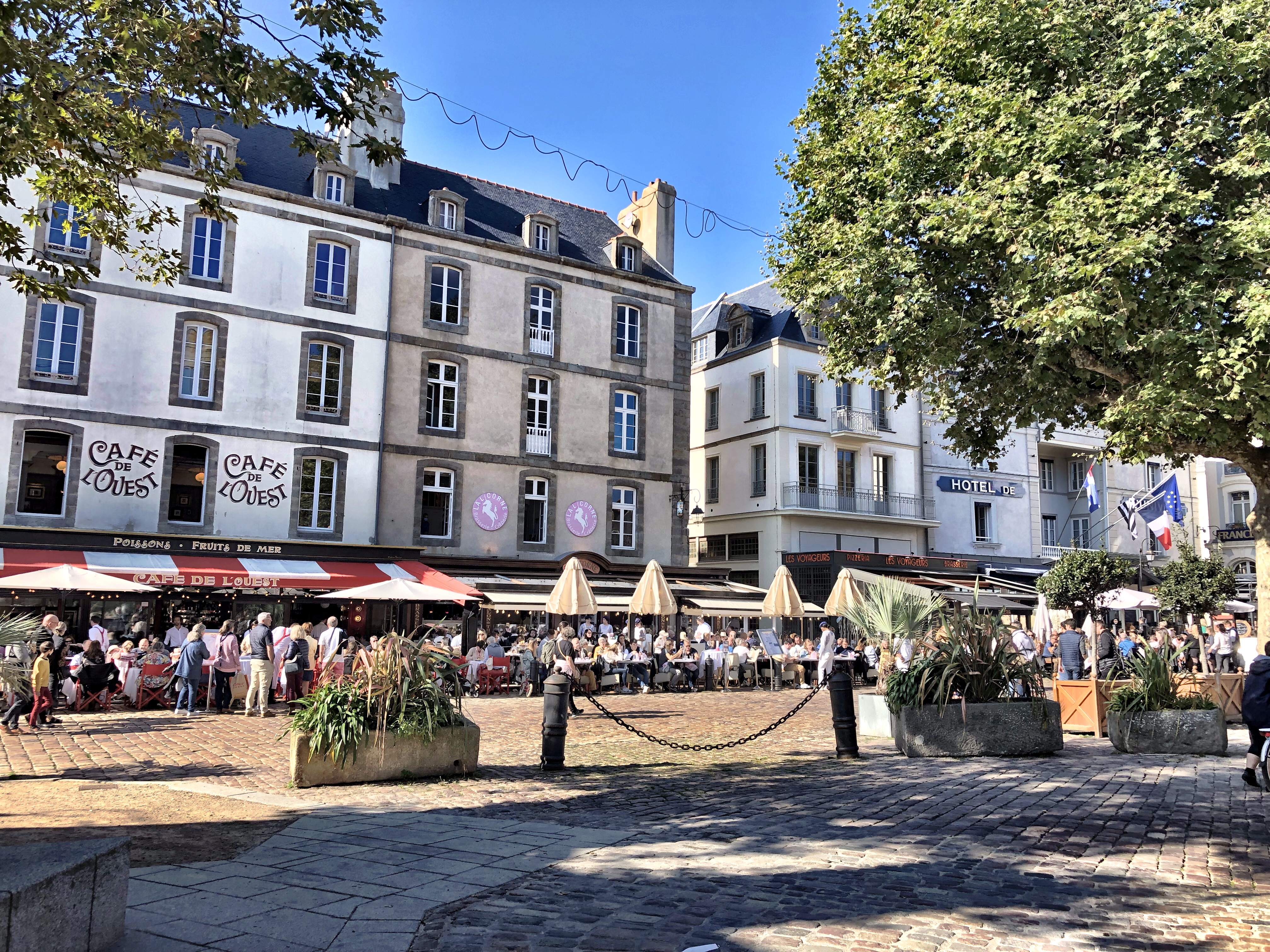
The city inside the walls is equally lovely. Massively shelled and bombed by Allied forces in August, 1944 as German forces refused to surrender, the city suffered extensive damage. Rebuilding took 12 years (1948-1960) and much of what stands today was reconstructed. Even so, the architects tried to replicate what had stood before the destruction of the war. The city streets therefore still exude a charm of previous times in a surprisingly pleasant way. The many cafes, bars, restaurants and shops lining the main streets are well-maintained and attractive – all designed to lure the countless hordes of tourists which visit the town every year. Even though we were there in October and Covid restrictions are still impacting travel, the high streets and walls were thronging with visitors. I can’t imagine what it would be like in the height of Summer sans pandemic.
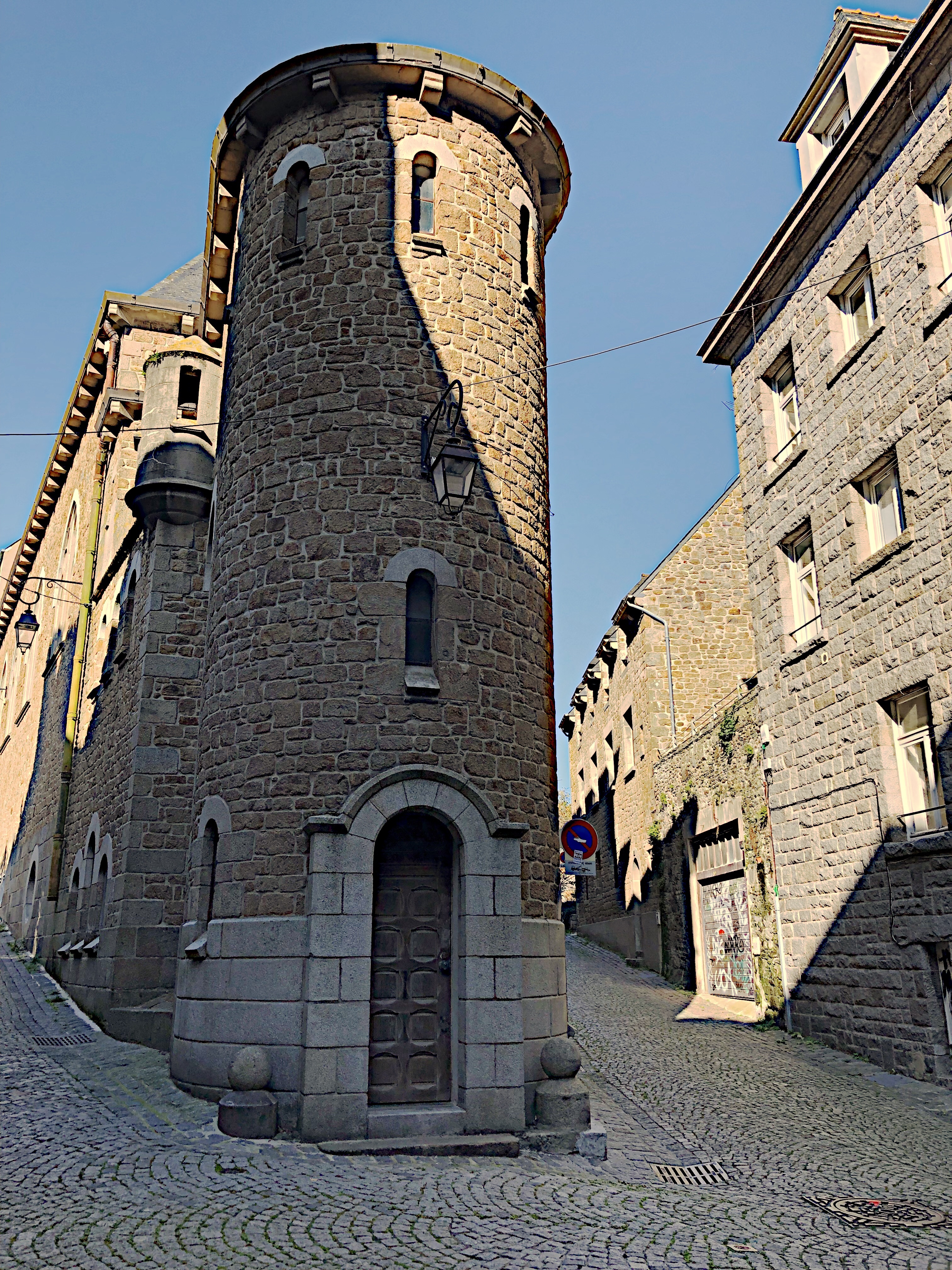
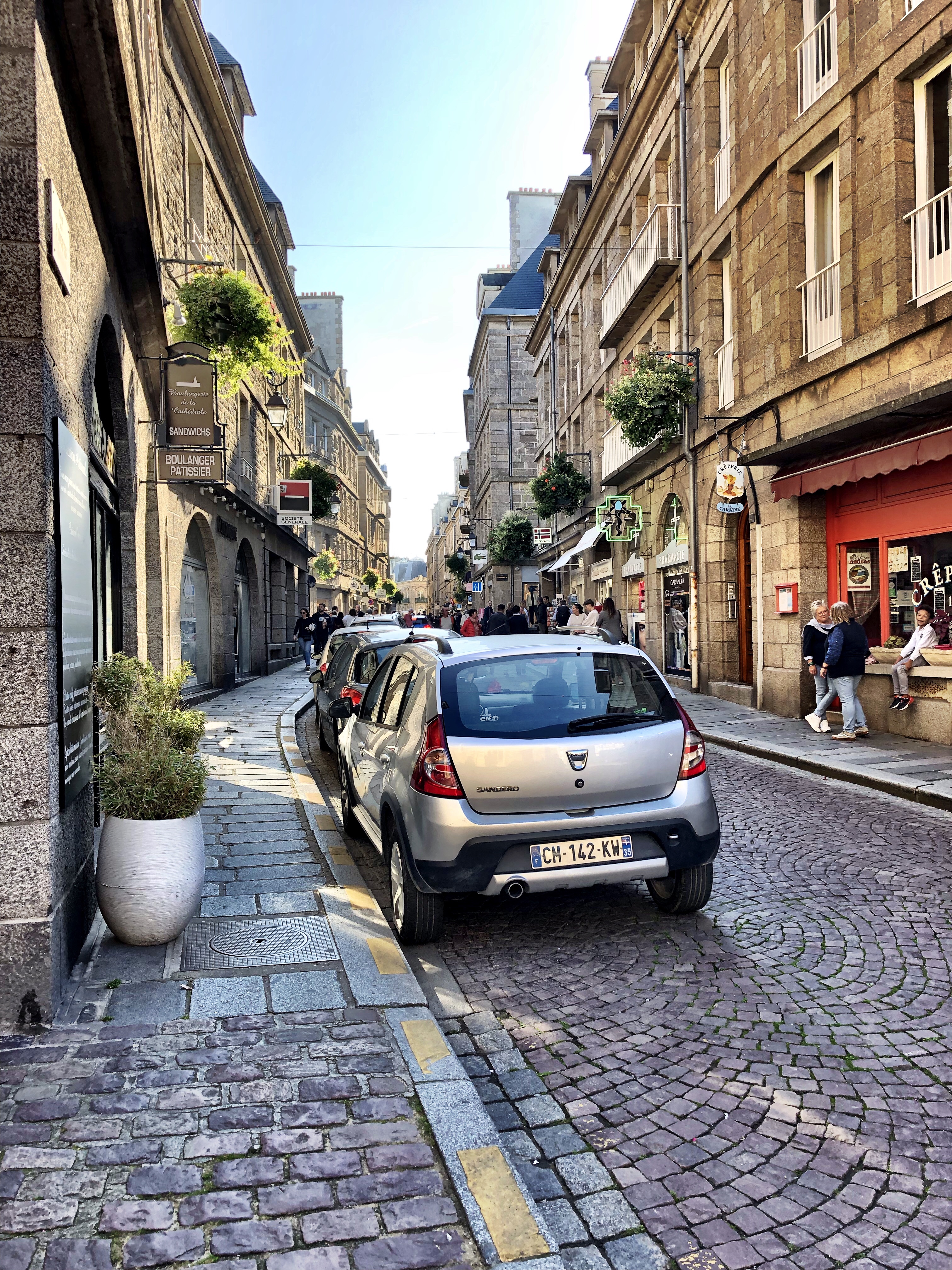
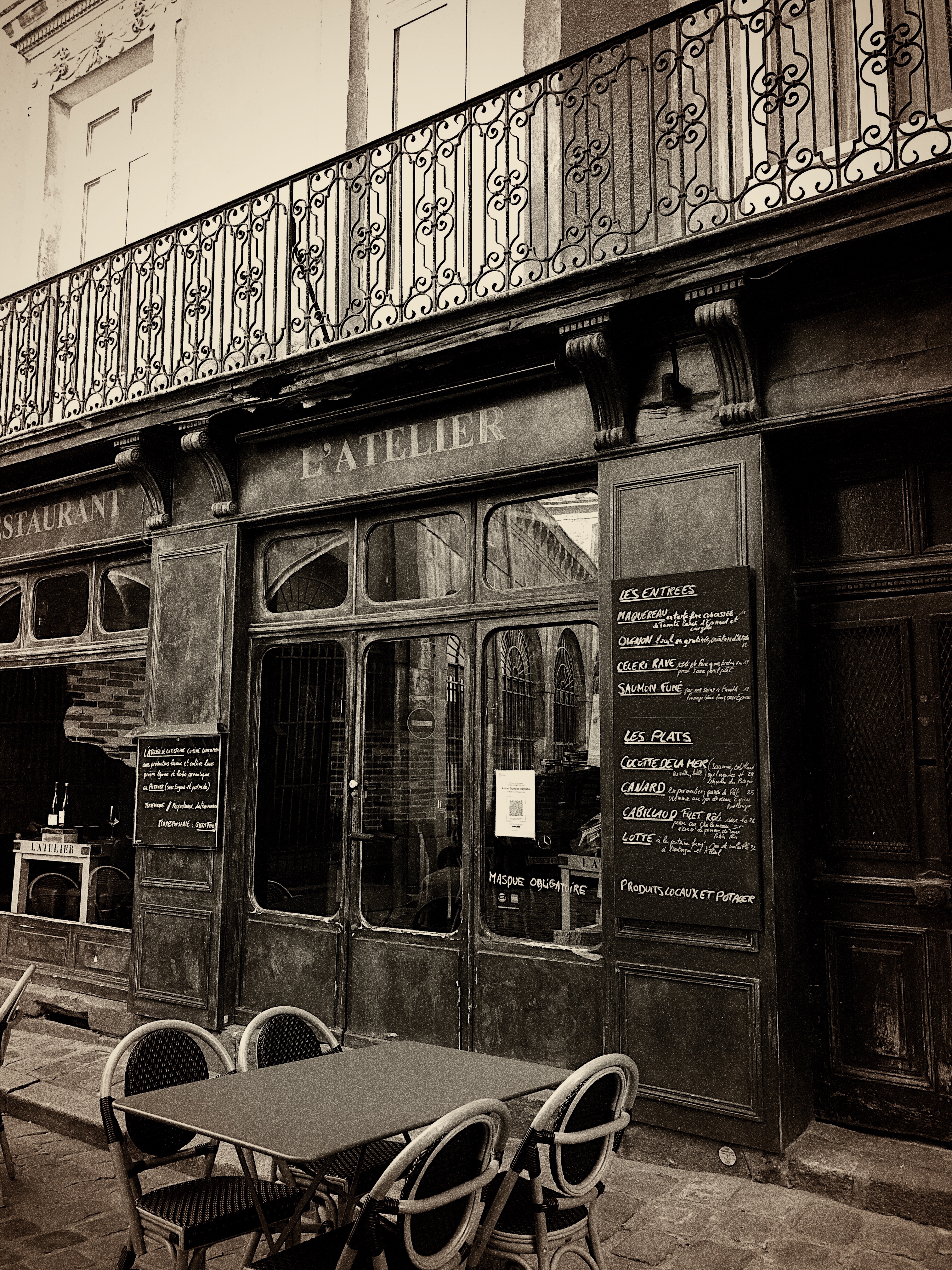
Branching out from the main avenues, the smaller, more narrow and intimate streets were havens of greater tranquility from the madding crowds. These were our favorite areas, harboring old-style coffee shops, épiceries, restaurants, and bars. The ambiance was alluring.
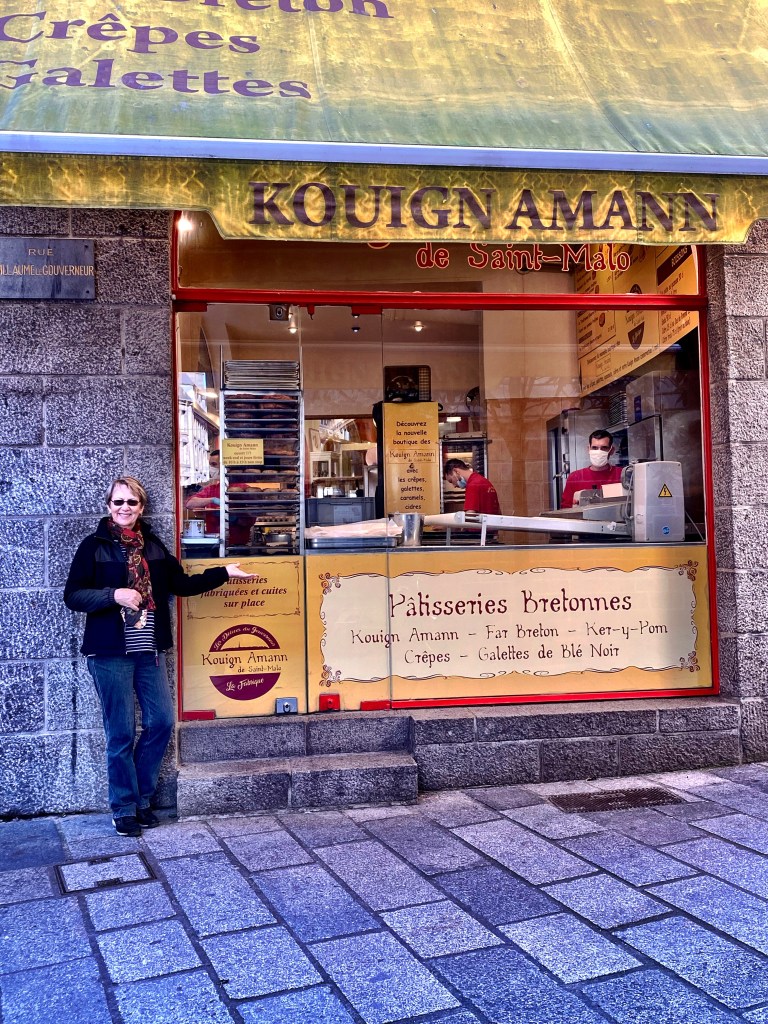
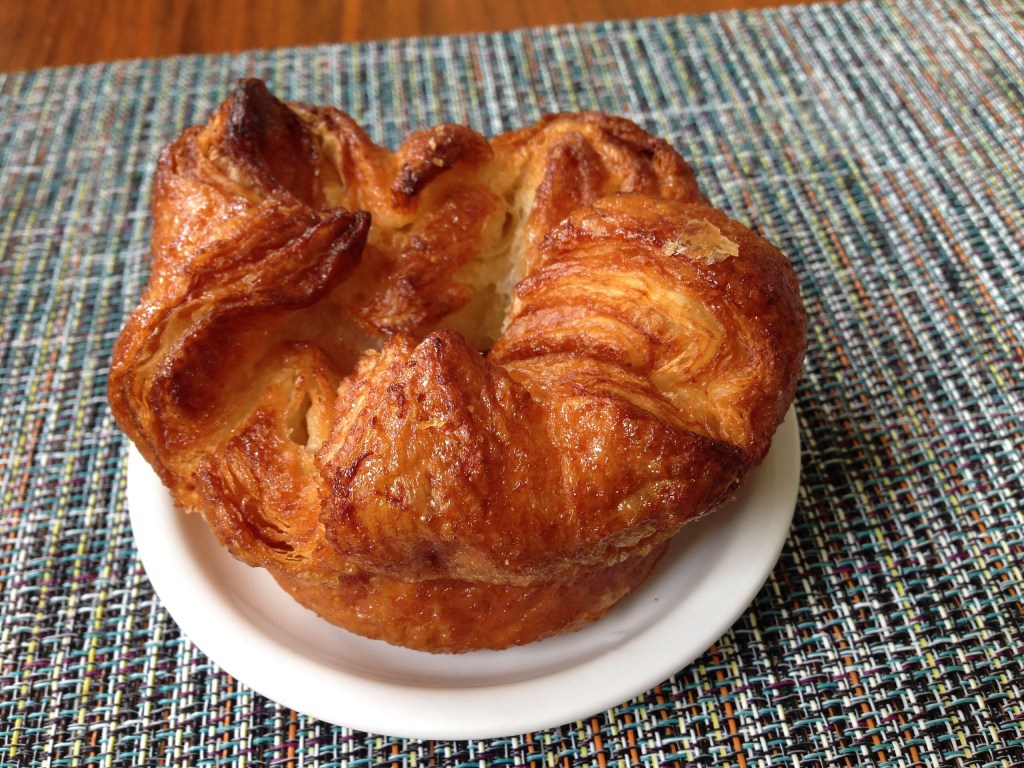
Val, About to Test Out Another Kouign Amann (“queen-ahmahn”)
The Fattiest Pastry: We Love You Just the Way You Are

Of course, we stopped for some Kouign Amann (a sweet Breton specialty pastry), amongst other goodies. Unusually, for me, I resisted the urge. Probably because I was so entranced by the interesting architecture and animated street scenes laid out before me. Val has been eager to try out different iterations of Kouign Amann because it’s a recipe which she and her granddaughter Jessica have been working to perfect. So far, she’s been a bit underwhelmed by the offerings she has tried. We have to agree. The versions we had in Seattle were far better. Which is surprising, given that we now live in the birthplace of this really yummy pastry. In Breton, the name simply means “butter cake” and was invented in Finistère town of Douarnenez in the 1860’s. Apparently, the New York Times dubbed it the most fat-filled pastry in all of Europe. Yeah, baby! That’s why it’s sooooo good. Just a puff-pastry consistency yeast dough filled with butter and caramelized sugar. When done well, it’s a beautiful thing. When not – meh!
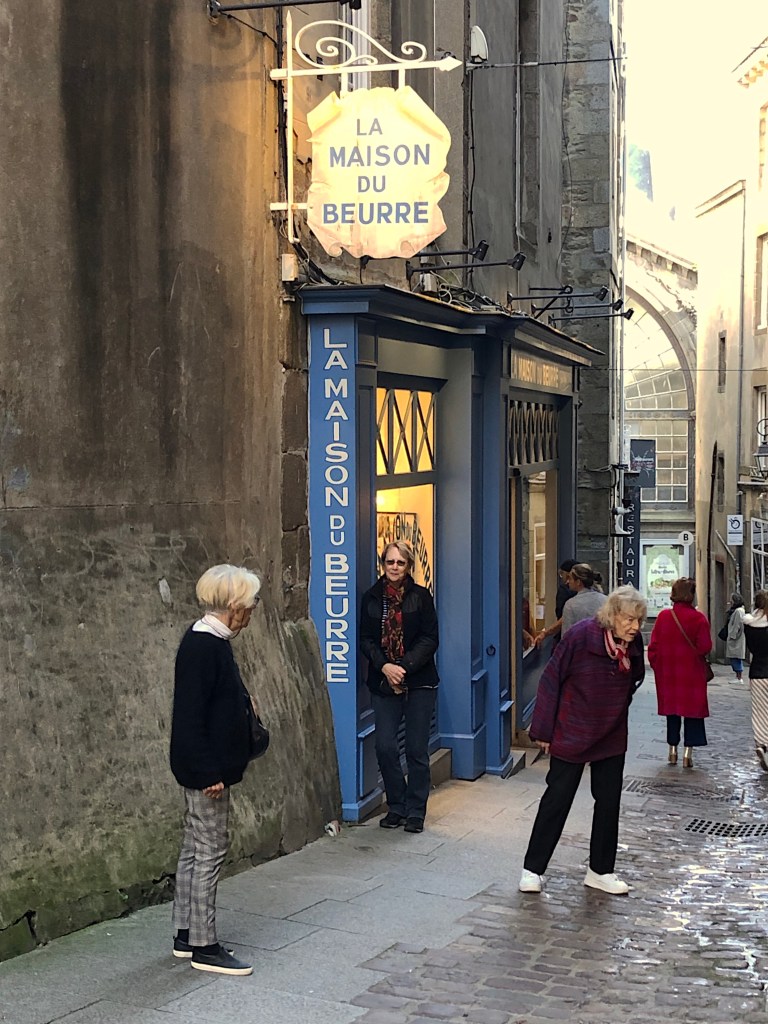
A Bemused Valerie in Front of La Maison du Beurre

Pastries accomplished, we sought out another destination: La Maison du Beurre. No, this “House of Butter” is not actually made of butter. Though nearly so. Situated down a cozy little street off the main thoroughfare, is a pretty blue-fronted shop dedicated to all things butter. I know, right? What could be better than that? They sell cheese too, which is also pretty great. It’s a small shop, packed with amazingly good things. Cherie and Val displayed admirable restraint, emerging with only a small bag of one slab of butter (olive oil and lemon infused), a wedge of cheese (Tomme de brebis Corse), and some apricot/basil paste (trust me, it’s good) to pair with the cheese. We broke into those goodies later that evening and I’m happy to report that they were all voted – by unanimous consent – delicious. None of it will last long. Not in our house!


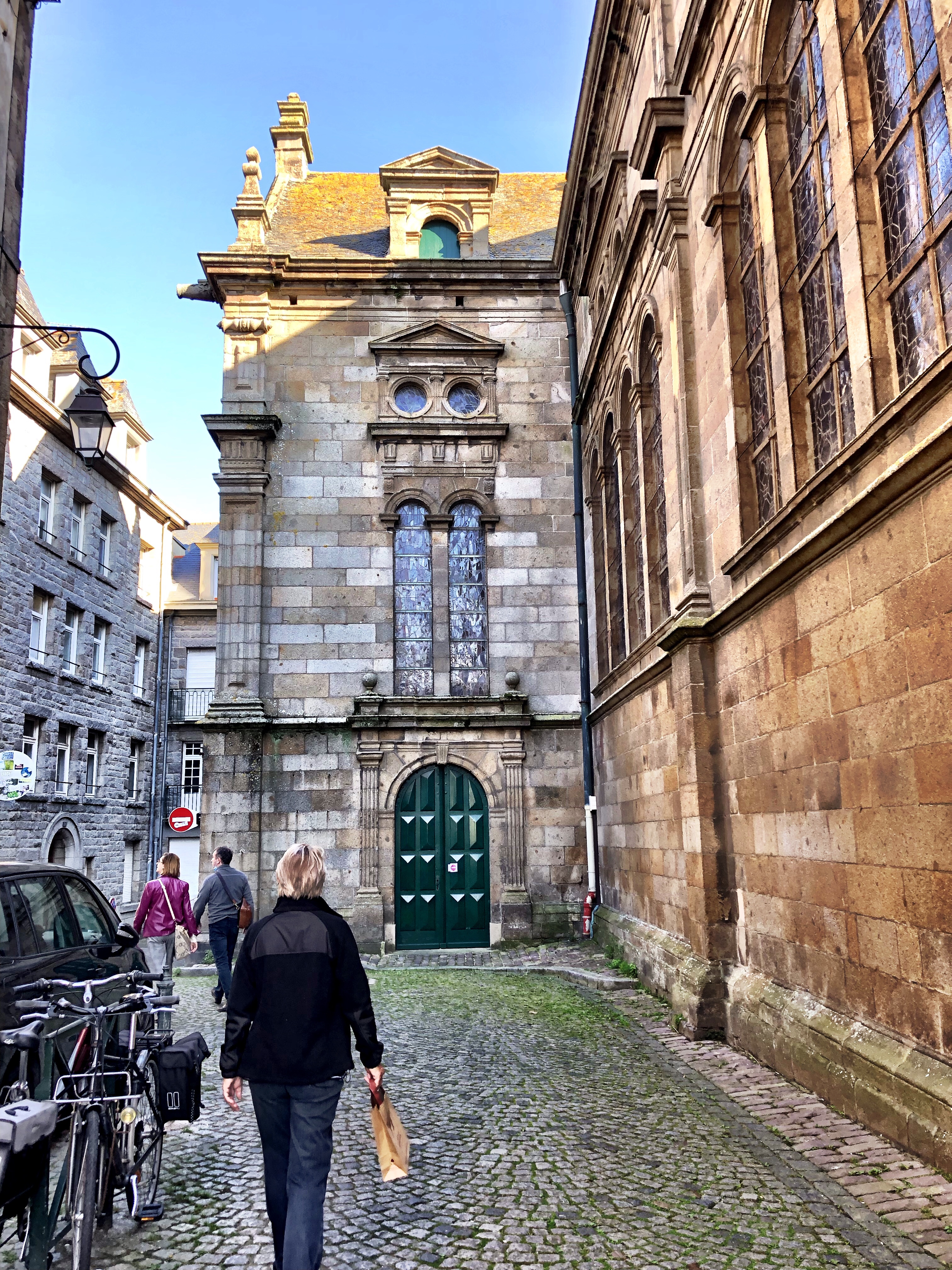
We visited two churches in town. Well, one, really. The first one we spotted from the ramparts. It looked to be a mix of medieval and baroque architecture and we were intrigued. So we descended from the wall and found the front. But it was not quite what we thought it would be. We should have known by the formal greeting we received upon entering. Not something one expects when entering your average church in France. We quickly discovered that this was a former church, now an exhibition space. We could see right away that the art on display was, shall we say, not to our taste. Lots of large format watercolor renderings of industrial buildings, parking lots, old school structures and the like. But, given the formal welcoming we received, we felt obligated to at least make a show of interested and purposeful viewing of the pieces on display.
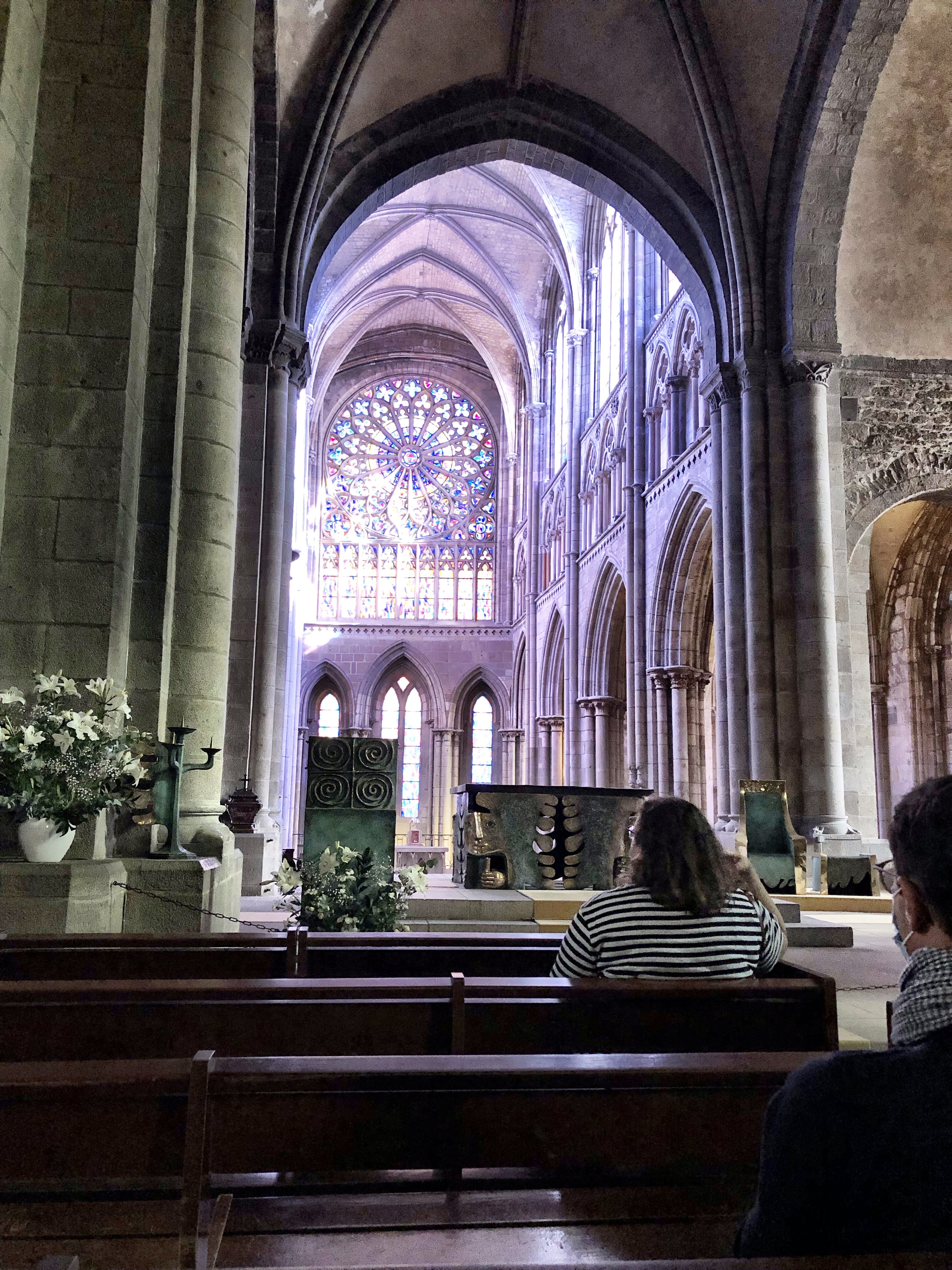
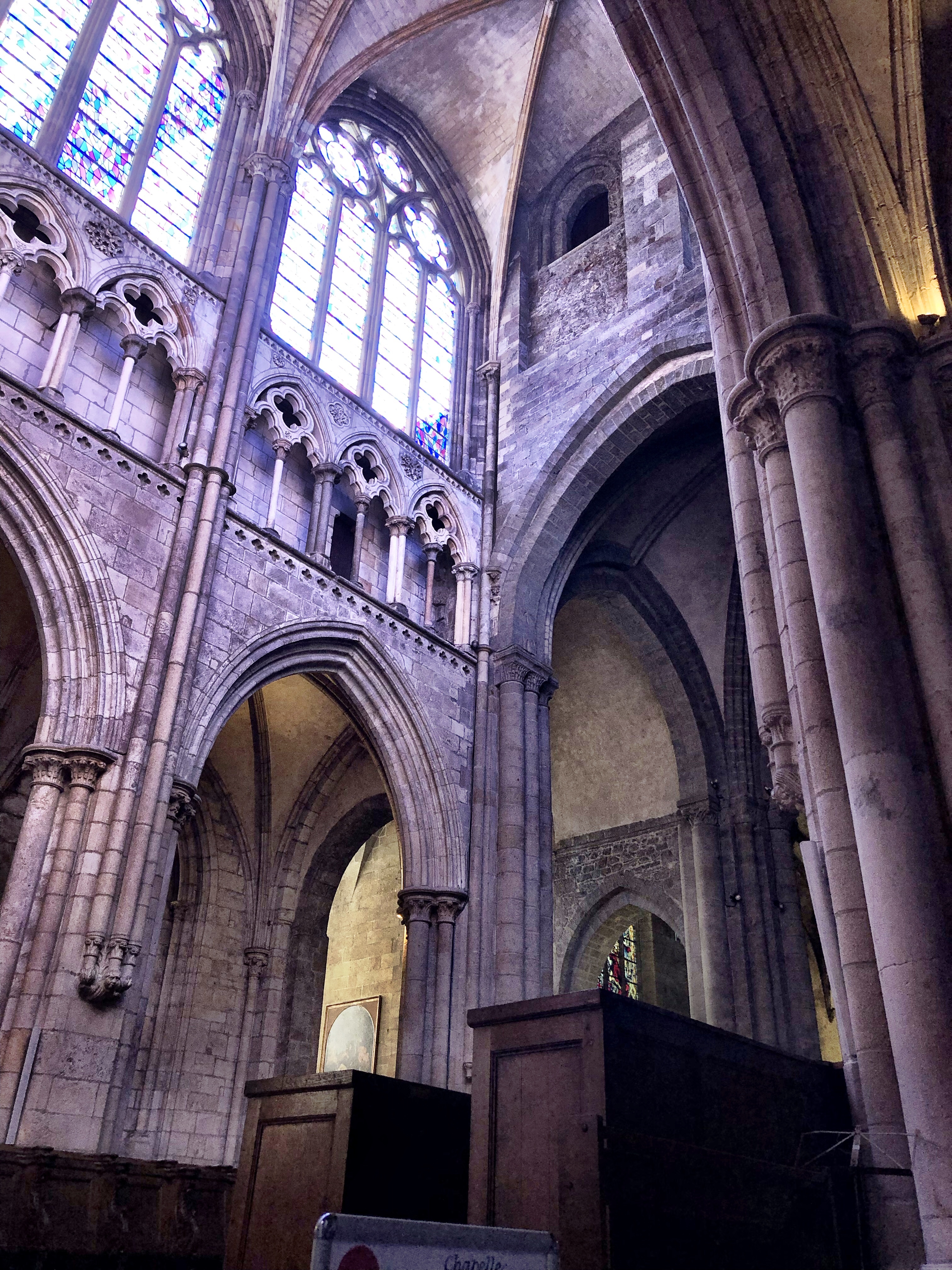
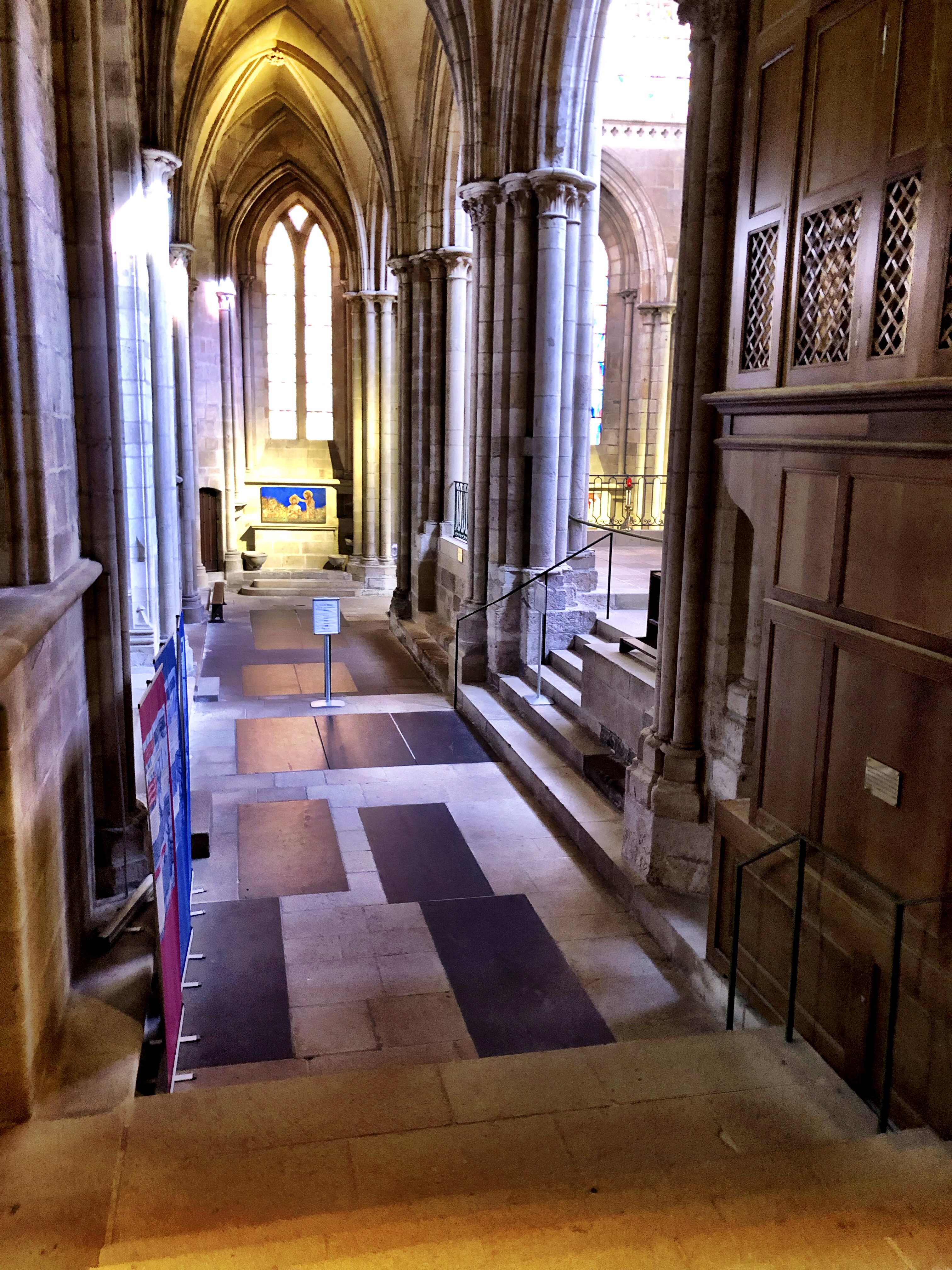
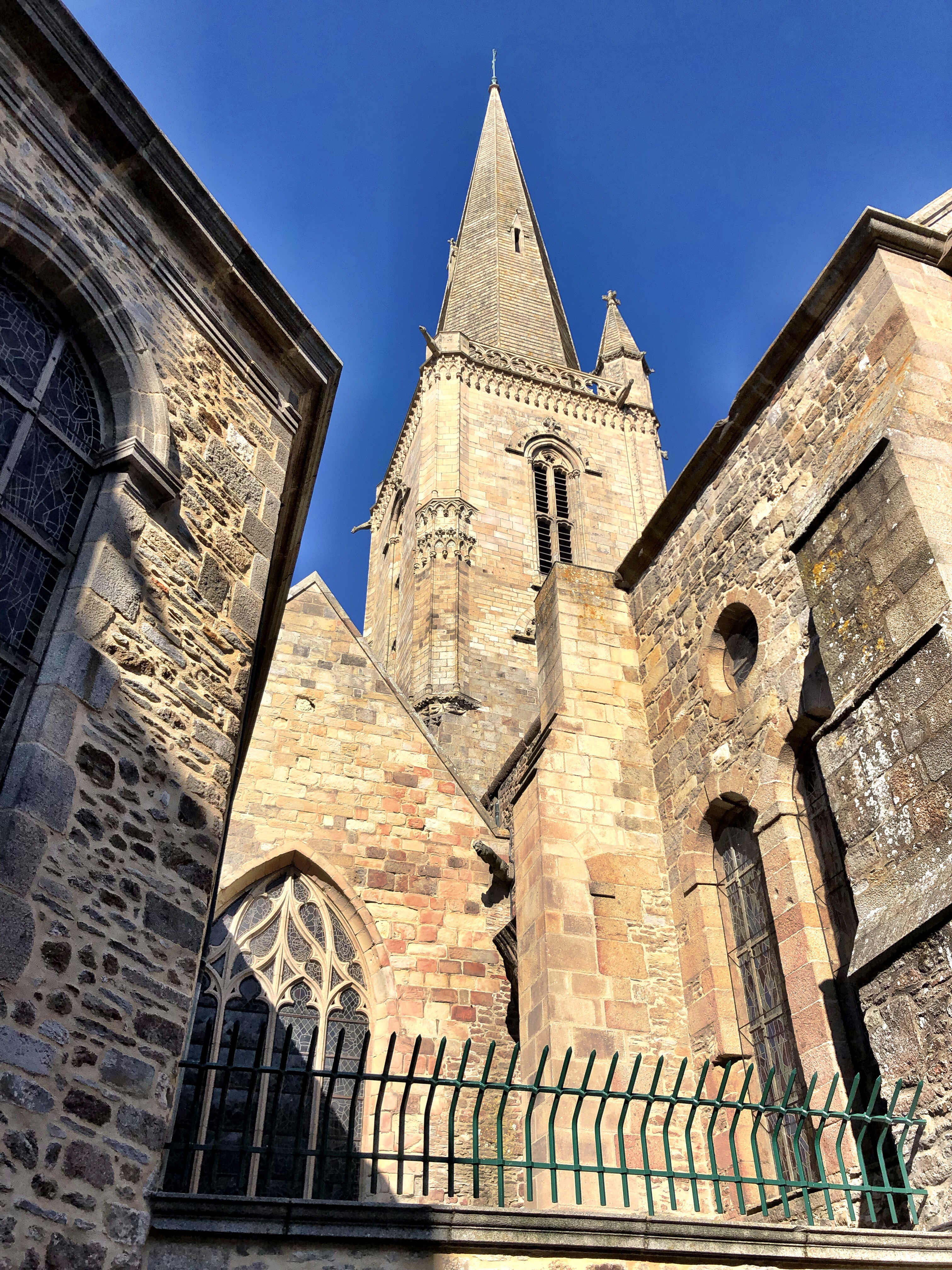
The social graces observed, we exited and returned to the ramparts. Somewhat later on, we managed to find the Cathédrale Saint-Vincent de Saint-Malo. A proper church. Although it is still referred to as a cathedral, it doesn’t appear to be the seat of a bishop anymore. But it was in the 12th century when bishop Jean de Châtillon began construction on the current edifice, built upon the ruins of a succession of older, war-ravaged, churches going back to the 6th century. Additional pieces were added in the later Middle Ages, the Renaissance, and the 18th century – elements of which are on display in this beautiful and interesting church. Of note is the sunken ambulatory which is one level below that of the chancel it surrounds. I’m sure there are other examples, but I’ve never come across this particular type of arrangement in any of the other ecclesiastical architecture I have visited. The famous french explorer Jacques Cartier (a native of St. Malo) received a blessing here before setting off to discover Canada in 1535. Well, if you want to get technical about it, he re-discovered it. Scandinavian explorers had found it centuries before. And, the Indigenous Peoples had been living there the whole time. Still, it was a remarkable feat of sailing and navigation. So there’s that. Back to the theme of war-ravaging, the cathedral was also heavily damaged during the siege of St. Malo in August, 1944. Reconstruction was not completed until 1972. Now whole again, St. Vincent offers a great insight into the history of the city and its people. We love churches and this one was well worth a look.
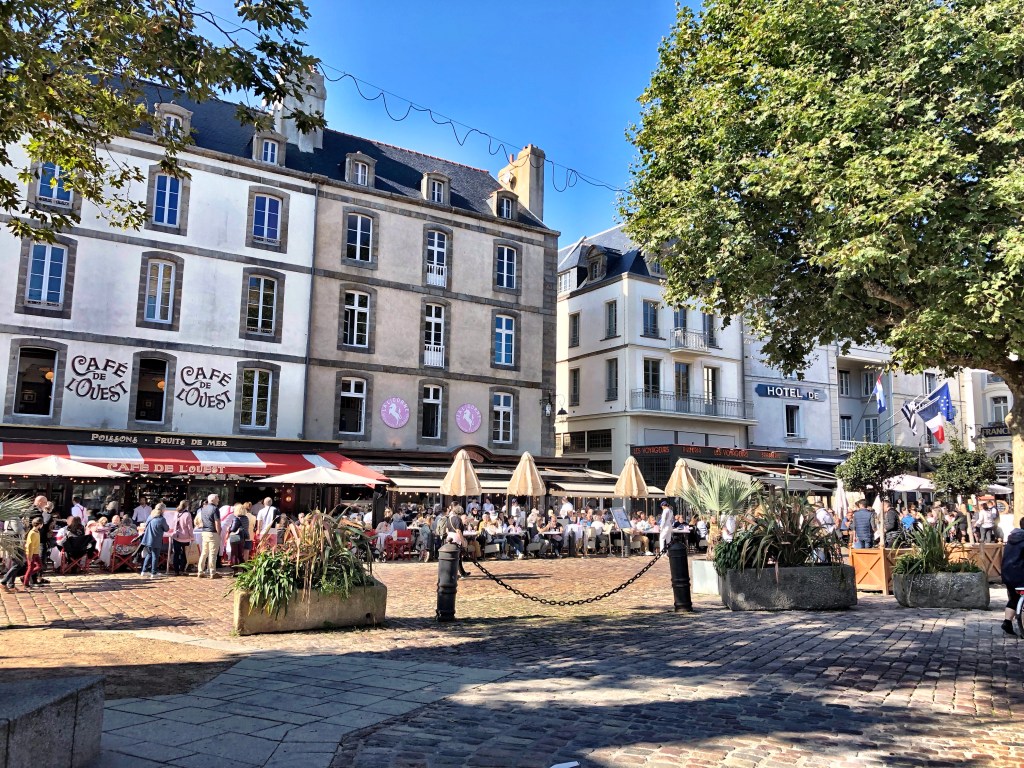
Place Chateaubriand

St. Malo was a real treat. We were so lucky to have visited during a spate of such glorious weather. Despite some crowded areas and the understandably heavy tourist influence, this city will definitely reward your efforts to get there. If you’re coming by train or ferry, it’s dead simple. By car, it’s rather congested and parking – even in October – was a bit hard to come by. But the city has clearly made significant efforts to accommodate their visitors. We will certainly make St. Malo one of our regular destinations.
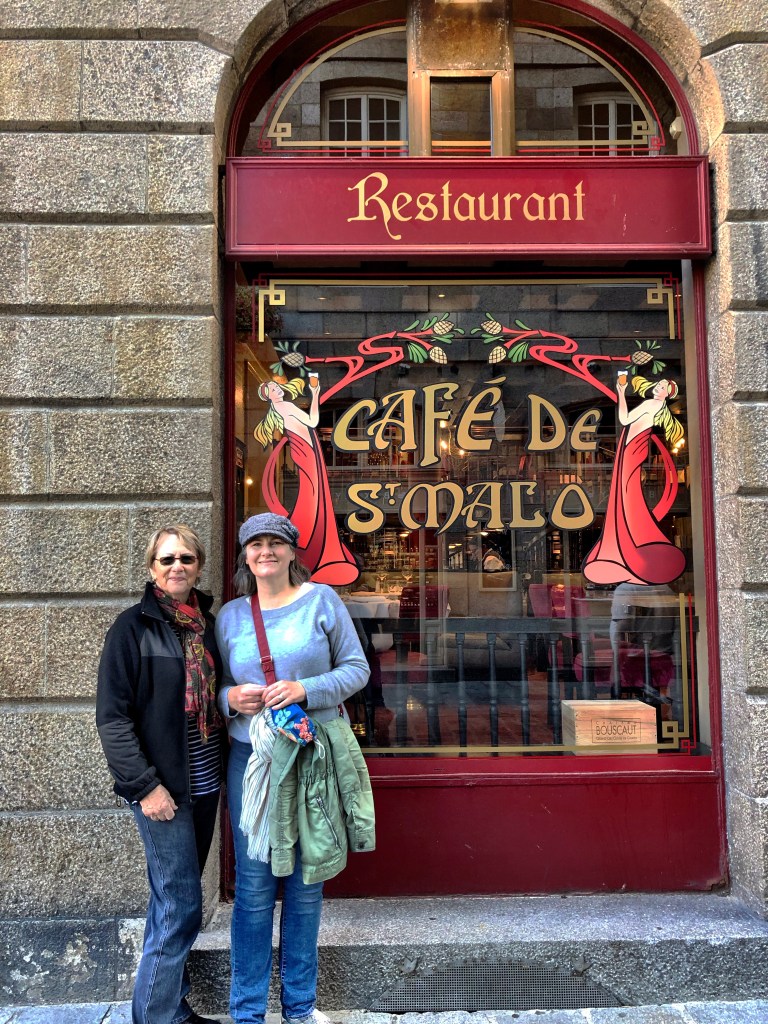


For Jessica: A Bit of Retro Art Nouveau

Vélo, Vélo!

Capitalizing on the Great Event: Fougères Tourist Office

I know it’s been a long time since our last post. Not a lot of action, lately, to report. But, just to let you know that we haven’t forgotten about you, I thought that I should at least post a little something to fill the gap. Here it goes …

In the time we’ve lived in France, we have learned a few undisputed truths: 1. The natural talent which the French have for rapid, intense, and exceedingly lengthy conversations cannot be overestimated, 2. The bise (kissing on the cheek) is a cultural ritual held in such high esteem by the French that it easily outmatches any American beliefs in the sanctity of owning a car or a Bruce Springsteen album, 3. French pastries are what your soul has been craving all of your life, and 4. The French absolutely adore a good bicycle race.

And it is the last truism I’d like to briefly explore. This is, in part, because one of our readers quietly expressed their disappointment that I had missed the opportunity to report on this year’s Tour de France. You know who you are. But also because it seems to be a not infrequent feature of life in France. One which, surprisingly, comes close to home.

The French are great enthusiasts about competitive bicycle racing. In fact, they adore all types of competitive sport. From informal Sunday afternoon games of boules played by a few locals in the village park, to internationally televised football (soccer) matches played by multi-millionaires. And everything in between. They love it all with equal fervor.

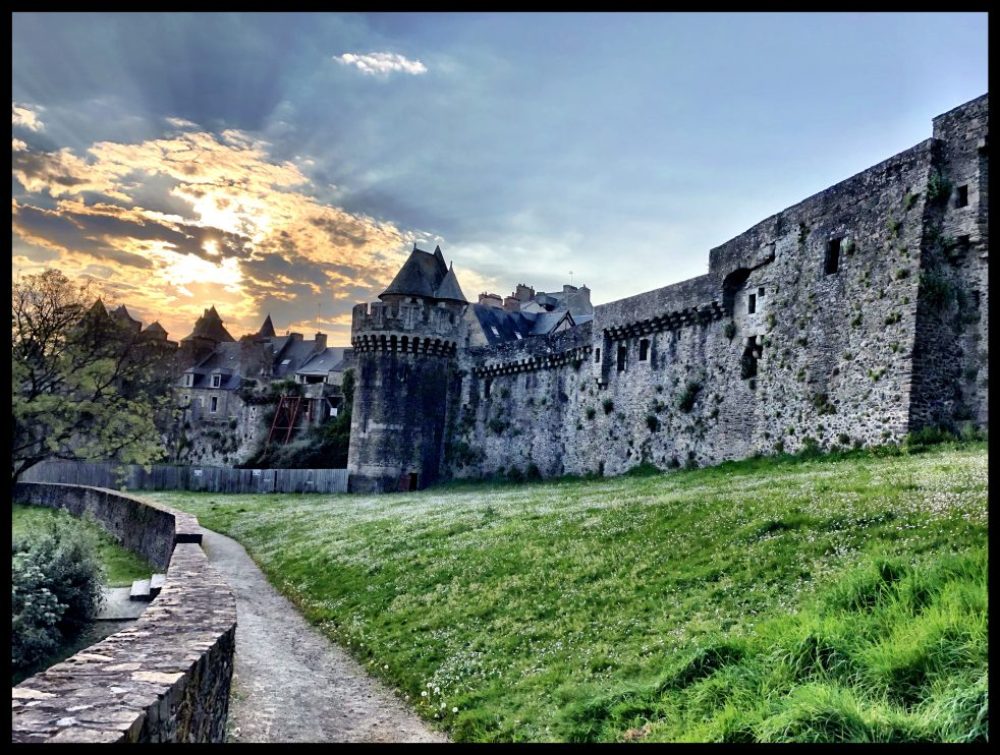
Promotion at the Château’s Expense

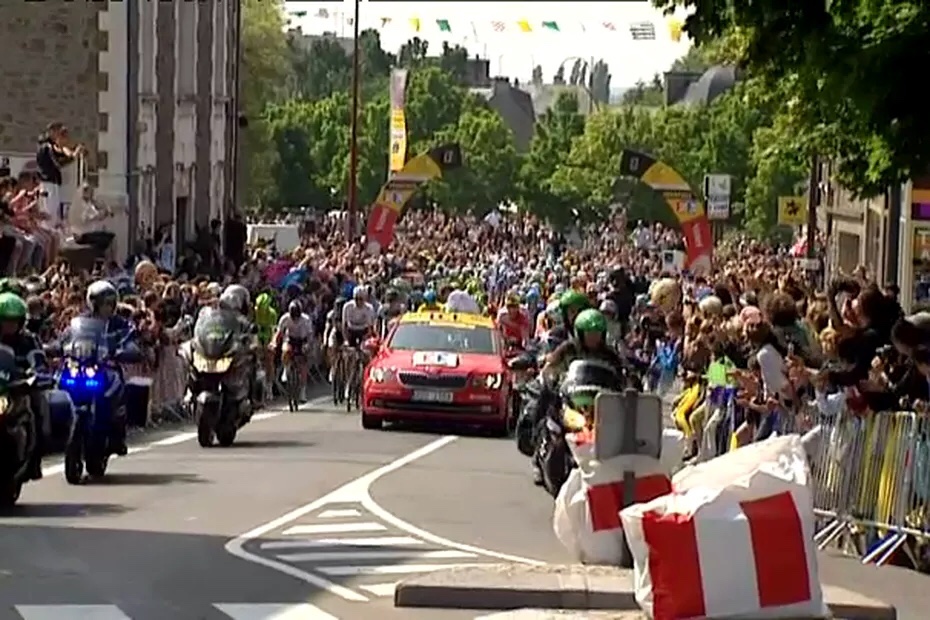
Our city of Fougères has hosted stages of the Tour de France in the past. It’s quite a coup to have a the course run through your town. So, when it was announced that the 4th stage of the 108th edition of the most elite bicycle race in the world was going to end in Fougères, the city was justly proud. For several months before the race, everything here was Tour de France. Clothes, key rings, advertising, the tourist office, the excitement surrounding the event was at a fever pitch. Even the Château was brutally adorned with a giant yellow jersey stretched across the rampart. June 29th arrived, streets were closed, cars, busloads and RV’s of race enthusiasts jockeyed for space, and everyone was sporting those little cycling caps that neither keep your head warm, soak up sweat, keep the sun out of your eyes, nor make you look more attractive. Pointless, really. Nevertheless, cap bedecked cycle fans were teaming throughout the city.

Fanfare is a Big Part of the Experience

As it happens, Cherie and I had to go south to Rennes so she could get her second COVID vaccination. When we arrived back in town that afternoon, the Tour mania was in full swing. We had no idea it was such a big deal. Apologies to those of you who are fans of bicycle races, but it’s just not our thing. Because of that, we simply continued on with working on the house, amidst the background din created by a world-class sporting event. Shame on us, I suppose. We probably should have taken greater interest. But we didn’t. So, yeah.

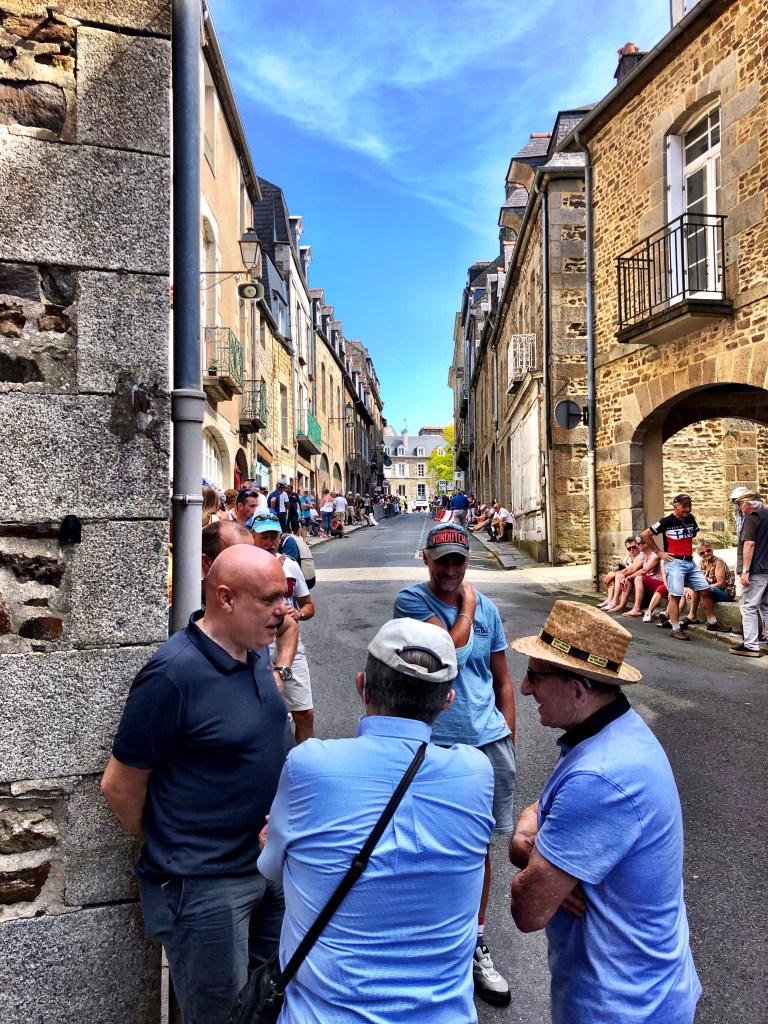
The Crowd Gathers at the Mouth of our Drive

Later in the summer, the town closed off our street for a series of races. All of which were run in succession directly in front of our house. It, too, was a big event, albeit a purely local one. There were 8k, 18k and 26k courses winding through the streets of Fougères during a lovely late summer evening. It was kind of fun to watch all of the hullaballoo that goes along with such affaires. Our fellow citizens clearly enjoy the event and lots of encouragement was given to all of the runners. Surprisingly, part of the course ran right through the church of St. Leonard. We watched, bemused, as the runners trotted through the main doors of the church, down the nave, and out, somewhere, beyond.

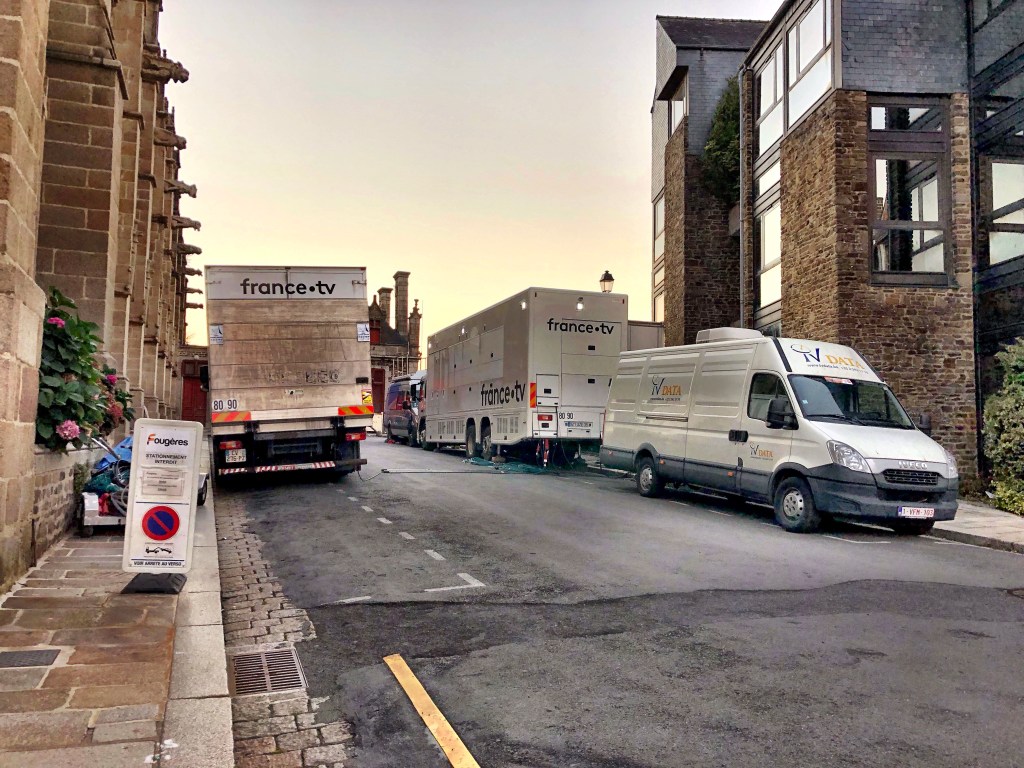
Television Trucks Taking Over the Streets

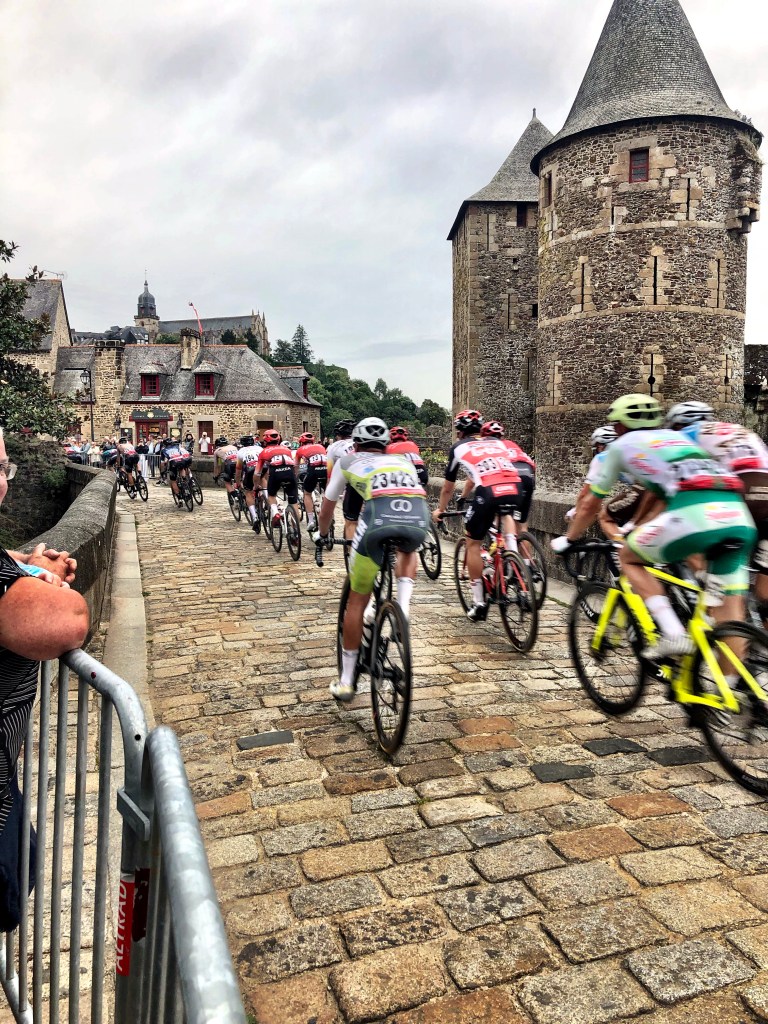
Not to be outdone, last weekend our street was closed off again. This time to allow for the Tour de Bretagne. This particular tour is a major race in the national sporting calendar, running across the length and breadth of Brittany. The streets were filled with network TV trucks and their broadcast equipment, temporary communications towers, and the many, many team support vehicles which accompany the riders. In short: kind of a big deal! The course ran right past our house, so we again had front row seats. Although the advantage is wasted on us, we were happy to see many fans filling the front of our driveway, eager to support their favorite riders.

The Peleton Racing Past the Gates of the Château

Even though neither of us are particularly interested in races, or sports in general, for that matter, we are conscious that lots and lots of people are. Clearly, this holds true for our neighbors in Fougères. The people here are very eager and supportive of sporting events in this city. That’s probably why this town seems to punch far above its weight in terms of attracting major competitions like the Tour de France. The excitement is infectious, even for us. So we can’t help but share a little pride in the place we now call home. For this, and so many other reasons!

We’ll be back with another post in the near future. Good health and happiness to all!

A Quiet Town in France: Bazouges-la-Pérouse


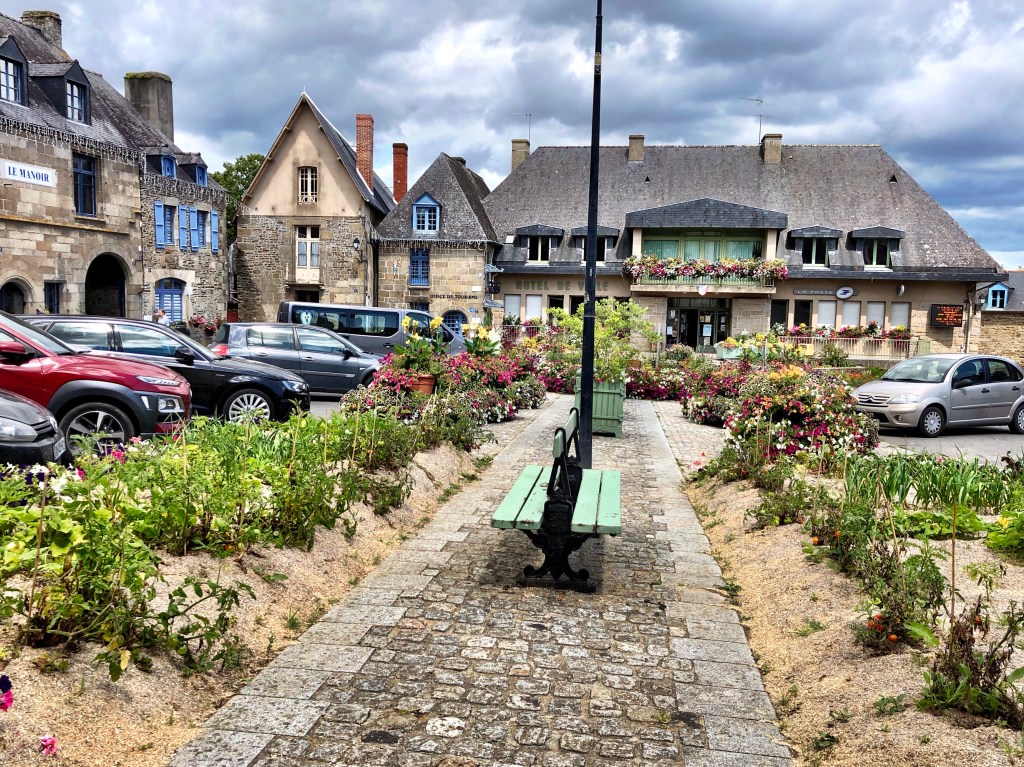
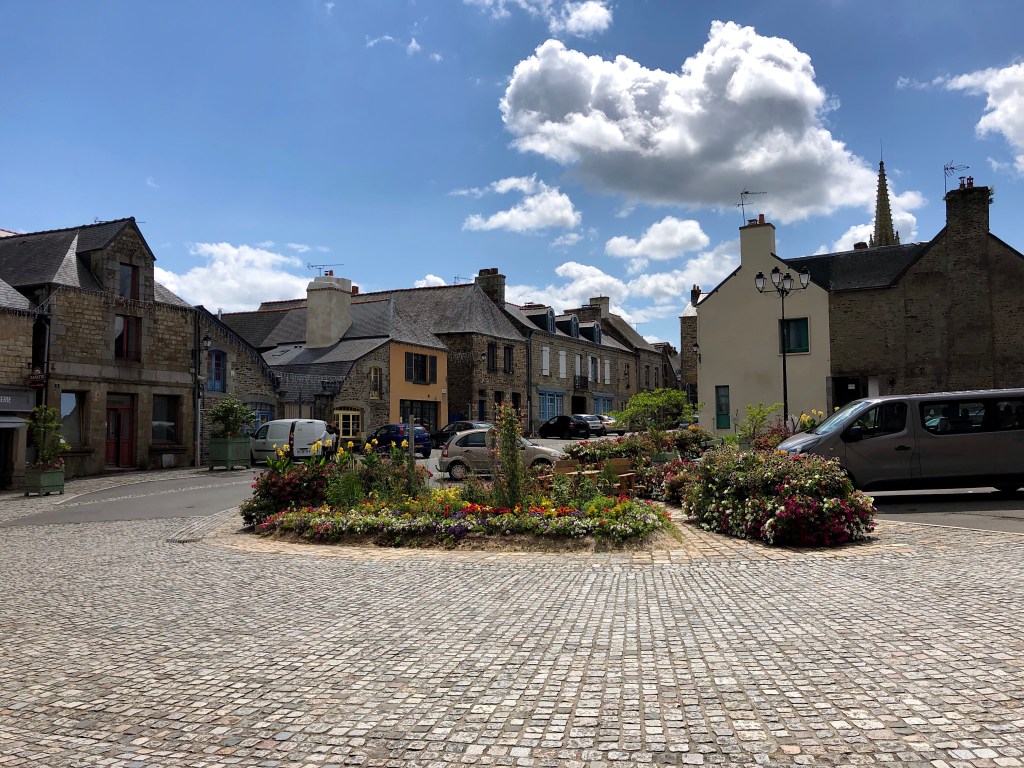
A Central Square in Bloom: Bazouges-la-Pérouse

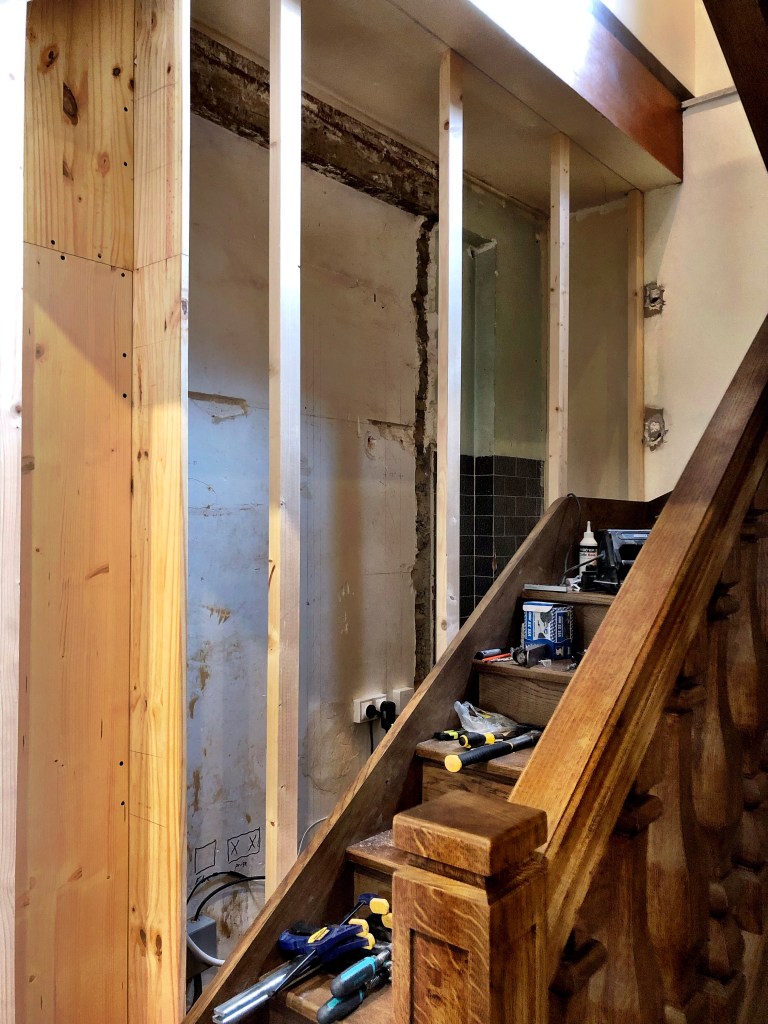
“We’re retired, right?” I keep reminding myself of this as I’m toiling away in and around our staircase. My attempt to build a paneled wall with cabinets alongside the lower flight of stairs has been, so far, a long slog. And it continues. My pre-retirement vision of being retired has required a radical revision.* Instead of long, relaxing walks, lazy wine-lacedf afternoons of sedate contemplation, care-free come-and-go-as-you-please explorations interspersed between long periods of sublime irresponsibility, I’ve found our post-work lives to be more like … well, work. At least in the sense that we seem to be constantly busy. Busy with appointments; busy with bureaucracy; and, especially, busy with projects around the house. It’s frankly kind of exhausting.

Supervillain Staircase Cabinets (in progress)

Nevertheless, do not, dear reader, mistake this for a complaint. Even on its worst day, being retired beats working (at least any job I’ve ever had) by a country mile. We’re both enjoying it immensely. And we wouldn’t change a thing. Well, if someone more skilled than I offered to finish this damn staircase for me, I wouldn’t say no.


Cherie was recently searching for new places to visit in the area and she stumbled upon a small town 30 minutes west of Fougères which holds the designation of Petite Cité de Caractère (roughly translated: a little town of distinction). Cool, we thought. Let’s go! Anything to get me away from the stairwell. [Can an inanimate object be an arch nemesis? I shall have to ask the superhero sages at Marvel.] Besides, the name of the town alone is distinctive: Bazouges-la-Pérouse. So, we took the day off and made our way westward toward the Couesnon valley.

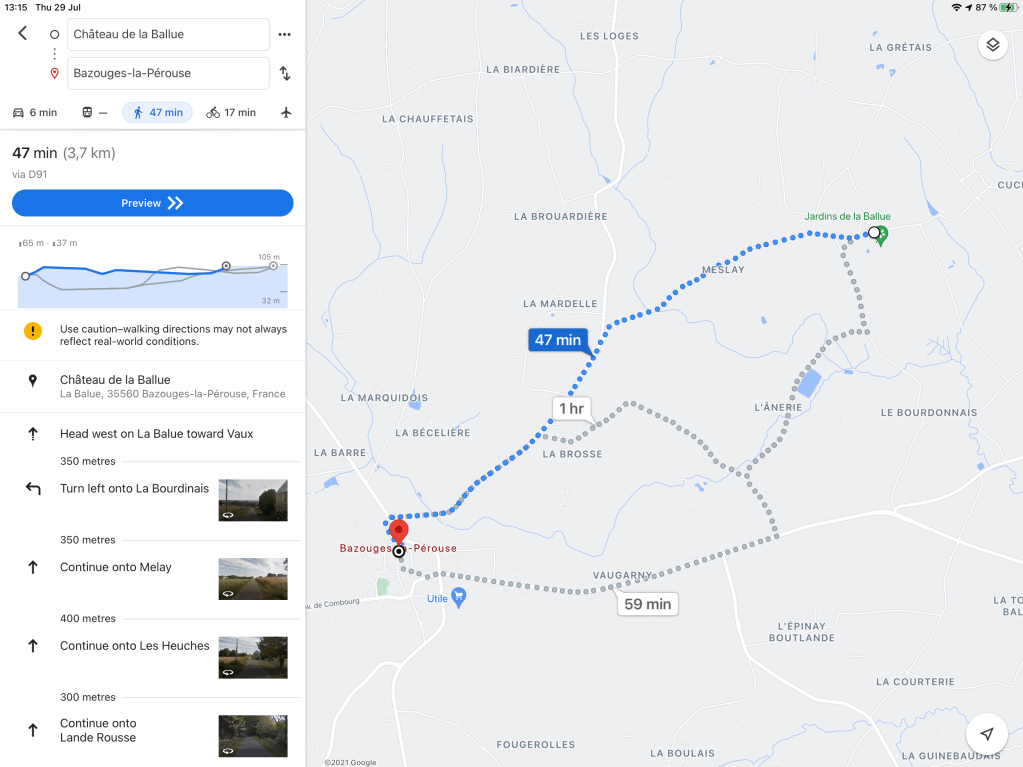
From Spa to Town: An Easy Country Stroll

Cherie and I have a pilot/co-pilot arrangement. She drives. I navigate. We’ve found that, if we reverse these roles, we tend to arrive more quickly; unfortunately, the place where we arrive is not the place we intended to go. So, like I said: Cherie drives, I navigate. It’s an arrangement that works best for us. As navigator, I quickly discovered that Bazouges-la-Pérouse is only something like three or four kilometers away from le Château Ballue where we had just been a couple of weeks earlier (see our previous post: Topiaries and Tea: Château Ballue). In fact, one could easily stay at the château’s hotel/spa and take a nice country walk to Bazouges and back for the day.

Nobody Home: The Nearly Empty Square

We parked in the town’s central square. The weather was agreeable and the planting beds in the square were overflowing with colorful blooms. Amongst the flowers were were happy to see that some enterprising gardener had also included tomatoes, peppers, and a few other vegetables and herbs in the mix. Nice.

After admiring the flora, we quickly came to the realization that this town is quiet. One might even say sleepy. No one was about, save for three locals having a sedate coffee on their private terrace. It being lunchtime, the post office, mairie and tourist information office – all huddled next to each other at the administrative end of the square – were all closed. On the other side of the square were a restaurant and a boulangerie. We were looking forward to a bit of lunch. Disappointingly, it was obvious that the restaurant was no longer in business. And the boulangerie was closed. Hmnphf! We happened to visit on the one day of the week when the sole boulangerie in town was closed. Stomachs protesting, we carried onward.

Shapely Stone: A Quirky House

There is a very helpful map in the square which points out highlights of the town and surrounding area. The map also outlines two walking routes for visitors to follow. One of the routes explores the countryside and includes Château Ballue on the itinerary. But that was a bit more walking that we were prepared to take on that day. Besides, we were more interested in seeing the town. So we took up the town route. Which we almost immediately lost. As with many things like this, the signposts for the route were too intermittent, missing or too well hidden for us to follow. So, what began as a curated visit, quickly became a random wandering amongst pretty little streets hemmed in by a good number of interesting houses and gardens.

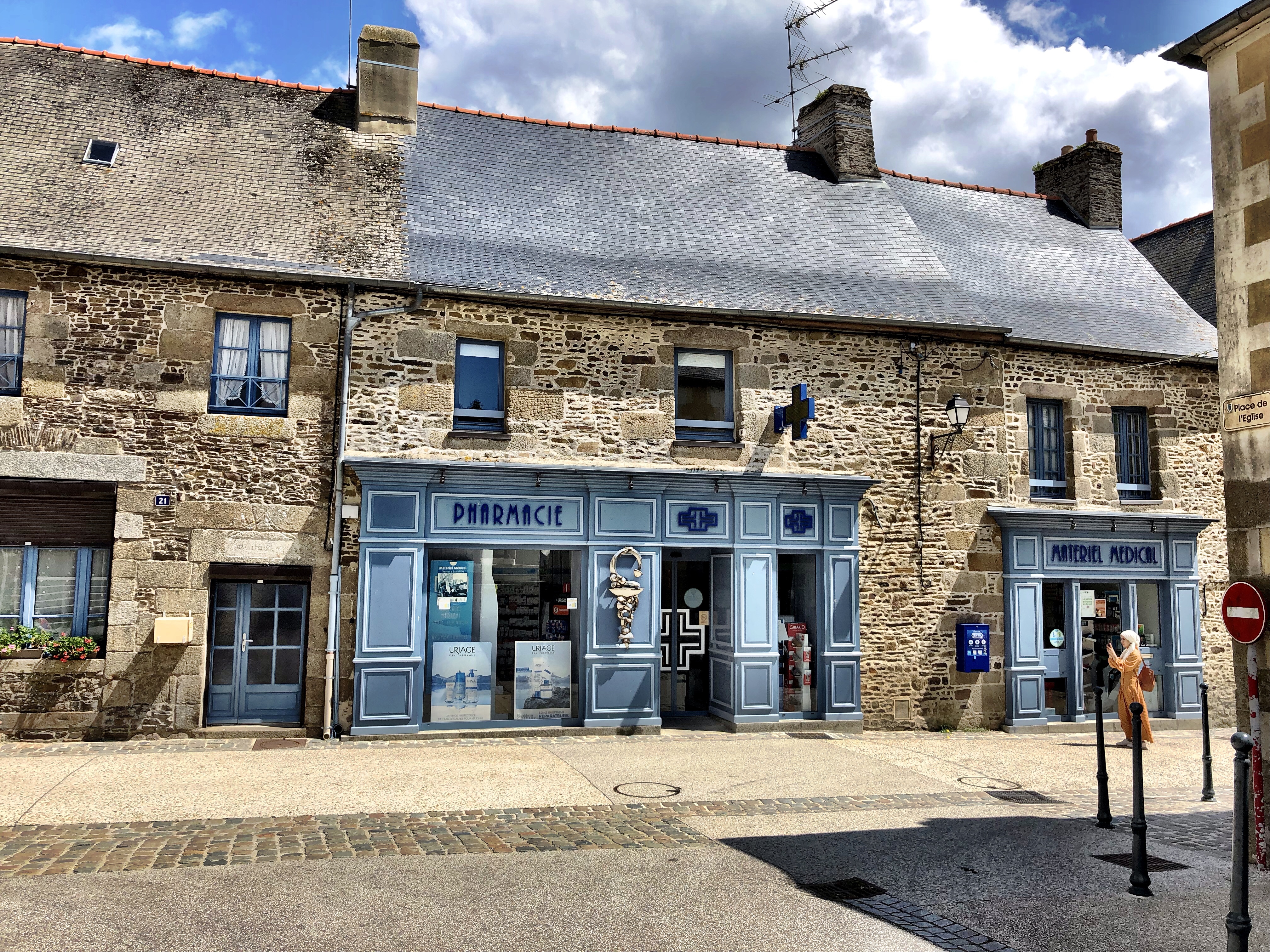
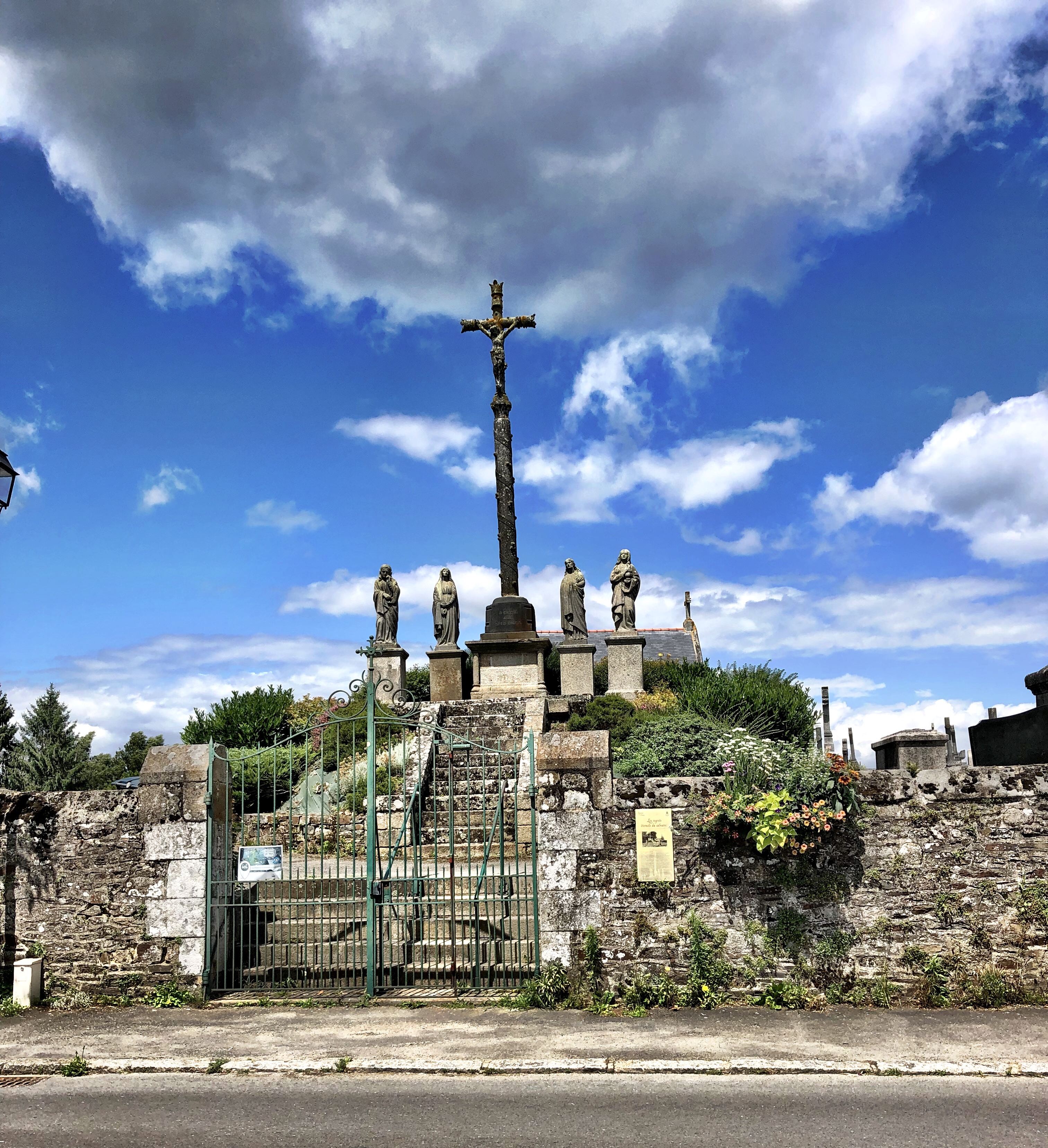
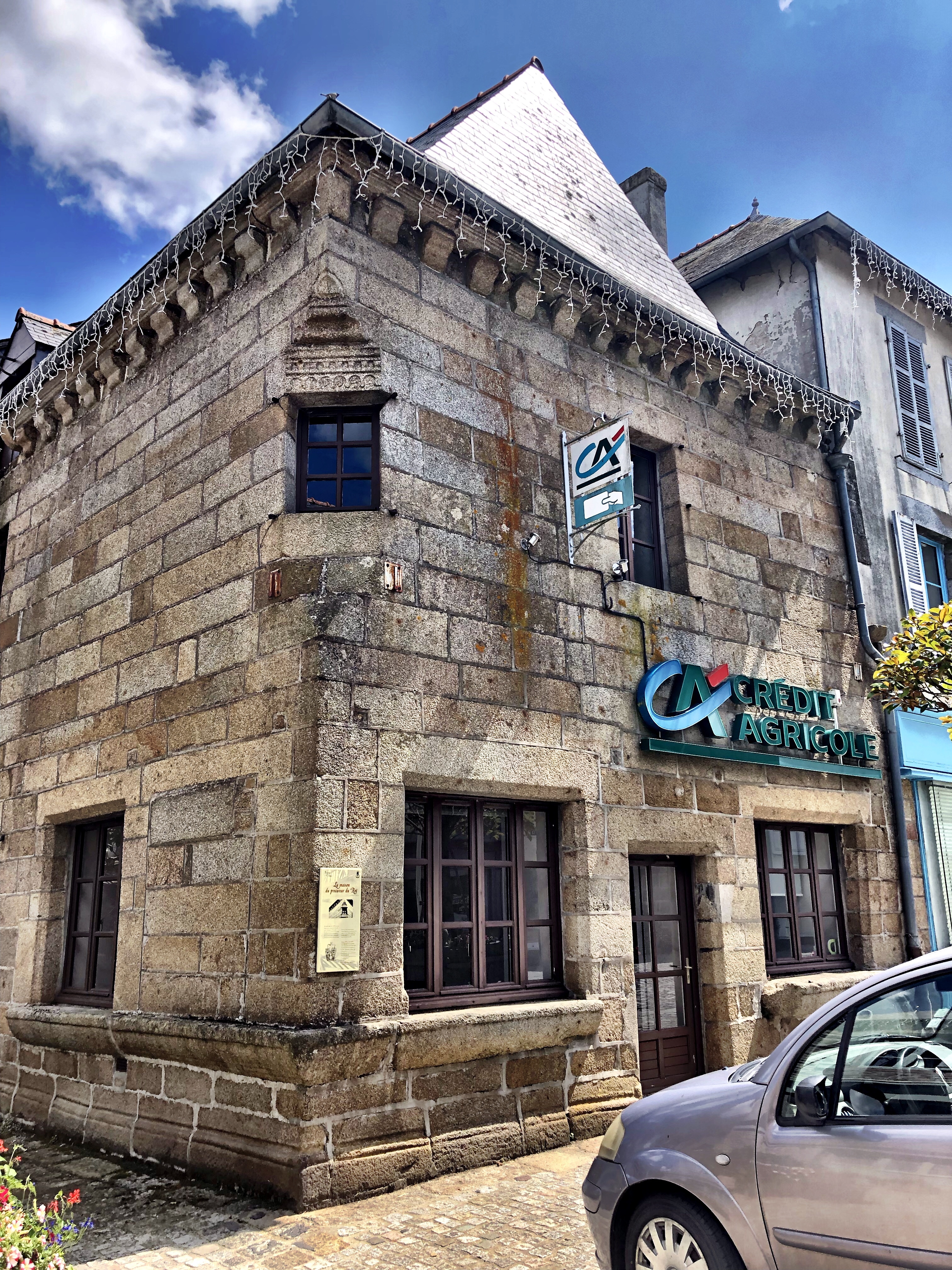
Bazouges-la-Pérouse sits atop a hill surrounded by pleasant countryside of scattered woodlands and farms. Several points on our amble amongst the streets afforded lovely panoramic views of this. The town is not big, sheltering around 1,800 inhabitants. Sadly, most of the active commerce appears to be located on the edge of town, huddled around a small chain grocery store. The town center appears to have suffered, with many closed shops and empty spaces – we found only one active restaurant (although it was closed while we were there), a bank, a pharmacy, a shop selling fishing tackle (an obsession amongst the rural french), a couple of small art galleries, a florist shop and the aforementioned closed-on-wednesdays-boulangerie. There is also a library, a couple of small schools, a health center and the ubiquitous church. All in all, the atmosphere left us feeling that the town is a bit tired. Sadly, it seems to suffer from the same curse of small towns everywhere in the world: increasing urbanization and the drift of employment away from the countryside to large cities. Some rural communities have been lucky enough to discover strategies to fend off this kind of malaise, but all too many are sinking under the weight of desertification. We hope that Bazouges will find a way to recharge itself without losing its heritage and character.

Approaching L’église Saint Pierre et Saint Paul

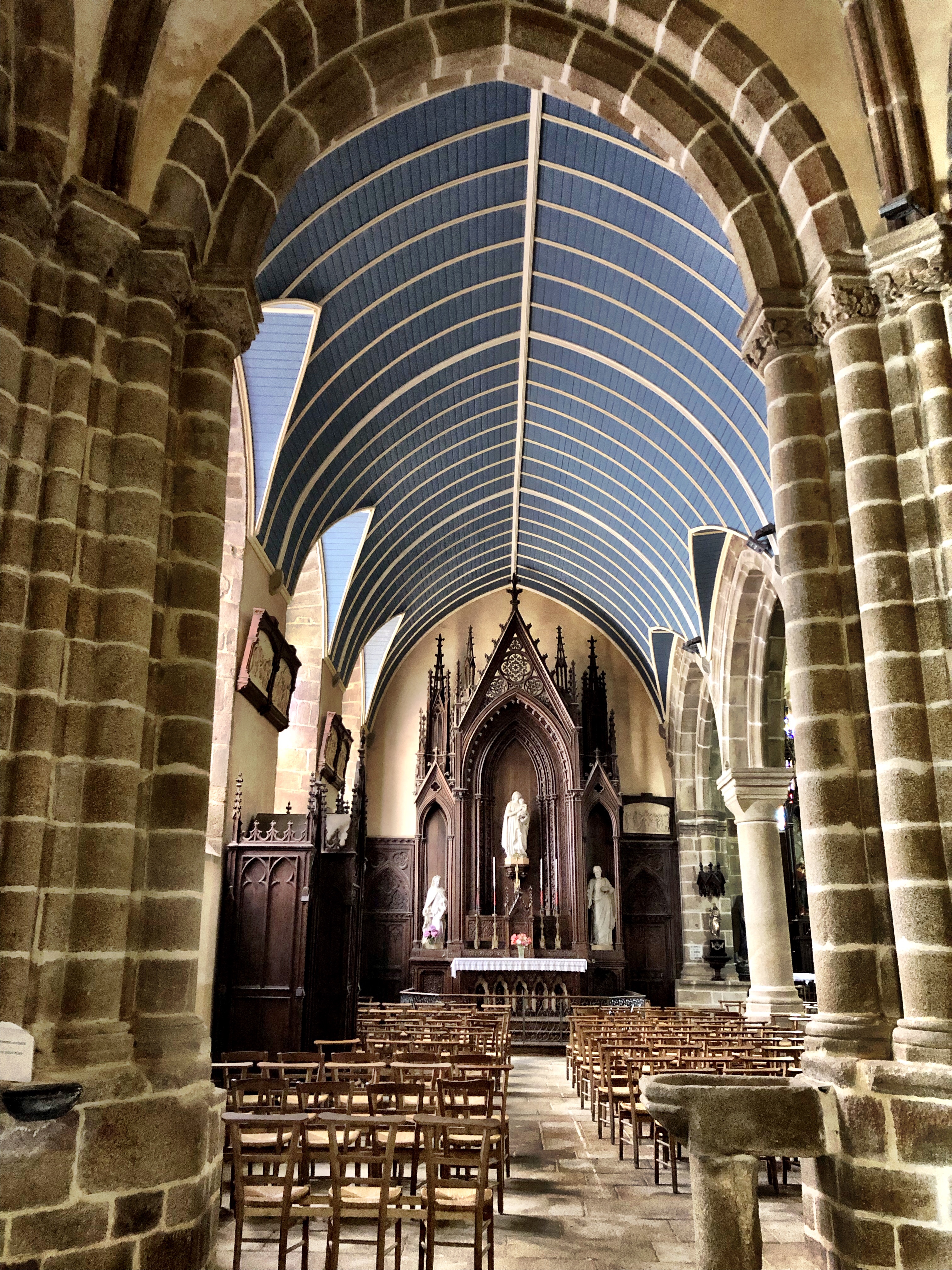
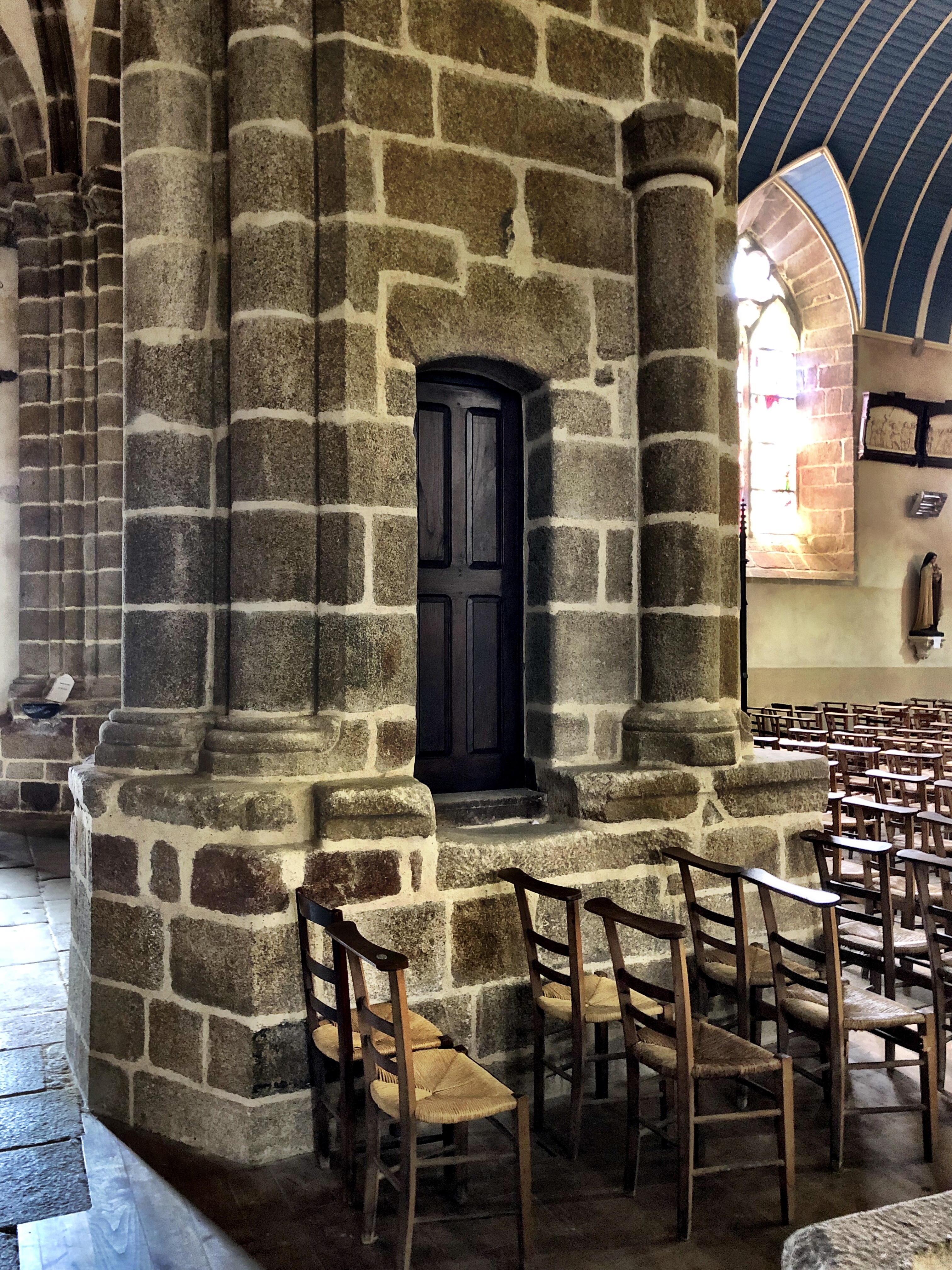
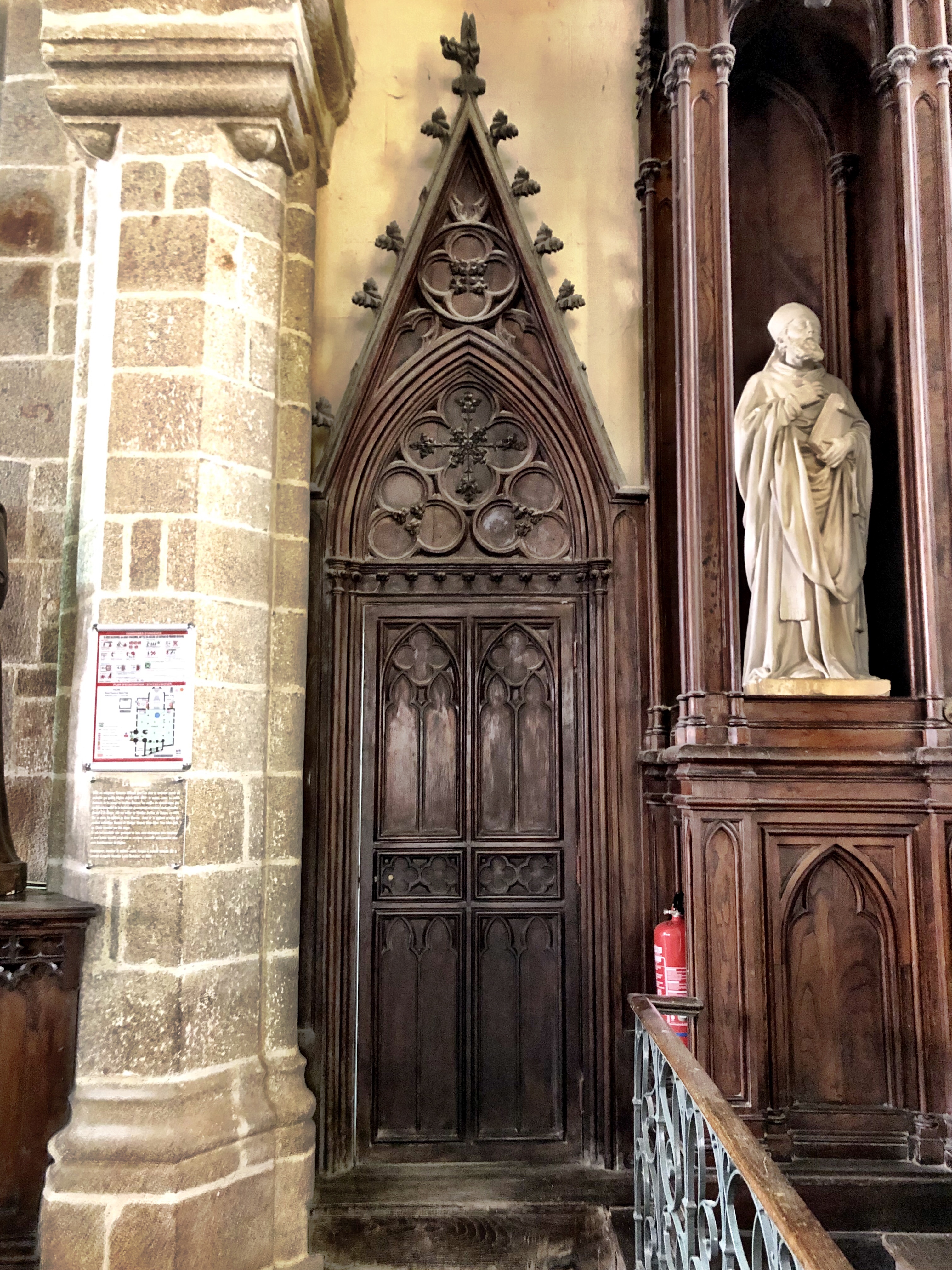
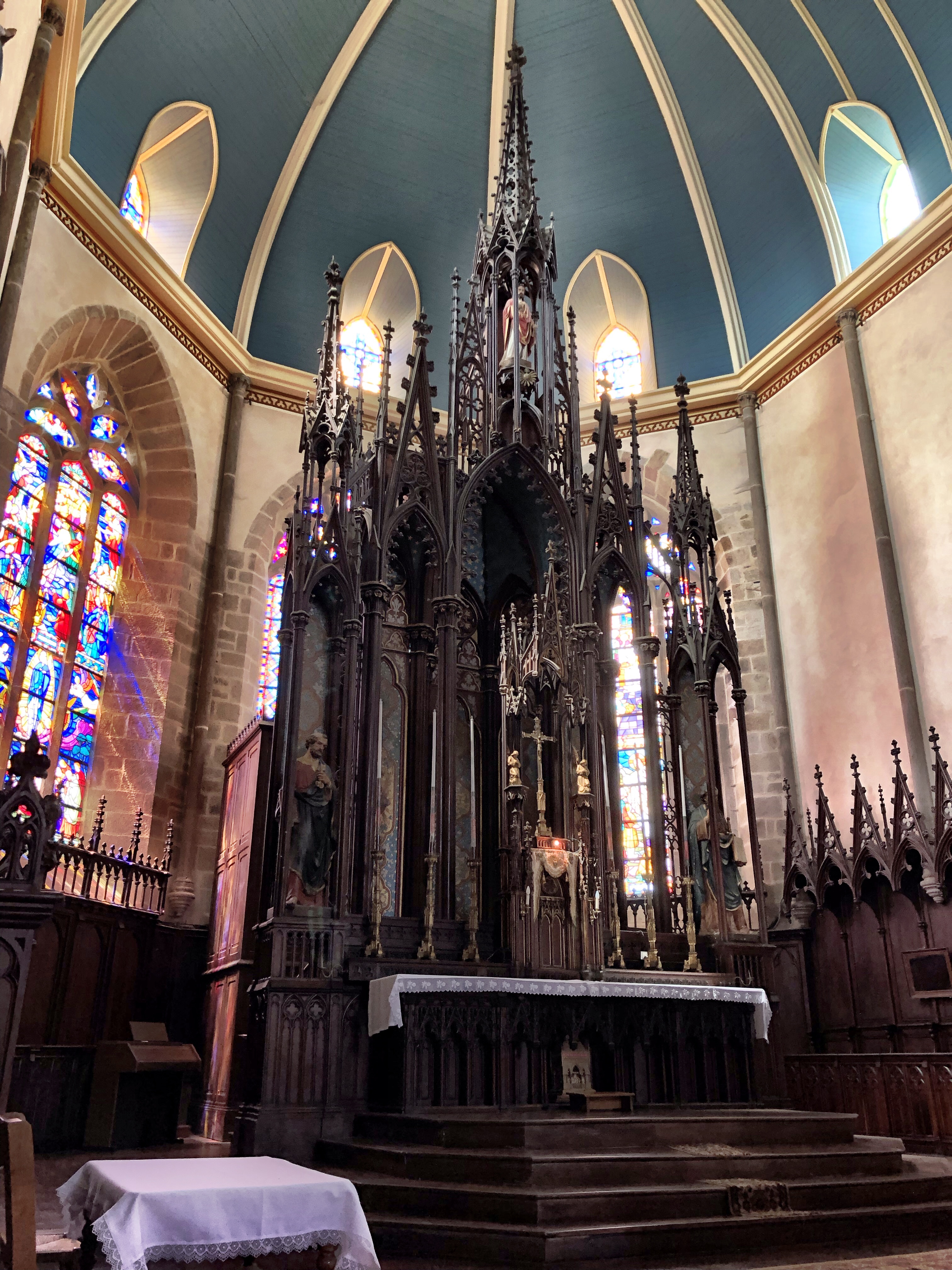
Notable amongst our visit was the church. L’église Saint Pierre et Saint Paul is a lovely stone church in excellent condition, ringing out the hours as it has done for centuries. The interior has enjoyed a thorough renovation in recent years. All of the wood and stonework is in excellent condition and the vaulted timber roof has been repainted with great care – all of this highlighted with the latest in LED lighting fixtures, subtly installed throughout. Objectively, it’s beautiful. And the restoration has been executed with great skill. But, for me, it’s just a little bit too clean. Too pristine. The past sanitized, like an aging celebrity, struggling with their mortality, smoothed and recolored – a once interesting person with a lifetime of experience written on their face, become unrecognizable – bland, banal. Despite my pedantic quibbles, the church is worth a visit. There are many examples of excellent architectural and figural woodcarving, and unusual pulpit accessed by two sets of steps wrapping around its supporting pier, and a lovely altar with a towering, carved reredos.

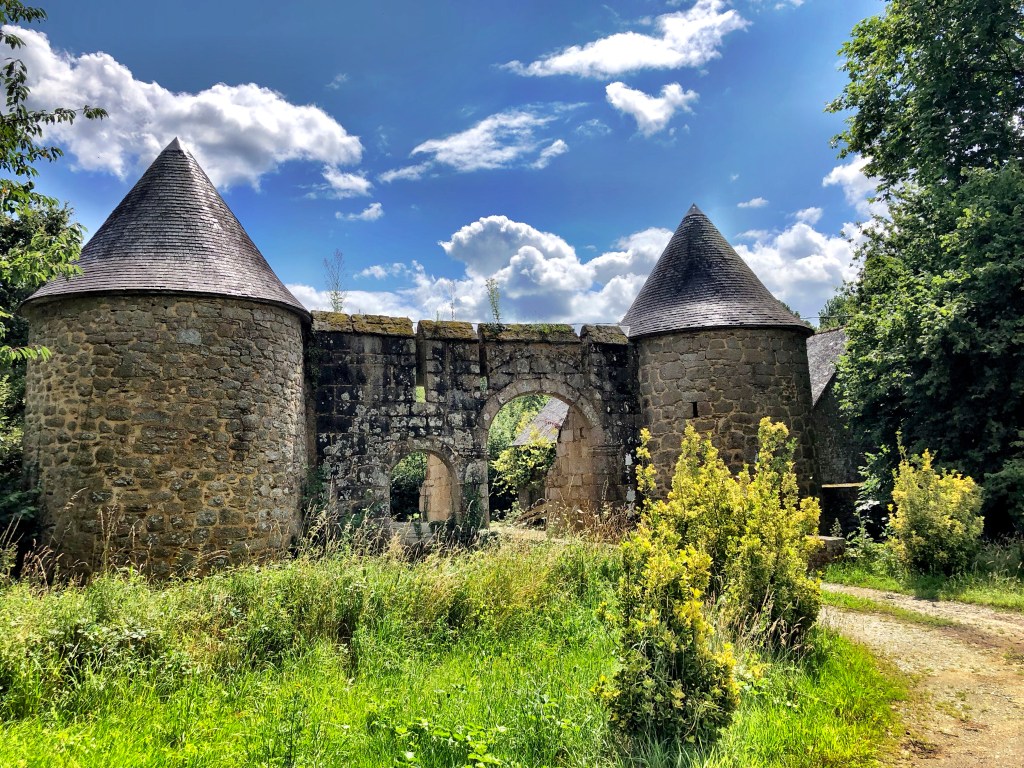
Oh, Happy Days!: A Late Medieval Manorial Fortified Gateway

Ironically, the most surprising and rewarding discovery in Bazouges-la-Pérouse wasn’t in the town at all. A few hundred meters south of town, down a winding country lane, stands a well-preserved late medieval fortified gateway. Amidst verdant corn (maize) fields and a stand of oak, hazel and fir trees, two squat towers are connected by an archway through which a narrow drive crosses a dry moat and enters a complex of buildings where there was once a seigneurial manor. This is probably all that remains of the original manor of Martigné. The gate structure was apparently purchased in the 1990’s by the town and restored. The complex of house and farm outbuildings within remain under private ownership, so we were unable to intrude. No matter. The gateway was reward enough. It’s a little gem of late medieval architecture and we were so glad to have made the effort to find it. If you like this sort of thing, we highly recommend it. A word of caution, you might avoid driving down the narrow farm lane which leads to Martigné if you are in a large motor home; there is only a small turnaround at the end of the dead-end drive and you will likely face the prospect of having to reverse all of the way back to the main road. That being said, it is well within walking distance from the town (about 2.2 kilometers, or 23 minutes) if you are reasonably fit and have the time to do so.


And with that, we bid you adieu. We must prepare for a visit from our new friend Claudia, a neighbor who lives just up the street from us. Claudia is french but speaks quite good english (also italian and russian, apparently – show-off!) and we invited her over for “apero”(aperitifs – a french tradition of getting together for a casual pre-dinner snack and drinks). It will be our first true use of our newly refurbished sun terrace. Now that the major phase of work on the terrace has been completed we have purchased a set of outdoor furniture and a sun shade. At long last, this is a comfortable area to lounge in the sun (or under the shade), listen to the birds, and look out over the tranquil Parc du Nançon directly below. Lovely. We still have a bit of work to do on this part of the house, but it’s now usable and we’re ready to entertain when the weather is fair. Lucky us!

*For anyone keeping score, that was olympic-level alliteration. Judges?