Tower and Town – Our Search for a New Home

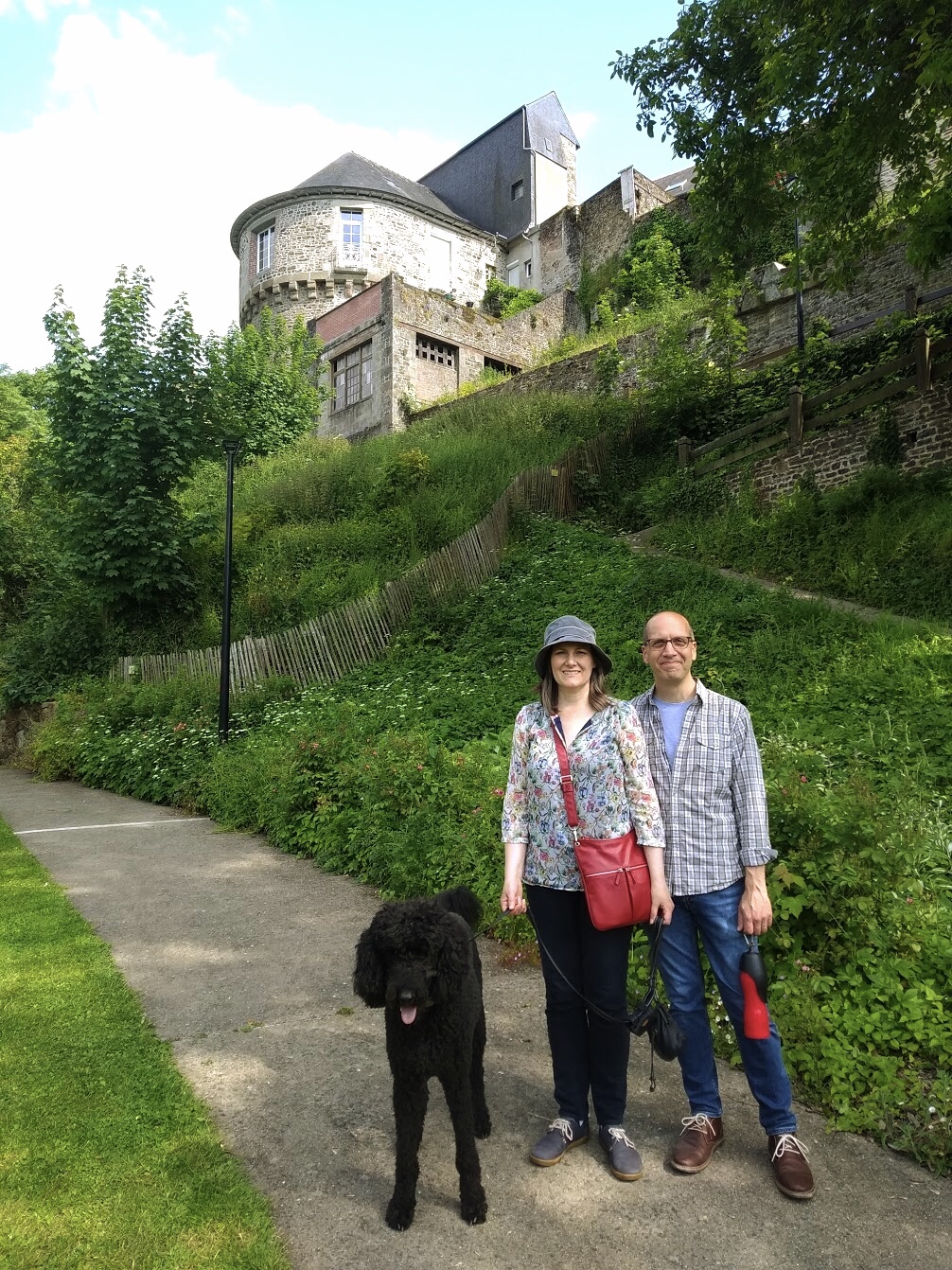
In the Jardin du Nançon, Our New Home in the Background

Where? Well, one of the benefits of being quite new to France was that we held no preconceived ideas about which area would be the best for us. So, pretty much all of France was in our sights. Of course, many of you are familiar with our preference for cooler climes. Thus we did have some bias against southern France. Apart from that, we were keeping an open mind.

We also knew that we preferred to live in an urban setting if possible. Having lived – and loved – our lives in the heart of Capitol Hill in Seattle, we didn’t think that we could trade away the liveliness and convenience of having services, entertainment and restaurants within easy walking distance of our doorstep. Not that it had to be a large city like Paris or Lyon. But we hoped we could find at least a medium-sized town which offered an urban ambiance. Malestroit is a lovely, lovely town. And, compared to most American towns of similar size, it packs quite a punch in terms of services, commerce and events. Even so, it’s a little too quiet, a little too insular to suit our taste.

By far the most important criteria for finding a place to live was the house itself. Cherie and I are both massive enthusiasts for architecture – as long as that architecture was built before 1940. Apologies to all of you lovers of mid-century modern and later styles, but we find nearly all of that to be appallingly cold, unimaginative, without soul. It’s lucky that we both tend to gravitate toward the same types of buildings. Generally, the older the better. Although I suppose we would both draw the line at stone-age cave dwellings. Give us a medieval or renaissance abode any day. A neo-gothic or Palladian pile? Sign us up. For us, a minimalist concrete box with “clean lines” doesn’t hold any appeal. To put it another way, we prefer Glen Close to Kim Kardashian; Rembrandt to Rothko; Bach to Satie.
NOT on the Agenda!

Looking for properties here in France is a bit more of a random affair. One does not enlist an agent who will help you search for you dream home, arrange viewings and accompany you to the property. Nope, that’s all up to you. Here, each agent holds a certain inventory of homes for sale and they will only show you those properties. So, if you see a property you like, you must contact the particular agent who represents the owner of that property; they generally seem to accompany you to view the house – which is a bonus when compared to the U.K. where they only set up the viewing but you are on your own with the property owner or renter (as the case may be) to view the house.

In essence, there is no one on your side. No one to represent your interests when searching for properties. If you are lucky, the home owner’s agent will be reasonably objective and help you out, but they are under no obligation to act in your best interests. I suppose that when buying properties in the U.S. we had been a bit coddled with the real estate structure in place there. And because of that, we had come to expect that same form of adult supervision in property searches everywhere. But it’s just not so. In France, you must be more actively involved. Once you accept that, the process is really not too difficult.
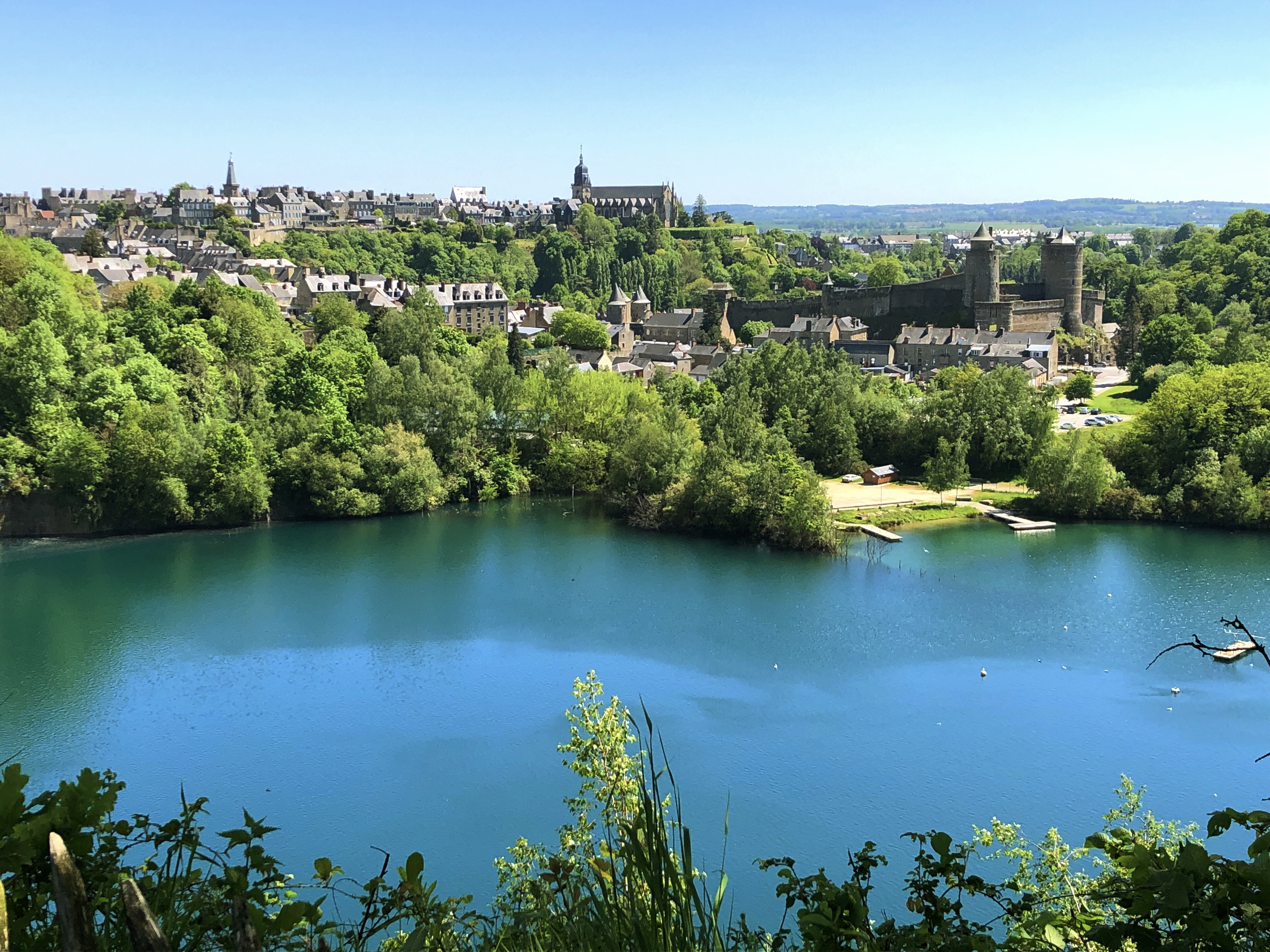
Fougères in the Distance

We began our search right away – just a couple of weeks after we settled in to our rental house in Malestroit. Online, we searched through thousands of properties. No joke. Thousands. There is a website here called Le Bon Coin. It’s the basic equivalent to Craig’s List in the U.S. This site has both private and professional home sales on it and ended up being the best resource for our initial search.

After finding a few likely candidates, we would call the agents or owners to arrange a viewing. Even though we considered properties throughout France, we ended up looking almost exclusively in Bretagne. To a significant extent, it was just easier to travel back and forth in the space of one day. We had no one to watch Saxon so he would have to come along on overnight forays. Was it practicality or laziness? Maybe a little of both. But in our defense, Saxon doesn’t like to ride in the car – it’s uncomfortable for him and makes him a little carsick as well. So it’s best for everybody if we avoid long drives anyway.
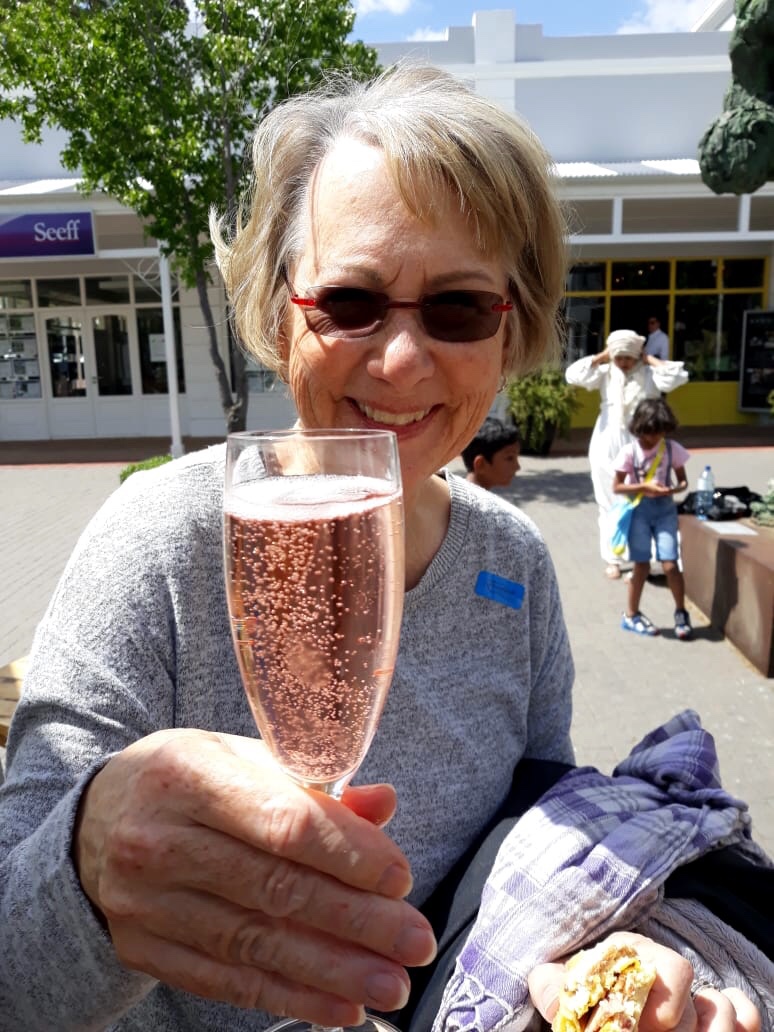
The Widely-Traveled Valerie Living it Up in South Africa

In the midst of our search, Cherie’s mother, Valerie (“Val”), came to visit us. She is an ardent house junkie. So she quite happily joined us on several property viewings throughout Bretagne and the Loire Valley. We all had a fun time crawling, climbing, snaking through ancient houses that were sometimes barely standing.

Just before Val arrived, we happened upon a property in the northeast corner of Bretagne in the medium-sized town of Fougères. Both of us liked it and we thought it would be worth a second look while Val was here to give us the benefit of her opinion. She has a keen eye and we wanted her take on it. At second look, we liked it even more. Val was convinced it was the place for us. Cherie loved it so much that it brought tears of joy to her eyes. Nevertheless, we tried to remain pragmatic; we looked at a few more properties. But, in the end, nothing matched the house in Fougères.
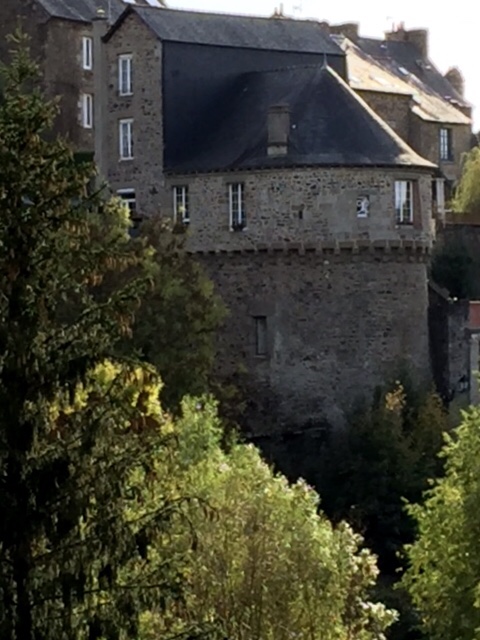
La Tour Desnos from the Northeast

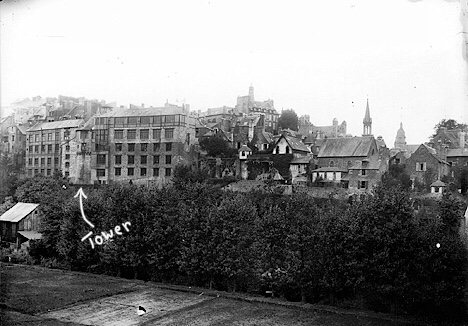
L’Usine Pacory: 19th Century View of the Pacory Shoe Factory Enshrouding the Tower

This is the state in which the tower remains today. There is a single, main floor, finished for living, with two bedrooms, a kitchen, shower room, separate toilet, laundry area, and a living room. And the top floor under the semi-conical roof, was used by the former owners as a third bedroom. The two levels below the main floor remain unfinished. There is also a small remaining portion of industrial building attached to one side of the tower containing two levels, each of which are also unfinished.

The Entry Hall with a View Toward the Front Door
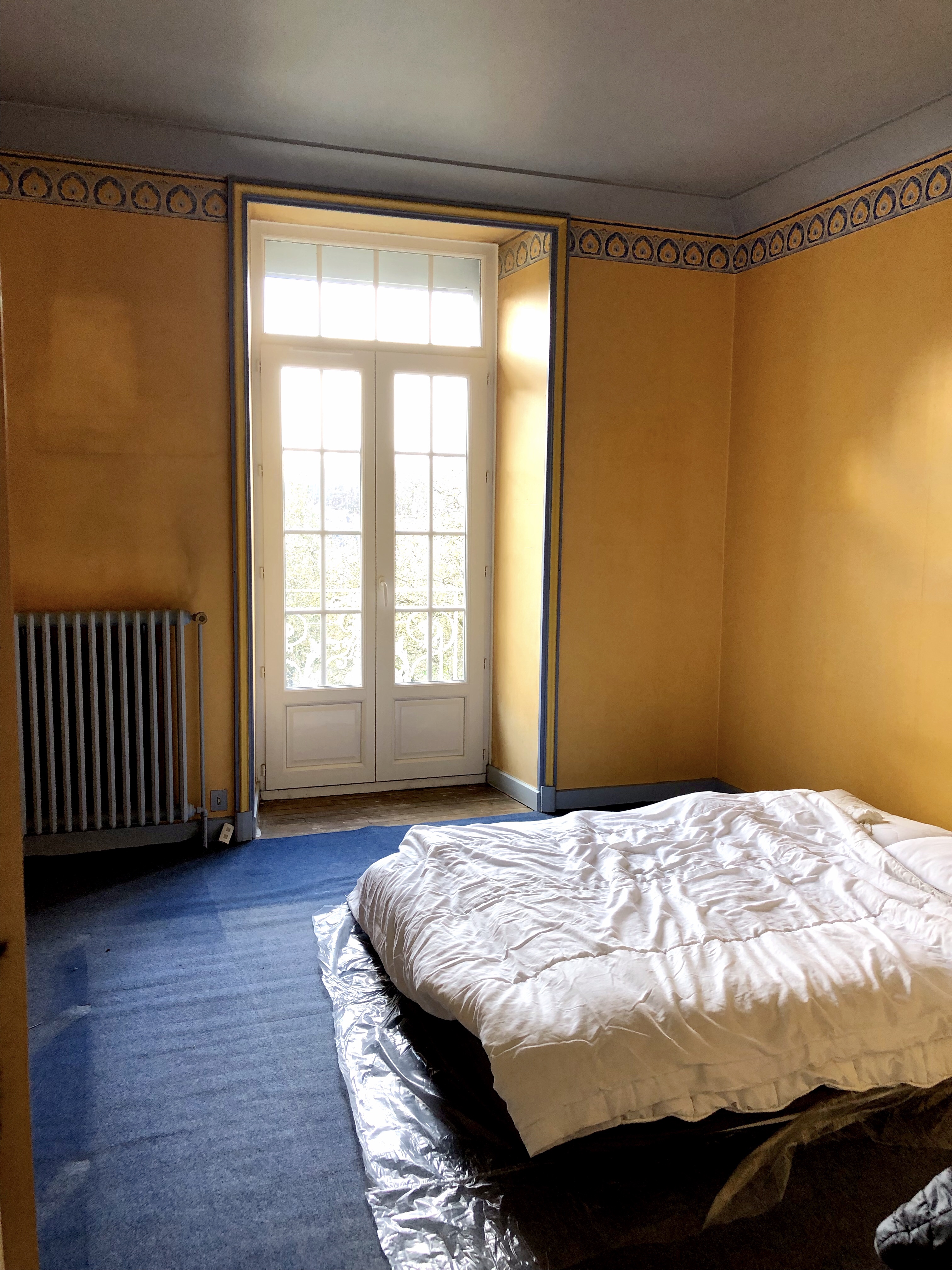
Former Bed Chamber. To Be Transformed into a Kitchen
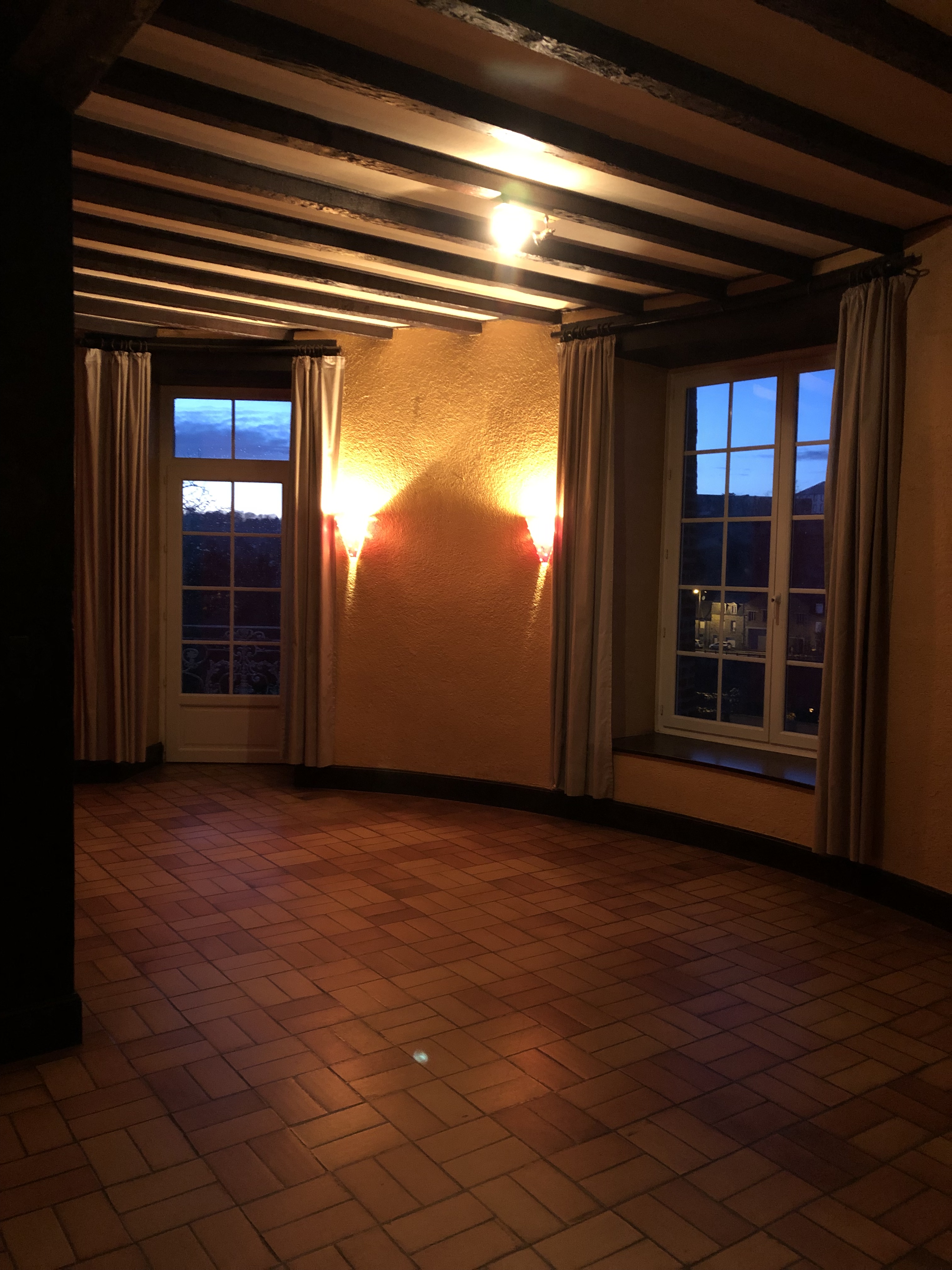
Living Room with Views Over the Park

Attic Space to Become a Master Suite
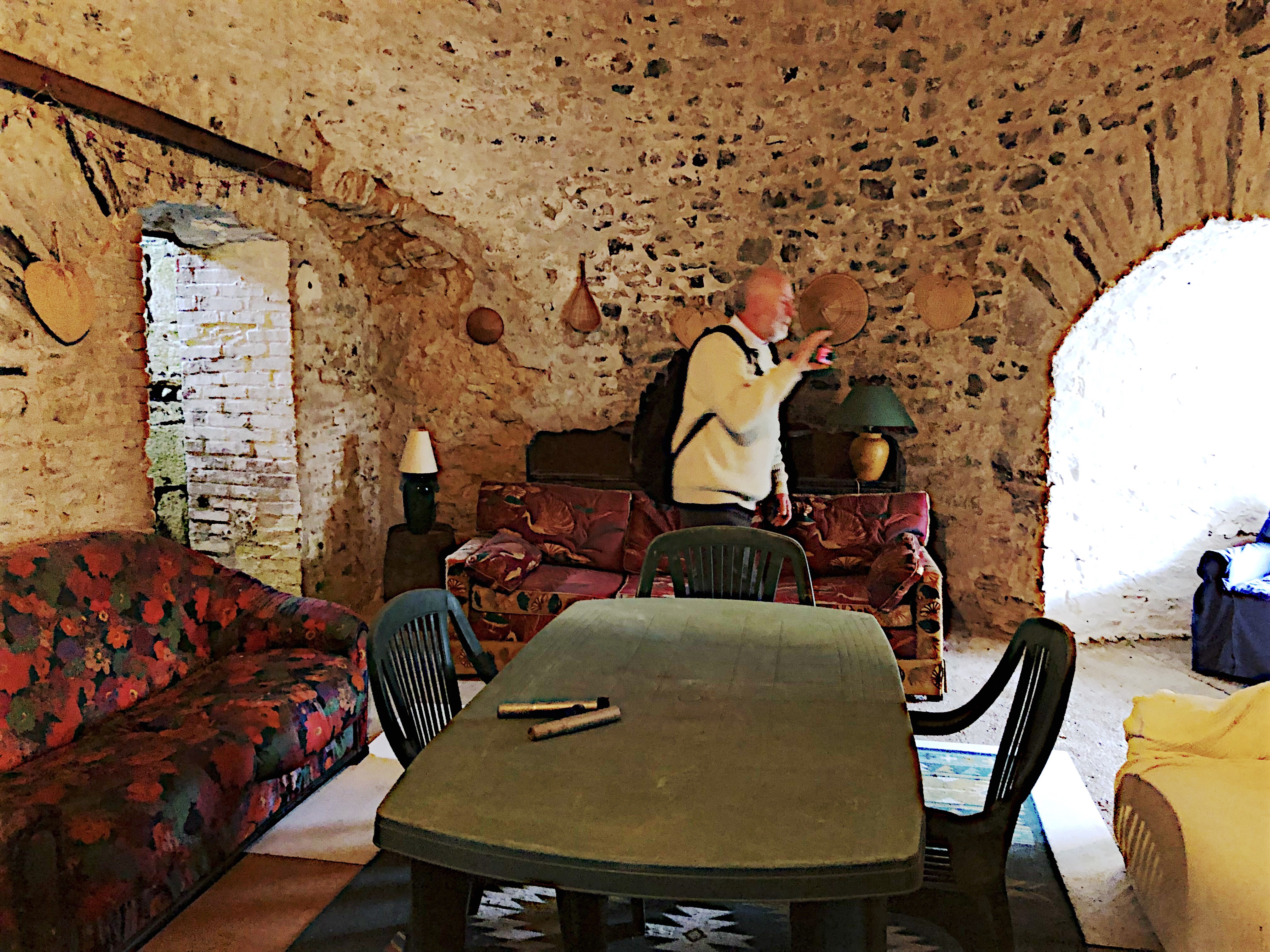
The “Chapel” (So-Called) Constituting the Second Level of the Tower. A Future Sitting Room

The tower stands against a slope. As a consequence, the main floor is on the third level of the structure. The entry into this main floor is level with a small courtyard and short drive which leads to the main street: Rue de la Pinterie. The base of the tower opens on to a pathway and looks out over a park, Le Jardin du Nançon. There is a bit of outside space, broken up into four areas. Two of these are paved terraces (the Upper Terrace and the Sun Terrace), while two others are small garden spaces (the Jardin and the Potager).
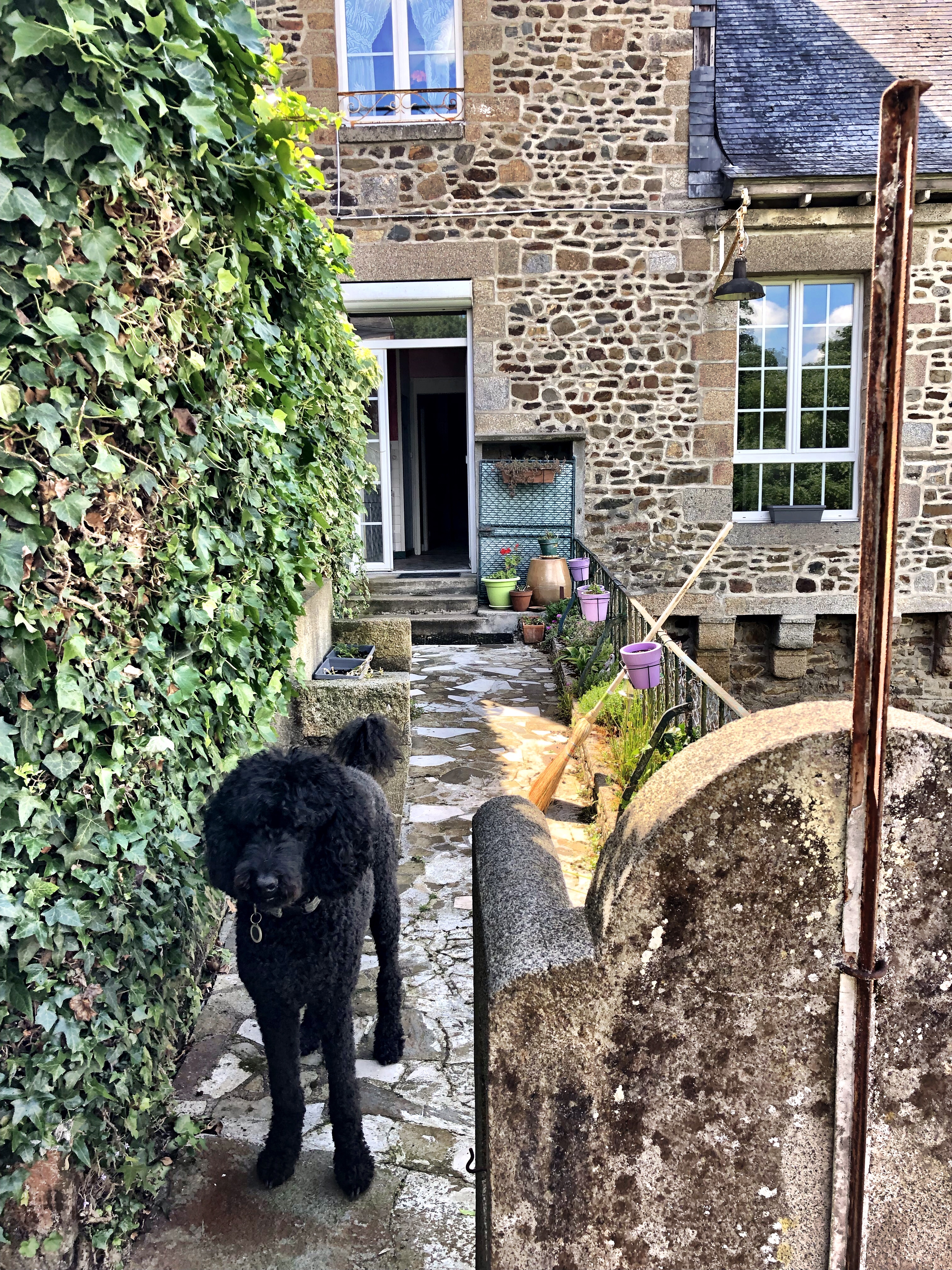
Saxon Posing on the Upper Terrace
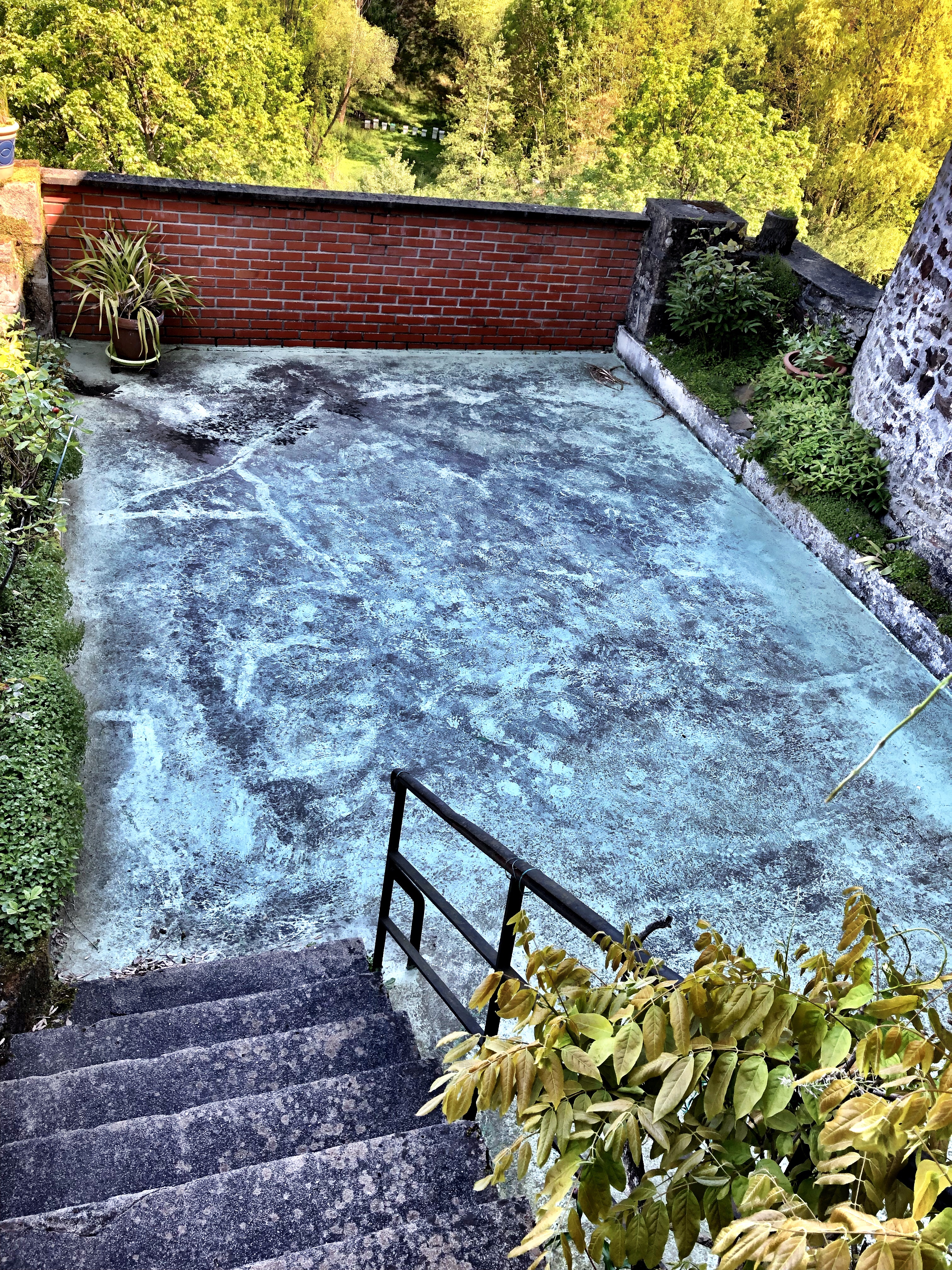
The Sun Terrace (in the Shade)

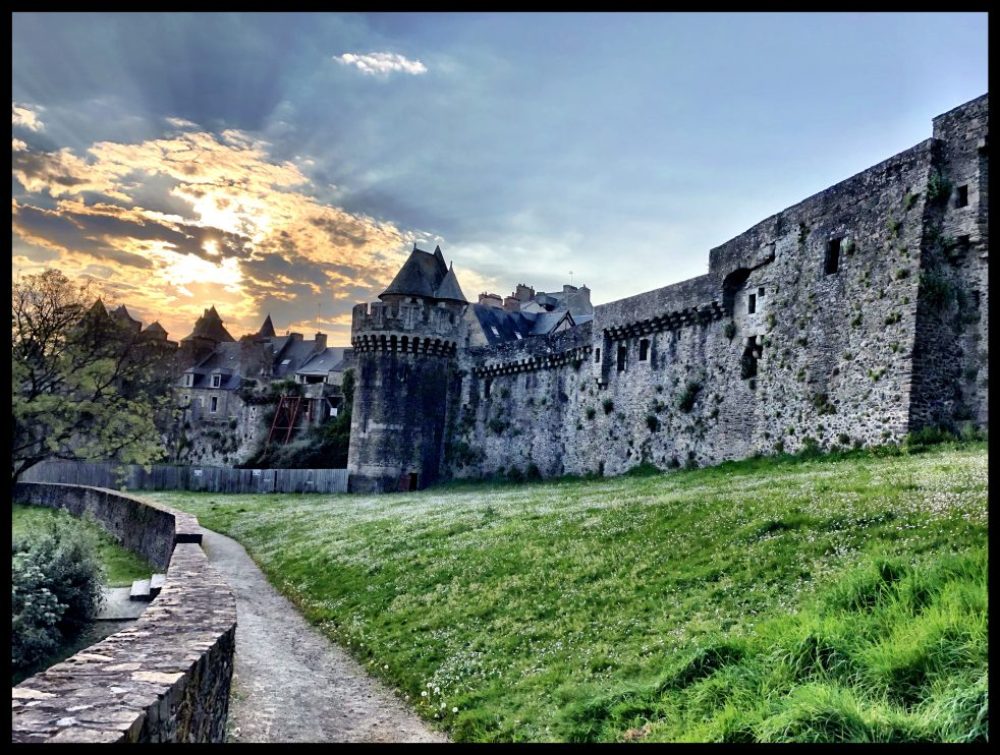
We couldn’t have found a better location for our house. It is situated directly in the heart of Fougères. This allows us to walk to restaurants, grocery stores, pharmacies, the theater, post office, the mairie (town hall) and, most importantly: the boulangerie. We are just steps away from Fougères’ large Saturday market. Moreover, I am able to trot down our street directly to the Château – one of the largest surviving medieval fortifications in Europe.

Little Courtyard, Drive and Gate to the Street (View from Our Front Door)

And yet with all of this convenience, the house itself is well off the street, isolated in its little courtyard. The other side of the property overlooks a large park through which meanders the Nançon river (really little more than a creek). The park is pretty and quiet. And the best part is, we have a lovely park as our back yard without having to maintain it ourselves. Sweet! So, for us, La Tour Desnos (we think it’s pronounced “day-know”) is pretty much perfectly situated.

Rue de la Pinterie: View from Just Outside Our Driveway Gate

Fougères (pronounced “foo-jehr”) itself is a town of about 21,000 citizens. It’s a 30 minute drive southwest to Rennes, the largest city in Bretagne. The town has a theater, multiplex cinema, numerous restaurants, cafes and bars, shops and services of all kinds – pretty much everything one normally needs in daily life. The only amenity our new town lacks is a train connection. There used to be one. But, as with countless other towns and villages throughout France, its rail line was shut down decades ago. Luckily we can at least catch the high speed rail (in France it’s called the TGV) in nearby Vitré 20 minutes to the south, or at the main station in Rennes. So it won’t be too much effort to conveniently explore the country by France’s excellent rail system.
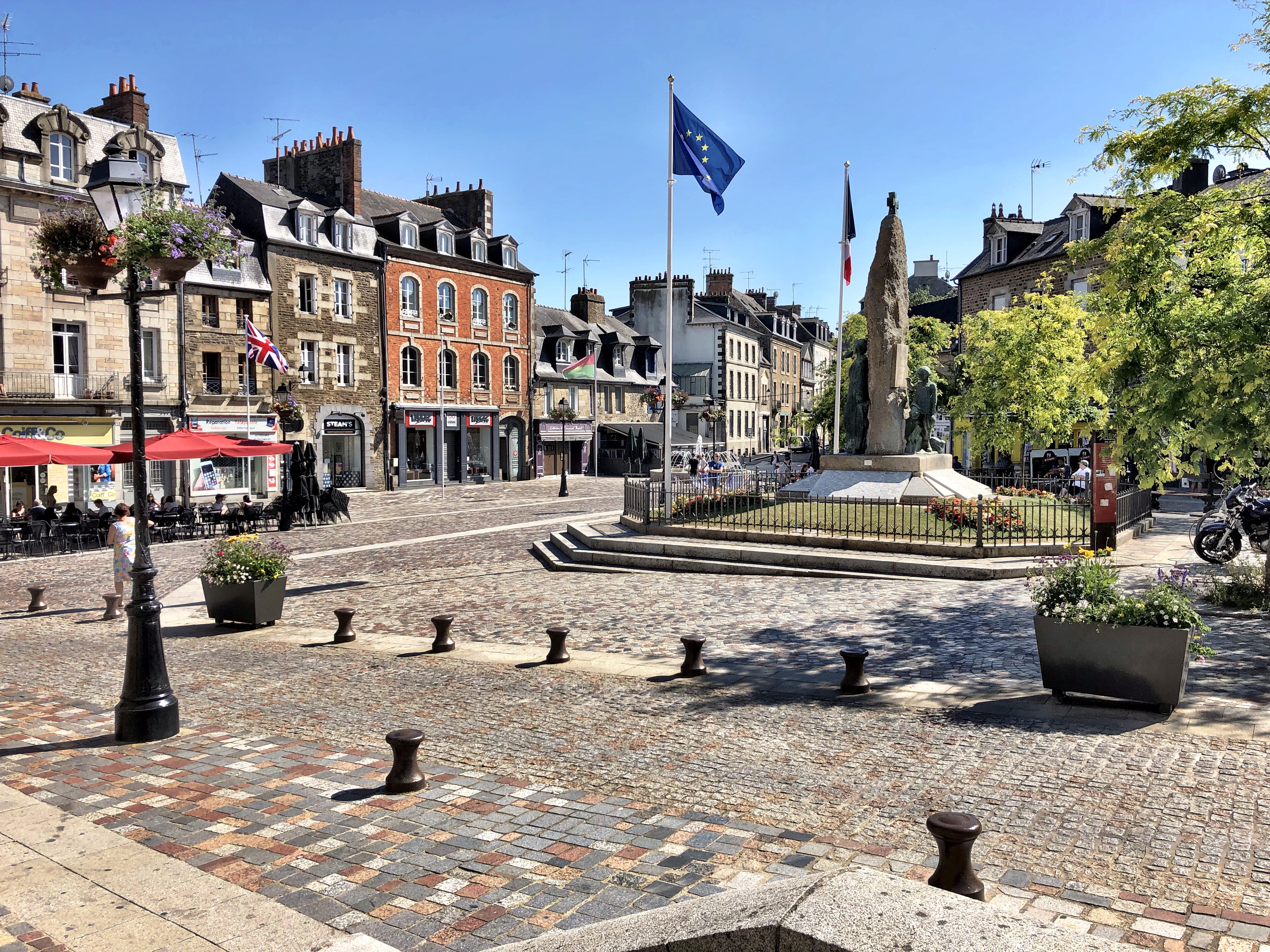
Place Aristide Briand (a Two-Minute Walk from Our Home)
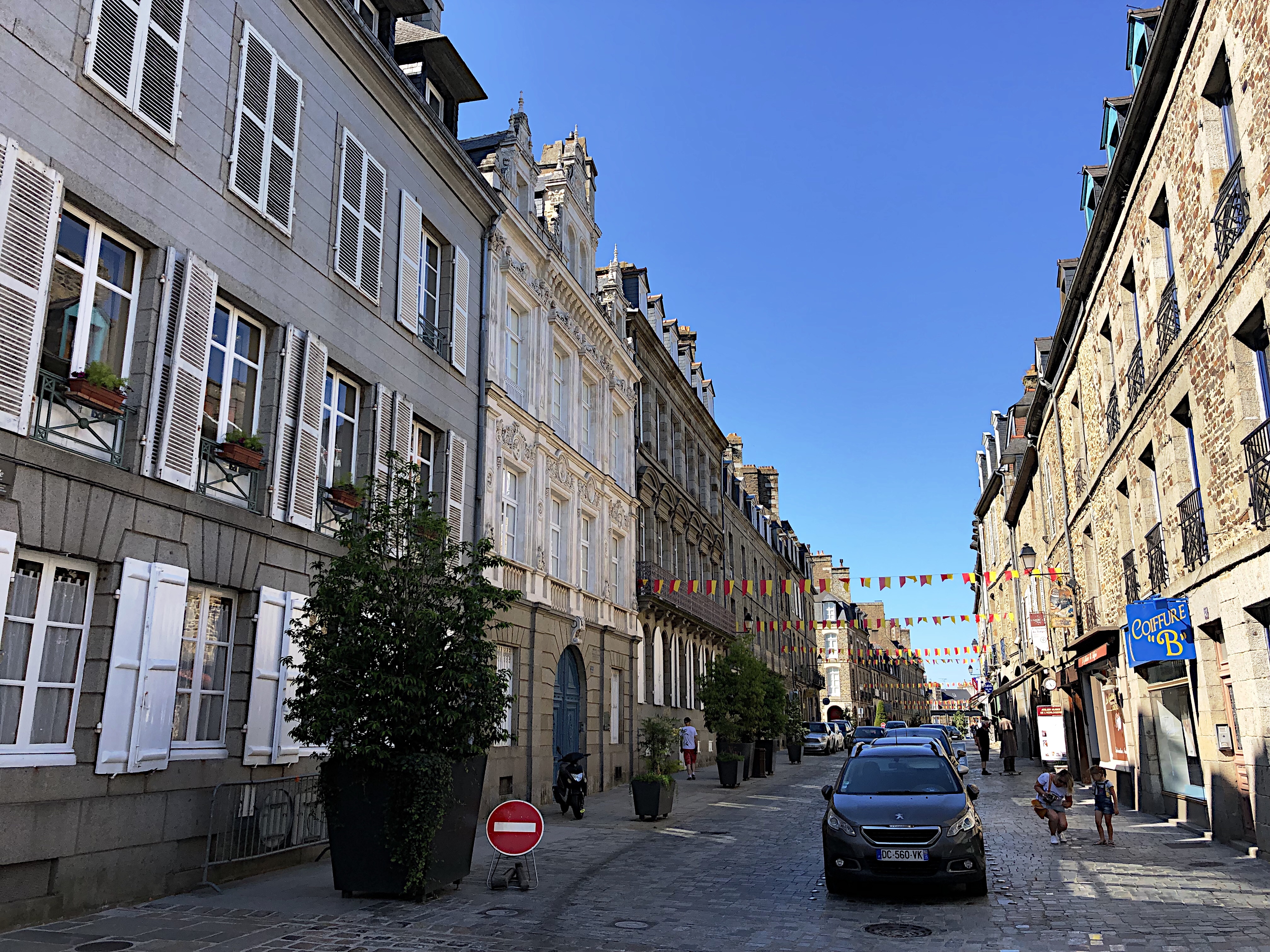
Rue Nationale
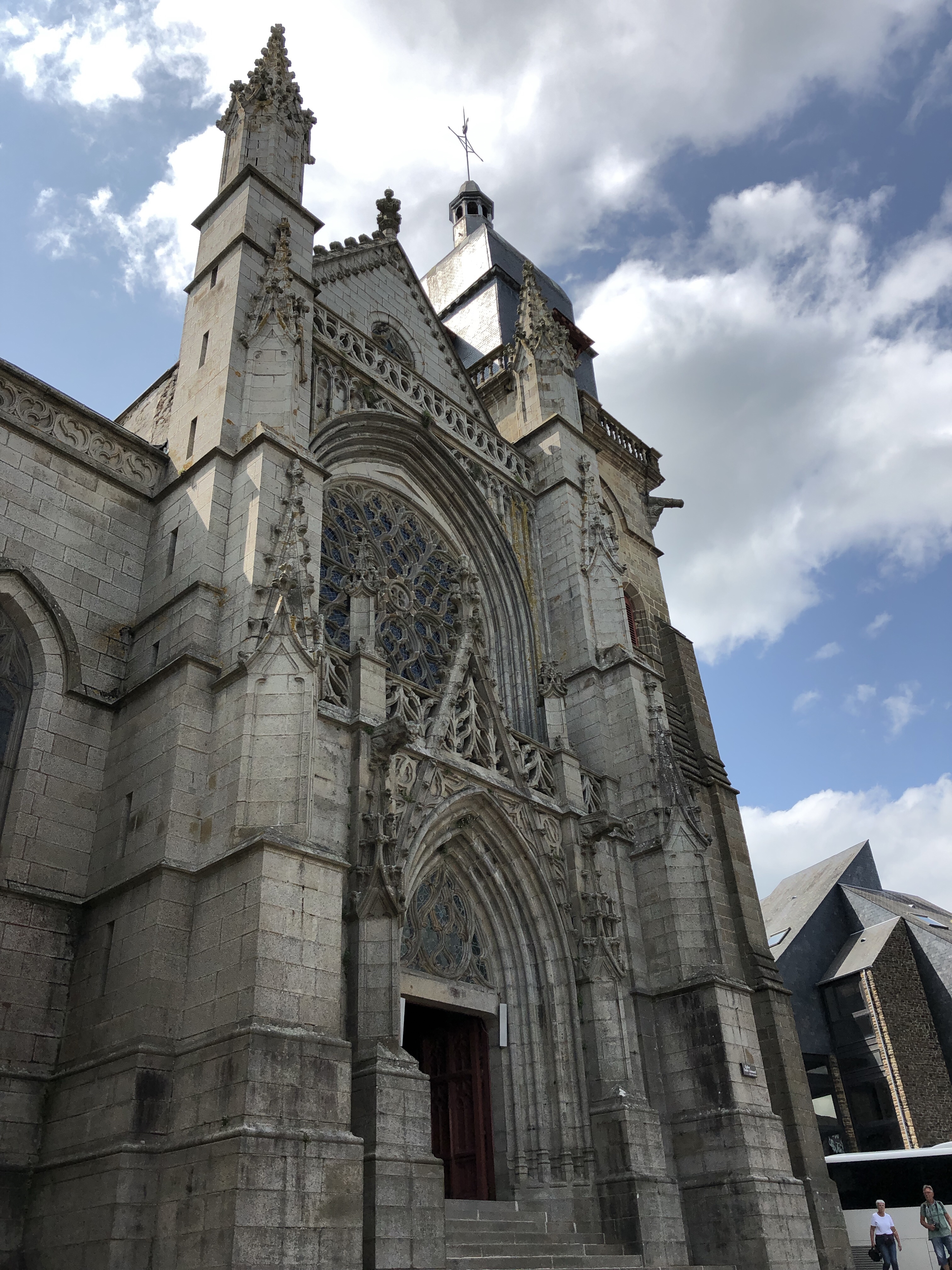
Église Saint-Léonard

Beffroi: A 14th c. Bell Tower We Can Hear from Our House (Don’t Worry – It’s a Good Thing!)

You may have noticed that we haven’t moved into our new home yet. That’s because we decided to make some changes to the layout on both the main and top floors. We’re also removing an external staircase, installing a new internal staircase, creating two bedroom suites, installing new electrics and plumbing, making minor repairs to the roof and sun terrace, building a covered passage between the tower and industrial building and fitting out a couple of workshop areas.

Terminus of Rue de la Pinterie (Our Street) at Château de Fougères
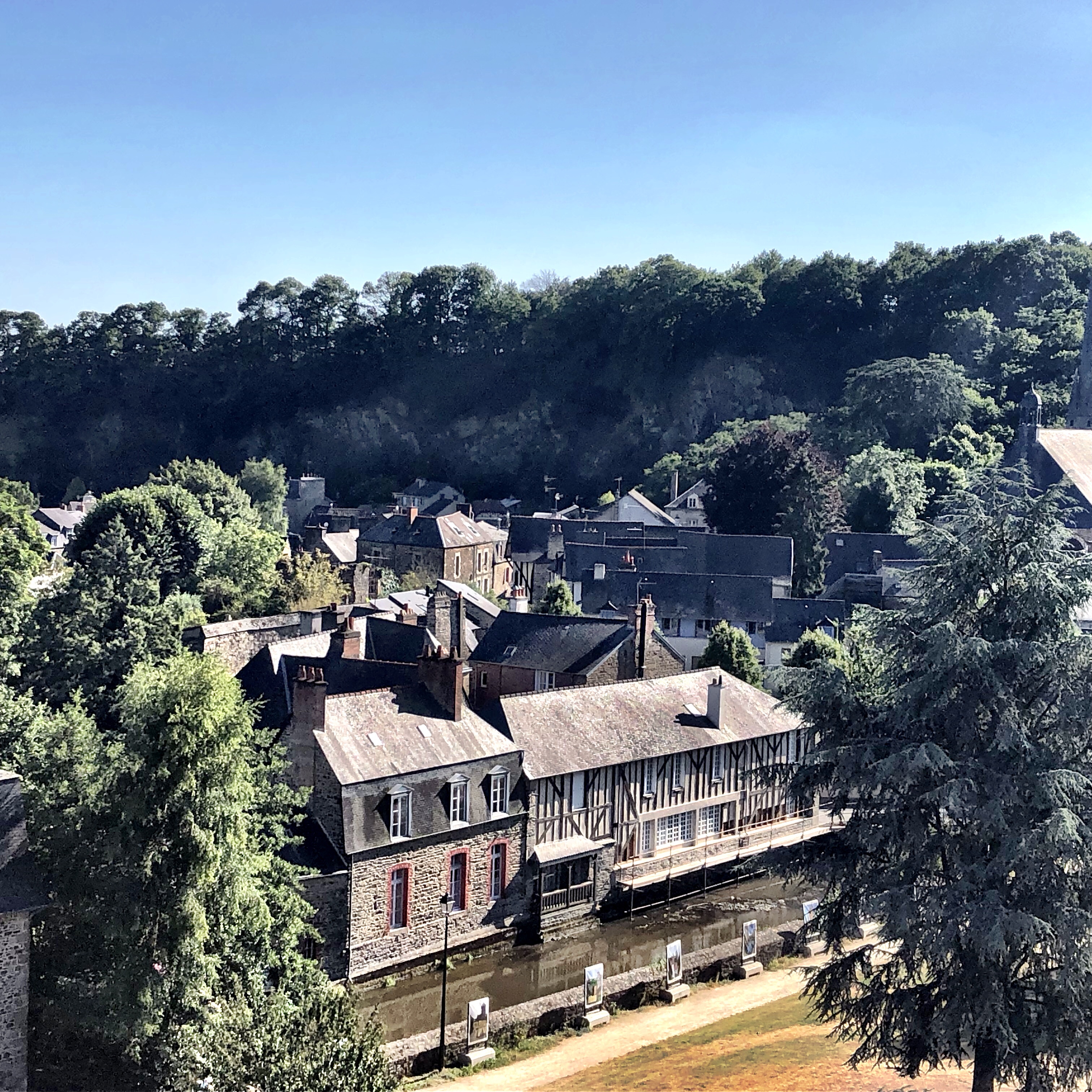
La Ville Basse: The Medieval Quarter of the Lower Town

As things progress on the house, I will provide additional Renovation Updates. In the meantime, we continue to pinch ourselves, feeling incredibly fortunate to own such an ancient piece of France’s historical patrimony. We feel terribly privileged to be the custodians of La Tour Desnos for this chapter in its long story. And I hope to be able to dig more deeply into the tower’s past history. Once I have compiled a more detailed story, I’ll share it with you all.

I’ll leave you with just a few more photos of some highlights from our new home town:
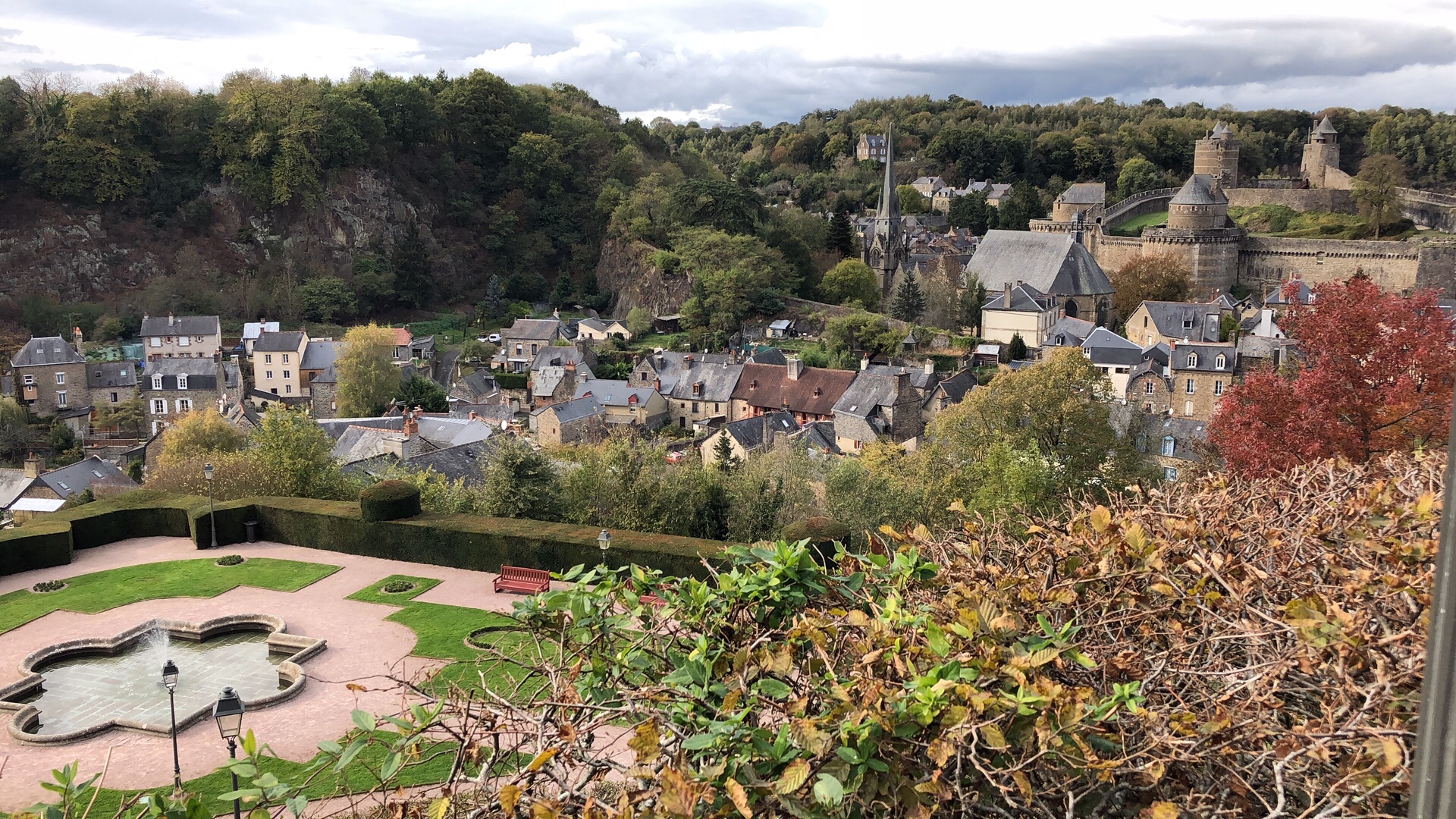
Le Jardin Publique Overlooking the Lower Town and Château
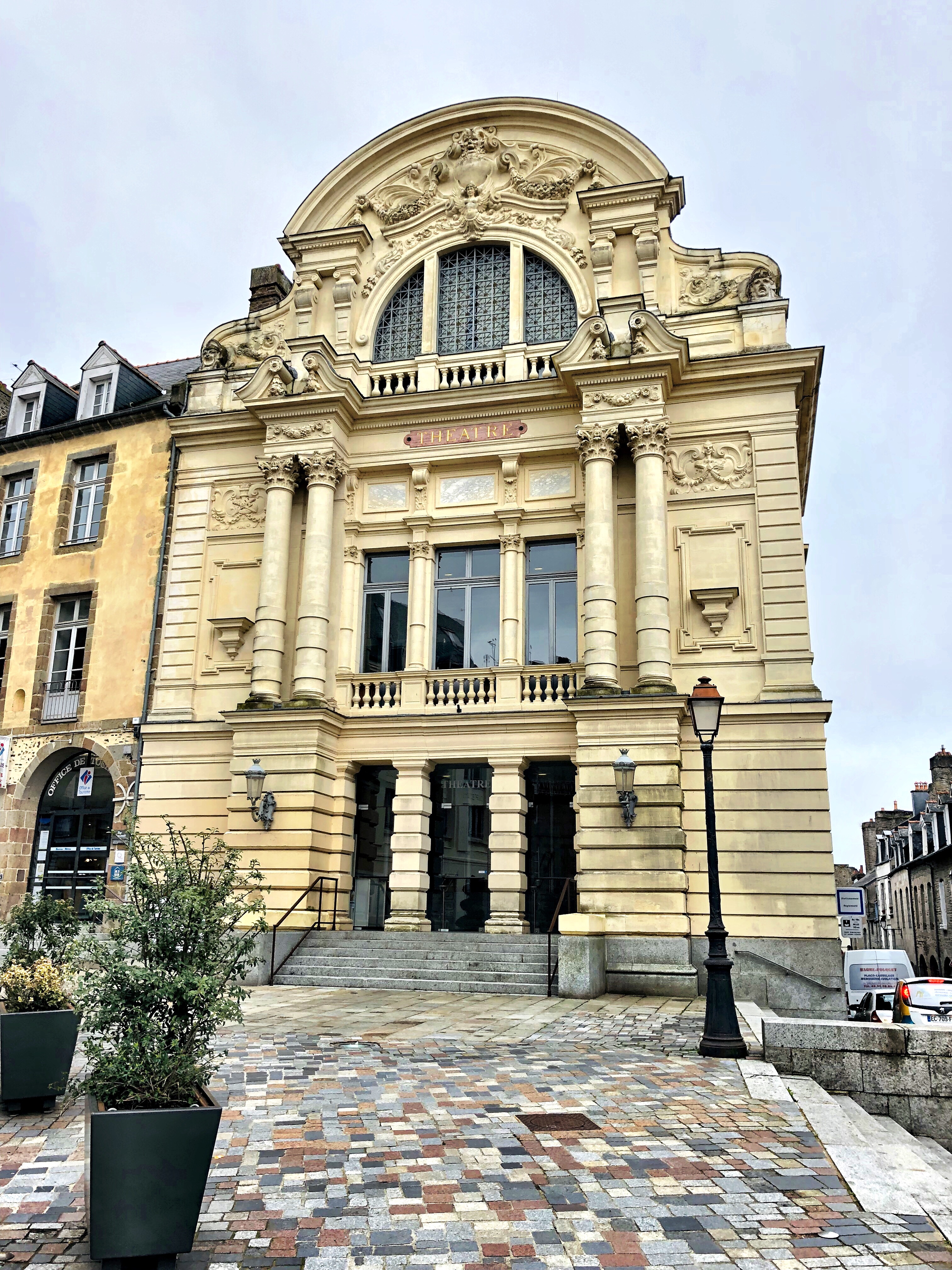
Victor Hugo Theater (a One-Minute Walk from Our House)
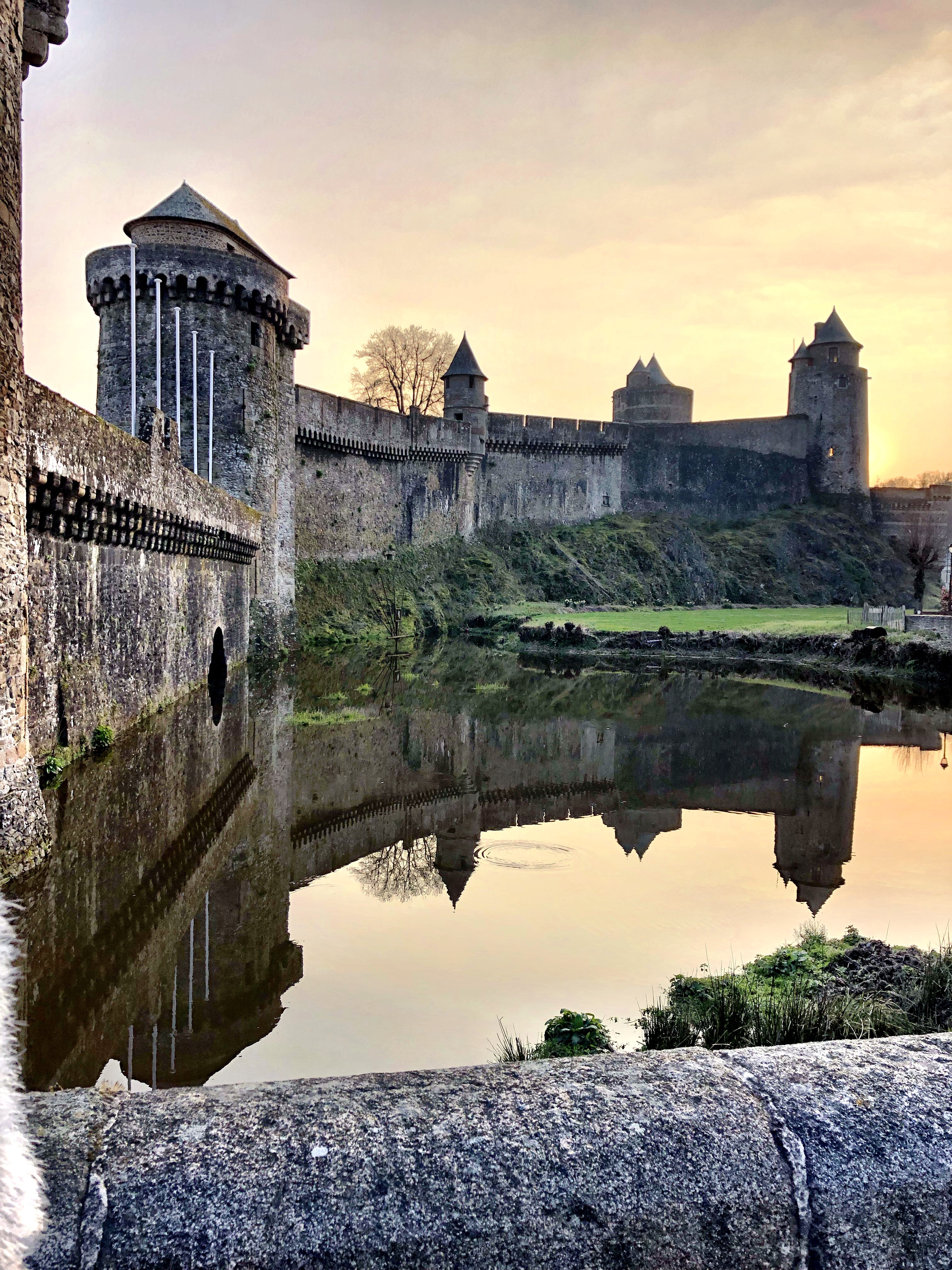
Chateau de Fougères at Dusk

Our Little Corner of France: Malestroit and the Val d’Oust

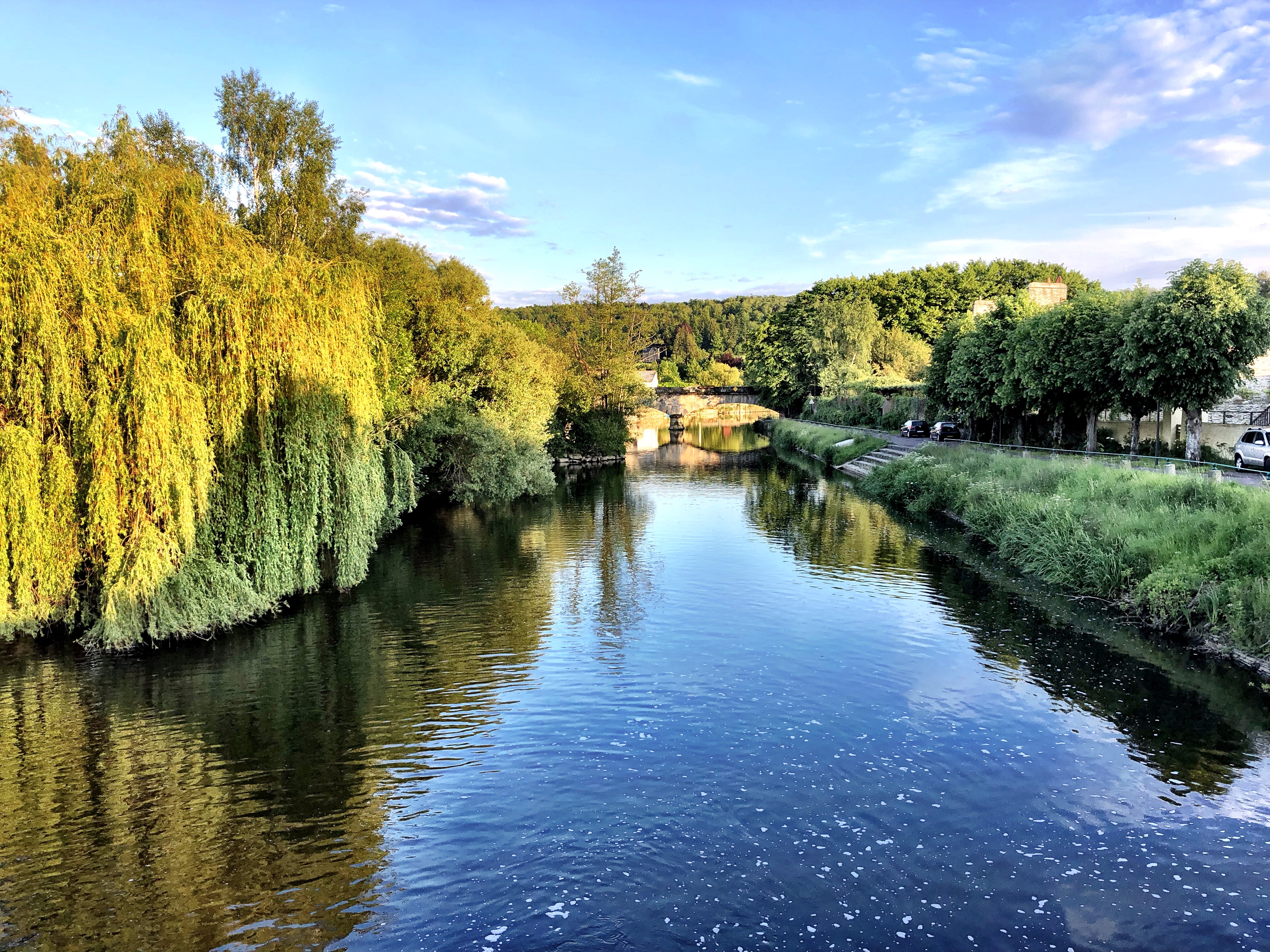
The River Oust, Malestroit

It was somewhat a random choice for Cherie and I to end up in this part of France. As regions of the country go, Brittany is not as well-known (particularly for geographically-challenged Americans) as, say, Provence or Normandy. The mention of Brittany generally leads to a reaction of embarrassed confusion or a knowing nod of the head in the mistaken belief that I am referring to Great Britain. Being smug, Europe-loving nerds, we both already knew the region’s geographic location. But that was about all we knew.

Ignorance has never – ever – stopped Americans from doing a thing that might seem (and probably is) crazy, if not entirely ill-advised. I offer you the deep-fried Hostess Twinkie as just one example. So it has been with great joy that the two of us are discovering the richness of Brittany. At the time of this writing, we have only been here for about nine months. Consequently, there are huge swathes of the region which we have yet to visit. But, the little pocket which we have called home since leaving Seattle is certainly itself worth exploring.

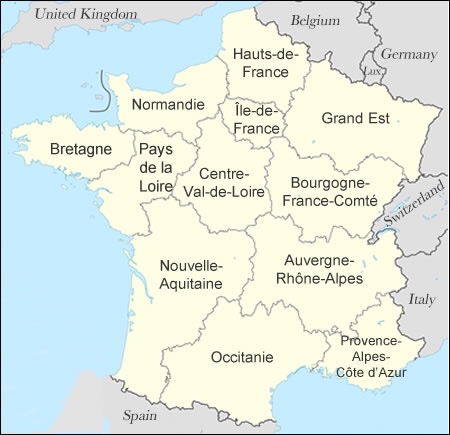
Administrative Regions of Metropolitan France

If you’re still a little fuzzy on the geography, Brittany (Bretagne in French) is the westernmost point in France. On the map above, it is on the far left, with Normandy to the north and the Pays de la Loire to the east and south. Bretagne is one of 13 (including Corsica) régions in mainland France. These are the rough equivalent to states in the U.S. or provinces in Canada.

There are 96 départements (similar to U.S. counties) in France. Bretagne itself is divided into four départements: Finistère in the west, Côtes d’Armor to the north, Ille et Villaine in the east, and Morbihan to the south. Each department is codified by a two-digit number and every postal code in the départements begins with these two digits. Morbihan’s is 56; Ille et Villaine 35.

Since living here, we’ve begun to realize that these two numbers show up on nearly everything even remotely administrative in nature; from your car’s license plate, to your electric bill, to food packaging to demonstrate it is locally produced. I’ve been asked for these numbers by my doctor, by cashiers at the home improvement store, and by random people we meet on walks. At first, we thought it a bit strange. But we’ve come to admire it. These departmental codes are a useful shorthand for quickly identifying any part of France. Moreso than people do with their state in the U.S. (with the possible exception of Texans), Bretons tend to link their identity with the département in which they live. It’s just a feature of the culture here and we find ourselves adopting the practice as well. At this moment we are 56’s, but when we make our final move to Fougères, we will be 35’s. Like all 35’s, we will be secure in the knowledge that ours is the best code in all of France.

Bretagne

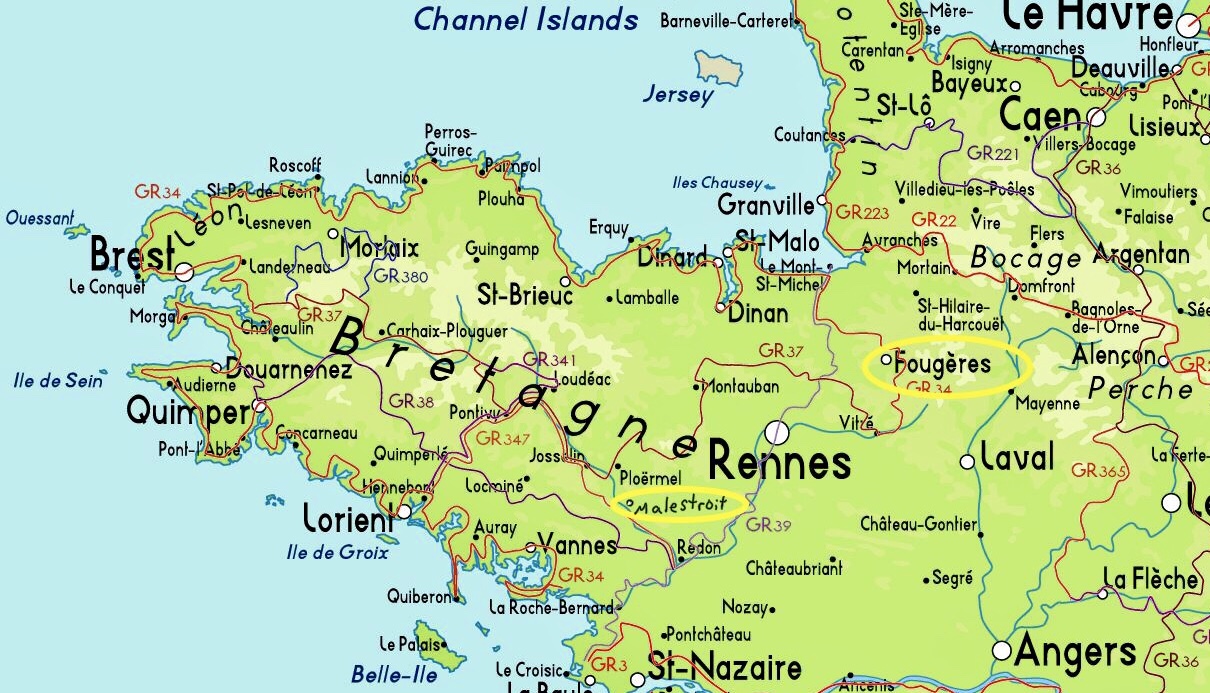
Our first home in France has been Malestroit, a lovely town in the department of Morbihan. Malestroit is small enough that it often does not show up on the less-detailed maps of the area. On the map above I have penciled it in and circled its location. [Look for it just below the end of “Bretagne”. While we’re on the topic of geography, I have also circled Fougères, the town where we have purchased our home-to-be to the northeast of Rennes.] A community of some 2,400 souls, Malestroit is, like nearly all French towns we have visited thus far, a compact town with nearly all of its dwellings, shops and services within walking distance.

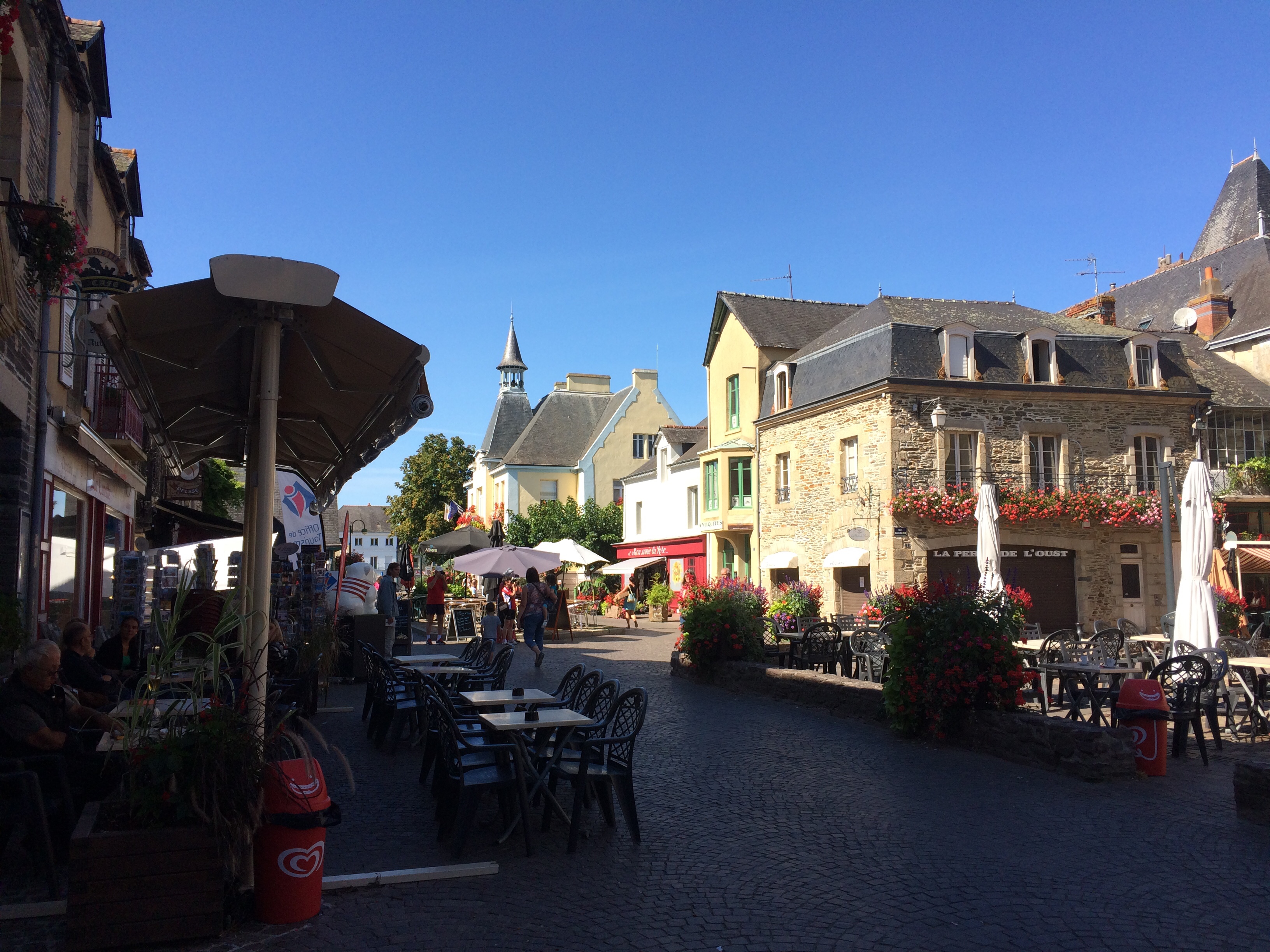
Cafés, Shops and the City Hall (in the distance) on the Place du Bouffay, Malestroit

We were amazed that such a small town would contain so much. There are three large grocery stores with another medium-sized convenience grocer, two more specialized food shops, a large multi-discipline health center, a hospice hospital, several individual health specialists, at least eleven restaurants and cafes, four bars, two news agent shops, two boucheries (butchers), two pharmacies, a post office, florists, car repair garages, garden centers, a veterinarian center, and more banks and insurance offices than I can count. It is, like most french towns, self-sufficient so that not often does one find it necessary to travel to a regional city for things.

Most important to us is that there are two boulangeries; both are lovely and we make daily pilgrimages to them for our required diet of fresh bread and pastries. Always pragmatic when it comes to their food, these two bakeries have arranged their hours so that one of them is always open when the other is closed for the day. And, apart from the grocery stores and cafes, they are the only shops which do not close for the sacred lunch hour(s). Very convenient, but bad for what has become our regular diet of bread, butter, pastries and tea. I tell you, though, it’s impossible to deny yourself a freshly-baked, warm pain au chocolat in the morning – or for lunch; or tea time; or in the evening. It’s a good thing they’re not open at midnight!

On the Towpath, the Nantes-Brest Canal on the Edge of Malestroit

Malestroit lies at the heart of the Val d’Oust, the Oust river valley. The Oust runs southeasterly for many kilometers through the interior hills and vales of Morbihan until it joins up with the larger Villaine in Redon on the eastern border of Bretagne. This waterway forms part of the canal network which spans 385 kilometers (239 miles) from the city of Nantes in the Pays de la Loire in the south to the city of Brest at the far western tip of Bretagne.

Cherie and Saxon in Lovely Josselin
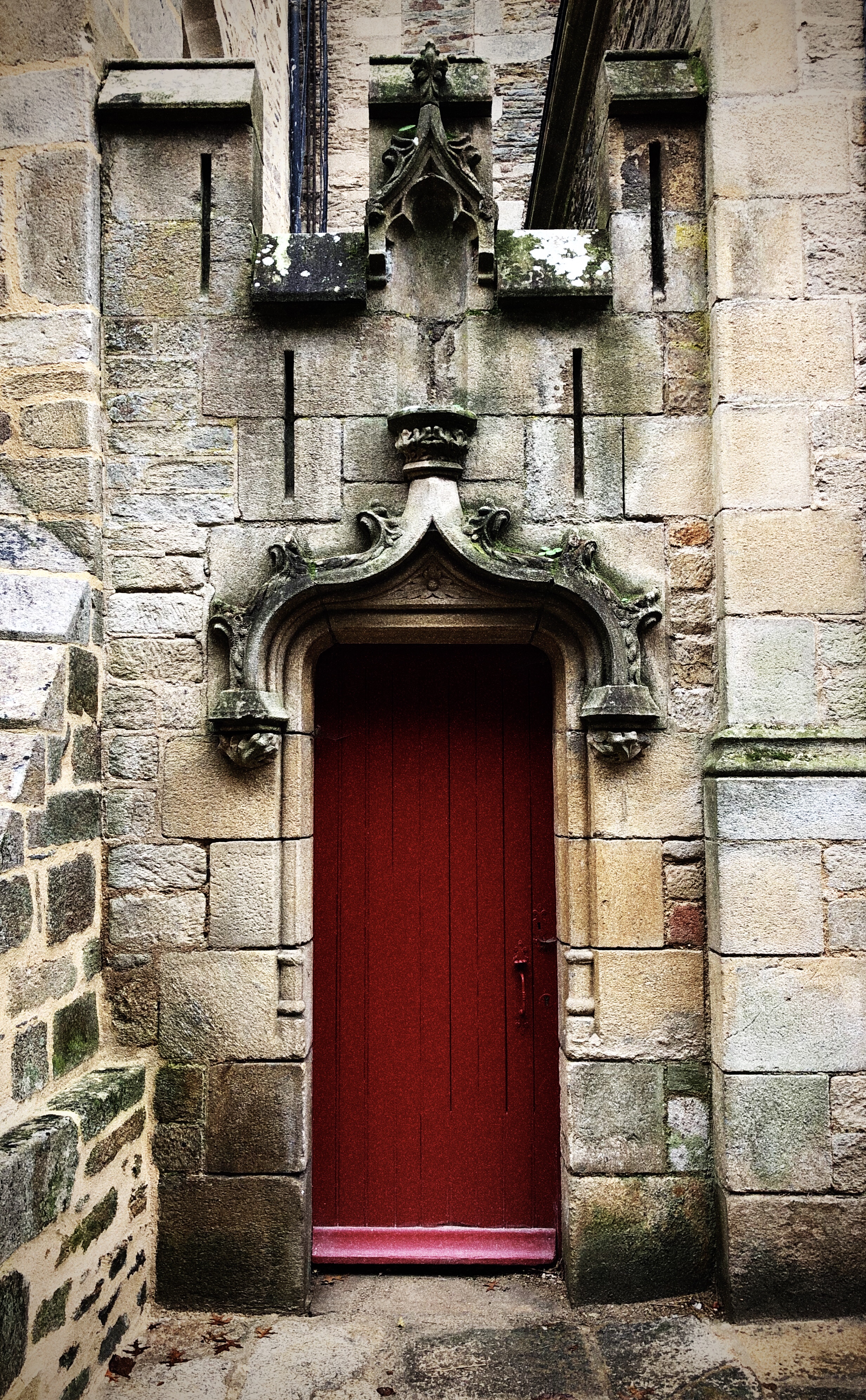
Renaissance Doorway, Josselin

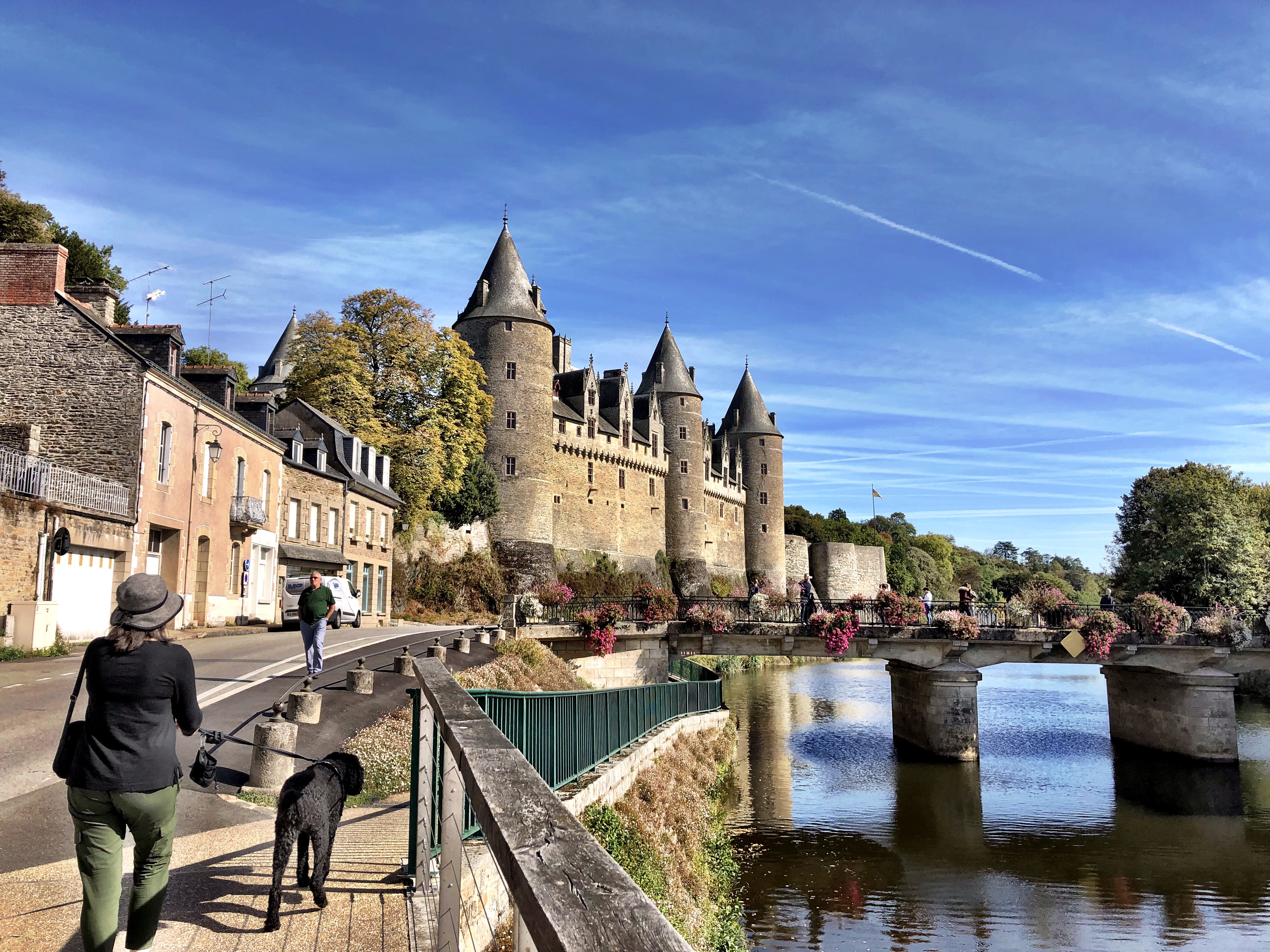
Along the Oust are several other beautiful towns, each with their unique character. Such a one is Josselin. Only a 25 minute drive to the northeast of Malestroit, this lovely town on the Oust boasts a magnificent castle (pictured above) and a picturesque medieval center connected by cobblestone streets. It’s a joy to visit, as we frequently do to take long walks along the towpath there. They also have a pretty good boulangerie!

A Sunday Afternoon Jaunt Along the Canal
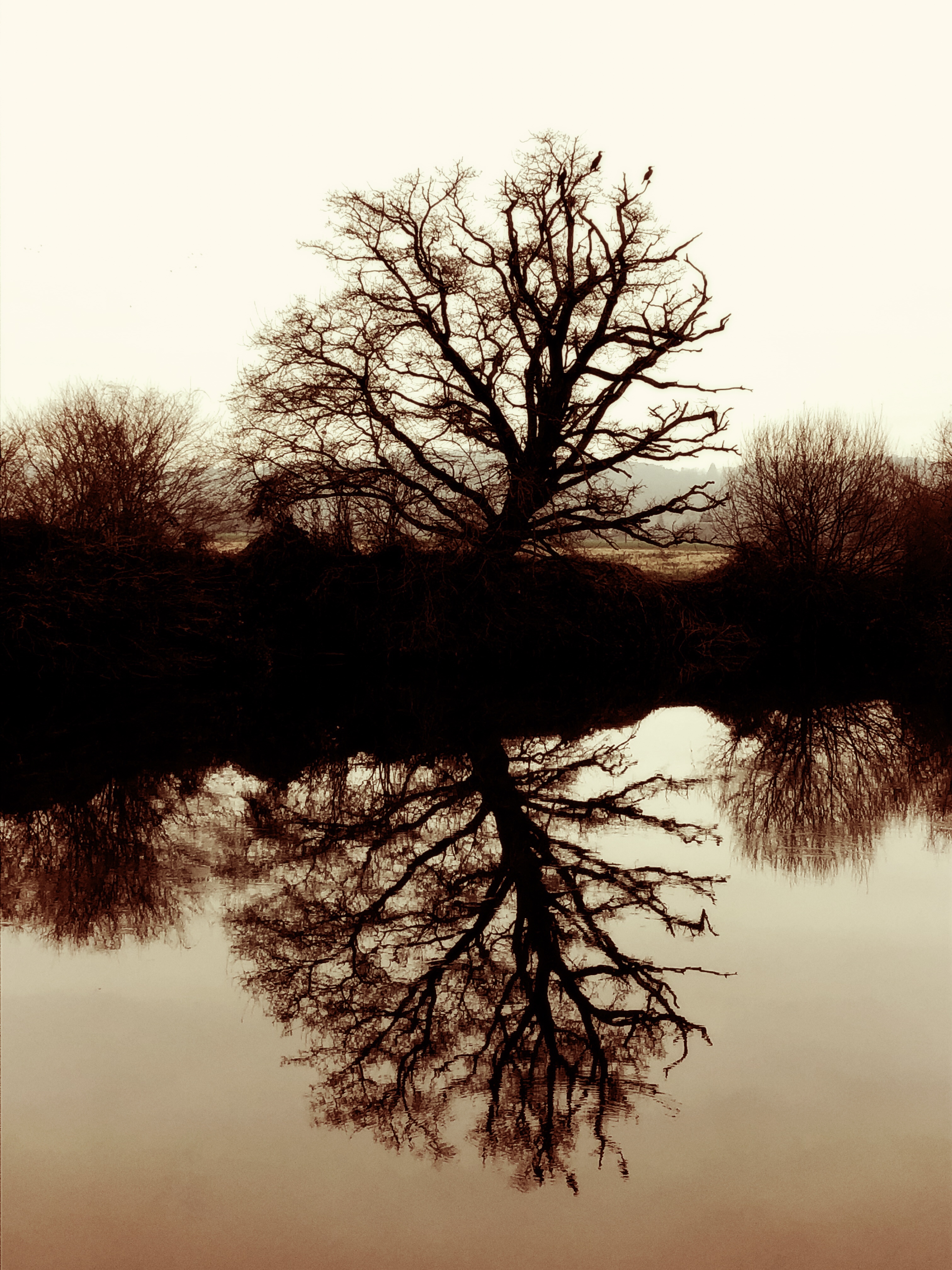
Cormorants Admiring the Reflection, the River Oust at Saint-Congard

For walkers, runners and bicyclists, the towpath along the tranquil Oust and the canal which intertwines with it is a real godsend. We walk along it every day at one point or another along the many kilometers up and down the valley. Everywhere we have plied it the path is flat, paved and very well maintained by the canal authority. The towpaths are very popular and they see a lot of traffic by locals and visitors of all ages. Sunday afternoons following Holy Lunch Hour(s) seem to be the most busy times, the paths abuzz with men, women, children, dogs, bicycles and horses (sometimes pulling a carriage as shown above). Add to that the many canal boats which ply the waters, bearing their relaxed and content passengers slowly along, and the atmosphere can’t be beat. It’s a beautiful thing.

Gone Fishin’, Montertelot

A little closer to home, between Josselin and Malestroit, are the villages of Le Roc-St.-André and Montertelot. These two smaller towns are a little quieter but no less enjoyable to visit. Le Roc stands on a bluff overlooking the Oust as it wends its way from Montertelot. The stone church there sports an interestingly openwork bell steeple served by a separate stair tower joined to it by flying bridges. Lovely and very cleverly designed.

Montertelot is quite petite, with one bar/cafe, a little church and a few houses. It also sports a lock for the canal and we had the pleasure of getting to know the lock-keeper’s husband, Michael, a musician who plays and sings traditional Breton and British music throughout France. He’s a great guy who helped translate for us when we made our official offer for the house in Fougères. The towpath between these two towns offers a very nice walk through mostly woodland. At the midway point is a surprise view of a large château through the trees. These are the kinds of things we encounter all of the time in France and we love it so much!

A Humble House in Trédion

Honorable mention goes to Trédion. Although I do not believe it is technically in the Val d’Oust, this little town is located just to the west of Malestroit. Even though the town itself is rather unremarkable, it happens to stand adjacent to a lovely château. We just happened to come across this breathtaking house on a random afternoon drive a few months ago. Such a typical structure, it’s often the picture that comes into people’s minds when one mentions “France” and “château”.

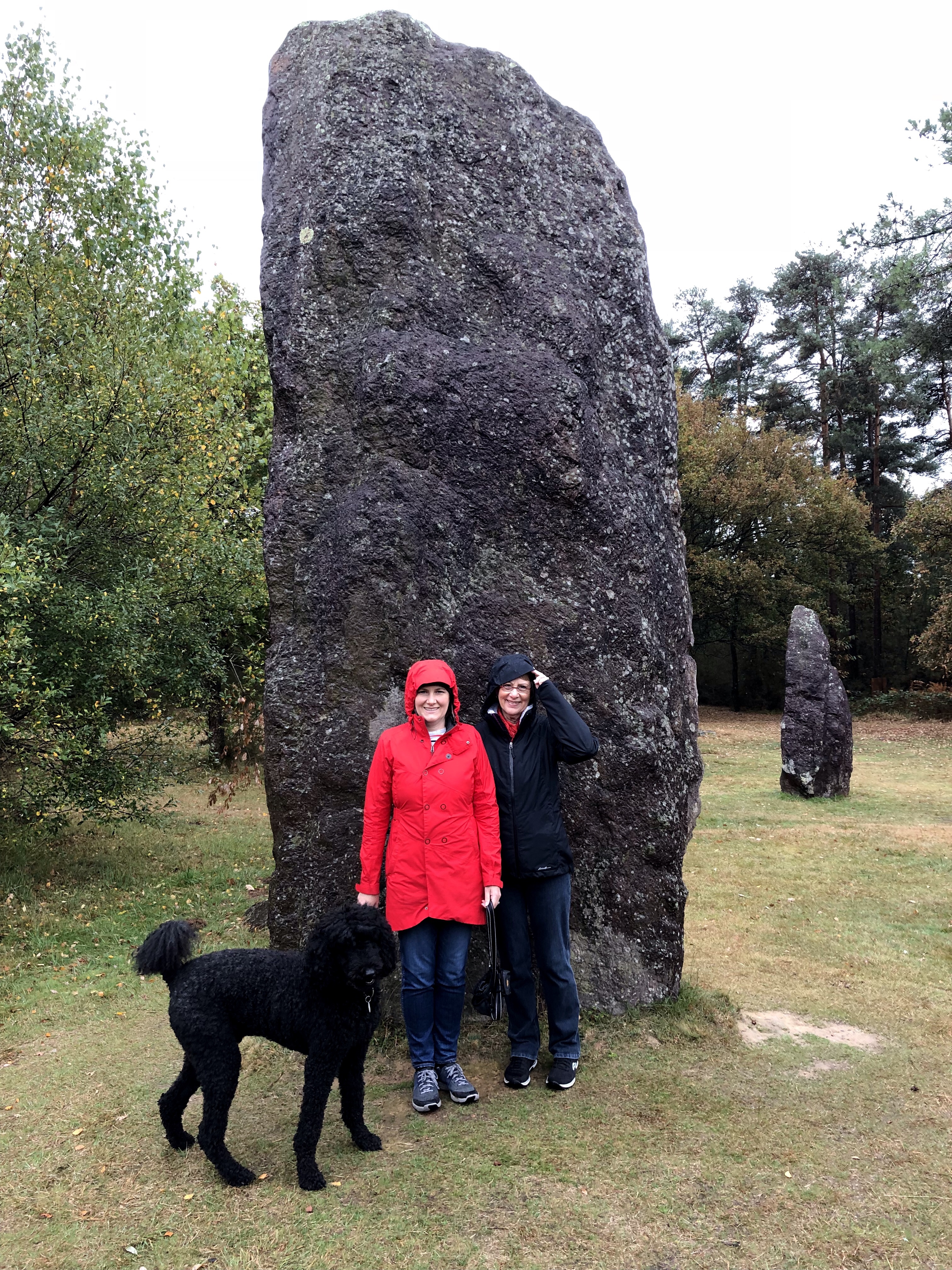
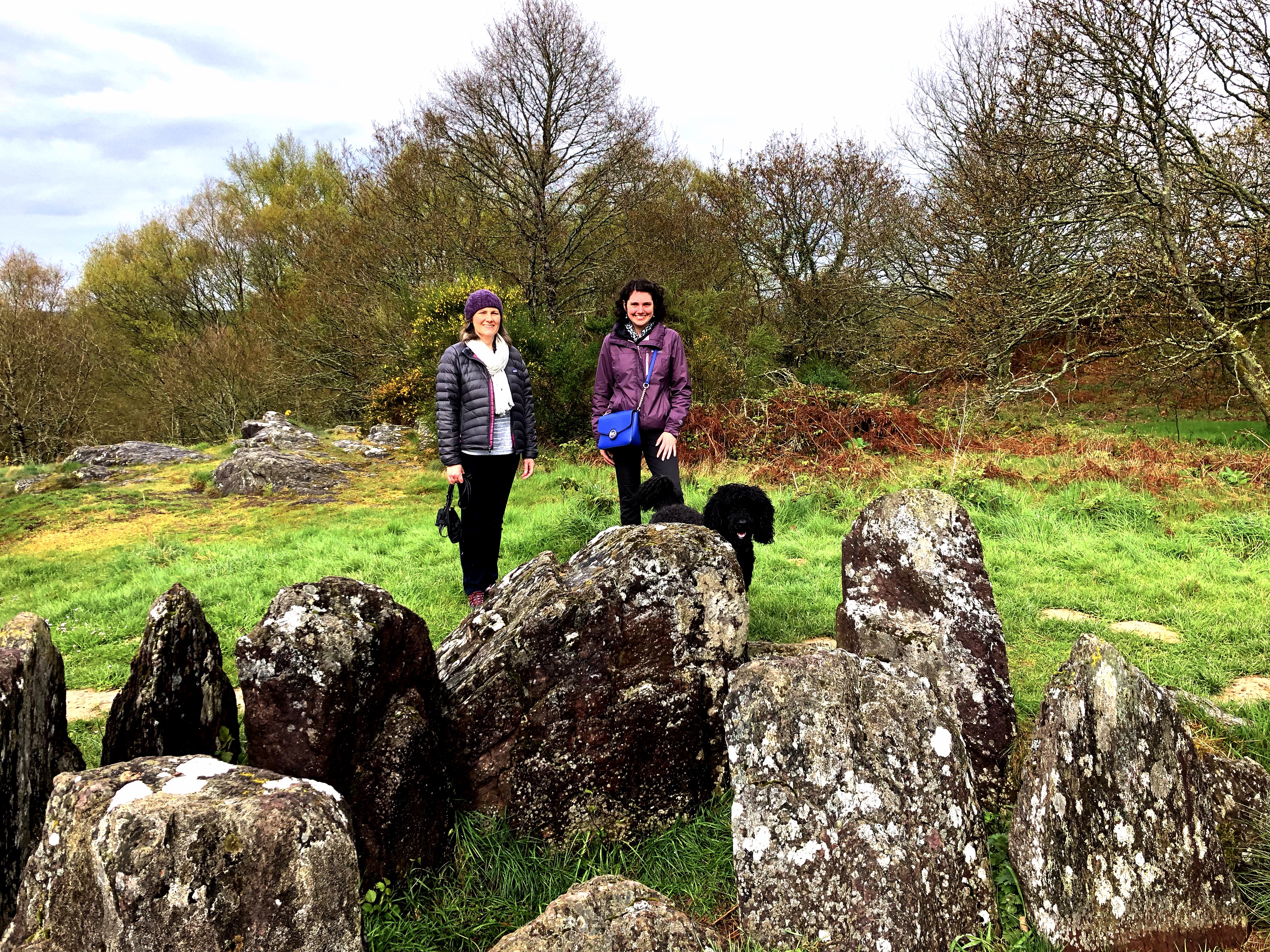
Cherie, Her Mother Valerie, and Saxon Amongst the Megaliths of Monteneuf

It’s not only quaint towns, grand châteaux, and serene countryside to be found in the Val d’Oust. There is a great deal of history here as well. Some of it factual, some of it fanciful. Just a short drive to the northeast are the woods near Monteneuf which conceal an impressive group of prehistoric megaliths. These huge stones were erected during Bronze Age by the inhabitants who had switched from hunting and gathering to an agricultural society. This settled existence allowed them the time to develop more sophisticated culture and even erect monumental structures such as these stones. Later, during the Middle Ages, many of the stones were pulled down, being feared as diabolical or beacons of dark magic. Today, this area has been protected as an historical site. Free to the public, it’s a very nice park where much research and experimental archeology occurs.

Cherie, Niece Jessica and, of course, Saxon Viewing the “House of Vivianne”

Further northeast is the forest of Brocéliande, a place filled with the magic of Arthurian legends. Bretagne has its own Arthurian history which is quite ancient. According to these stories, many of the events surrounding Arthur and his knights occurred in this craggy woodland, the only remaining remnant of a once vast forest which stretched across the entire spine of the peninsula. The area is beautiful and very enigmatic with lots of lovely hiking trails. Once such place is the Val Sans Retour, the Valley of No Return. Reputed to have been the magical haunt of Morgan le Fay this valley was enchanted by the sorceress to entrap knights. Cherie and I, along with her niece Jessica, spent an invigorating (if not but a little soggy) afternoon hiking our way through this dread valley of craggy outcrops, oaks and beeches, faerie lakes and and ensorcelled streams. Making our way to the top of a lofty hill we came upon a circle of rocks that is said to have been the house of Vivianne, the Lady of the Lake who, in one telling, bestowed Excalibur upon Arthur. In Monty Python and the Holy Grail she is referred to as a “watery tart” with the acute observation that:

Strange women lying in ponds distributing swords is no basis for a system of government. Supreme executive power derives from a mandate from the masses, no some farcical aquatic ceremony.”

In the current political climate, I’m beginning to wonder if forming a government in a large puddle in a forest in Brittany couldn’t be more ridiculous than what we see in many countries right now. But I digress…

Regardless of how seriously one takes these legends, the journey is worth it and just one more example of how rich and varied Malestroit and its environs is. And the people here are just as lovely. So welcoming and friendly. We’ve made many friendships which we know will endure long after our move to Fougères. We love it here and we’re so glad we have had the good fortune to immerse ourselves in this wonderful, magical place over the past several months. A perfect place to begin our lives in France!

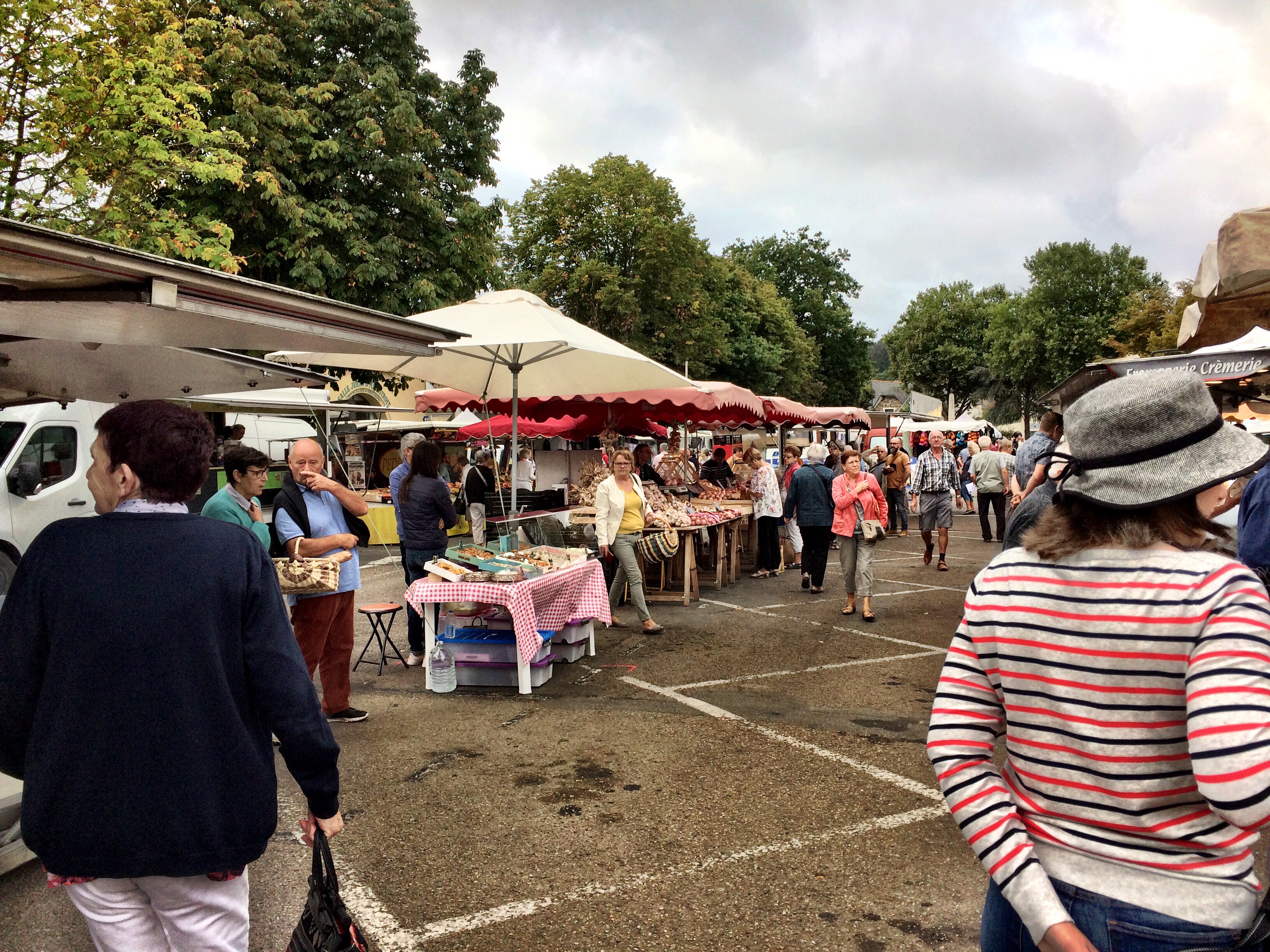
Thursday Market, Malestroit