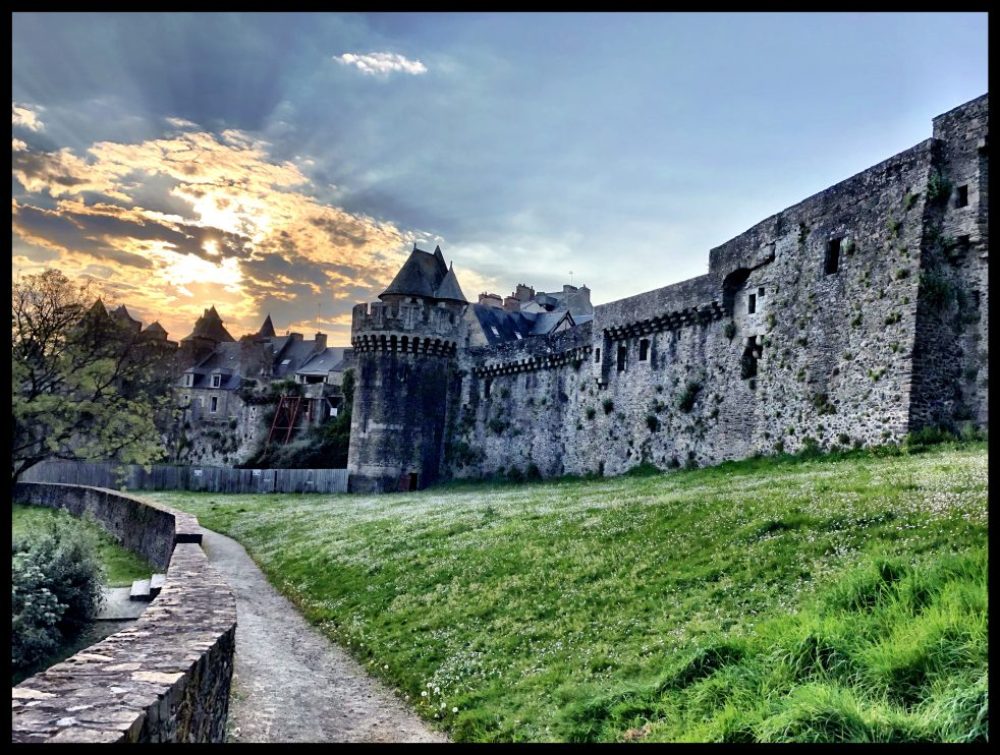
A Walk Through History in Côtes d’Armor

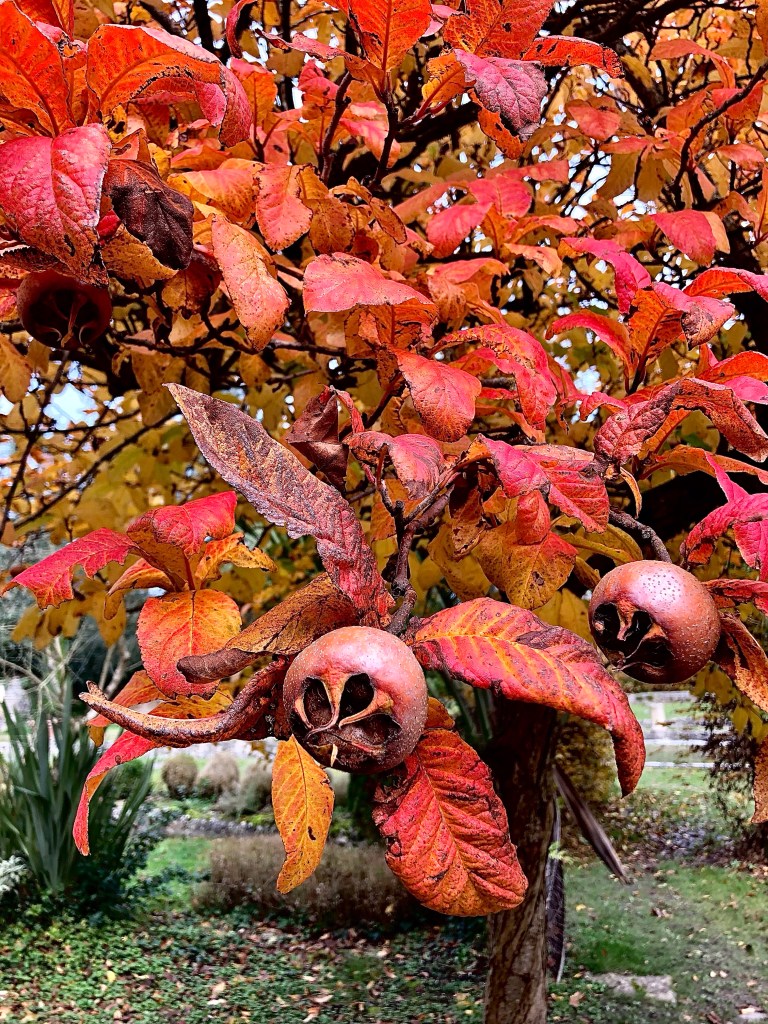
Autumn Bounty – A Medlar Tree Amongst the Roman Ruins of Corseul

We are in the depths of Autumn now. It’s often quite stormy. I’m cold all of the time – the French have a particular word for this: frileux – and I’m wishing our chimney was in good repair so that we could have a cozy fire. Yet another repair project for the future.

Nevertheless, this time of year has its attractions. Bretagne is a land dominated by deciduous trees, the gold and red hues of their waning leaves making for a very colorful season. The view from our elevated perch in the tower over the park allows us to watch the grand carpet of shrubs and trees laid out below us as it gradually shifts tones from day to day.

Cherie and I try to maintain our quest to visit as many local sites of interest as possible. But it is decidedly more of a challenge to do so during the off-season. Many, if not most, privately-held attractions in France tend to close from October through April. Doors are shut, shutters are closed and gates are locked to visitors for months on end. So, we look for the sites which remain accessible.
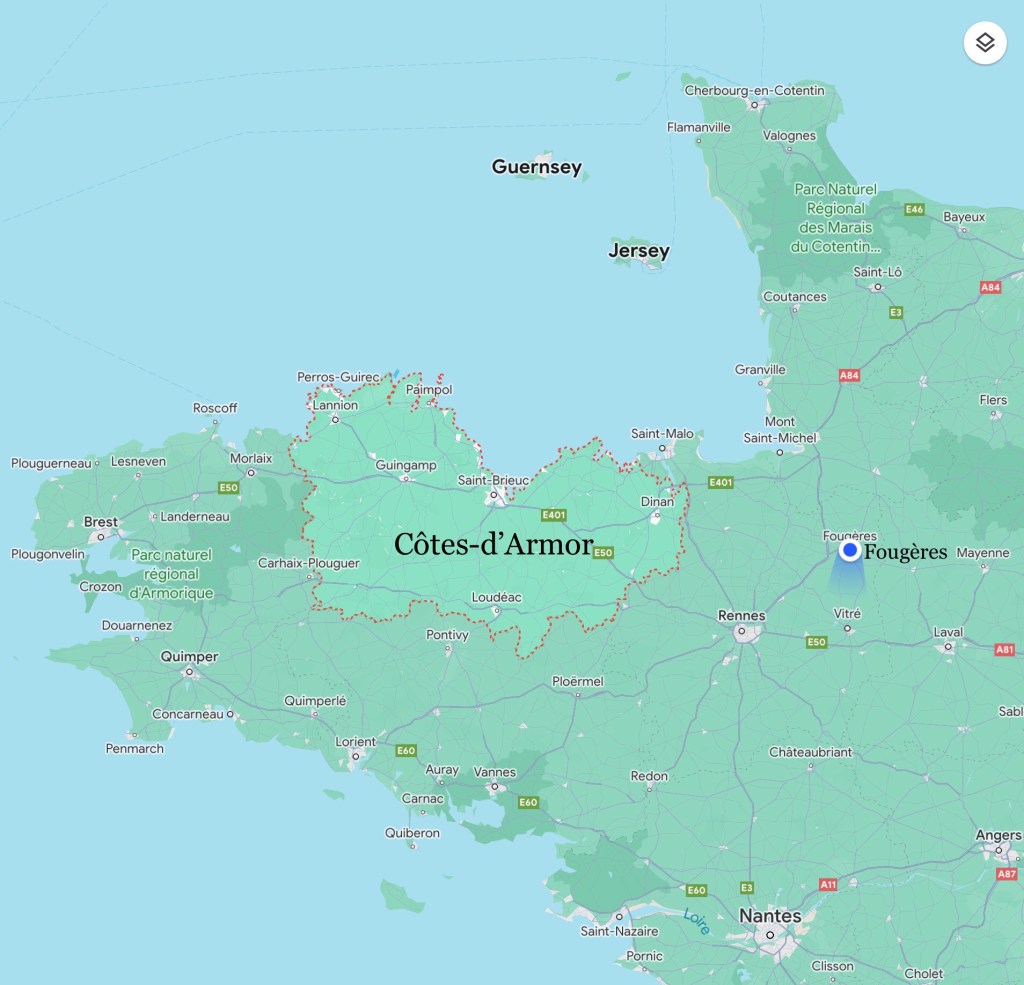
The Département of Côtes-d’Armor with Fougères to the East

This week we ventured westward into the heart of Bretagne, in the département of Côtes d’Armor. With the exception of Dinan, we haven’t really explored this part of the region. When searching for a house in 2018, we made some brief sojourns to Tréguier, La Roche-Derrien and Pontrieux, but we never did much in the way of sightseeing. It’s a lovely part of the peninsula with lots of green, rolling countryside and rocky coastline looking northward to England across the Channel.
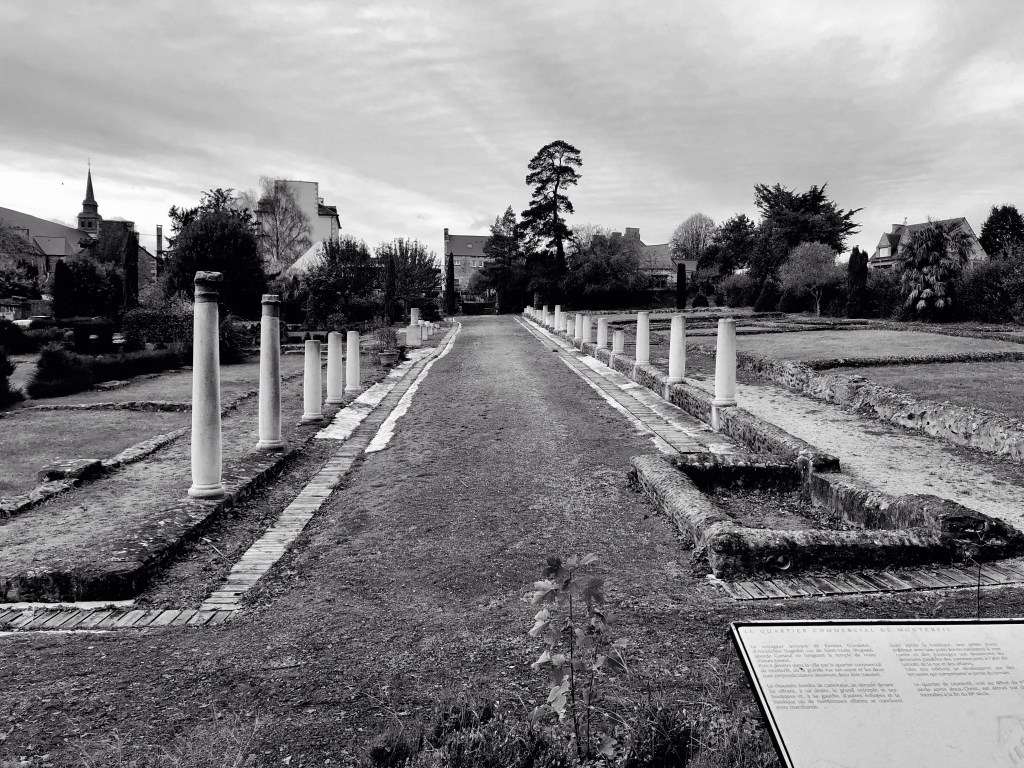
A Swanky Street in Gallo-Roman Corsiolitum

Not too far west (11 kilometers) of Dinan is the village of Corseul. A village which has the good fortune to sit upon the ruins of a Gallo-Roman town. Dating from the 1st century, Corsiolitum, as it was known then, was the capital of the Coriosolites – the local gallic tribe who so kindly agreed to be overrun and absorbed into the Roman Empire. In return they ended up with the latest in Italian urban design, complete with paved streets, underfloor heating and shopping.

Shards of Lost Civilization

The ruins in Corseul are subtle. One can walk down a short section of streetscape marked by the remains of townhouse and warehouse foundations. Well-posted interpretive signs help visitors to imagine the scene as it may have been as a bustling hub. Extensively excavated in the 1980’s and 1990’s, the remains have been tidied up quite a bit. This includes what appeared to us as the imposition of cement copies of architectural elements such as rows of columns, textured and broken. A problematic practice which is, thankfully, rarely employed.
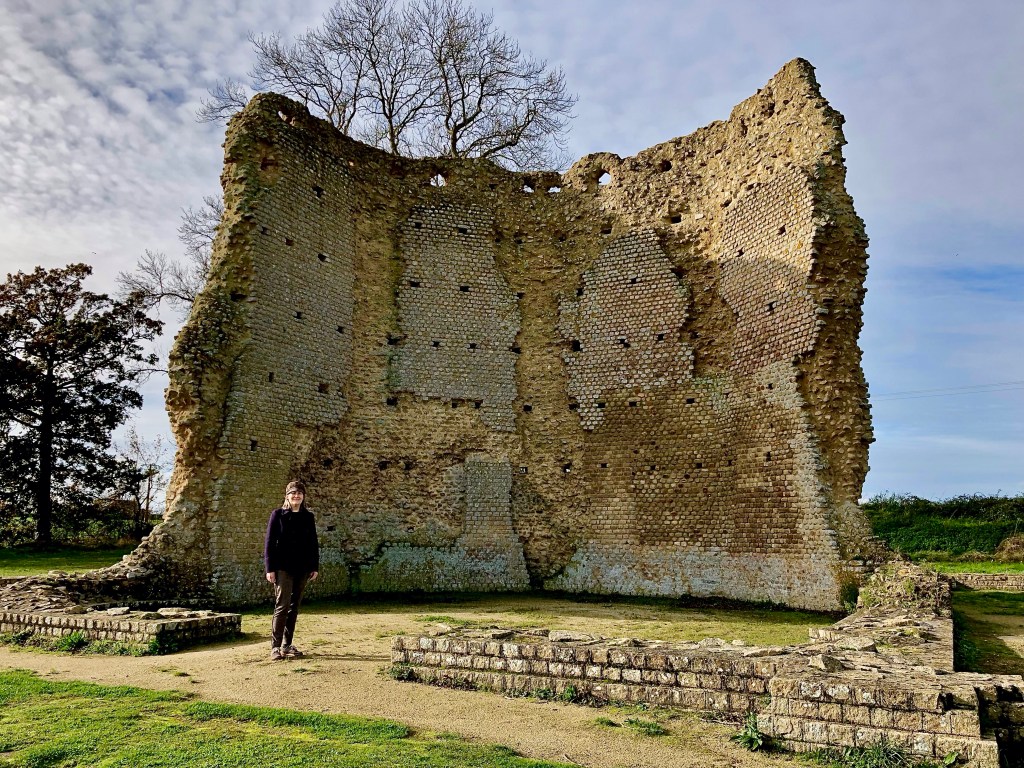
Move Over, Mars, There’s a New Goddess in the Temple

Just outside of town is the site of a Gallo-Roman temple complex: the Temple of Mars. It is a remarkable site with the remains of a roman tower standing tall like a sentinel above the foundations of a complex of walkways gateways and ancillary structures. Constructed in the first century, its primary purpose was dedicated to the worship of the god Mars. But there was also a smaller temple for veneration of the emperor. The builders also saw fit to include a separate entrance to the complex for the wealthy elite. Some things never change.

Reconstruction of the Temple of Mars

One of the interpretive signs in Corseul noted what we thought was another roman site to the other side of town. Following a narrow rural road up into the hills, we ended up at a wide spot near a dead end marked “parking”. Somewhere, down a dirt drive, was an historic monument. At least that was where the vague sign pointed to. Shrugging our shoulders, we parked and trudged along a lonely track through an oak wood. It was only five minutes later when we sidled up to the remains of a medieval castle. Hmnnn … not quite what we were expecting. But a pleasant surprise nonetheless.
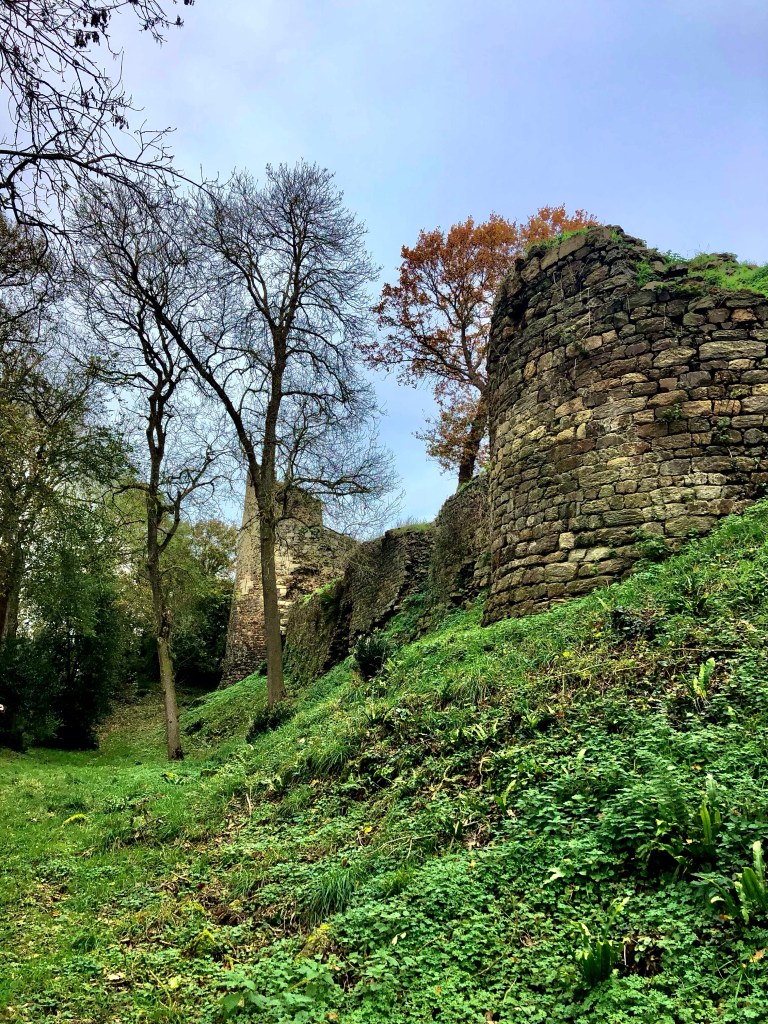
A Castle in the Wilderness

The château-fort of Montafilant was built in the 12th century. It remained in use until the end of the 15th century when it was abandoned. After that, its structures served as farm sheds and its ramparts as a handy quarry for stone by local inhabitants. Amazingly, there is still a substantial portion of walls and towers remaining. Enough to see that this was a considerable fortress. It rests on a promontory above two steep-sided valleys. Montafilant is a no-frills monument. Quite the opposite of the ruins back in town, this castle is raw. No effort has been spared to present this edifice as anything but what you see. All the better for it in my opinion. For those willing to do a bit of exploring, this castle is worth the time and effort. If you go, make sure to continue along the outside of the wall – you will find a large corner tower and a further rampart with a dry moat around the other side.

Léhon’s Medieval Bridge with the Abbey in the Background

Our final stop for the day was the village of Léhon. Now it is, effectively, a suburb on the south side of Dinan. But it originally grew up around an independent abbey and castle along the banks of the Rance river. This Petite Cité de Caractère’s most picturesque area is the bourg surrounding the medieval abbey, overlooked by the castle ruins on the escarpment above. We enjoyed a nice afternoon stroll through the compact bourg, over its lovely medieval stone bridge and along the river to the canal lock and back. It didn’t take long. The bourg is quite small. Especially since the abbey was closed for the season. We plan to come back sometime when it’s open to visitors.
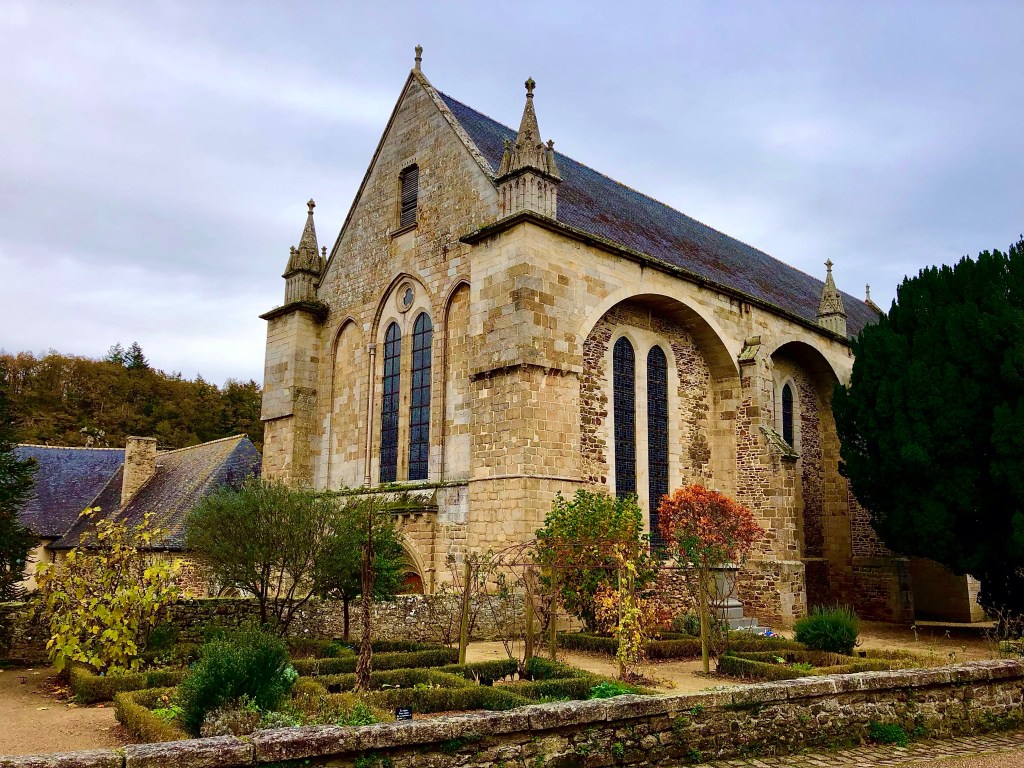
L”Abbaye Saint-Magloire

All in all, we passed an enjoyable day of visits and got to know this part of Bretagne a little bit better. We witnessed 2,000 years of history in the span of an afternoon. Not bad for a day’s work!

Lock and Lock Keeper’s House on the Canal North of Léhon

Ducking Underground – les Grottes de Saulges

Now THAT’s an Old House! – Rochefort Cave

Le printemps (spring) is in full swing. Lashings of rain are broken by days of limpid blue skies and freshening sunshine. The first flowers have already come and gone and most of the trees are already robed in this year’s new line of greenery. So what better way is there than to celebrate this rejuvenating season than to crawl into a hole in the french countryside. Bien sûr.

Where’s Her Work Visa? – Valerie in Her Element

Cherie’s mother, Valerie, has come to visit us once again. We therefore put her right to work. As you do. In our defense, she asked for it. Seriously, she literally asked us what she could do to help out. Our work on fixing up an old apartment and turning it into a holiday rental continues. And that kind of work is right up Val’s alley. She loves it. Don’t ask me why. But we’re not ones to look a gift mother/mother-in-law in the mouth so we gratefully let her loose on the place. With her help, we’ve accomplished quite a bit. So much so that we are fast approaching completion. Thanks, Val!

Our Happy Place!

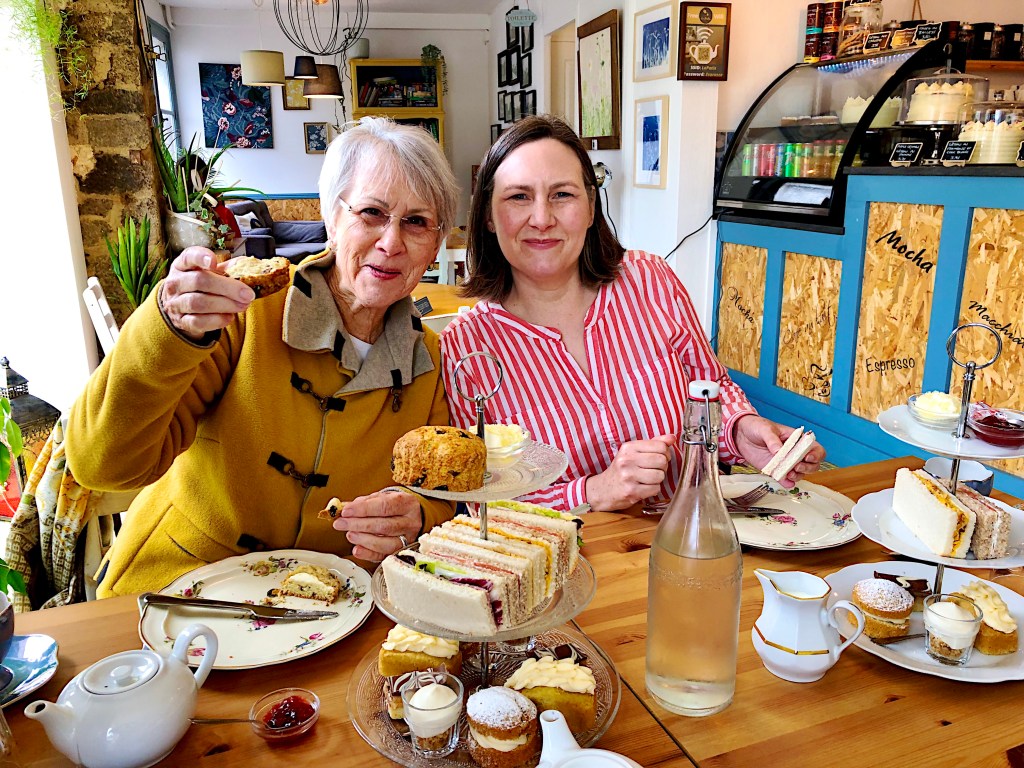
Valerie has been laser-focused on renovating the apartment. But Cherie and I finally had to cry for mercy. We needed a break. So we have been taking a day off, here and there, to reenergize ourselves. And what better way to recharge than an afternoon tea? We returned to le Patis in Landivy [see our recent post here] for the full Monty: buckets of tea, sandwiches (without the crust, of course), scones with cream and jam, and scrumptious little cakes. It was so good, but so filling I swore off any more food for the rest of the day.

Wisteria Doorway: Sainte-Suzanne

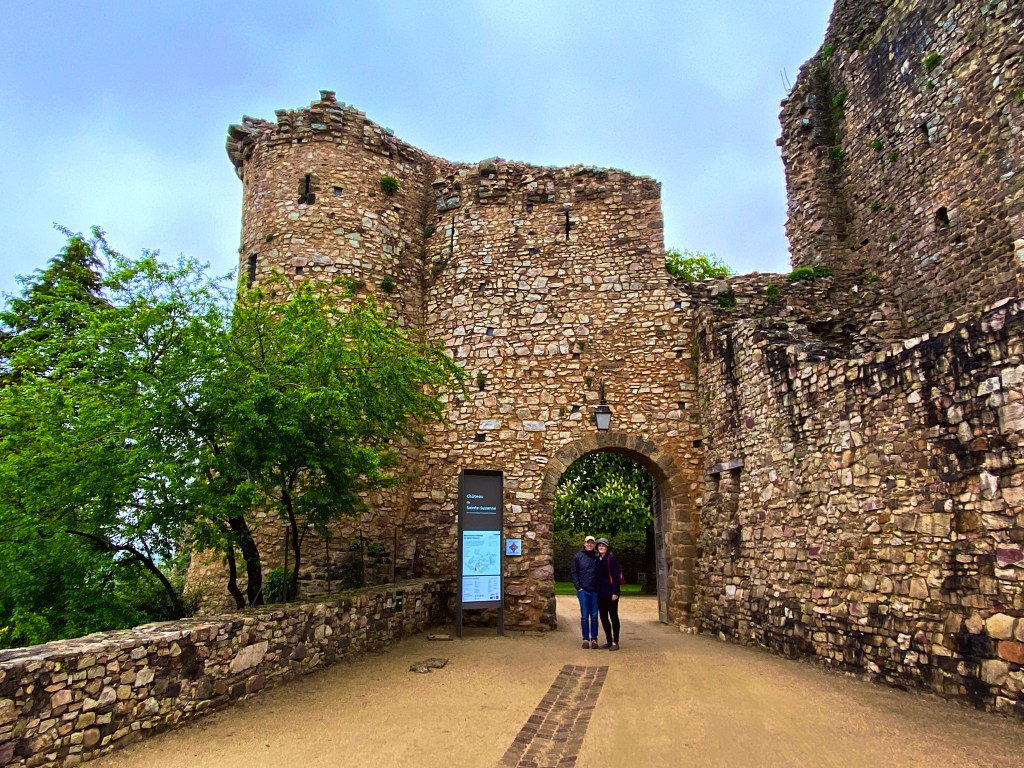
Our next break was more ambitious. Hoping for no rain, we travelled east to the beautiful lands of Mayenne and the town of St. Suzanne (about which I wrote in more detail in our post here). As you know, we love this little town. And it didn’t disappoint this time either. The weather was lovely and the ville was impossibly picturesque as we wandered its worn cobbled streets, explored the ruins of the Norman keep, and meandered the path encircling its ancient ramparts amidst wildflowers humming with bumblebees and tiny lizards sunbathing on the honey-colored stone walls. Sublime.

Valley of the Caves

Moving on from Sainte-Suzanne, we made our way southward to a rocky gorge near the village of Saulges, about halfway between the large towns of Laval and Le Mans. There, in the cliff faces of the gorge, sit several caves (or, grottes, as they are known in French). A few of these grottes have been utilized by hominids (homo sapiens and, probably, homo neanderthalensis) for at least 29,000 years.

Are they Judging Me? – Artifacts in the Musée Préhistoire

In this gorge on the river Erve is a ticket office and small museum which houses a nicely-displayed collection of prehistoric artifacts. It was interesting to have a close view of the various stone and bone tools used by the early humans who lived here, as well as their items of adornment (beads, pendants, etc) and other bits of evidence of habitation in this valley. It’s with recurring astonishment when I’m reminded that these people lived alongside rhinoceroses, leopards, and mammoths. How different the landscape must have been!

Trail Along the Banks of the Evre

There is a restaurant next to the museum, so one can plan on having a meal here. We had already eaten lunch in Sainte-Suzanne so we didn’t try it. Lots of picnic tables throughout the valley as well – great places to enjoy a leisurely lunch or snack in a peaceful and beautiful setting. There are also a few hiking trails.

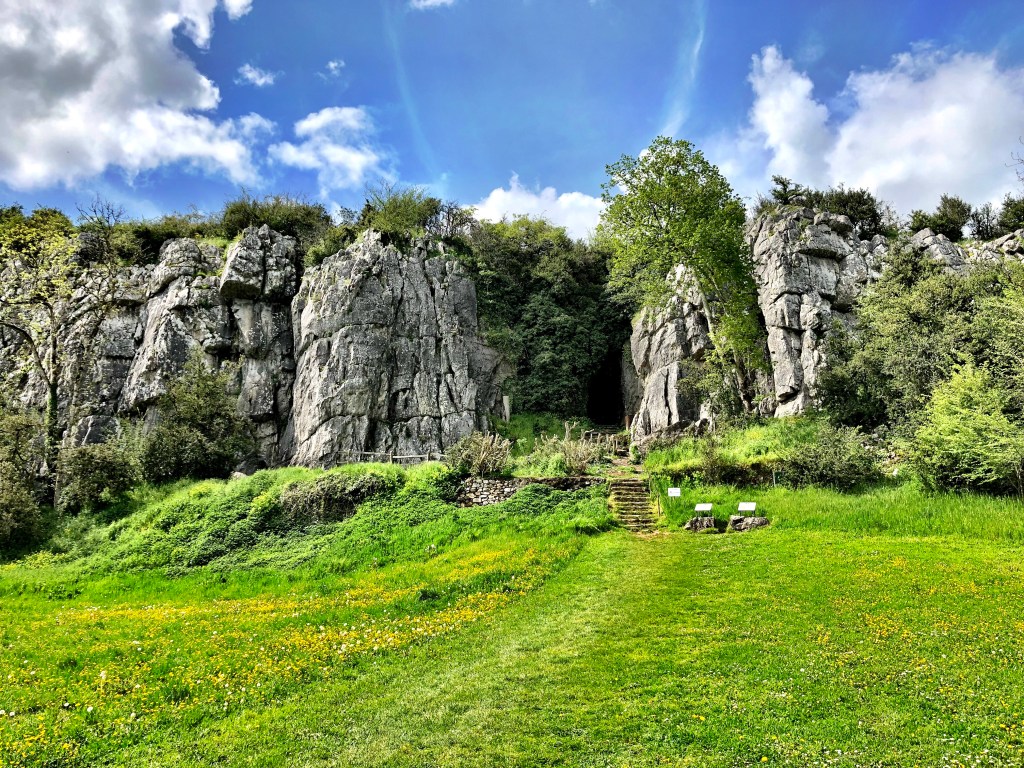
Cherie and Val at the Entrance to Margot’s Cave

But the stars of the show are definitely the cave tours. Two caves (Margot and Rochefort) can be visited. These guided tours can be reserved online or at the ticket desk in the museum. Unfortunately, we only had time to visit one cave (Margot), but it was well worth it. With a small group our knowledgeable guide took us through the ancient, water-worn openings of the cave system, giving us an informative overview of the grotte’s geology and history of human habitation. She pointed out four gravures (figures scratched into the calcified layer covering the limestone) on the walls, rendered by the hands of humans who used these caverns many thousands of years ago. A wonderment to behold. Witnessing these representations forms such a profound visual connection between us and our ancestors – from their eyes to ours across the millennia. It really makes you think. Which is a good thing, in my opinion. There’s far too little of it these days. Thinking, that is.

Can You Spot the Rhinoceros? – Prehistoric Gravure

Something you should know if you’re considering a visit to the Grottes de Saulges: the cave tours are not a walk in the park. If you are a practicing contortionist, then this is right up your alley. But for those of you who find bending and crouching difficult or painful, this might not be the way you want to spend an hour underground. Try the subway instead. Sturdy shoes are highly recommended and avoid wearing white – it’s wet and muddy. You are not allowed to touch any part of the cave surface in order to protect the gravures and rock formations as well as minimize the introduction of pathogens to the several species of bats which winter there.

The Living Rock

[N.B. Photos are strictly forbidden inside the caves. Those included in this blog are from their website.]

The ceilings of the passages are sometimes low and irregular too. At one point we had to shuffle through a small opening with a muddy puddle directly underneath it while bending over nearly double. Kind of a reverse limbo, but without the tiki torches and Caribbean music. I’m happy to report that the three of us traversed all obstacles well, but there were a few in our group who struggled a bit. Consider yourself, intrepid adventurer, forewarned.

We emerged from Margot’s cave more thoughtful, enriched, and grateful to see the open sky above us. It had been an altogether good day. Lucky, lucky us. We try to be mindful that our ability to immerse ourselves in beautiful and historic towns, grand estates, mighty castles, dramatic countrysides, vibrant cities and, yes, even dank and dark prehistoric caves, is a true privilege. Something that far too few people ever get the chance to experience. We hope that, in sharing our journeys through our blog, we can spread the joy just that little bit further. Thanks for reading and stick with us for more humble little adventures in France. Take care!

Before the Gateway of Château Sainte-Suzanne

Jublains – From Rome to Ruins

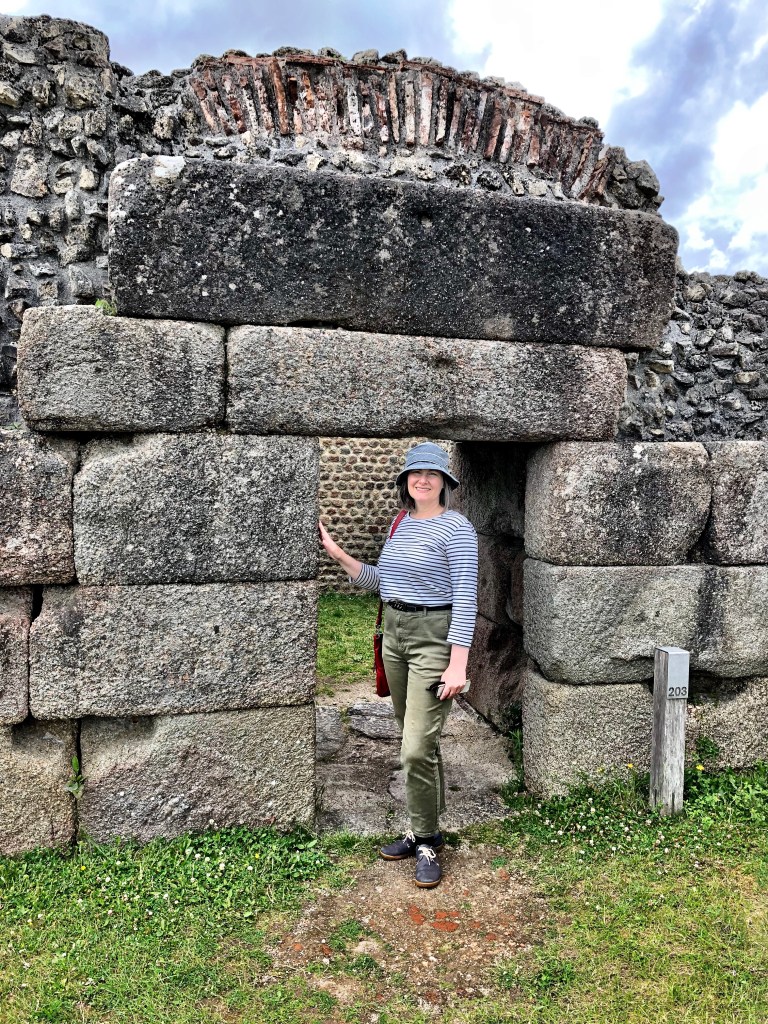
A Gem Amongst the Stones – Cherie in the Roman Fortress of Jublains

I hope you’ll agree. The Romans accomplished some pretty amazing things. As a whole, they weren’t the kind of people to lay in hammocks, drink iced tea, and wait sleepily for dinner time to roll around. Nope, they had energy to burn: aqueducts to build, peoples to conquer, orgies to, er, organize. Multifaceted, they were – probably more mult-y and more facet-y than any other culture to ever stomp their way around this planet at any time in history. So much so that they left a lot of their stuff behind. Just laying around.

Bathroom Envy – Heated Walls in the Fortress Baths.

Of course, the Roman stuff was so good, that anyone who came after them preferred to bury it. I mean, who wants to have to live up to those show-offs, eh? Better to just cover up their pretentious under-floor heating and get on with slapping up your mud walled hut where you, the wife, your twelve kids, the sheep, the cows and the pigs can all huddle together for warmth. And thank goodness they did. Because now we get to dig it all up and learn how this scrappy group from the Italian peninsula developed such a remarkably sophisticated material culture. One from which we still benefit today.

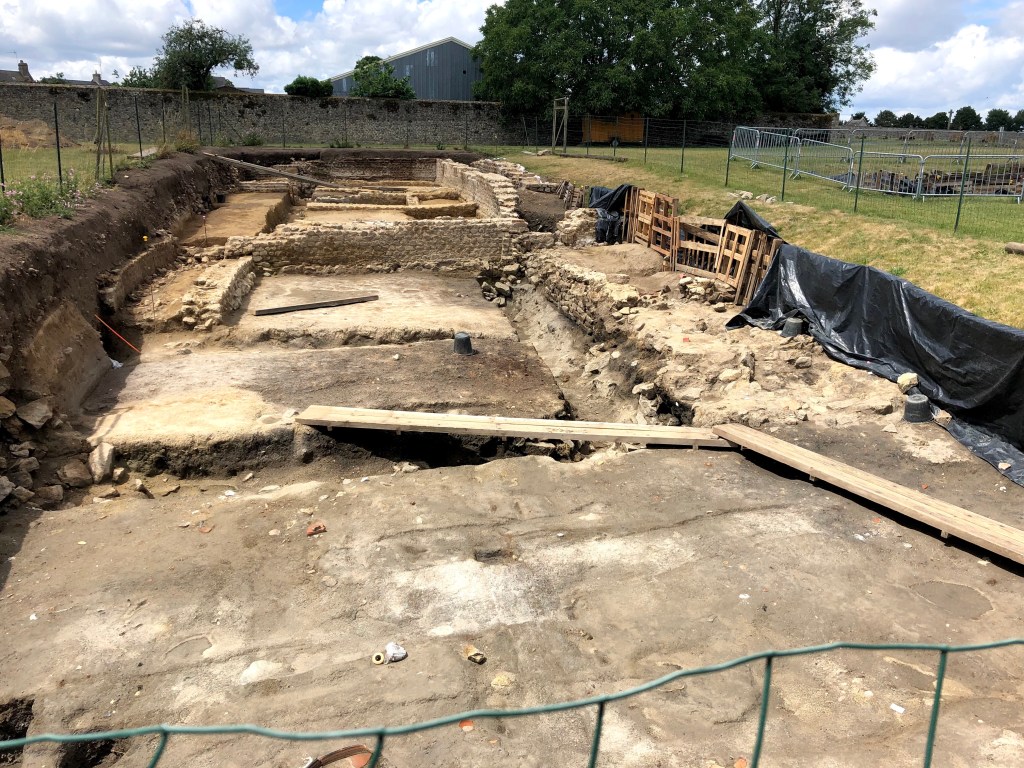
Example of Excavations at Jublains

Cherie and I are fascinated by the ancient Romans and we jump at the chance to explore their history as often as possible. So when we happened to discover that there was a major site of Gallo-Roman ruins not too far away from our home, we carved out a day from our surprisingly busy retirement life schedule to go see them.

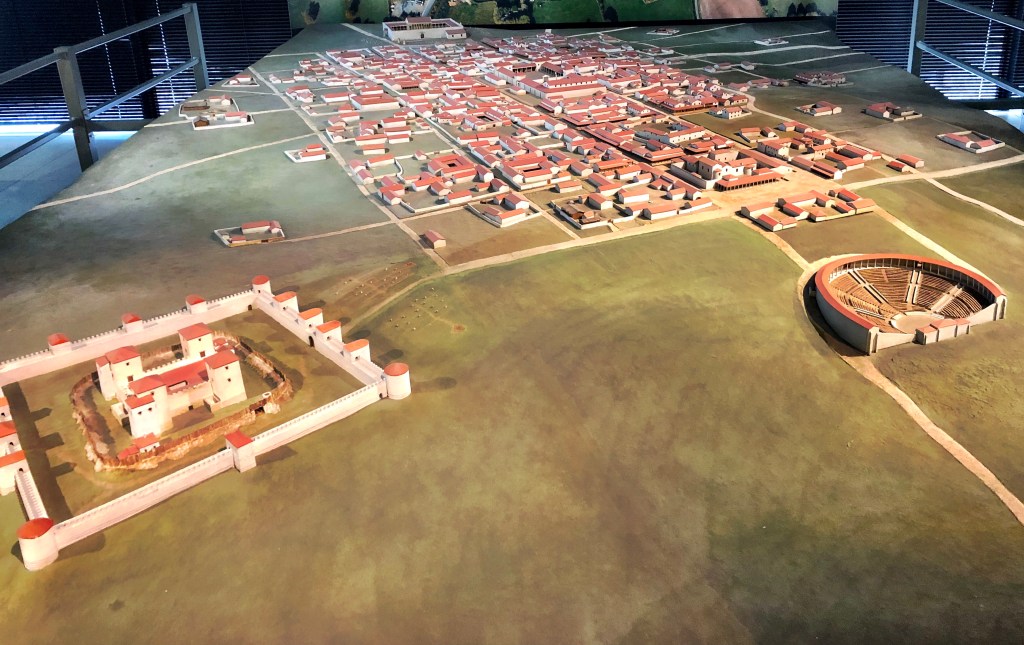
Model of Noviodunum With the Fortress and Theater in the Foreground

The ruins are part what was once an important Gallo-Roman town known as Noviodunum. They are now situated in the village of Jublains in Mayenne, Val de la Loire where the village and its partners have set aside and carefully maintained generous portions of land to allow visitors to view the extraordinary remains of the ancient town. The primary archeological remains in Jublains actually run from the Bronze Age through to the 4th century A.D. (or C.E., if you prefer).


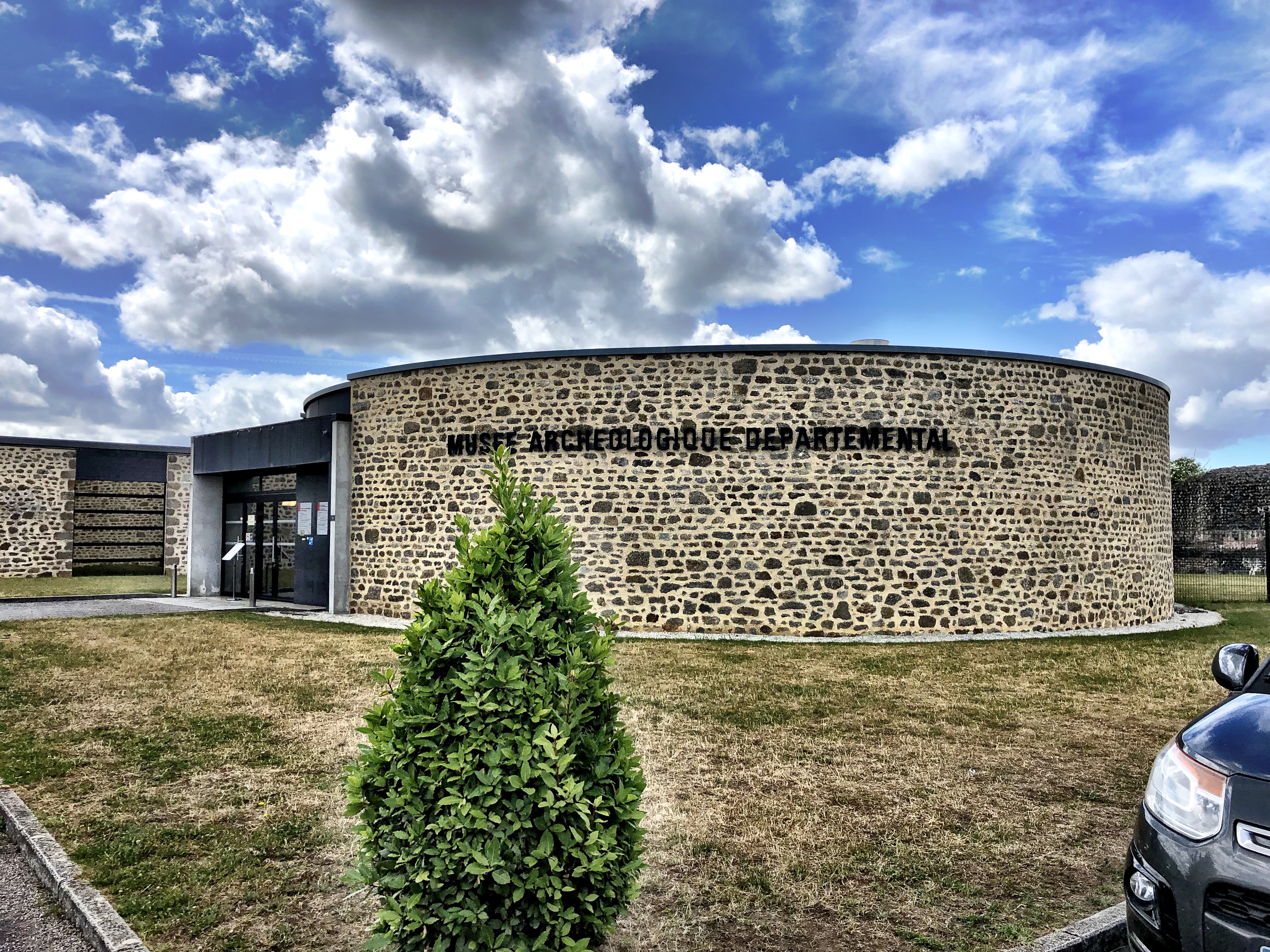
There is also an excellent museum filled with hundreds of fascinating artifacts. All of the displays, descriptive plaques and visual aids are well thought out and executed. Well-done, Jublains!

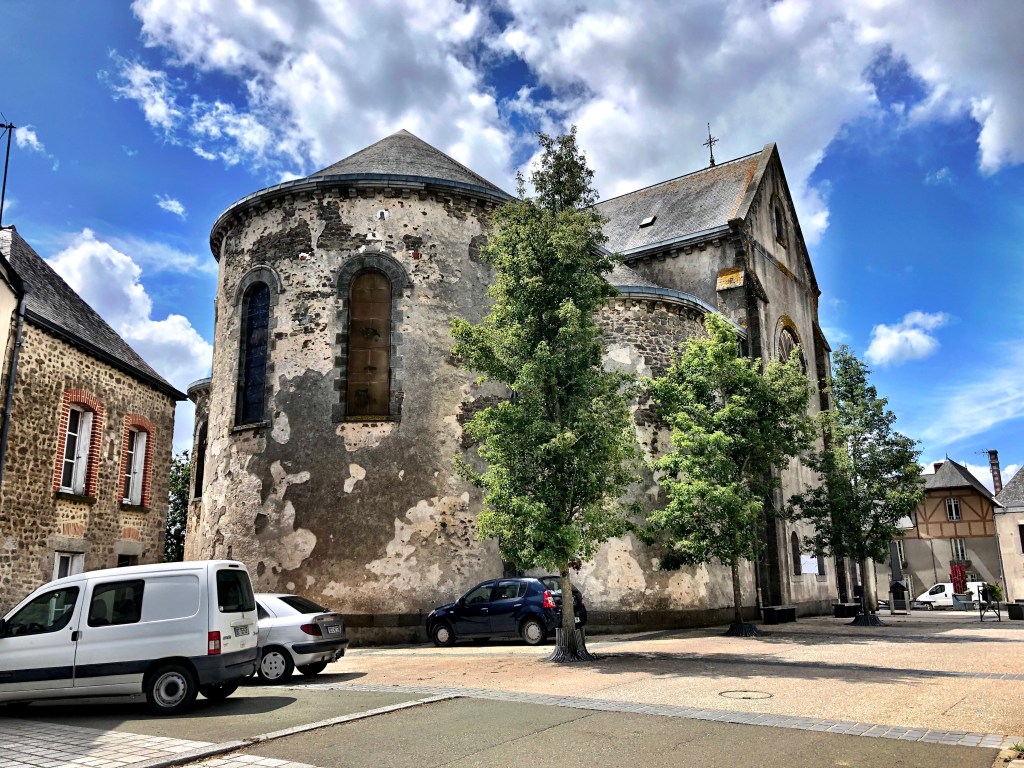
The Church With Roman Baths

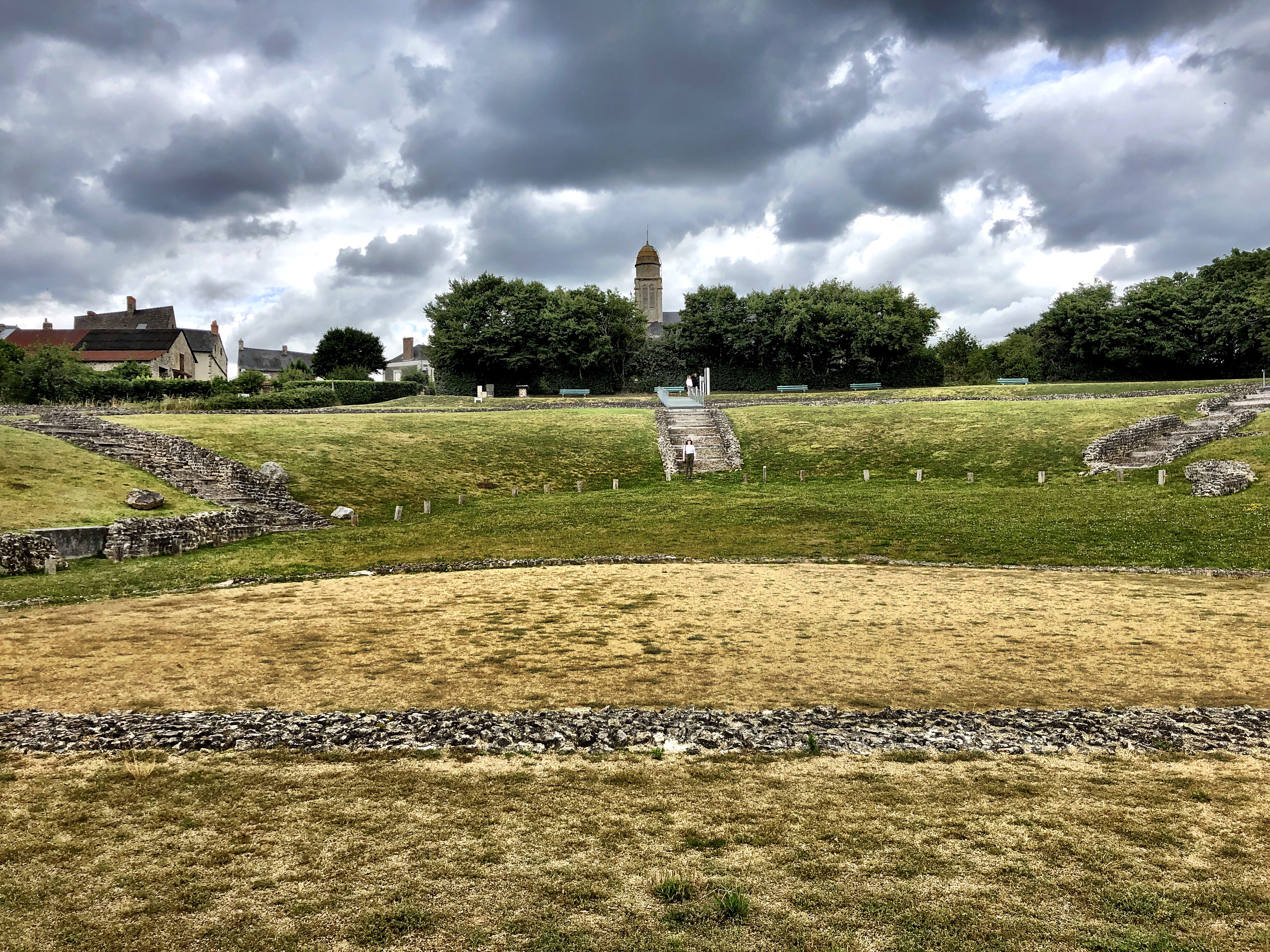
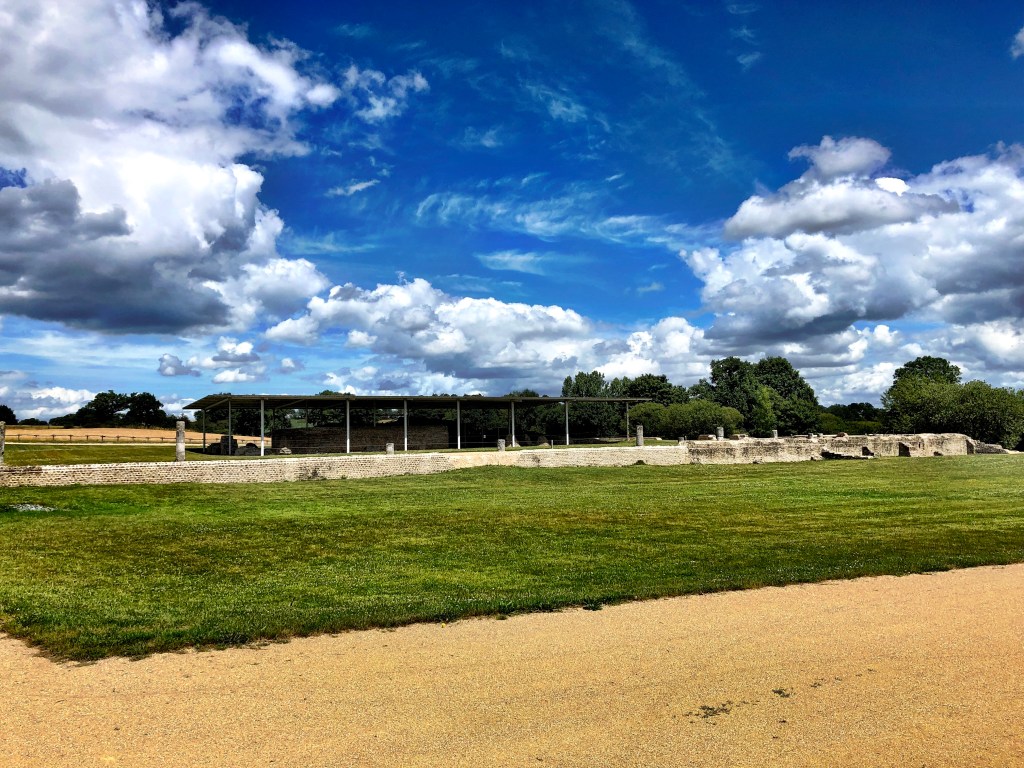
Highlights of our visit were the civic baths which were discovered underneath the chancel end of the village’s church, the vast temple complex on the edge of town, the legionary fortress, and the amphitheater. There is a lot to see and this entails a bit of walking to and fro. We got plenty of exercise in without realizing it. But the sites appear to be well set up for those with different mobility challenges. One can also drive and park quite close to most of the areas, so it seemed to us that accessibility was actually quite good.

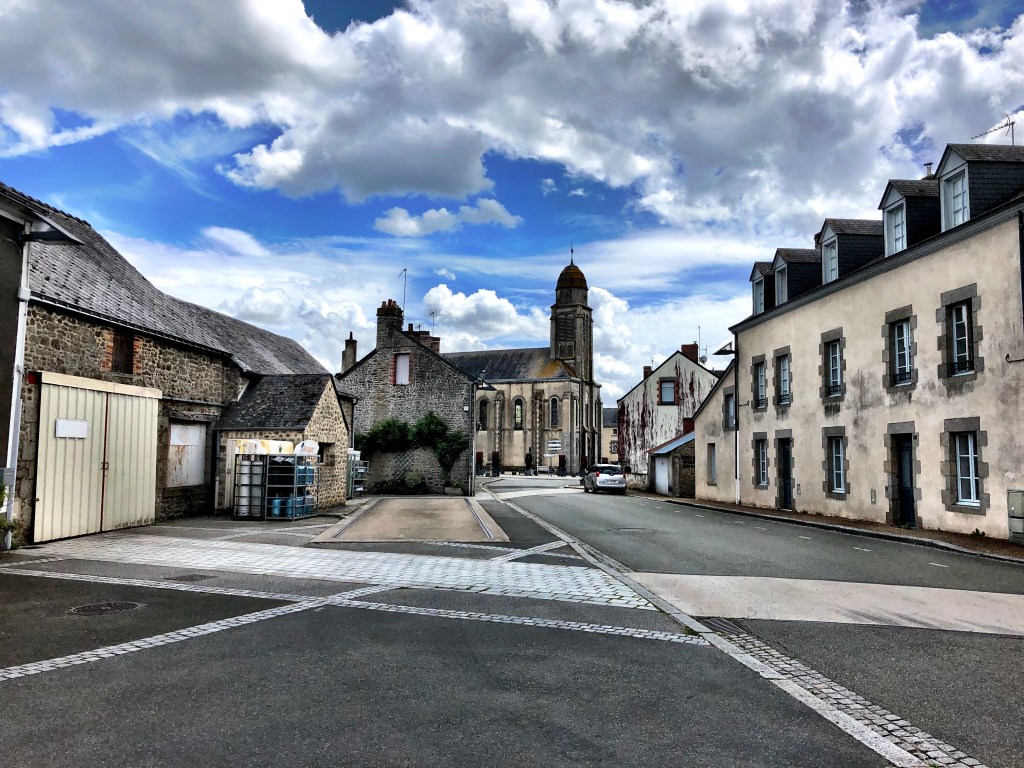
Ville de Jublains

Sadly, the village itself felt just a little bit in need of a boost. It is clear that Jublains is not what you would call buzzing. The museum and historic sites are the main – well, only – attractions. But, to be fair, we visited on a Sunday. Stupidly, we assumed that we would be able to get something to eat at lunchtime. The village does have restaurants and a boulangerie. However, none of them were open. Only a bar-tabac was serving. But only drinks. “Just up the street is pizza, though,” offered the server, helpfully. Trudging up the street we found the pizza restaurant. Closed. But sporting a hot pizza vending machine which is becoming so popular in the rural parts of France these days. Sigh! Well, we had to eat. So we consumed our robot pizza for lunch and carried on with the cultural enrichment.


If you take the time to visit Jublains, you will not be disappointed. Unless, of course, you aren’t interested in history, culture, and how we all fit in to the rich tapestry of life. In which case, I really can’t help you with your terminal Kardashian infatuation. But the rest of you beautiful and intelligent people will find what the people of Noviodunum left behind to be fascinating and thought-provoking. We had a fantastic time!

Remains of the Temple Complex
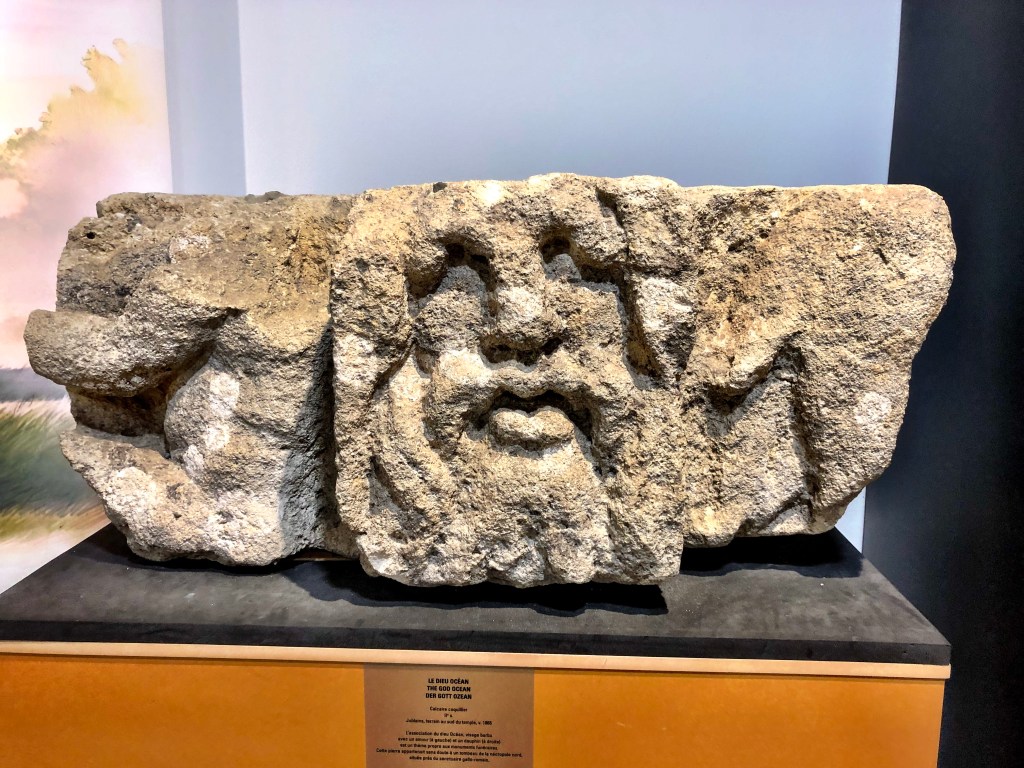
Carving From the Temple Area
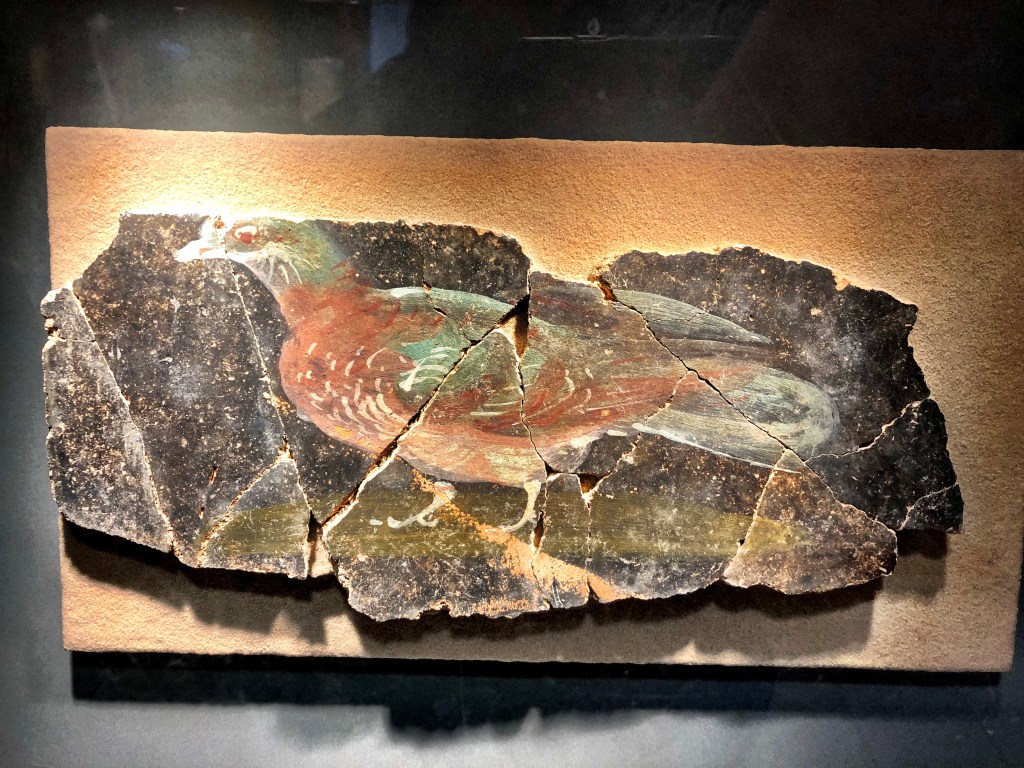
Decorated Roman Wall Plaster
Section of Defensive Wall From The Vast Roman Fortress