Holiday Horse Barns: a Christmas Market at the Lamballe National Stud Farm

A Stall Amongst the Stables

For some reason, Fougères does not host a Christmas market. We’d like to go to some of the big ones some day. But, for now, travelling farther afield is quite difficult for us. Our beloved dog, Saxon, is aging and he doesn’t travel well. We don’t wish to impose upon our friends and putting him in a kennel while we’re gone is simply out of the question. So, for the time being, we are focused on more local events.

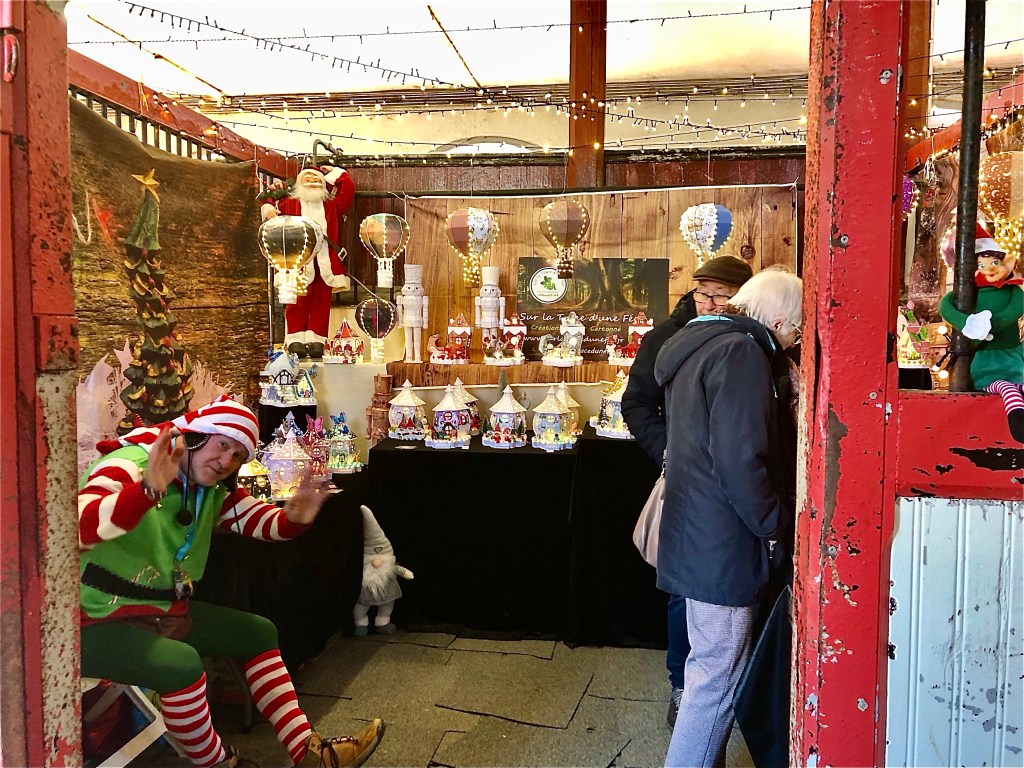
Elves Can Never Resist a Photo Bomb

Quite by chance I happened to discover that a Christmas market was being held at the Haras National (the national stud farm) in Lamballe. Silly me, I wasn’t even aware that there was a national stable in Bretagne at all. Plus, this was to be their inaugural holiday market. And, there was an equestrian show. Oh, man! I couldn’t wait to tell Cherie. She is mad about animals of all kinds. But she has a particular love for horses. As a young girl growing up in Washington State, she kept a horse and rode in many competitions (hunter-jumper, eventing, western). I only got half way into telling her about the market before she was already looking for tickets online.

Haras National de Lamballe: Luxury Flats for Some Lucky Horses!

The Haras National is located right in the middle of Lamballe, in the Côte d’Armor, about an hour-and-a-half drive west of us. We arrived around noon after following a series of tiny signs pointing us along a circuitous route through the back streets and suburban neighborhoods of the town – the kind of route taken by political dignitaries and rock stars when they’re trying to avoid notice.

Searching for Vin Chaud

It was a beautiful but cold day. It had been -3 degrees celsius when we awoke that morning, so we came prepared. Lots of layers. Waddling into the grounds, I made directly for the main attraction of my day: vin chaud. This French version of hot spiced wine is a favorite of mine. It’s the best part of the winter holidays and I never miss an opportunity to try out the local recipe.

It’s Better Than it Looks

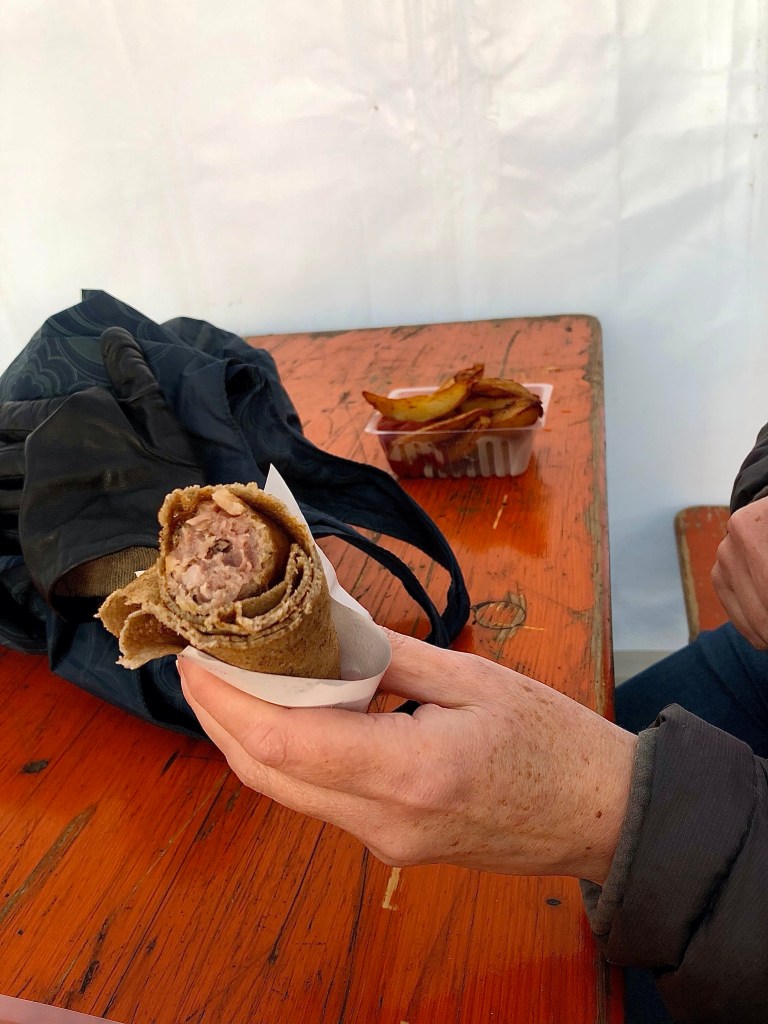
My aromatic, steamy wine cupped lovingly in my now-warm hands, we then could move on to that other most-cherished of Breton traditions: the communal outdoor consumption of galettes-saucisses et frites. The Bretons have never met weather foul enough which would prevent them from taking a meal outdoors. Preferably amongst the company of as many friends, family and complete strangers as possible. Welcome to my nightmare. To be fair, our sausages wrapped in thin buckwheat galettes were excellent, along with the roasted potato wedges. Maybe it was the cozy wine softening my hard heart, but I actually enjoyed our meal. In a freezing tent. With a few dozen strangers.

Commerce in the Stalls

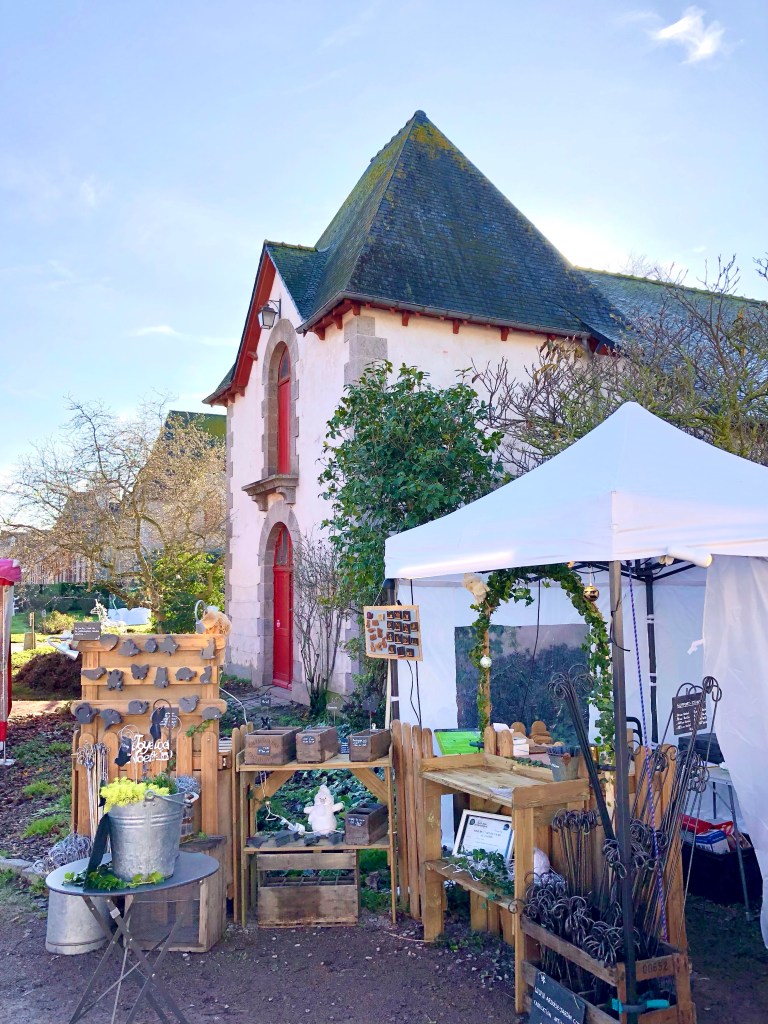
The market itself sprawled in and around several stable blocks. In a clever bit of planning, the vendors in the stable were housed in individual horse stalls. There were dozens of sellers and we enjoyed a good browse amongst the wide range of offerings. Predictably, we ended up buying edible things: local honey, cookies, etc. It was fun. Though we were surprised that, of all the variety on offer, very few items were related to the holidays. It was a Christmas market, after all. Still, the festive spirit of the event was clear and that was enough for us.


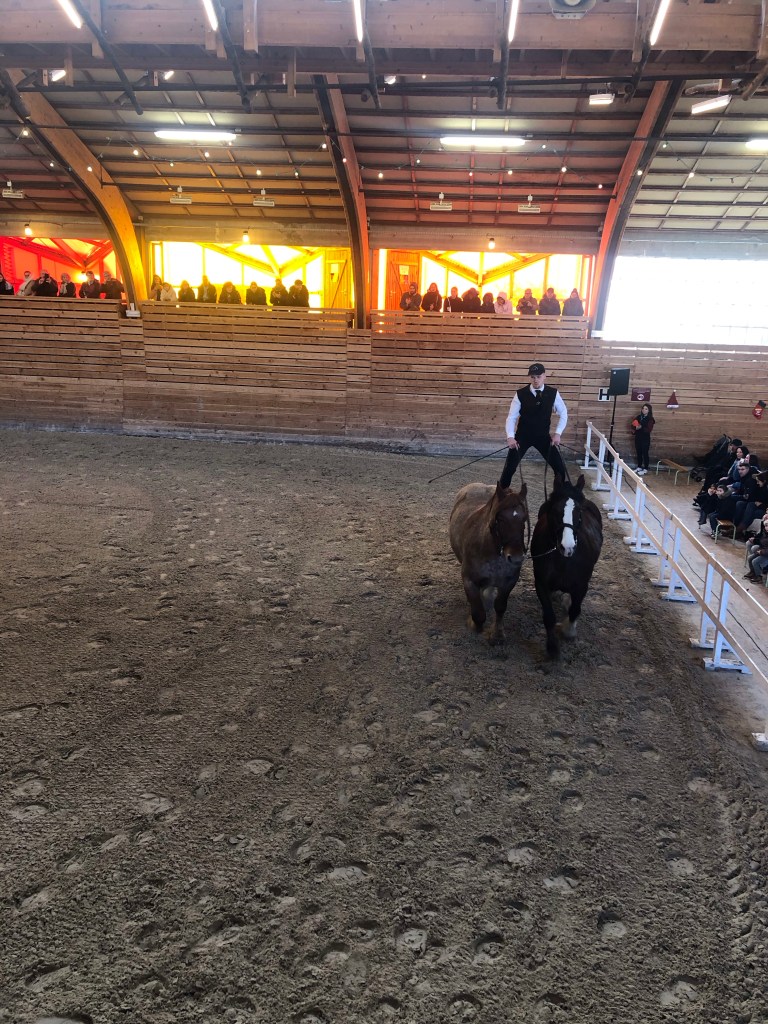
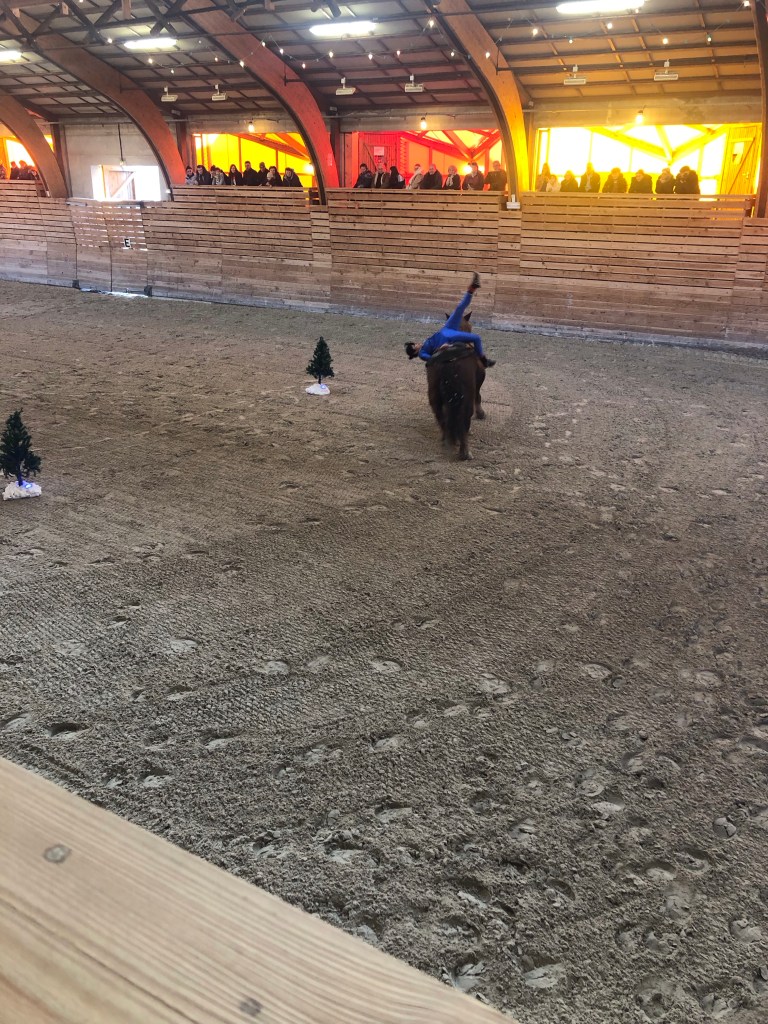
The pièce de résistance came at the end of our day: an equestrian demonstration. Cherie was able to book some excellent seats from which to view the show in a well-designed arena. We were fortunate to see some beautiful horses – some of them monstrously large – and witness some masterful riding and handling during the 30-minute event. Cherie didn’t stop smiling the entire time. Perfect!

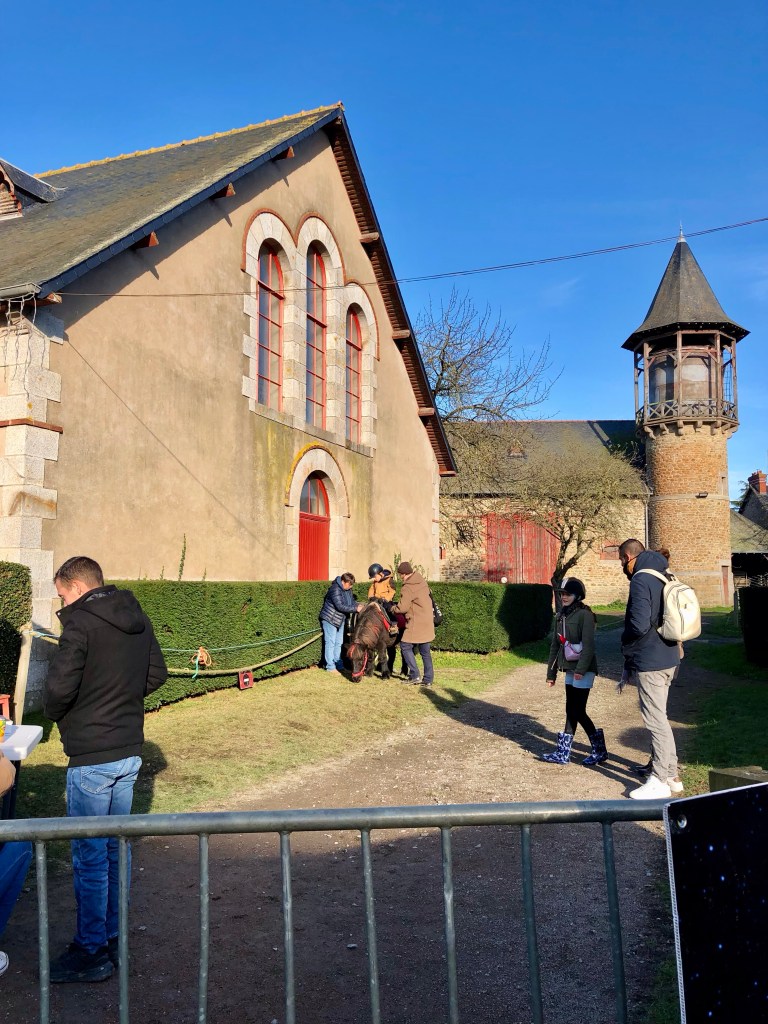
Pony Rides by the Stable’s Water Tower

We had to rush back home directly after the show in order to be back in time to give Saxon his afternoon walk. So, we were unable to devote any time visiting the town of Lamballe itself. Undoubtably, we will return. But we left with happy hearts after a wonderful day at the stables. We hope you all find your own happy places this holiday season.

A Trio of Breton Beauties (click to play video)

A Walk Through History in Côtes d’Armor

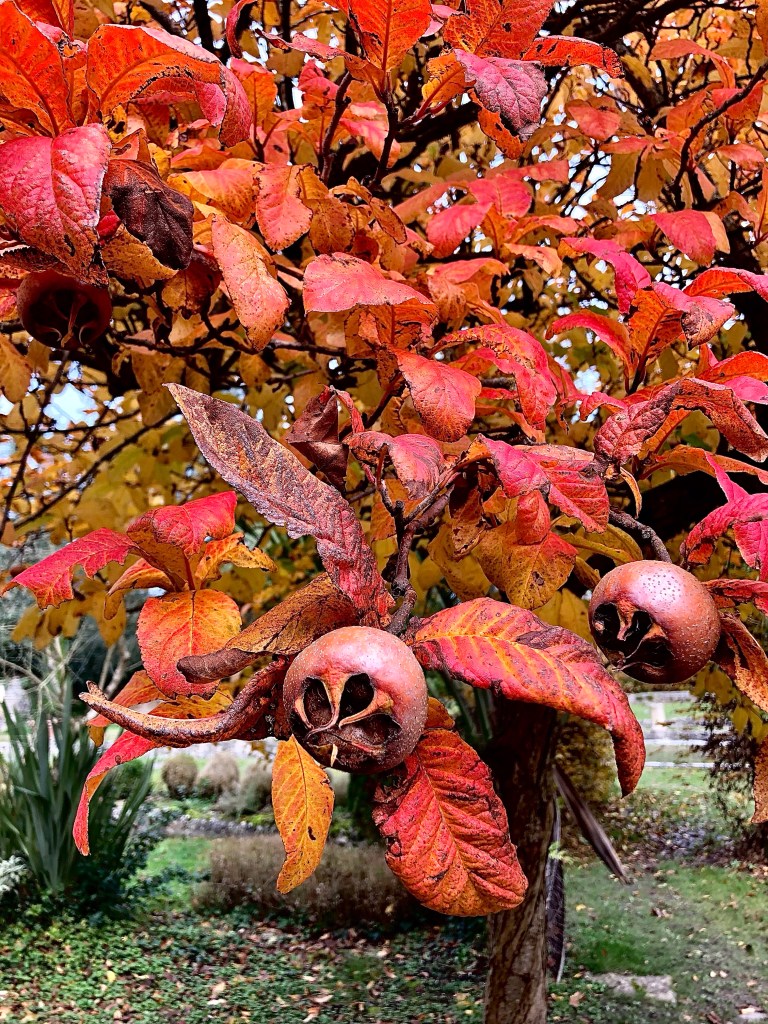
Autumn Bounty – A Medlar Tree Amongst the Roman Ruins of Corseul

We are in the depths of Autumn now. It’s often quite stormy. I’m cold all of the time – the French have a particular word for this: frileux – and I’m wishing our chimney was in good repair so that we could have a cozy fire. Yet another repair project for the future.

Nevertheless, this time of year has its attractions. Bretagne is a land dominated by deciduous trees, the gold and red hues of their waning leaves making for a very colorful season. The view from our elevated perch in the tower over the park allows us to watch the grand carpet of shrubs and trees laid out below us as it gradually shifts tones from day to day.

Cherie and I try to maintain our quest to visit as many local sites of interest as possible. But it is decidedly more of a challenge to do so during the off-season. Many, if not most, privately-held attractions in France tend to close from October through April. Doors are shut, shutters are closed and gates are locked to visitors for months on end. So, we look for the sites which remain accessible.

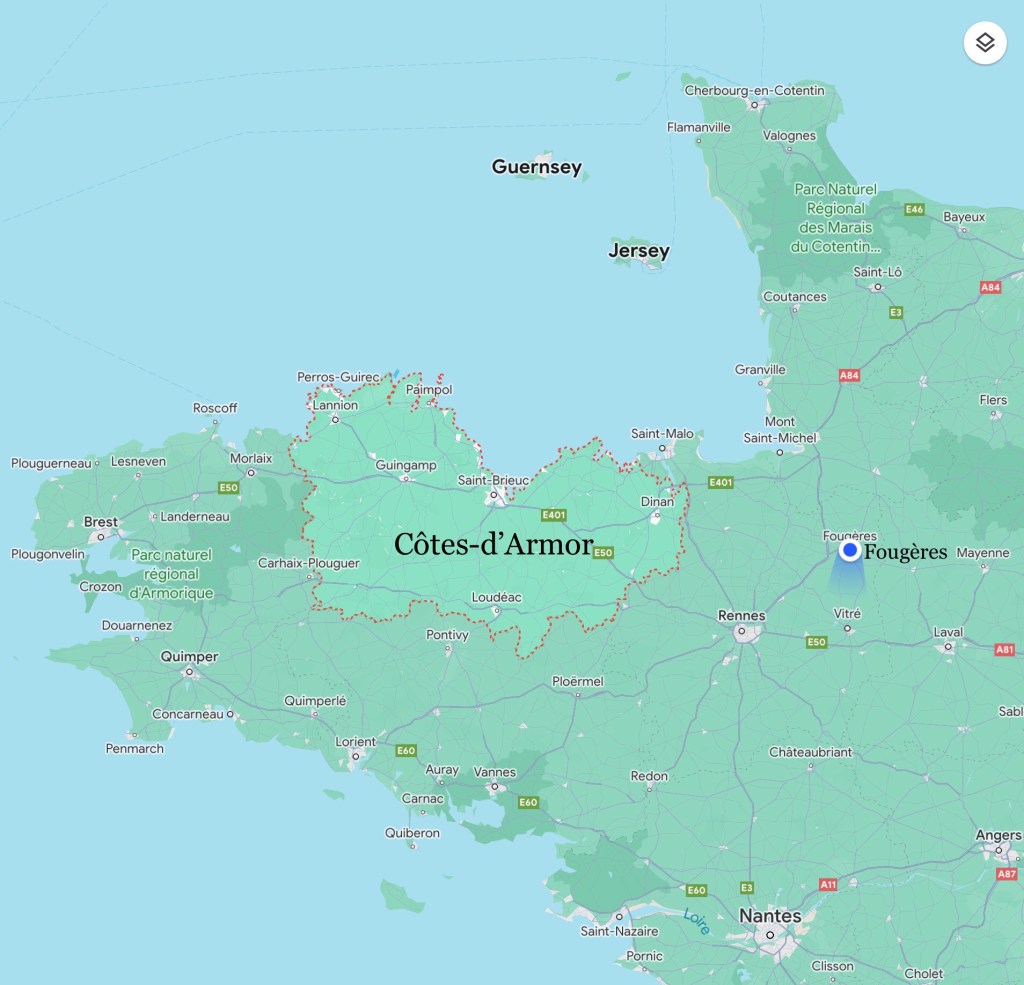
The Département of Côtes-d’Armor with Fougères to the East

This week we ventured westward into the heart of Bretagne, in the département of Côtes d’Armor. With the exception of Dinan, we haven’t really explored this part of the region. When searching for a house in 2018, we made some brief sojourns to Tréguier, La Roche-Derrien and Pontrieux, but we never did much in the way of sightseeing. It’s a lovely part of the peninsula with lots of green, rolling countryside and rocky coastline looking northward to England across the Channel.

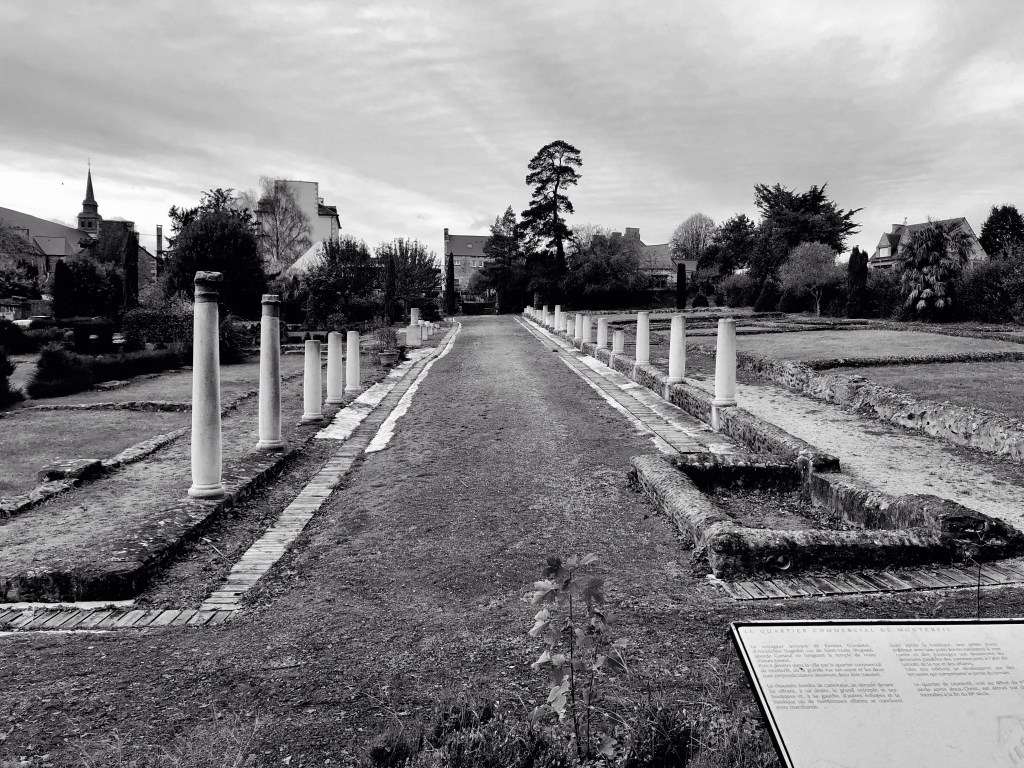
A Swanky Street in Gallo-Roman Corsiolitum

Not too far west (11 kilometers) of Dinan is the village of Corseul. A village which has the good fortune to sit upon the ruins of a Gallo-Roman town. Dating from the 1st century, Corsiolitum, as it was known then, was the capital of the Coriosolites – the local gallic tribe who so kindly agreed to be overrun and absorbed into the Roman Empire. In return they ended up with the latest in Italian urban design, complete with paved streets, underfloor heating and shopping.

Shards of Lost Civilization

The ruins in Corseul are subtle. One can walk down a short section of streetscape marked by the remains of townhouse and warehouse foundations. Well-posted interpretive signs help visitors to imagine the scene as it may have been as a bustling hub. Extensively excavated in the 1980’s and 1990’s, the remains have been tidied up quite a bit. This includes what appeared to us as the imposition of cement copies of architectural elements such as rows of columns, textured and broken. A problematic practice which is, thankfully, rarely employed.

Move Over, Mars, There’s a New Goddess in the Temple

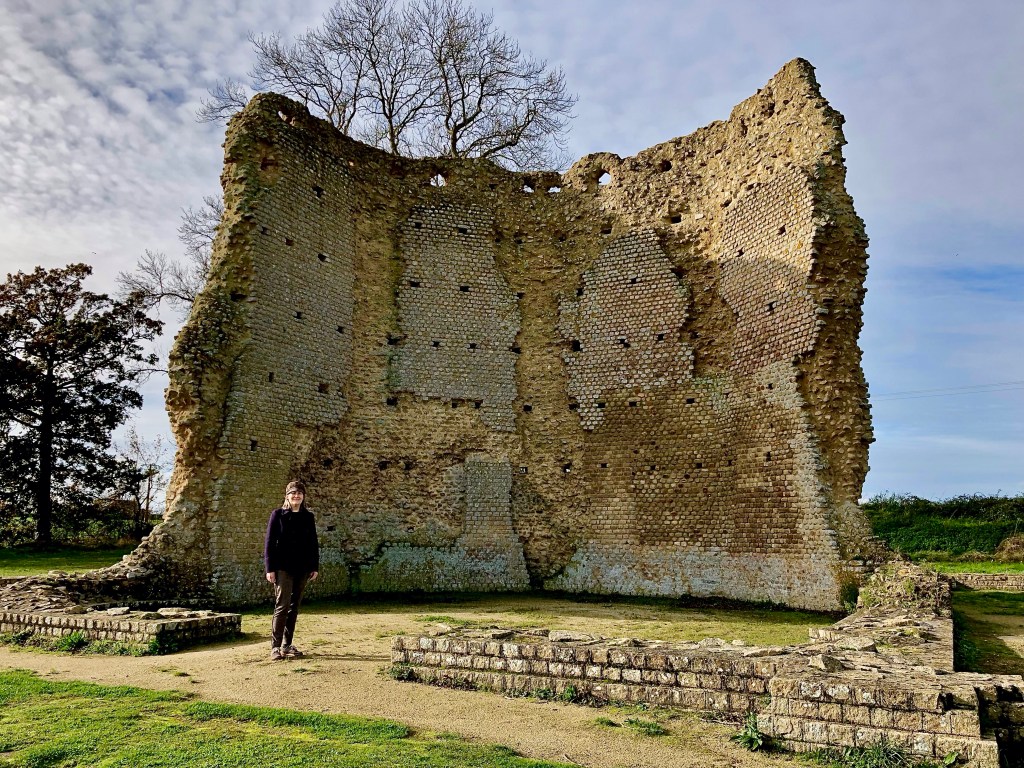
Just outside of town is the site of a Gallo-Roman temple complex: the Temple of Mars. It is a remarkable site with the remains of a roman tower standing tall like a sentinel above the foundations of a complex of walkways gateways and ancillary structures. Constructed in the first century, its primary purpose was dedicated to the worship of the god Mars. But there was also a smaller temple for veneration of the emperor. The builders also saw fit to include a separate entrance to the complex for the wealthy elite. Some things never change.

Reconstruction of the Temple of Mars

One of the interpretive signs in Corseul noted what we thought was another roman site to the other side of town. Following a narrow rural road up into the hills, we ended up at a wide spot near a dead end marked “parking”. Somewhere, down a dirt drive, was an historic monument. At least that was where the vague sign pointed to. Shrugging our shoulders, we parked and trudged along a lonely track through an oak wood. It was only five minutes later when we sidled up to the remains of a medieval castle. Hmnnn … not quite what we were expecting. But a pleasant surprise nonetheless.

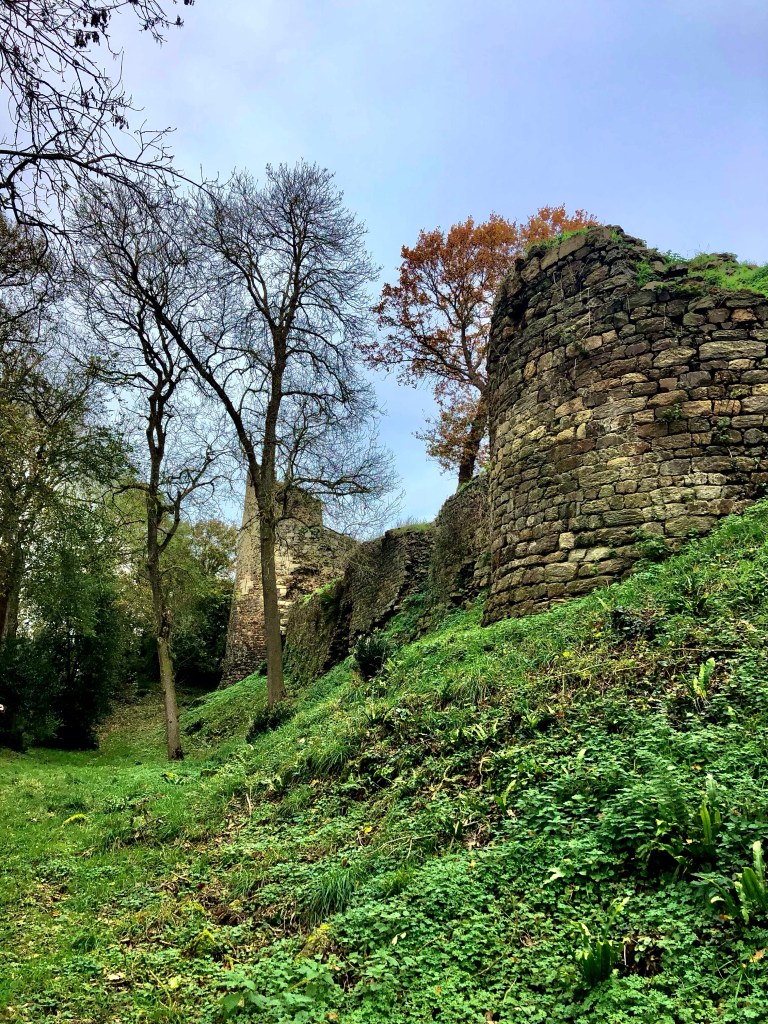
A Castle in the Wilderness

The château-fort of Montafilant was built in the 12th century. It remained in use until the end of the 15th century when it was abandoned. After that, its structures served as farm sheds and its ramparts as a handy quarry for stone by local inhabitants. Amazingly, there is still a substantial portion of walls and towers remaining. Enough to see that this was a considerable fortress. It rests on a promontory above two steep-sided valleys. Montafilant is a no-frills monument. Quite the opposite of the ruins back in town, this castle is raw. No effort has been spared to present this edifice as anything but what you see. All the better for it in my opinion. For those willing to do a bit of exploring, this castle is worth the time and effort. If you go, make sure to continue along the outside of the wall – you will find a large corner tower and a further rampart with a dry moat around the other side.

Léhon’s Medieval Bridge with the Abbey in the Background

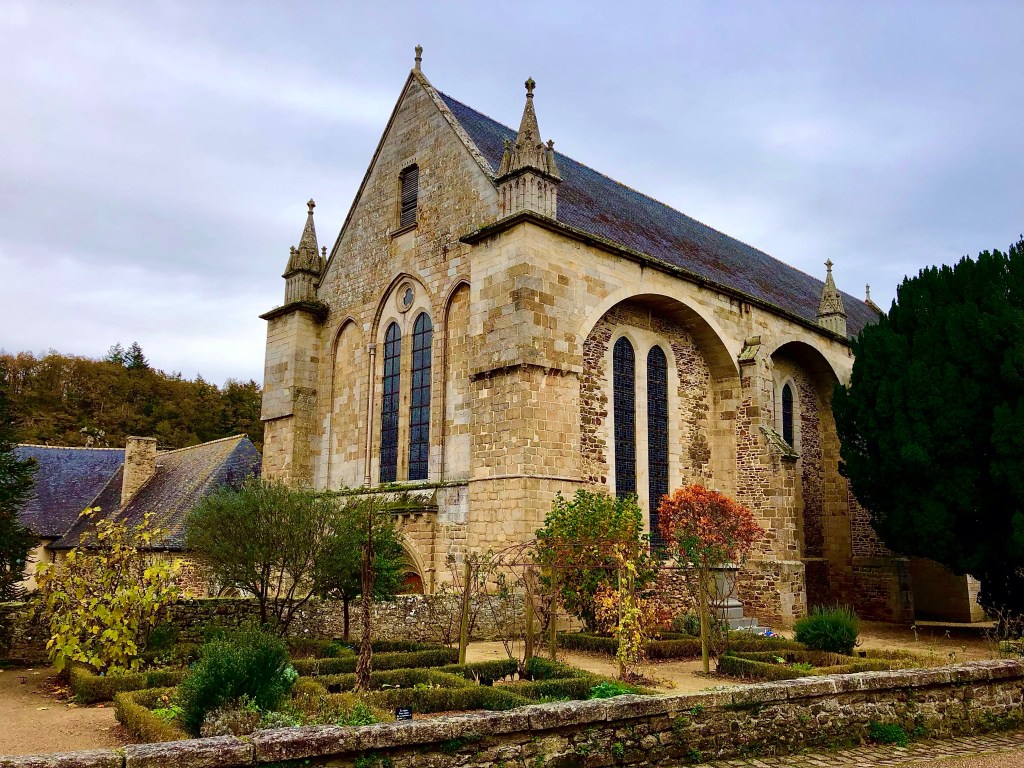
Our final stop for the day was the village of Léhon. Now it is, effectively, a suburb on the south side of Dinan. But it originally grew up around an independent abbey and castle along the banks of the Rance river. This Petite Cité de Caractère’s most picturesque area is the bourg surrounding the medieval abbey, overlooked by the castle ruins on the escarpment above. We enjoyed a nice afternoon stroll through the compact bourg, over its lovely medieval stone bridge and along the river to the canal lock and back. It didn’t take long. The bourg is quite small. Especially since the abbey was closed for the season. We plan to come back sometime when it’s open to visitors.

L”Abbaye Saint-Magloire

All in all, we passed an enjoyable day of visits and got to know this part of Bretagne a little bit better. We witnessed 2,000 years of history in the span of an afternoon. Not bad for a day’s work!


Lock and Lock Keeper’s House on the Canal North of Léhon

A Calm Breeze in Cancale

Quayside Refreshment in Cancale

It’s 9:00 in the morning and we’re just rousing ourselves from sleep. Ugh! So EARLY, right? But we were determined to take a little road trip because we live in France. And it would be a crime not to see as much of our new home as possible. Walked Saxon. Showers. Clothes. And off we went. This day’s objective was the small seaside town of Cancale.

Just a few kilometers east of St. Malo, on a part of the north coast of Bretagne which juts out into La Manche (the English Channel), Cancale faces eastward. A hazy view of Mont-Saint-Michel on the horizon, the sea is dense, a solid blue-green slate upon which a few fishing boats skate back and forth. The town itself sits upon a high headland, tumbling down to a broad, hard-working port and a waterfront lined with a profusion of businesses trawling for the tourist trade.

Oyster Beds with Mont-Saint-Michel on the Horizon

Cancale is most well-known for its oysters: in particular, the Pied de Cheval, or, Horse’s Hoof oyster. Quite large, these oysters are native to the Baie de Mont-Saint-Michel and are a highly prized delicacy. Or so I’m told. Neither of us are partial to oysters (huîtres). Especially in the raw. So, I’m sorry that I won’t be able to report on the magical slurpiness of these treasured bivalves. But, judging by the high praises (bordering on cult-like mania) of every French person who ever lived, I’m guessing that you could do worse than slug down an oyster from Cancale. I mean, Louis XIV had them delivered fresh from here to Versailles every day. And that gentleman knew a thing or two about eating well.


Out of the door by 10:30, we fetched up to the center of Cancale a little before Noon. There is a lovely square with a tasteful park/parking lot surrounded by a church, a pharmacy, a grocery shop, florist, boulangerie, bar and bistros – all of the French essentials. This is the upper town. Much more geared toward local life and the needs of the people who actually live in town.

A Modest Home Overlooking the Bay

We had a fine meal (no oysters) for lunch in a bistro on the square and took a leisurely stroll through the neighborhood. There are many stylish and interesting homes from the late 19th to the early 20th centuries in the upper town and we enjoyed pointing out their various decorative features to one another. As we always do. We’re unrepentant architecture nerds.


Then it was down to the harbor-side where, despite it being the low season, was still thronging with tourists. Despite the tourism focus of this part of Cancale, it is a pleasant area. The shopping for Breton-inspired clothing, food, sweets and other assorted tchotchkes is good. But the real stars of the show are the views. The harbor and the bay are stunning. From the quai you can see the acres of oyster beds where tractors weave in and out of the rows at low tide. In the distance you can see Mont Dol (Holy Hills & High Streets: Mont Dol and Dol de Bretagne) and Mont-Saint-Michel (Blue Skies and Archangels) across the broad waters of the bay.

Oyster Nirvana – Eating Oysters With the Market in the Background

The waterfront bustles and there is a nice outdoor market by the lighthouse where one can buy freshly-harvest oysters and all the fixings. Not us, obviously. But many people pick up a plate of oysters and a glass of wine and sit on the edge of the promenade, slurping down their gelatinous treasures and tossing the empty shells onto the beach. Don’t worry, they aren’t carelessly littering. It’s traditional to discard the shells. And given the size of the pile, thousands of others have done the same thing. People power!


Although we didn’t have time to walk the entire 7 kilometer trail, but we did take a stroll along part of the cliffside path which stretches from Cancale to the Point de Grouin. The path affords dramatic views of hidden coves, smaller harbors and moorings, and beautiful old homes perched atop the bluffs. We even spotted a public seawater swimming pool cached demurely on a rocky beach. We have spotted several of these piscines de mer around the seaside towns of Bretagne. Cherie is intrigued by these public facilities and feels that it is a kindly service to provide for their citizens’ enjoyment and good health. I couldn’t agree more.

A Public Swimming Pool With a View

A few hours enjoying the charms of Cancale is time well spent. We had a lovely, relaxing visit. You could too. And if you are in the area, we would definitely recommend it. Our sojourn to Cancale is so typical of the good life in France. All one has to do is slow down a bit and open your eyes to the small things which make us truly happy and content. The French are particularly good at cultivating these things and we love them for it!

Oyster Harvesters Returning from the Beach (click to play video)