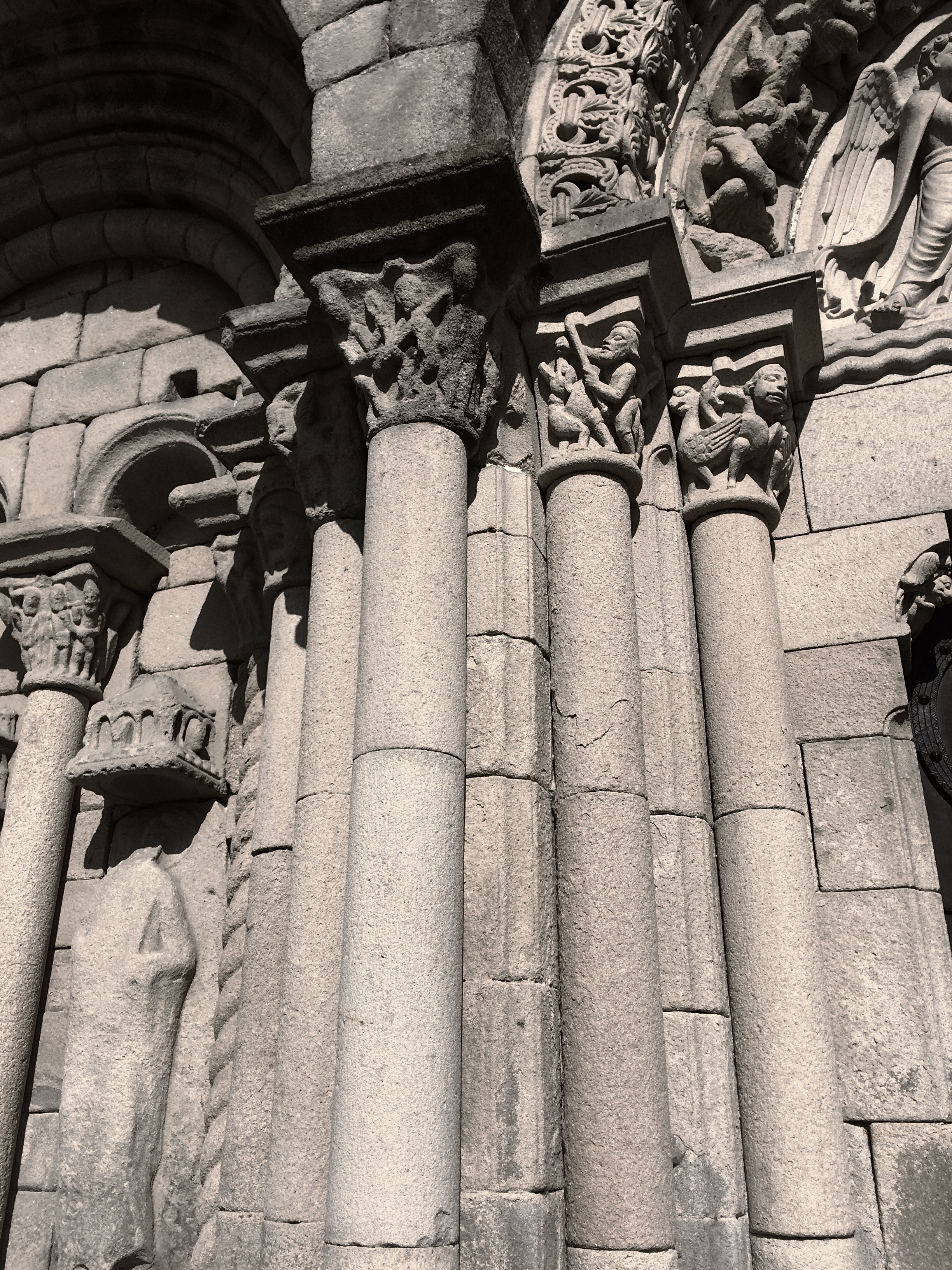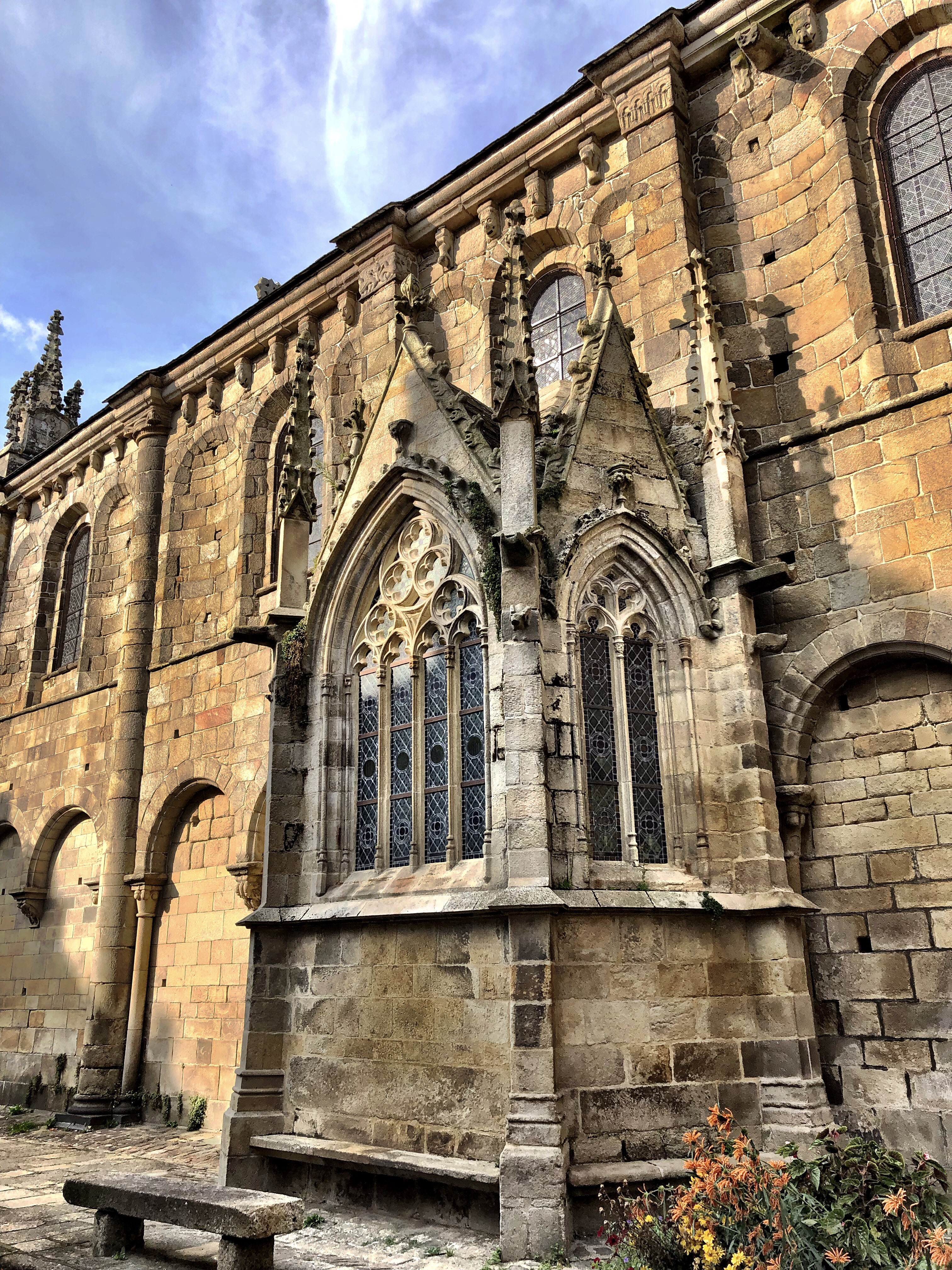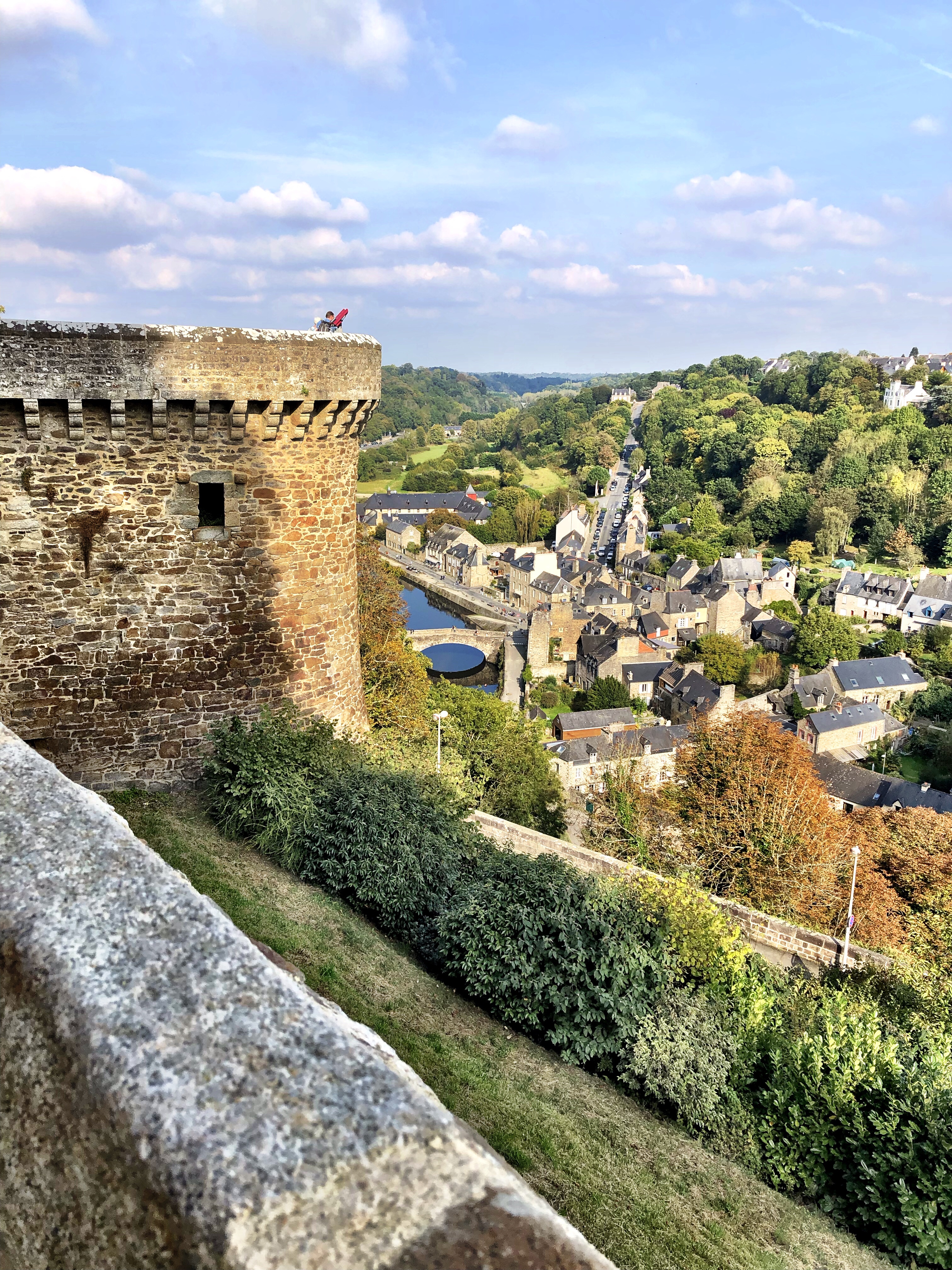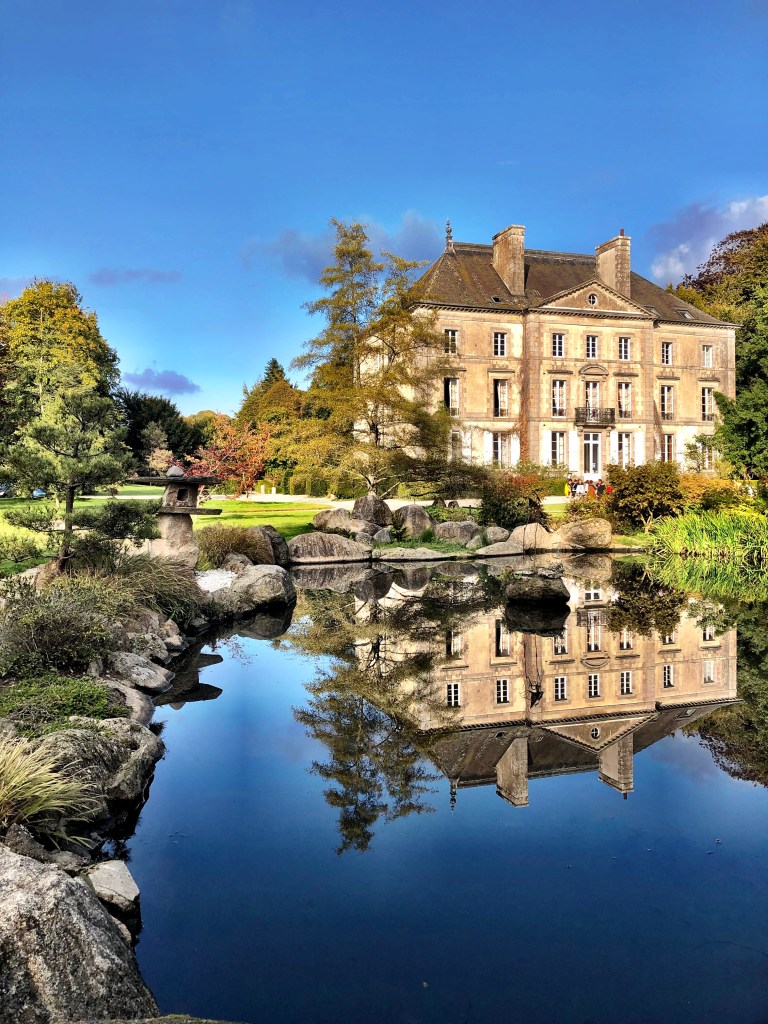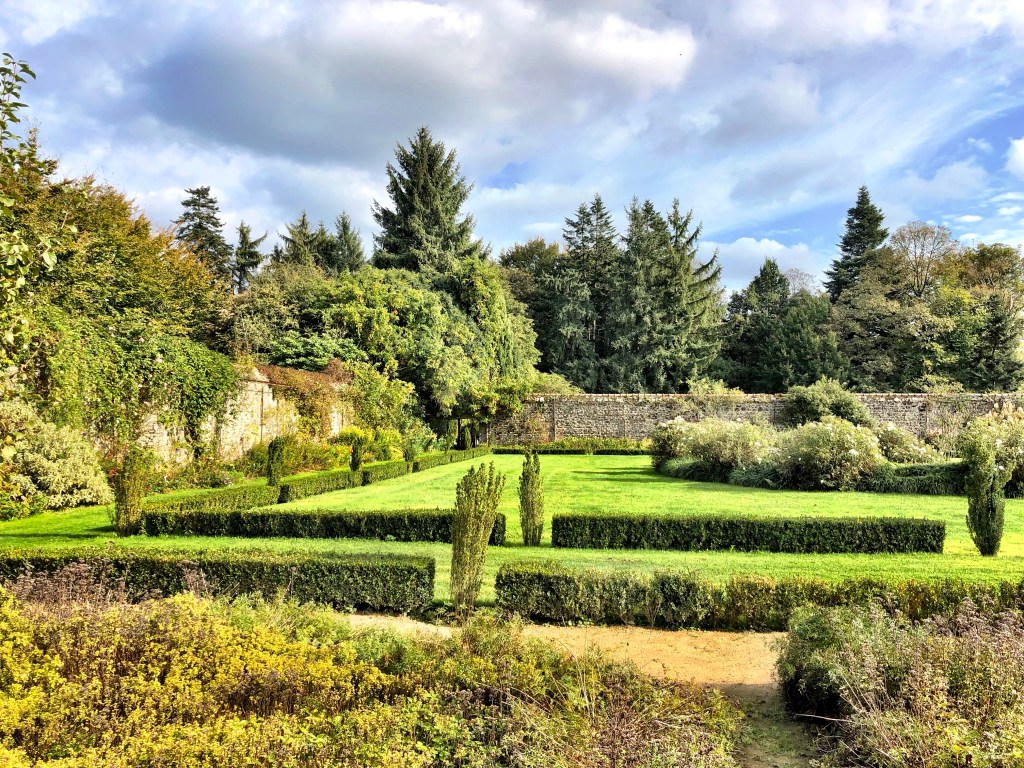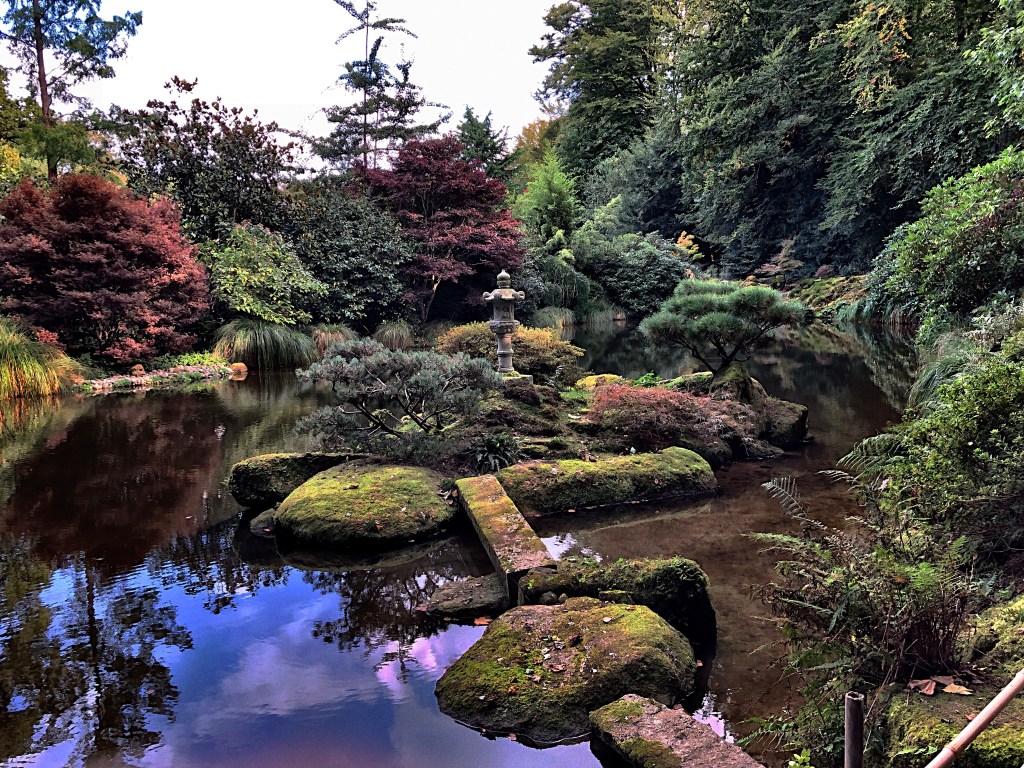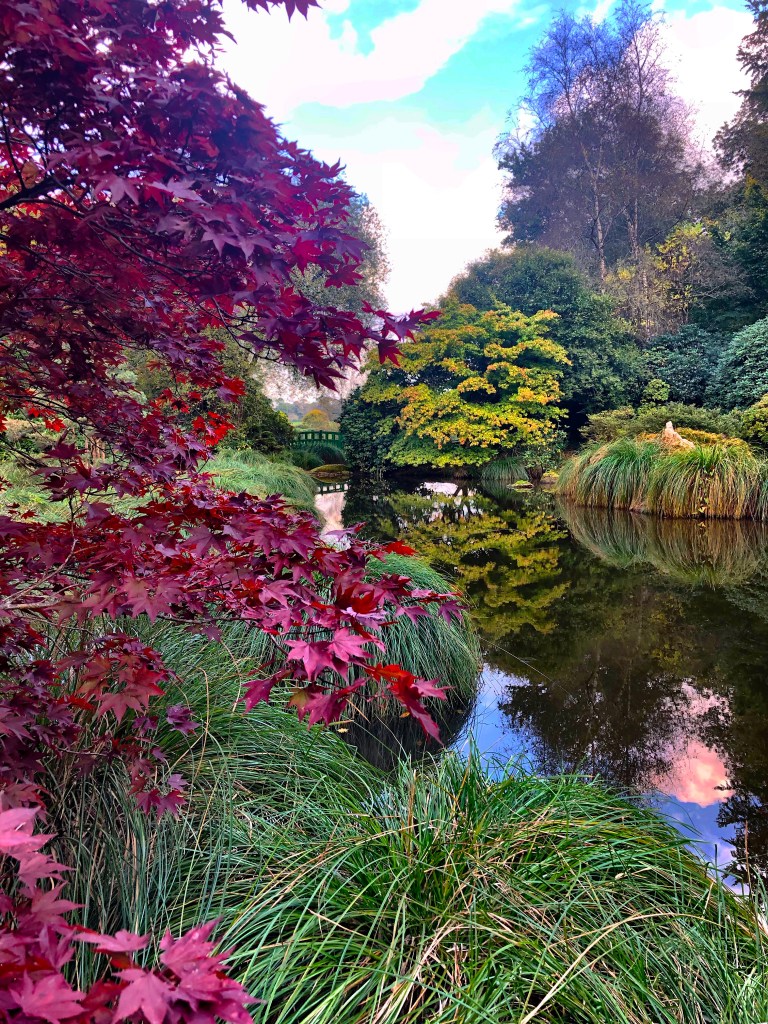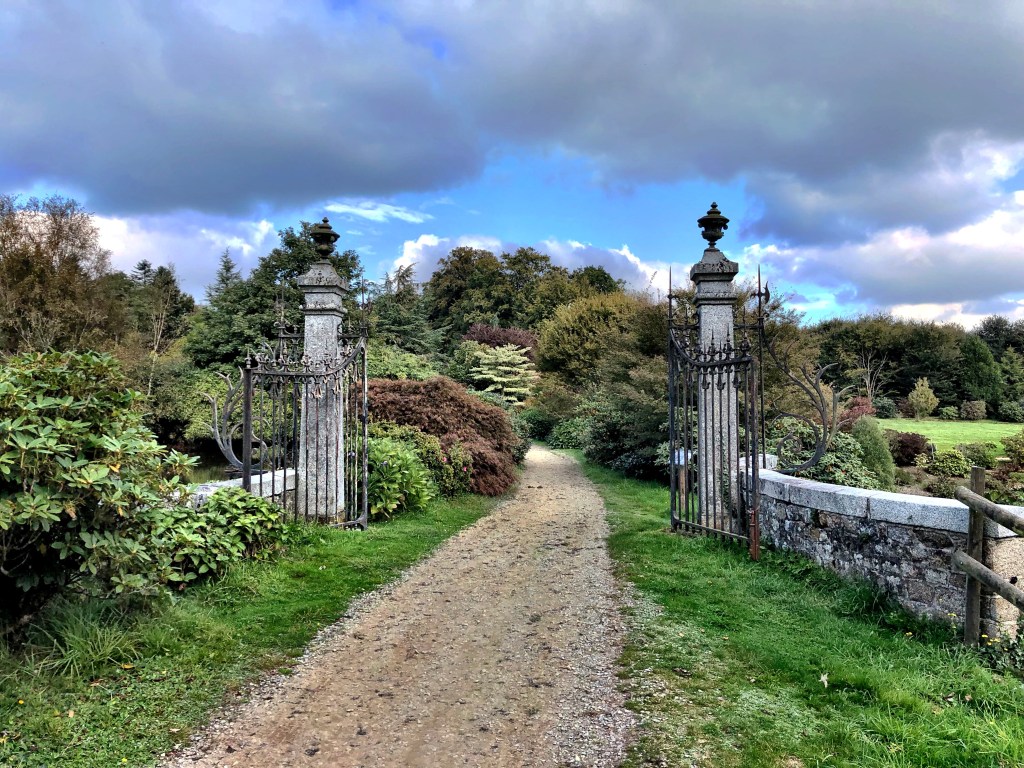
So, yes, Autumn is in full swing. Probably not the best time of the year to visit a garden. But Fall has a beauty all its own, don’t you think? It’s not necessarily measured in riotous explosions of flowering and ebullient foliage. But this season brings a certain, slightly melancholic subtlety. An evanescence, a dénouement, if you will, signaling Nature’s job well done over the Spring and Summer. I like Autumn. I like its understated quality, its more solemn light and colors, its less frenetic energy. And there is a certain grandeur to be witnessed for those who wish to see it.
It was in this spirit that Cherie, Valerie and I decided to make a visit to the Parc Botanique de Haute Bretagne. This botanical park is a mere 15 minute drive northeast of Fougères, deep in the rural countryside, set amongst low, tumbling hills checkered heavily with corn fields and cow pastures. Last year, Cherie and I had ventured out to visit this garden, but we arrived to very ominous-looking skies which were daring us to go for a walk far from shelter. So we took the coward’s way out and drove right back home. But on this day of our return the weather was beautiful and Cherie and I were ready to reclaim our pride.
We had a nice, quiet time at the park. While there were certainly other visitors, they were far and few between. So it was tranquil. We felt like guests on a friend’s estate. Not that we know anyone who actually owns an estate. [But we’re not snobbish – if there are any estate owners out there who would like to become our friends, we’re more than happy to visit you!] The 25 hectare park is beautiful and offers a great variety of areas to explore with different themes. It’s well-curated and maintained. And even though most of the flowers were spent, it is still easy to imagine the potential. We will certainly visit again in the Spring or Summer.
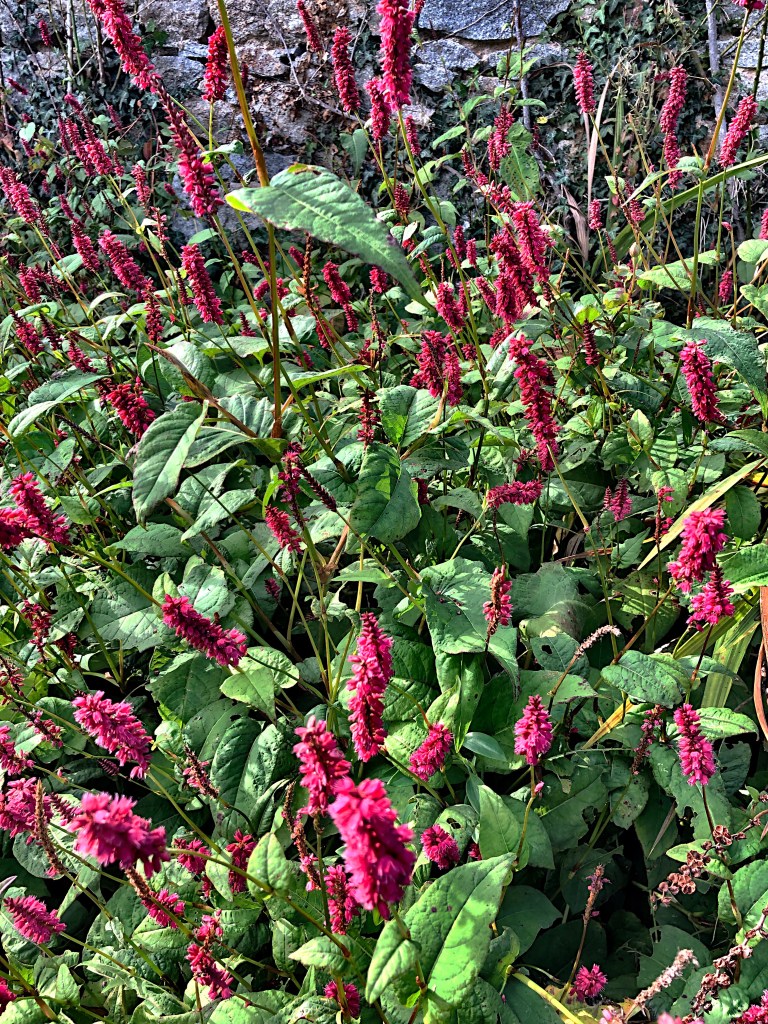
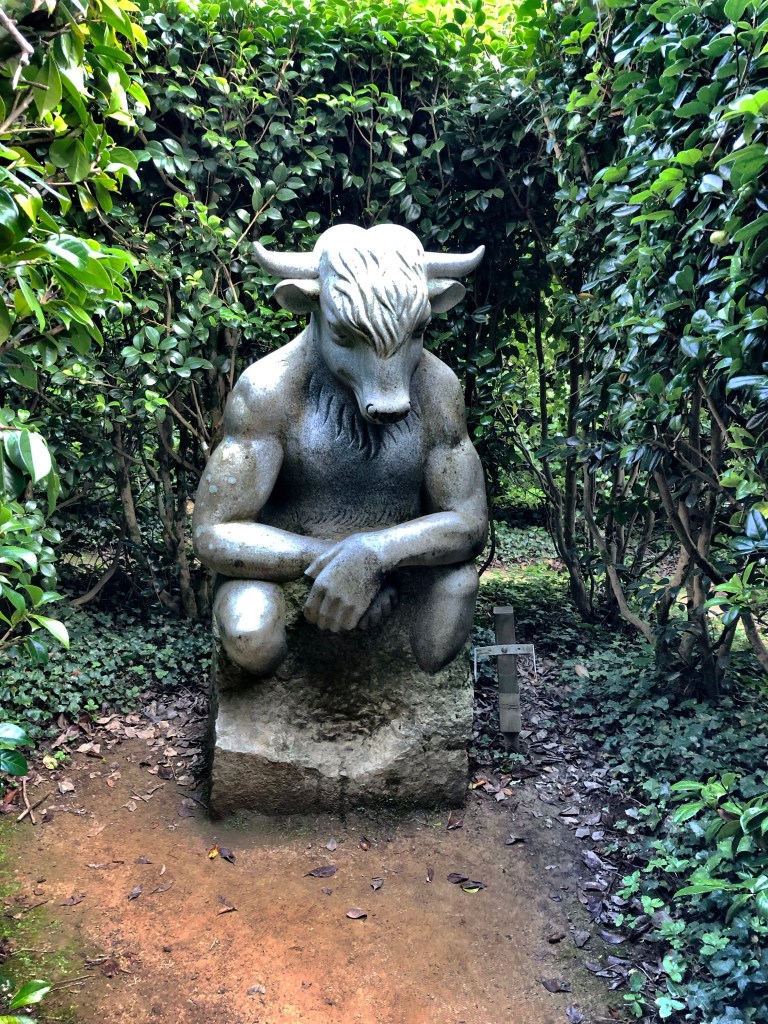
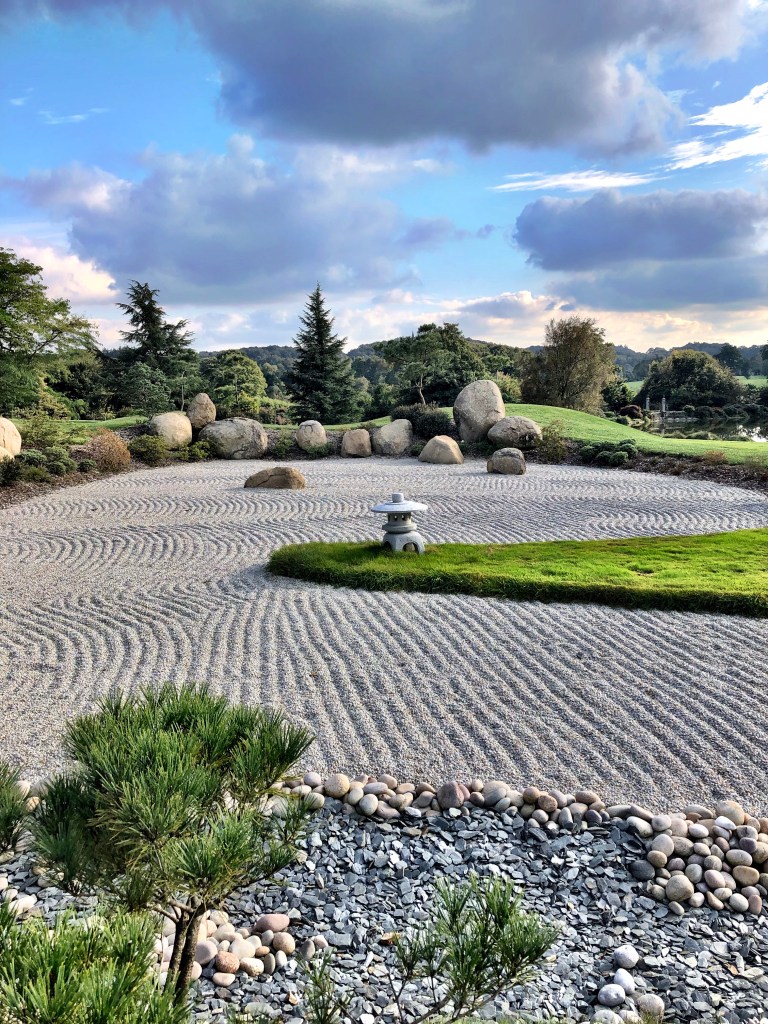
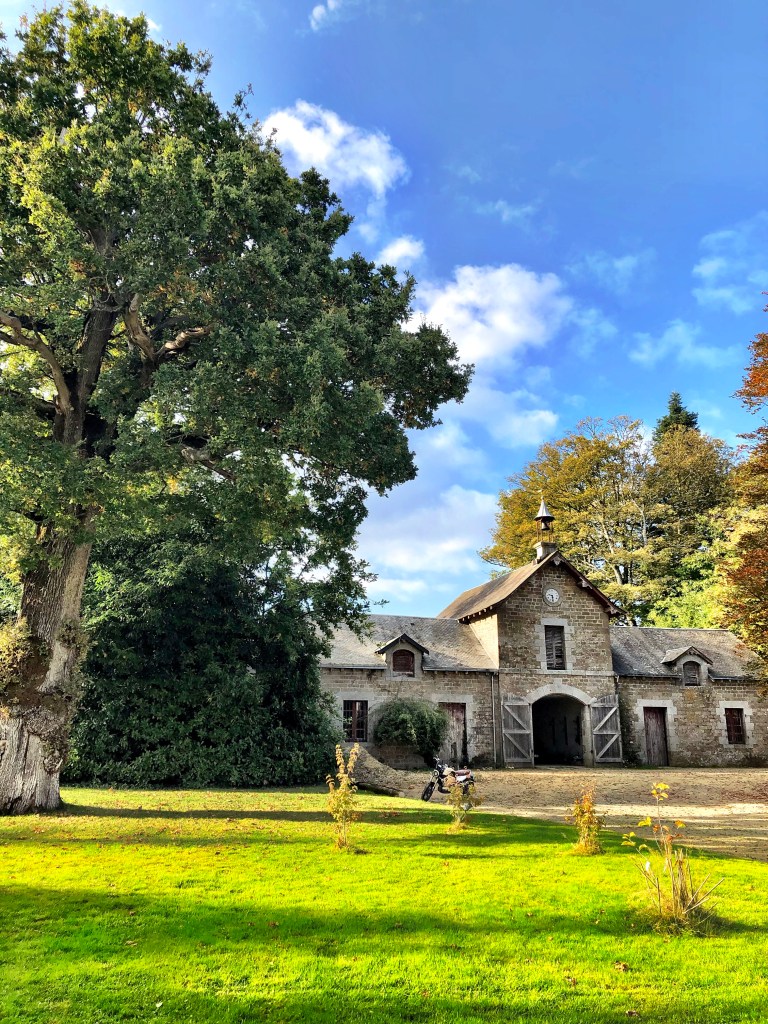
View of the Walled GardenStill Blooming – Red Bistort in the Walled GardenIn the Heart of the Maze of Knossos Lurks a Minotaur (On the Loo?)The Japanese GardenAutumn ReflectionsFormer Entrance to the EstateThe Old BoathouseThings Get RockyStable Barn
And finally, your reward for making it to the bottom of this post. A moment of zen …
It seems like we only really drop our preoccupation with the tower when we have visitors. Having Valerie stay with us has been a real catalyst for us to go sightseeing. Happy days! Yesterday, we awoke to beautiful October weather. Clear blue skies, warm but fresh temperatures, occasional gentle breezes – absolutely beautiful. And this time the city of Saint-Malo was our target for exploration.
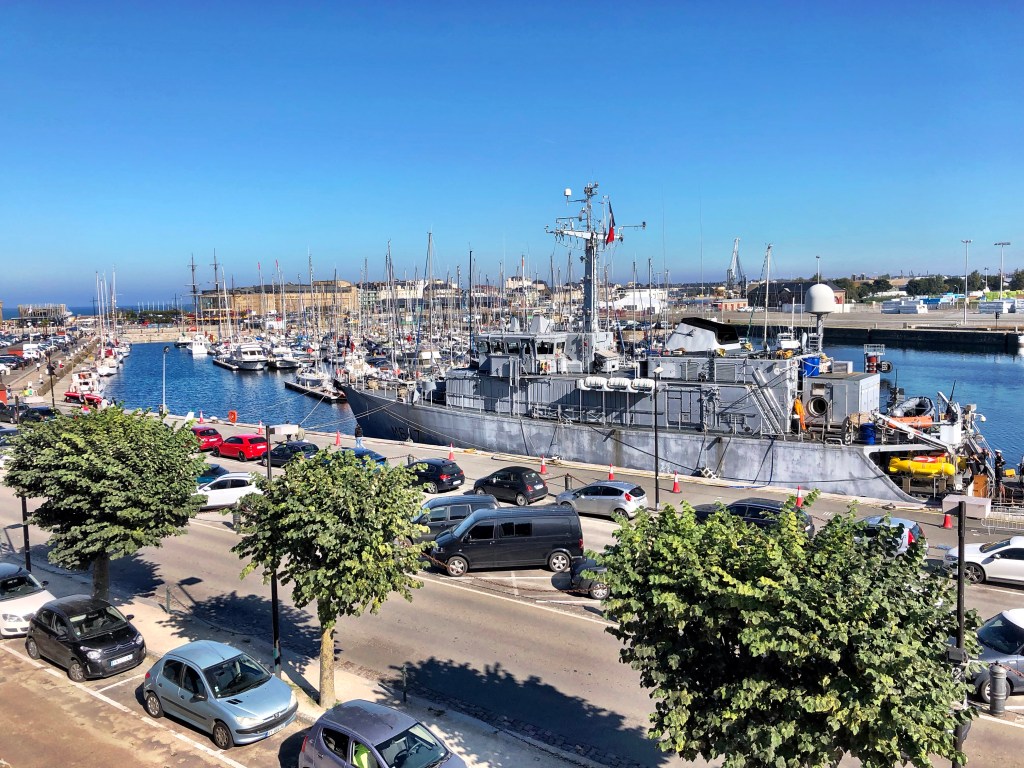
Acres of Harbor: A French Naval Vessel Amongst a Fleet of Fishing Boats
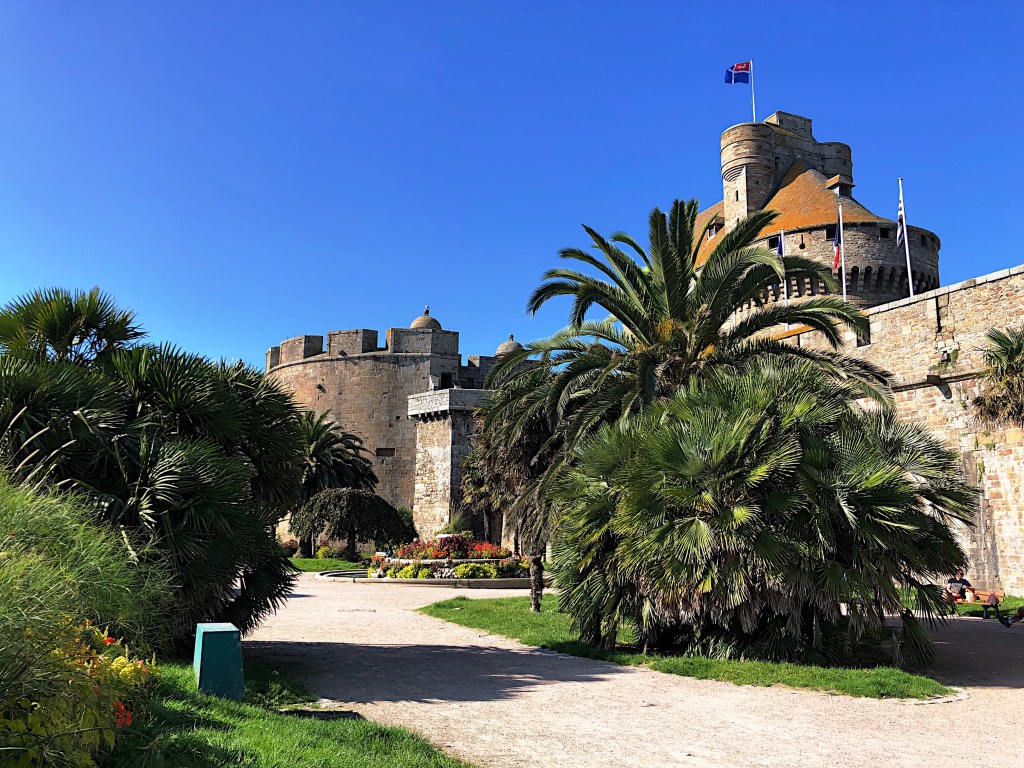
St. Malo is a city of around 135,000 people in the metropolitan area. It’s a port city, situated on the northeastern coastline of Bretagne at the mouth of the Rance estuary. Wider St. Malo is quite spreading, but the old city, the Intra-Muros, is compact, easily walkable, and confined within the still-complete circuit of city walls which define it. It’s essentially surrounded on all sides by water, a combination of the ocean and a series of large harbors. There is a large fishing fleet, a naval station, marinas for pleasure boats, and a significant ferry terminal – all hugging the walls of the old town. From here, you can catch daily ferries to the U.K. (Portsmouth or Poole), or the Channel Islands. So, even though the center within the wall is largely given over to tourism, there is a good deal of serious business going on just outside.
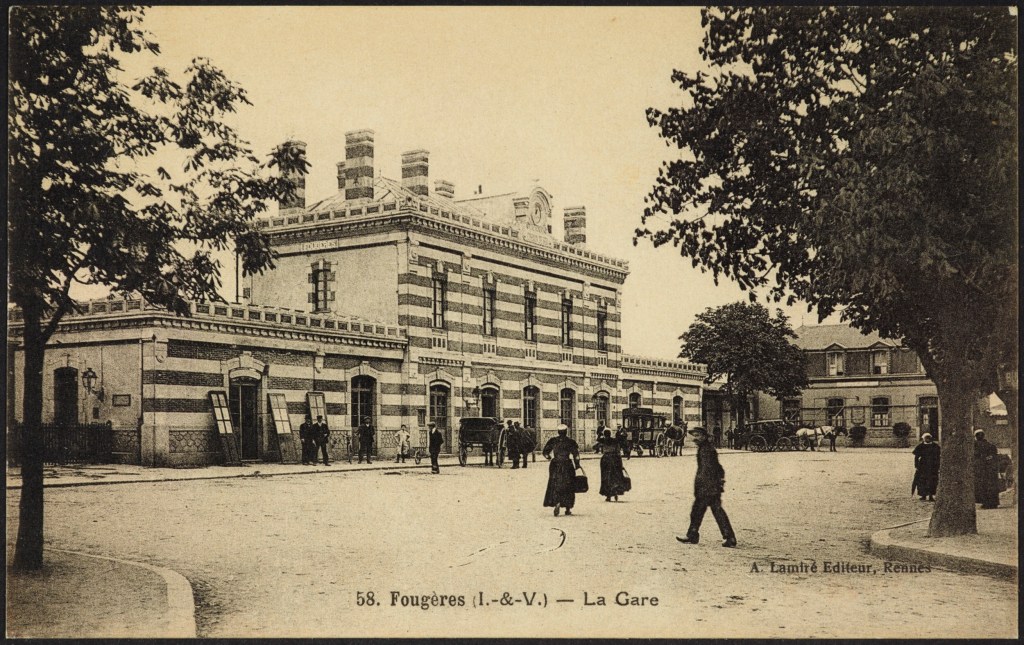
What Was Lost: The Old Train Station in Fougères
There are direct TGV trains from St. Malo to Rennes, Paris, Brest, etc. But, sadly, not to Fougères. Our town has no train service at all, which is a real disappointment. Like many places in the world, a thorough lack of vision led to the cessation of passenger train services in Fougères in 1972. So, we drove. It’s only 1h25m by car to St. Malo, a nice northwesterly drive through rolling countryside. The outskirts of St. Malo are full of business parks, a massive water park, subdivisions and the like. Not particularly awe-inspiring.
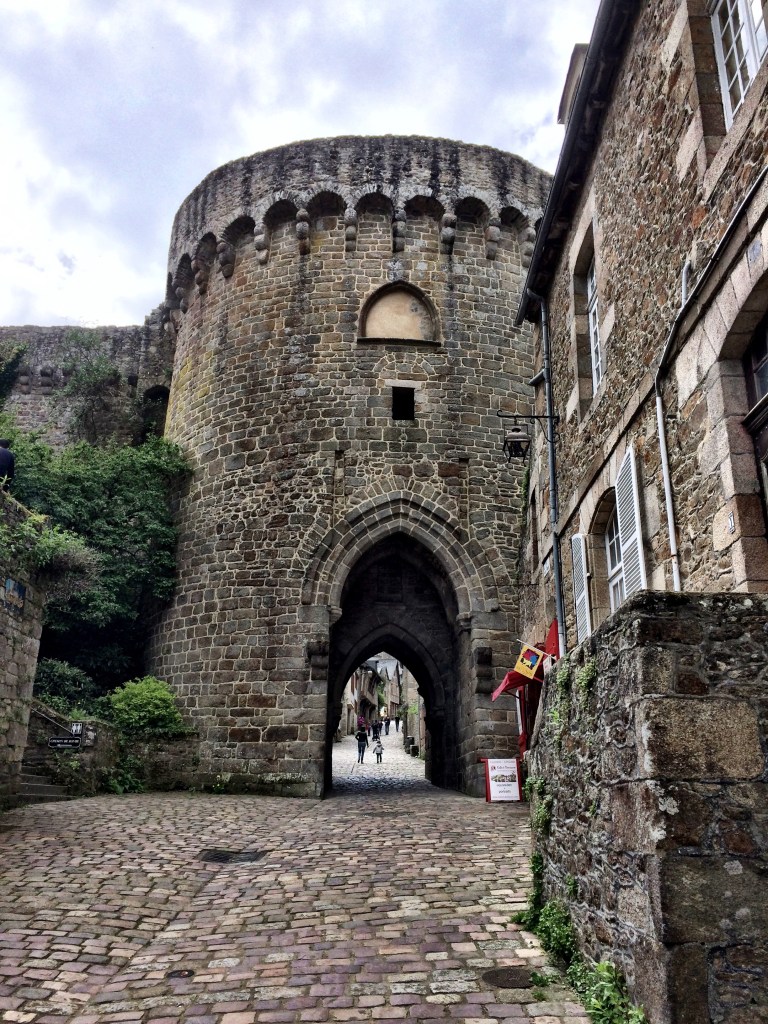
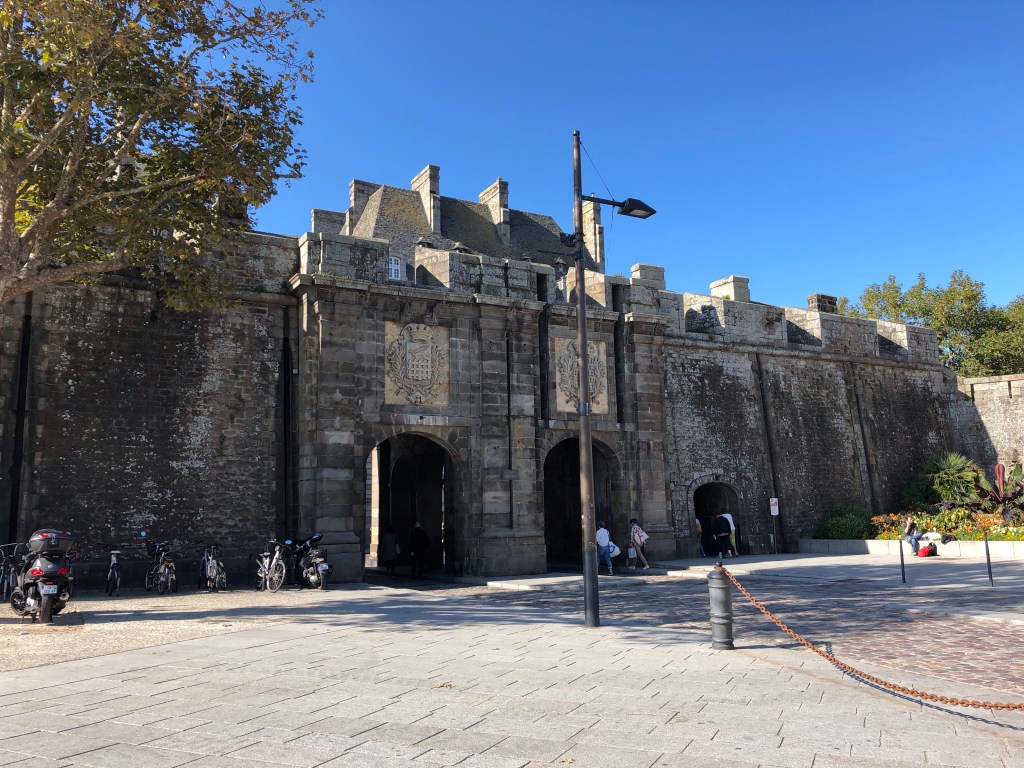
Porte Saint-Vincent
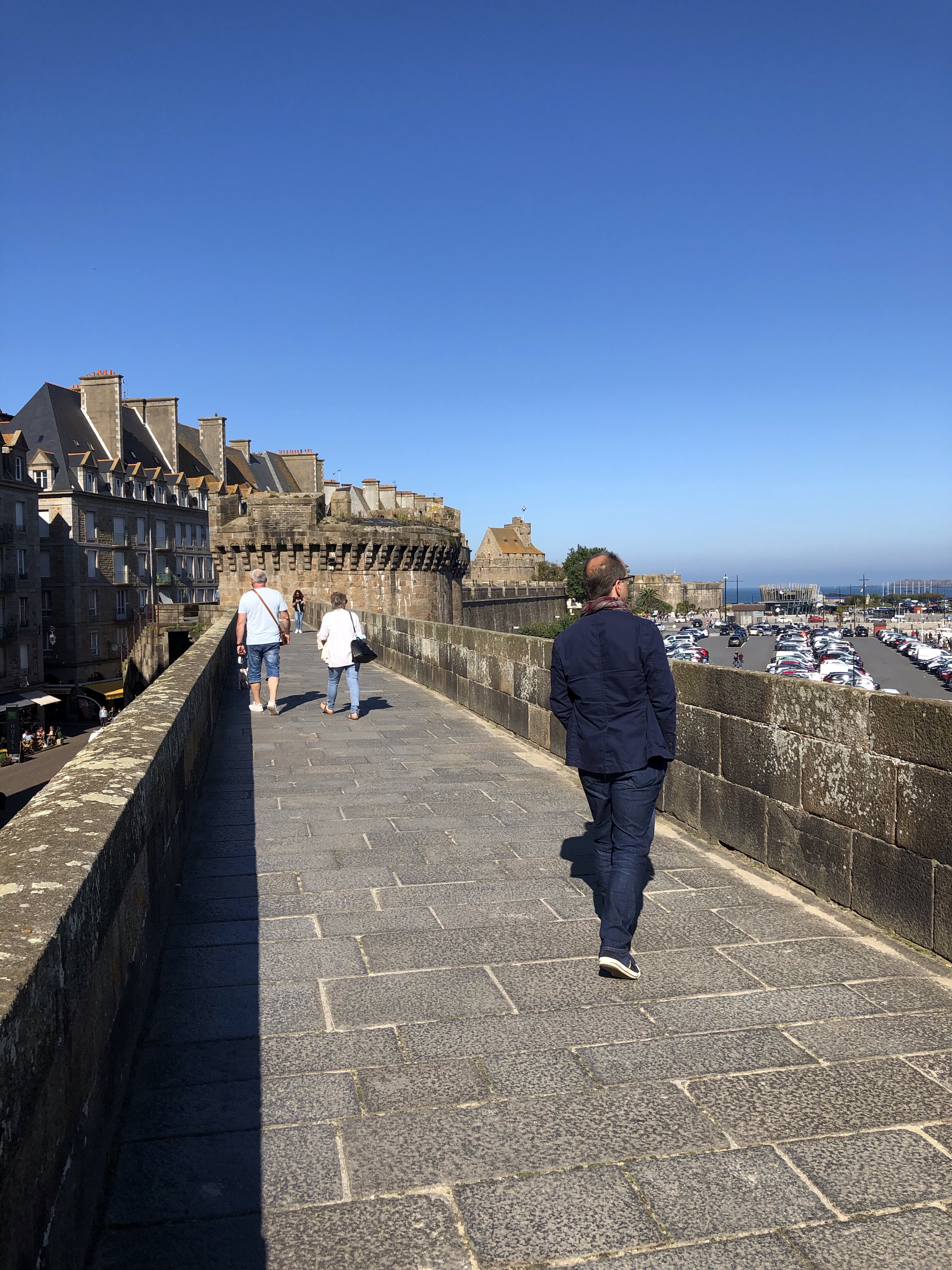
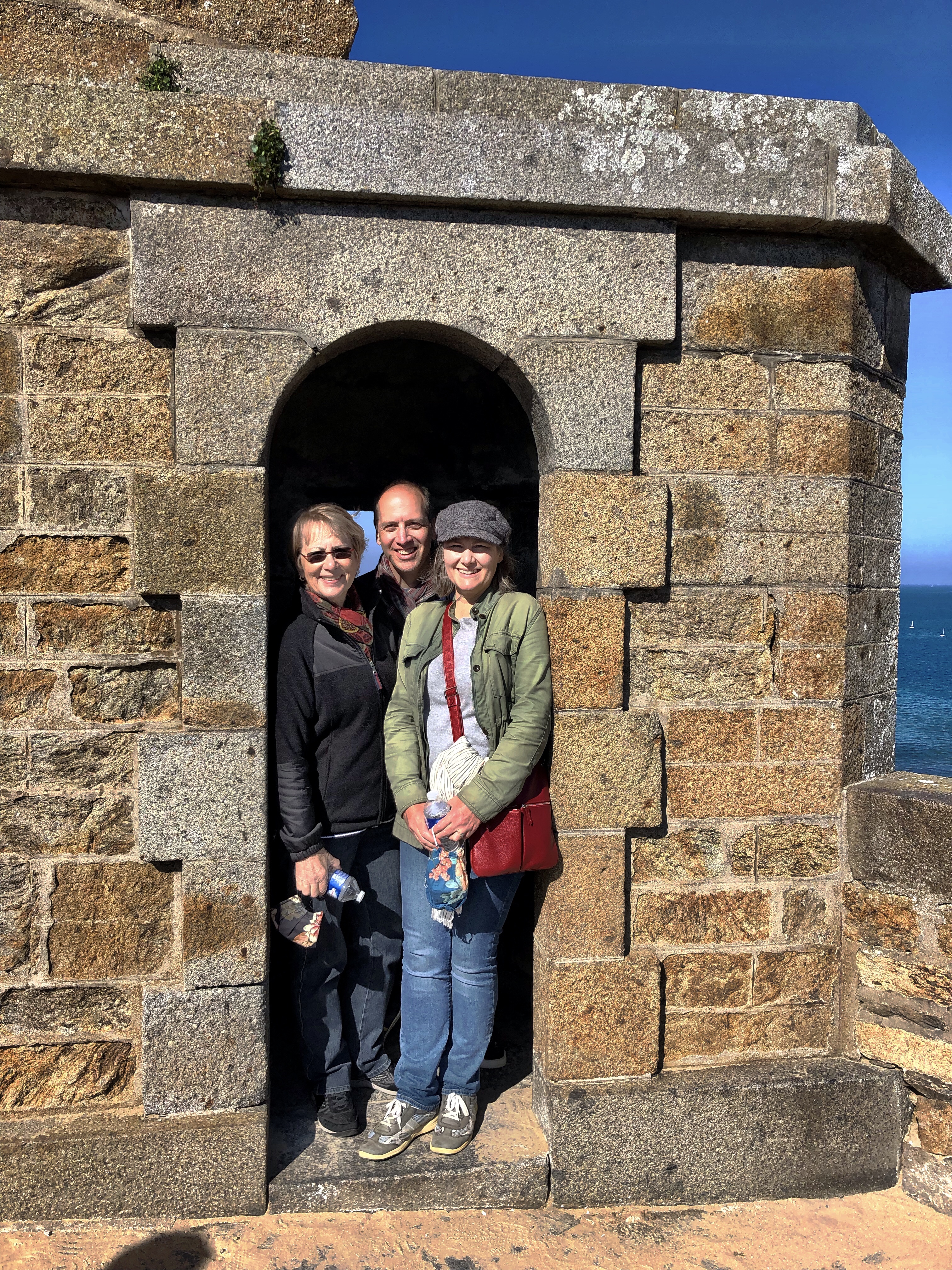
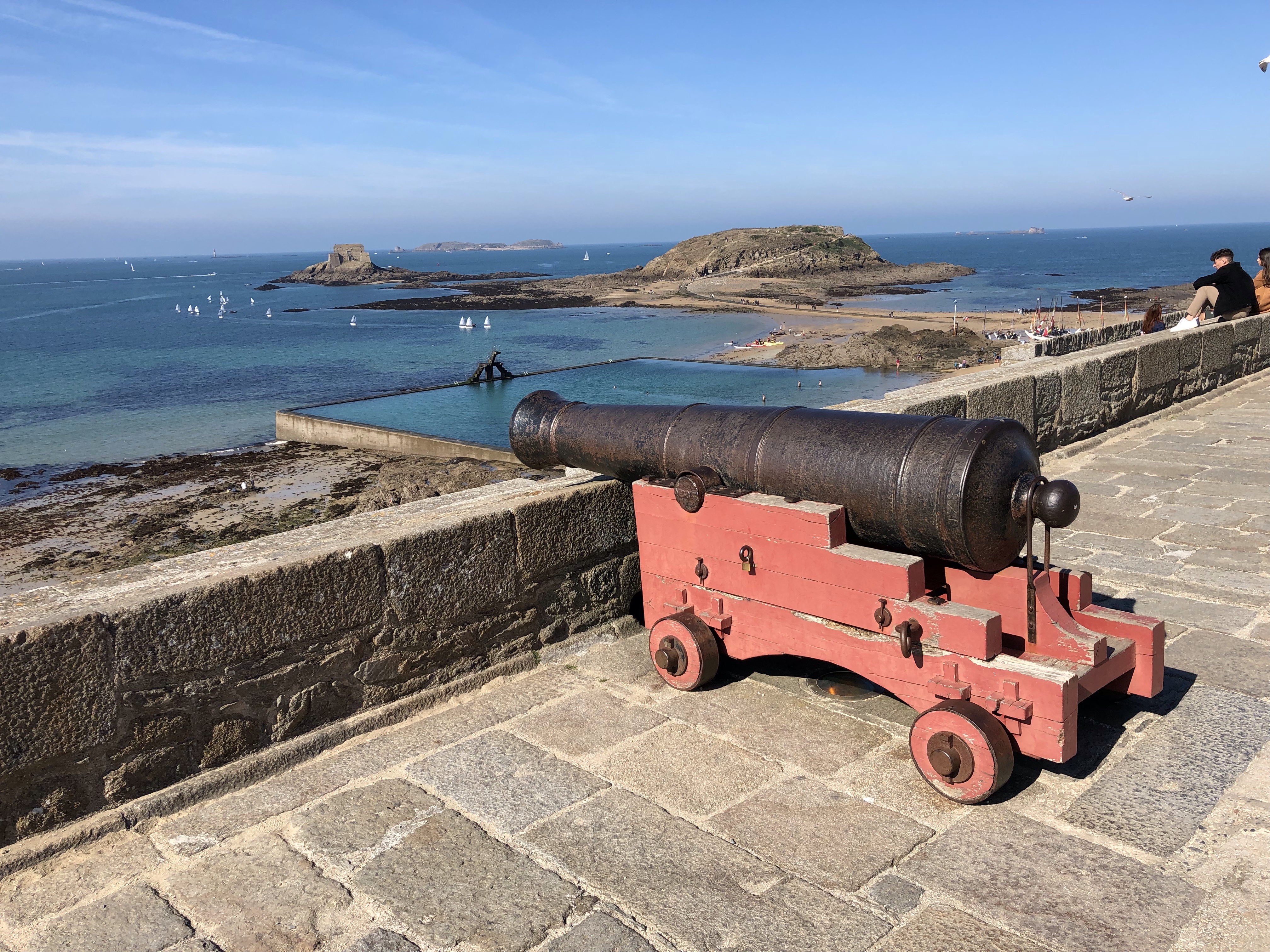
Click the Photos to Enlarge. Clockwise from Top Left: View South Along the Rampart; John, Lost in Reverie; Valerie, John and Cherie; Canon Guarding the Coastline (and the Saltwater Pool)
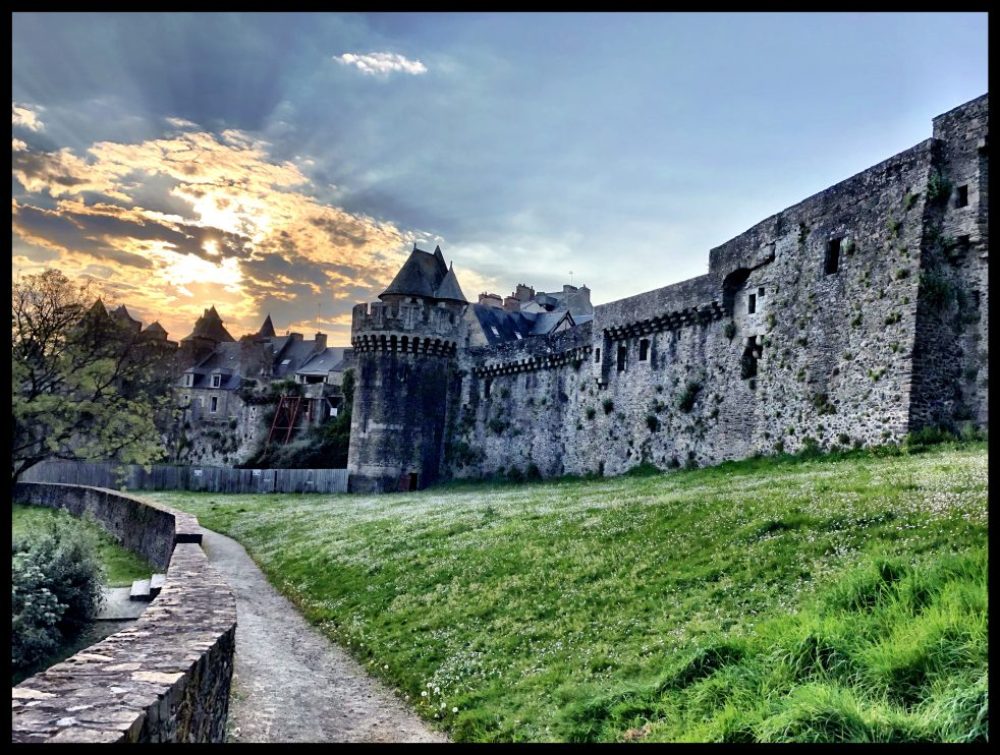
Once past the detritus of modern sprawl, we came upon a 17th century vision: the old fortified city of St. Malo. It’s really beautiful and impressive. The original walls, devised by Louis XIV’s famed military engineer, Sébastian Le Prestre de Vauban, still encircle the original town. These formidable defenses erected to shield the inhabitants from English ambitions and to guard the surrounding waters for their naval and fishing fleets. The entire circuit is some 2 kilometers and it’s possible walk the ramparts nearly the entire way. So, we did. It was a glorious stroll, with magnifient views along every single section of the walls.
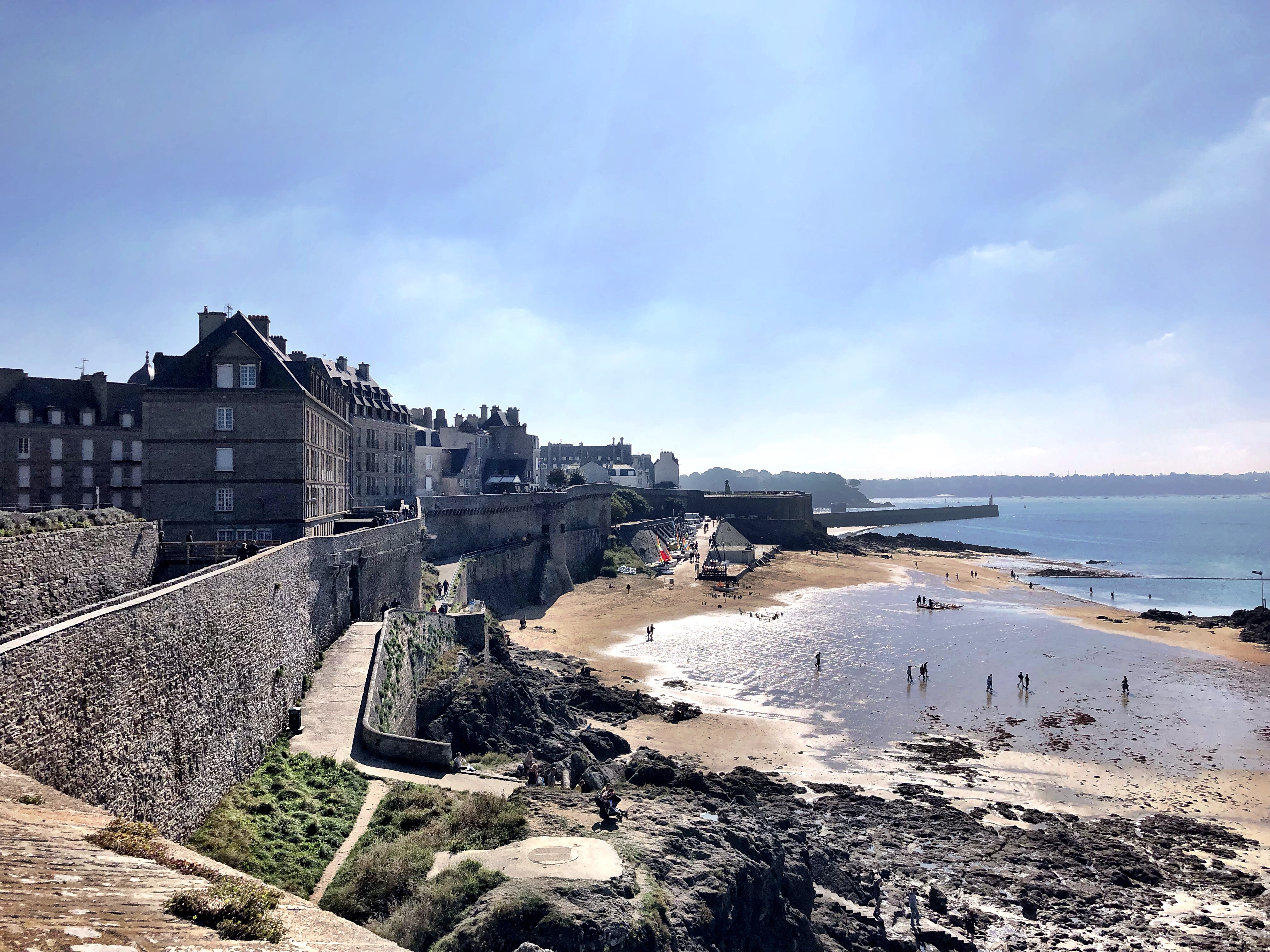
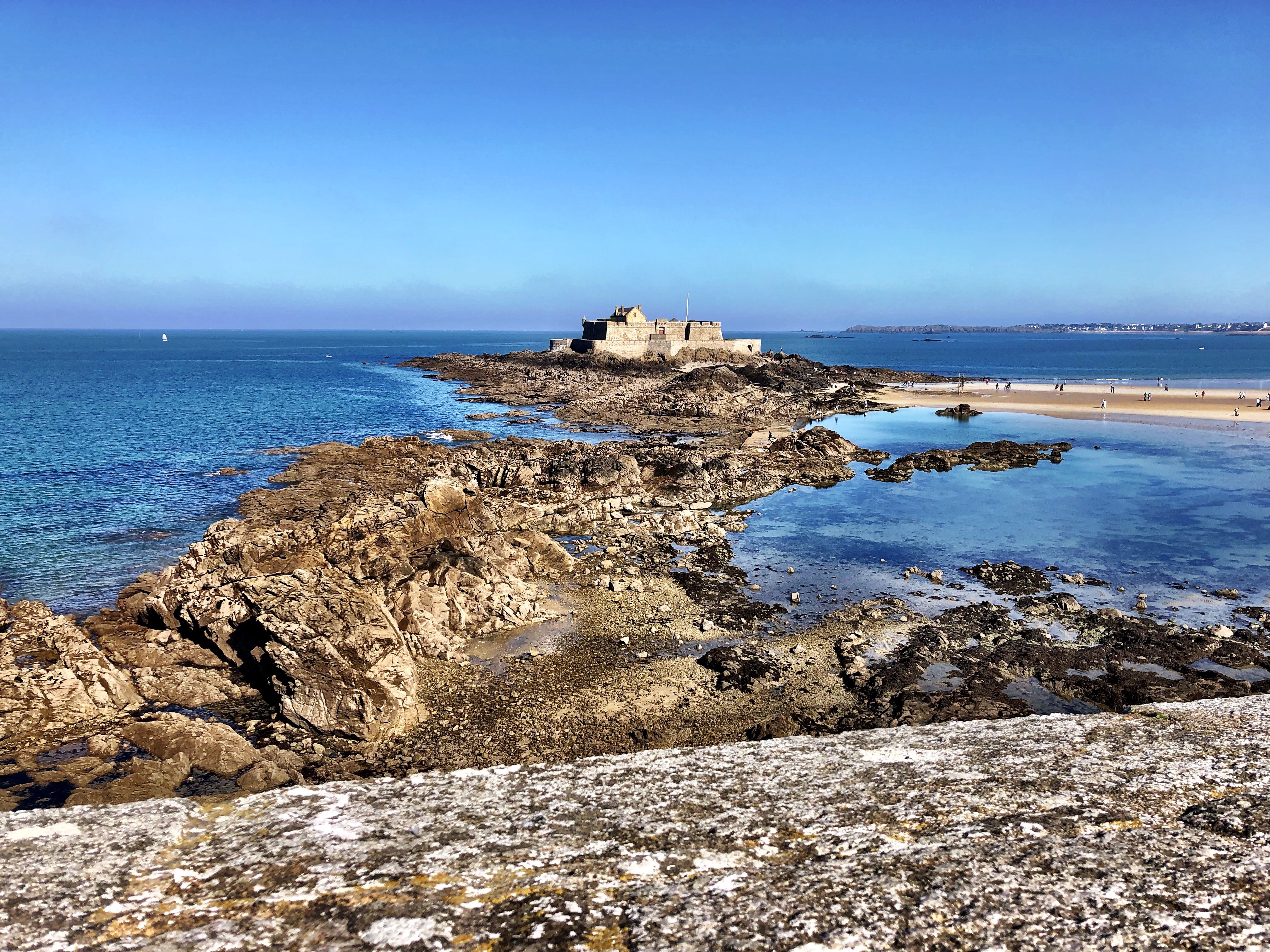
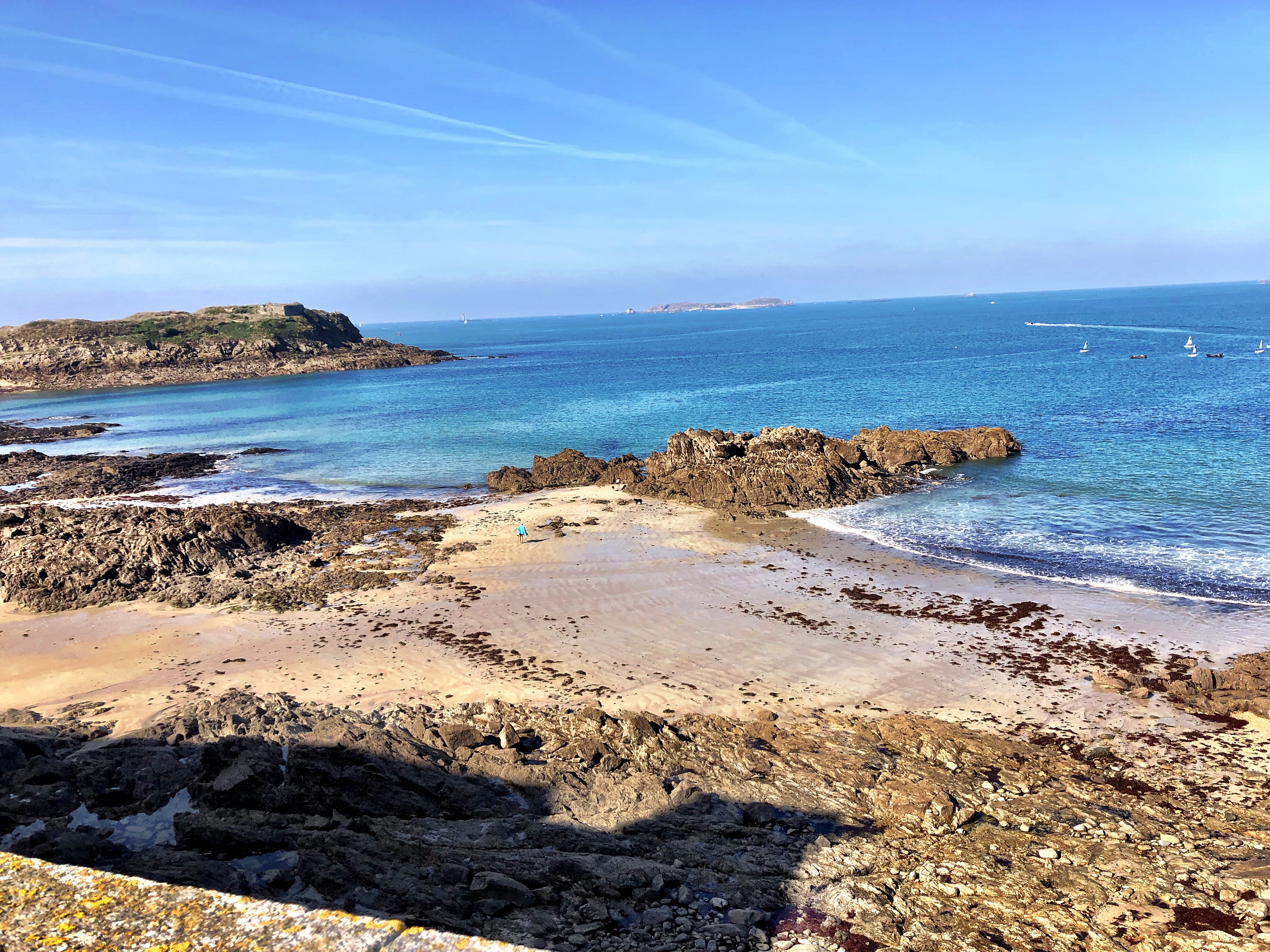
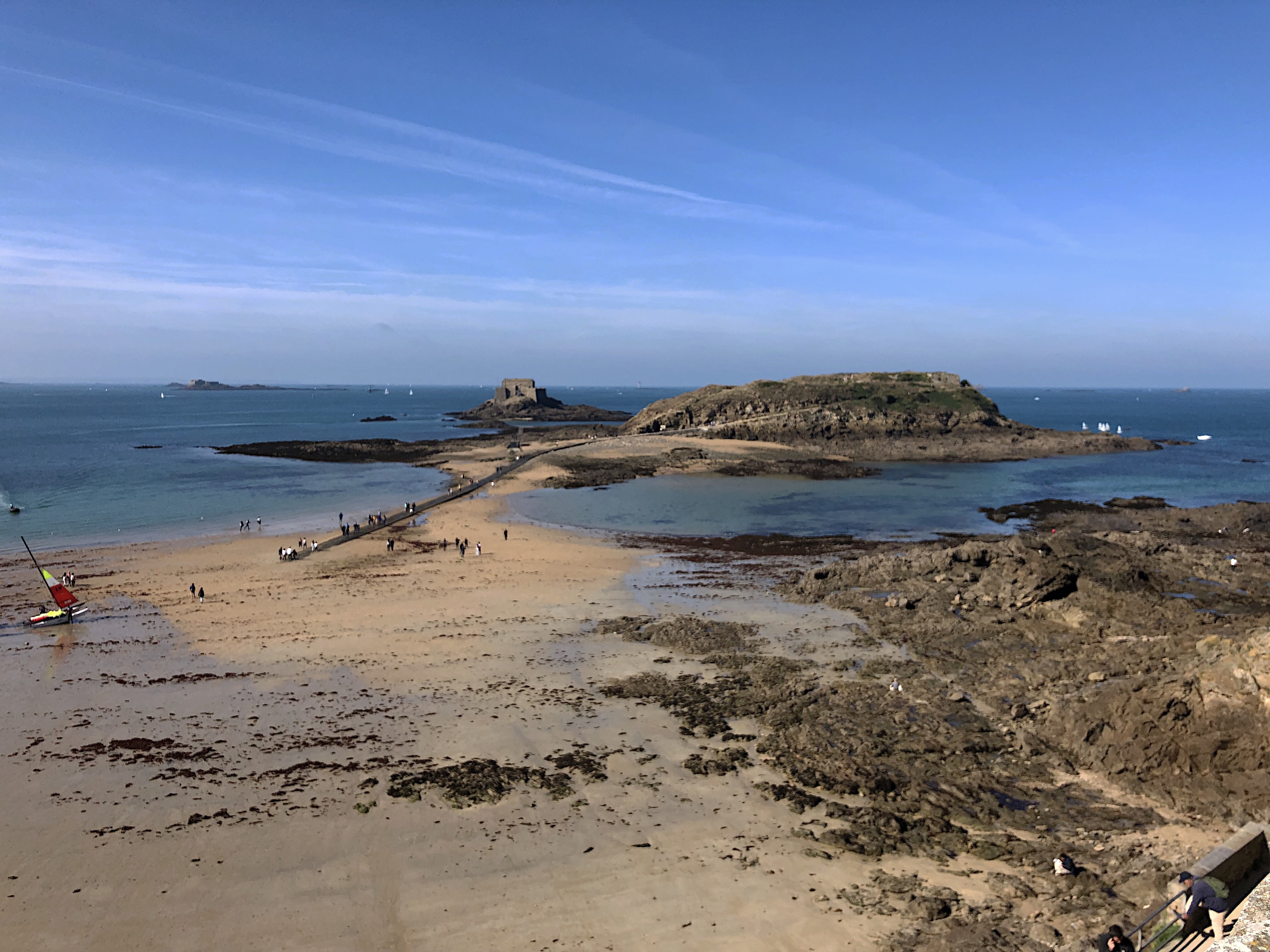
The Beautiful Coastline at the Foot of the City Ramparts
In particular, the ocean views are tremendous. The azure waters surround numerous small rocky islands, many of them topped with smaller forts and gun platforms. There are several stretches of sandy beach at the foot of the walls, punctuated with rocky patches strewn with tidal pools and low-lying causeways leading out to a couple of the islands offshore. Much of this is under water for part of the time. St. Malo experiences a huge tidal range of 13 meters! We were lucky enough to see it at low tide. There is also a large saltwater pool on one of the beaches, complete with several high-dive platforms at various levels. It was nice to see that locals and visitors alike enjoy these beaches, including several dogs happily frolicking in and around the water.
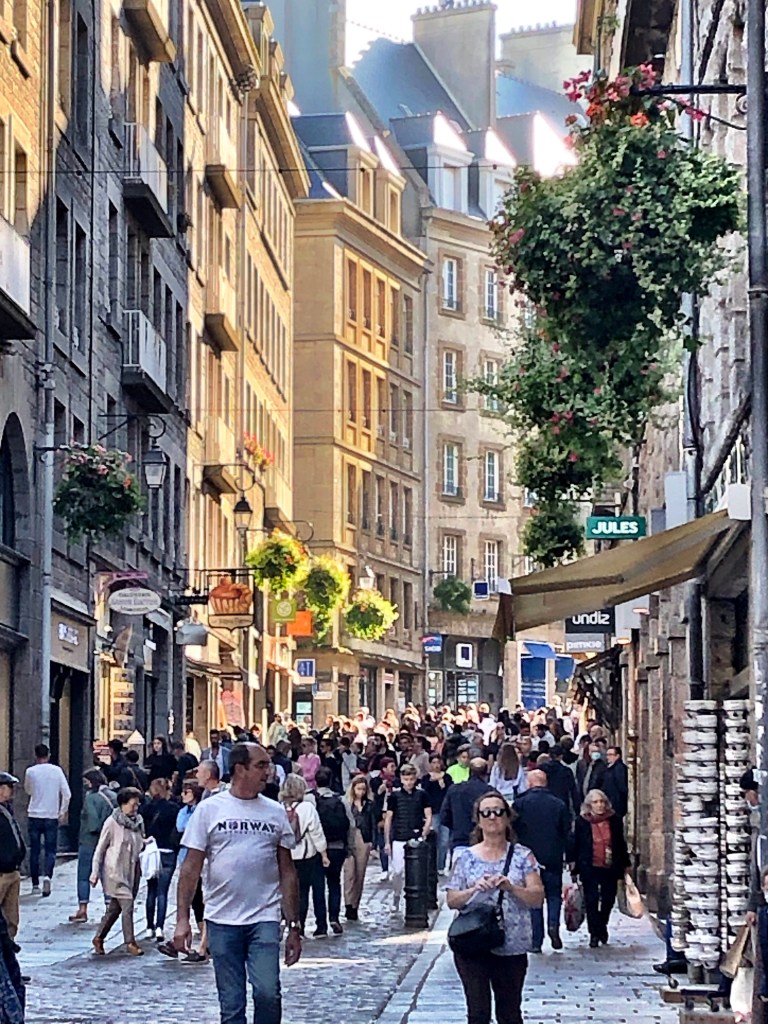
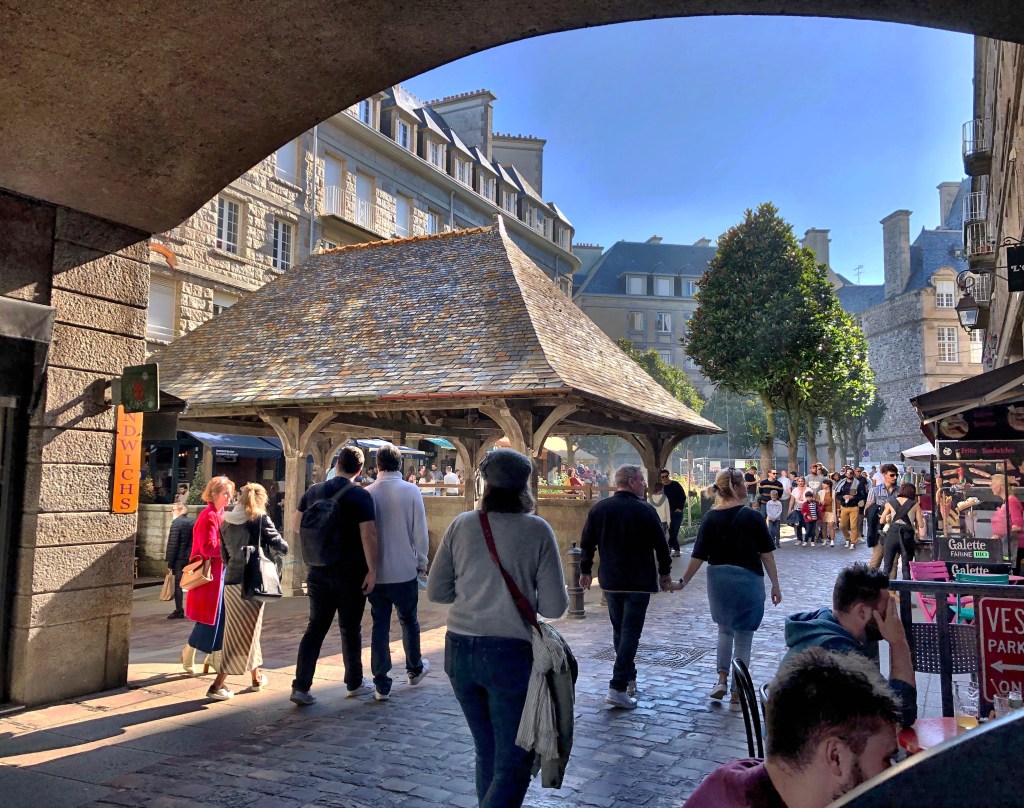
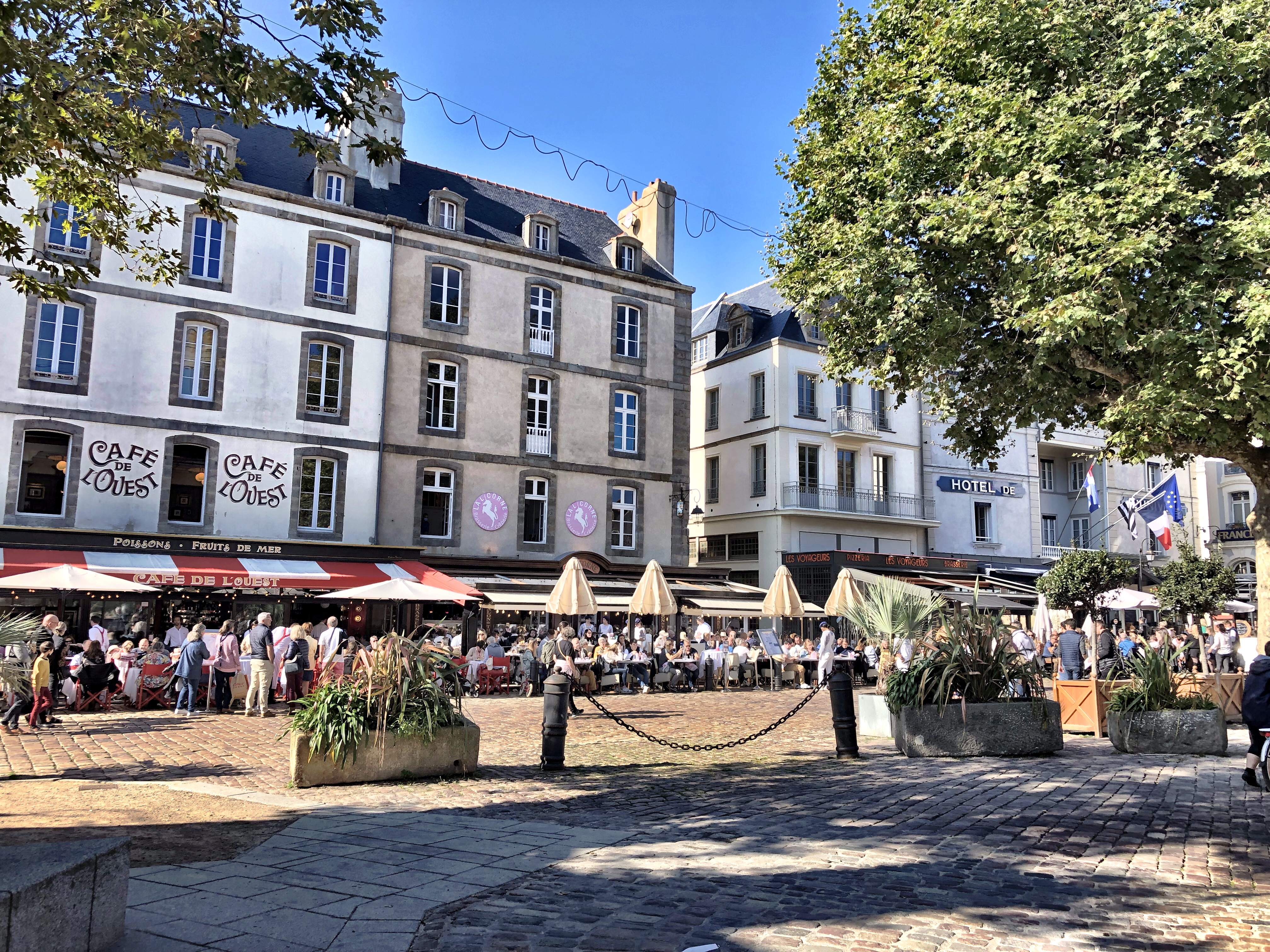
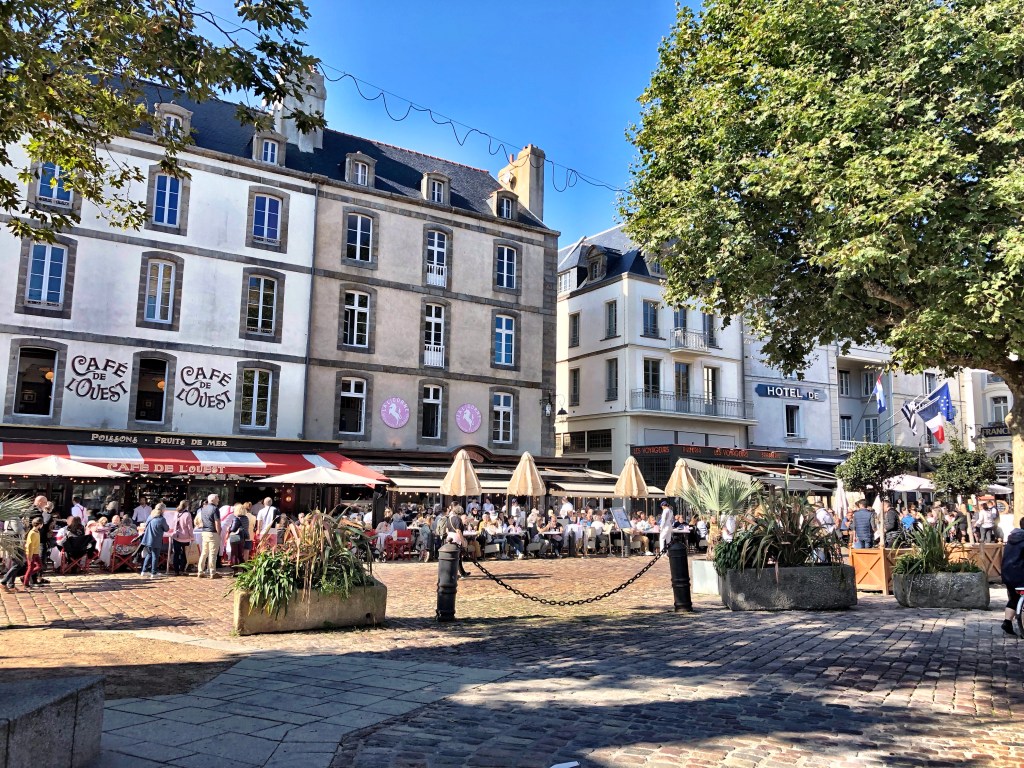
Run for Your Lives!: Tourists on ParadeCherie Leading the Way into a Pictoresque Square
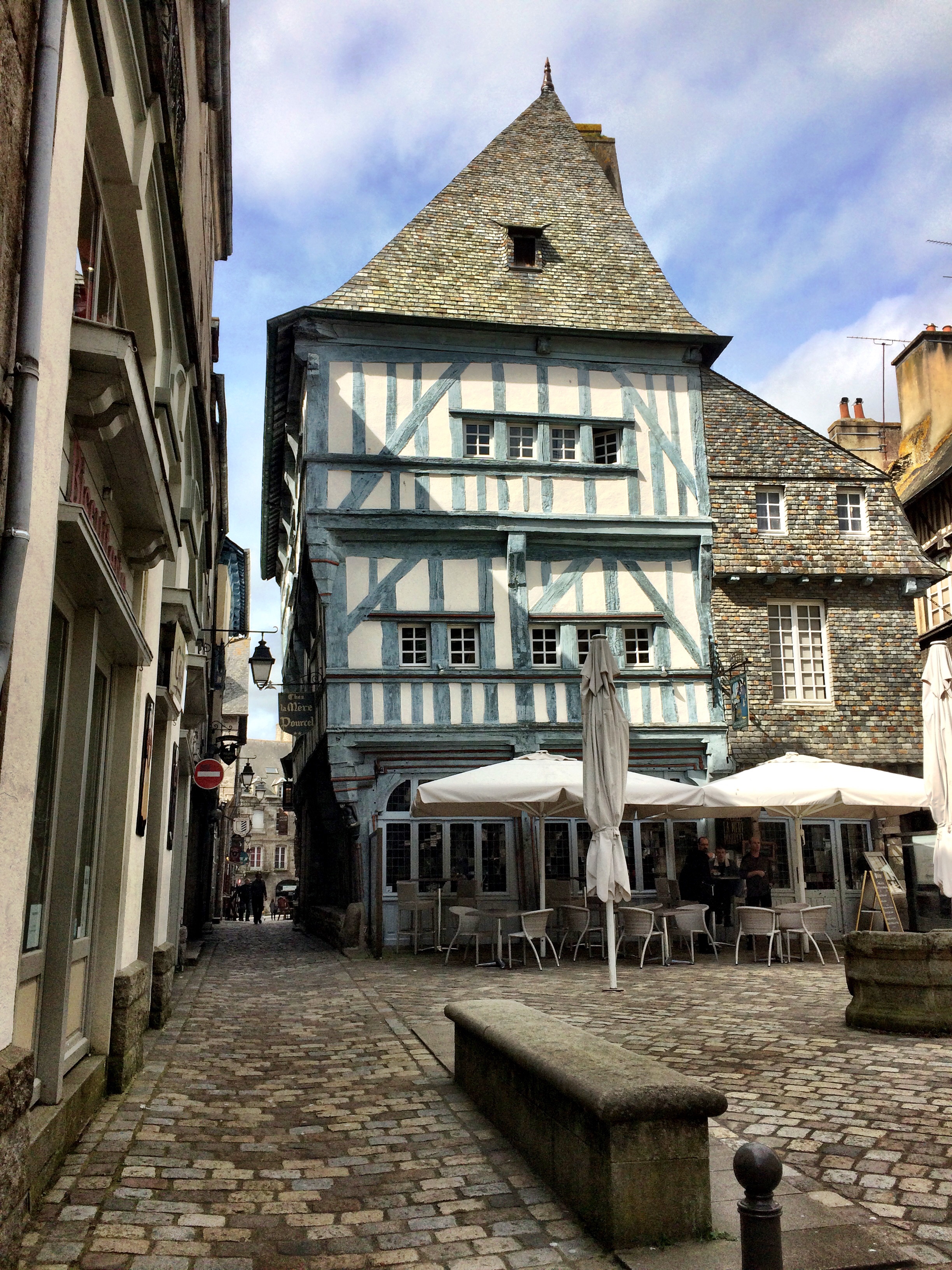
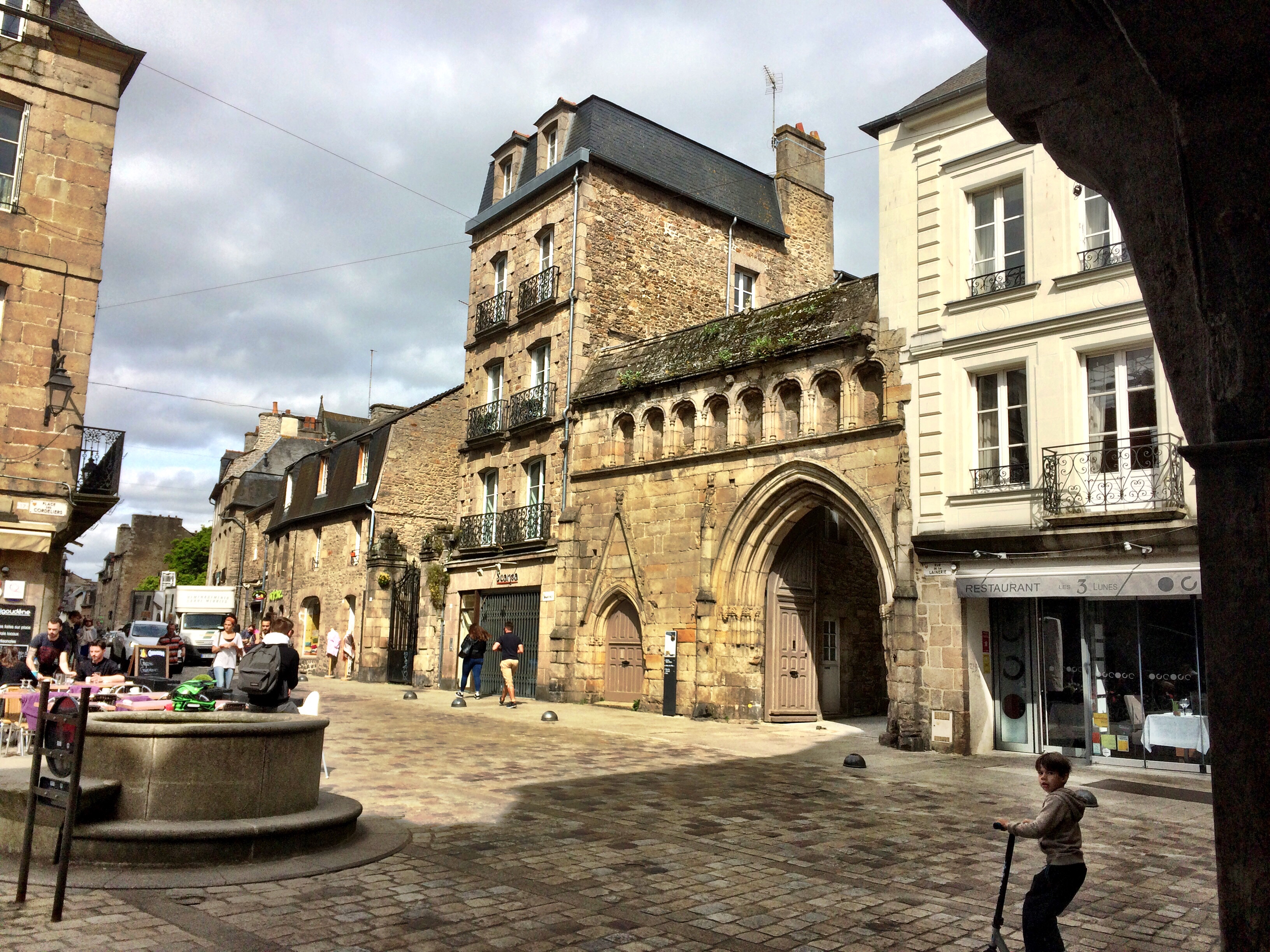
The city inside the walls is equally lovely. Massively shelled and bombed by Allied forces in August, 1944 as German forces refused to surrender, the city suffered extensive damage. Rebuilding took 12 years (1948-1960) and much of what stands today was reconstructed. Even so, the architects tried to replicate what had stood before the destruction of the war. The city streets therefore still exude a charm of previous times in a surprisingly pleasant way. The many cafes, bars, restaurants and shops lining the main streets are well-maintained and attractive – all designed to lure the countless hordes of tourists which visit the town every year. Even though we were there in October and Covid restrictions are still impacting travel, the high streets and walls were thronging with visitors. I can’t imagine what it would be like in the height of Summer sans pandemic.
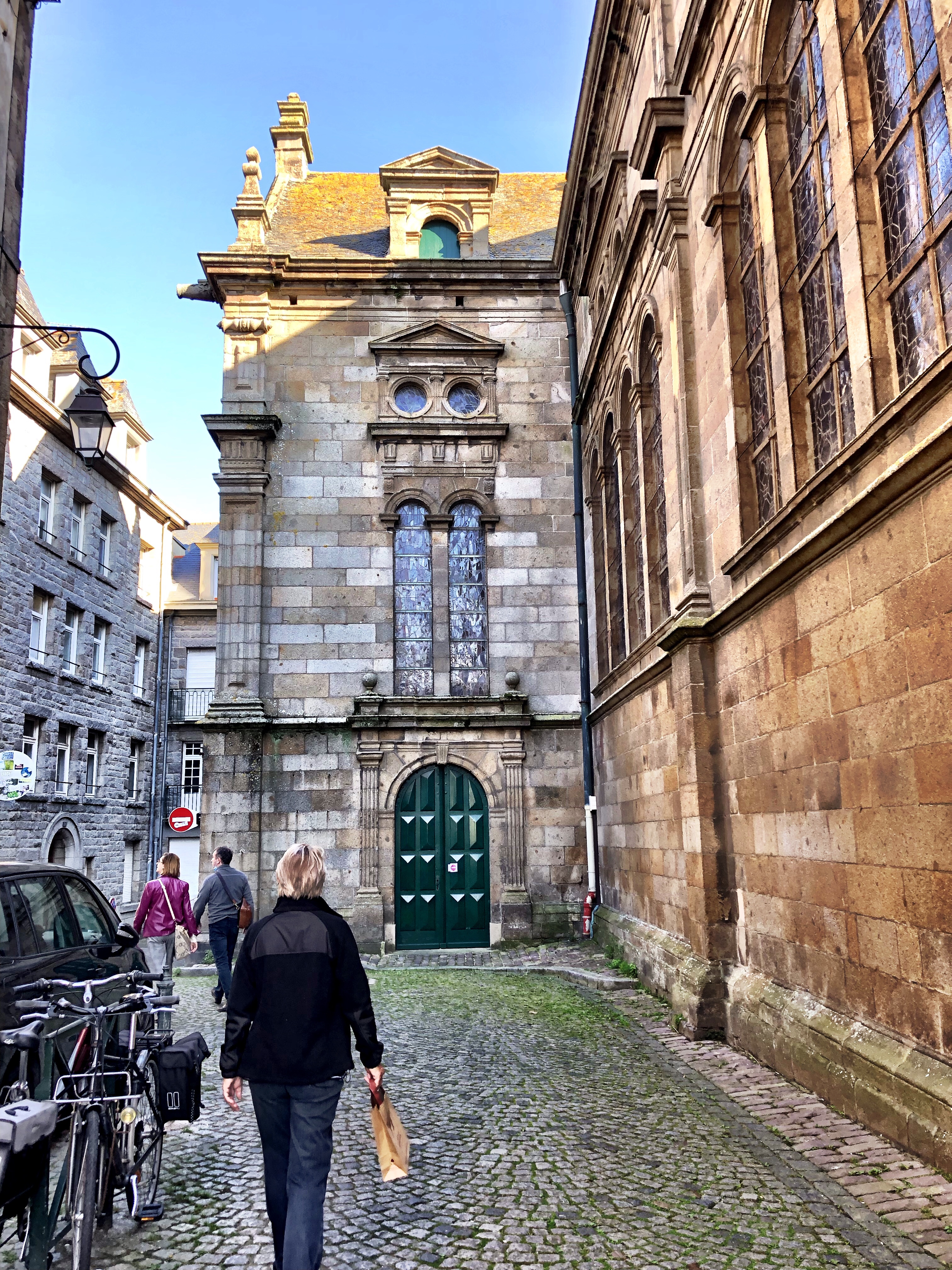
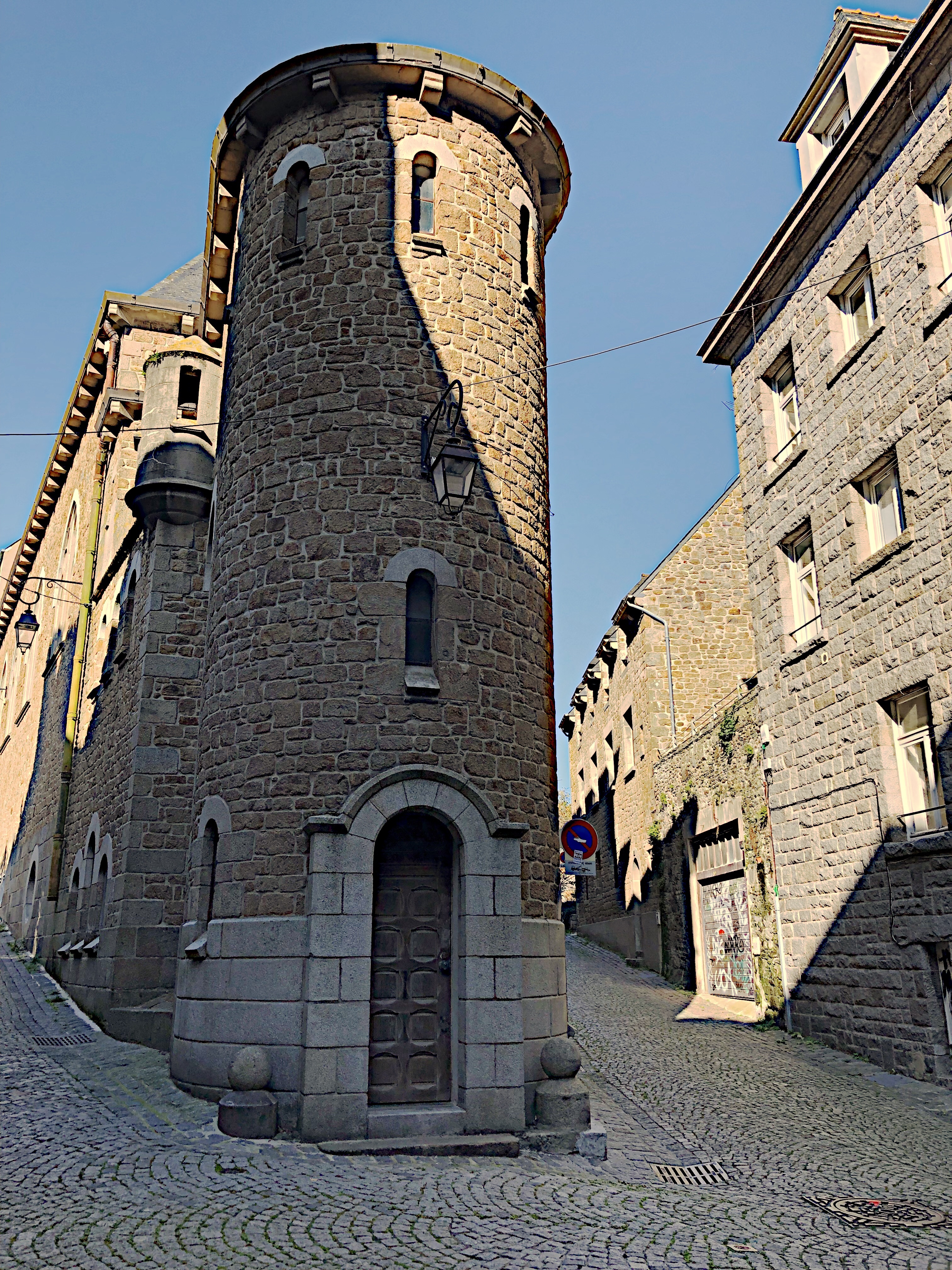
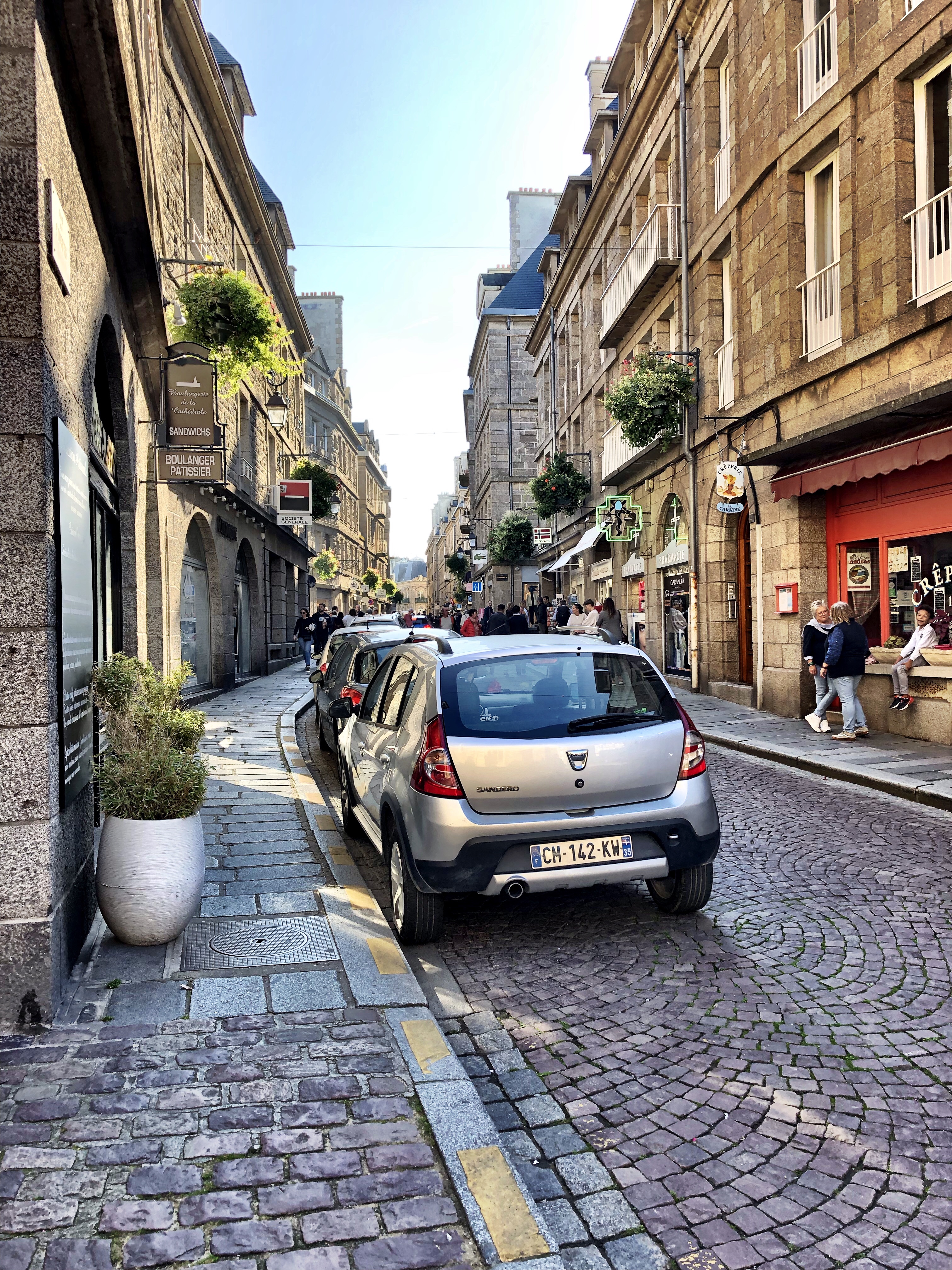
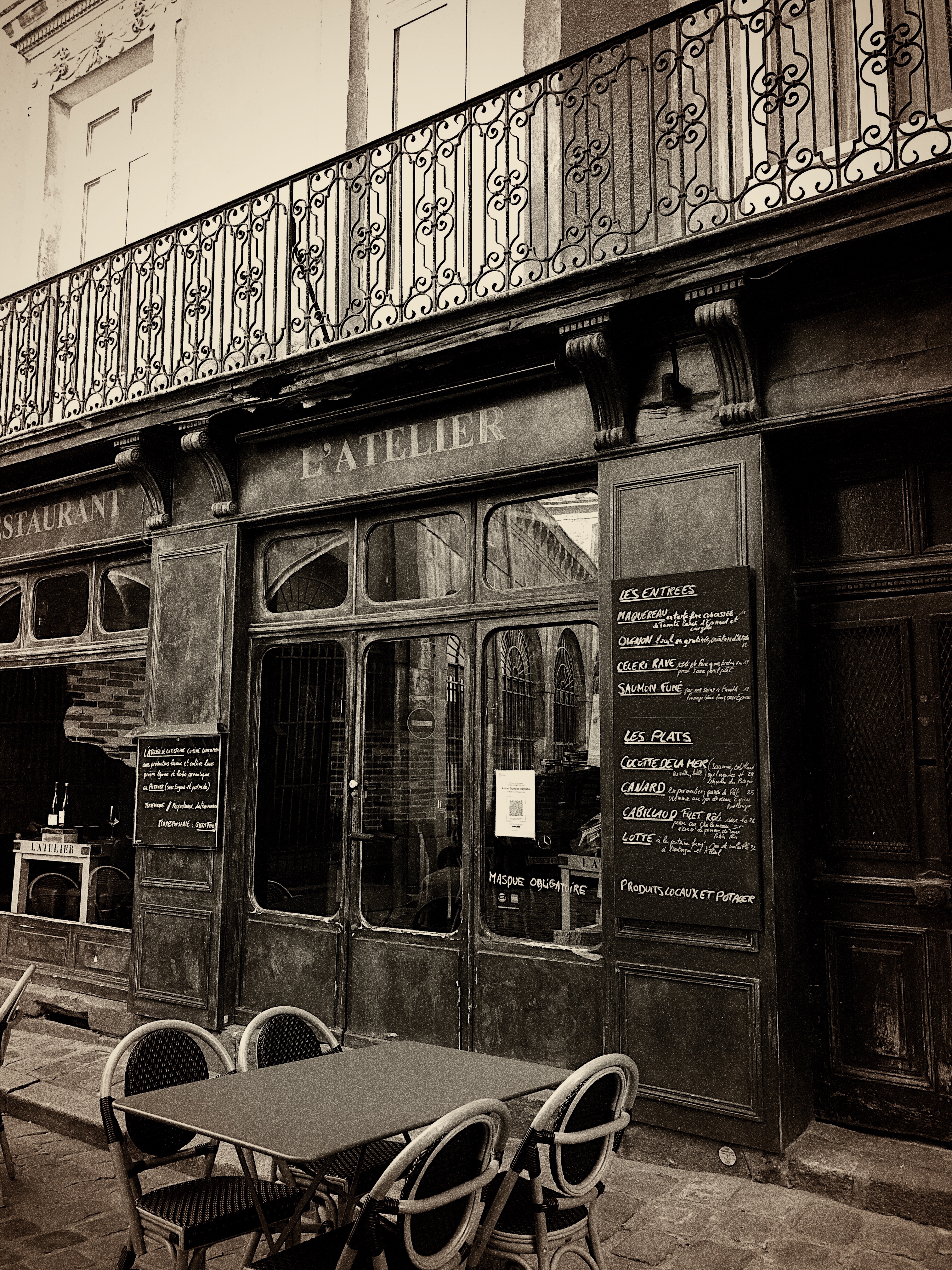
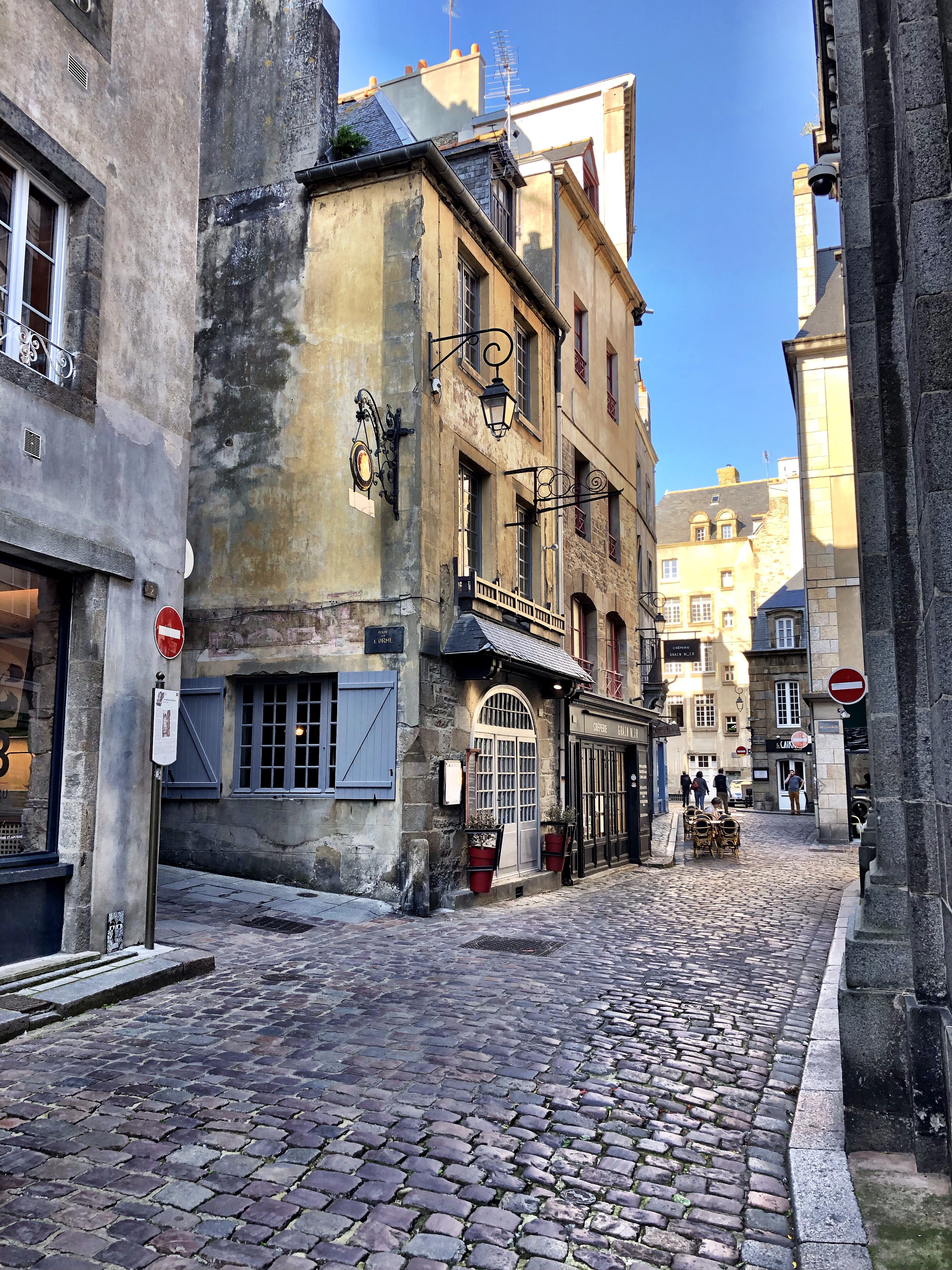
Wandering the Streets of Saint-Malo
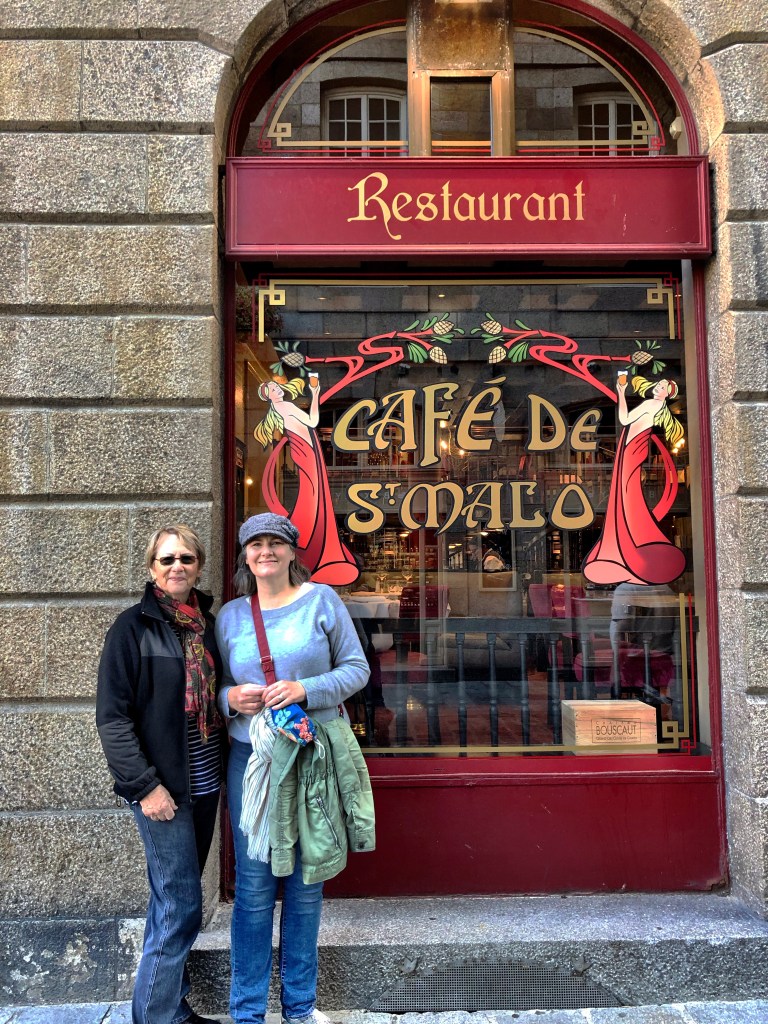
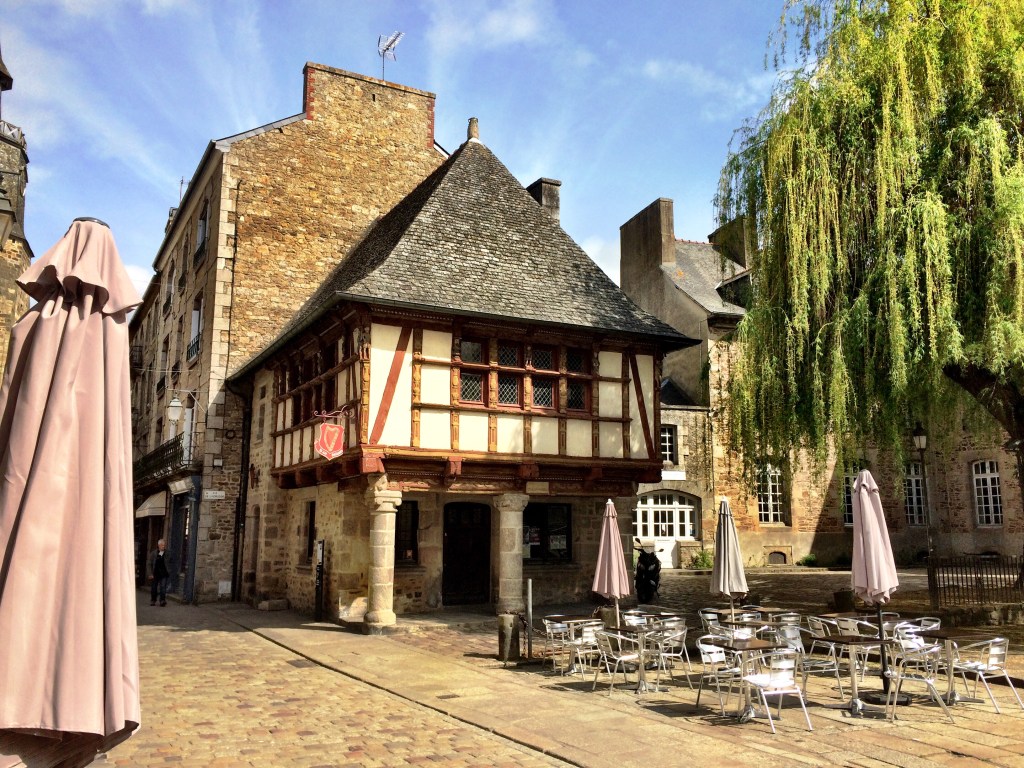
Branching out from the main avenues, the smaller, more narrow and intimate streets were havens of greater tranquility from the madding crowds. These were our favorite areas, harboring old-style coffee shops, épiceries, restaurants, and bars. The ambiance was alluring.
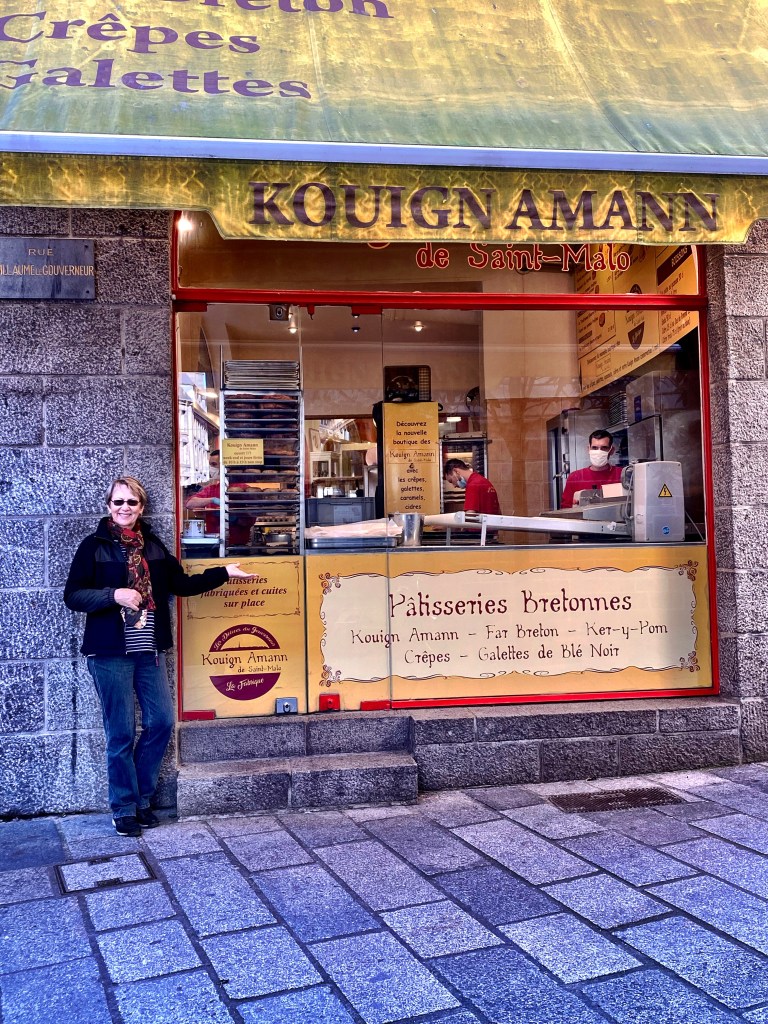
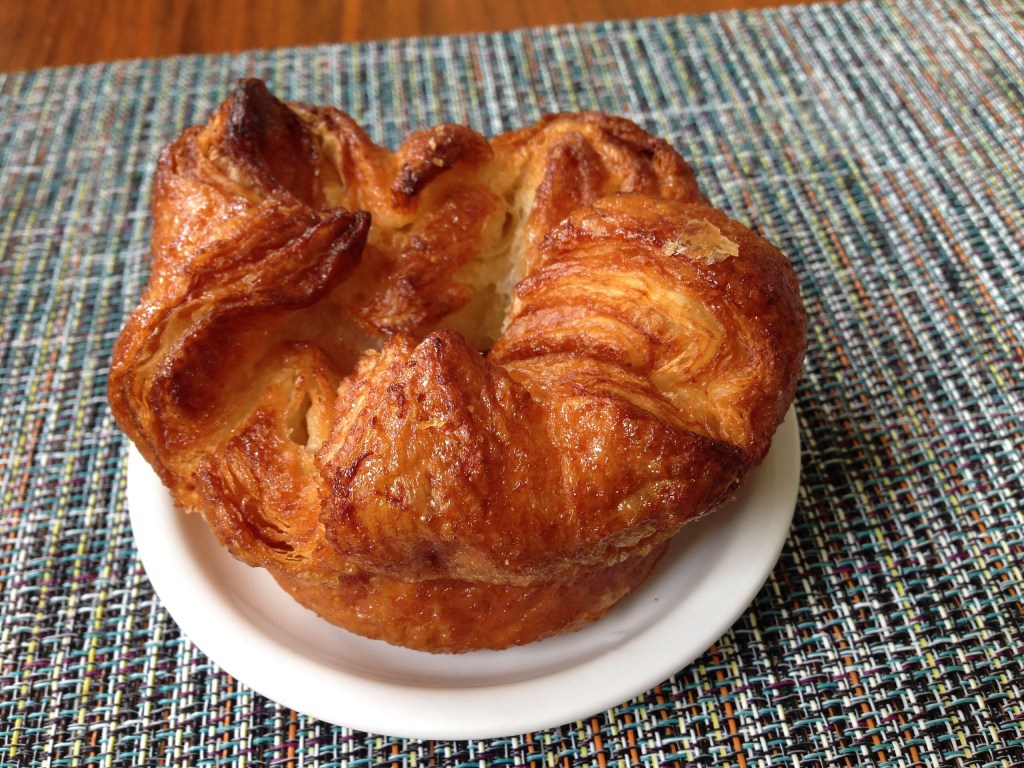
Val, About to Test Out Another Kouign Amann (“queen-ahmahn”)The Fattiest Pastry: We Love You Just the Way You Are
Of course, we stopped for some Kouign Amann (a sweet Breton specialty pastry), amongst other goodies. Unusually, for me, I resisted the urge. Probably because I was so entranced by the interesting architecture and animated street scenes laid out before me. Val has been eager to try out different iterations of Kouign Amann because it’s a recipe which she and her granddaughter Jessica have been working to perfect. So far, she’s been a bit underwhelmed by the offerings she has tried. We have to agree. The versions we had in Seattle were far better. Which is surprising, given that we now live in the birthplace of this really yummy pastry. In Breton, the name simply means “butter cake” and was invented in Finistèretown of Douarnenez in the 1860’s. Apparently, the New York Times dubbed it the most fat-filled pastry in all of Europe. Yeah, baby! That’s why it’s sooooo good. Just a puff-pastry consistency yeast dough filled with butter and caramelized sugar. When done well, it’s a beautiful thing. When not – meh!
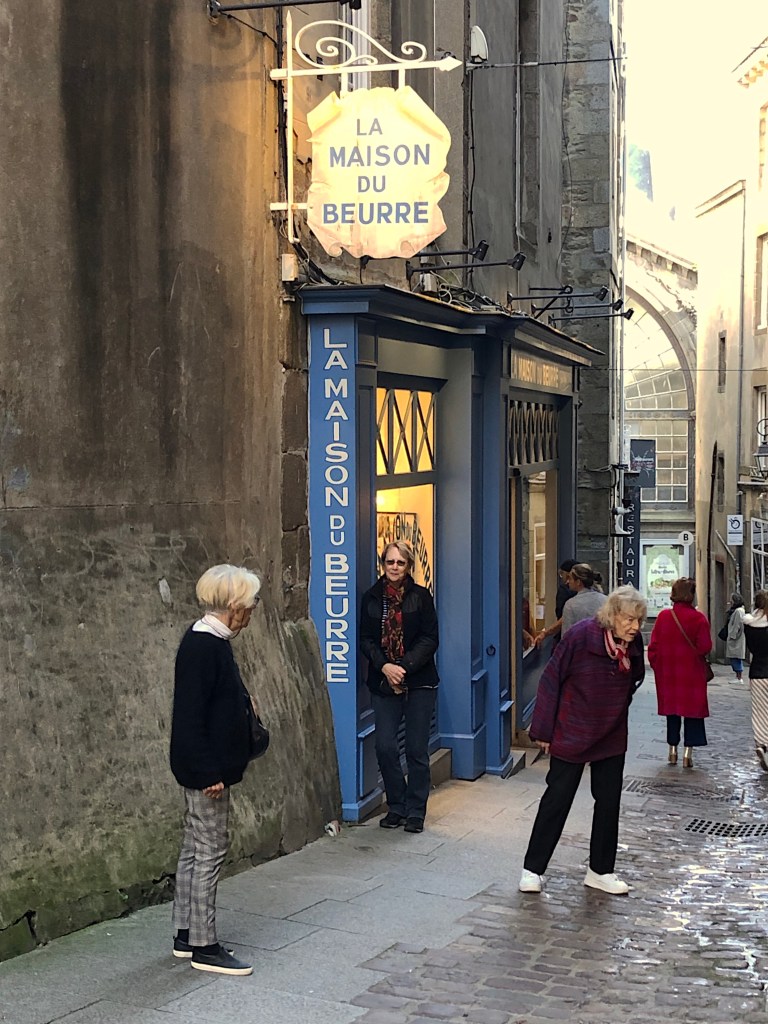
A Bemused Valerie in Front of La Maison du Beurre
Pastries accomplished, we sought out another destination: La Maison du Beurre. No, this “House of Butter” is not actually made of butter. Though nearly so. Situated down a cozy little street off the main thoroughfare, is a pretty blue-fronted shop dedicated to all things butter. I know, right? What could be better than that? They sell cheese too, which is also pretty great. It’s a small shop, packed with amazingly good things. Cherie and Val displayed admirable restraint, emerging with only a small bag of one slab of butter (olive oil and lemon infused), a wedge of cheese (Tomme de brebis Corse), and some apricot/basil paste (trust me, it’s good) to pair with the cheese. We broke into those goodies later that evening and I’m happy to report that they were all voted – by unanimous consent – delicious. None of it will last long. Not in our house!
We visited two churches in town. Well, one, really. The first one we spotted from the ramparts. It looked to be a mix of medieval and baroque architecture and we were intrigued. So we descended from the wall and found the front. But it was not quite what we thought it would be. We should have known by the formal greeting we received upon entering. Not something one expects when entering your average church in France. We quickly discovered that this was a former church, now an exhibition space. We could see right away that the art on display was, shall we say, not to our taste. Lots of large format watercolor renderings of industrial buildings, parking lots, old school structures and the like. But, given the formal welcoming we received, we felt obligated to at least make a show of interested and purposeful viewing of the pieces on display.
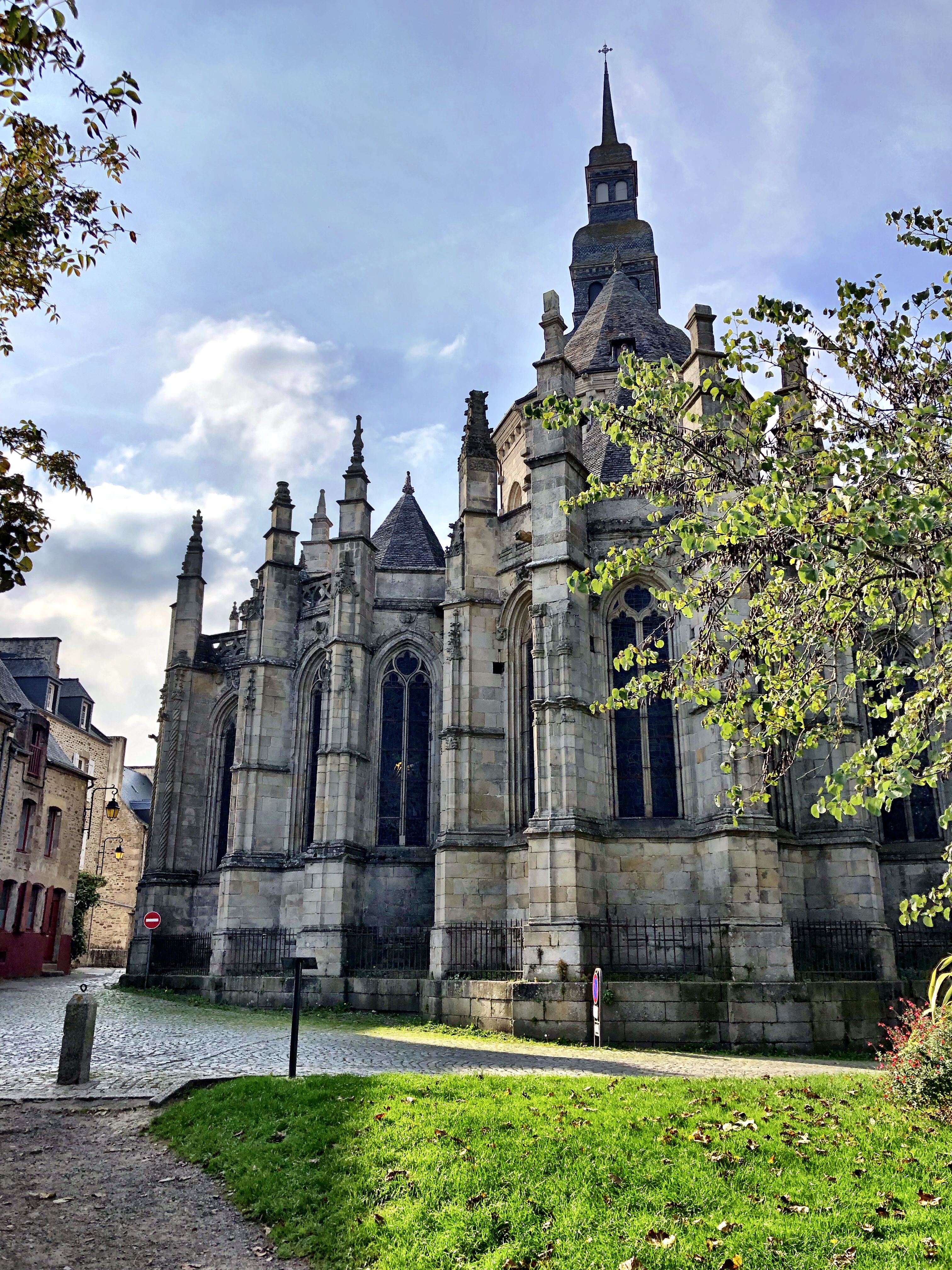
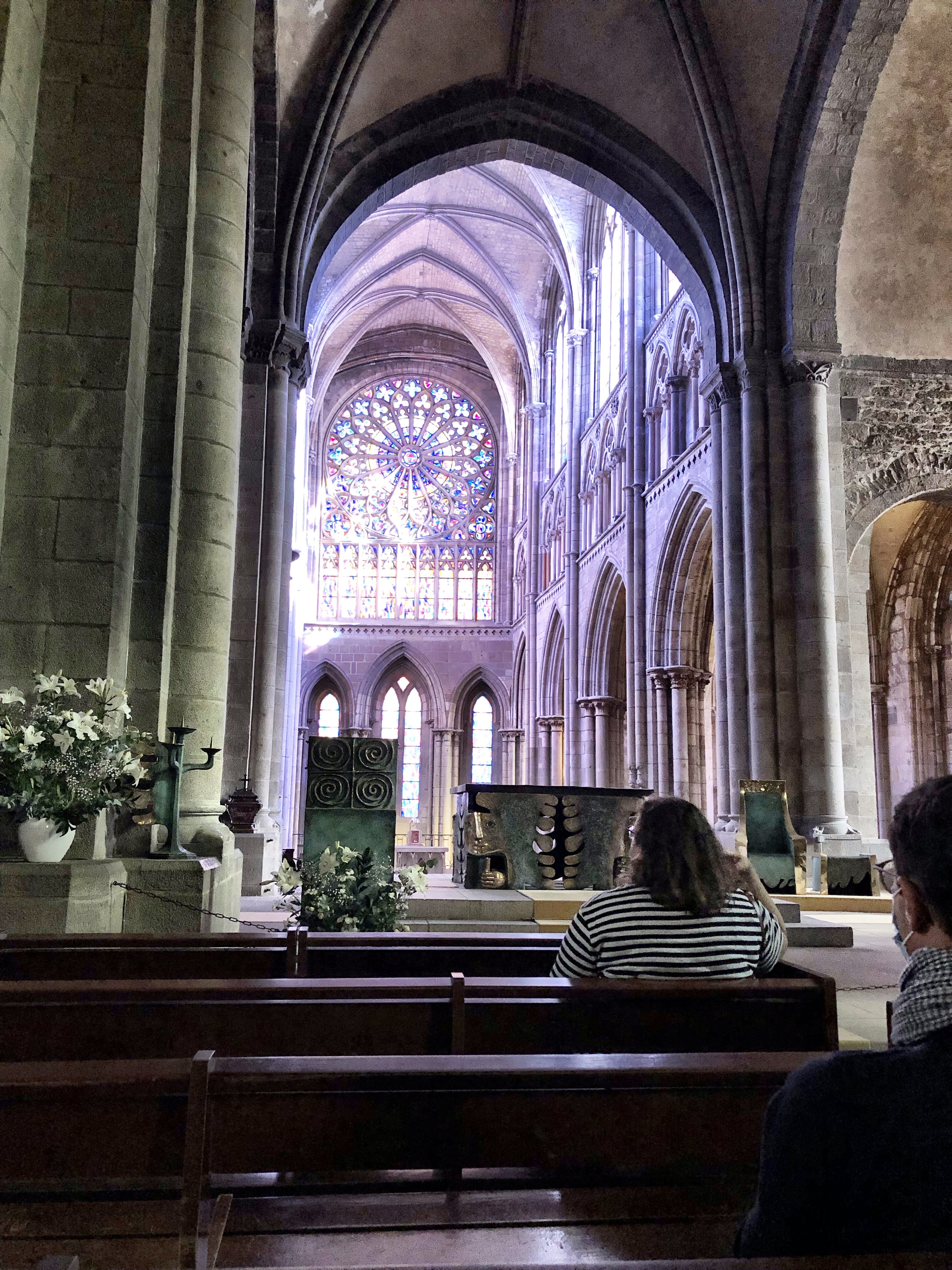
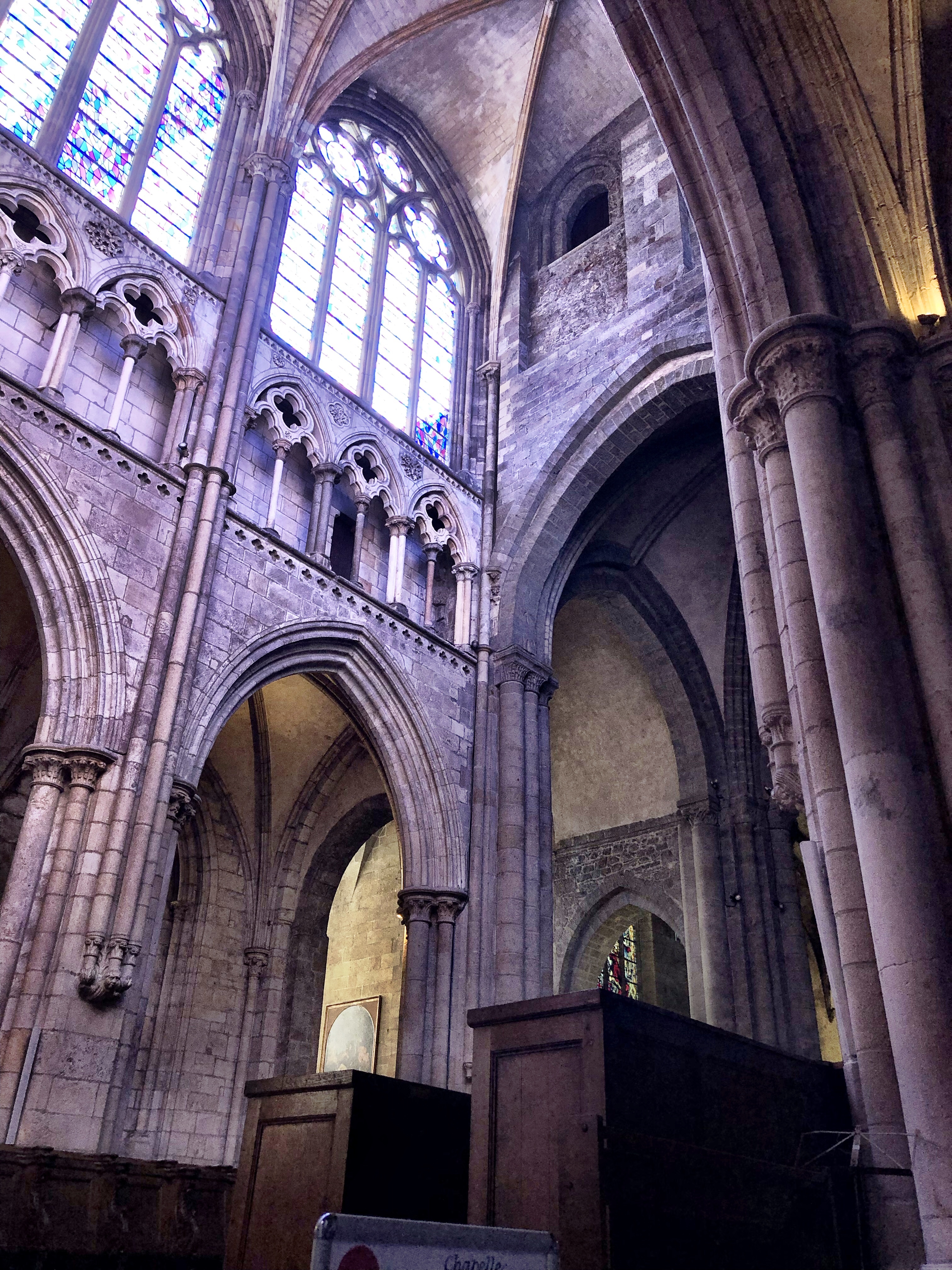
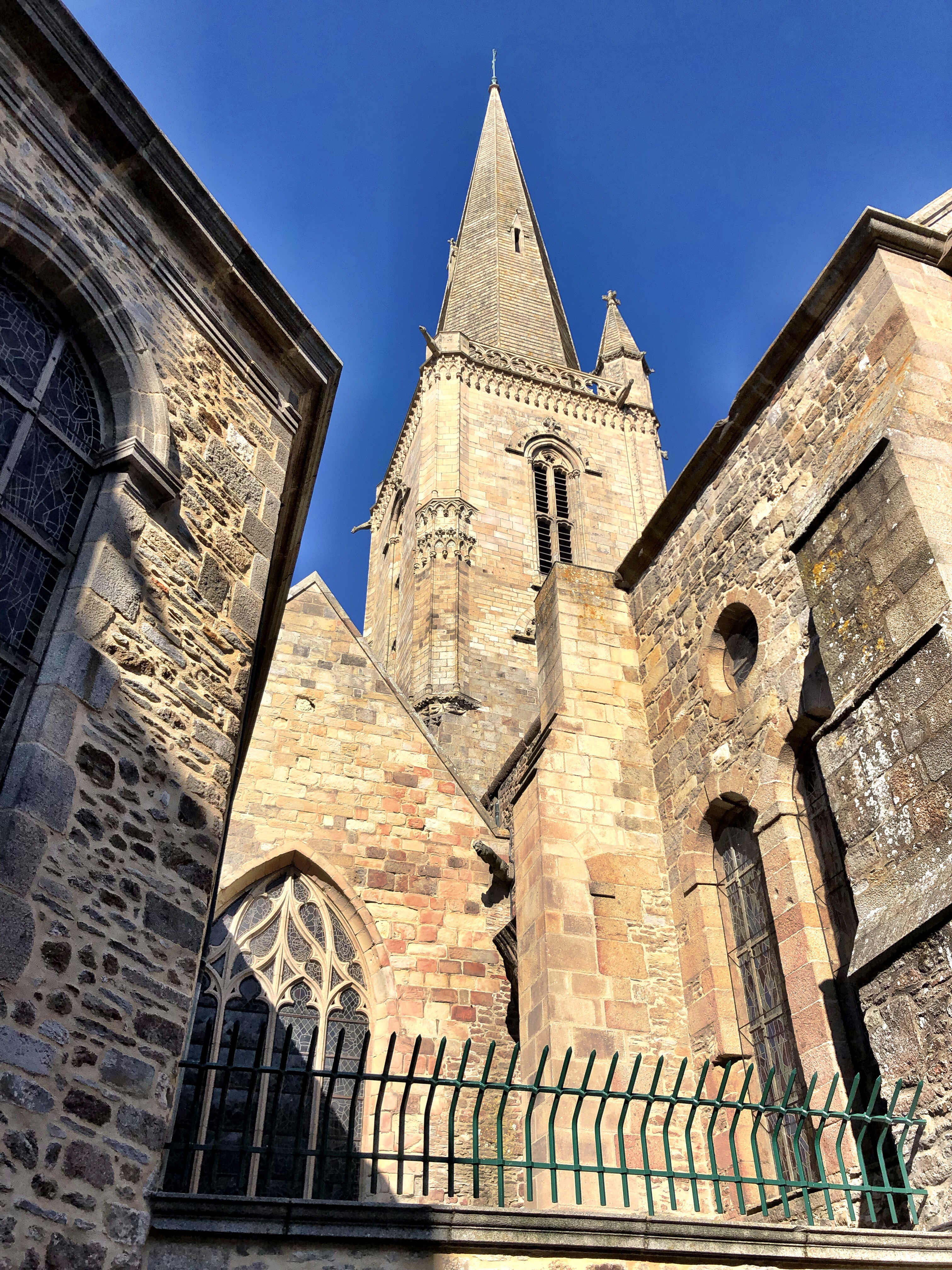
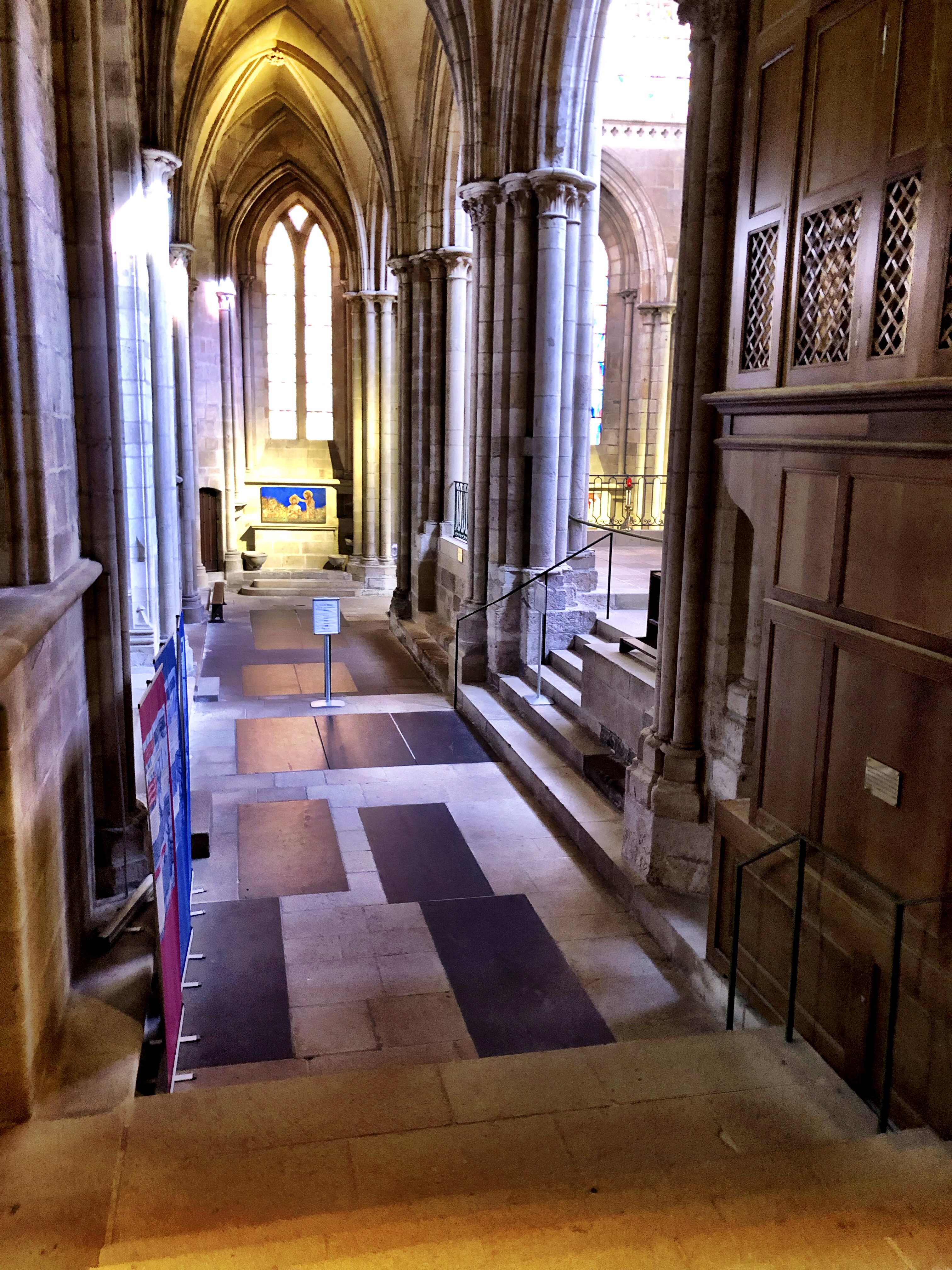
Saint-Vincent de Saint-Malo
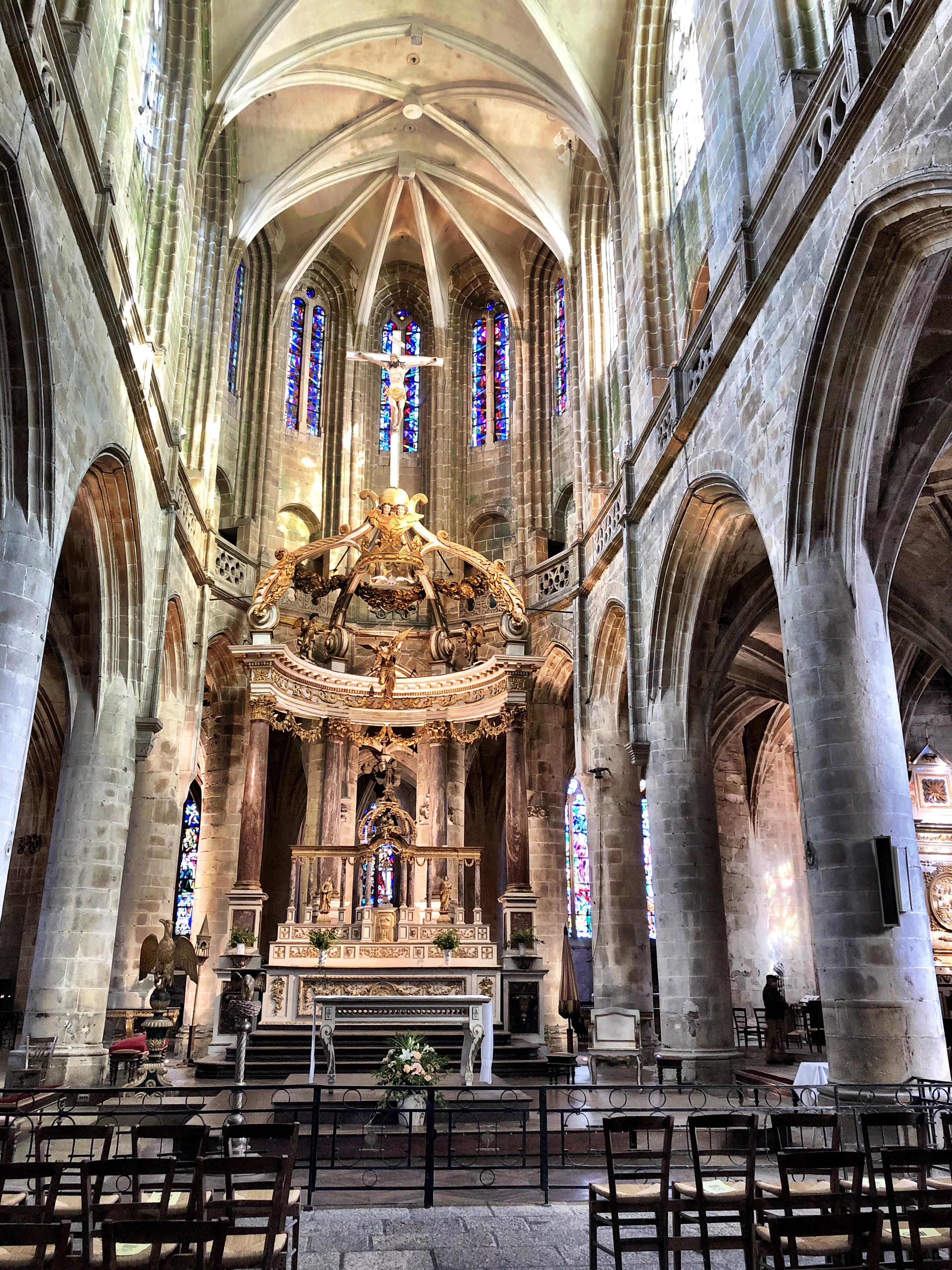
The social graces observed, we exited and returned to the ramparts. Somewhat later on, we managed to find the Cathédrale Saint-Vincent de Saint-Malo. A proper church. Although it is still referred to as a cathedral, it doesn’t appear to be the seat of a bishop anymore. But it was in the 12th century when bishop Jean de Châtillon began construction on the current edifice, built upon the ruins of a succession of older, war-ravaged, churches going back to the 6th century. Additional pieces were added in the later Middle Ages, the Renaissance, and the 18th century – elements of which are on display in this beautiful and interesting church. Of note is the sunken ambulatory which is one level below that of the chancel it surrounds. I’m sure there are other examples, but I’ve never come across this particular type of arrangement in any of the other ecclesiastical architecture I have visited. The famous french explorer Jacques Cartier (a native of St. Malo) received a blessing here before setting off to discover Canada in 1535. Well, if you want to get technical about it, he re-discovered it. Scandinavian explorers had found it centuries before. And, the Indigenous Peoples had been living there the whole time. Still, it was a remarkable feat of sailing and navigation. So there’s that. Back to the theme of war-ravaging, the cathedral was also heavily damaged during the siege of St. Malo in August, 1944. Reconstruction was not completed until 1972. Now whole again, St. Vincent offers a great insight into the history of the city and its people. We love churches and this one was well worth a look.
Place Chateaubriand
St. Malo was a real treat. We were so lucky to have visited during a spate of such glorious weather. Despite some crowded areas and the understandably heavy tourist influence, this city will definitely reward your efforts to get there. If you’re coming by train or ferry, it’s dead simple. By car, it’s rather congested and parking – even in October – was a bit hard to come by. But the city has clearly made significant efforts to accommodate their visitors. We will certainly make St. Malo one of our regular destinations.
October has come and with it a visit from Cherie’s mother. Valerie has made the long trip from the west coast of the United States to spend a few weeks with us in Fougères. And we’re so happy to have her here with us. Valerie is, of course, lovely company and we simply enjoy hanging out with here, wherever it may be. But we are also excited to show her around the amazing place we now call home. As a bonus, she actually enjoys working on home improvement projects, so she has volunteered to help us hang wallpaper in our hallway. Try not to judge her.
Cherie and Valerie in Mid-Hang
After an introduction to Fougères, some preliminary wrestling with papier peint (wallpaper), and maybe, just maybe, a few pastries here and there, we decided to take Valerie on a day trip north to Normandy for a few hours. First up: Avranches. A town of around 10,000 souls, Avranches is situated high on an escarpment overlooking the Baie du Mont-Saint-Michel just over the regional border that separates Bretagne from Normandy. It’s only a 30 minute drive from our house but we have never really explored the center of town. It was time to redress this oversight.
Avranches Centre-Ville Under a Looming Sky
Avranches has an ancient and interesting history. The town stretches back to at least the classical period when it was a Gallo-Roman settlement in the province of Lugdunensis. Its name was originally Ingena. But after the fall of the Western Roman Empire, it began a centuries-long evolution to Avranches, derived from the celtic tribe inhabiting the area: the Abrincatui. Early on, in the 6th century, Avranches became an episcopal seat, and remained so until the Revolution. The area has seen frequent conflict – from viking raids in the 10th century, to the D-day invasion in the 20th, and everything in between.
Église Notre-Dame-Des-Champs
We really enjoyed our visit to Avranches. The centre-ville is quite pretty, with beautiful and interesting architecture running the gamut of styles and periods, pleasingly landscaped borders and gardens, towering churches, and lots of active shops and restaurants. All are within easy walking distance. Parking was easy with a large lot conveniently located in the center of town.
Valerie and Cherie About to Breach the Castle Walls
We arrived in town around noon on a cool but sunny day and found ourselves wandering toward the ruins of the old castle. There are substantial vestiges of the medieval fortifications, including ramparts and towers. They have all been well-conserved. Although only a small part of the château now remains, the town has cleverly incorporated garden areas amongst the stone ruins. It is quite well done, with small, intimate areas where one can take an outdoor lunch or simply enjoy the pretty plantings pleasingly juxtaposed against the stone structures enfolding them at various levels. Within this complex of ruins is the Scriptorial, a museum of jarringly modern concrete box form which houses a large collection of medieval manuscripts that were formerly in the libraries of the abbey of Mont-Saint-Michel. Wisely, we did not attempt a visit. For I could easily have spent the remainder of the day there, engrossed in the beauty of such magnificent works of knowledge, art, and craft. I’m at least self-aware enough to realize that not everyone shares my mania for medieval books and art. Weird, huh? Still, it’s a visit for another time.
Fish & Chips; Satisfied Customers; and a Good Local Beer
Our stomachs grumbling, we disembarked from the castle ruins and sought out a nice little place for lunch. As luck would have it, we found one close by. In fact, you could easily hit it with a rock from the castle ramparts. Not that we tried, mind you. Val enjoyed a nice slice of quiche (smoked salmon and leek) while Cherie and I both had the fish and chips. Topped off with some tasty beer, we enjoyed a lovely meal.
Left to Right: Jardin des Plantes; Fall is Fast Approaching; If You Squint, Mont-St.-Michel Stands Distant/Center
Refueled, we stretched our legs with a walk through the streets of the town center, ending up at the Jardin des Plantes. This 3 hectare botanical garden was formerly a monastic park but now houses a large variety of plants and trees, as well as a not-inconsiderable population of goldfish and koi. It’s a well-designed park with several distinct areas threaded together by clear pathways and meandering streams and ponds. The most striking feature is the belvedere, a broad area with an expansive view over the low countryside to the west. In the distance is a clear view of the broad tidal bay and Mont-Saint-Michel itself. Twelve kilometers away, our poor smartphone cameras could not adequately capture the dramatic majesty of the panorama laid out before us. Suffice it to say: très cool!
View of L’abbaye de Hambye Church and Eastern Range
Avranches was nice, but our primary goal was to visit the Abbaye de Hambye. So, off we went. After a short drive north on the autoroute, it’s a pleasant roll through the Normandy countryside of lush, rolling hills and deep dells spotted with dairy farms and the occasional hamlet. It’s really beautiful scenery there, accentuated on that day with blue sky and patchy white clouds creating dramatic lighting over the scene. Many twists and turns brought us to an ancient stone bridge spanning the Sienne river. Bordering the eastern side of the river is the precinct of the old benedictine abbey which once thrived there for centuries. The abbey is situated in a flat valley, surrounded by stony slopes blanketed by oaks. It’s an idyllic setting and, frankly, our photos simply don’t do it justice. But, hopefully, you get the general idea.
Left: the Garth – Right: the Farm Buildings
Our Lady of Hambye Abbey was founded in 1145, reaching its peak of prosperity in the 13th century and then slowly declining until the last monks left the place a few years before the Revolution. In the 19th century, the many monastic outbuildings appear to have been used for farming until the whole complex was inscribed as an historic monument and protected. It’s now partly under private ownership, the abbey church and some other parts owned by the regional council. But the whole site meshes nicely and there is plenty to see.
Clockwise from Top Left – Sacristy; Monks’ Parlour; Fragment of Decorated Wall Plaster; the Chapter House; Kitchen; Kitchen (further view)
Even though a good deal of stone was taken (vandalized, in my opinion) from the church, and the entirety of the cloister was removed, the original plan of the monastic complex is still clear. A well-written and succinct visitor guide comes with the price of a ticket provides excellent descriptions of the major areas. But I was so transfixed with the glorious medieval religious and lay architecture that I barely glanced at the guide. It’s a tremendous example of a monastic community from the Middle Ages and several of the rooms – the chapter house, sacristy and kitchens in particular – have been nicely restored/conserved and furnished. I spent a few minutes just sitting quietly in the chapter house, soaking up the atmosphere and marveling at the medieval builders and sculptors who created such beautiful and evocative spaces. A surprisingly good deal of original lime plaster and painted decoration remains on the walls of several chambers. It’s a direct glimpse of what the monks and lay brothers must have seen in their own time, and real pleasure to see in the 21st century!
Left to Right – Apple Mill; Juice Press; Cow Manger
People often forget that monasteries in the Middle Ages were complex corporate enterprises that required sophisticated management or resources, finances and personnel. At Hambye, it’s easy to see how much the abbey relied upon farming and management of the waters, fields and meadows that supplied the monks with all they required. Many of the farm outbuildings are still visible. One of them includes a large cidery housing a massive crushing wheel with a circular stone trough, and a huge juice press with armatures formed from entire oak (or perhaps beech) tree trunks. Super impressive!
Poetry in Stone: the Abbey Church
The abbey church is the most ruined part of the site. Much of the shell of the structure remains, but it is largely open to the elements and, sadly, the flooring is no more. Nonetheless, it’s a dramatic piece of architecture. Large, soaring, but still it must have been an intimate place of worship for the lay and monastic brothers residing at Hambye. Many of the columns are heavily inscribed with graffiti from visitors who felt the need to carve their marks over the past centuries; some of it is quite beautifully done. Despite being only a ghost of what it once was, it doesn’t take a great stretch of the imagination to form a mind’s eye view of how this church must have appeared when in use. A stroll through the forest of columns and pilastered walls, the side chapels, the nave and ambulatory is evocative. One can easily see how visiting victorians would be inspired to compose romantic poems of nearly opaque allusions to the mists of time as they trod the silent stones.
Oooh, La Vache!: a Brook, a Pasture, and a Contented Cow
All three of us thoroughly enjoyed our long afternoon visit to L’abbaye de Hambye. It was one of those quintessential conjunctions of fascinating history, dramatic architecture, a bucolic setting, pleasant weather, and the best of company (if we do say so ourselves). It couldn’t have been better. Well, okay, a tea shop with pastry, could conceivably have been a nice bonus. But that would have been almost too perfect – if there is such a thing. Regardless, it was a truly memorable day in only the absolute best sense of the word. A visit there is highly recommended. And, unless you’re an utterly hopeless philistine, you won’t be disappointed that you made the effort.
Not a Philistine – An Especially Good Day in France!