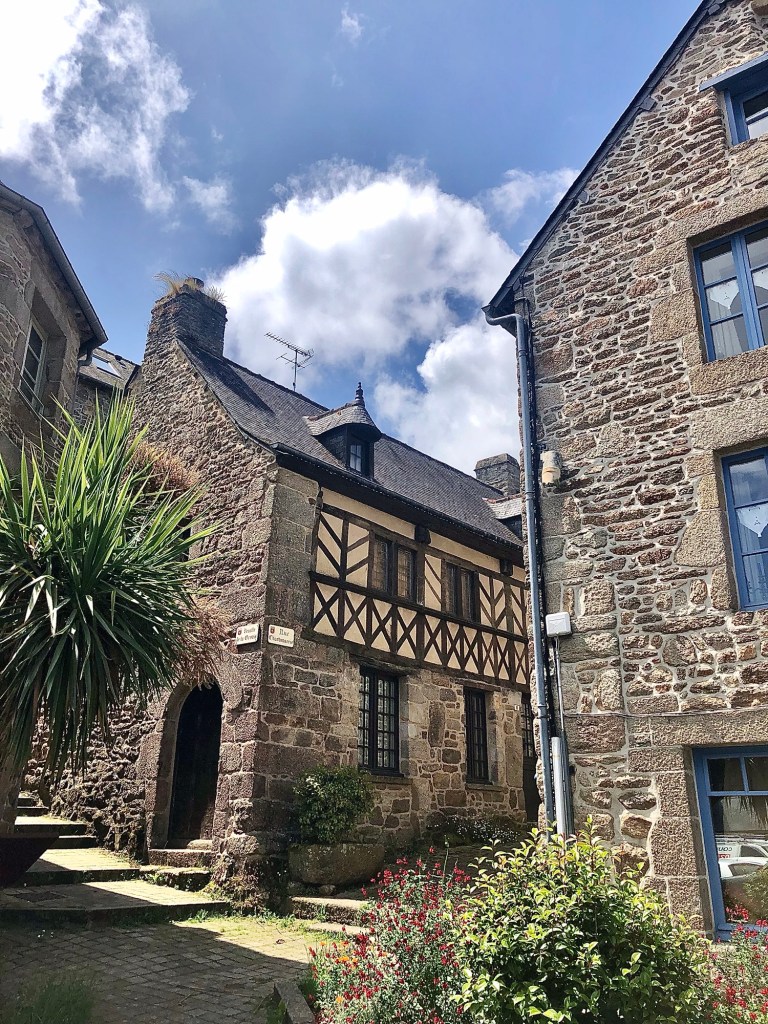
Admiring the Streets of Moncontour

Treasures Around Every Corner

It was the middle of the week. We had finished yet another changeover for our holiday rental the previous day. Feeling a little tired, we decided that a quick exploration would be just the ticket to revive our spirits. The other day I had seen a short video online about a town which looked kind of interesting. Winding streets. Centuries-old architecture. A history reaching back for centuries. Definitely our kind of place. The ville of Moncontour has attained the coveted designations of being a Petite Cité de Caractère, as well as one of Les Plus Beaux Villages de France. Not bad, we thought.
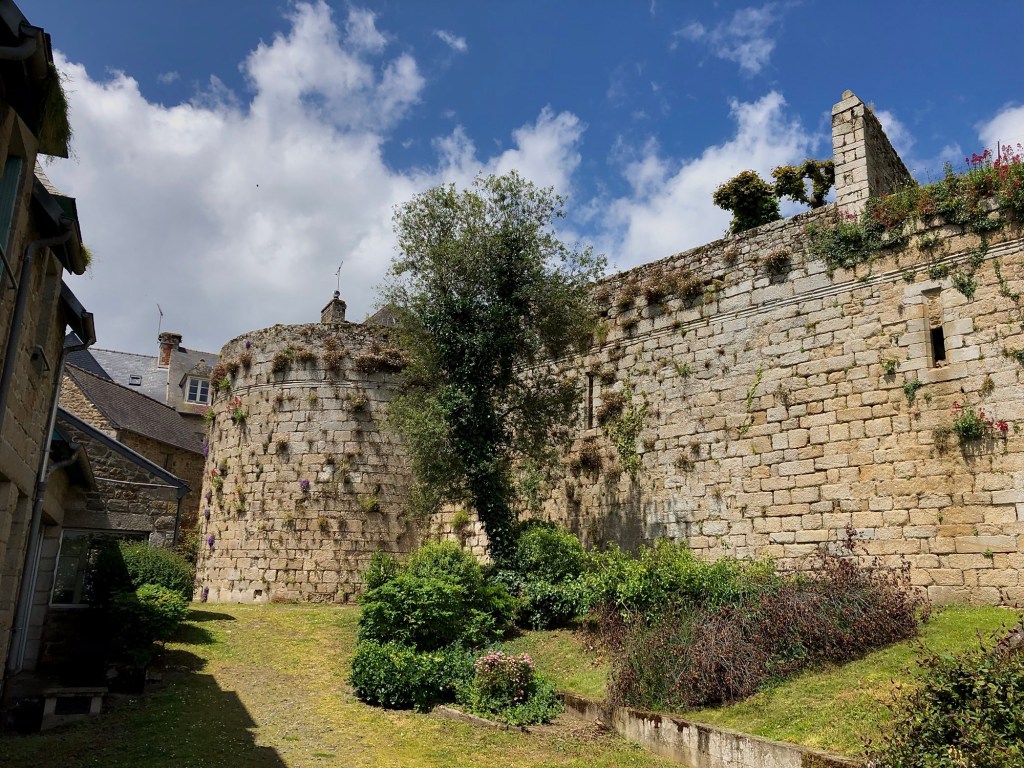
The Old Town Defences

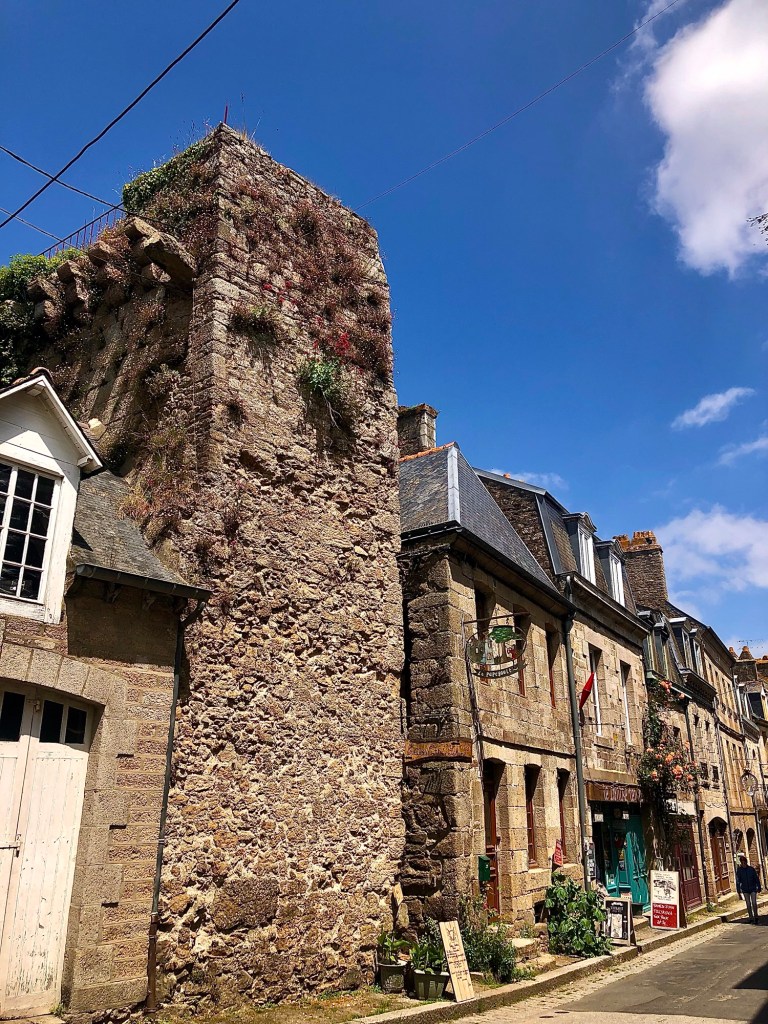
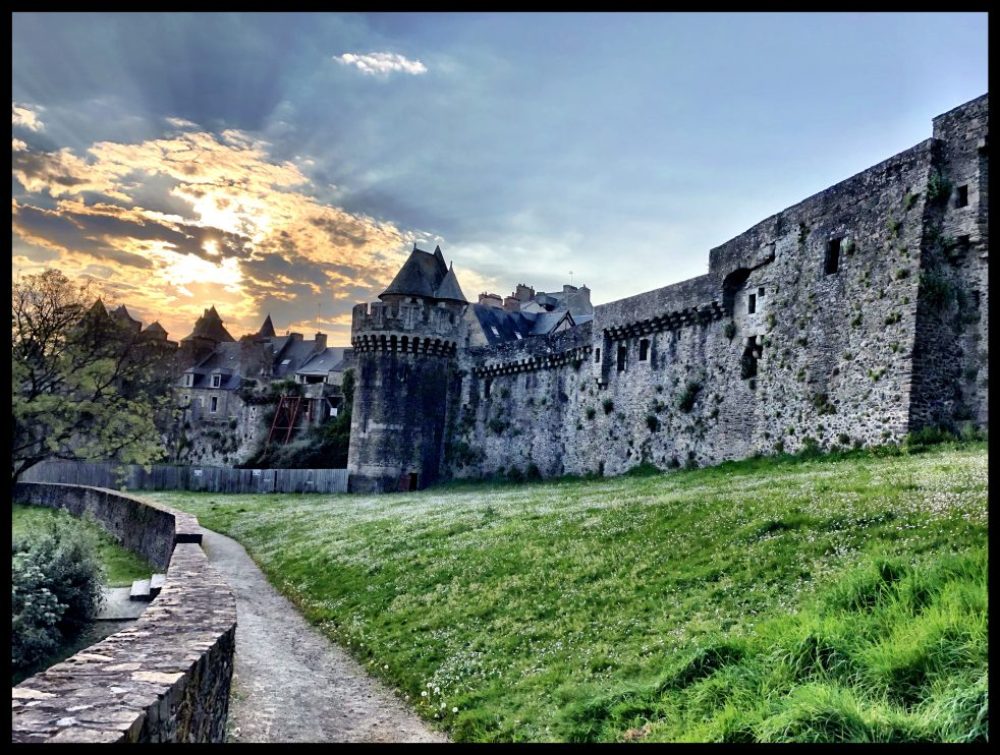
It seems that there was a settlement at Moncontour as early as the 7th century. The later medieval town developed on top of a narrow, rocky escarpment situated at the confluence of two small rivers. Its purpose was to guard the western approaches to Lamballe, then the capital of the area known as Penthièvre. The ville was encircled with strong stone ramparts and round towers, clinging to the steep slopes that tumble down to the waters below.
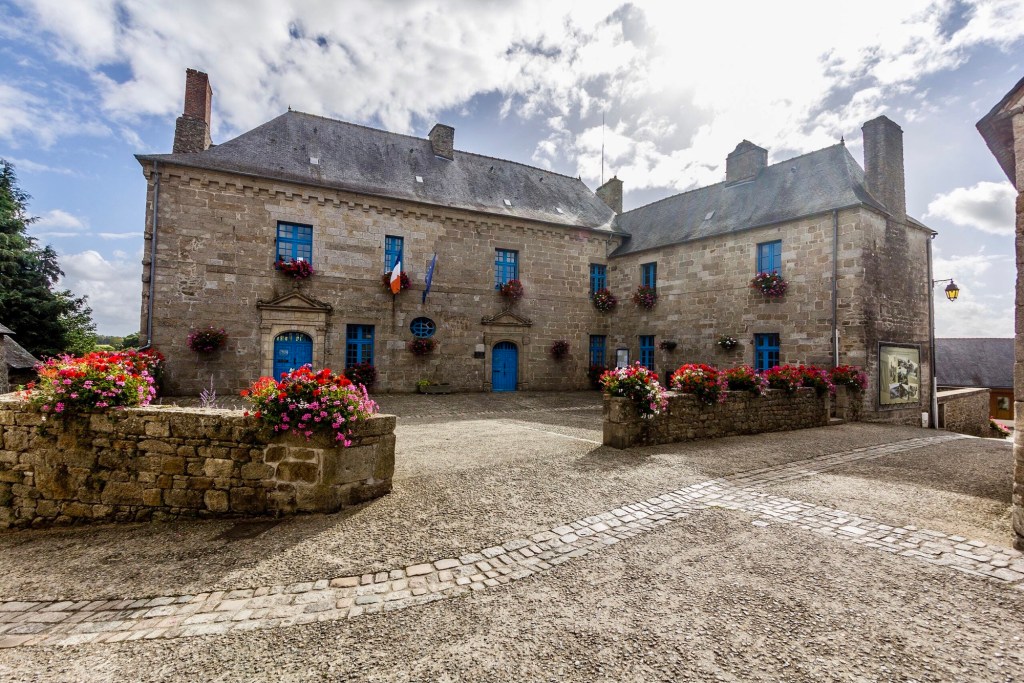
L’Hôtel Kerjégu (now the Mairie) – a 17th c. Testament to Moncontour’s Past Grandeur

Although the town expanded through the centuries, it appears to have changed little since the 17th and 18th centuries. In the past, it thrived on the weaving of linen and hemp cloth, exporting these goods through the ports of St. Malo and Lorient to Spain and the Indies. By the 1790’s, the town boasted more than 2,000 inhabitants. But a slow decline over the ensuing two centuries reduced the population significantly. By 2021, only 745 people made Moncontour their home.

Once We Were Giants

From Fougères, we drove an hour-and-a-half westward to Moncontour. It sits about 24 kilometers south of Saint-Brieuc in pretty countryside, surrounded by rocky hills and steep-sided vales. One enters by climbing up the ramp-like approach that mounts the side of the escarpment. Once on top, you are surrounded by lovely old buildings. Once regal and proud to display their proprietor’s success, many of the ancient homes now bear a patina of diminished fortune and a want of population to support them. For the visitor, it presents a charming age and is pleasantly evocative of the past centuries. However, I am not so sure it is as reassuring to those who live there.

Commerce

Moncontour is not a town for shopping. There are precious few shops, though we did pass by a fine-looking bookshop. If you are looking for something sweet to take home (or eat in the street if you can’t wait), then the patisserie on Rue Notre Dame is quite good. We bought a rather delectable slice of chocolate torte there and, quite proud of our restraint, managed to wait until we got home to eat it.


The real show in this lovely little town is the ambiance. We simply let ourselves wander down the quiet lanes, admiring the many stone and half-timbered buildings which line them. A good number of the homes and shops are well-kept, lovingly maintained and restored. But many others, sadly, stand empty, a bit worn down and sagging as the accumulating years threaten to melt them away. Fine examples ranging from the 14th through the 18th century await any lucky wanderer who cares to appreciate the art and skill of those past artisans.


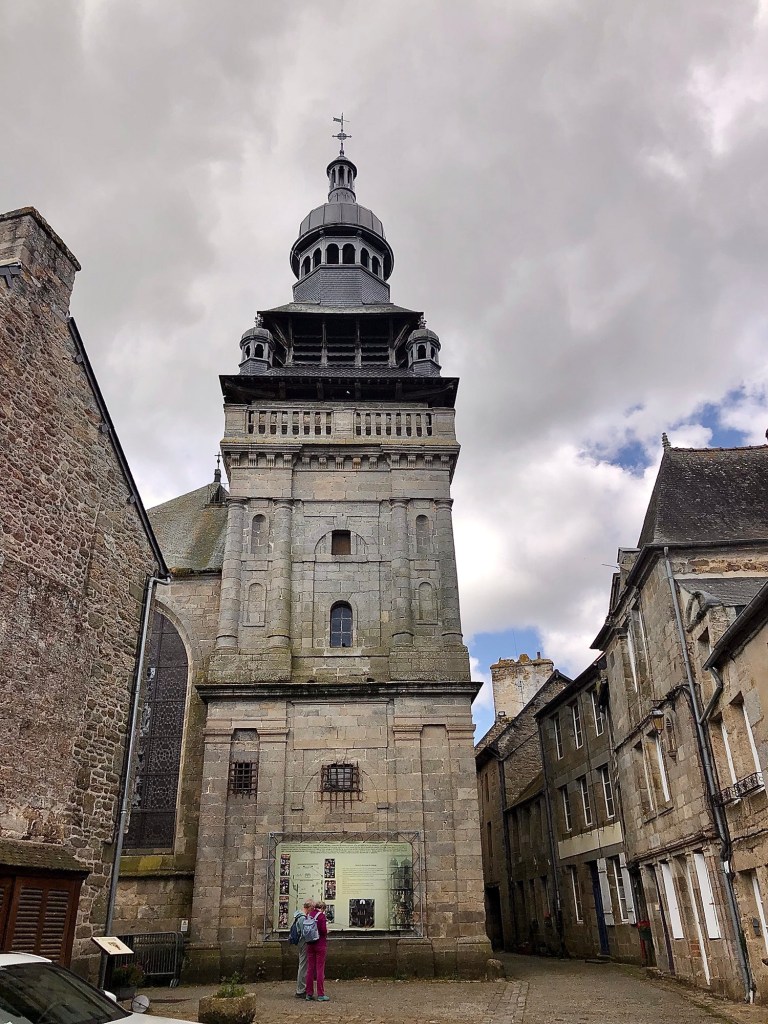
Possibly the star of the panoply is the church. L’Église St. Mathurin proudly anchors the center of town, a broad square affords a pleasing view of the church’s west front and its bell tower projecting skyward. The building’s constituent parts cover the early 16th to 18th centuries and somehow with age have combined into a harmonious assemblage. We were dazzled by the several 16th century stained glass windows still intact and seemingly as fresh as the day they were made.

By the time we arrived in Moncontour, we were feeling quite hungry. And, thankfully, it was right at the beginning of the sacred two-hour lunchtime which our fellow French citizens observe with meticulous regularity. In fact, lunchtime might just possibly be the only event about which they are so precise. Excepting, perhaps, the Tour de France.
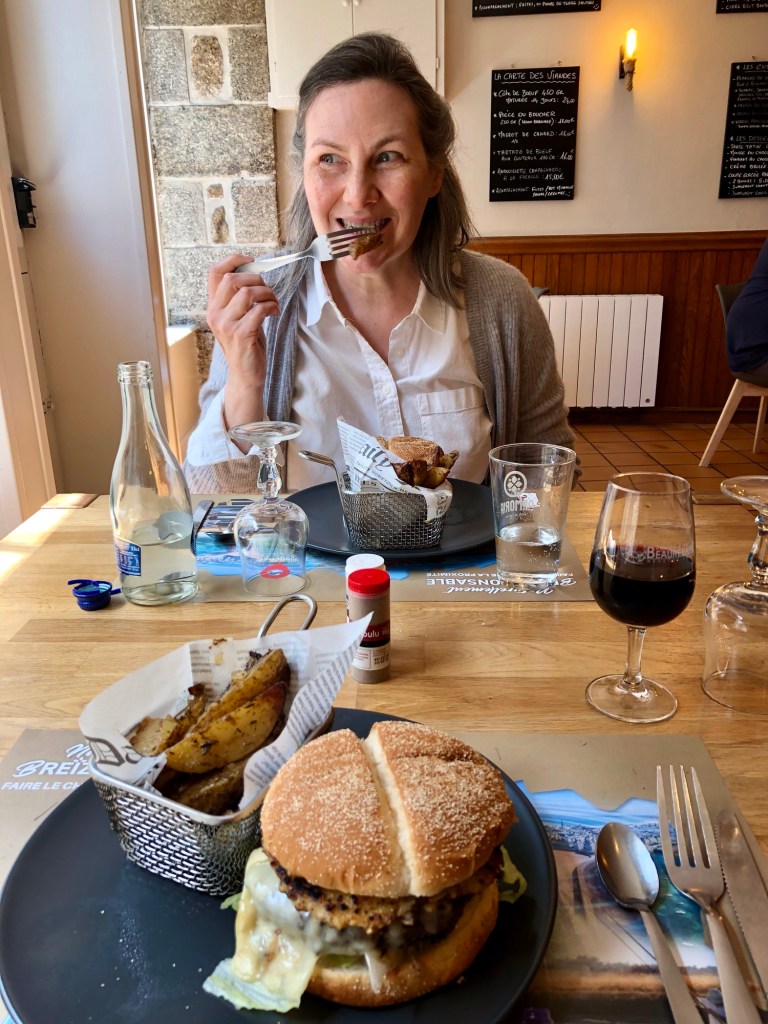
Really Good Burgers from the Wizard of Les Remparts

Not intending to miss out, the two of us cast our keen eyes about the town, searching for our next meal. As you might imagine might be the case in such a small town, the choice was limited. Luckily for us, Cherie thought we should try a little place just up the street on Rue de l’Union: les Remparts. Unassuming in the extreme, the place was almost entirely full. We were shown to one of the last open tables by what turned out to be the sole owner/chef/bartender/server/and dishwasher. This man did it all, and he was nothing short of a phenomenon. We counted 7 tables and 18 diners, six of whom were a group of hungry construction workers. Despite a surprisingly extensive menu plus daily specials, he took orders, poured drinks, cooked, served meals and took payment – all in the time you would expect of at least three or four normal human beings working flat out. Moreover, the food was quite good and well-presented. Needless to say we were well impressed. It was a performance worthy of a Nobel Prize. Do give this restaurant a try if you visit.

We had a fine time in Moncontour. Relaxed, eminently picturesque, it’s one of those many places in France where you feel really fortunate to be a traveler. We’re glad we came and thankful that towns like this exist.

Reflecting on Our Good Fortune

The Olympic Flame Comes to Fougères

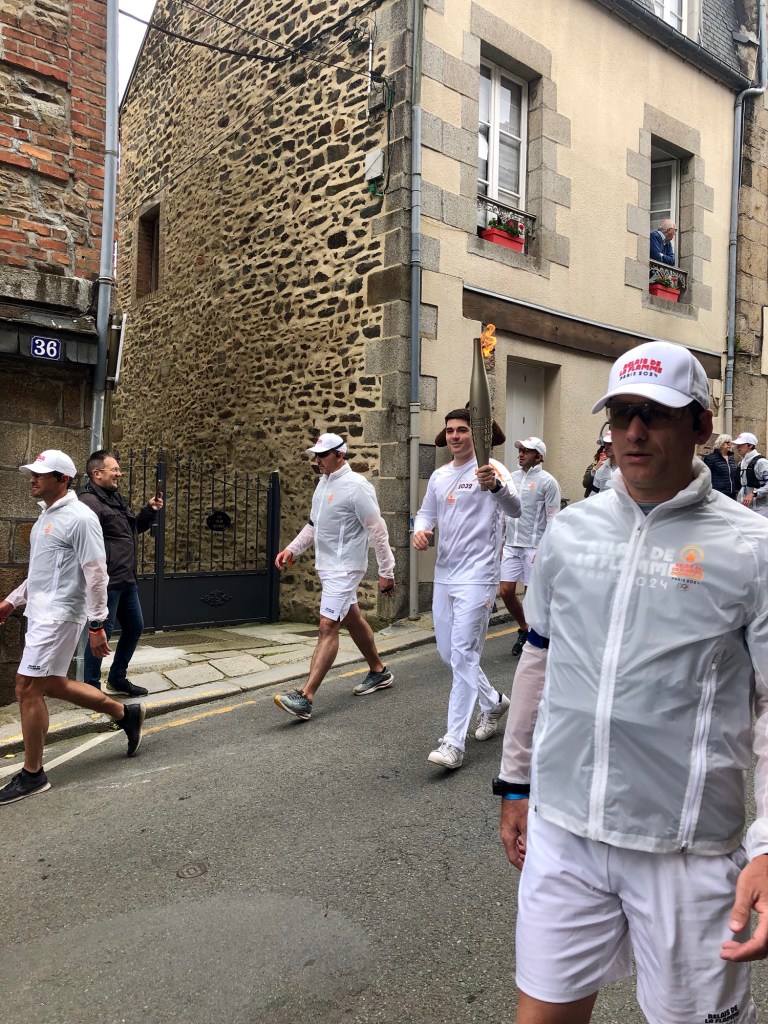
The Torch Bearer and His Olympic Enforcers Pacing Past Our Gate

Surprising things happen in our little town in France. No, it wasn’t the appearance of a rude-shaped turnip in the market; not the invention of a new baguette with frosting and sprinkles; nor even the sighting of a grown man peeing with joyous abandon onto a memorial in the main square in broad daylight. [Although we did witness the last one yesterday while taking Saxon for a walk.] Even though all of those stories would easily make it onto the front page of the local edition of the newspaper here, it was something much more unusual.

Crowds Begin to Gather Down Our Street

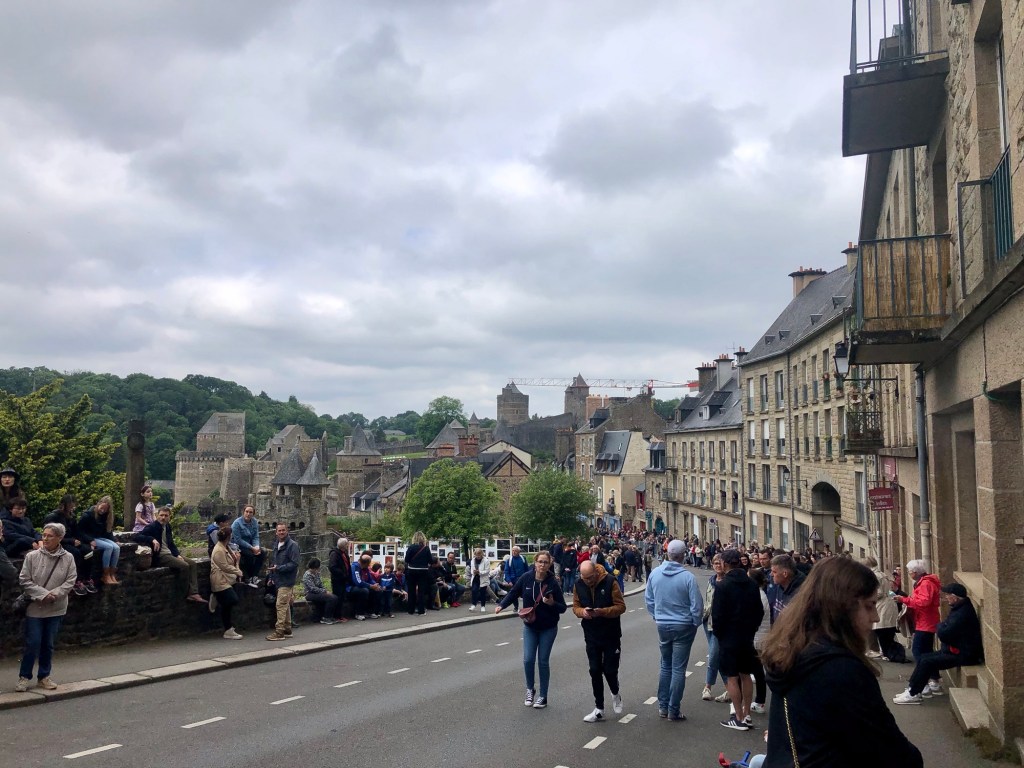
Saturday morning. Crowds began to gather throughout Fougères. There was a murmur of excitement building in front of our gates as people hurriedly laid claim to key viewing sites on the street in front of our house. The flame of the Olympic Games was coming to town.

The Procession Begins – Can You Spot the Torch?

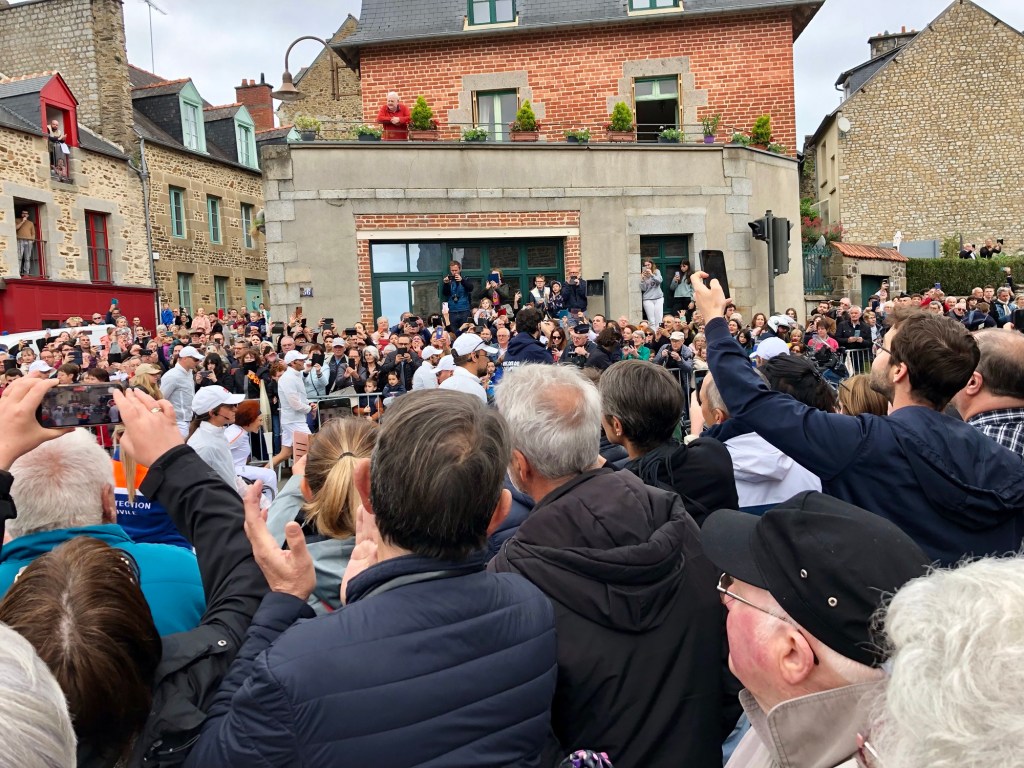
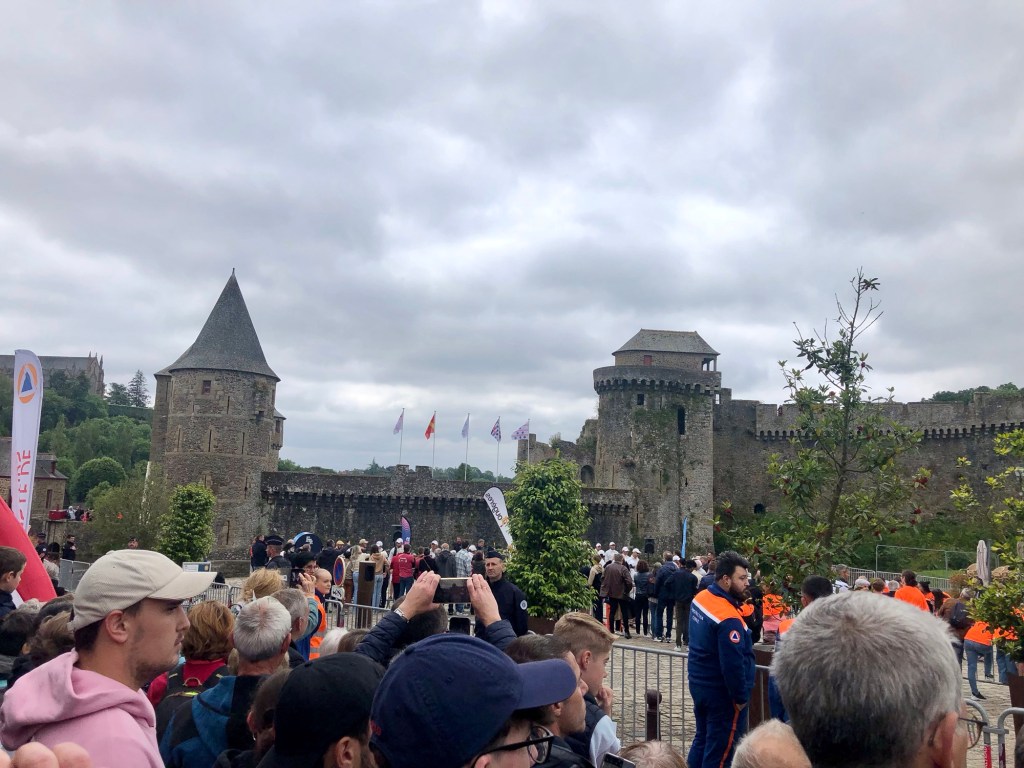
Joining the general hubbub filtering through our normally sedate neighborhood, Cherie and I walked down the hill to the square next to the castle. A sizable crowd had gathered to see the arrival of the olympic flame. After a surprisingly brief introduction, the first runner (more of a slow jog, really – the sort of thing you do when you see your bus pulling away, make a half-hearted show of quickening your pace for a few steps, and then stop in the acknowledgment that you never had a chance in hell of catching the damn thing in the first place) began the procession.

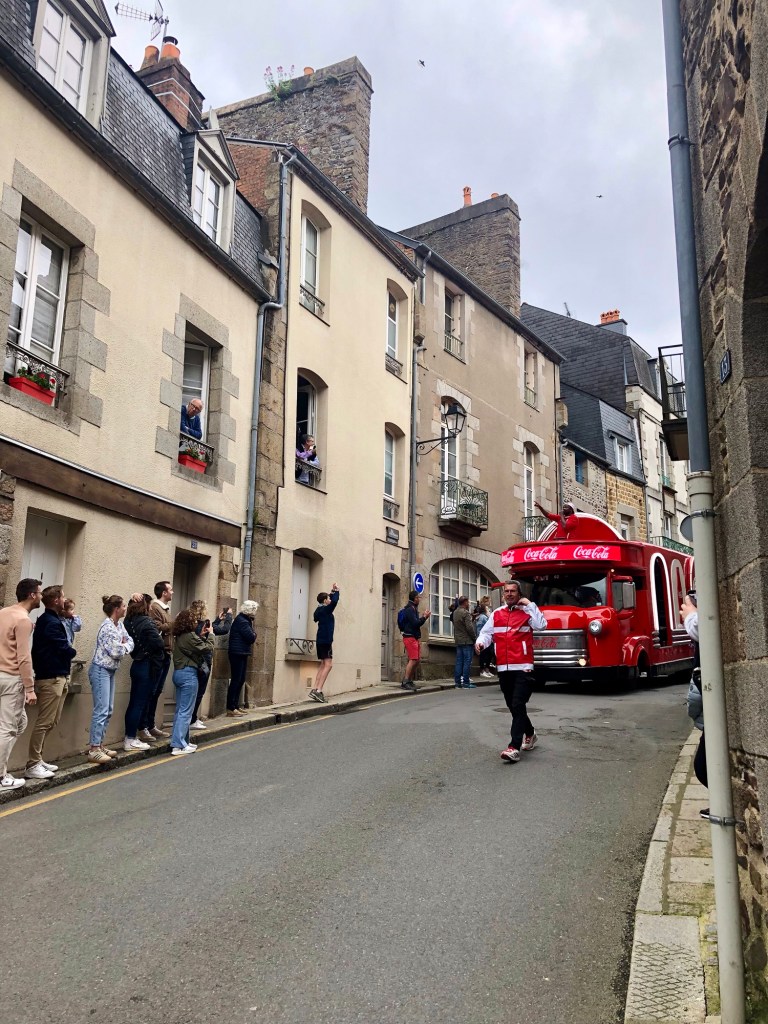
The Coca-Cola DJ, Bringin’ the Love (and tiny cans)

Everyone was very excited. This was the olympic flame, after all. Direct from Greece. As part of the buildup for the Summer Olympics in Paris, the flame has been making its way through several parts of France, including Bretagne. For some reason this included Fougères. And, for an hour or so, we played host to the sacred flame of Udûn, er, Olympia. Pretty cool!

Old Flames – the Passing of the Olympic Torch

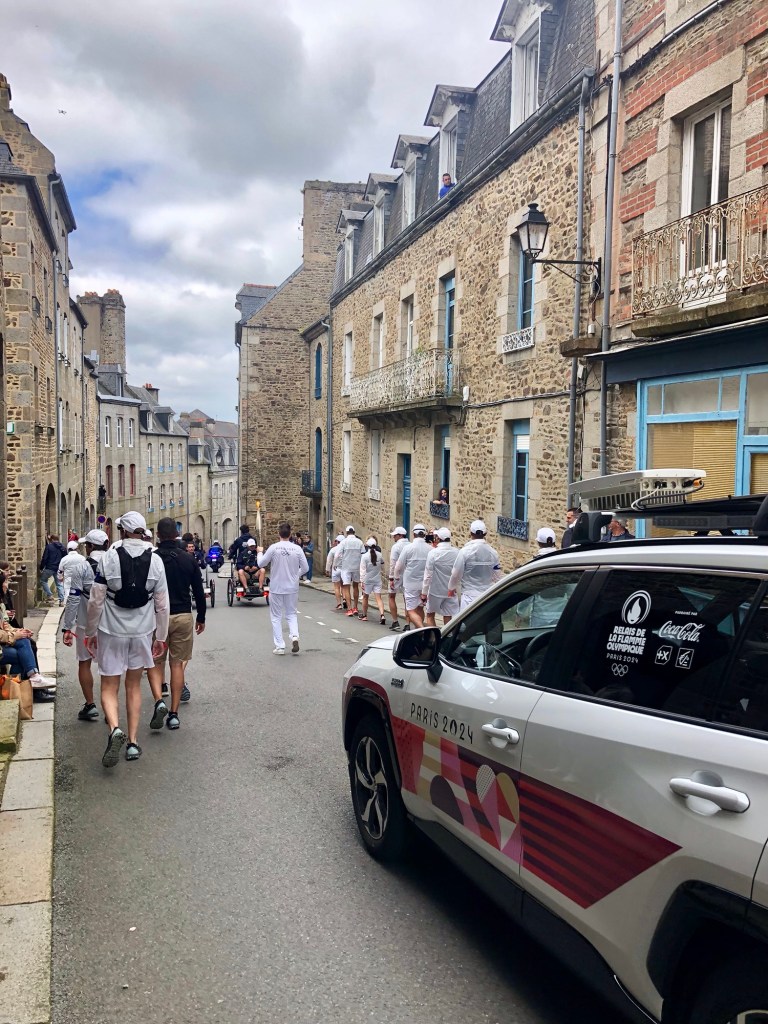
While the torch relay wound its way through the center of town, the two of us climbed back up our street and grabbed some sidewalk turf in front our gate. Like seasoned paparazzi, we skulked on either side of the pavement, Cherie in an archway, and me perched atop a stepping stool – my parents forgot to check the box for a statuesque build when they ordered me, so I needed the extra height. After a cavalcade of trucks sent by corporate sponsors to blare music and fling mini-cans of sugary drinks at unsuspecting bystanders, the torch bearer came loping down towards us. She passed the holy fire to the next bearer, they posed for a few photos, and then the new bearer let gravity take hold as he ambled with solemnity down the slope.

Opening Ceremonies in Front of the Château

And that was it. For a few moments, we were swept up in the planet’s gravitational pull towards the 2024 Olympics. It was an intoxicating moment. Pretty big stuff for our small piece of France.

Our Fifteen Minutes of Flame Trundles Away Down Our Street

Heritage Days in France: Château de Montmuran

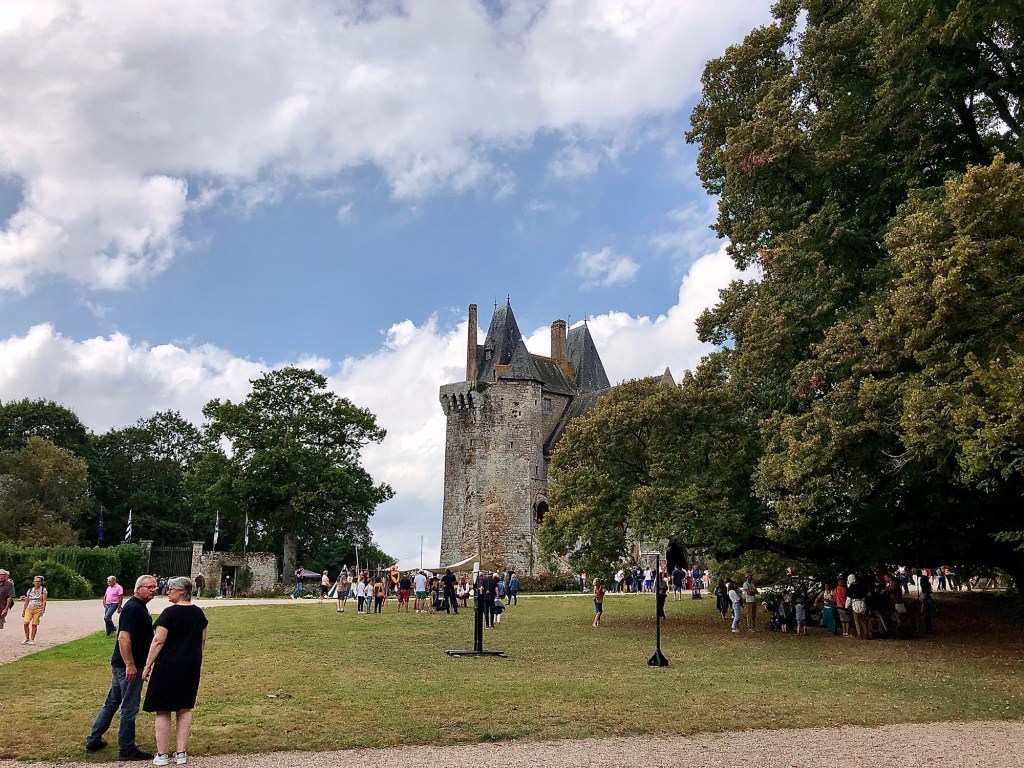
Everyone Loves a Good Castle!

[Just a quick one today. I had begun this post last September but then got sidetracked and eventually put it aside. But I think I did this subject a disservice in passing it over. So, I’ve dusted it off, nipped and tucked it in a few places, and nudged the poor neglected thing out in to the world for your consideration. As always, you be the judge.]

Having read this blog for a while now, you’ve probably noticed that France is a nation rich in historical monuments. Sadly, the country has not developed very good mechanisms for protecting and restoring these amazing places. There is no equivalent to English Heritage or National Trust to acquire historic properties, protect them, restore them and manage them. It’s a shame, really.

Nevertheless, a great deal of this important historic preservation work still manages to get done here, most of it conducted by passionate individuals and families, struggling to overcome considerable obstacles. I don’t know how they do it, but I greatly admire their efforts. We all owe them a debt of gratitude for preserving such beautiful and enduring chronicles of the past.

Carriage Rides and Market Stalls During Journées du Patrimoine (click the arrow to play video)

Despite the organizational challenges, one thing which France is particularly good at in this regard is honoring and promoting their heritage, their patrimoine. And every September the nation joins with the rest of the EU to celebrate the Journées Européennes du Patrimoine (European Heritage Days). During this weekend-long festival, many historic sites which are normally closed open their doors to the public for viewing and special events. We look forward to it every year.

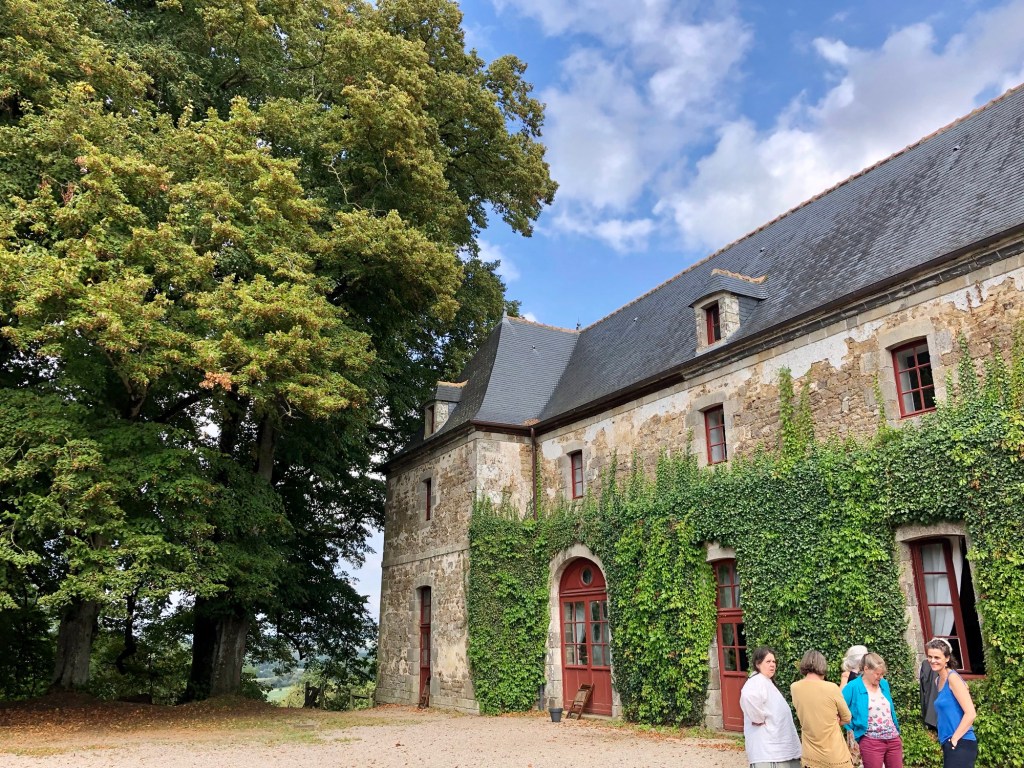
One of the Beautiful Outbuildings at Montmuran

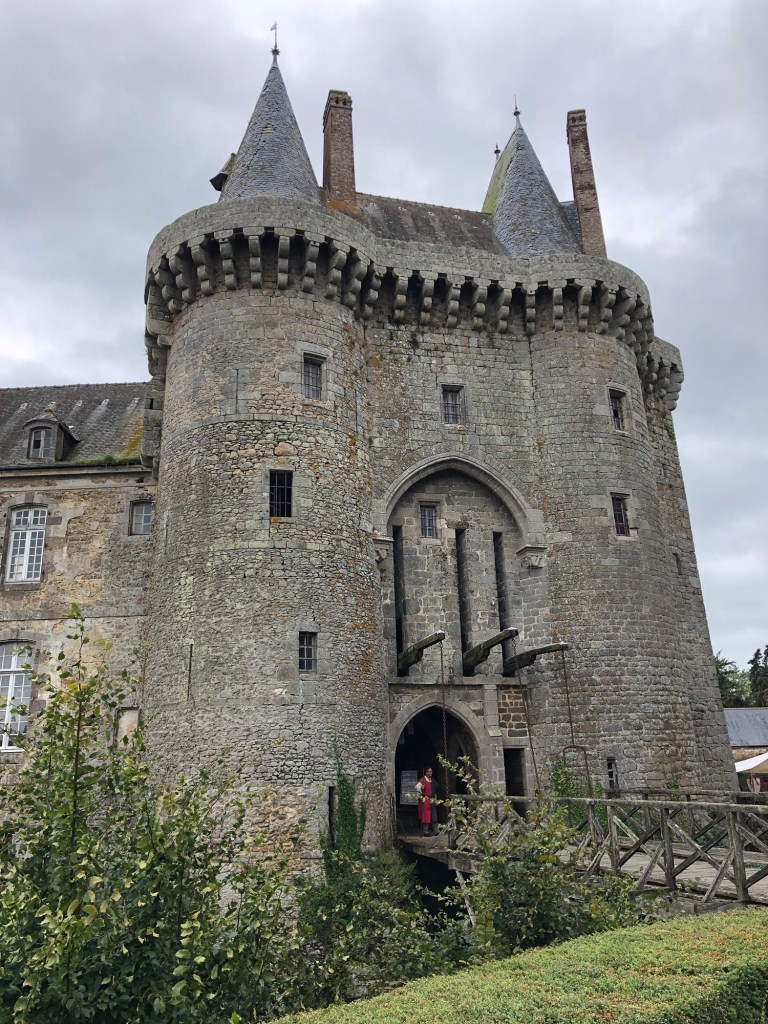
This last September we set our sights on Château de Montmuran. This beautiful castle sits in an elevated position just a few minutes walk away from the village of Les Iffs, and only a 30-minute drive north of Rennes. Currently undergoing major restoration, Montmuran is normally closed to the public. But we and a few hundred other admirers had the good fortune to gain admittance on a lovely, sunny Saturday.

The châtelet

The château-fort visible today displays elements ranging from the 12th through 18th centuries. Most impressive is the 14th century châtelet (a sort of mini-castle at the entrance) composed of two magnificently soaring towers framing a gate with a moat and drawbridge. It is striking. For a castle enthusiast, Montmuran is worth seeing for that alone.

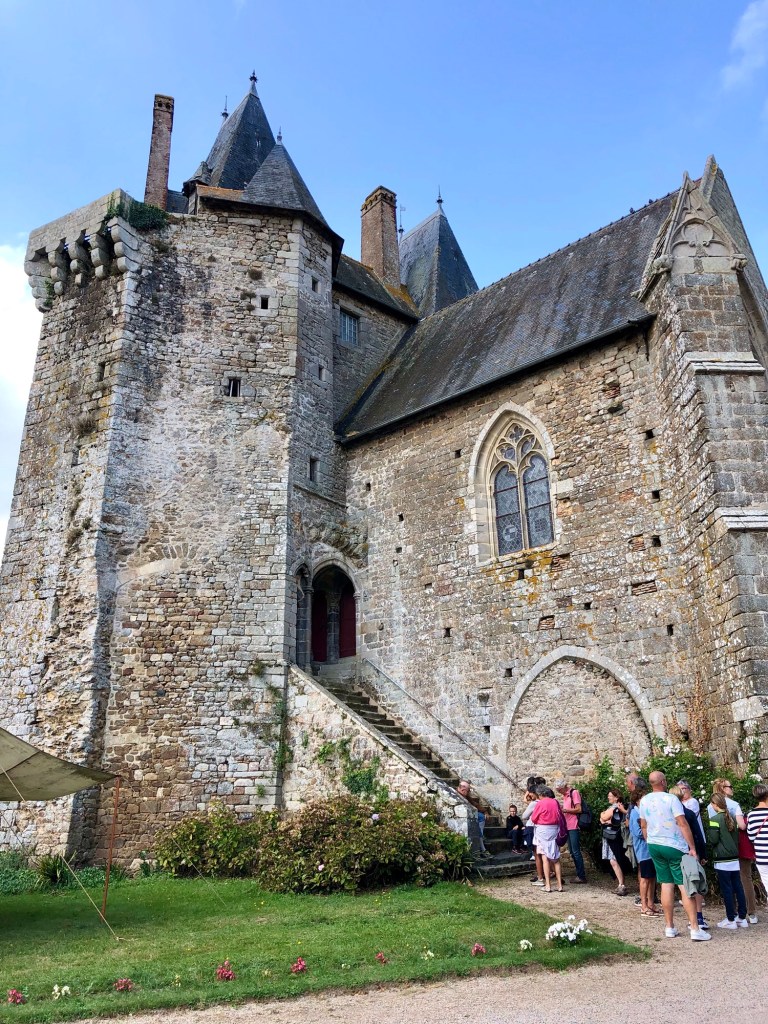
Queuing up to View the Chapel

But, wait, there’s more! A lovely elevated gothic chapel extends from the rear of the châtelet. It is said that the famed Bertrand du Guesclin, later Constable of France, was knighted in this chapel in 1354. In addition, the primary residential block consists of a series of 17th and 18th century chambers. And there are several outbuildings of notable character as well.

Saint-Ouen des Iffs

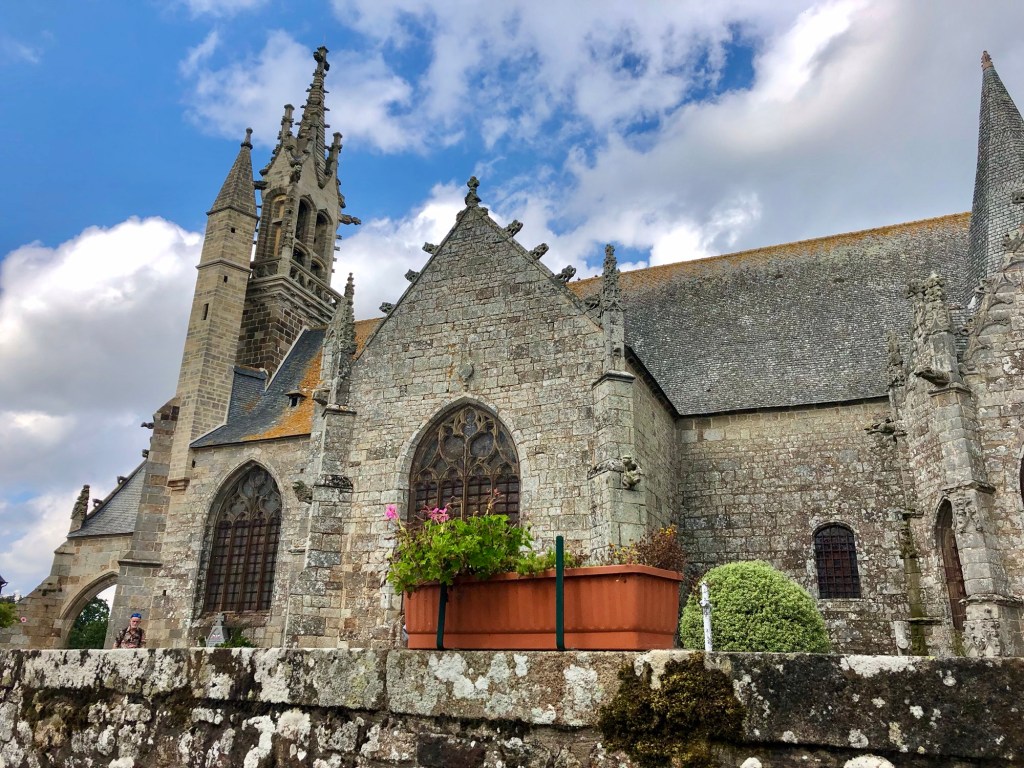
We also had a walk around the nice village of Les Iffs. The whole village seemed to be engaged in celebrating the heritage days with games, food stalls and decorations. Honorable mention goes to the church. L’Église Saint-Ouen des Iffs was built in the 15th century. It is justly famed for its 16th century stained glass windows. A beautiful and unique parish church, it is worth a detour all by itself.

Holy Hares!: Baptismal Font in Église Saint-Ouen

I promised a quick one, didn’t I? Well, so much for that. But I did try. I will simply leave you with this bit of advice. If you live here, or will be visiting around the end of September, it’s worth the extra effort to seek out those special historic sites which only open their doors to the public during this very unique holiday. Sites like Montmuran.


[Editor’s note: we have since learned that Château Montmuran is now open on a more regular schedule. The writer responsible for this blog has therefore been sacked.]

[Editor’s post-note note: due to lack of applicant interest, the previous writer has been rehired. We apologize in advance for any future misinformation which may leak from his brain.]