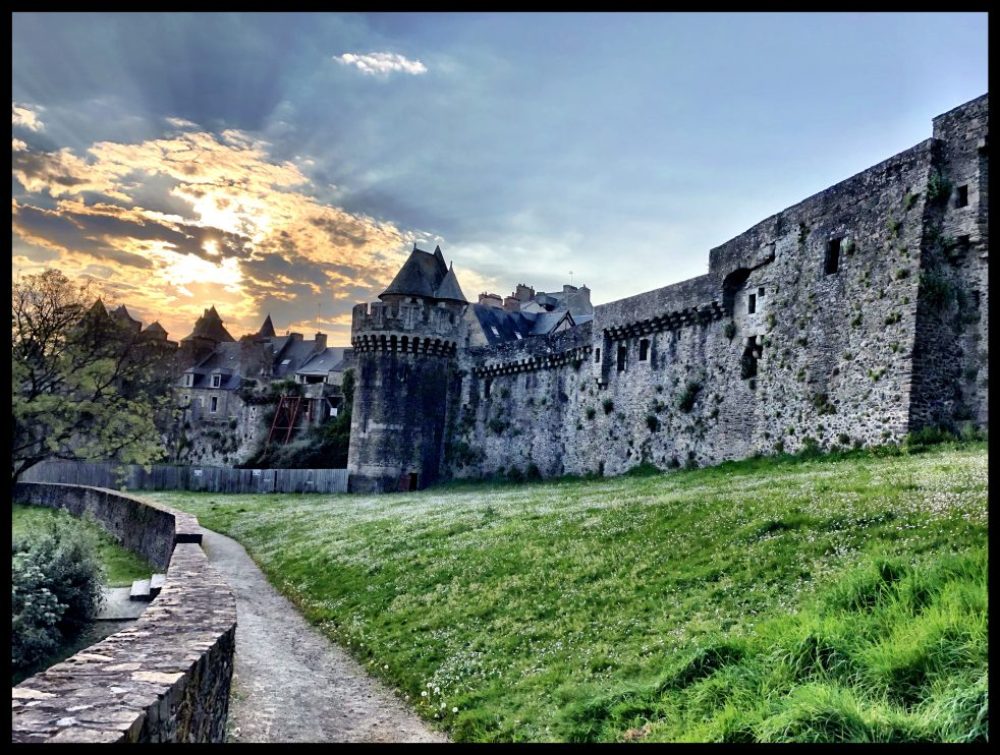
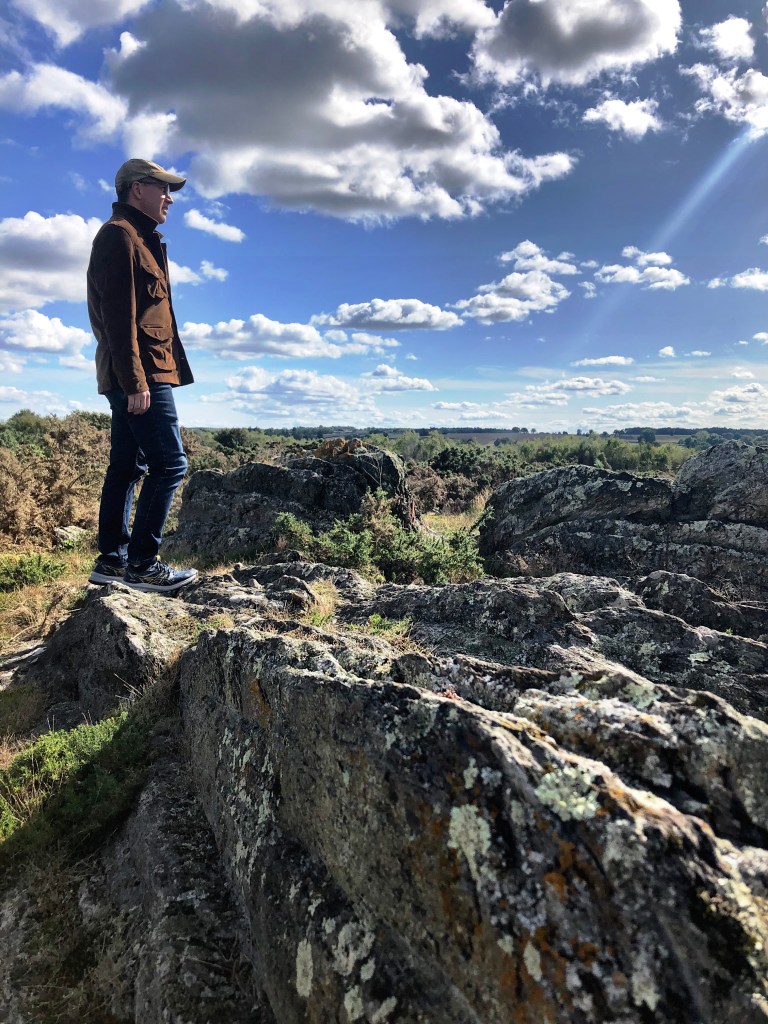
Cherie and I are reminded, frequently, of the truly ancient heritage which permeates the land in which we now live. History is all around us. Literally. Most of that history is visible through the many medieval and later structures still standing all about us. These pieces of our ancestors’ handiwork are beautiful, atmospheric and endlessly fascinating. And they create a landscape which is radically different from our previous home in the United States. Frankly, we prefer it here. It’s so much more interesting and varied. Turn a corner in France and you are more often than not greeted with a grand vision, a lesson in history, or a little mystery. It’s a feast for the senses. There is no lack of opportunity to, as Hercule Poirot would observe, “exercise the little grey cells” in our corner of the world.
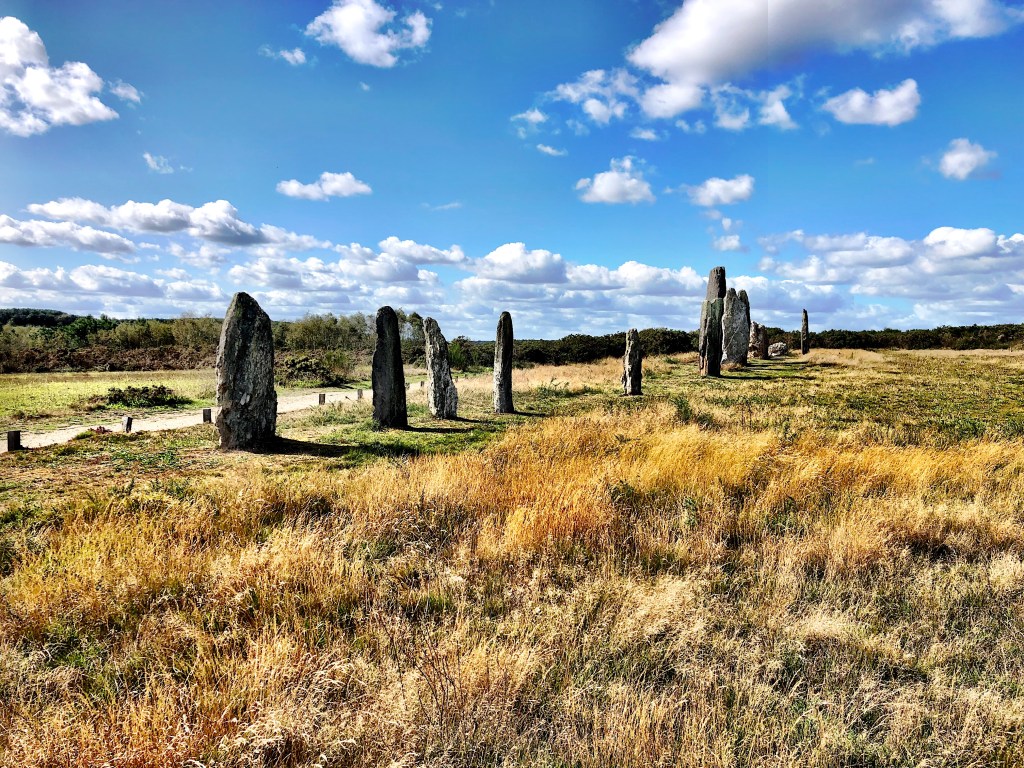
In addition to perfusion of historic buildings and other monuments which surround our daily lives here, we are very often reminded that we are inhabiting a landscape of even deeper roots into the story of humanity. It’s astounding the number of prehistoric sites peppered throughout, especially in Bretagne (but also other areas of France: see our post Ducking Underground: les Grottes de Saulges). Carnac (BBC: The Mystery of France’s “Stonehenge”) in the southwest of Morbihan is probably the most well known. And rightfully so. It is an astonishing display of some 3,000 standing stones as well as other structures from prehistory. Definitely not to be missed.
But there are hundreds of other, smaller, sites dotted throughout the Breton landscape. And they are all fascinating. We recently visited one such area that is filled with a number of neolithic treasures: Saint-Just and les Landes de Cojoux. About an hour and a quarter’s easy drive from Fougères, the small village of Saint-Just sits almost due south of Rennes, only a couple of minutes off the D-177 highway.
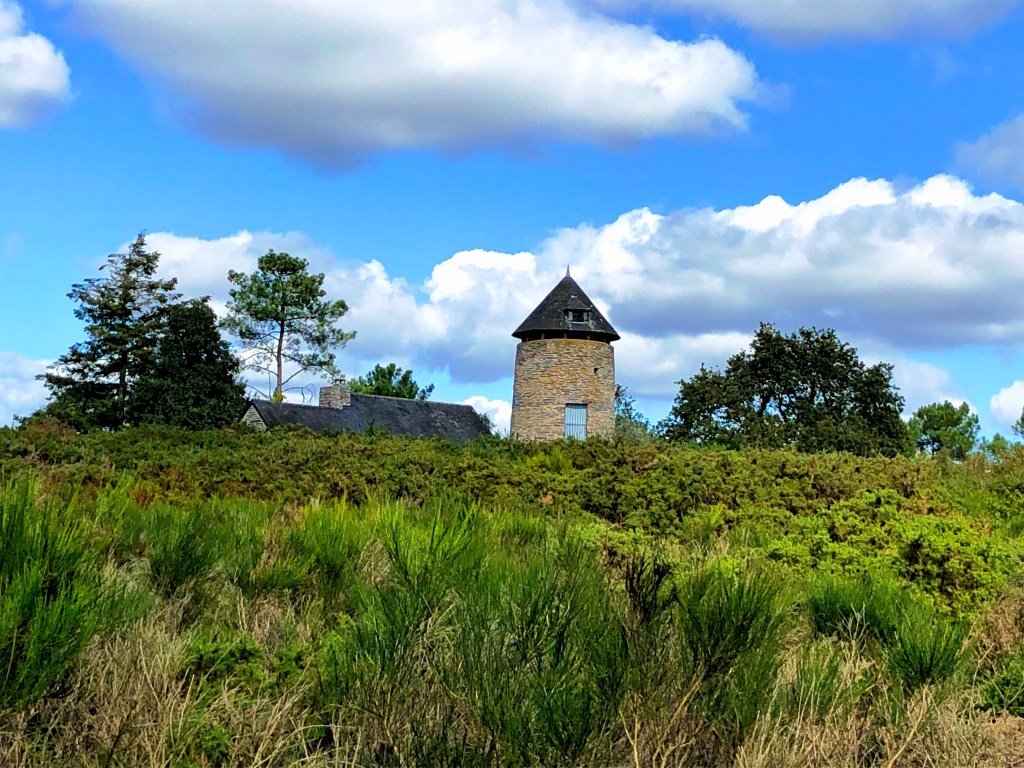
Extending westward from the village is a network of trails which lead through dramatic moorland. These well-tended trails are reasonably wide and flat, providing some of the best accessibility we have encountered for people with mobility challenges. The landscape is beautiful. Following the crest of a long stony ridge, the walk took us through gorse-and-heather-covered moors, past a former windmill, down amongst small, shady copses of oak, aspen, chestnut and beech trees, and up to a deep ravine with windswept cliffs.

But most important of all are the dozens of megalithic sites which are strung along the trail. Such variety! There are rows of standing stones, round burial mounds, long barrows, small individual stone-lined graves, and enigmatic stone placements which still have archaeologists scratching their heads.
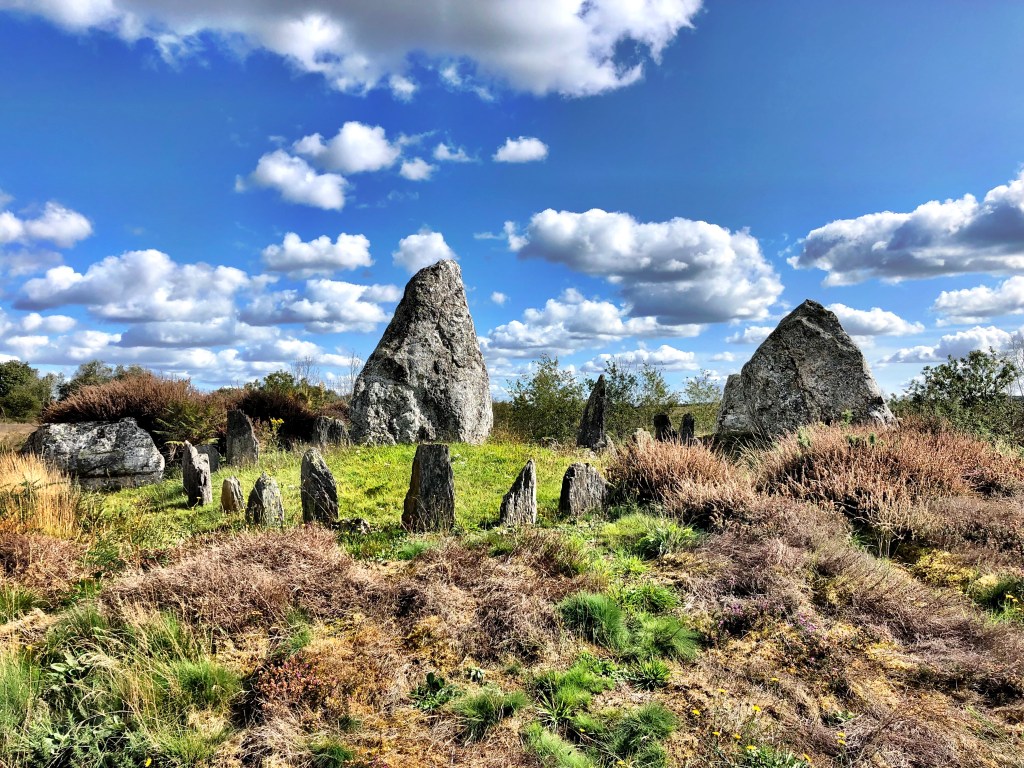
Apparently, the entire site remained lost, forgotten for millennia until wildfires in the 1970’s and 80’s exposed the stones. Archeologists soon began to conduct numerous excavations. What they have uncovered so far is fascinating. Each exposed site is well-presented with panels to help make sense of what has been found. Still, so much of what our neolithic ancestors did here – and why – remains a mystery. And, perhaps, that is part of the attraction of these stone monuments. Despite being put together by people who were so similar to us in so many ways, these strange stone constructions are so unlike anything we are used to experiencing. It really makes you think.
Our long afternoon wander through the prehistoric past of Saint-Just was really enjoyable. If you have any interest in visiting the distant past set within a beautiful landscape, you will be well-satisfied with a visit to this area.

 Finding Our France